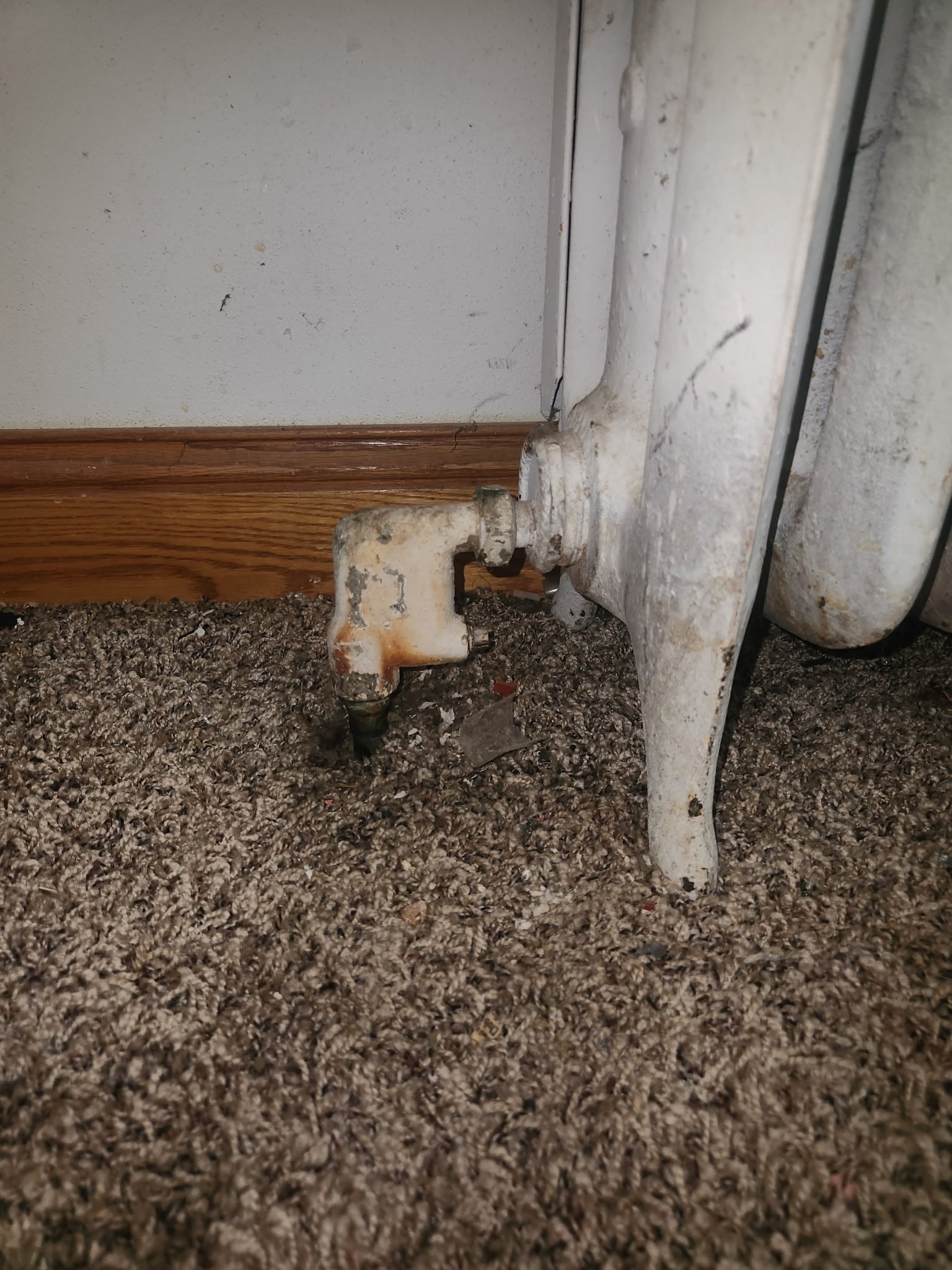
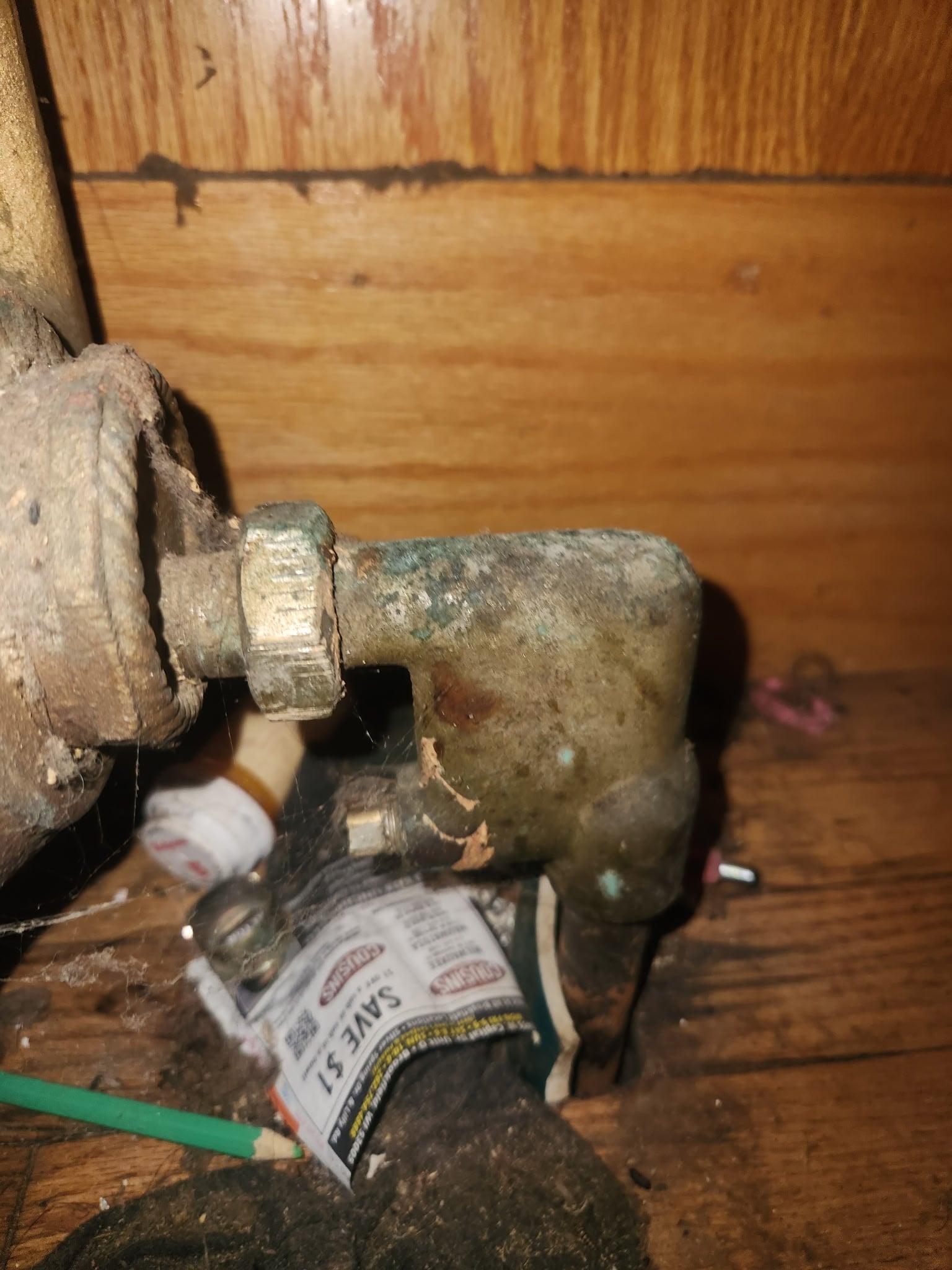
What is this on this radiator?

Curious to what this functions as? I'm assuming it's some type of steam trap based on the two pipe radiators .. but I have never seen one of these so I have to ask you guys.
This is the oddest system , was in foreclosure and anything in the basement that was copper was gutted..
Steam boiler
Each radiator has two pipes going to them.
Main vent on each return
Not a steam trap in sight...
One radiator was piped in as if it was a hot water radiator with a bleeder at the top..
But I'm curious to what these are on every radiator on the lower portion return side
Thank you in advance
Comments
-
it is a return fitting proprietary to one of the vapor systems. you have a vapor system. some others will know which vapor system without digging through "The Lost Art of Steam Heating".
your radiators have special metering valves that in combination with controlling the pressure at the boiler limit the amount of steam admitted to the radiator to less than the amount of steam that the radiator can condense so no steam makes it to that return fitting.
if there is a bleeder on the radiators and knuckleheading in the basement then someone might have tried to convert it to hot water.
1 -
And you don't absolutely have to have the specialized inlet valves - just keep the pressure down (8 OUNCES per square inch or less).
And you may actually be in luck — if someone did you the favour of removing all the copper in the basement, which you have had to remove yourself and which was most likely kludged anyway, you can replace the piping correctly and have a wonderful quiet heating system!
Br. Jamie, osb
Building superintendent/caretaker, 7200 sq. ft. historic house museum with dependencies in New England1 -
Look on the "trap" or the supply valve for a name that would be a clue.
Also, look around the boiler for a boiler return trap
1 -
i know @Steamhead or @STEAM DOCTOR or @retiredguy will know exactly what that is. people have posted it here before.
1 -
@mattmia2 , you're right, it's some sort of water seal. I don't recognize the brand though.
@Mail4tommo , we have some detective work here. I don't see any maker's info on those water seals. Are any of the original radiator shutoffs still there? If so can you find any name on them and post some pics?
Also, do the main vents look original?1 -
Would love to see a cutaway
1 -
I remember a system with something like that in Atlantic City NJ. that might be a VECO trap. There are no moving parts inside. Just a water trap and a hole drilled into it where that plug is located on the bottom
Edward Young Retired
After you make that expensive repair and you still have the same problem, What will you check next?
1 -
-
a lot of times there will be a little check ball inserted through that plug but it could just be a cleanout for the water seal too. if any of the specialties near the boiler are still there those could help identify it too. many vapor systems need to vent only at one specific place in the system if all of the original parts are still in place.
1 -
The suspense is killing me! Looking forward to adding this to the list:
 2
2 -
@Mail4tommo probably didn't follow this thread so they have no idea that we are talking about them. @HeatingHelp.com could it be made such that when you make a post you automatically follow it?
0 -
It already works like that for me………………..
0 -
I apologize I didn't mean to leave anybody hanging trust me. I finally had a chance to sit down.
There is nothing at all in the basement but a crooked boiler the supplies and returns were cut at the elbows and nothing to the boiler.
The main vents did look original, and about a quarter of the supply valves looked original but I didn't think the snapper photo of those. I had a chance to get in when the owner of the property was there there. It was a horribly damaged foreclosure, so it is vacant and my chance at getting info was the one time unfortunately. Then again I did not want to really take the job because of one the neighborhood, the condition of the property in three all the Frankenstein stuff they had going with the system. Then again I don't mind a challenge.
I wish I had more information for everybody I really do, I mainly wanted to know what the hell those devices were and it's clear that they're not that common based on everybody's comments.
I wanted to be able to offer a solution, but the circumstances of not being able to get in again for a few weeks doesn't help specially coming in the heating season.
I really do appreciate everybody's input, and I have been itching to have a chance to get back and read and reply.
 1
1 -
Also I forgot to mention..
One did not have that device on it, it was pipe straight in and straight out with copper so there was a repair at some point.
0 -
-

That plugged hole is there so someone can drill the small (1/8" or smaller) hole in the internal trap. The plug is there to cover up the hole they made to drill the other hole. It is a machining necessity for drilling the hole and inspecting it if the device fails.
This is what I remember: »»»
So, I’m not an expert on this particular vapor system, but as I remember the explanation of how that trap worked, it was an extremely simple device that depended on maintaining the proper operating pressure.
At the correct pressure, enough condensate remained in the trap to form a water seal. That water seal prevented steam from leaving the radiator and entering the return piping. If the system pressure became too high, however, the steam could blow through or displace that water seal, allowing steam to enter the returns.
The very small hole in the trap—perhaps 1/8 inch or smaller—allowed condensate to drain into the return at a controlled rate. The opening was small enough that, under normal operating conditions, condensate could pass without allowing any significant amount of steam to follow it. As condensate continued to form in the radiator, it would gradually drain through the trap and into the return, and the system would operate as intended.
Once the firing rate dropped and the heating cycle effectively ended, the remaining condensate could continue draining through that small opening. That also allowed the radiator and return side of the system to equalize so air could move properly when steam was introduced again.
You also have to remember that these systems were originally designed around hand-fired coal boilers. They did not operate with the definite on-and-off cycles we associate with modern burners. The fire was maintained continuously and adjusted according to the weather—less coal and a smaller fire on warmer days, and more coal with a stronger fire on colder days.
That is part of the elegance of those old vapor systems. The trap had essentially no moving parts. As long as the orifice remained clear and the system was operated at the pressure it was designed for, there was very little inside the trap to wear out. In theory, it could last almost indefinitely.
Edward Young Retired
After you make that expensive repair and you still have the same problem, What will you check next?
 2
2 -
i'm pretty sure someone has posted a return specialty like that before.
it isn't super critical that you know what that is, just that it is a vapor system and how vapor systems work.
vapor systems keep the boiler pressure under about 8 oz/in^2 and have a metering device on the inlet to the radiator that acts as an orifice to regulate the steam that is admitted to the radiator to less than what the radiator can condense. this means that the steam is all condensed by the time it gets to the outlet so the return fitting never sees steam.
if the vapor valve is missing you can use an orifice plate in the union of a standard valve or you can still get metering radiator valves in its place but you must have some metering device.
the radiator vents through the return like any other 2 pipe system
the mains will be dripped in to a wet return to allow the condensate from the mains to drain
the mains either are vented in to the returns through crossover traps or have main vents.
if there is a boiler return trap/differential loop or similar specialty the mains need to be vented with crossover traps and the only vent in the system needs to be on the return near that device.
the returns also need a vent because tat is where the radiators vent.
returns that were intended to be below the water line to provide a water seal between various parts need to remain below the water line with the current/new boiler. modern boilers frequently have much lower water lines than the original coal boiler did.
1 -
oh, and it is very important that you match the boiler to the connected radiation or even undersize it a little because that will make controlling the pressure much easier. the boiler has to be controlled by a vaporstat rather than a pressuretrol
1 -
Yes, look at the title of any thread. To its right is a small flag. Just click on that and you’ll get a notification when anyone adds to the thread. You can click it on and off.
Oh, and I also dream of finding out who made this device. We’ll never stop seeing something new with The Steam.
Retired and loving it.1 -
-
I'm suggesting if you are the creator of the thread that it should auto select that because a lot of new people come here, make an account, post a question then don't know that people replied to it because they didn't know they needed to select it.
1 -
Got it. Thanks.
Retired and loving it.0 -
-
Job is in Milwaukee, im pretty sure that was my only visit unfortunately
0 -
Milwaukee was home to Sterling and O-E. That doesn't look like an O-E return ell though……………
I've spent some time in that city, and have been known to consult there.0




Categories
- All Categories
- 87.8K THE MAIN WALL
- 3.3K A-C, Heat Pumps & Refrigeration
- 60 Biomass
- 430 Carbon Monoxide Awareness
- 133 Chimneys & Flues
- 2.2K Domestic Hot Water
- 6K Gas Heating
- 124 Geothermal
- 170 Indoor-Air Quality
- 3.9K Oil Heating
- 79 Pipe Deterioration
- 1.1K Plumbing
- 6.7K Radiant Heating
- 397 Solar
- 16.1K Strictly Steam
- 3.5K Thermostats and Controls
- 56 Water Quality
- 51 Industry Classes
- 51 Job Opportunities
- 18 Recall Announcements