shower drain in an old school building
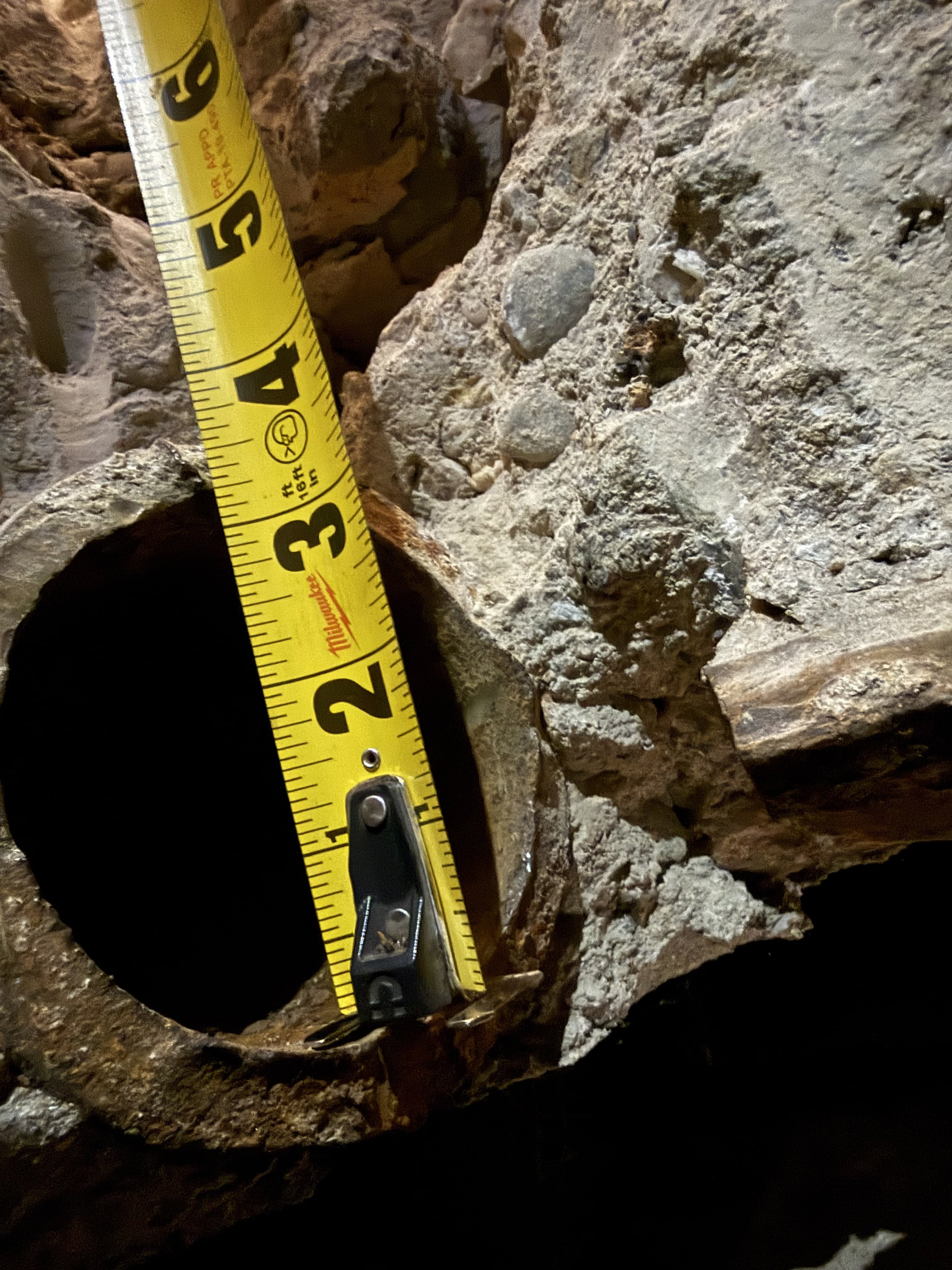
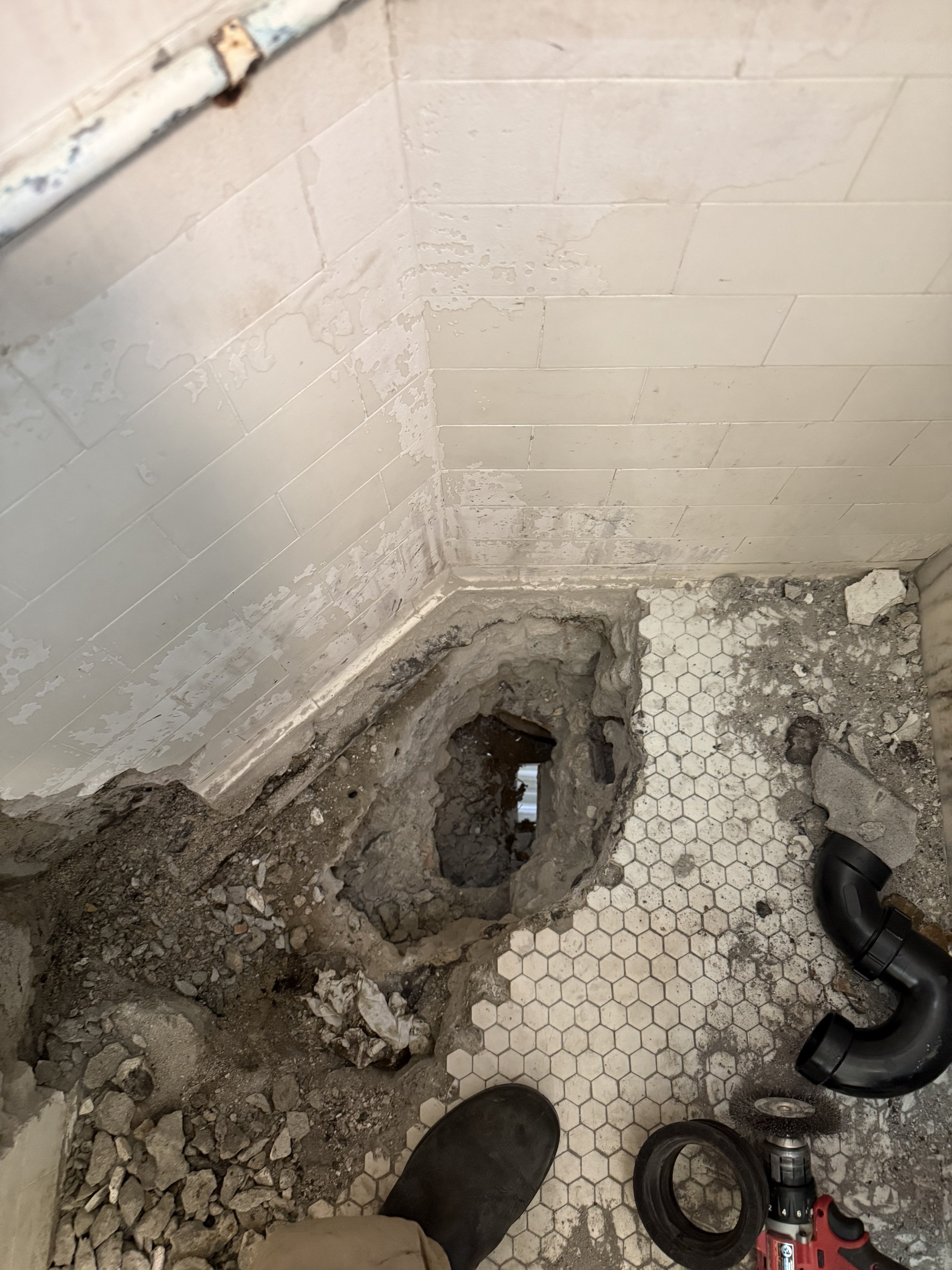
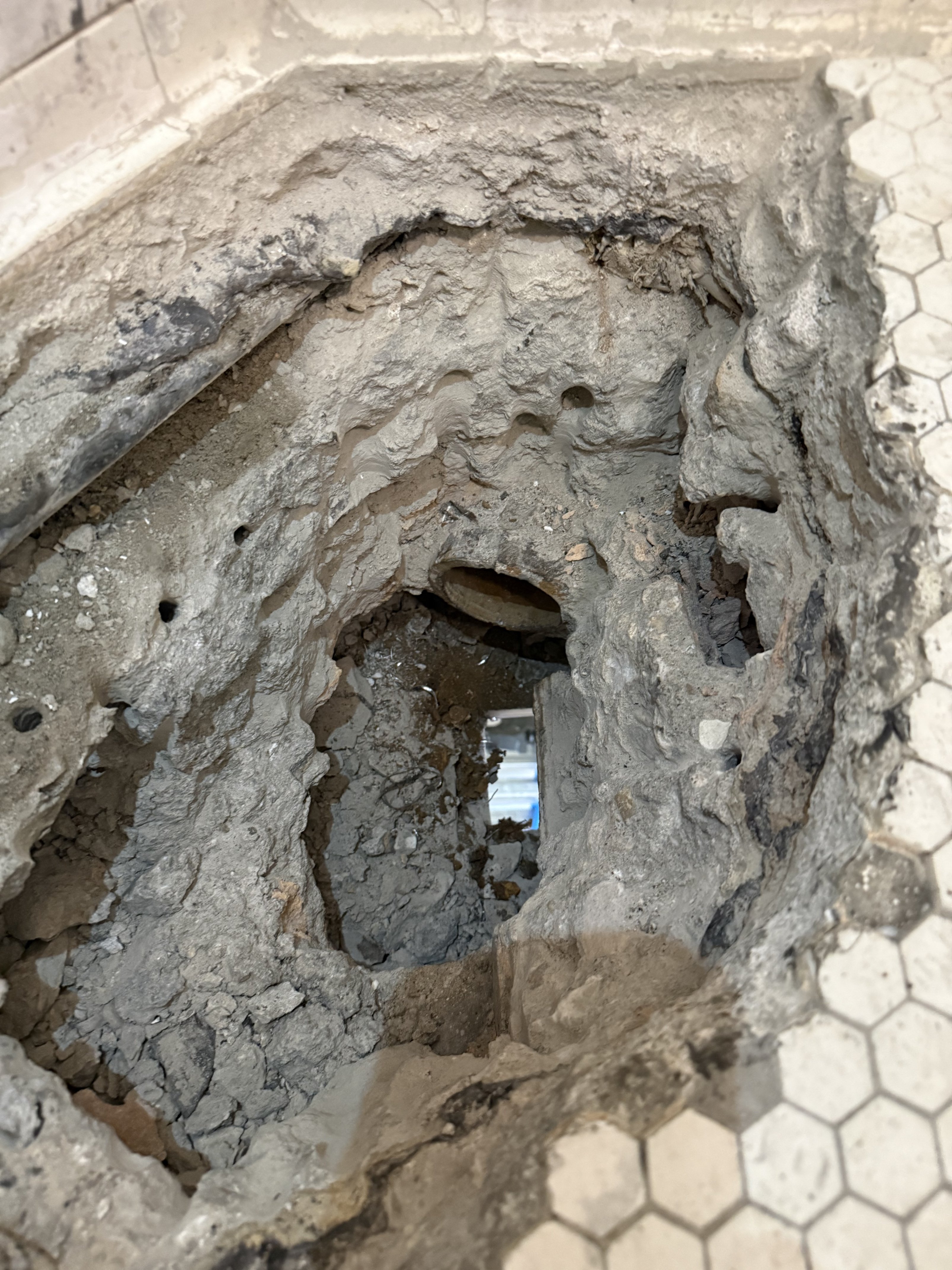
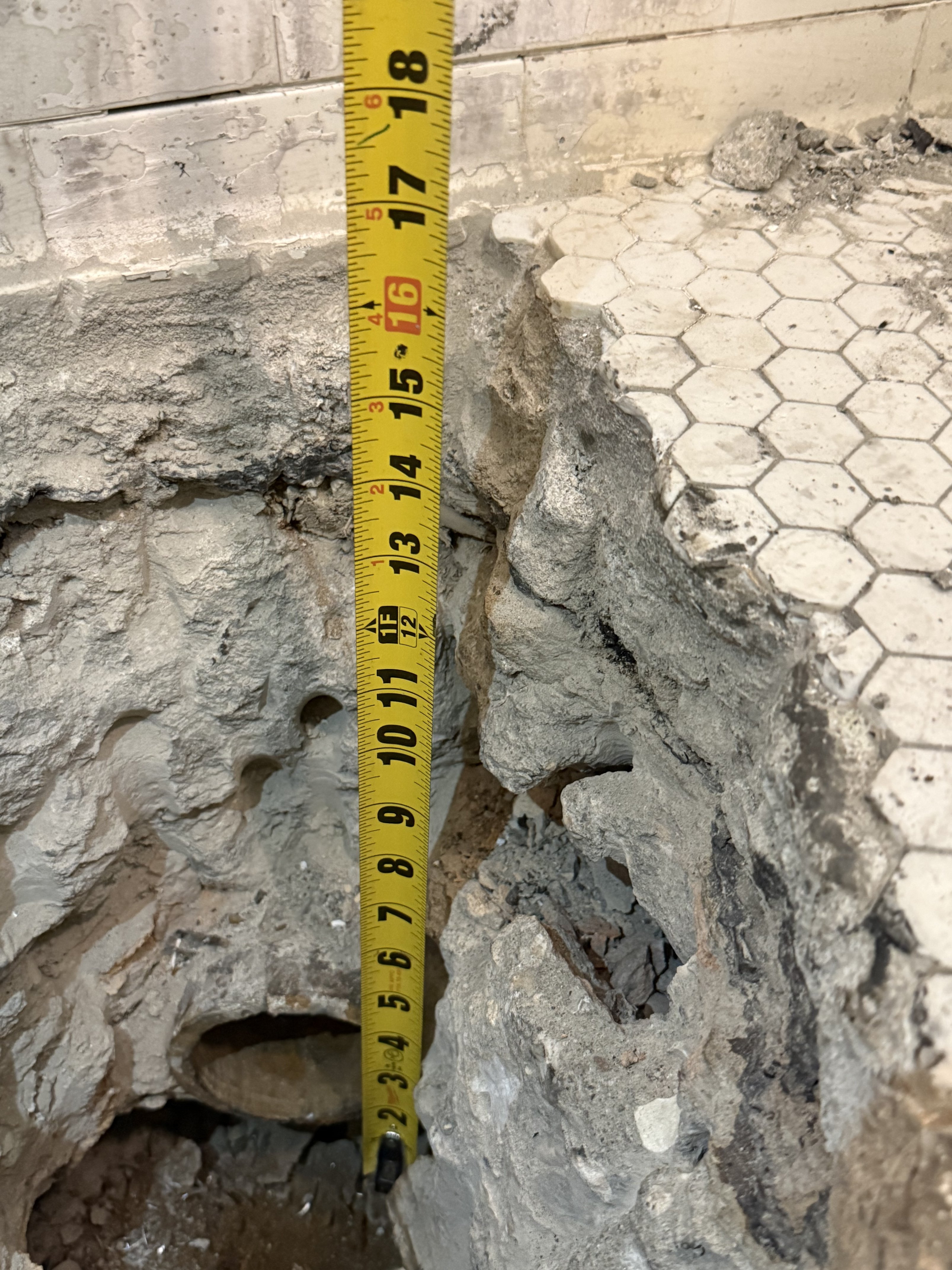
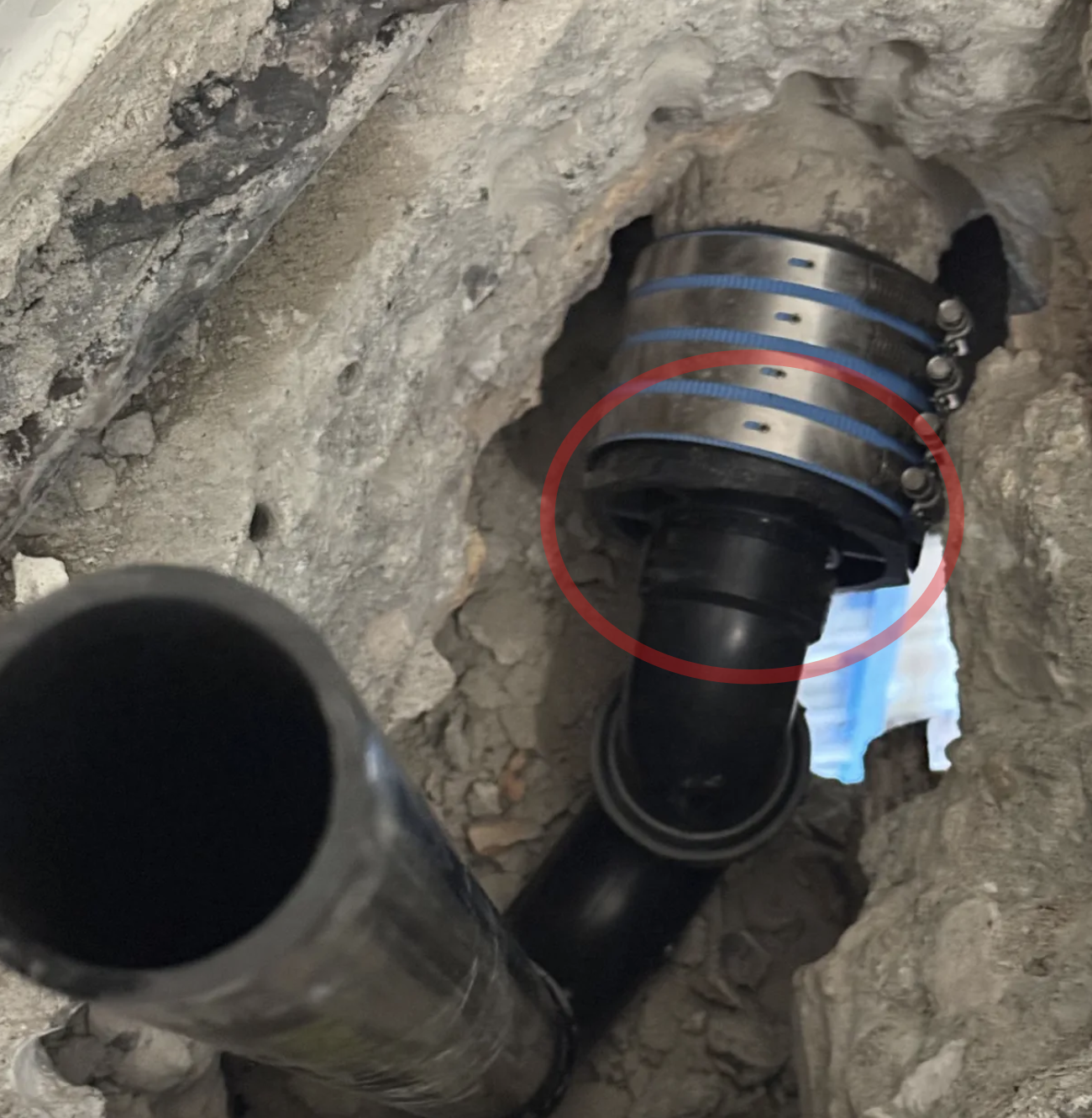
Hi everybody. I'm deep into an interesting shower drain issue. Tasked with replacing a trap for a shower. Without getting long winded I'll put up some pictures as an illustration of what I'm working with. This building is all masonry and this shower trap cast into about 12' of cement. I need to get from a new shower drain and trap into the existing 3"wye. The problem I'm having is a 3" rubber bushing is too big and a 2" is too small. I'm missing something I guess. Any advice would be greatly appreciated.


Miss Hall's School service mechanic, greenhouse teacher, dog walker and designated driver
Comments
-
your images are missing but i'm thinking lead and oakum?
0 -
weird about the images. I think youre right about the lead and oakum which is something ive not ever done I’ll try the images again
thenks for the reply
Miss Hall's School service mechanic, greenhouse teacher, dog walker and designated driver
0 -
Miss Hall's School service mechanic, greenhouse teacher, dog walker and designated driver
0 -
is that a hub you're looking at? could also try calling fernco or mission and see if they have different size doughnuts. different manufacturers and different weights of ci have different hub sizes.
you'd need a runner to pour lead on a horizontal joint.
 1
1 -
is there a bomb shelter under that bathroom?
 1
1 -
I will look around for a different size. My first stop was F W Webb. Second stop was you guys.
That's the living room below. 12' ceilings. Being renovated. There was a steam condensate leak at a tee in the ceiling/floor along with a roof leak running down a vent in the wall saturating the masonry. This destroyed the ceiling. We thought it was the trap. It was not but in order to find that out I had to dig.
Miss Hall's School service mechanic, greenhouse teacher, dog walker and designated driver
0 -
Not a plumber but I looked up the diameter of Ex heavy and service weight CI pipe and hubs and I saw nothing that was 3 1/4".
0 -
Seems odd. My guess is it's actually 3" or was. I have a bushing marked 3" for SV and POG-3-SW but it's far too large to fit into the hub. Or seems to be. I recognize they are a very tight fit but this really seems excessive.
Miss Hall's School service mechanic, greenhouse teacher, dog walker and designated driver
0 -
Though I am unable to see if it's extra heavy or service my guess is extra heavy judging by how this building was put together.
Miss Hall's School service mechanic, greenhouse teacher, dog walker and designated driver
0 -
that is one thick floor!!!
1 -
You will need to chip away the outer diameter of the pipe and use that as your connection.
When it's that deep into the floor, I would use a four-band no-hub clamp, or a reducing four-band clamp.
From the look of it from here, probably a 4 x 2 or a 3 x 2. That is, unless a hub appears when you chip the cement away from the outer diameter of the pipe, then you would need a push gasket.
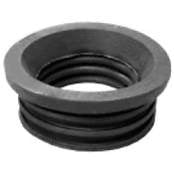
Push gasket
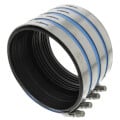
Four-band no-hub clamp.
 2
2 -
What is pictured there is the hub of the wye. Do you mean clamp directly to the outer diameter of the hub? I hadn't thought of that. That might be the direction I need to go.
Miss Hall's School service mechanic, greenhouse teacher, dog walker and designated driver
0 -
Ya. Three day of careful chipping away to avoid any buried surprises. I did find a 3/4 brass cold supply. The whole domestic supply is threaded brass wrapped in tar paper buried in cement.
Miss Hall's School service mechanic, greenhouse teacher, dog walker and designated driver
0 -
The next challenge will be to rebuild the floor, seal it water tight and tile it.I'll cross that bridge when I get to it.
Miss Hall's School service mechanic, greenhouse teacher, dog walker and designated driver
0 -
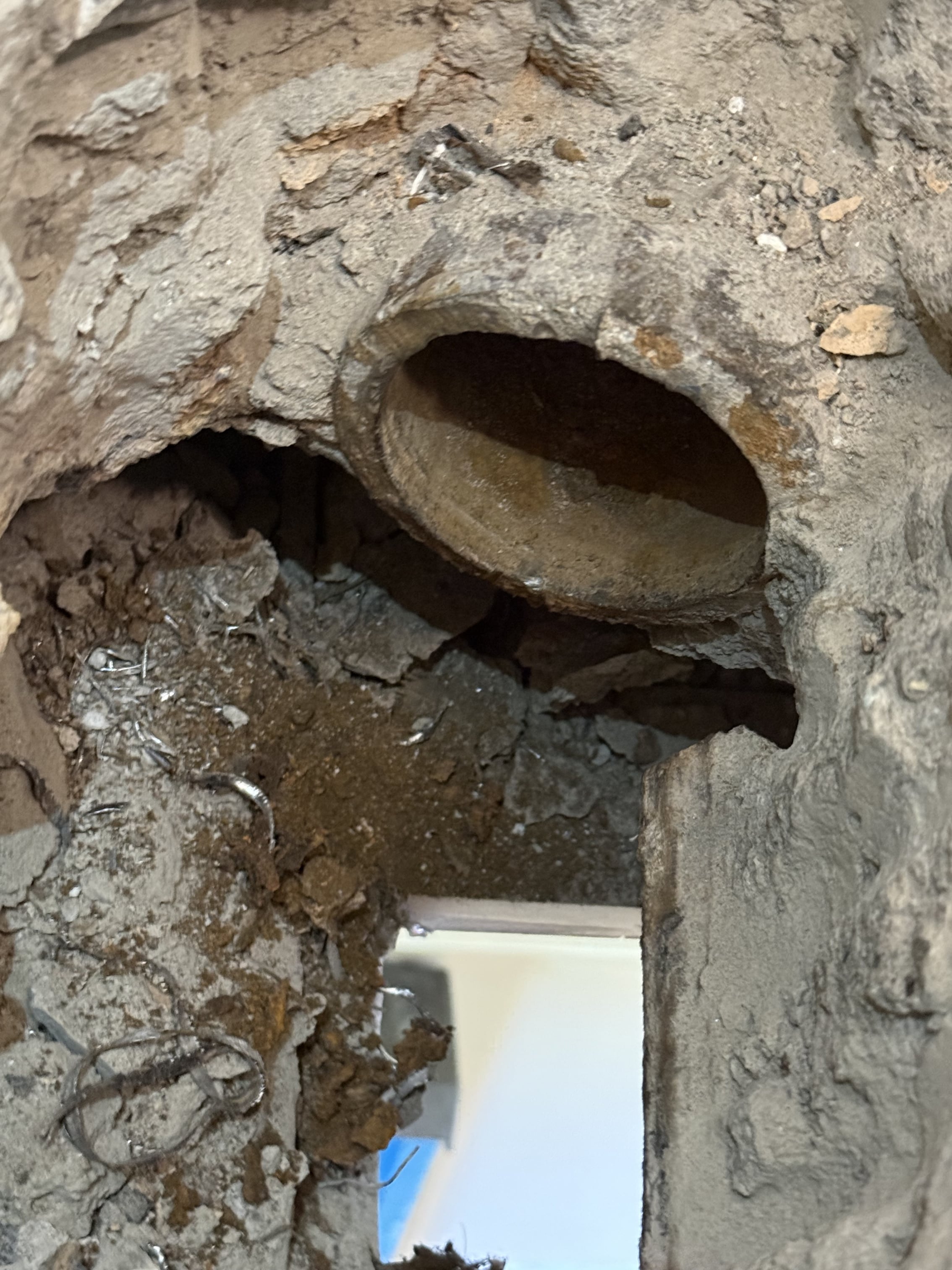
That looks to be a slightly oversized hub for 2" extra-heavy cast iron soil pipe.
Cast iron pipe comes in two sizes, "service" and "extra-heavy." You can see a chart of dimensions here: https://www.engineeringtoolbox.com/cast-iron-soil-pipe-dimensions-d_1751.html
Extra-heavy in 2" has a hub inner diameter of 3.06".
The fitting you need is a Fernco donut: https://www.supplyhouse.com/Fernco-22UX-205-2-x-2-Compression-Donut
That will allow you to transition to 2" PVC. Will that work? I don't know. Fernco makes two sizes of the donut, for service and extra-heavy, even though the hub inner diameter only varies by 0.12", or 1/8". Your hub looks to be about 3/16" bigger than extra-heavy.
The donut is only about $8 so it's worth trying. If it doesn't work, you can do it the old school way, pack the joint with oakum and seal it. You can pour lead on PVC, but there is a modern sealant specifically made to be a cold replacement for lead in these kinds of joints:
https://www.supplyhouse.com/Hercules-25215-Plastic-Seal-10-3-oz
If the Fernco donut makes a mechanically sound joint — ie, it stays together — you can also use the sealant with the donut.
0 -
Thank you for this. I'd forgotten all about the engineeringtoolbox.
Here's the fitting cleared away a bit. I'll head over to the supply house and see what they have.
Thanks again
Miss Hall's School service mechanic, greenhouse teacher, dog walker and designated driver
0 -
-
also, are you sure that is cast iron and not clay?
0 -
your attachment is just a bang graphic that says "unsafe" if you hover over it. not sure if it needs approval or if it never will show up.
1 -
-
seems to be ok now.
0 -
it could be 3.5" pipe too
you might want to measure it with a caliper and call fernco. their catalog doesn't give dimensions and they seem to have hundreds of sizes that aren't in their catalog.
0 -
It would be consistent with 2.5" iron pipe. There are two types of iron pipes, cast iron sewer pipe and schedule 40 steel pipe. Cast iron is joined with hubs, schedule 40 is threaded and joined with fittings. In cast iron 2.5" isn't a standard size, but it is in schedule 40. It's not uncommon to see them mixed in a drain system, usually what you see is schedule 40 for 2" and under, which then transitions to a 2" cast iron hub. The sizes don't exactly match but the hub system is very tolerant.
The spec sheet for schedule 40 is here:
https://www.engineeringtoolbox.com/ansi-steel-pipes-d_305.html
Did you save any of the pieces that were there?
0 -
If it's a hub, then you would use a push gasket as mentioned in my earlier post. Please note that plumbing is measured in inside diameter, or I.D. HVAC/R is measured in the O.D., or outside diameter. This is plumbing; all you should need to do is measure the inside diameter of the pipe, not the inside of the hub.
0 -
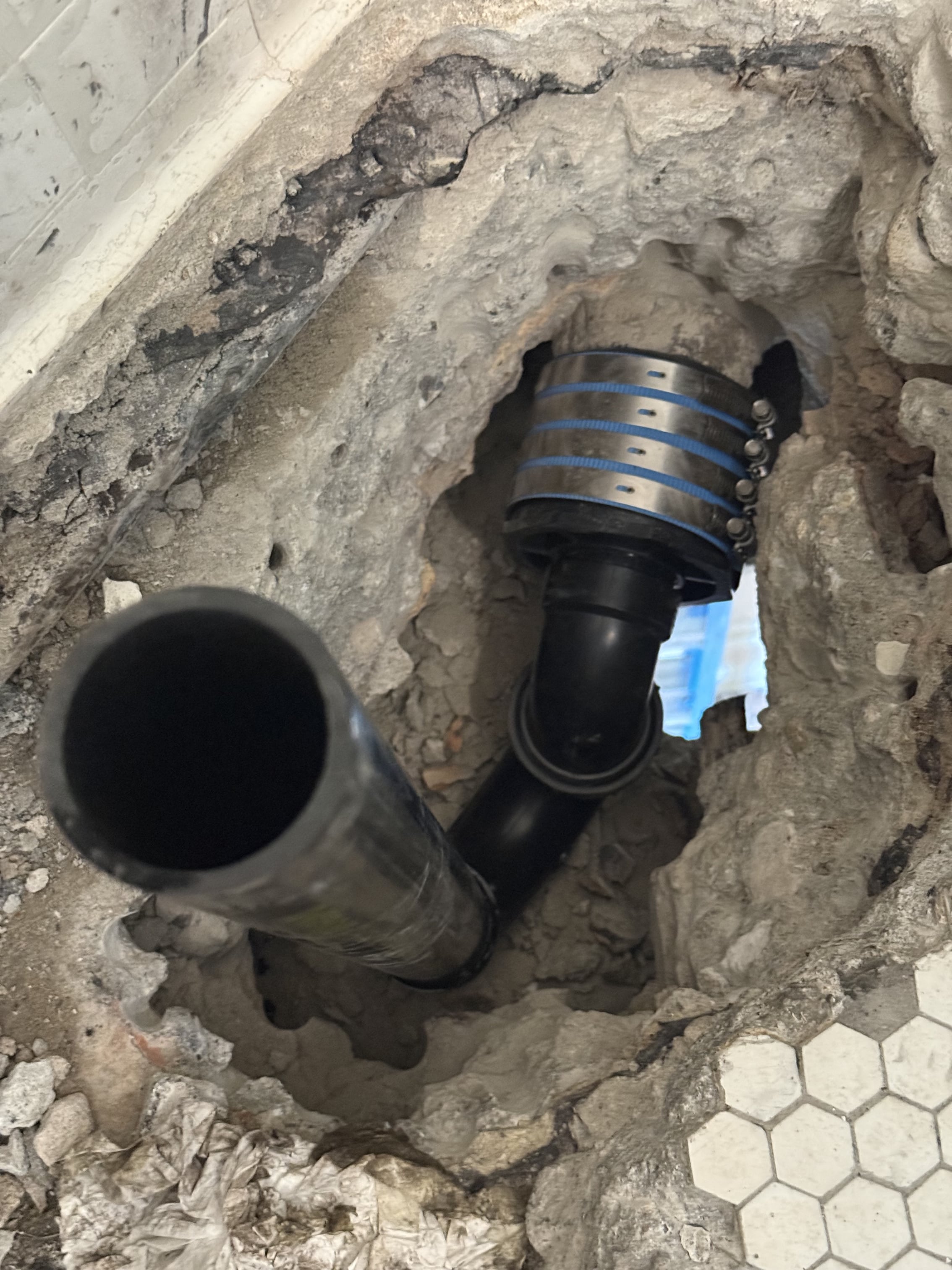
Definitely cast iron. I think it's 2" but really hard to tell. I've tried a 3" push bushing too big and a 2" is too small. Kind of hard to tell but this is a 4" clamp on the OD of the hub to a 4x2ABS adapter. I wont seal this in cement like it was originally but suspend a poured floor over it in some way to allow access from below. Is this completely hair brained?
Miss Hall's School service mechanic, greenhouse teacher, dog walker and designated driver
 1
1 -
Looks like to me.
0 -
Hair brained?
Miss Hall's School service mechanic, greenhouse teacher, dog walker and designated driver
0 -
If the old pipe is in as good a condition as the hub, you're golden. The ABS p-trap with bushing is a good solution and if it doesn't leak when you run a water stream down it with a hose, it passes muster. Just make sure it remains undisturbed as you progress.
8.33 lbs./gal. x 60 min./hr. x 20°ΔT = 10,000 BTU's/hour
Two btu per sq ft for degree difference for a slab2 -
It's worse than that. Plumbing is measured in "nominal size."
There are two main nominal size systems, IPS — iron pipe size — and CTS — copper tube size. An IPS fitting has the outside diameter of an iron pipe with an inside diameter of the nominal size — or did, when the standard was created. Since pipes are joined on the outside, the outside diameter has to be kept constant, even if new materials and manufacturing techniques mean the wall thickness has changed.
Here are the dimensions of different types of 3" nominal IPS pipe. First number is outside diameter, second is inside diameter:
Sch 40 steel 3.5 3.07
Sch 80 steel 3.5 2.90
Sch 40 PVC 3.5 3.068
Sch 80 PVC 3.5 2.90
Note that none of them have any dimension that is exactly 3" but all have the same 3.5" outer diameter.
Similarly, CTS is based on the outside diameter of a copper pipe with the nominal inner diameter. It's used for copper, PEX and CPVC.
Here are some specs for 3/4" nominal pipes of different materials:
Type K copper 0.875 0.745
Type L copper 0.875 0.785
Type M copper 0.875 0.811
CPVC 0.875 0.70
Type B PEX 0.875 0.709
Note that none of them have an inner diameter of 0.750" exactly but all have the same 0.875 outer diameter.
 3
3 -
Nice work, where did you buy the adapter?
1 -
@DCContrarian - Good information. I've always found it crazy that CPVC uses a different sizing standard than PVC.
0 -
That's what I was/am hoping to hear. I got the adaptor from our local F.W.Webb. The no hub connector fit easily over the cast hub and quite tightly over the adaptor. What you see there is just a proof of concept really. It flows water with out any leaking as is sits now. I will roll that clap over so the nuts are assessable from below if there's an issue in the future.
Miss Hall's School service mechanic, greenhouse teacher, dog walker and designated driver
0 -
what i would do i pack it with oakum and that lead substitute stuff to more or less seal and support it then slip that contraption over it.
or call fernco and get the right doughnut.
1 -
That will probably work and give years of trouble-free service, but it violates a core tenet of plumbing that a drain line should never decrease in size. The end of that hub is probably 2.5", the no-hub is 3". So you're creating a spot where the water flow will slow and debris can drop out, and then a constriction.
But it may be the best you can do.
0 -
That is a really good idea!!!!
Miss Hall's School service mechanic, greenhouse teacher, dog walker and designated driver
0 -
It's a 4 x 2 ABS bushing.
1 -
I thought that line serviced just the shower and feeds into main drain line so meets smaller into larger criteria.
1 -
Shower drains don't typically plug up do they?
I could see things getting hung up with a toilet drain or a kitchen sink especially with a disposal. Of course if someone mops the floor and uses the shower to dump the mop bucket I suppose it could plug.
Not to spoil the party I don't think MA. allows PVC or ABS in commercial buildings. But I am not a plumber and I won't tell.
2 -
There is no, or shall I say, has been no indication of ABS or PVC not allowed in a commercial setting.
The party is still on. 😉
1



Categories
- All Categories
- 87.9K THE MAIN WALL
- 3.3K A-C, Heat Pumps & Refrigeration
- 60 Biomass
- 430 Carbon Monoxide Awareness
- 133 Chimneys & Flues
- 2.2K Domestic Hot Water
- 6K Gas Heating
- 124 Geothermal
- 170 Indoor-Air Quality
- 3.9K Oil Heating
- 80 Pipe Deterioration
- 1.1K Plumbing
- 6.7K Radiant Heating
- 397 Solar
- 16.1K Strictly Steam
- 3.5K Thermostats and Controls
- 56 Water Quality
- 51 Industry Classes
- 51 Job Opportunities
- 18 Recall Announcements