Water Pipe Clogged

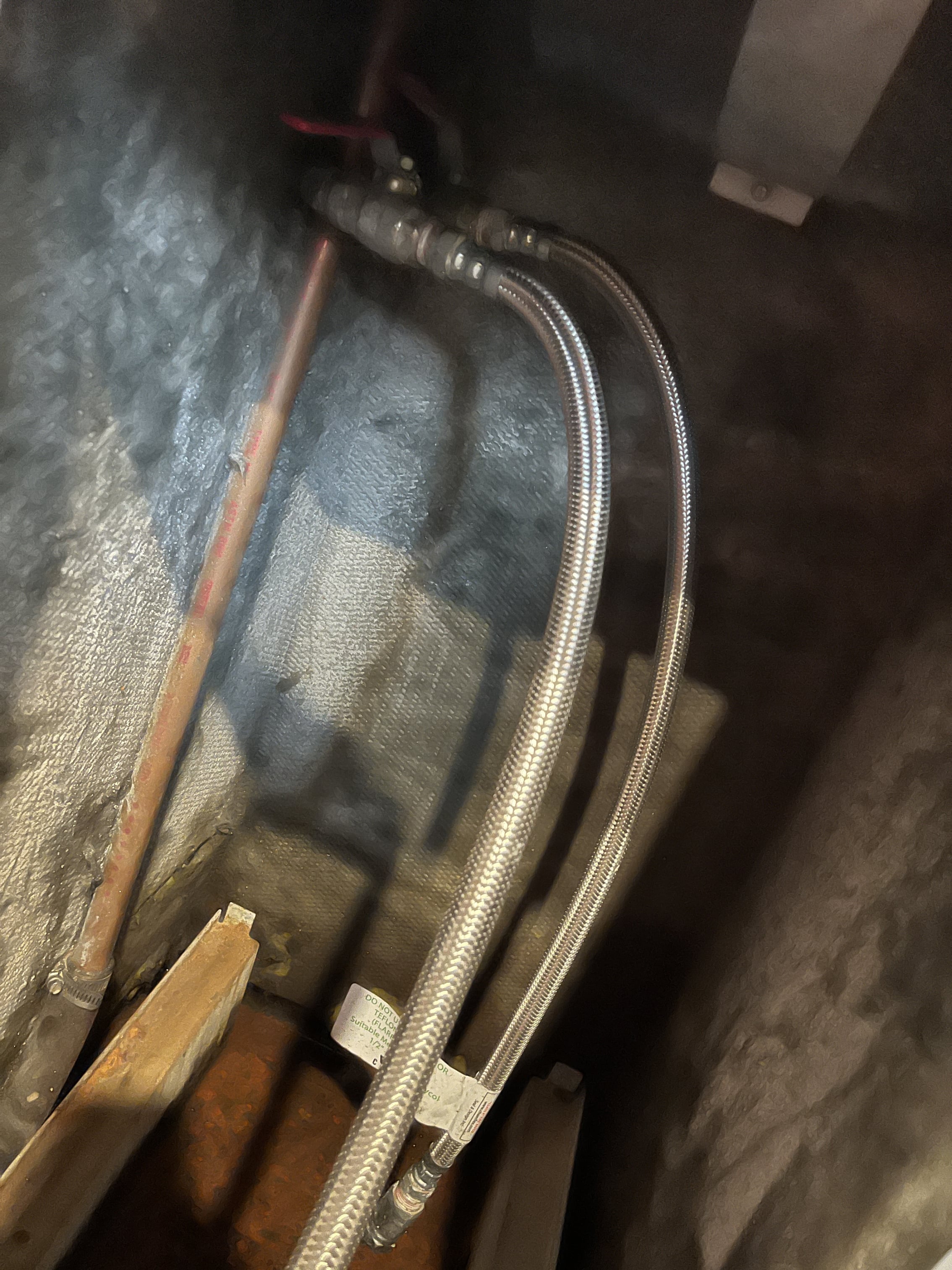
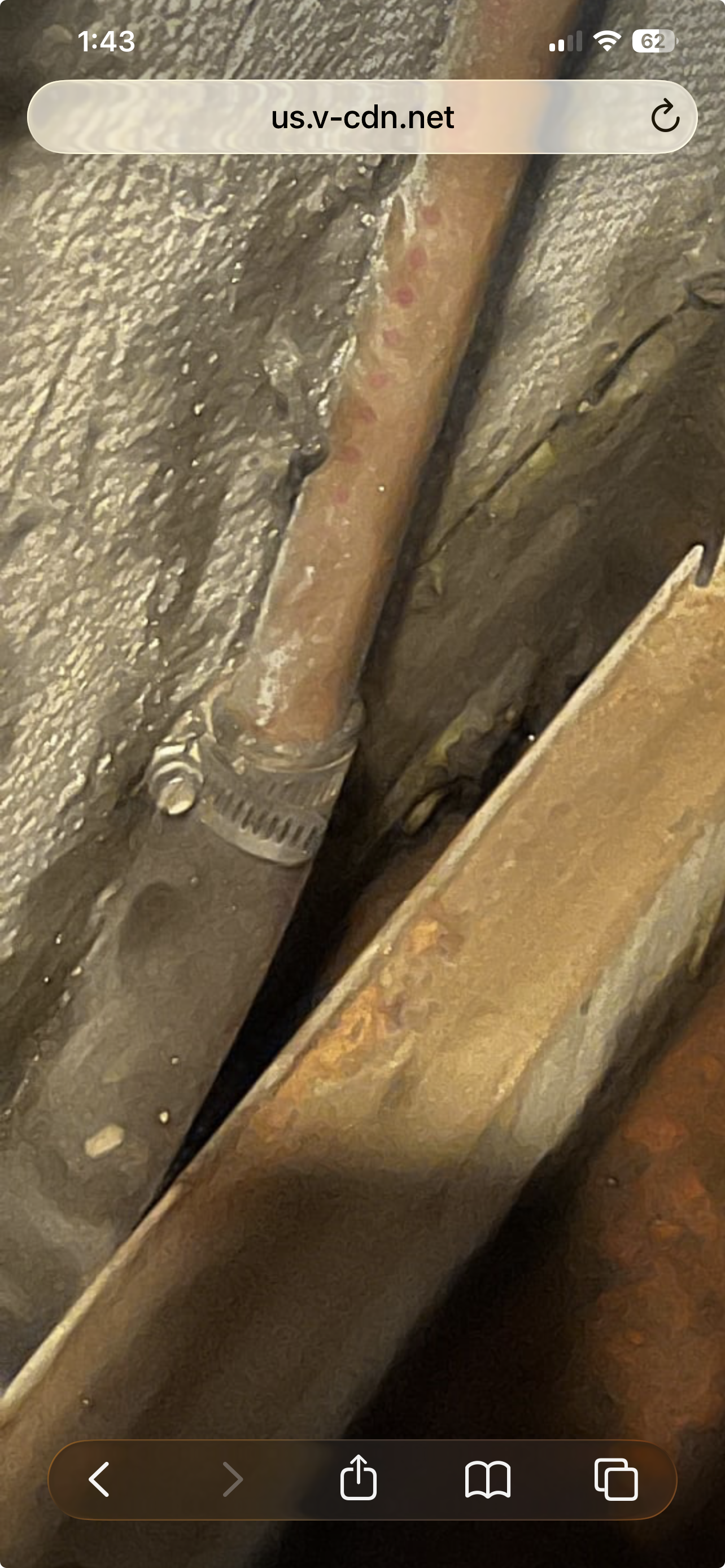
One of the two pipes (closest one) is clogged. When drained into a bucket, a cupfull of water comes out and then stops. Black sediment comes out with the water. This is in a high rise. I have drained two bucketfulls already and it has not helped. How can I get it unclogged?
Comments
-
What is this water pipe connected to? You might be able to disconnect it at both ends and flush it under full pressure… or replace it… but are you sure it's the pipe and not the valve?
Br. Jamie, osb
Building superintendent/caretaker, 7200 sq. ft. historic house museum with dependencies in New England0 -
need to be careful in a high rise as you really don't want a flood. I am assuming this is a water source heat pump connected to a water tower/boiler system.
This would be a closed loop system in a high rise. You should get water out of either hose when it is disconnected.
I would make sure the hoses is clear up to the valve the hose may have deteriorated or broken down.
I don't know if you are the homeowner or part of building maintenance, but I would get building maintenance involved. You could take the hoses off carefully and open the valve slowly and stick a wire in there but use caution you could spray water or black mud everywhere. Depending on the building height you could have a lot of pressure on those pipes
0 -
pull the hose off the valve and S L O W L Y open the valve.
if there plenty of flow replace the hose. Personally I’d use copper. I wouldn’t trust those hoses on tower pressure and chemicals.0 -
I have seen a bunch of those HP systems. They all use hoses I think due to the heat pump vibration. Never seen one without hoses.
Those systems work well.
Except for the occasional flood LOL😊😊😊
Two I worked on (unfortunately) one was all PVC with hoses on the heat pumps. and it is a shower system every year.
The other one was steel welded risers with PVC branches with hoses on the end to the HPs. That one has fared better. 13 story building.
0 -
I think it is all geothermal with no boiler.
Yes, water comes out of both pipes. Only one pipe seems to be clogged.
It is not the hose, the clog is upstream of the valve. If I leave the valve on, the flow slows to a trickle. Leave the valve turned off for a minute and a cupful of water gushes out when the valve is turned on before the flow slows to a trickle again. The longer the valve is left off, the more the initial flow of water when the valve is turned on.
0 -
is that on a cooling tower?
0 -
So the braided hose has no pressure out but the other braided hose has plenty of pressure going in?
I'm assuming that water is for the geo, not the fan coil because of the M copper and the hose clamp connection.
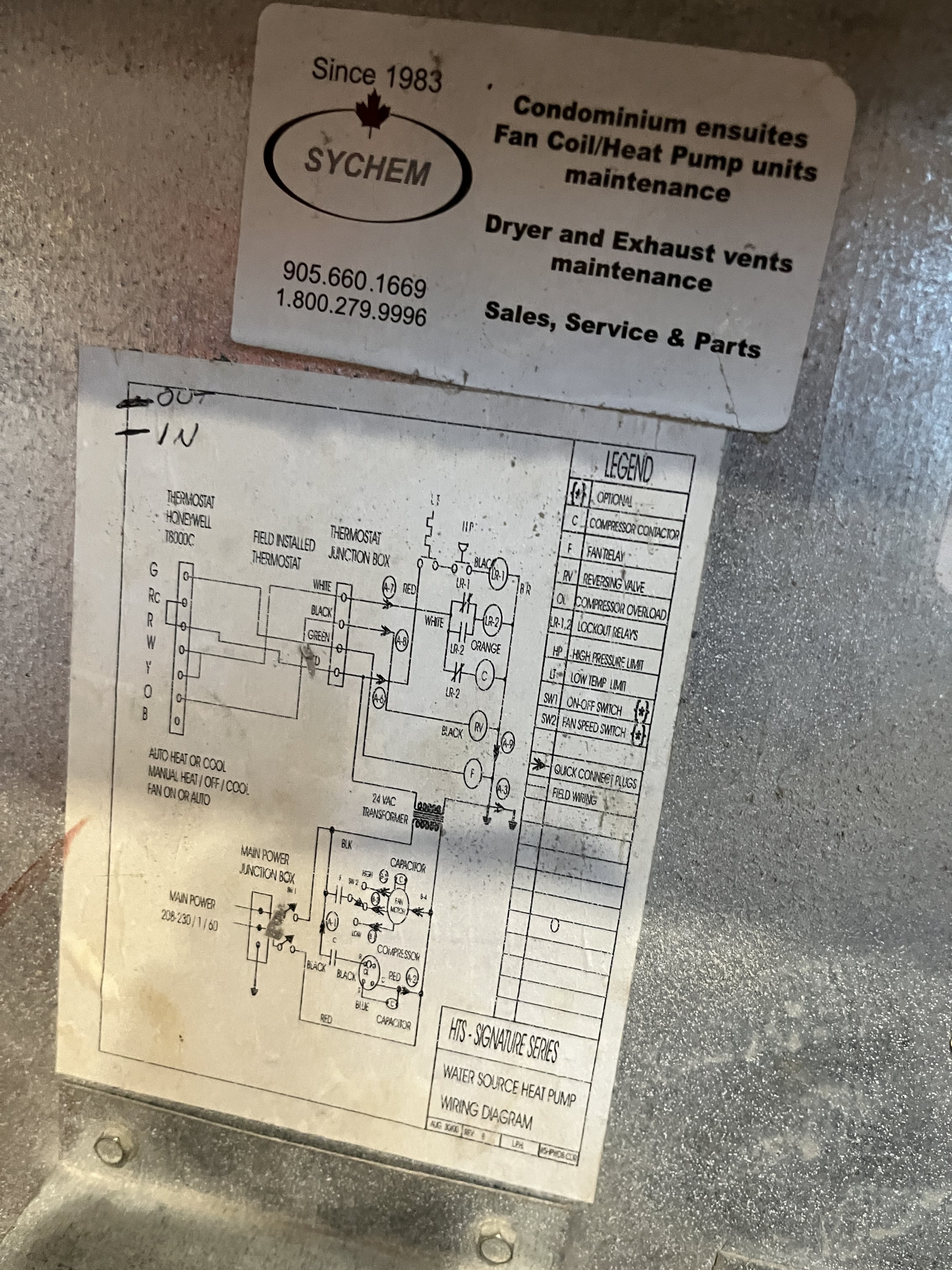
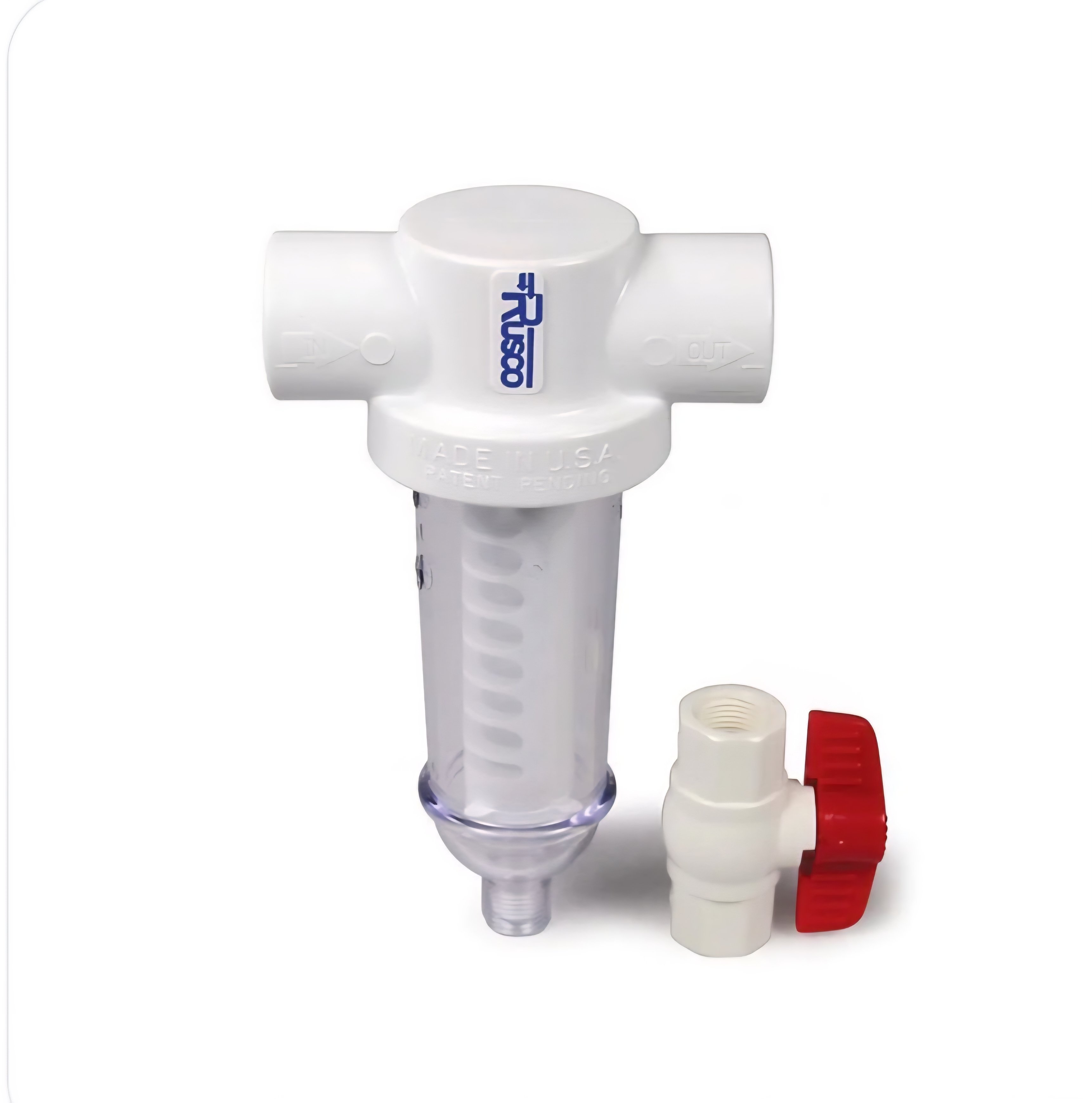
The diagram doesn't show a factory geo valve. If one was added, check for 24 vac. If its constant flow, I'd say the coax coil is clogged. There's a cleaner you can try that uses a recirculating pump setup and opposite flow. The manufacturer might recommend a specific type of cleaning agent. If there's room, pipe in a water filter.
 0
0 -
maybe the condensate drain.
If the system is geo water is this a closed loop with glycol? Or an open loop to ground water? I don't see an open loop to groundwater in a high rise without a heat exchanger.
Either way maybe opening and closing the valve repeatably will eventually clear the line.
0 -
Is it possible that the one that flows water is the supply (from the tower/loop, etc) and is under pressure, whilst (I love using that word) the one that flows a bit and slows to a trickle is the return and isn't under pressure? Doesn't seem like water should flow from both…
0 -
I will attempt to answer the questions the best I can with my very limited knowledge.
It is a closed loop system with glycol. There is a note posted on the enclosure about glycol concentration.
The M copper is a drain line and I think it is from the heat pump located in the floor above this. Both floors belong to this apartment.
Water comes out of both braided hoses under pressure when the valves are turned on. They both behave identically except the flow slows to a trickle in the first hose because of the clog.
All I have posted about is with the heat pump removed. I don't think the coax coil is a factor here.
0 -
Correct me if I am wrong. My guess as to how this system works is as follows. Heating in the winter and cooling in the summer is both achieved using the geothermal water. The heat pump only kicks in when the geothermal water is not cool enough in summer and not warm enough in winter.
The geothermal water comes in through one of the braided hoses and exits through the other braided hose.
0 -
no
The geothermal is where you extract heat from (heating) or get rid of it ( cooling) think of it as an outside air cooled condenser only with water Instead of air.
0 -
Isn't that what I am saying?
0 -
I’m just trying to clearly
0 -
a closed loop system needs a minimum pressure. What’s the loop pressure?
0 -
I don't know. All I can say after watching the flow when the valve is opened is the pressure is at least 15psi, maybe more.
0 -
Pressure is probably way above 15psi. The building has ten stories and this unit is on the ground floor. The ground floor pressure will have to be 60psi plus for the tenth floor units to have adequate pressure.
0 -
@george7941 , where do the braided lines connect on the other side of the ball valves? We can't see that. What do the other ends of braided lines connect to? NOT the coax coil? You seperated the coil and checked the flow rate? And there's no 24 volt geo water valve? Any closed loop geo I've worked on had pressure regulators for each system. The first floor should see the same pressure as the 10th floor.
0 -
Don't know what the valves connect to, it goes through the enclosure wall. I might have cut open walls to see what is on the other side of the wall.
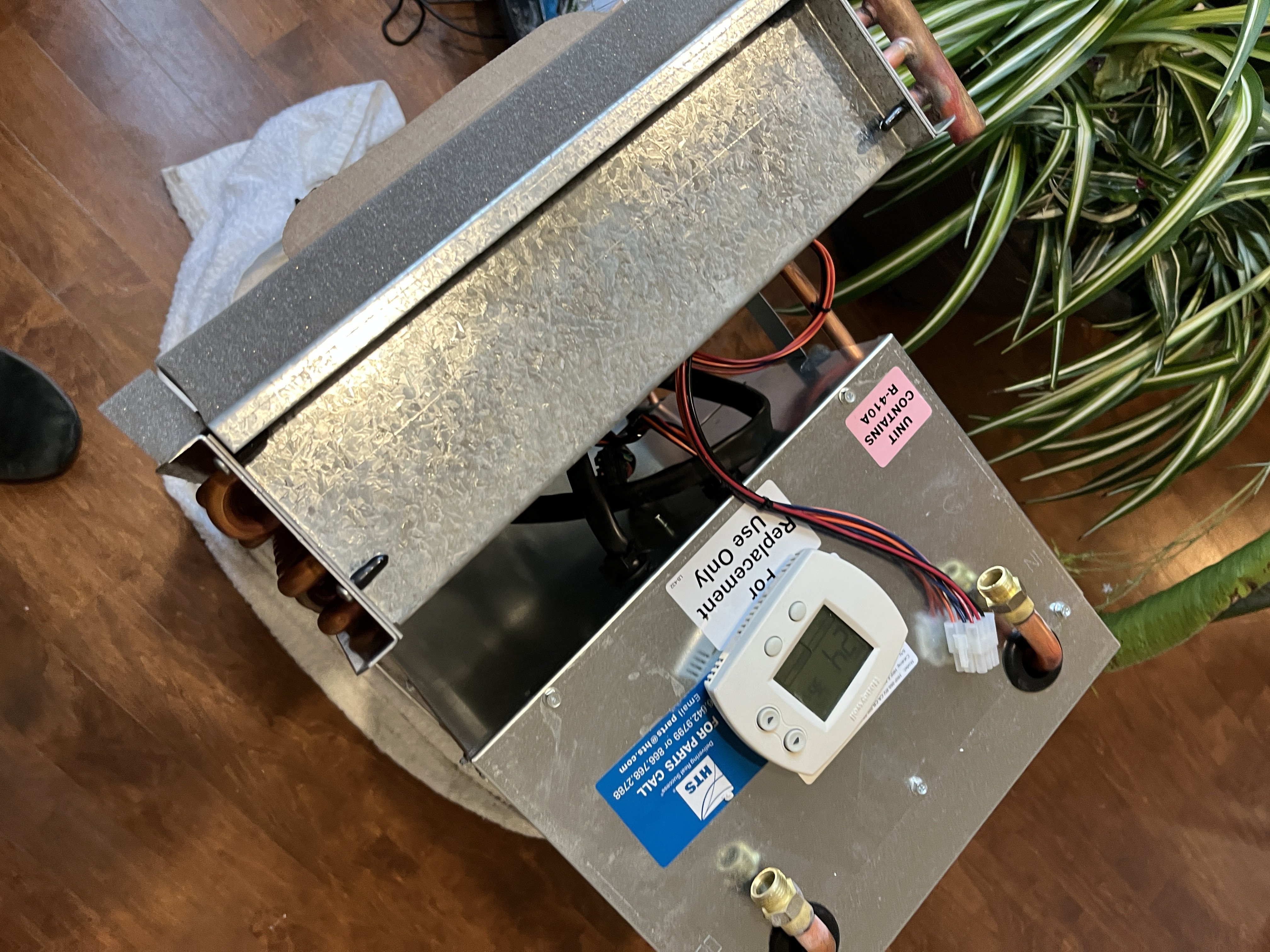
The old heat pump quit and the HVAC company ny friend hired brought a new heat pump and noticed that the flow through one of the hoses was low. They said they cannot proceed till the building clears out the clog.
I did not remove the old burned out heat pump, so I don't have answers to your other questions.
0 -
the pressure at the bottom of an 80’ 10 story, column of water would be around 35 psi.
Bob "hot rod" Rohr
trainer for Caleffi NA
Living the hydronic dream0 -
Why are you messing with the buildings tower water. Thats up to the building. Do not open or close valves, do not drain water again what you do can affect the entire building.
Have you contacted the engineers or super and reported it?
0 -
So this is a new WSHP? That information would've helped in the beginning. There's a regulator or something elsewhere if the other units aren't experiencing the same thing. Like @pecmsg said, contact building management. So there's a new unit because of a wrong diagnosis? Awesome.
0 -
if there are regulators, could the return only be expecting flow away from the coil, not to it so that it can't provide fluid to pressurize the return, it can only regulate the water returning from the supply and if there either are no calls or inadequate calls to provide the flow you are releasing then it can't maintain pressure in the return?
0 -
This has been going on for a month and was reported to the building management at the very beginning. They do not want to do anything about it, said it is not their problem and told my friend to hire a HVAC company.
I think some debris got into the building system, maybe through sloppy maintenance, and this unit was affected because it is the bottommost one. The unit directly above this is working well.
I assume there is automatic regulated feed water for the system like in a hydronic heating system and my draining water would not affect the system pressure. Of course it would dilute the glycol concentration.
0 -
Except this is a high end building with 10 ft ceilings, so it is more like 120 ft tall. I did the rough math with 2 ft of water column = 1 psi.
0 -
there may be a strainer somewhere but that really seems like the building's responsibility.
0 -
The hp systems I worked on never had pressure regulators. On was a 13 story building with the pump on the roof. 10psi up there. The other building was 4 stories with the pump in the basement. Never seen pressure regulators. If your on the ground floor of a high rise you may have 100psi or more.
120 feet =52 psi. in your case.
Sounds like something is blocked in that connection. Check to see if the units directly above and below you are working. If they are the problem is not the riser it is in your individual riser connection.
@george7941 I would suspect you are correct that you have a blockage being at the bottom of the riser.
You going to have to do some fishing………more like lawyer fishing. someone need to determine where the building system people are responsible for and where the tenant is responsible for. I would think the building people would be responsible to get water to the HP.
I would go after them hard and tell them about their pipes at the bottom of the riser are blocked.
Make them prove they are not blocked. Have them come up and open the valve.
Could always call a lawyer. A letter from him will probably get them moving
0 -
In the commercial building Ive worked in we were responsible up to the main isolation valves. The tenants were responsible for everything after that. Strainers, gauges, thermometers, hangers, insulation, equipment etc.
0 -
Since it sounds like the issue is with the building loop, this really is the building's problem, not the unit's. If the building continues to refuse to do anything, reporting it to a relevant city authority or a lawyer is likely the next step.
0




Categories
- All Categories
- 87.9K THE MAIN WALL
- 3.3K A-C, Heat Pumps & Refrigeration
- 60 Biomass
- 430 Carbon Monoxide Awareness
- 133 Chimneys & Flues
- 2.2K Domestic Hot Water
- 6K Gas Heating
- 124 Geothermal
- 170 Indoor-Air Quality
- 3.9K Oil Heating
- 80 Pipe Deterioration
- 1.1K Plumbing
- 6.7K Radiant Heating
- 397 Solar
- 16.1K Strictly Steam
- 3.5K Thermostats and Controls
- 56 Water Quality
- 51 Industry Classes
- 51 Job Opportunities
- 18 Recall Announcements