Oil Fired combi boiler?

I have been looking around trying to find a combi boiler system that is oil fired to replace my current hydronic heating system that includes a tankless coil for hot water. I see plenty of solutions that are natural gas and or propane, for me that represents a significant cost to pipe in a propane bottle since the existing oil tank is in the basement. That and my wife is strongly opposed to any propane.
Maybe my presumptions are also incorrect but i would believe a combi unit would be more efficient than my current setup especially for hot water. I also use mini splits for heat most of the time now since i have gone solar for power.
Comments
-
They make oil fired boilers with tankless coils in them, they are quite common try searching for "oil fired boiler with tankless coil" instead of "combi" since even though combi is a correct term it is more often used for mod/con combi boilers so that is probably what comes up the most with that as a search term
0 -
Actually what you have is pretty good — a quality modern oil boiler firing a hydronic system. The downside is keeping the boiler warm for the domestic hot water. You might gain some efficiency by using an indirect hot water heater, such as a SuperStor, heated by the boiler but storing a good deal of hot water, like a regular hot water heater. It works like a separate zone off the existing hot water heat.
What you will NOT find is an oil fired "combi" in the modern usage of the word — which also implies "mod/con" — that is modulating. Those do have slightly higher rated efficiencies, true — but they are only for LP or natural gas, as modulating an oil burner is really remarkably hard and there isn't that much to be gained anyway (oil is naturally more efficient that either LP or gas under otherwise identical conditions).
Br. Jamie, osb
Building superintendent/caretaker, 7200 sq. ft. historic house museum with dependencies in New England
 4
4 -
Thank you, not sure i want to go the route of adding a tank to the system with decreasing how much i use the system for heating the home. It does sip oil when it comes to using the system for hot water only, in the summer i only use maybe 50-60 gallons between spring and summer. Maybe i am just looking for savings that might not really exist these fuel prices are killing me.
0 -
-
We have a customer with this boiler and he loves it. Several of EK's people post on here, most notably @Roger .
0 -
Yes EK is the way to go, or you’re going to have to go to Europe or Asia for one.
0 -
you could also just get a separate oil fired water heater which might be the way to go if you don't use the boiler for domestic heating much. it is somewhat less efficient at transferring the heat to the hot water than a boiler would be but the insulted tank has less standby loss than keeping a boiler hot 24/7
0 -
Honestly, i did not know such a thing existed at all.
0 -
Bock makes them still.
0 -
I have a Bock tank which I use for hot water and hydro-air. I think that a switch will not save you any significant amount of oil. Perhaps changing equipment is not the best cost saving approach. Are you using a "full service" oil dealer? You could be paying for high cost services you are not using. I use a pay as you go dealer and rely on my plumber for service. There are also independent heating service companies. Pay as you go dealers are usually have a much better oil price. Also, consider if you need annual service calls. I only have my equipment serviced every other year because of low operating hours. I heat with wood
0 -
Around me, DHW off oil is more expensive than resistance tank, never mind the cost of cooling the heat dumped into the basement from firing a boiler to heat hot water.
If your electricity is more expensive a heat pump water heater tends to be the cheapest option plus it gives a bit of free dehumidification/cooling in the summer time. Lot of local utilities also run incentives for installing a HPWH.
0 -
Hay @TdiGuy, An oil-fired boiler with a tankless coil is about as close as you are going to get to a combi system with oil heat. However, I would not recommend that approach.
Where are you located? What is the price of Fuel Oil v. Electric in your area? And finally: Do you use wood heat to reduce your fuel oil usage? Answering those three questions will send you to or away from some suggestions above.
Gas-fired mod-con combi boilers are a step above that because they do not maintain a minimum water temperature the way an oil-fired boiler with a tankless coil does. That is why I say they are a step above. Even so, I still would not recommend a combi system, for at least two reasons.
The expected life of a tankless water heater is generally less than 17 years, even if all the required maintenance is completed properly during that time. With a combi system, both the heat and the domestic hot water come from the same device, even though those two functions have different demands and different potential problems.
Either the heating side or the domestic hot water side could become the determining factor in replacing the entire heat and hot water system. An expensive failure any time after the fifth year could mean buying a complete new system. That could happen because of a failed control board related to the heating system, a domestic hot water problem caused by improper heat exchanger maintenance, or any number of other issues that can occur.
That said, an oil-fired boiler that maintains a minimum temperature for domestic hot water all summer long is, in my opinion, a waste of energy. In most cases, that boiler is connected to a chimney. The chimney continues to draft, pulling heat out of the boiler’s heat exchanger while cooler basement air is drawn in to replace the warmer air going up the chimney. That standby loss can cause the burner to operate every four to six hours just to recover the heat lost up the chimney, even if you dont open a hit water tap during that time.
If you were going to install a gas-fired mod-con boiler, I would choose a heat-only model and connect it to an indirect water heater. That would give you the energy-saving benefits of outdoor reset control and the small water content associated with mod-con boilers.
Since you are suggesting that you want to stay with oil heat, I would choose the most efficient cold-start, heat-only oil boiler available in your area and connect it to an indirect tank for domestic hot water. That will get you as close as possible to the most energy-efficient oil-fired system you can have.
The burner is large enough to heat your home, so it has more recovery capacity than an oil-fired stand-alone water heater. The indirect tank is not connected to a chimney or any other vent system, so the standby loss is measured over a much longer period, often 12 hours or more, and as much as 20 hours on some well-insulated models.
That means if you go away for the weekend and forget to set the water heater to a lower temperature or vacation mode, the burner may only operate once for less than ten minutes every 12 to 20 hours to make hot water. That is very different from a tank of hot water connected to a vent system that can constantly pull heat up the chimney.
The main heating boiler can operate as a cold-start boiler, and the boiler temperature can drop as low as the basement temperature during that standby period. That will vent far less energy up the chimney than keeping a boiler hot all summer just to maintain a tankless coil.
Indirect water heaters also tend to last longer than tanks that have flames directly under them. Some even have lifetime warranties. It might be the last water heater you ever purchase.
Energy Kinetics has one of the best offerings, as you may have seen in a previous post. I would look closely at that one. Your fuel dealer may wonder if you started buying fuel from someone else!
Edward Young Retired
After you make that expensive repair and you still have the same problem, What will you check next?

 3
3 -
Thank you all. There are more options out there than i was aware of.
I am trying to consider these with my last oil refil costing 900$ for 200 gallons. No i do not use a full service oil company and i dont use a service where they just come to fill whenever they deem fit to send me oil. Its all an on call service and i frequently shop around before getting a fill since there are multiple companies in the area that do oil delivery. Frankly i have wondered if i could get a 50 or 100 gallon tank to tow with the car since for some reason diesel at the pump is less than getting oil delivered and its a nearly identical product ( except heating oil isnt getting hit with road tax like diesel does so in theory it should be cheaper right? )
Anyway, i have solar on the home so that reduces my electric cost a good deal, i have outpaced my system for the original design because i now also have an electric car and a couple dehumidifiers along with a chest freezer that were all added after the solar was designed and installed. I am really thinking about going with a hybrid heat pump water heater. The indirect tank seems like a great option as well and i can imagine that tank would be unlikely to break where at the hybrid water heater has a lot of complex components and is weirdly close to the same cost at least for the product itself they both are about 2k depending on what you look at.
I think for me a big question is can i move completely off oil? I am up in MA, and if i was to say just turn my boiler off the basement would have no direct source of heating. The mini splits cover the upstairs only. My thoughts are if i still will have to use oil to ensure pipes dont burst and such i might be better off with an indirect tank as opposed to a hybrid water heater tank. Would love your feedback on this, maybe i am thinking about it all wrong it would be great to know beforehand.
0 -
In eastern Massachusetts and in the area right around the Connecticut River you could probably get off oil with a cold climate heat pump or heat pumps and a heat pump water heater. You would NOT be getting off oil (or gas), as that is what much of the grid electricity you might use comes from. But it wouldn't be that much more oil or gas (power plant efficiency vs. heat pump efficiency is close to a wash in cold weather!). Now if you had enough solar PV and enough battery storage you could go off grid, but the capital investment to do that is very high.
Elsewhere in the State you are going to need a backup/cold weather heat source — so keep the oil for that. Mini-splits or more complete heat pump coverage can keep you somewhat warm even in pretty chilly weather — that's a matter of setting thermostats and warm sweaters and the like.
Br. Jamie, osb
Building superintendent/caretaker, 7200 sq. ft. historic house museum with dependencies in New England0 -
I am close to Fall River / Eastern MA area so moving completely off oil might not be wise. As much as i would love to detach from the grid i dont have that kind of money to invest in solar and battery stuff. I do hope to get a whole home battery in a few years but i would remain grid tied and use the battery in lue of starting up a generator, we have somewhat frequent power outages but they generally dont last a full day so battery backups work great.
But more on the topic, if i have to stick with oil it probably makese sense to go with an indirect water heater thing and i will see if there is anything that needs to be done to my existing setup since its a boiler with a coil for hot water. maybe its as simple as a setting to stop calling to heat up when the coil is cold.
0 -
The EK boiler would be a good match but how can you justify the expense for DHW? An oil fired HWH would solve the HW issue but not give you BU heat.
You could keep the boiler for BU heat, disable the tankless heater and put in a Heat Pump water heater. The cost of operating the HP water heater operation will be offset by your solar if the HPwh can't keep up.
1 -
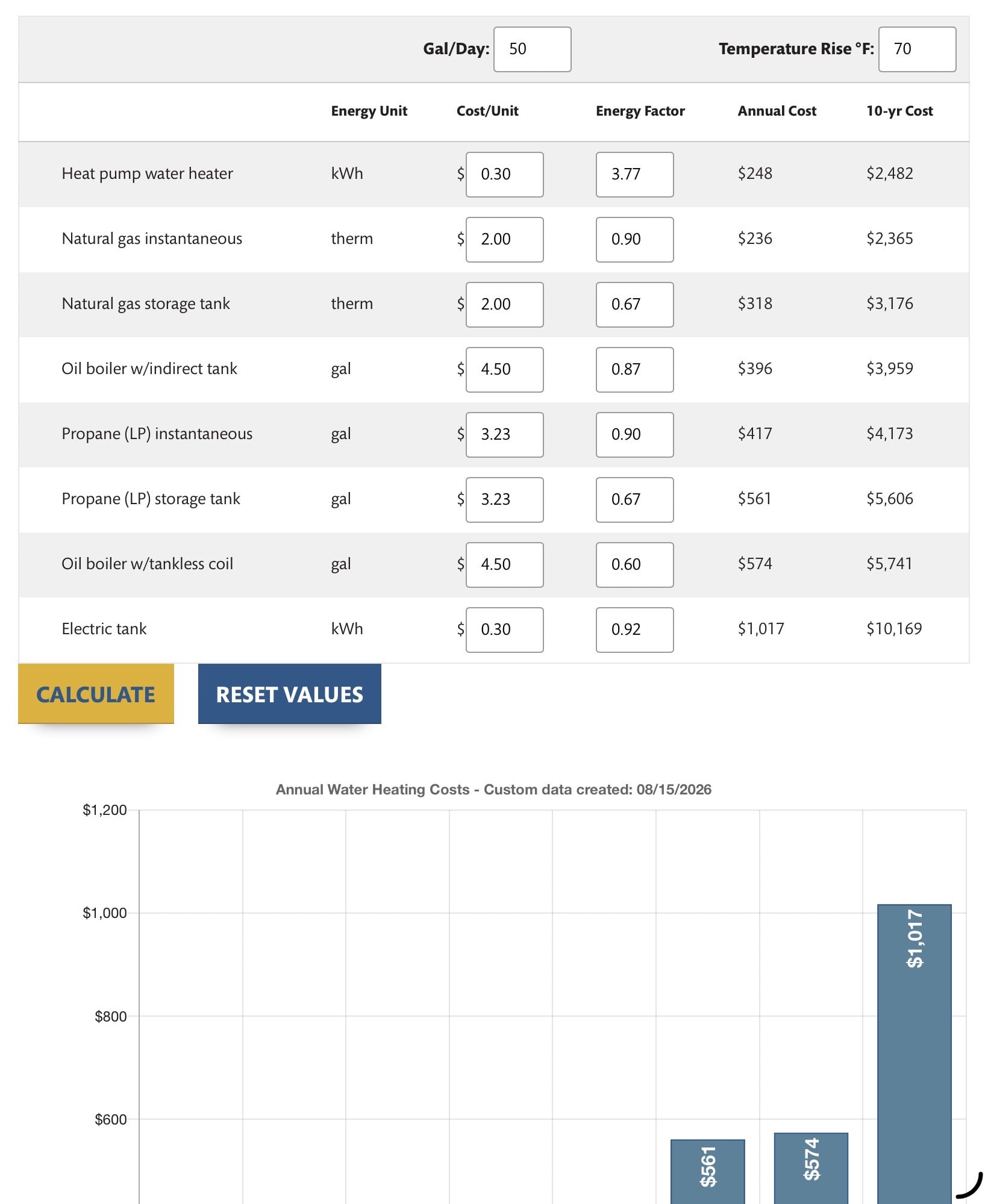
this calculator allow you to plug in your actual fuel costs.
Oil at 4.50, electricity at .30, here is a look. You are unfortunate to be paying twice the national average for a kWh.Even so a HPWH is the least expensive option.
Check at www.dsireusa.org
for incentive $$
 Bob "hot rod" Rohr
trainer for Caleffi NA
Living the hydronic dream1 -
That is quite insightful honestly. This explains my energy costs so well. It seems unless electricity goes up significantly and oil goes down a lot that the tankless coil is going to be the most expensive way to heat water for a long time. I absolutely love seeing data so clear like this. The hpwh shows as the clear winner on this. The indirect hot water tank is better than my current setup but the hpwh is a clear choice. I feel like the install itself would also be easier.
0 -
Bob "hot rod" Rohr
trainer for Caleffi NA
Living the hydronic dream1 -
Bob "hot rod" Rohr
trainer for Caleffi NA
Living the hydronic dream0 -
We were supposed to get 2 additional natural gas pipelines but that isn't happening
0 -
How is the solar PV penciling out? How long hasn’t been online?
if you have excess generation, and the feedback deal is not great, even a resistance water heater might be worth considering.Your inverter software or utility bill should show consumption and feed in.
We have a summer and winter power rate .13 or .15. But feedback is.05!
Bob "hot rod" Rohr
trainer for Caleffi NA
Living the hydronic dream0 -
My electric use has outpaced generation. But thats completely my fault. After install about 7 years ago i have added a chest freezer in the basement and 2 dehumidifiers a mini split and a electric car. The solar still saves me a good deal my power bill in the winter is typically 150$ and normally 50$ in the summer. With how expensive oil is i think its still in my best interest to switch to a heat pump water heater i just might need to upgrade my panel as well since all the slots are occupied and its a 150 main breaker. I called mass save and am awaiting to hear back.
0 -
They make an assortment of HPWH in regards to power required.
They have models that run on a 15A 120V all the way to a 240V 20A circuit, some are classified dedicated circuit models.
Obviously the low power draw would be slow to recover if it depended on the resistance element back up.
In areas where off peak rates apply, HPWH owners allow the tank to run to 140- 150 on off peak. Then add a 3 way mix valve at 115- 120F to extend the tank drawdown.
Where the tank is located has a lot to do with a successful installation. it has to pull heat energy from SOMEWHERE.
Also if you are used to large dump batches of DHW, like filling a large tub, the tanks are slow to recover.
I had a sample low current model.Filled it with 55° water, it took over 8 hours to get to 120°! This was in HP mode only. Some tanks kick in a backup element to speed recovers. But efficiency drops, you don't want that with your power rates.
Your average incoming water temperature has a bit to do with recovery.
So do some homework before buying a HPWH:
The amount of water you are used too.
Where the tank will be located.
Power available to supply it.
Bob "hot rod" Rohr
trainer for Caleffi NA
Living the hydronic dream0 -
I am thinking of a similar setup with a hybrid heat pump water heater where i will set the tank temp fairly high and use a mixing valve. I am a big fan of the thermostatically controlled mixing valves myself. I feel like combining that with some flow controls and i should be able to increase how long the showers stay hot. My wife and daughter love their long showers ( typically 30-60 minutes ) and my little boy likes to play in the tub sometimes for an hour at a go.
0 -
If you have a 150 amp panel you should have plenty of power. You may be able to get creative and use some tandem breakers or add a sub panel off the 150.
Changing the entire panel may open up a can of worms like an outdoor disconnect and other thing that are ridiculous and cost $$$
0 -
Maybe they have improved, but… my experience has been that if you do get a hybrid, and you use water as you describe, it will be using its resistance heat boost elements, since operating in heat pump mode you will be fortunate to get half of one shower out of it — and then wait 8 hours for it to recover.
Br. Jamie, osb
Building superintendent/caretaker, 7200 sq. ft. historic house museum with dependencies in New England0 -
Unless you define your DHW load, we are just guesstimating.
The common aoppoch, if you have the room is a large tank, 80 gallon at elevated temperature. This give you some dump load for a tub fill and leaves some additional water.
My 50 years experience tells me people get accostomened to the amount of water you provide them.
Give them a 40 gallon tank, they use all the water.
Give them 150 gallons and they use all the water.
It may be a learning curve with a HPWH if you are used to endless dhw.
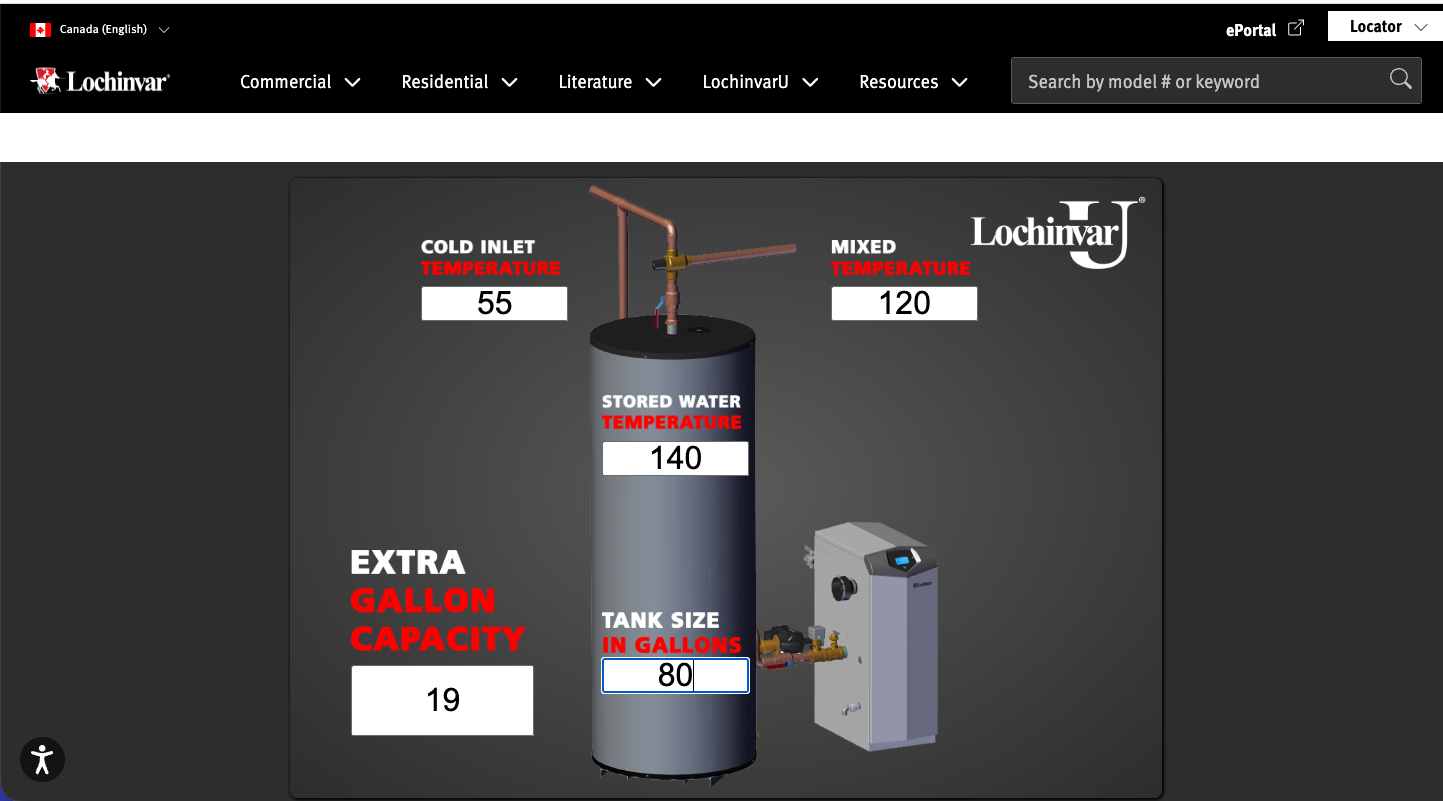
The online free Lochinvar calc (lochinvar toolkit) shows the effect of elevated tank operation.
So the 80 becomes a 99 gallon tank when mixed down rom 140- 120.
Keeping in mind the 80 will take longer to recover thn a 50, like through the night hours or more!
 Bob "hot rod" Rohr
trainer for Caleffi NA
Living the hydronic dream0 -
Interesting that you want to go into the fuel transportation business "Frankly i have wondered if i could get a 50 or 100 gallon tank to tow with the car since for some reason diesel at the pump is less than getting oil delivered and its a nearly identical product". What would you be willing to pay for such a trailer? Would you consider doing it for a friend? If you did this for a friend how much would you charge them? Would you sell them the fuel at the same cost that you paid? Would you then offer free delivery? Would you want to get some money for your time or for the gas it takes to make that fuel delivery for them?
Once you own the trailer, you could find a gas station that has "Off Road Diesel" with no road tax added. Farmers buy that stuff all the time for their tractors. It would have a redish/purple dye added so the government coild tell there is no road tax. We used to sell it at a rural gas station we owned in South Jersey many years ago.
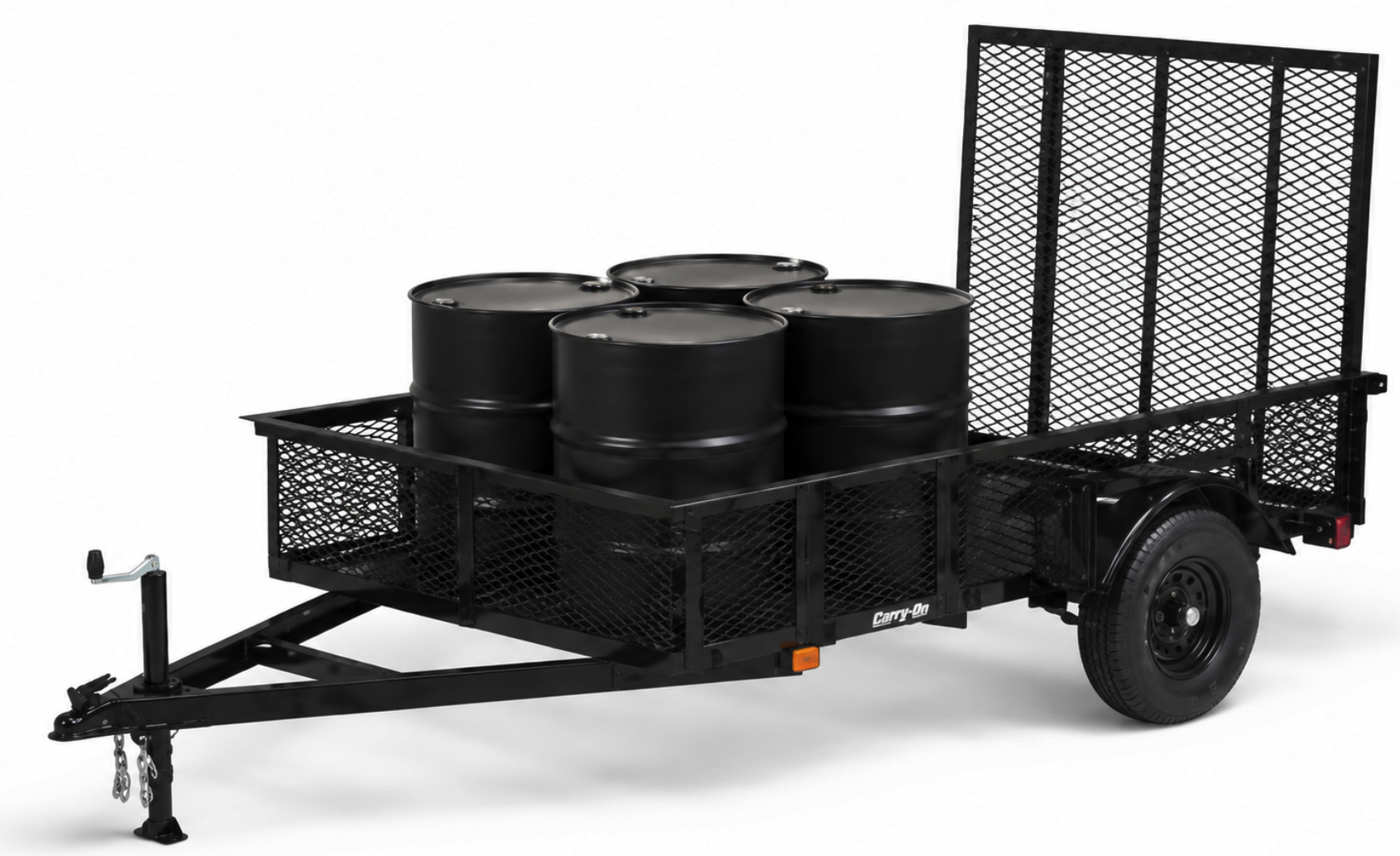
Would this work for you? You might want to add the cost of a pump and explosion-proof motor. You wouldn’t want a spark from an open motor pump to be that close to any fuel vapors that may be escaping from those tanks while transferring the fuel.
Have you ever looked at the electrical wiring on a fuel delivery truck that operates the turn signals, windshield wipers, and such? It is all enclosed in explosion-proof junction boxes, and each cable is sealed in explosion-proof conduit. The truck and tank manufacturers do not want a spark from a loose wire to accidentally ignite any vapor. This trailer does not offer that electrical protection.
Then you might want to look up your state and local fuel transportation rules to see whether you are allowed to do that without a Commercial Driver’s License (CDL) with a HazMat endorsement. Under 119 gallons for personal use should generally be no problem. Doing it for others may not be subject to the same rules.
OR
You could ask the fuel dealer to sell you the fuel for only a few cents over his cost and then pay a delivery fee. That fee could be as much as $150 for a single delivery, so you would want to get as many gallons as possible in that situation.
For example, suppose a fuel dealer pays $3.25 per gallon for fuel at a refinery or tank farm near a major port such as Paulsboro, NJ; Newark, NJ; Providence, RI; Portsmouth, NH; Portland, ME; or Long Island, NY, and then trucks it 50 to 100 miles to his local terminal or loading rack before reselling it to you at around $4.50 per gallon.
If you could get it from him for only 8 cents over his cost — say $3.33 per gallon — and pay the driver a $150 delivery fee, then 100 gallons would cost $333 for the fuel plus $150 for delivery, for a total of $483, or $4.83 per gallon.
But if you bought 200 gallons at $3.33 per gallon, the fuel would cost $666. Add the same $150 delivery charge, and the total would be $816, or $4.08 per gallon.
I wonder if you would purchase fuel from a dealer that advertised
FUEL OIL
Cost between rack and customer
Approx. cost/gal
Rack price
$3.25
Terminal/loading/credit costs
$0.03–$0.08
Delivery-truck fuel, maintenance, tires
$0.10–$0.18
Driver wages, payroll taxes, benefits
$0.15–$0.25
Truck depreciation/lease/insurance
$0.08–$0.15
Office, dispatch, billing, phones, software
$0.08–$0.15
Liability/environmental insurance
$0.04–$0.10
Bad debt, spills, shortages, miscellaneous
$0.03–$0.08
General overhead/profit allowance
$0.20–$0.40
Delivered selling price
about $4.50
Edward Young Retired
After you make that expensive repair and you still have the same problem, What will you check next?
 1
1 -
OMG. I was unable to post on this thread and all of a sudden my post that would not show just showed up. That was weird.
Edward Young Retired
After you make that expensive repair and you still have the same problem, What will you check next?
 1
1 -
Not interested in doing this for others at all. I will have to check into it hopefully i can find something that i can simply tow that has a fill on the top and a drain on the bottom. With a setup like that i can likely at worst use a set of ramps and empty it into my oil tank without making things too complicated. I get that heating oil companies have overhead to take care of. But if i can get the same thing or what is virtually the same from a few miles from my house at retail cost paying road tax for less it is most certainly in my best interest.
0 -
If you are going to tow a trailer with fuel on it, check your local and State laws VERY carefully. There may be an upper gallon limit (typically 100 gallons) that you are permitted to have without a CDL and certification for handling fuels.
Also check your truck's insurance. If you are not specifically covered for auxiliary fuel tanks or transfer tanks, you aren't covered at all, and your liability exposure is going to be huge.
And once you have all that nicely lined up, please do the rest of us a favour and go and take a few lessons on handling a trailer with a significant volume of liquid on it. They don't trail the way an ordinary load trails, and not to put to fine a point on it i don't want to be behind you when it starts to sway and you jackknife it.
Br. Jamie, osb
Building superintendent/caretaker, 7200 sq. ft. historic house museum with dependencies in New England1 -
Oh and one more thing — if you have a decent truck you might find it a good deal cheaper — never mind a lot safer — to invest in a transfer tank which mounts in the truck bed and has its own transfer pump.
@EdTheHeaterMan 's picture of 4 55 gallon drums on a utility trailer terrifies me.
Br. Jamie, osb
Building superintendent/caretaker, 7200 sq. ft. historic house museum with dependencies in New England0 -
@Jamie Hall said: "@EdTheHeaterMan 's picture of 4 55 gallon drums on a utility trailer terrifies me."
That s the point.
Now lets see how the numbers work out.
Retail oil price delivered in your area. You recently paid about $900.00 for 200 gallons that is roughly $4.50 per gallon.
You mentioned that you could get diesel including the road tax for less. According to the information available Diesel at the pump is approximately $5.50 per gallon in your area, but a month ago it may have been less. So lets say it is actually $4.28 per gallon.
An you burn maybe 600 gallons per year.
That is $4.50 less $4.28 or a difference of 22 cents per gallon.
a 100 gallon tank will hold about 95 gallons. (you need some air space for expansion) so that is about a savings of $20.90 per load of fuel. That is a savings of $125.00 to $130.00 per year.
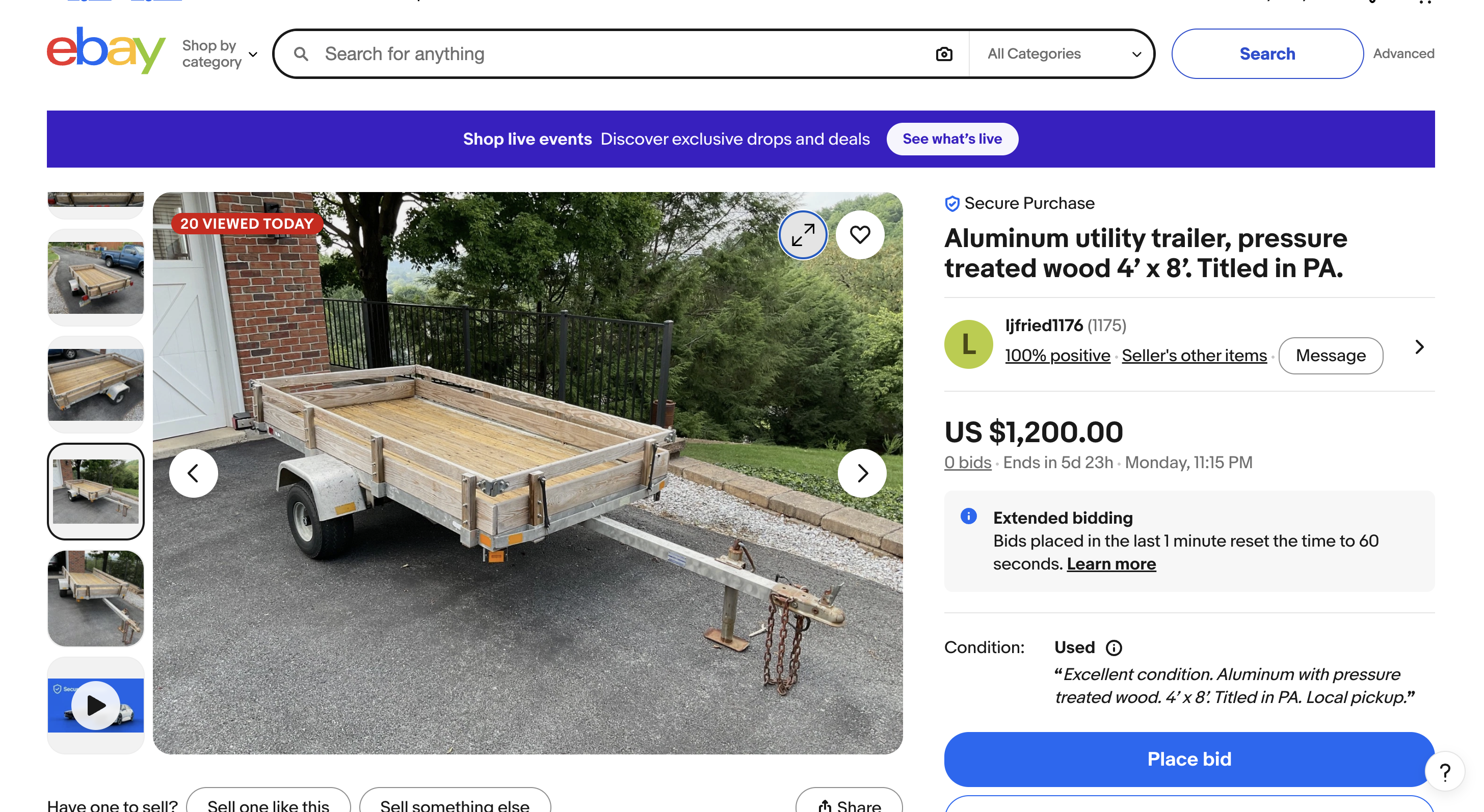
Now lets look at the cost of that trailer you want to get. eBay has several used utility trailers for around $1200.00
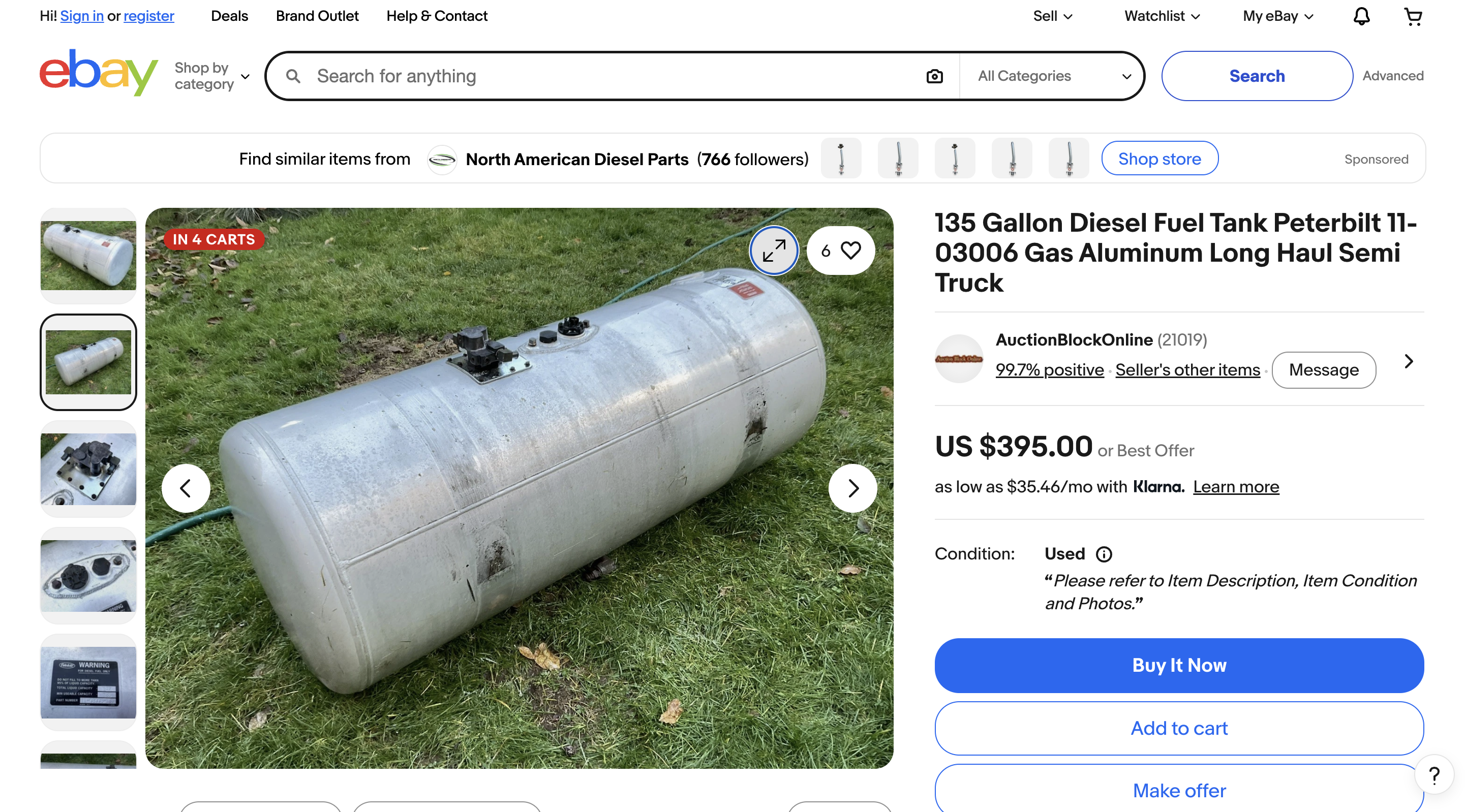
There is a used 135 gallon aluminum diesel truck tank for about $395.00
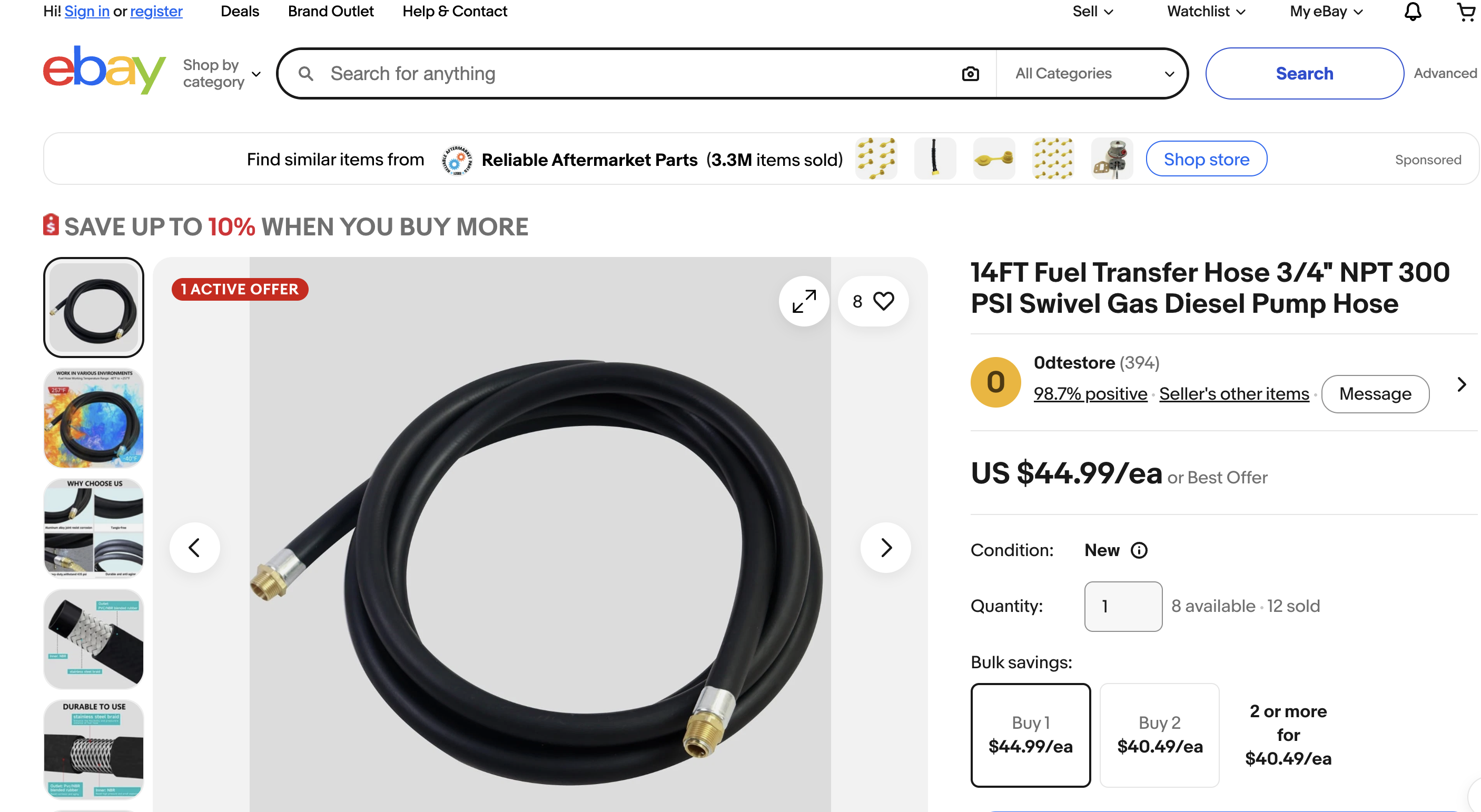
then a diesel hose to connect to the bottom of the tank at about $45.00
Perhaps some lumber and hardware to make the tank permanent for $150.00
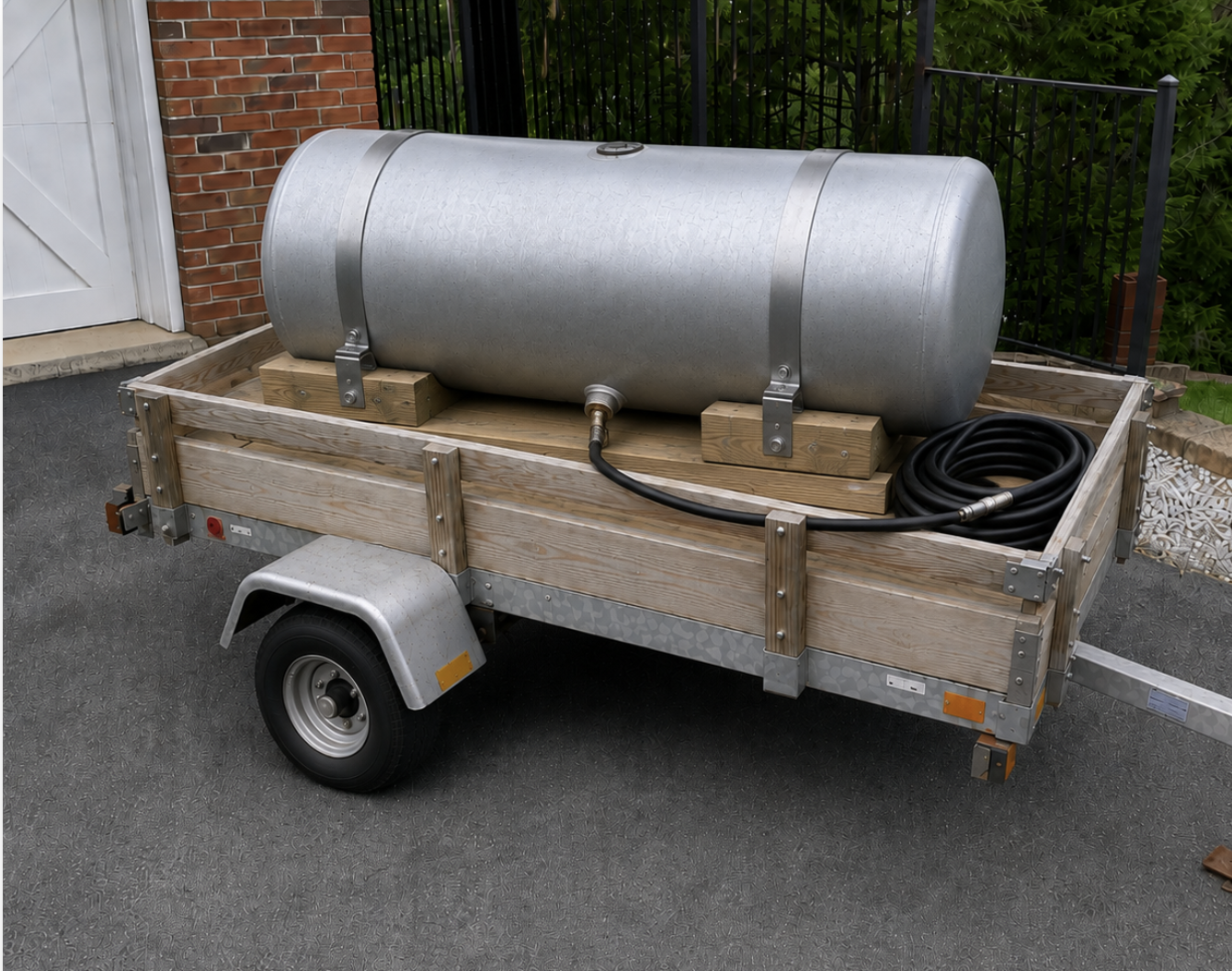
That comes to about $1,800.00.
At a savings of $125.00 per year, you will save enough on fuel in about 15 years to pay for that investment. Then you can start saving big time.
Maybe if you were to let your friends use the trailer for a fee, you can recoup a few years sooner.
Of course, you might need to repack the trailer wheel bearings, fix a busted tail light or even change a flat tire over the 15 years. But still…. You are saving big time on that fuel.
Edward Young Retired
After you make that expensive repair and you still have the same problem, What will you check next?
0 -
Did you mention how much an hour you make at your day job? Let’s look at that.
After spending several hours of time putting this contraption together, let’s call it 8 hours, since there will be time at Home Depot getting straps, lumber, and hardware, then several hours of actual time on the assembly project.
And where are you going to store that trailer that you use 6 times a winter?
Then, of course, there will be “Fuel Day” that takes a few hours out of your weekend. Connecting the trailer, the safety chains, testing the brake lights and turn signals, and you are ready to go to the filling station.
Uh-oh… the price was 3 cents lower yesterday when you were working… not saving as much today… But you still need fuel.
That takes 20 minutes to get to the filling station. Then you fill the tank for 15 minutes because the pump is a little slow today. 120 gallons at 8 gallons per minute. Then you do the payment thing and hang the hose back up, so you are there for at least 25 minutes, then the 20-minute trip back home.
There is an hour every time you fill up. Then there is the other hour it takes to put the fuel into the fuel tank at your home. Probably 2 hours each load of fuel. Aren't you glas you got the 135 gallon tank. then there is putting the trailer back into the storage spot. Are you any good at backing up a trailer?
So your time at work is worth $____.00 per hour, and your time at home is not worth anything, so all that time is free. That's why they call it FREE TIME. You don’t have to pay yourself for all that saving you will be looking forward to.
My friend, the fuel dealer, sold fuel oil to his friend of 35 years, and one day his friend purchased fuel from his competitor because it was 4 cents lower in cost. The total delivery was 150 gallons.
The fuel dealer asked his customer friend why. The customer friend said it was 4 cents cheaper.
The fuel dealer said, “So for $6.00, you couldn’t call me and say that the price of fuel was lower and give me the courtesy of asking me about it? I would loan you six bucks if you are that hard up. We went to high school together and have gone fishing every summer for the last 30+ years, and for $6.00 you fire me?”
Think about what you are actually saving and what it cost you to save it.
Edward Young Retired
After you make that expensive repair and you still have the same problem, What will you check next?
0 -
There is one really big factor thats not being accounted for here also. Not having to rely on someone else and their annoying habbit of having next to no communication. It might as well be a 1 way street when it comes to talking to fuel oil delivery companies. I call request a fill then hope to hell they respond within a day or 3 never knowing when they will show up. Sure i value my time, to a point. I value reliability much more and i am the most reliable person i know. I am the paranoid person with a generator, a extra gas can and backup plans for when things go south. When i am a customer i am just another customer to these people and often i can tell they simply do not care if there is any urgency to my request at all. If i can just hook up a trailer and go out to the gas station that is a literal 5 minutes down the road and get diesel man that sure is a lot more convenient than calling someone and hoping they show up within a day or 3.
0 -
@TdiGuy , when I heated with oil I kept several 6-gallon jugs filled. If I ran out, I would dump them in the tank and that would be enough to get through the night. Then I'd refill them and call the oil company. Normally the fuel truck would arrive the next day. Just sayin'…………
0 -
In my experience just sign up with a decent company for automatic fill and then you don't have to deal with these issues.
You're not saving $$$ going with a cheaper company that doesn't have any service. If you are an established customer, they will not want you to run out of fuel.
The oil meters on the trucks are sealed and checked yearly so the oil company is not robbing you.
If you are not a regular customer, why should they rush when you call?
0 -
they respond within a day or 3.
How many companies do you call
when I was on oil I they’d be there within a day or two at the most unless it was an emergency
0 -
@TdiGuy said: "There is one really big factor thats not being accounted for here also. Not having to rely on someone else and their annoying habbit of having next to no communication. It might as well be a 1 way street when it comes to talking to fuel oil delivery companies. I call request a fill then hope to hell they respond within a day or 3 never knowing when they will show up. "
Then you are purchasing fuel from the wrong oil company.
When I was driving a fuel oil delivery truck, we scheduled deliveries to the exact minute. None of this “sometime Tuesday” nonsense. If your appointment was for 2:15 PM on Tuesday, we were there at 2:15 PM on Tuesday. Not 2:14. Not 2:16. At 2:15 you could practically set your watch by the sound of the truck backing into the driveway.
It was a difficult company to work for because the boss would hand you the schedule and apparently expected you to obey the laws of both transportation and physics.
I remember talking to drivers from other companies at the loading rack, and they thought we were completely insane.
“You mean the customer knows when you’re coming?”
“Yes.”
“And then you actually show up then?”
“Yes.”
“What kind of communist operation are you running over there?”
But my boss took the customer’s concerns seriously. He used to say, “Our customers have lives too. We can’t expect them to sit in the front window all day staring down the street waiting for an oil truck like a Labrador waiting for its owner to come home.”
We charged a premium for our fuel because we provided premium service. You made an appointment, we delivered the oil, and then you were free to continue with the rest of your life.
No fasting. No prayer vigil. No burning a candle in the window hoping the fuel truck might appear before Thursday.
If you had a 2:15 delivery, you could schedule a dentist appointment for 3:00, dinner for 5:30, and your second marriage for 7:00 with complete confidence.
Apparently somewhere along the way the fuel oil industry replaced “appointment” with “we’ll get there when we get there.”
So yes, if ordering heating oil currently involves calling the company, leaving a message, checking your tank gauge every 20 minutes, staring out the window for three days, and eventually seeing a truck pull into the driveway like the second coming of Christ...
You need a better oil company.
Edward Young Retired
After you make that expensive repair and you still have the same problem, What will you check next?
0











Categories
- All Categories
- 87.8K THE MAIN WALL
- 3.3K A-C, Heat Pumps & Refrigeration
- 60 Biomass
- 430 Carbon Monoxide Awareness
- 133 Chimneys & Flues
- 2.2K Domestic Hot Water
- 6K Gas Heating
- 124 Geothermal
- 170 Indoor-Air Quality
- 3.9K Oil Heating
- 79 Pipe Deterioration
- 1.1K Plumbing
- 6.7K Radiant Heating
- 397 Solar
- 16.1K Strictly Steam
- 3.5K Thermostats and Controls
- 56 Water Quality
- 51 Industry Classes
- 51 Job Opportunities
- 18 Recall Announcements