Mitigating extreme water hammer spikes in high-head plumbing loops?

Hey everyone, I am currently remodeling an old rural hydronic heating layout and upgrading the domestic supply loop from a hillside spring, but I am running into massive water hammer issues that are rattling the copper risers whenever the check valves cycle under high head pressure. To better understand how to naturally absorb or handle severe fluid momentum spikes without relying on constant mechanical expansion tanks or electrical pressure regulators, I’ve been analyzing the heavy-duty valve physics used in classic off-grid plumbing systems. For example, studying the heavy check-valve cycles and pressure-vessel mechanics and how industrial setups safely manage continuous water hammer shocks to lift water without external power grids. For those here who design or fix high-head domestic plumbing networks in old houses, do you prefer building massive air cushions directly into the vertical pipe manifolds to dampen extreme pressure spikes, or do you install heavy-duty spring-loaded water hammer arrestors right at the primary feed lines?
Comments
-
Is the water hammer happening on the hydronic heating system or the domestic water system? They should be separate water systems in most cases.
Are you using a closed system for the hydronic heating? That would require expansion tanks of some type for the closed system to allow for expansion, otherwise your relief valves would be releasing hot water and when the water cools down on a closed system the system may drop to an extreme vacuum without an expansion tank to allow that expanded water a place to go on system temperature rise and a place to come from on system temperature drop.
Edward Young Retired
After you make that expensive repair and you still have the same problem, What will you check next?
0 -
What type of check valve?
Swing checks with their long travel length are more prone to water hammering. A spring loaded check with a soft seat, 1/4- 1/2" travel lower pic small travel length may help. Notice the difference below between a swing and spring check.
Another potential issue with a swing check is they need a full flow to push the gate all the way open, so they should be sized by their Cv number not connection size. Some checks, like pictured below have a space for the gate to swing up out of the flow. Lower designed checks like some Y pattern, the gate stays in the flow when fully open.
Sizing is important especially with variable speed pumps that may not open the gate on lowest speed settings. You may have a gate floating mid point between open and close.
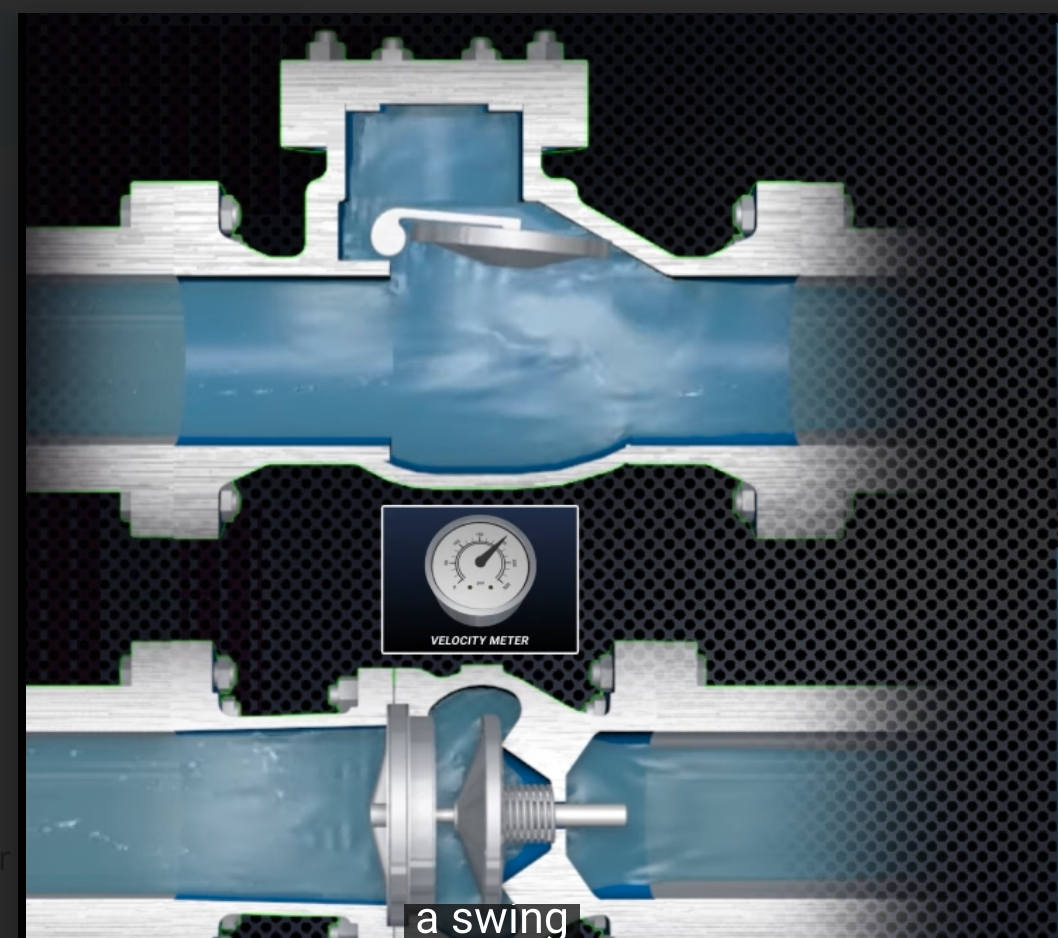
You want to deal with the shock wave close to where it originates. Putting a water hammer arrester not as effective as right at the check.
Typically a well tank has enough air cushion to absorb any hammer?
It all comes down to the flow rate and how quickly you are stopping it. Best to eliminate the cause instead of trying to suck up the shock wave, it can pound components apart in the piping system
There are some You Tube videos out there showing how pressure spikes when valve close quickly against high flows, this screen grab is from one of the videos
Bob "hot rod" Rohr
trainer for Caleffi NA
Living the hydronic dream0 -
Several thoughts — but there isn't enough information for specific recommendations.
First, on a domestic water supply system, water hammer is — or should be — rare. With the exception of a few appliances (washing machines are a common villain) neither the flow velocities nor the control valve closing rates should be great enough to cause a water hammer. There is an area which is sometimes overlooked, however: a high flow, high head well pump, particularly with a long pipeline to the pressure control tanks. That may need a small expansion tank at or very near the well head. Most turbine type pumps (submersibles, deep well turbines) spin down slowly enough, however, that this shouldn't be a problem.
Perhaps obviously, quick closing valves, such as some solenoid operated types (those washing machines again!), can cause problems. The need for them should be carefully evaluated, and if they are required for some edge case situation again a small expansion tank is needed on the upstream side of the valve.
Your reference is a reasonable modern take on a 2,000 plus year old technology: the hydraulic ram. They do work, though the life expectancy of some of the bits — especially the valves — is quite limited unless they are wildly overengineered for the application. Their efficiency is also appallingly low. In my humble opinion a water wheel or windmill driven piston pump is a better approach — but that's just me.
Br. Jamie, osb
Building superintendent/caretaker, 7200 sq. ft. historic house museum with dependencies in New England0 -
is the spring uphill of the home? And a pump installed also to boost pressure?
If it is just spring fed enough pressure from the elevation difference, where is the check valve?
There are water hammer arresters made for washing machine connections, dishwashers , even small ones for ice makers. They are not commonly used these days as many homes have thermal expansion tanks on the tank type water heaters which tend to absorb any force created by fast closing solenoids.
Some people that like high water pressure 80 psi and higher may want wash machine arrestors to protect the connection hoses from failing. That 80 psi could spike to several hundred psi from a fast closing valve.
Hydraulic shock, sometimes referred to a elastic shock due to how the pressure wave dissipates gradually
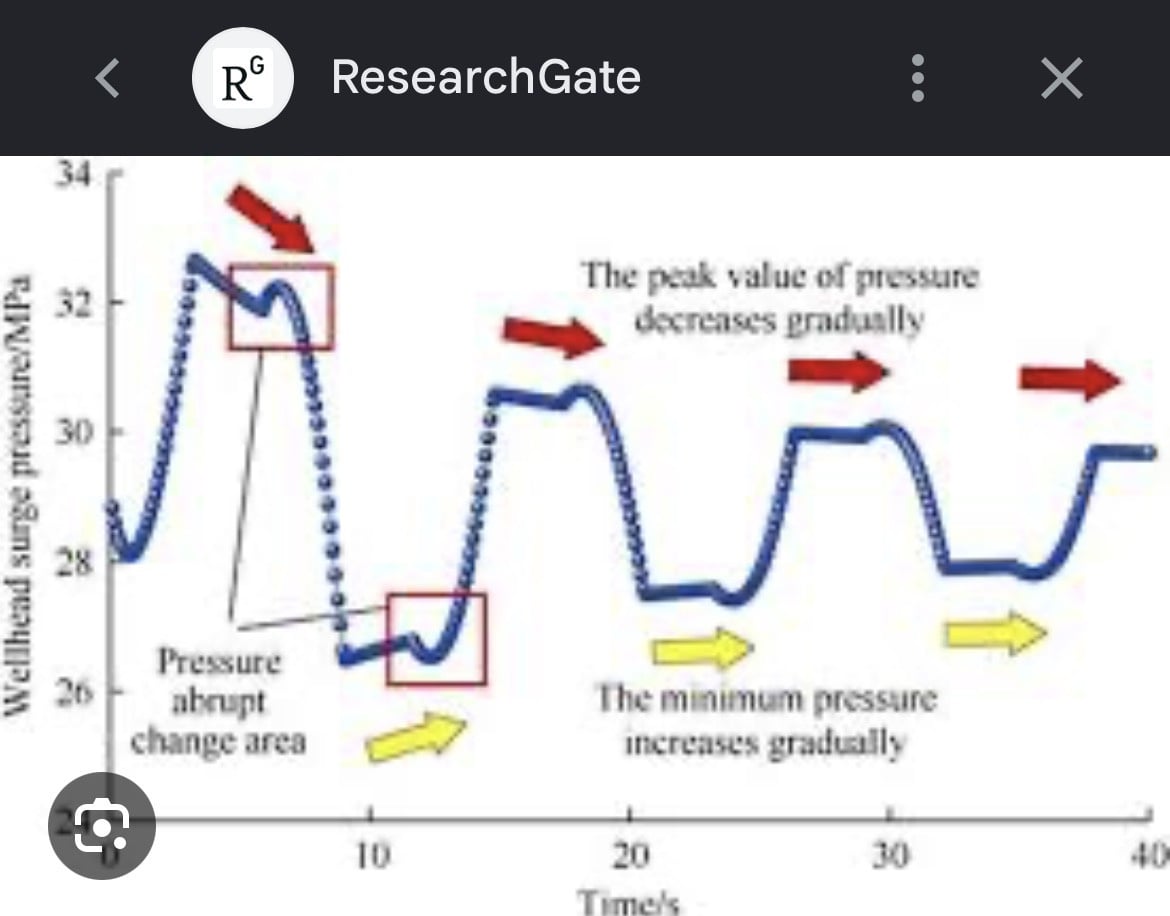 Bob "hot rod" Rohr
trainer for Caleffi NA
Living the hydronic dream0 -
Is it just me, or is the original post spam, AI assisted ad? New account? Super model photo? Trying to get traffic on the international website? Nobody I know who works on pipes can write so elegantly with perfect grammer.... Actually I probably don't know anybody personally, any field, who writes like that.




 6
6 -
"Currently remodeling a hydronic heating system and upgrading the domestic supply loop from a hillside spring."
What risers? Heating or domestic? Where are the check valves? Such a well written post should've included the most basic information.
0 -
bjohnhy your instincts are good. I work on pipes. My grammar (and spelling) are not too shabby. Last week I worked on a gravity fed water system at a Buddhist temple in a rural setting. It had about 30'-40' of head (I walked to the source). There were pressure isssues. Not enough at some fixtures on the first floor and plenty in the cellar, with a slight amount of water hammer there. Problem was a cheap Delta kitchen faucet. I advised getting a Moen. Problem solved.
0 -
I think you hit the nail on the head here, this looks to be some sort of spam post. The supermodel photo is just icing on the cake.
0 -
The OP looks like SPAM/AI to me too, although there were some thoughtful responses from you guys. I'm going to just remove the OP's URL and any company mentioned in the original post and then ban the user. I'll keep and close the thread for info purposes.
Thanks for the heads up!
-Andrew
Forum Moderator
 4
4


Categories
- All Categories
- 87.8K THE MAIN WALL
- 3.3K A-C, Heat Pumps & Refrigeration
- 60 Biomass
- 430 Carbon Monoxide Awareness
- 133 Chimneys & Flues
- 2.2K Domestic Hot Water
- 6K Gas Heating
- 124 Geothermal
- 170 Indoor-Air Quality
- 3.9K Oil Heating
- 79 Pipe Deterioration
- 1.1K Plumbing
- 6.7K Radiant Heating
- 397 Solar
- 16.1K Strictly Steam
- 3.5K Thermostats and Controls
- 56 Water Quality
- 51 Industry Classes
- 51 Job Opportunities
- 18 Recall Announcements