Dryer vent duct

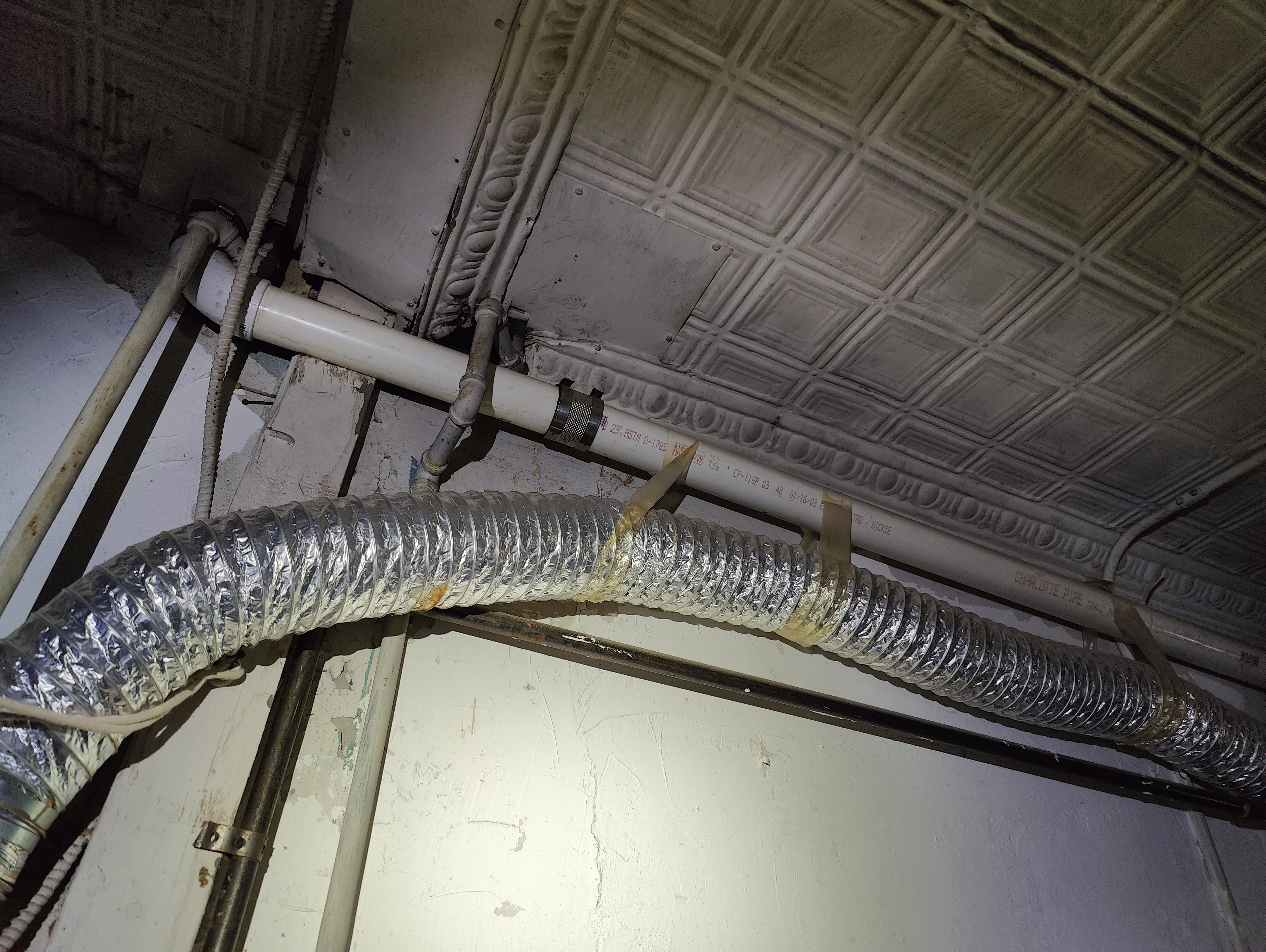
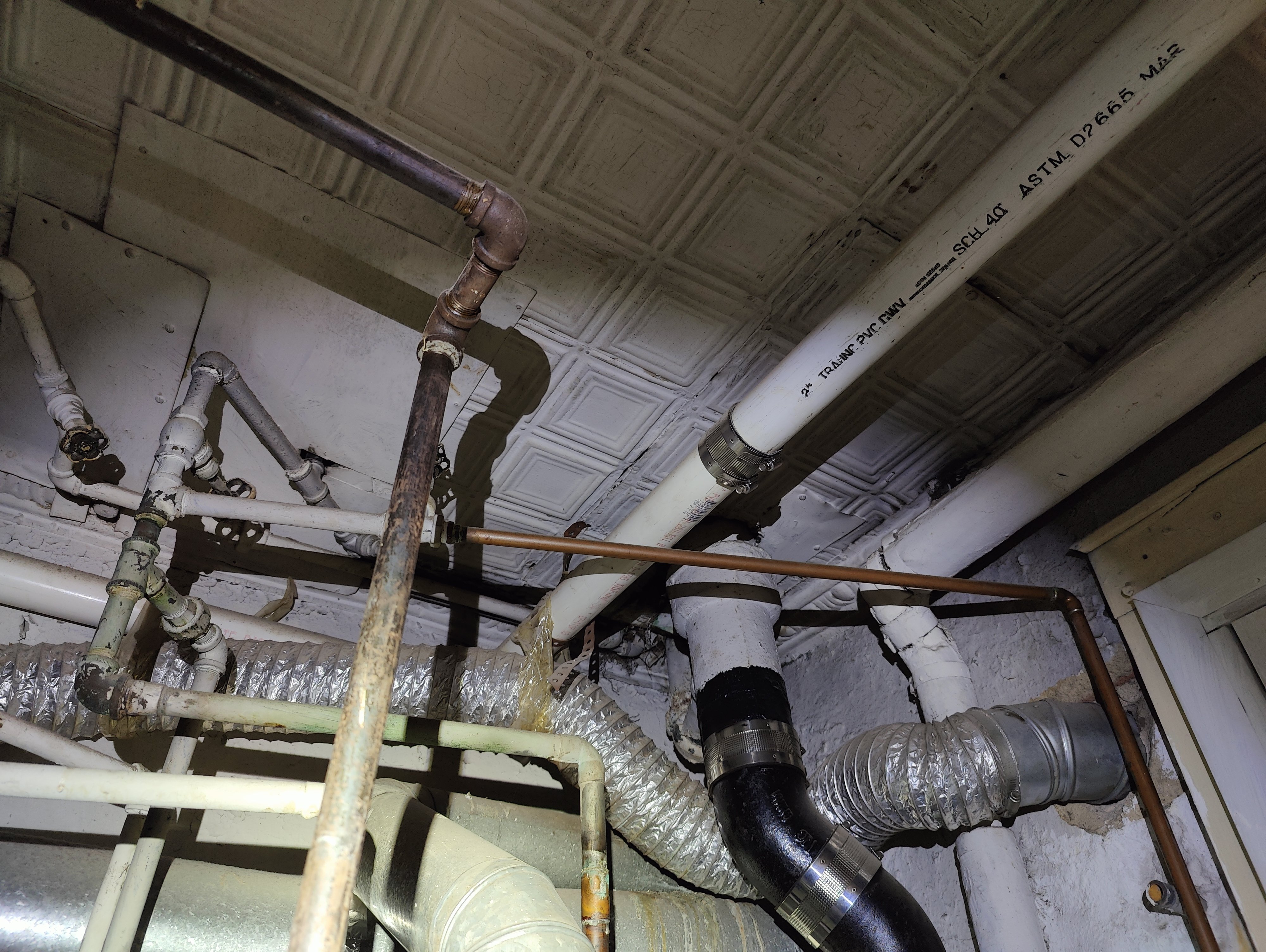
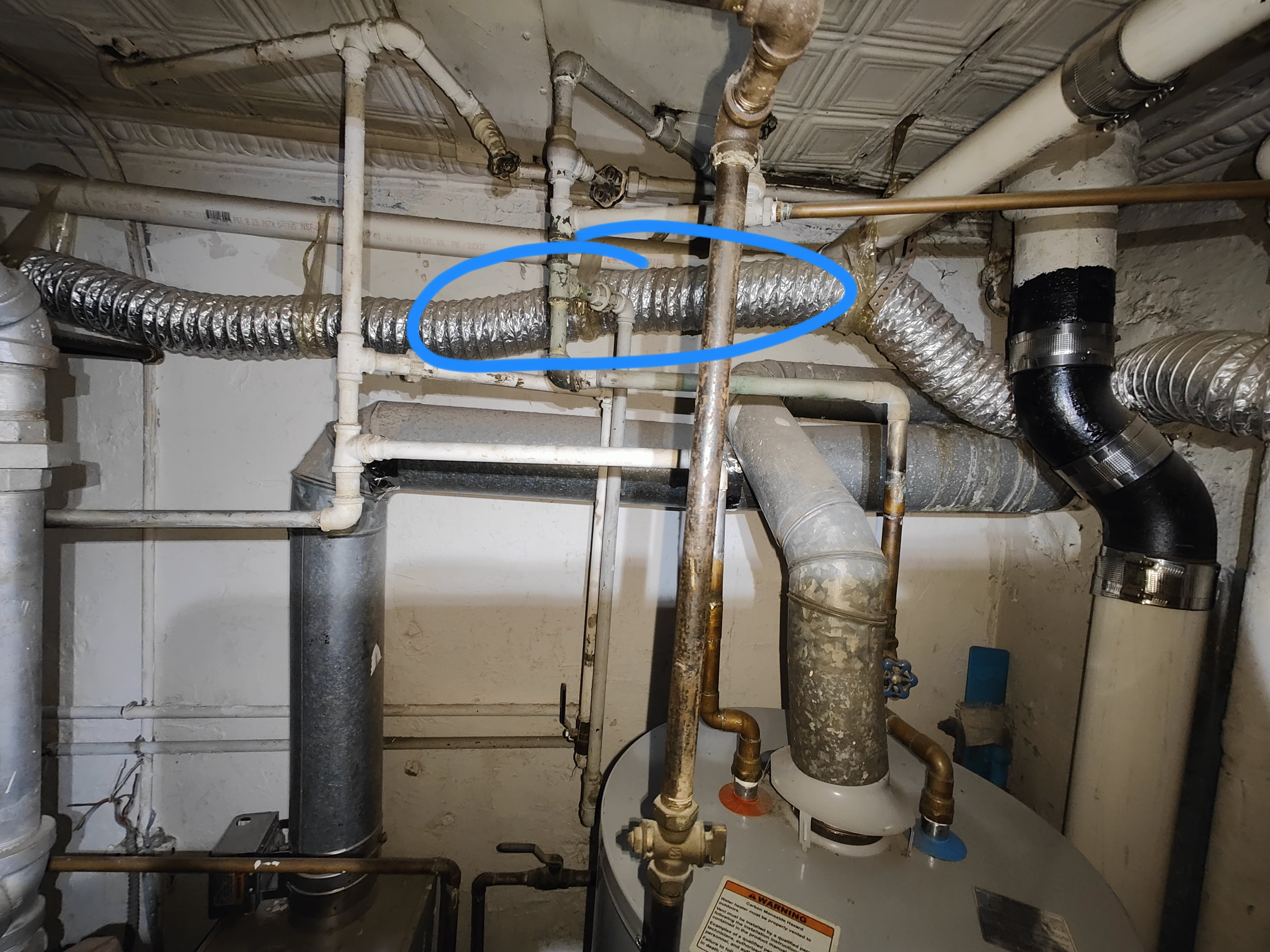
The dryer duct runs about 12' to an exit that is within 3' of the door.
The duct is aluminum foil, hung from some PVC drain pipe using tapes.
The code is, the exit needs to be more than 3' from the door, and the duct must be rigid metal with smooth inside surface.
If a New York City inspector comes to do gas pressure test and check gas related compliance, will this dryer duct be an issue?
Thanks.
Comments
-
Maybe. Depends on the inspector. If that's an electric drier, you may get away with it — but I wouldn't count on it. If it's a gas drier, they may not be real happy about it.
Nor should they be. Electric or gas, that thing is a fire waiting to happen…
Br. Jamie, osb
Building superintendent/caretaker, 7200 sq. ft. historic house museum with dependencies in New England0 -
The longest available from the store is 4" x 5' snap lock aluminum duct gauge 30. Two 5' ducts with two elbows and two 2' should bring it up to the code.
Is there a max number of ducts allowed when joining ducts in series?
Also, the min duct thickness is 0.016" in the code. Although gauge 30 alum is 0.012, does an inspector really check the gauge?
0 -
the instructions for the appliance will tell you the maximum run. rigid galvanized or aluminum duct and elbows would get you the required gauge.
0 -
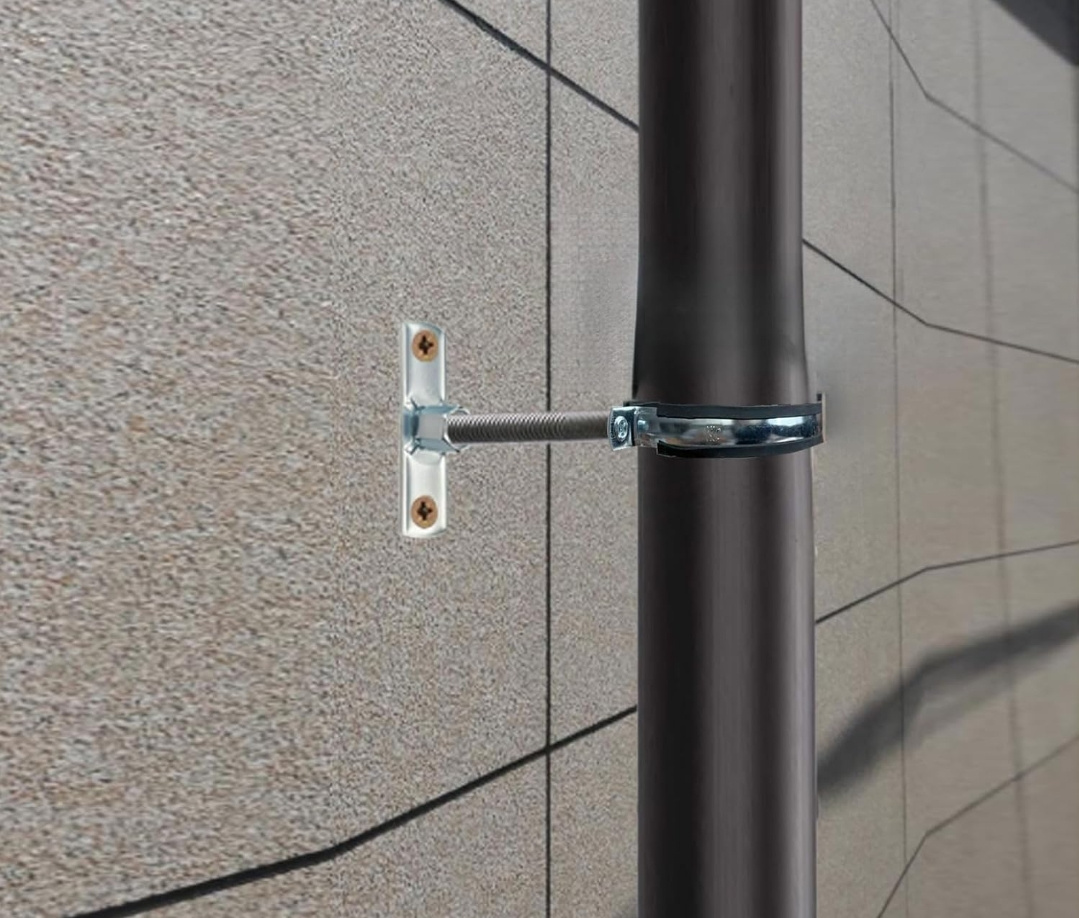
For duct support, is there a commonly used spacing between neighboring brackets?
Is nylon strap ok with the code? The duct will touch the wall if using nylon straps.
Metal brackets are too expensive.
 0
0 -
no contact restriction I’m aware of. The joints can be oriented to 45 degrees which will reduce pressure drop.
I’d bring it away from the wall and suspend from ceiling for a straight shot to exterior connection.0 -
the rules are in the mechanical code. the spacing will depend on the material. since it is a dryer duct it has to be seamed the proper foil tape so there are not screws in the duct to catch lint. hanger iron held together with a bolt is certainly one option for support.
0 -
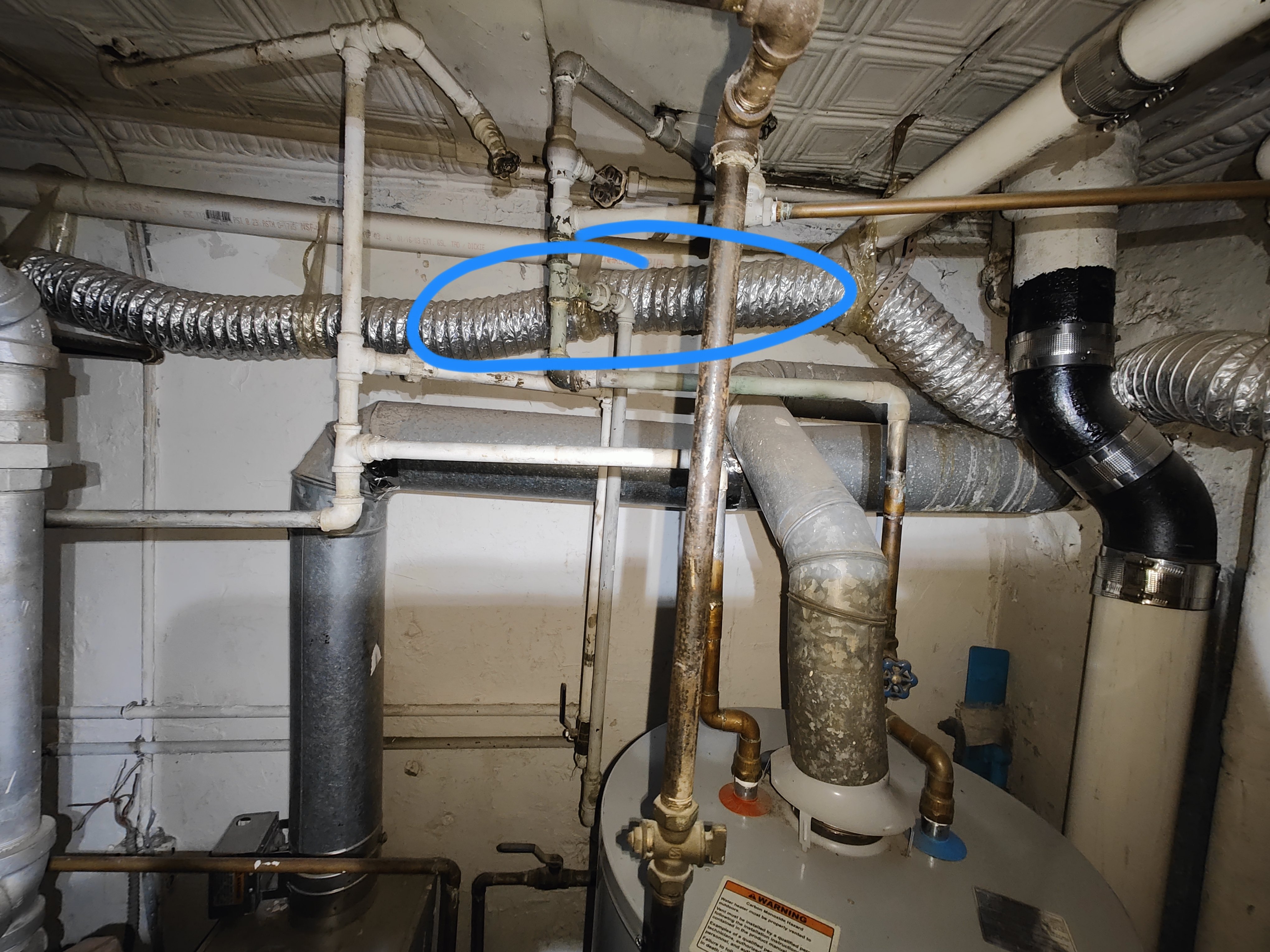
This area needs a bracket but the access is blocked by a boiler and water heater. Access is needed to join the ducts and apply tape. Any way to do it?
 0
0 -
The more I look at it the less I like what you have. That is a major fire hazard. I just noticed that it is actually in contact with the breeching pipes from the water heater and boiler…
Without looking at your basement, I can't tell you how to reroute that disaster — but there has to be a way. Use rigid duct and hangars.
Br. Jamie, osb
Building superintendent/caretaker, 7200 sq. ft. historic house museum with dependencies in New England
 3
3 -
If you go in the plumbing Isle at a big box look for the Sheetmetal hangers used to hang 4" ABS or PVC drainpipe. They will hold a 4 1/2" OD pipe so they will be slightly larger than you need but you can make them work.
Or you can use the roll of hanger strap with all the holes in it commonly called band iron.
As far as how to connect the pipe use "gear clamps" otherwise known as hose clamps. They have those at the big box as well.
Better than tape which doesn't last and it makes it easy to take the pipe apart and clean if need be.
The hangers and clamps won't set ypu back much.
0 -
some guidelines from a building code. Your local code may vary, and manufacturers requirements apply
Bob "hot rod" Rohr
trainer for Caleffi NA
Living the hydronic dream0 -
Is it preferable that the duct goes behind the thick sanitary stack (see 2nd photo in post #1)? It's much easier to arrange a rigid duct in front of that stack.
Also, it'd be more noticeable the duct is pivoting downwards from its straight run section to the exit on the wall. Does this downward pitch fly with the code?
0 -
There's no reason the pipe can't go in front of the sanitary pipe.
The min thing on the ducting is that the pitch should be consistent, if it's there at all No dips. No humps. I don't know what your local code says — different locations have different codes..
Br. Jamie, osb
Building superintendent/caretaker, 7200 sq. ft. historic house museum with dependencies in New England0 -
the flexible duct used for dryer connections is generally smooth inside, I doubt that stuff you have is even suitable for dryer venting, currently? It may exceed the maximum length also, the manual should have that info.
Aluminum ridgid makes sense, but no duct screws! I think the aluminum foil tape is approved for vent assembly
Bob "hot rod" Rohr
trainer for Caleffi NA
Living the hydronic dream1 -
The vent run length is not a problem according to the manual -
the block is how to install the 2nd support bracket, given the gas boiler and water heater blocking the access, I need a way to reach that area.
someone managed to hang a transparent tape there, I assume they did so by stepping at least one foot on the water heater or boiler. it is a definite “No" from google.
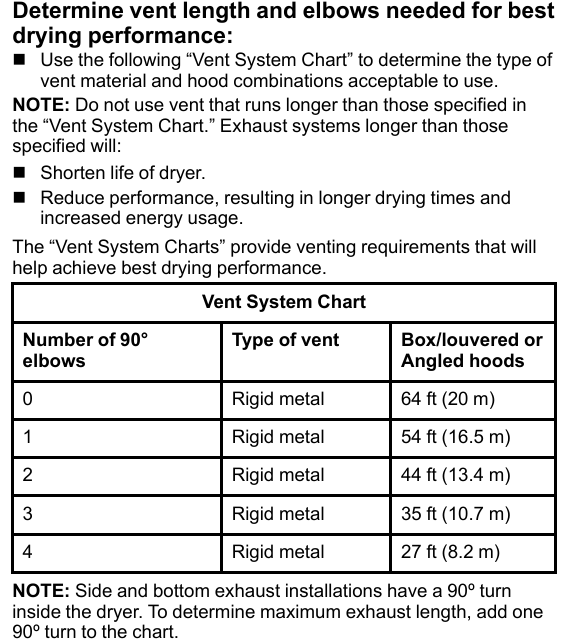 0
0 -
Found it on the Internet, "continuous downward slope 1/4" per foot towards the outside should be maintained to avoid condensation build up"
https://www.purifiedairductcleaning.com/post/water-in-dryer-vent-duct-fix-it-fast
0 -
I will use hose clamps where the ducts could be disconnected later. I was once undoing a nashua mastic tape and saw how messy it was. Will use the tape for one-time permanent joints.
0 -
I wouldn't worry about any pitch. You basement would have to be very cold to get any condensation. If you clamp the pipe with hose clamps it will be very rigid. You won't need too many hangers. You can easily go 6' or more if needed between hangers.
Most dryers are in a basement, and the pipe runs up and out to the sill so there is no way to down pitch
0 -
now the concerns left are about exhaust.
The dryer vent opens into the backyard, but the water heater and gas boiler both vent into a brick chimney. what aspects will the chimney be inspected on?
According to the NY residential code (2020), the exit opening needs to be 3' away from an operable door or window. This dryer vent opening is right next to the door casing, so it does not comply with the current code. How often is this flagged in a city inspection?
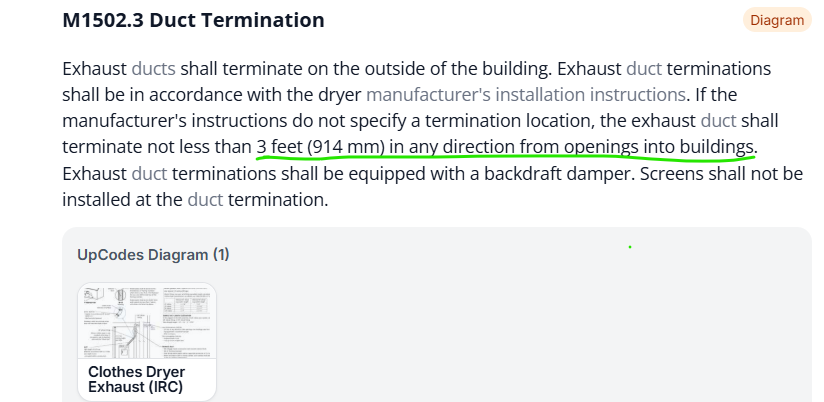 0
0 -
You could extend the duct outdoors to terminate in an approved location. The code concern is not with where the duct exits the building, but where the exhaust exits the duct.
—
Bburd0 -
sounds like your getting ready to sell.
if you are I wouldn’t worry about it. 1
1 -
I would not change that unless he picks up on that which I doubt they will.
But would it be that difficult to move it 3'? Drill a hole with a 4 1/4 holesaw. You can leave the old vent termination and block it up on the inside.
0 -
The wall is pretty thick, made of brick. 3 ft left of the door is the brick chimney where the water heater and gas boiler vent to.
0 -
Or until the trapped lint catches fire where it's touching the breeching…
Br. Jamie, osb
Building superintendent/caretaker, 7200 sq. ft. historic house museum with dependencies in New England0 -
What's the minimum distance that should be maintained between the dryer duct and those breechings
0 -
6" if the fuel burning appliance vent is plain stovepipe, i think it is
3"1" if it is double wall type b vent.0 -
I don't think you need much clearance. B vent only needs to have 1" clearance from wood.
1 -
I'd be OK with 1" for B vent…. but I'd want more. Remember that dryer lint has two nasty properties: it's flash point is quite low (around 250 or so) -… and it is dust, so if it does decide to flash, the whole length of the pipe will go boom.
Br. Jamie, osb
Building superintendent/caretaker, 7200 sq. ft. historic house museum with dependencies in New England0 -
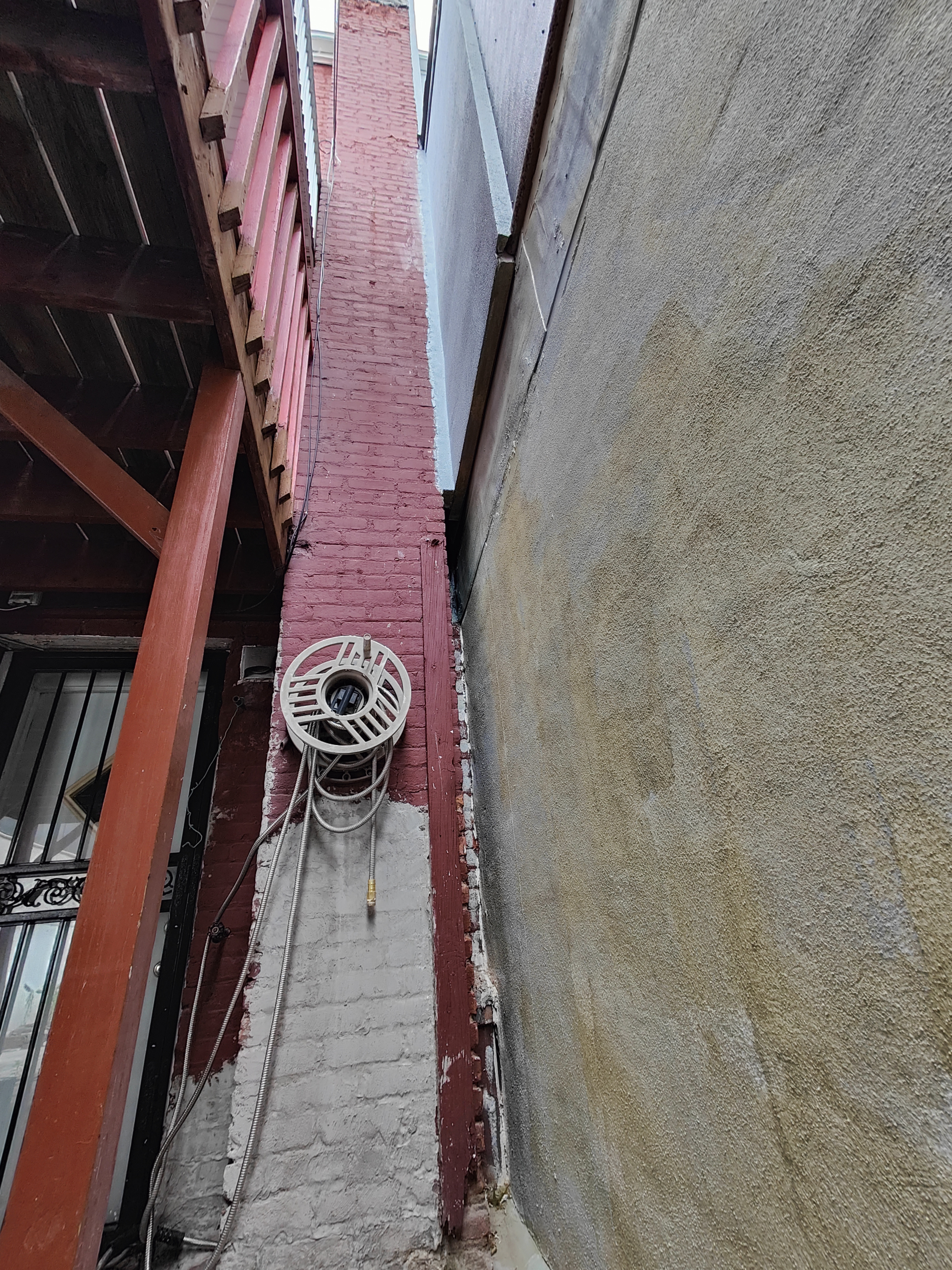
The water heater and boiler vent into a chimney. The chimney does not have a clean out inside or outside. How will the inspector from the city inspect the chimney?
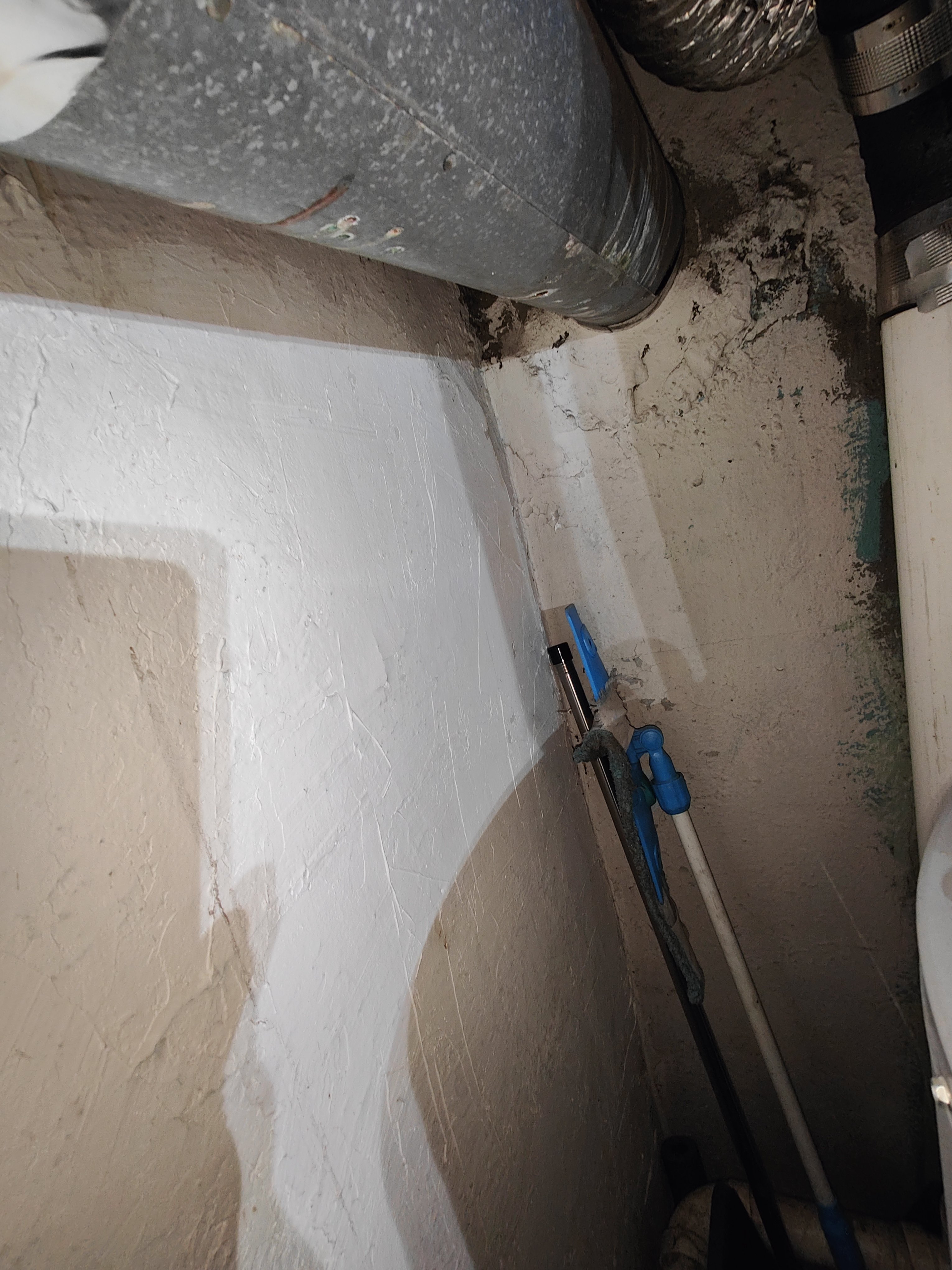
 0
0 -
he is not going on the roof that's for sure.
he may want you to get a chimney sweep to inspect it.
0 -
It's not difficult to cut one 8x8 opening from exterior.
Is it necessary to arrange a lintel on the top edge of the opening?
0 -
Generally not — but that really is a job for a chimney sweep who is also a qualified mason. And just to be a nuisance — a cleanout located below the lowest entry into the chimney should be required!.
Br. Jamie, osb
Building superintendent/caretaker, 7200 sq. ft. historic house museum with dependencies in New England0 -
unless there is some other circumstance like a point load is directly above it or it has been cut and patched a lot and they didn't weave the patches in, for an 8" wide opening you don't need a lintel.
0 -
If you ask AI the same question, it will say: 8"x8" opening on a brick chimney risks delayed collapse, because masonry chimneys rely on the integrity of their structure to support the massive weight above
Then with the century age and 3 story height in mind, I feel a tendency to err on the conservative side.
0 -
if you are putting a breech in a chimney you would line it with a thimble that will seal the passage to the liner and support the chimney although as long as you aren't cutting near the corners it will be fine. the bond between the bricks will support it over a small opening like that. if you cut n opening every couple vertical feet it would be different but the bond of the bricks, the way they are interwoven, will transfer the force out to the corners.
0 -
in the photo where the breech enters the wall, why I cannot see a thimble around the opening?
0 -
i believe it is steel and is right here:
it gives me "network error" when i paste an image but if you zoom in you can see a metal thimble in the breech
sometimes unqualified individuals or people cutting corners will just knock a hole in the chimney, stick the smoke pipe in the hole, and mortar around it but there is supposed to be a steel or clay thimble there.
0 -
I checked the NYC Administrative Code, found two places mentioning cleanout port.
The first place is in the building code.
The required size of the cleanout door is 6x6 inch. However, where to find a 6x6 cleanout door? from the home store only 8x8 is available.
Also, what does "with 6 in of the base of each flue" mean?
Cleanout openings shall be provided within 6 inches (152 mm) of the base of each flue within every masonry chimney. The upper edge of the cleanout shall be located not less than 6 inches (152 mm) below the lowest chimney inlet opening. The height of the opening shall be not less than 6 inches (152 mm). The cleanout shall be provided with a noncombustible cover.
Exception: Chimney flues serving masonry fireplaces, where cleaning is possible through the fireplace opening.
location:
Title 28: New York City Construction Code
Chapter 7: New York City Building Code
Article 701 Enactment and Update
28.701.2 Enactment
Chapter 21: Masonry
Section BC 2113: Masonry Chimneys
2113.18 Masonry chimney cleanout openings
https://codelibrary.amlegal.com/codes/newyorkcity/latest/NYCadmin/0-0-0-181259
0 -
it is supposed to be within 6" of the bottom of the opening through the middle of the chimney, it shouldn't be say 3' above the foundation so you can't reach debris all the way at the base of the chimney. the frame and door doesn't need to be out of a catalog, it can be fabricated by a sheet metal shop or fabricated on site. i'm not sure you need to add it if it wasn't required when the chimney was built.
0 -
Try a supply house that sells masonry products, brick, cement block, clay tile etc. They would have chimney caps and cleanout doors and other accessories
0 -
Get a level II inspection of the chimney first. Look at all the spalling near the top. A lot of freeze-thaw damage on that cold exterior chimney. Reline it with a properly sized smooth wall 316Ti or 316L ss liner. Sweep the liner into the Combustion Appliance Zone and cement in place. Once in the room, split it to the DHW and boiler, which btw appears to be running downhill. If you sweep it into the room, as allowed under the IRC Ch24, you don't need a clean out for gas.
According to Ch15 of the IRC, the max length of a Flexible Transition Duct or 'Slinky' is 8 ft. it can only attach to the appliance and not start further along. It must be stretched until the inner lining is smooth to maintain the minimum cross-sectional area. No male down fittings such as that band clamp on the elbow. Any Slinky must be listed to UL 2158A. It is not approved for direct contact with those hot vent connectors.You need to rework those vent connectors, min. 3 screws per joint equidistantly spaced, no seams from 5-7 O'clock pitched up towards the chimney 1/4" per LF. The larger connector must be heavier gauge pipe. I'd replace that crummy ground key gas cock on the WH.
Ask Hector the Inspector how he wants it terminated: as-is or extended with hard duct out from the building 3 feet supported.
I would skip all the flimsy material and just run a continuous 4" smooth wall 316ss chimney liner as your one-piece exhaust duct. It exceeds the code. Use a ss wall termination extended out from the bldg. 3 ft. with a strong steel hanger off that post and angled away from the wood.1




Categories
- All Categories
- 87.8K THE MAIN WALL
- 3.3K A-C, Heat Pumps & Refrigeration
- 59 Biomass
- 430 Carbon Monoxide Awareness
- 133 Chimneys & Flues
- 2.2K Domestic Hot Water
- 6K Gas Heating
- 124 Geothermal
- 170 Indoor-Air Quality
- 3.8K Oil Heating
- 79 Pipe Deterioration
- 1.1K Plumbing
- 6.7K Radiant Heating
- 396 Solar
- 16.1K Strictly Steam
- 3.5K Thermostats and Controls
- 56 Water Quality
- 51 Industry Classes
- 51 Job Opportunities
- 18 Recall Announcements