Please sanity check my plan for installing main vents?

Hi everyone - thanks so much for all the info you post on here!
I bought a beautiful 1890 victorian home in Albany NY that has one-pipe steam heat. After reading Dan Holohan's books and reviewing the useful information on this site, I was able to get the system reasonably well balanced and get all the radiators to warm up. The one problem that remains is that it takes a long time (maybe 15-20 mins) for steam to make it to the furthest radiators. When the thermostat sends out a call for heat, the radiator vents vent out air for about 10 mins before they stop and the radiators start to get hot.
I noticed that there are no main vents in my basement. Based on what I've read so far, I believe adding in main vents should reduce the time it takes for heat to make it to my radiators.
Could you please help me validate the following?
- I believe that installing main vents will save energy by letting steam get to the radiator more quickly, and also reduce the hissing from my radiator vents. Am I right about this, or am I missing something?
- Have I selected the right places for my plumber to tap in vents?
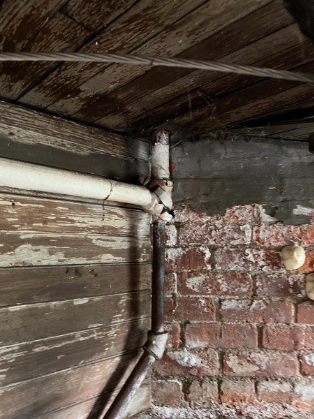
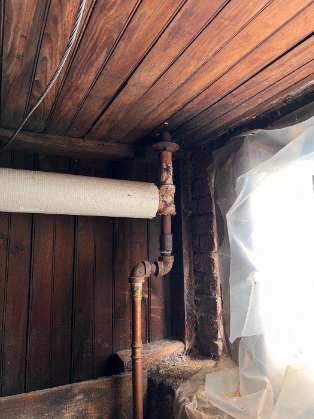
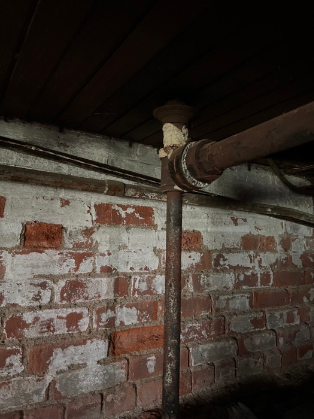
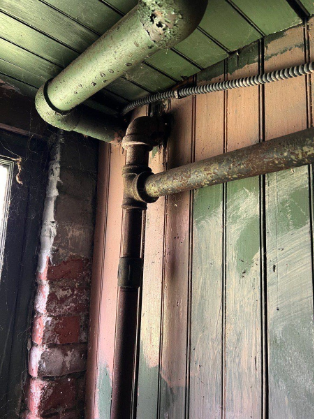
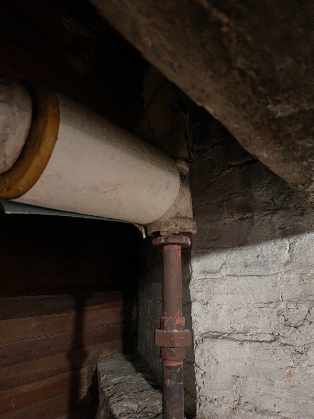
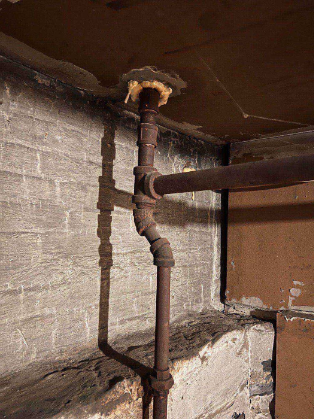
Here are the locations where I believe we need to install main vents - do these look right to you? The house is large, so there are 19 radiators in total, which are served by 5 main runs (or so I believe).
My understanding is that the main vents should be installed in those places in my basement where a supply run meets a return run. is that correct?
|
|---|
|
|
|
|
|
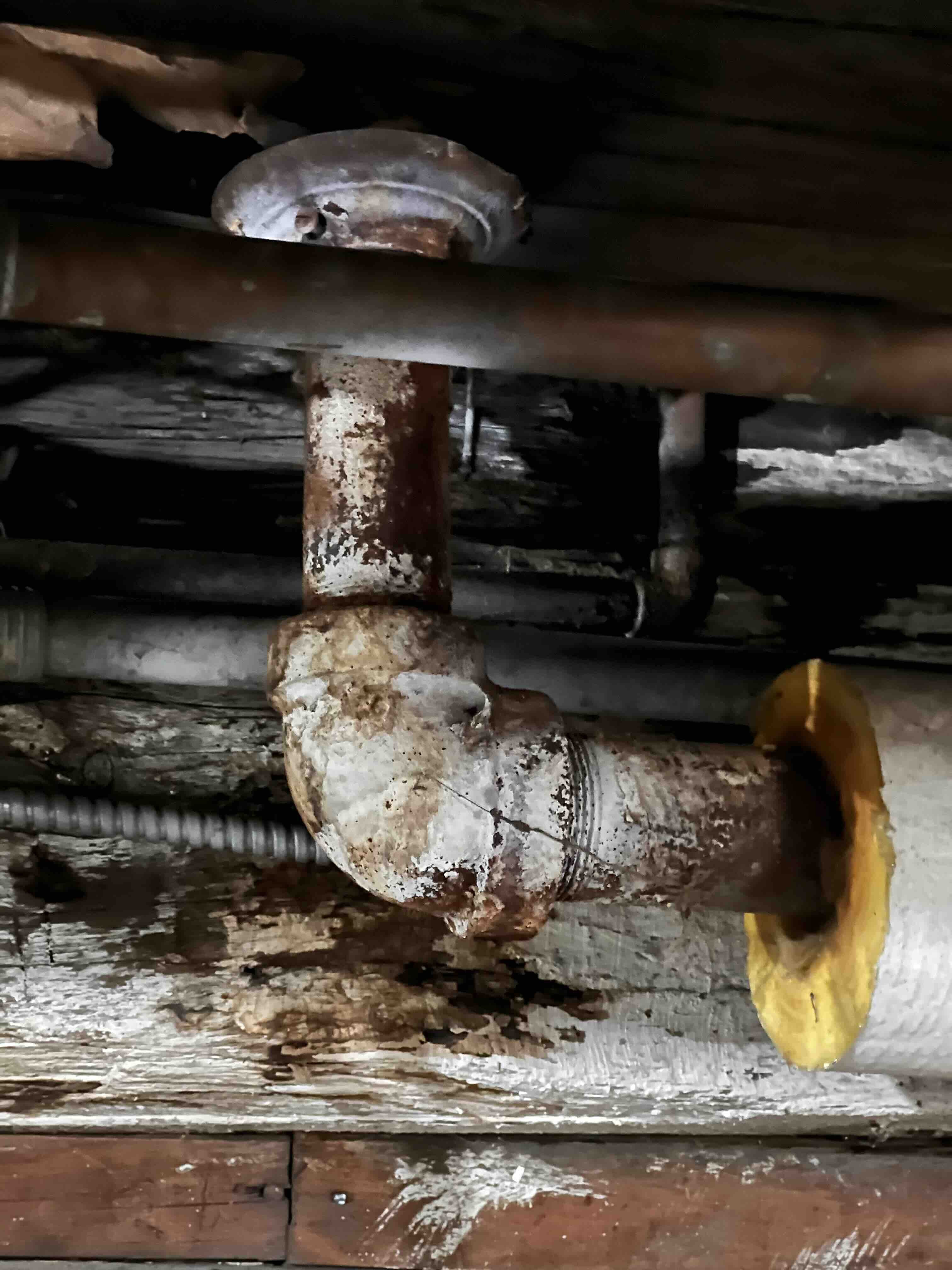
Here's an example of a place where I do not think we need a main vent - there's an upward pipe but it does not meet a return. Am I right?
Finally here's a picture of the boiler and the near boiler piping:
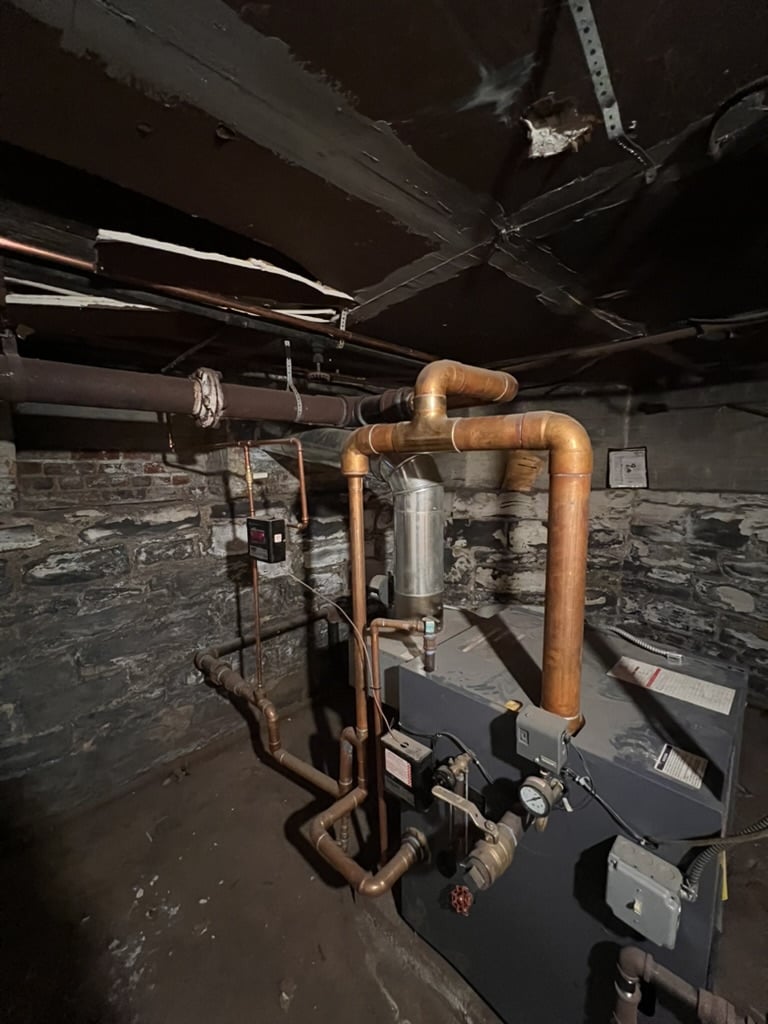
I don't love that the near boiler piping is in copper, but it's perhaps something I will attend to next year.
Final question: Does anyone have any hypotheses as to why there are no main vents in the system? I suspect it is because the house originally had a coal boiler, which pushed out heat continuously and therefore didn't have to deal with trapped air very often. I think the folks who converted the boiler to gas (I think there was an oil boiler too) just lived with the high energy bill and long venting times without looking for a solution.
One last note - I have a plumber + HVAC tech who will install the vents for me. He does a great job of working on the system but it's my house, so I want to understand how the system works and I want to make decisions like this one with eyes wide open.
For anyone who made it this far, here's a spreadsheet with pictures of my radiators, if you're interested :) Thank you so much for your help!
https://docs.google.com/spreadsheets/d/1MhNTihu_JGvs1g34TjbP-dBWgU1O7FICiHJkMZ_SxF0/edit?usp=sharing
Comments
-
More or less. The idea is to have the main vents for each steam near, but not necessarily right at, the end of the main. In fact, it's better to have them a foot or two back from the end of the main, so as to protect them from any possible water hammer.
Br. Jamie, osb
Building superintendent/caretaker, 7200 sq. ft. historic house museum with dependencies in New England0 -
I wouldn't count on being able to notice a significant energy cost difference, but there should be a lot less venting through the radiator vents for sure.
Balancing and speed of heat arriving at your radiators should be a lot better.
NJ Steam Homeowner.
See my sight glass boiler videos: https://bit.ly/3sZW1el0 -
Thanks @Jamie Hall and @ethicalpaul !
I'll make sure I have the vents installed a foot or so before the end.
One quick question - should I try to rebalance with the main vents by using gorton #1s for the close vents and Big Mouths for the furthest vent, or should I just stick Big Mouths in every run and use radiator vents for rebalancing?0 -
Something that will both save energy and decrease the time it takes to heat up the system is to install fiberglass insulation on all steam carrying pipes where the asbestos was removed. 1 inch is usual.
—
Bburd0 -
@adeeshaek , how long is each steam main (from boiler header to last radiator) and what pipe size?
0 -
Since you asked, I would not use Big Mouth vents. I would use Gorton #1 for the shorter mains and Gorton #2 for the long mains
The different sized main vents don't really provide balancing, they just let the main quickly expel air.
When one main vent closes, the other one will remain open and will get the vast majority of the steam before any radiator lines do (due to the relatively tiny radiator vents)
NJ Steam Homeowner.
See my sight glass boiler videos: https://bit.ly/3sZW1el0 -
@adeeshaek
how long is each steam main (from boiler header to last radiator) and what pipe size?@Steamhead are you asking about the linear length of the main from the boiler to the last pipe that goes upward to a radiator (i.e: the length of the pipe excluding the length of the steam loop)? I do not know this offhand but I can measure it! Once I know the length of each run, what can I do with the information?
0 -
Since you asked, I would not use Big Mouth vents. I would use Gorton #1 for the shorter mains and Gorton #2 for the long mains
The different sized main vents don't really provide balancing, they just let the main quickly expel air.
When one main vent closes, the other one will remain open and will get the vast majority of the steam before any radiator lines do (due to the relatively tiny radiator vents)
Thanks @ethicalpaul ! Why do you recommend gorton vents instead of big mouths? My understanding is that the goal here is to vent as much air as possible as quickly as possible, and since the big mouths can vent more air than gortons I thought they would be the best choice. What am I missing?
When one main vent closes, the other one will remain open and will get the vast majority of the steam before any radiator lines do (due to the relatively tiny radiator vents)I don't understand - do you mean that I should put large vents on the longest mains and smaller vents on smaller mains so that the steam reaches the end of the mains at around the same time?
0 -
Thanks @ethicalpaul ! Why do you recommend gorton vents instead of big mouths? My understanding is that the goal here is to vent as much air as possible as quickly as possible, and since the big mouths can vent more air than gortons I thought they would be the best choice. What am I missing?
They do have a massive capacity to vent, but they are also very massive in the amount of metal that has to be heated by the steam, so they take a long time to close comparatively, and I personally had issues with it staying closed (it allowed steam to escape quite a bit).
I don't understand - do you mean that I should put large vents on the longest mains and smaller vents on smaller mains so that the steam reaches the end of the mains at around the same time?
Yes generally. You just don't need a massive vent on a short main. There are tables out there that tell you how large a vent is good for how long of a main (and its pipe size), but I would just use your gut. You can even start out with the smaller #1 vents everywhere and then see how quickly the steam progresses through the mains on a call for heat (by feel). If you find one of the mains is only like 1/3 or 1/2 filled with steam by the time the shorter one gets full, then you can swap in a #2. Since the #2 is like 3 times the cost of the #1 it's good not to buy them unnecessarily.
NJ Steam Homeowner.
See my sight glass boiler videos: https://bit.ly/3sZW1el0 -
They do have a massive capacity to vent, but they are also very massive in the amount of metal that has to be heated by the steam, so they take a long time to close comparatively, and I personally had issues with it staying closed (it allowed steam to escape quite a bit).
Thank you for the explanation - this is immensely helpful, particularly since I hadn't heard this before!
Yes generally. You just don't need a massive vent on a short main. There are tables out there that tell you how large a vent is good for how long of a main (and its pipe size), but I would just use your gut. You can even start out with the smaller #1 vents everywhere and then see how quickly the steam progresses through the mains on a call for heat (by feel). If you find one of the mains is only like 1/3 or 1/2 filled with steam by the time the shorter one gets full, then you can swap in a #2. Since the #2 is like 3 times the cost of the #1 it's good not to buy them unnecessarily.
Got it. Thank you for laying out the options - I might start with the #1s and then put #2s into any main runs that heat up slowly.
One follow up - if I choose to measure the steam runs, do I measure the length of pipe from the boiler to the end of the run? In other words, in the places where the main branches into two runs, I should include the shared run in both measurements, correct?0 -
That's difficult to answer without knowing the layout…typically each main would come right from the header. Having a main split into two is non-standard. I think if you count the shared part in both measurements you'd end up with more venting than you need, but that doesn't cause any harm
NJ Steam Homeowner.
See my sight glass boiler videos: https://bit.ly/3sZW1el0 -
@adeeshaek , knowing the length and diameter of each main tells us how many cubic feet of air is in that main, so we can select vents based on that volume. Sometimes some fine-tuning is needed, but this gives us a place to start.
 1
1 -
Personally I like the Big Mouth, serviceable, outlet port is threaded so you can add a custom orifice if desired.
Both have Pros and Cons.
National - U.S. Gas Boiler 45+ Years Old
Steam 300 SQ. FT. - EDR 347
One Pipe System 1
1 -
@Steamhead thank you! I will measure the mains and report back!
@109A_5 I had no idea that you could add custom orifices to big mouths - are there off the shelf custom orifices or would we have to fabricate our own?
0 -
@adeeshaek That is the beauty of the threaded outlet port.
No off the shelf custom orifices that I know of. Not hard to build, just a 3/4" pipe plug and drill a hole the size you want. Also you could use a short nipple with a cap and multiple small holes and close off the holes you don't want with screws. It can be as simple or complicated (versatile) as you want.
National - U.S. Gas Boiler 45+ Years Old
Steam 300 SQ. FT. - EDR 347
One Pipe System0 -
Dan's book is great but it doesn't go deep (if at all) into nuance of venting.
By having main vents AND radiator vents you have two point of venting control. 1 for the pipes and 1 for particular radiator. Sometimes you want steam to take longer to some radiators.
One VERY important aspect that not talked often about is that steam behaves differently with cold pipes and hot ones. With hot it goes the path of least resistance to largest vent opening. BUT with cold pipes it goes to physically closest pipe first (not necessarily the one that has larges main vent opening). Thus some radiators with large vents and large main vents BUT on further pipe run might be lukewarm before call for heat ends while those with small vents and small main vents might be steaming hot.
What I can advise you is sketch out your pipe runs and radiators placements then ask yourself which you want to heat up most (fastest). Consider where thermostat is located - you want the radiators closes to it to heat up last.
»»» See my steam heat YouTube videos:
https://www.youtube.com/@HeatingBlog1 -
@patrykrebisz thank you!
> Thus some radiators with large vents and large main vents BUT on further pipe run might be lukewarm before call for heat ends while those with small vents and small main vents might be steaming hot.How do you avoid this behavior? Would the solution to be to not add a vent to very short runs (i.e: runs where the distance from a boiler to radiator is short), or is there a different approach I should consider?
For context, I have installed Thermostatic Radiator Valves on most of the radiators that are close to the boiler / primary thermostat. I also installed an Ecobee, so I have one remote thermostat by the furthest radiator so as to prevent the boiler from shutting off while the last loop is still stone cold.0 -
Measure your mains first. Let's see what you have.
0



Categories
- All Categories
- 87.8K THE MAIN WALL
- 3.3K A-C, Heat Pumps & Refrigeration
- 60 Biomass
- 430 Carbon Monoxide Awareness
- 133 Chimneys & Flues
- 2.2K Domestic Hot Water
- 6K Gas Heating
- 124 Geothermal
- 170 Indoor-Air Quality
- 3.9K Oil Heating
- 79 Pipe Deterioration
- 1.1K Plumbing
- 6.7K Radiant Heating
- 397 Solar
- 16.1K Strictly Steam
- 3.5K Thermostats and Controls
- 56 Water Quality
- 51 Industry Classes
- 51 Job Opportunities
- 18 Recall Announcements