Removing valve plug on cast iron radiator

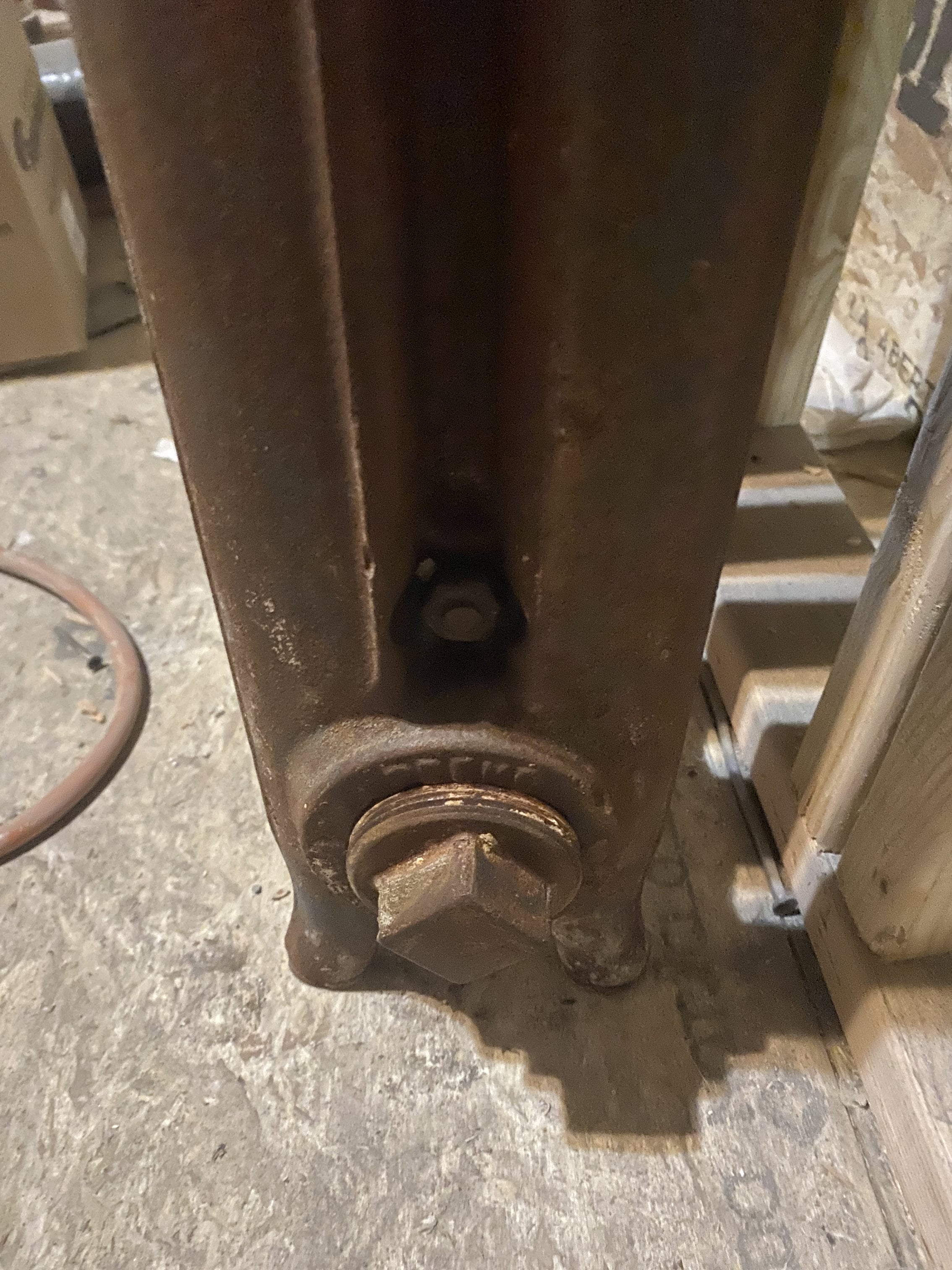
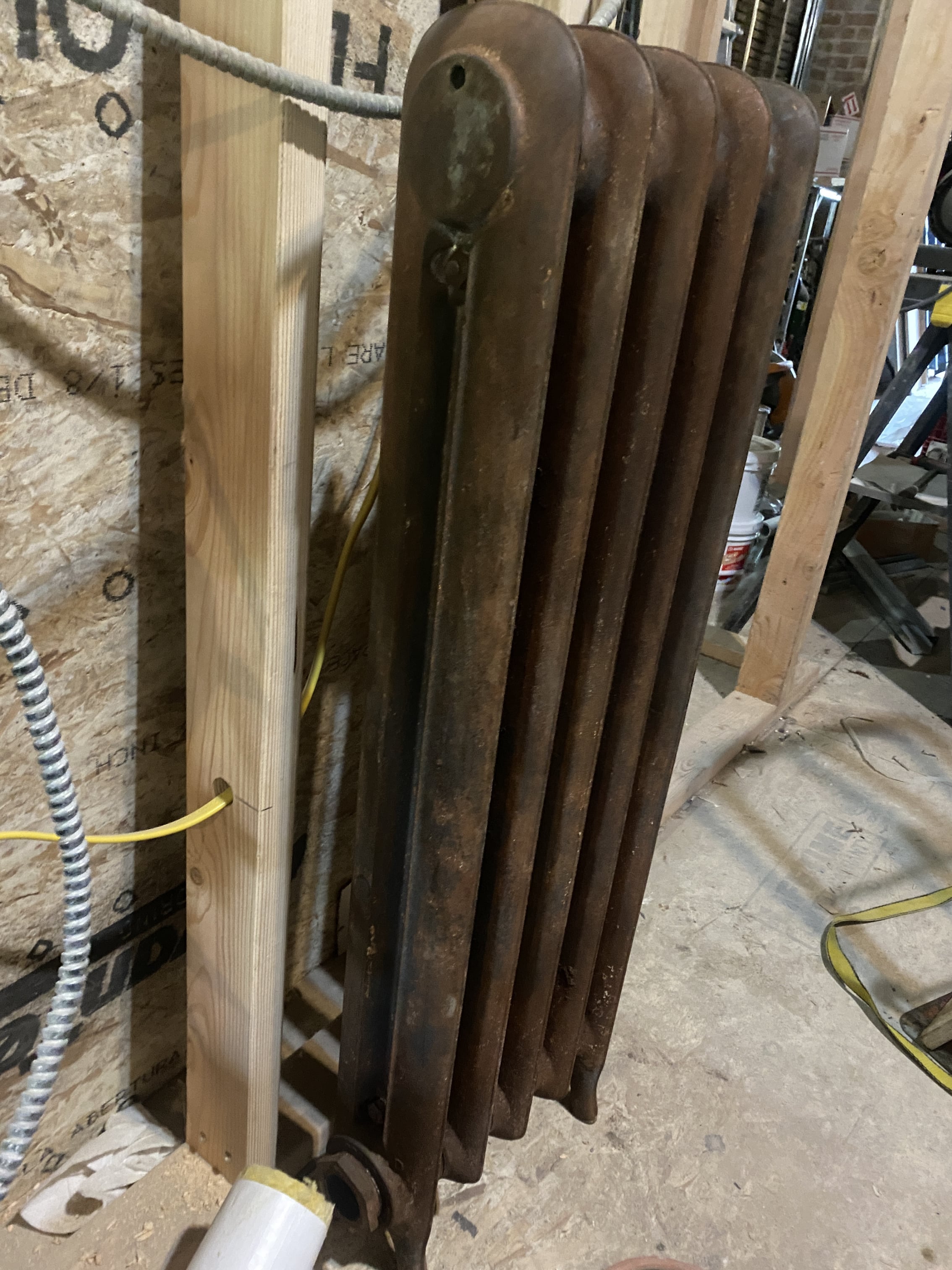
I have a radiator where the vent hole is on the same side as the valve opening. And the vent hole is in the wrong location (near the top instead of 1/3 of the way up from bottom). From what I recall, it heated up ok. Maybe not 100% but it did the job and my radiators will be a backup heat source. MAin heat will be from heat pumps.
I am not going try to drill the vent boss on the opposite side. I am batting 0.500 on that procedure. 2 situations where I ruined the radiator. Cracked thru the column.
So I could attempt to remove the plug using mapp gas, PB Blaster and cheater bars. I've cut out bushings from radiators valve openings in the past, but never removed a plug with a sawzall.
Is there a good procedure to remove the plug, or is this a "LEAVE WELL ENOUGH ALONE" situation?
Comments
-
You can dill and tap a vent hole on that flat side , 1/3 from the bottom, Plug and seal the other hole .. We are talking steam..
There was an error rendering this rich post.

 3
3 -
From what I recall, it heated up ok. Maybe not 100% but it did the job and my radiators will be a backup heat source
Then leave it alone. I don't take risks when there is very little to gain. You take risks when there is a lot to gain.
 2
2 -
You could hire someone to tap it out for you.
0 -
So I could attempt to remove the plug using mapp gas, PB Blaster and cheater bars. I've cut out bushings from radiators valve openings in the past, but never removed a plug with a sawzall.
That's about how we all learned……….By mistakes. Try drilling and taping. Worst that happens is you have to get a replacement radiator.
0 -
Leave well enough alone. I would put the radiator back in service as is.
0 -
because that radiator is pretty small, the vent begin in the wrong place probably doesn't have a huge effect on its output.
since that is a column radiator rather than a thin tube radiator the casting is thicker where you will be drilling and tapping. get the right size drill from the tap chart and work up to that size in a couple steps. use some cutting oil like tap magic for both drilling and tapping, don't just use some random oil, cutting oil has extreme pressure components that lubricate where the cutter is wedged in to the face of the metal in a way that ordinary motor or household oil doesn't. Make sure you drill and tap square, if it is not square it will put off center loads on the tap that are likely to break it.
0 -
As a person with a long and ongoing machinist background, and having drilled and tapped literally thousands of holes in cast iron on a production basis, I can tell you the lubricant we used for tapping holes in cast iron is kerosene or similar mineral spirits.
My 22nd revised copy of Machinery's Handbook (1984) says cast iron is drilled dry, and tapped either dry or with a 25/75% mixture of lard oil/mineral oil. (Old school recommendations here)
The issue here is iron castings like radiators and engine blocks have a lot of free carbon which acts as a lubricant, but can also be a source of iron dust. Soluble oil and other fluids are used in machining cast iron as much as to keep the dust down as to lubricate the cutting tools.
Whenever I'm doing a one off tapping job in cast iron, I just use a spray of aerosol penetrating oil or similar.
I completely agree with @mattmia2's comments and advice when working with other metals like carbon steel.
Dennis Pataki. Former Service Manager and Heating Pump Product Manager for Nash Engineering Company. Phone: 1-888 853 9963
Website: www.nashjenningspumps.com
The first step in solving any problem is TO IDENTIFY THE PROBLEM. 1
1


Categories
- All Categories
- 87.8K THE MAIN WALL
- 3.3K A-C, Heat Pumps & Refrigeration
- 59 Biomass
- 430 Carbon Monoxide Awareness
- 132 Chimneys & Flues
- 2.2K Domestic Hot Water
- 6K Gas Heating
- 124 Geothermal
- 170 Indoor-Air Quality
- 3.8K Oil Heating
- 79 Pipe Deterioration
- 1.1K Plumbing
- 6.7K Radiant Heating
- 396 Solar
- 16.1K Strictly Steam
- 3.5K Thermostats and Controls
- 56 Water Quality
- 51 Industry Classes
- 51 Job Opportunities
- 18 Recall Announcements