Insulating Radiant PEX Tubes between joists under 1st floor

PEX tubing looped between joists with access in cellar and radiantly heating first floor. Aluminum plates fixed over the PEX. Need to insulate under the tubes/plates as significant heat stays or radiates into the cellar (my workshop). Winter temps 1st floor at 70 degrees, but cellar is MUCH warmer. The joists have cross struts to stabilize. Can I install rockwool batts, cutting around struts in joists, and use metal springs to hold in place? Batts installed to touch the plates/sublfloor with no space. We just want to transfer more heat to the floor above, even if we do not 100% seal the joists/struts. Our radiant was backfit to replace original (CA 1950) hot water tubes/fins around the ist floor.
Comments
-
Rockwool is a step above fiberglass insulation - it also costs more. It''s also better for sound insulation.
You'll get different opinions on where to place it, but I always push it all the way up to the subfloor if using plates as plates heat by conduction and insulation contact won't interfere.
If you were to use something like Ultra-Fin which needs an air space for convection, keep the insulation 2" away from the Ultra-Fin to allow for convection currents for heat migration.
8.33 lbs./gal. x 60 min./hr. x 20°ΔT = 10,000 BTU's/hour
Two btu per sq ft for degree difference for a slab
 3
3 -
I think you want at least a 6” batt under the plates, it is okay to push it tight against the plates
Bob "hot rod" Rohr
trainer for Caleffi NA
Living the hydronic dream 2
2 -
Who installs a radiant floor heating system without insulation? Did they read the instructions when they decided to do that job?
Edward Young Retired
After you make that expensive repair and you still have the same problem, What will you check next?
 1
1 -
Because of the low temperatures, you don't need all that much R value to stop the heat flow down. The cheapest batts you can stuff in there will work, not need to splurge on anything high R value. If anything you only want about R5 or so to allow a bit of heat to keep the workshop more comfortable. This is not like an exposed floor, despite what most people think, basement is part of your conditioned space, generally by insulating the floors you don't save all that much heat but do end up making the place unpleasant and sometimes cold enough to have RH issues.
I would put something over the insulation though, you don't want to be breathing in those fibers when working in the shop. Could be something as simple as some cheap house wrap stapled up.
1 -
I haven't insulated my staple-up radiant that I put under my living room. It didn't noticeably add to the temperature of the basement. The basement is already pretty warm with that boiler sitting in it. But the radiant made the living room floor very comfortable.
A lot more heat seems to be transferred via conduction from the plates to the wood floor than down into my basement.
NJ Steam Homeowner.
See my sight glass boiler videos: https://bit.ly/3sZW1el0 -
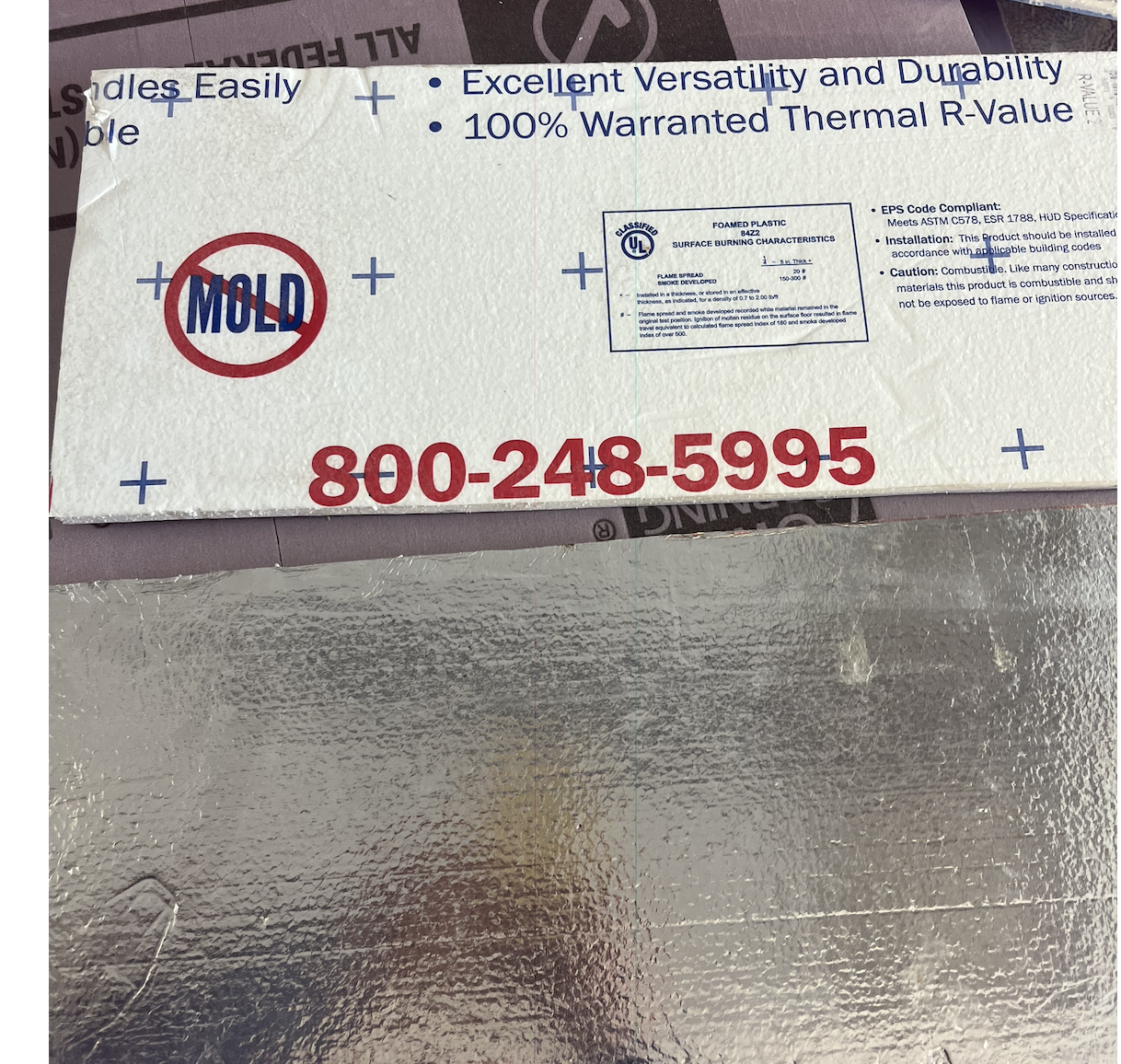
It may be more work to fit in, but this foamboard from the home depot makes for a nice finish look. No fibers to deal with. I have it on the walls of my shop. 1/2- 2" size 4X8 sheets
 Bob "hot rod" Rohr
trainer for Caleffi NA
Living the hydronic dream0 -
Be aware of local code requirements for foam board. The way I, as a homeowner, read the rules for my area, foam board can be used in an unoccupied crawl space that isn't used for storage, but must be covered with something like 1/2" drywall in a living space.
0 -
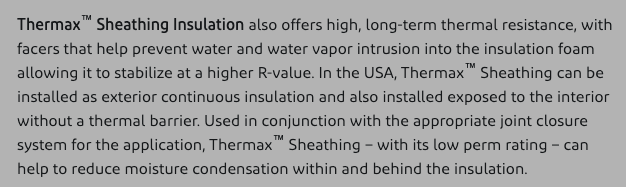
It is good to check with the manufacturer also. Thermax foil faced claims to be able to be installed exposed. If it has a code listing the building department should accept it?
 Bob "hot rod" Rohr
trainer for Caleffi NA
Living the hydronic dream0 -
I somewhat over-simplified my comment. Not all foam board is created equal. Expanded ploystyrene (R-Tech) and extruded polystyrene (pink and blue boards) are the only types available in our local box stores and that's what I was addressing in my example.
"THERMAX™ Sheathing is a high-performance, rigid polyiso insulation board with a glass-fiber-reinforced foam core and reflective aluminum facers."
0 -
What @AlaskaDick pointed out is important. Most box store rigid is pretty much solid gasoline, you need to protect it.
The rated stuff can be left exposed but pretty spendy. I would only do rigid with something like ultrafin where you need a gap, in that case the rigid can be installed under the joists.
I've tried the rigid under plates but gave up quickly. Usually in most floors there is too much wiring/piping in the way to get longer sections in. If the rigid is cut to wide, impossible to get in, if too narrow hard to hold in place.
Batts are really the best option in this case as they can be squished in there, easily fished around wires and pushed tight against the heat spreaders.
 1
1




Categories
- All Categories
- 87.8K THE MAIN WALL
- 3.3K A-C, Heat Pumps & Refrigeration
- 60 Biomass
- 430 Carbon Monoxide Awareness
- 133 Chimneys & Flues
- 2.2K Domestic Hot Water
- 6K Gas Heating
- 124 Geothermal
- 170 Indoor-Air Quality
- 3.9K Oil Heating
- 79 Pipe Deterioration
- 1.1K Plumbing
- 6.7K Radiant Heating
- 397 Solar
- 16.1K Strictly Steam
- 3.5K Thermostats and Controls
- 56 Water Quality
- 51 Industry Classes
- 51 Job Opportunities
- 18 Recall Announcements