Heat sizing question

does anyone have a rule of thumb to determine for the heat load for storage warehouse. In our area for residential with standard 8’6” ceilings I normally use 30 BTUs per square ft., and add in 10 percent for morning warm up, and extreme cold days.
The project in question would use LP gas unit heaters and is 51,100 cubic feet, 2544 square feet. That includes the 20 foot high ceiling which is bar Joyce then metal deck.
Any suggestions would be much appreciated. Thanks to all
Comments
-
do you live in alaska?
 1
1 -
Why not do the Manual J calculations? For a structure like that they would take perhaps half an hour…
Br. Jamie, osb
Building superintendent/caretaker, 7200 sq. ft. historic house museum with dependencies in New England2 -
Here is why 30 BTUs per square foot does not work.
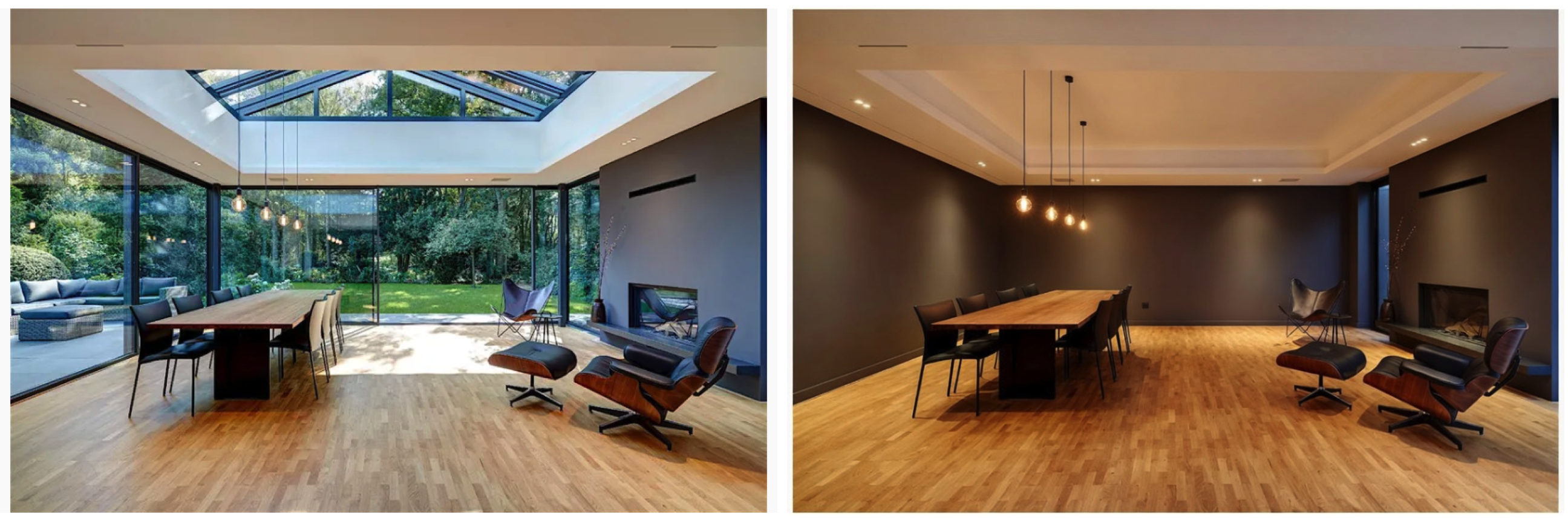
If you are using that method for all your estimates, then you will over size equipment on a regular basis. And you thought you were doing it the right way all these years, didn't you?
If this does not make sense to you then PM me for a detailed explanation
Edward Young Retired
After you make that expensive repair and you still have the same problem, What will you check next?
1 -
South Texas?
0 -
thanks for the responses. We are in Maryland. The 30 btus per square foot was given to us a rule of thumb by our carrier representative 25 years ago when the switch was made from atmospheric furnaces, to draft induced. Most contractors in our area use the same rule of thumb
0 -
The correct answer is to perform a load calc
Well insulated and sealed buildings built to today's codes should be in the 20 or lower number
Oversizing equipment is a bad deal deal for fuel consumption, excessive cycling, and low return temperatures
ACH on storage or warehouses could be a big number.Bob "hot rod" Rohr
trainer for Caleffi NA
Living the hydronic dream 1
1 -
Where in MD?
All Steamed Up, Inc.
Towson, MD, USA
Steam, Vapor & Hot-Water Heating Specialists
Oil & Gas Burner Service
Consulting0 -
I used to do a lot of work in southern NJ. I ran my own company then sold it and worked for another contractor. That contractor required the estimator to include a manual J load calculation to accompany the heating equipment size we put on our estimates. Then another contractor I worked for also required the load calculation to accompany the equipment selection for the sales contract. No calculation, no approval of the work. this protected their customers form a lazy salesman that was not going to take the time to measure up the home and specify using an arbitrary rule of thumb. then I operated my own business again. For over 35 years of working in southern, NJ every job that I quoted a new heating or air-conditioning system for has a manual J load calculation in the file with the sold contract.
I can tell you from experience that selling a smaller heater or air conditioner than the competition that uses your method for sizing equipment was very successful for me. the prices came in lower as a result of using lower price equipment, (the 40,000 BTU unit was always less expensive than the 80,000 or 100,000 BTU unit of the same model equipment). Then when you needed to match up ductwork for the larger oversized equipment, or the pipe size for the larger boiler, they always came in higher with the number if register outlets and trunk duct sizes or pipe fittings on the boiler jobs.
If you are going to do this for a living, you need to learn how to do heat loss calculations, or hire someone who does. And NJ and MD are in the same climate zone and I don't remember any of my heat loss calculations for a standard residential home being anywhere near 30, BTU per sq ft.
How often are the warehouse doors opening in the winter? 10% 0r 50% of the time? what insulation is in the walls? How many windows are in the walls? Glass looses more BTUh per sq ft, than an insulated wall. So you 30 BTU per sq ft may be right on, or way off. Tough to tell.
I was doing my own whole house load calculations in 1980. It's never too late to start to do it right.
Edward Young Retired
After you make that expensive repair and you still have the same problem, What will you check next?

 2
2


Categories
- All Categories
- 87.6K THE MAIN WALL
- 3.3K A-C, Heat Pumps & Refrigeration
- 59 Biomass
- 430 Carbon Monoxide Awareness
- 124 Chimneys & Flues
- 2.2K Domestic Hot Water
- 5.9K Gas Heating
- 120 Geothermal
- 168 Indoor-Air Quality
- 3.8K Oil Heating
- 78 Pipe Deterioration
- 1K Plumbing
- 6.6K Radiant Heating
- 396 Solar
- 16K Strictly Steam
- 3.5K Thermostats and Controls
- 56 Water Quality
- 51 Industry Classes
- 51 Job Opportunities
- 18 Recall Announcements