Height difference between primary and emergency low water cutouts

Hey folks. Is there a standard for the height difference between a primary and emergency lwco? When our boiler was installed we were having issues with surging tripping the primary cutout. Rather than addressing water quality issues that were likely causing the problem, our contractor simply raised the primary cutout but not the emergency. As a result it takes about 20 seconds for the emergency cutout to trip when doing a blowdown leading to excessive fresh water being taken on.
Thanks
Comments
-
Both need to be above the minimum safe water level, which means they're about the same height. See attachment
1 -
How did they move it ? Different tapping ?
Once the water quality issue is resolved can you just move it back the where the boiler's manual recommends?
Pictures?
Boiler Make and model?
National - U.S. Gas Boiler 45+ Years Old
Steam 300 SQ. FT. - EDR 347
One Pipe System1 -
good Question?
1 -
Height difference between primary and emergency low water cutouts
About that much
Edward Young Retired
After you make that expensive repair and you still have the same problem, What will you check next?
1 -
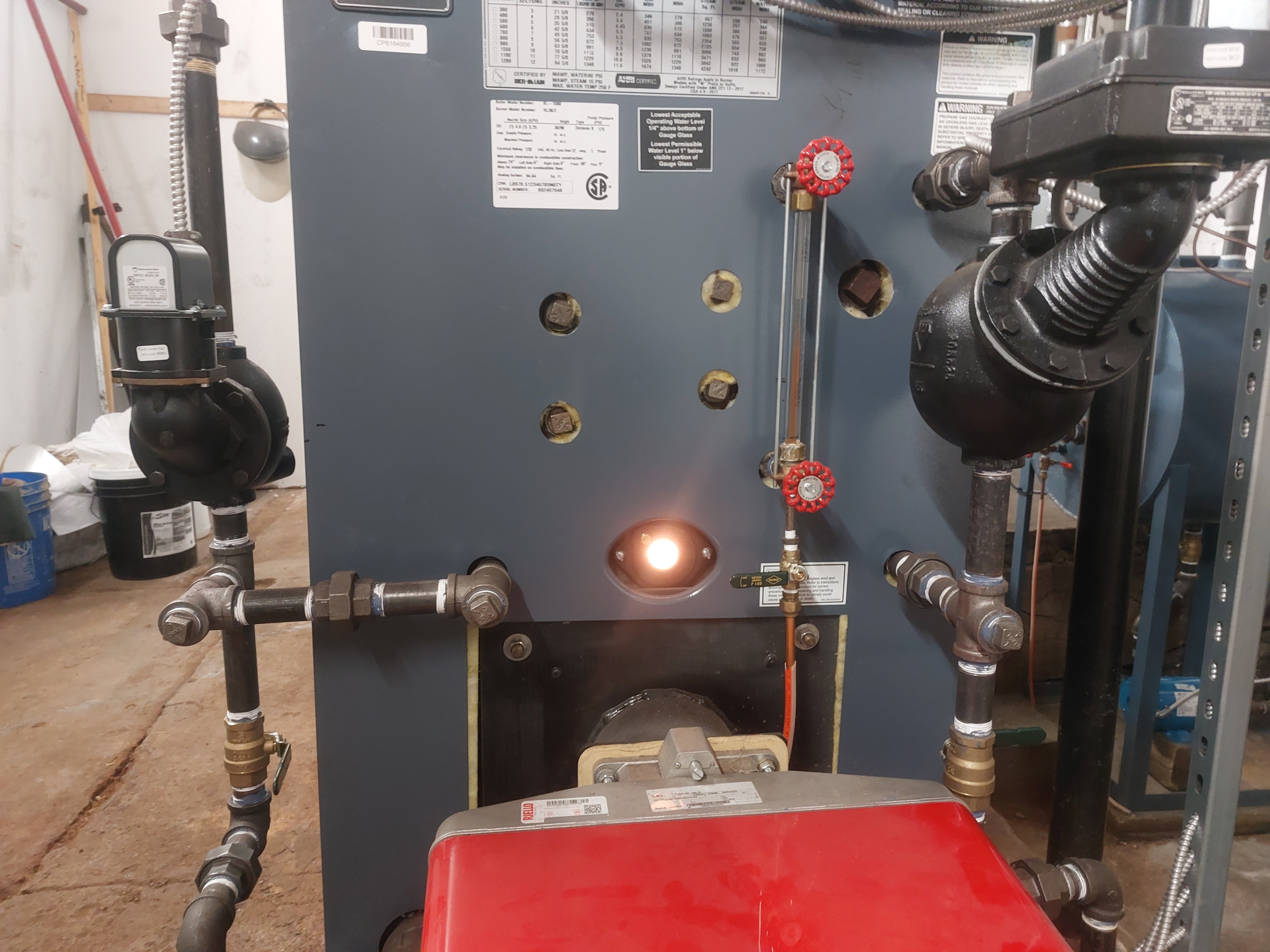
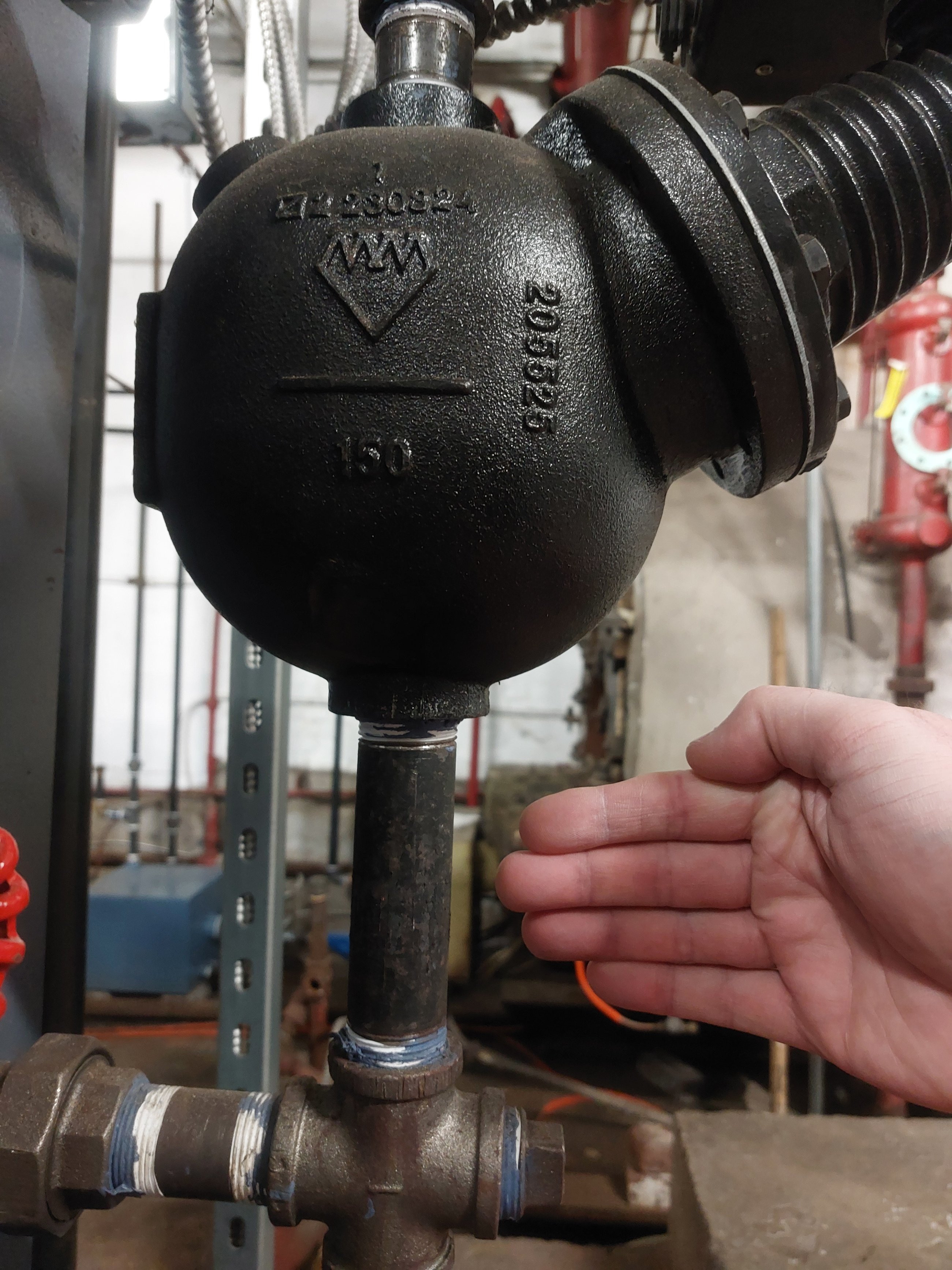
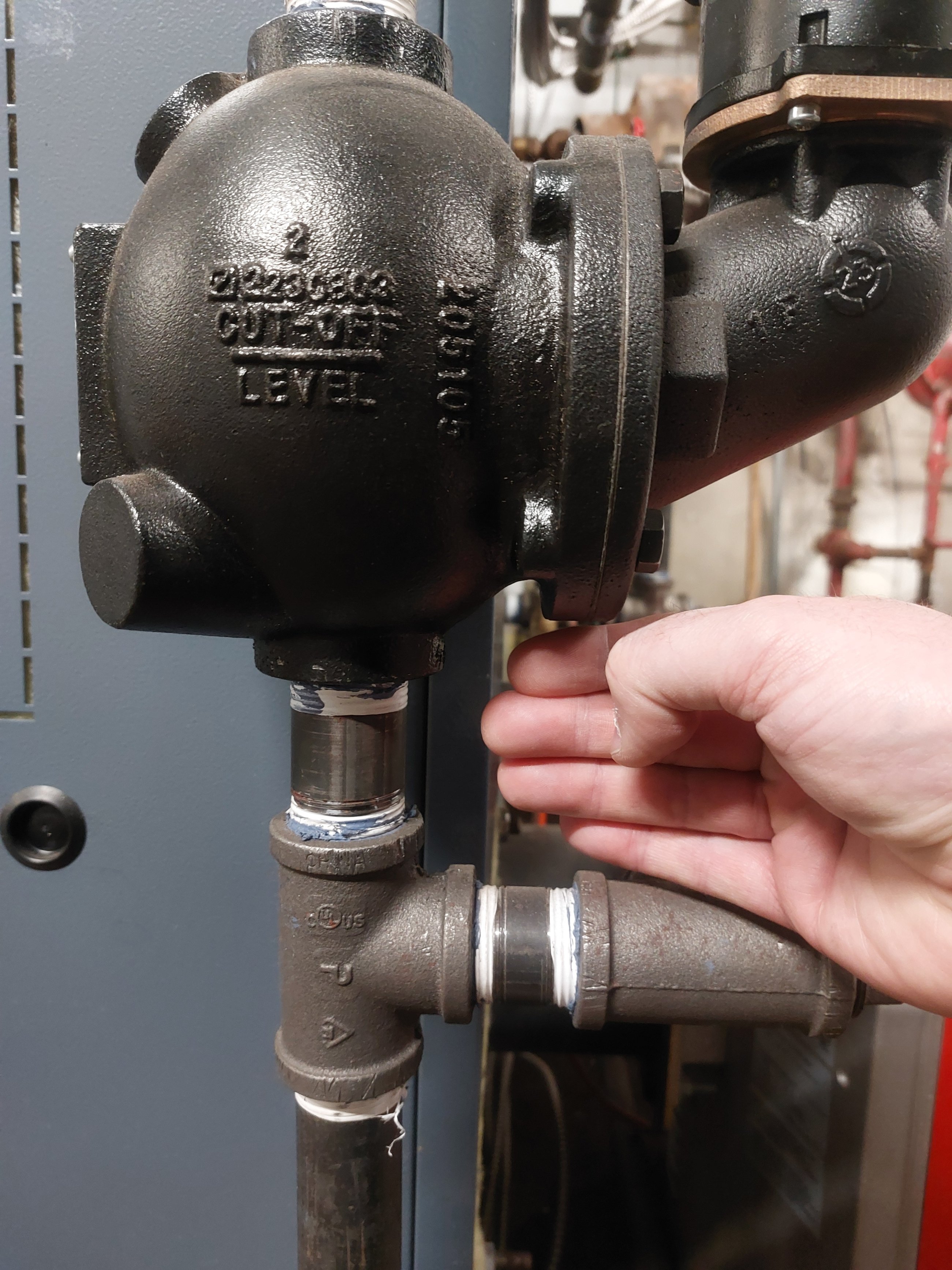
Thanks for the response, sorry about the delay. The tappings are the ones intended for lwcos and are at the same height. These are float type cutouts and the primary was raised by putting a longer nipple between the bottom of the cutout and the tapping. I can't find anything in WM's installation manual for this series of boiler that specifies what if any difference there should be between the water levels on the two lwcos.
 0
0 -
Both are above the safe minimum which is listed as 1/4" above the bottom of the glass. The primary/feed pump controller is about 4" higher than the emergency. With the boiler running and not calling for water, the primary will kill the burner within 2s of opening the ball valve. Under the same conditions the emergency takes closer 20 seconds. That's alot of water and chemistry down the drain.
0 -
Sometimes I think that agent 86 himself installed this boiler.
 1
1 -
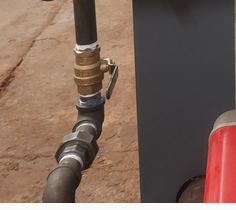
"As a result it takes about 20 seconds for the emergency cutout to trip when doing a blowdown leading to excessive fresh water being taken on. "
I don't understand how raising the Right LWCO causes a problem with the Left LWCO. The blow down water volume should be about the same.
I think most folks would want the LWCO that operates the water fill to be higher, since they are lazy and don't maintain a good water level. Often the LWCO only maintains near the minimum water level for safety, not for best boiler operation. So as the water line depletes over time and the LWCO eventually calls for water it fills to a more optimum point by a fill duration delay. But never actually maintains an optimum water level.
To me the more water in the boiler (to a point) the more water that can absorb the burners energy.
I think you are better off where the Right LWCO presently is now (assuming that is what is pictured above), just fix the water quality.
If the 20 seconds really bothered me I'd go to the next pipe size up for the drain pipe so the Left LWCO drains faster to test the switch.
 National - U.S. Gas Boiler 45+ Years Old
Steam 300 SQ. FT. - EDR 347
One Pipe System0 -
This is a 10 section Weil Mclain 80 series and the primary lwco is also the pump controller for the boiler feed tank.
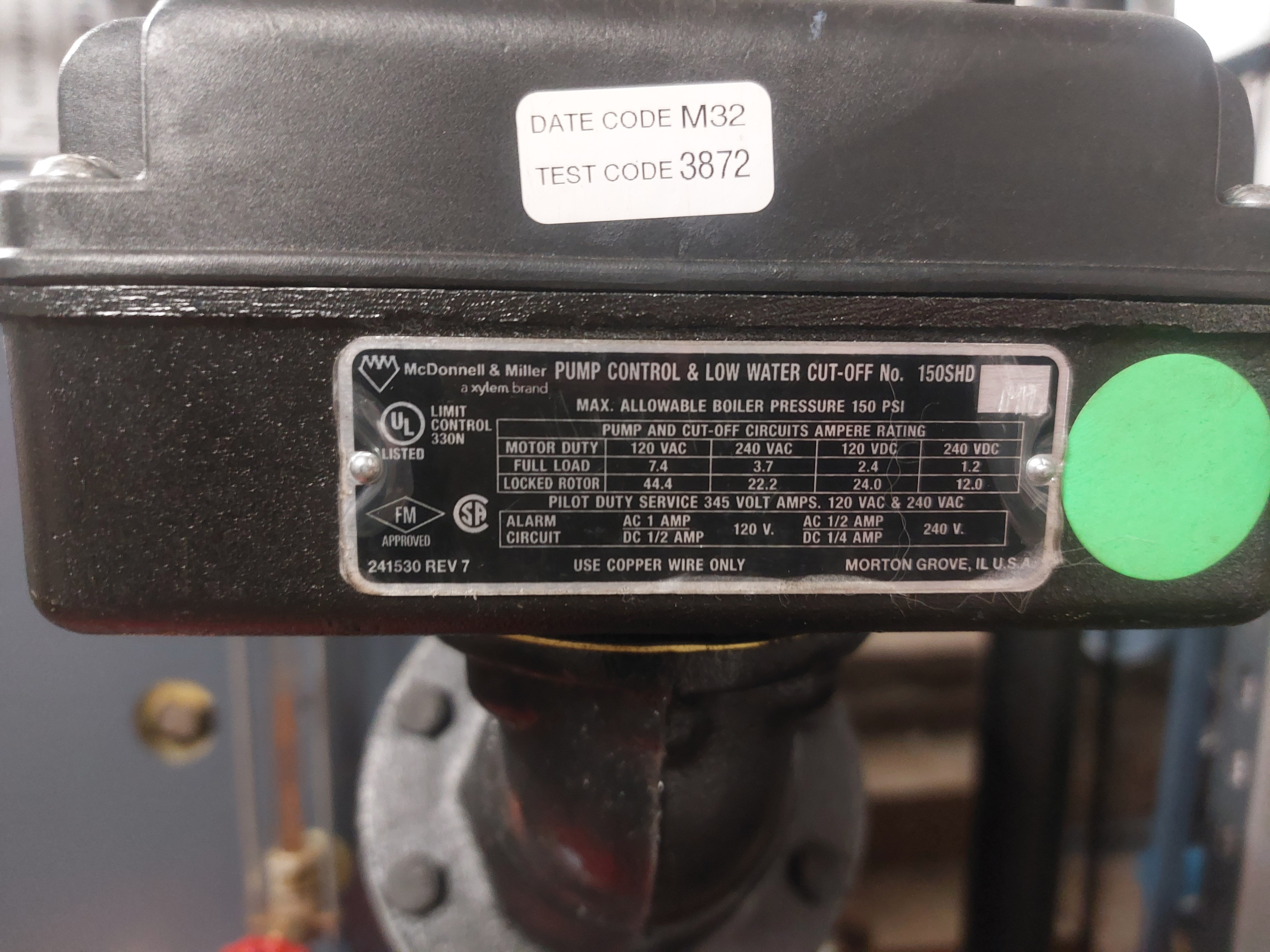
Being a high efficiency boiler, it doesn't run for long before that primary starts calling for water from the tank. The cycle of condensate returning to the feed tank and the boiler calling for water is very consistent throughout a cycle and the water level in the boiler stays pretty solid.
The problem we encountered when the unit was commissioned in 2024 was surging causing nuisance tripping of the emergency lwco, requiring a reset. The installer raised the primary lwco and thus the water level in the boiler to prevent this. It seemed to work as the boiler hasn't gone out on low water since. The water was changed after that first heating season but its quality is suspect and the glass jumps around alot (I suspect far too much water treatment).
Being float type cutouts, I do weekly blowdowns of each both to clear out sediment and verify their function. Because the emergency lwco is so much lower than the primary, which sets the water level in the boiler, it takes a large drop in water level before the emergency lwco will trip. I've not been able to measure but I estimate I'm losing over 10gal every time I blowdown the cutouts.
I intend to address water quality before the next heating season starts and would like to raise the emergency lwco to a level closer to, but obviously somewhat lower than that of the primary.
I'm just curious if there's any type of standard or general guidance on how much lower an emergency lwco should be than a primary.
0 -
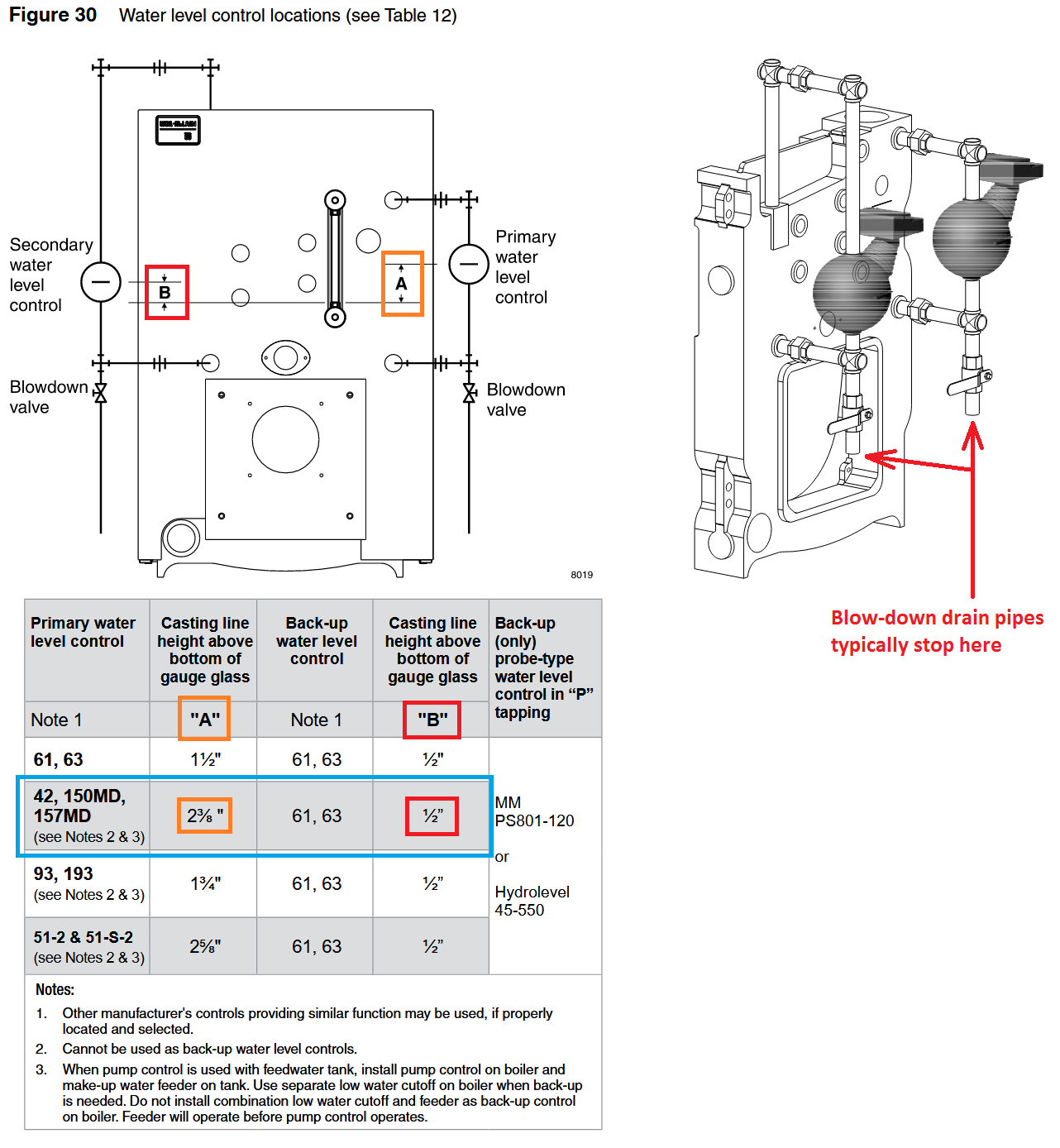
The control on the left is the LWCO and should be set to shut off the burner if the water level drops below the boiler MFG safe minimum water level. It is set in the right position with the casting mark on the control. You can look in the M/M instructions for what happens at the casting mark and adjust the mounting measurements to suite
The control on the right is a combination pump control/low water cutoff. It should be installed so that the pump control operates the pump to keep the boiler water level at its optimal height. 1/2 a glass unless the boiler mfg specifies otherwise. Again , refer to the M/M instructions for that control
1 -
" I've not been able to measure but I estimate I'm losing over 10gal every time I blowdown the cutouts. "
That is insane.
My M&M 67 trips the switch in seconds, like maybe a quart of water.
During a blow-down the LWCO's float chamber should evacuate much faster than the boiler's water content can keep it flooded. If you don't have a bucket almost directly underneath the LWCO your drain is probably too restrictive. Or not a full port valve or too much pipe (too long and/or too many elbows). I can't see where it goes, a larger drain pipe may be the answer.
Personally I would not move either LWCO, I like where they are now.
Also if you are using water treatment to minimize system rusting the blow down interval could probably be extended.
National - U.S. Gas Boiler 45+ Years Old
Steam 300 SQ. FT. - EDR 347
One Pipe System0 -
Another way of thinking about it, if you need to drain 10 gallons of water from the boiler (slow) to evacuate that small LWCO float chamber you are probably not doing a very good job of flushing out the rust and debris which is largely the intent of the procedure (besides switch verification).
I tried mine and crudely measured the water, my switch trips with less than a quart of water released. I usually cycle it a few times. My drain pipe is maybe 6 inches long and drains into a bucket.
National - U.S. Gas Boiler 45+ Years Old
Steam 300 SQ. FT. - EDR 347
One Pipe System1 -
From the manual. You should have the manual.

 National - U.S. Gas Boiler 45+ Years Old
Steam 300 SQ. FT. - EDR 347
One Pipe System1 -
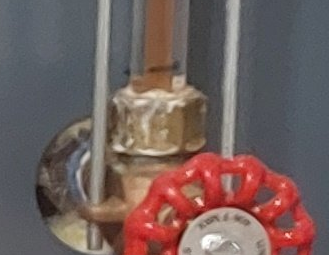
Is this leaking ? If so it should be repaired before it gets worse.
 National - U.S. Gas Boiler 45+ Years Old
Steam 300 SQ. FT. - EDR 347
One Pipe System0 -
Wow. This is why I value this forum so much. It hadn't occurred to me that water being unable to immediately drain from the float chamber might be the issue but it makes perfect sense.
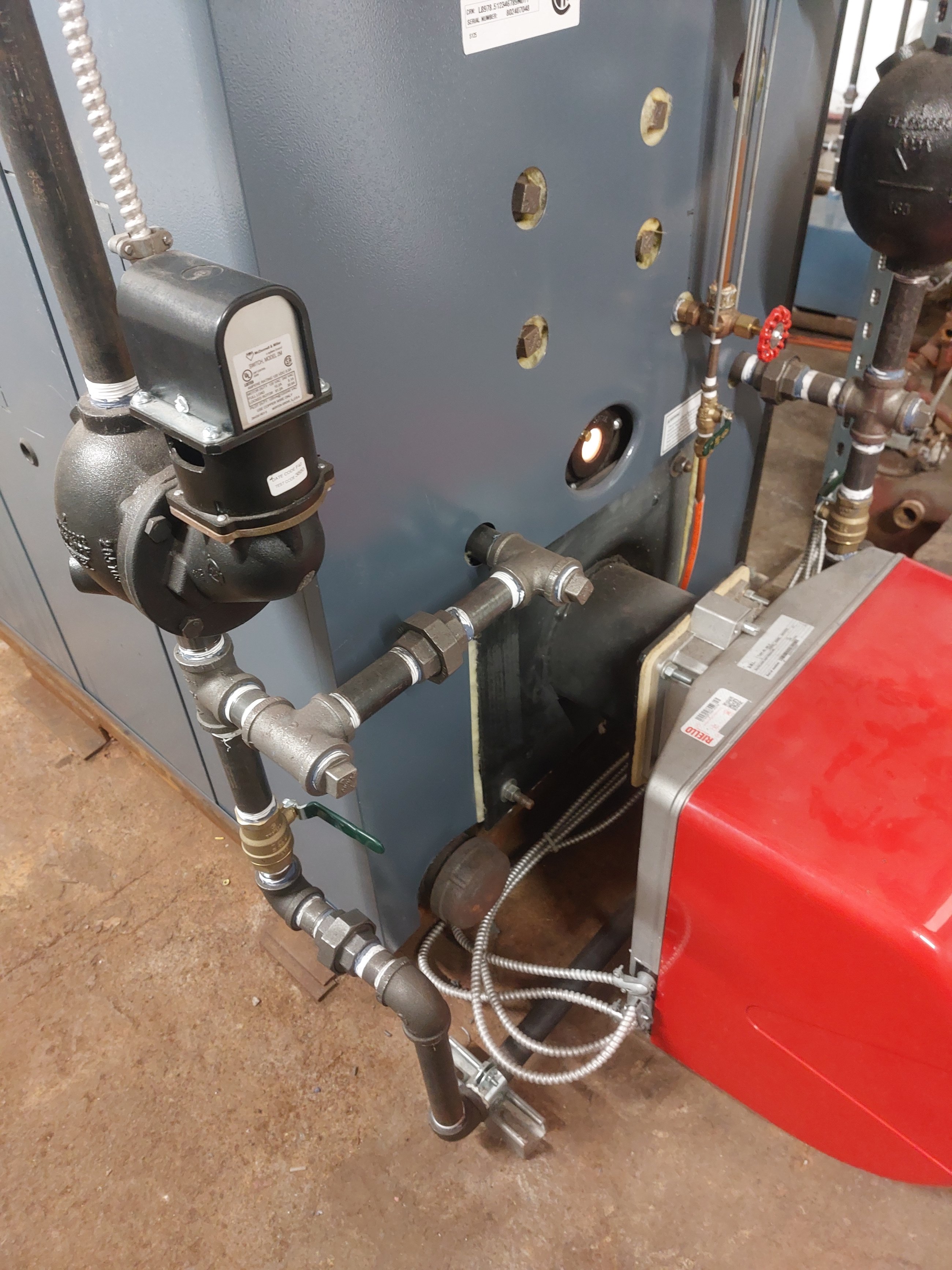
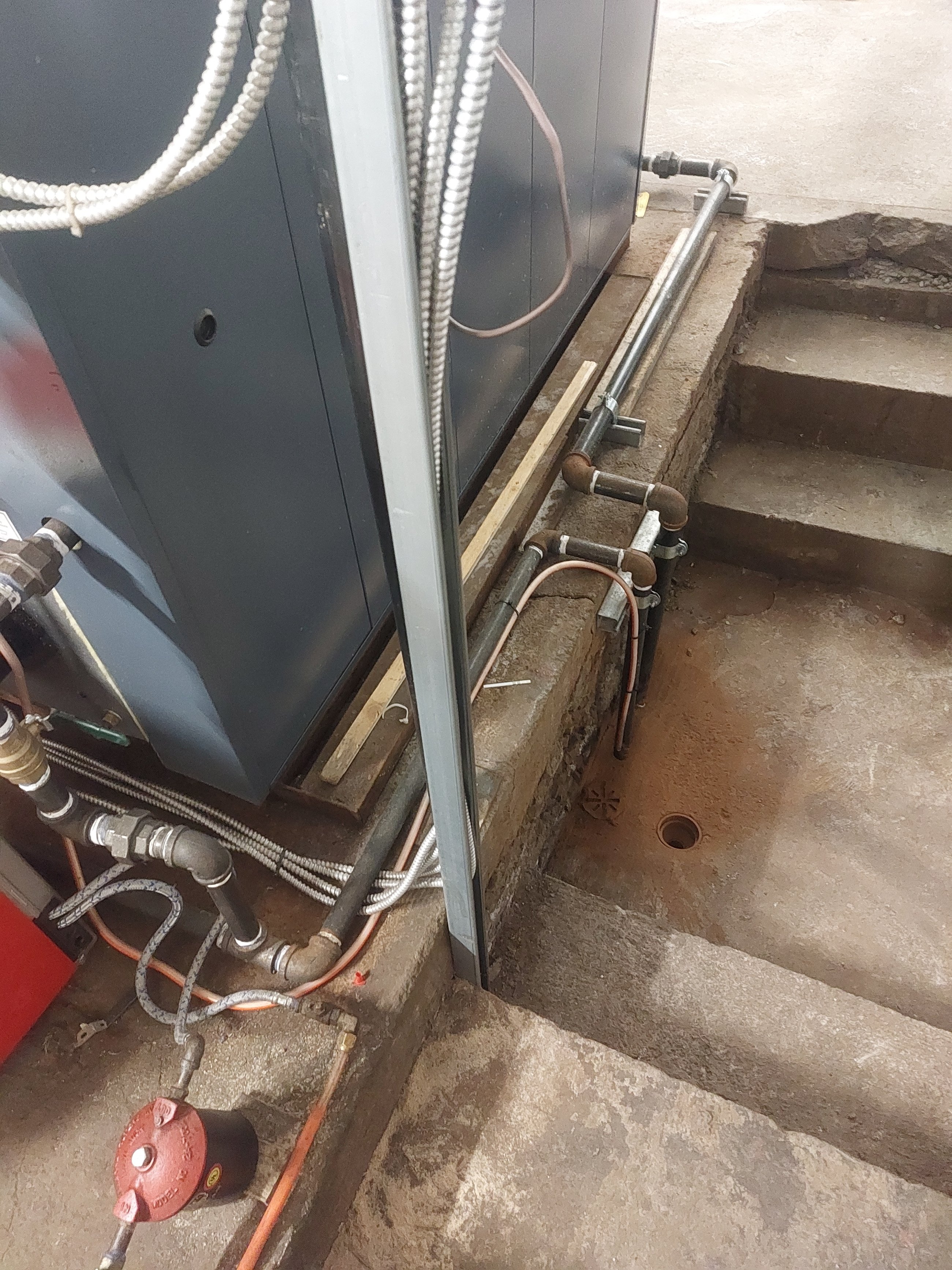
There's a good 10' of pipe and 6 elbows directing blow down water into a floor drain.
You can bet I'll be breaking the union after that ball valve and trying a blowdown straight into a bucket.
Thanks a million for your insight on this.
0 -
Hadn't noticed that but I'll check it. Thanks
0 -
@Gateacre said: Hey folks. Is there a standard for the height difference between a primary and emergency lwco? When our boiler was installed we were having issues with surging tripping the primary cutout. Rather than addressing water quality issues that were likely causing the problem, our contractor simply raised the primary cutout but not the emergency. As a result it takes about 20 seconds for the emergency cutout to trip when doing a blowdown leading to excessive fresh water being taken on.
And I had the same thought as @109A_5 has here:
" I've not been able to measure but I estimate I'm losing over 10gal every time I blowdown the cutouts. "
That is insane.
My M&M 67 trips the switch in seconds, like maybe a quart of water.
But then I looked at the geometry and understand the problem.
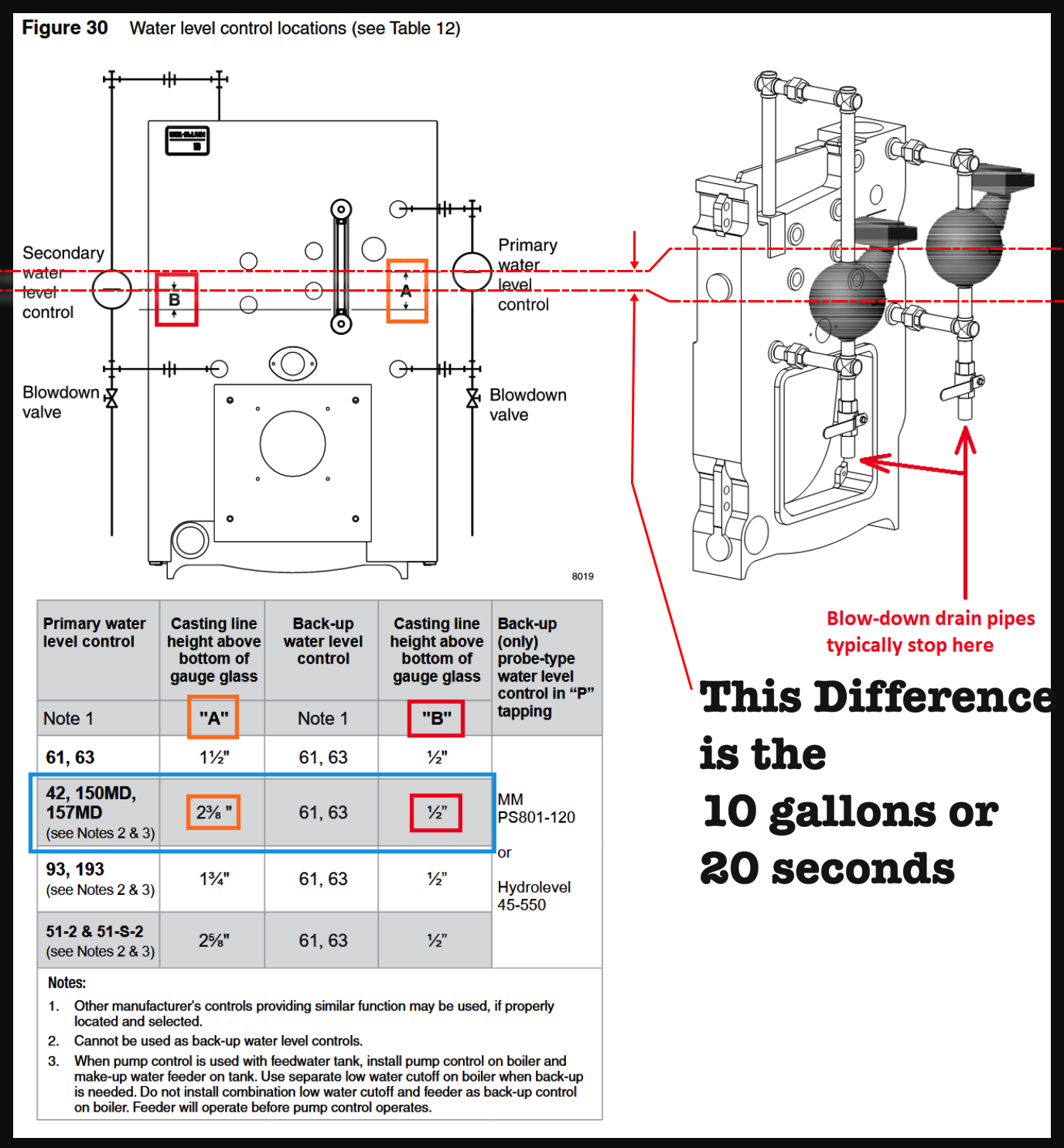
Once you get the water quality issue solved and have the surface properly skimmed, the surging will stop and you can put the LWCO levels closer together.
Edward Young Retired
After you make that expensive repair and you still have the same problem, What will you check next?
 2
2 -
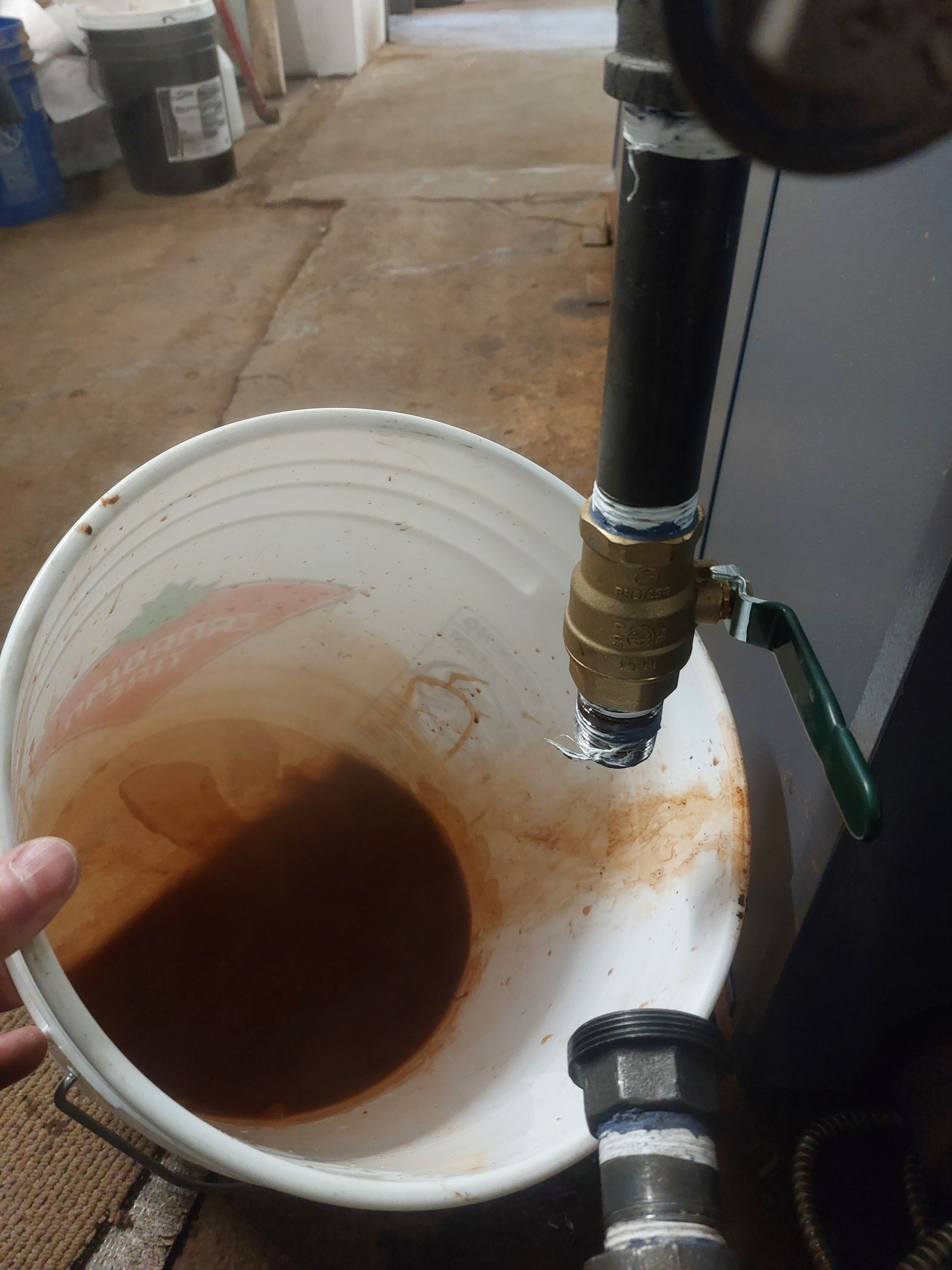
Well there you have it. With half a pound of pressure in the boiler it may have taken a full second to trip. Maybe. Thanks again
1 -
As an example my boiler never has half a pound of pressure.
Anyway glad you understand the situation better.
If it were me and I wanted the nice piping to the floor drain, I'd probably use 1-1/2 PVC from just under the valve unless there is a plumbing code against it (I'm not a Plumber). For the short duration and limited temperature I think the PVC would tolerate it well.
National - U.S. Gas Boiler 45+ Years Old
Steam 300 SQ. FT. - EDR 347
One Pipe System0 -
This is a sprawling 2 pipe system in a fairly large 1890s commercial property. There are a couple of locations where I need enough pressure to move condensate uphill. Half a psi is just enough to keep condensate flowing.
Regarding piping the cutouts to the floor drain, I couldn't care less. All that drain piping was done by the installer without consulting me. He mustn't have considered the possible consequences. There was such a dramatic improvement today, blowing the emergency lwco into a bucket, that I'm now realising the primary is restricted as well - just not so severely. It takes maybe 4-5 seconds for the it to trip which is a significant volume of water over time and may not be flushing the float chamber very well. In sure I'll wind up 86ing the the rest of that drain line and doing both blowdowns into a bucket. Keep it simple.
Oh, and that's pipe dope on the guage glass nut. Maybe he nicked the gasket or something. It's not leaking anyway.
0 -
I was not commenting on your system's need for half a pound of pressure. What I was referring to was my blow-down is pretty much gravity water flow, no real pressure to push the water out, yet it works good.
I like the idea of a drain pipe, it just has to work correctly and not cause problems. In my case the floor drain is way too far away, so it gets the bucket.
OK on the pipe dope, not corrosion. It should not need pipe dope, but who knows was was going on. Good that it is not leaking.
As far as water quality, was the boiler skimmed initially (to get the production oil out).
National - U.S. Gas Boiler 45+ Years Old
Steam 300 SQ. FT. - EDR 347
One Pipe System0 -
For myself I don't agree at all with Weil McLains location for the pump control. It will cause the boiler to run with a low water level at all times.
That is if the #150 is being used as a pump control
 1
1 -
It was skimmed some but I boiled a sample in a clean 2" pipe and it frothed like a cappuccino. My plan is to clean it with tsp before next heating season.
0 -
If that were mine, I'd get rid of that secondary float LWCO. Then I'd remove the plug from tapping P in the following diagram:
and install a probe-type manual-reset LWCO therein. This would sidestep the blow-down issues, at least for the secondary LWCO.
On a gravity-return job, I'd remove the plug from tapping F2 and put my primary LWCO probe there. The M&M PS-801 will fit that space, but the Hydrolevel Safeguard/CycleGuard 450 or the M&M FPC-1000 would need a remote probe.
We all know folks don't blow down float LWCOs like they should, so this solves the problem. It also eliminates all those moving parts. We have installed 80-series steamers this way for years, and never had a problem.
All Steamed Up, Inc.
Towson, MD, USA
Steam, Vapor & Hot-Water Heating Specialists
Oil & Gas Burner Service
Consulting1 -
Agreed. Thankfully I trust myself to do blowdowns. Certainly if it were to fail I'd replace with a probe type.
0 -
So do we- but what happens when you retire?
All Steamed Up, Inc.
Towson, MD, USA
Steam, Vapor & Hot-Water Heating Specialists
Oil & Gas Burner Service
Consulting0 -
There is no prefect LWCO, both types have their own issues. The manufacture's have recommend change out intervals for both types, CYA motivated in my opinion.
I prefer the float type, since I maintain it (when needed, disassembled and cleaned, needed twice in 50 years). The next guy can do their own research.
The problem I have with the electronic probe type is electronics fail (40 + years repairing electronics is enough proof for me) and unless you drain the boiler enough to actually test the probe type you don't know if it is truly working.
In my opinion, both types have a margin for a false sense of security.
National - U.S. Gas Boiler 45+ Years Old
Steam 300 SQ. FT. - EDR 347
One Pipe System0



Categories
- All Categories
- 87.6K THE MAIN WALL
- 3.3K A-C, Heat Pumps & Refrigeration
- 59 Biomass
- 430 Carbon Monoxide Awareness
- 124 Chimneys & Flues
- 2.2K Domestic Hot Water
- 5.9K Gas Heating
- 120 Geothermal
- 168 Indoor-Air Quality
- 3.8K Oil Heating
- 78 Pipe Deterioration
- 1K Plumbing
- 6.6K Radiant Heating
- 396 Solar
- 16K Strictly Steam
- 3.5K Thermostats and Controls
- 56 Water Quality
- 51 Industry Classes
- 51 Job Opportunities
- 18 Recall Announcements