Two steam radiators piped in series

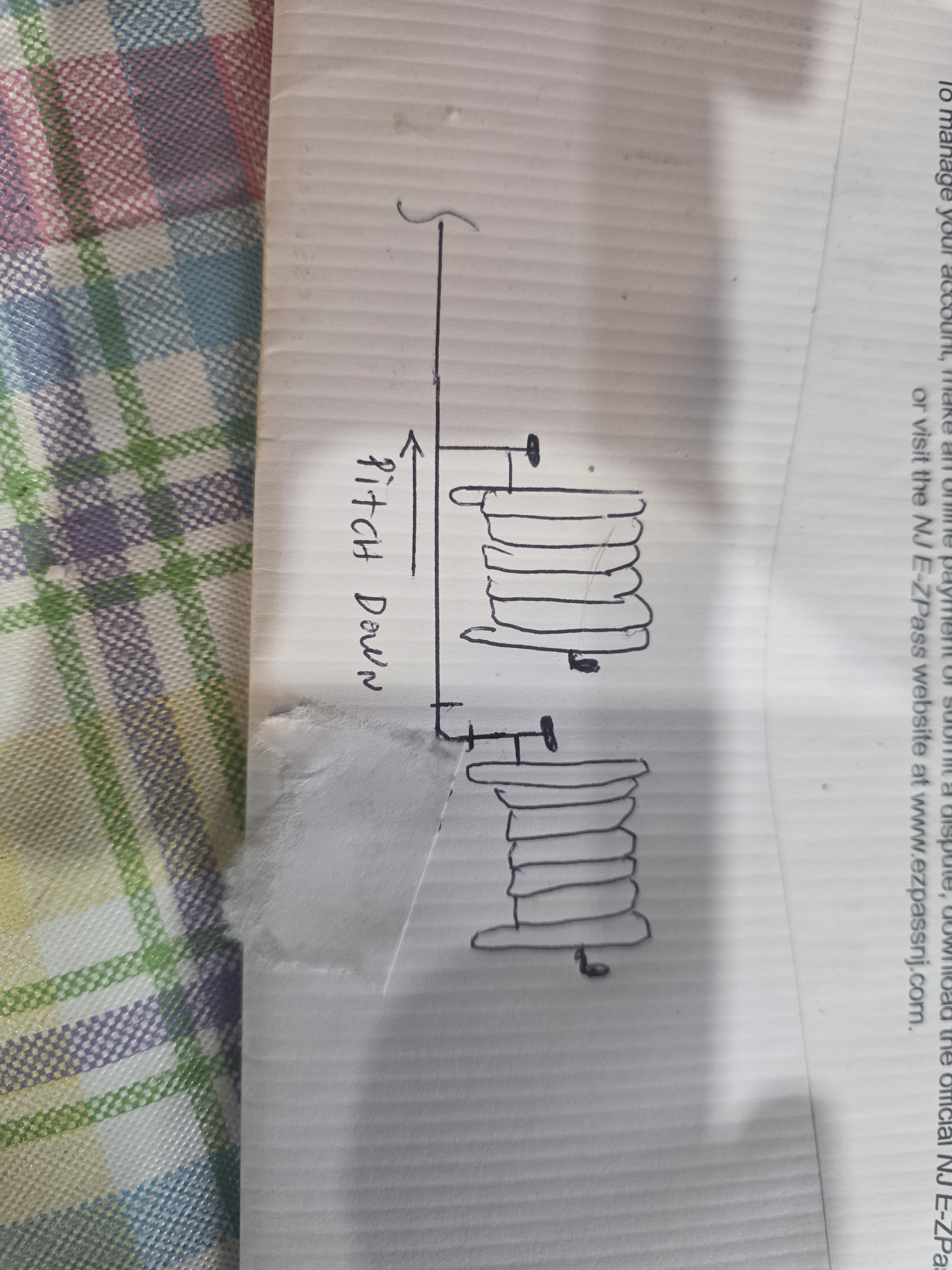
I have a client who is asking me to add a radiator within his bedroom as the current radiator which is located on an opposite wall of a very large bedroom is not adequately heating his space in the giant walk-in closet. There is a radiator already located in there I’m curious if there’s any negative implications if I were to remove the 2 inch plug at the bottom of the radiator located in the closet and extend a pipe utilizing proper pitch into the next room which would be his bedroom and add a second radiator ultimately placing these radiators piped in a series fashion is that possible
Comments
-
Forget it- it won't work. @DanHolohan covers this in his excellent book "The Lost Art of Steam Heating".
 2
2 -
What Steamhead said.
Retired and loving it.1 -
Curious, could there be an arrangement utilizing a single supply valve where they could be joined in parallel so to speak? Basically split at the inlet valve, piped around behind the first radiator with slope to the second radiator which would have to be set on some amount of blocks to maintain pitch on the supply pipe. I have never seen it but if the current supply pipe size is large enough to support the two radiators could it work?
0 -
Yes that could be made to work, @dabrakeman . The trick — I'm assuming single pipe here — would be to get the balance right, and might take some fiddling with the vents. The other thing to watch out for would be not exceeding the EDR capacity of the riser and any runouts
Br. Jamie, osb
Building superintendent/caretaker, 7200 sq. ft. historic house museum with dependencies in New England 1
1 -
@DanHolohan is their a configuration in which would work?? Damaging any walls or ceiling is completely out of the question
0 -
Pipe size. The pipe size feeding the one radiator is most likely size for one radiator. The condensate being produced would have to slide by the incoming steam on the common connection. At that point the piping would mostly be undersized to handle the additional condensate being produced.
0 -
like others have said, you have to look at the sizing of the runout to see if it can handle more capacity, but your options are either to get a bigger single radiator(new radiators are available from a few manufacturers or you can find a used radiator). your other option is a tee at the riser to connect it to 2 radiators that do not exceed the capacity of the runout.
0 -
-
Curious, why wouldn't this work?
I mean I think it looks ridiculous but, it would have to work, no?
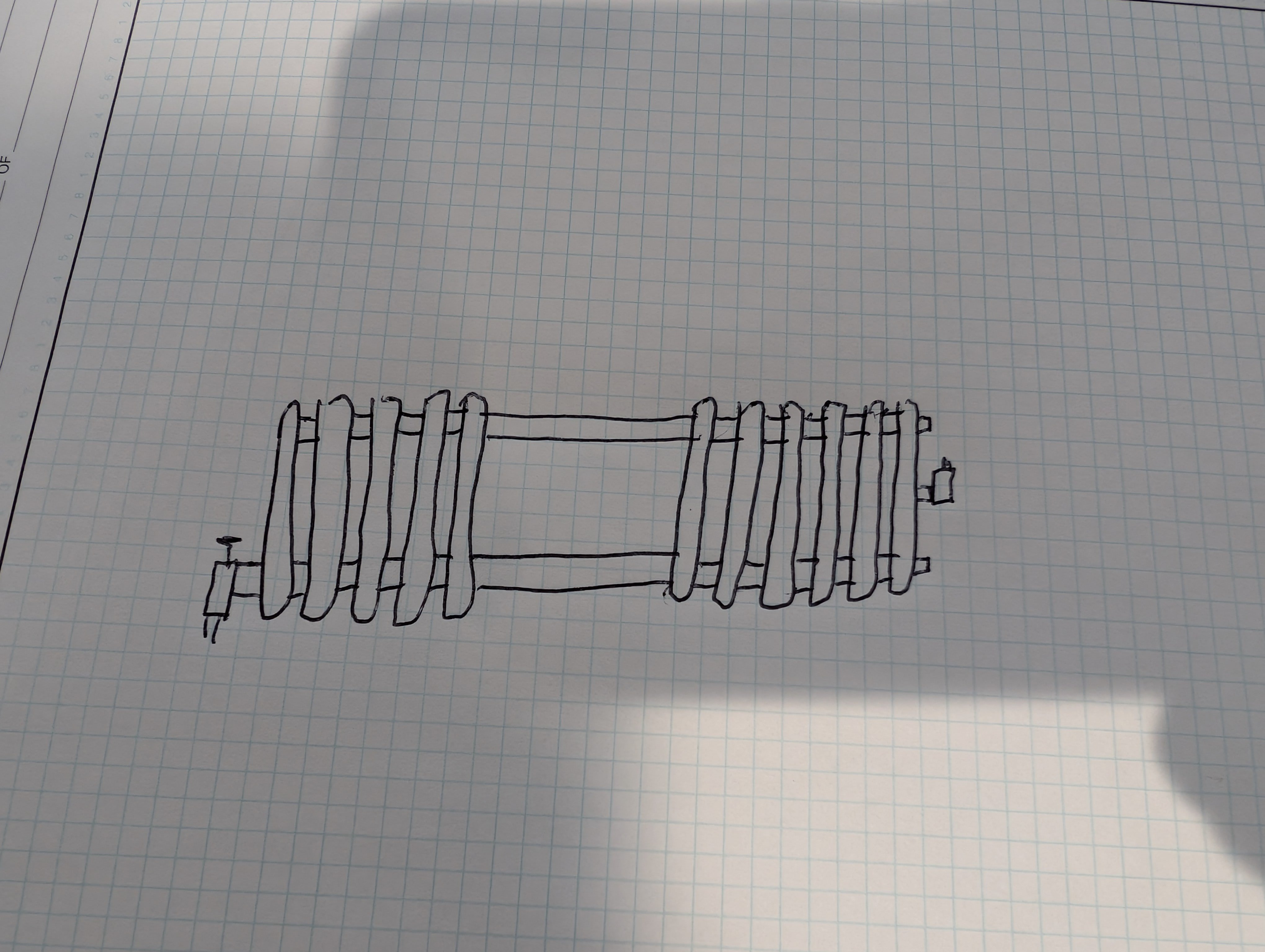
Single pipe 392sqft system with an EG-40 rated for 325sqft and it's silent and balanced at all times.
 1
1 -
I thought that @New England SteamWorks did it a year or 2 ago but it might have been 2 pipe and I think it would work on 2 pipe.
0 -
It should. It's now one bigger radiator. (assuming there's enough input.)
Trying to squeeze the best out of a Weil-McLain JB-5 running a 1912 1 pipe system.0 -
maybe one of us should crack open tlaosh and find out why it doesn't work…
0 -
I'm so happy you volunteered!
I would, but I won't be home until very late.
Single pipe 392sqft system with an EG-40 rated for 325sqft and it's silent and balanced at all times.
0 -
my copy is also currently at home and i am not…
0 -
I would think it would work unless it is too long to pitch correctly
0 -
I don't see why it wouldn't work — if pitched as @EBEBRATT-Ed said and the riser and runous were big enough. But… it would like a little odd.
Br. Jamie, osb
Building superintendent/caretaker, 7200 sq. ft. historic house museum with dependencies in New England0 -
@DanHolohan didn't elaborate because presumable he wanted tlaosh to not be a 10 volume set, he simply says that the condensate in the first radiator keeps the steam from getting in to the second radiator.
I think what is happening if i try to think like steam is when the steam fills the first radiator down to the far outlet where the second radiator is connected, it encounters the condensate in the bottom of the radiator and that for the most part stops the steam there, it doesn't follow the pipe across.
I think that @ChrisJ 's connecting to and bottom would work. the textbook way is to run a lateral that tees up to both radiator between the legs of or behind both radiators with pitch back to the riser.
or just get a bigger radiator.
but once again make sure the piping can support the bigger load.
 1
1 -
Think about it....most residental supply piping is max 1 1/2" for a large radiator which is sized for it., more often its 1" or 1 1/4" Now you want to add another radiator off that same supply....its overloaded. That being said, if the supply is large enough AND you have plenty of plenty, Chris J's depiction will work fine. Mad Dog
0 -
1 1/2" can handle 81sqft. 1 1/4" 55sqft.
0 -
I would wager it can do that and a lot more. So far every steam "limit" I have tested has been dramatically conservative.
NJ Steam Homeowner.
See my sight glass boiler videos: https://bit.ly/3sZW1el1 -
Let's back up a second. Does that radiator get fully hot? If not, adding radiators will accomplish nothing
 2
2 -
That's a dangerous question.
It should only get fully hot when all or most of the others are fully hot and that likely only happens during extremes.
Single pipe 392sqft system with an EG-40 rated for 325sqft and it's silent and balanced at all times.
0 -
I wonder why Dan said this?
What Steamhead said.
After @Steamhead said this? "Forget it- it won't work. Dan Holohan covers this in his excellent book "The Lost Art of Steam Heating"."
Maybe they know something from experience. But What do I know. @ethicalpaul could do a video to prove everyone wrong.
Edward Young Retired
After you make that expensive repair and you still have the same problem, What will you check next?
0 -
the sketch in tlaosh shows them connected end to end at the bottom which I think won't work for the reasons I stated above.
0 -
We have done it several times. Not good practice, and there are a number of issues that negatively affect this, but it has worked where we've done it.
As some above have said, you need the proper sizing and pitch of the supply pipe. You also must understand that the standing condensate in the first radiator will dramatically condense the steam passing over it into the second. And the condensate will cool both radiators. That can cause hammering, a cold radiator, wet steam or spitting vents.Like most things steam: You can try it and maybe it will work. Maybe it will work in mild weather only; maybe it will work in cold weather only. Maybe or maybe not it will be balanced. Sometimes. Maybe it won't work at all.
Proper practice assures a consistent, well operating system. Anything less than that invites problems.
 2
2 -
And we are still asking if it will work anyway. I have this better idea where we don't use pipes to connect the radiators. We just imaging that the steam will get to the next radiator. What if I draw you a diagram of how it might work. That will make it happen. Right?
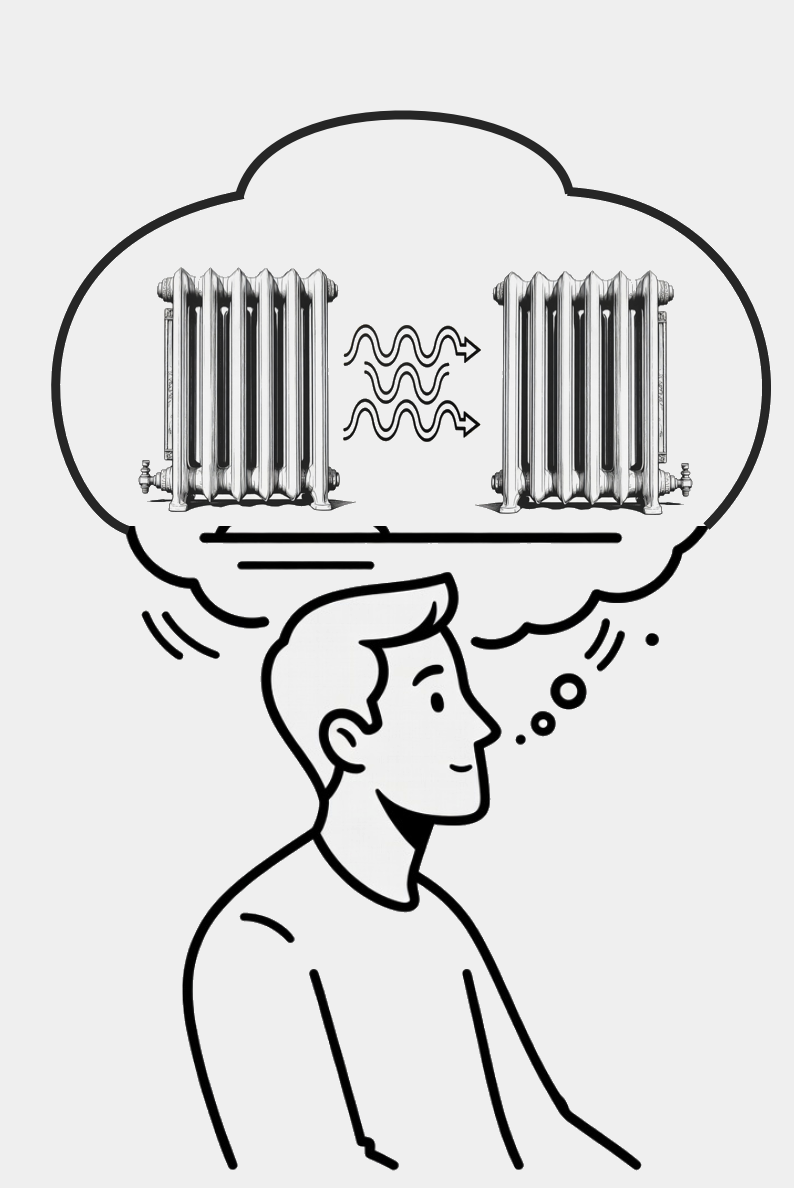
Try it and tell me how it works out for you. I would like to know
Edward Young Retired
After you make that expensive repair and you still have the same problem, What will you check next?
0 -
So there is already a radiator in the space that isn't connected to anything? That seems a bit odd, but I guess a radiator could have been removed from service and stored there. However it might pay to check for piping that was mothballed for some reason.
As a separate possibility, would a fan on the existing radiator increase it's heat output?
-Jonathan
0 -
Even if it doesn't get fully hot on some cycles connecting the second in parallel (as opposed to in series) should increase room heating for a given cycle, roughly as a function of the increased combined radiator venting. For a shorter cycle doubling the venting could do similar but the single radiator vs two woujld have less potential capacity on longer cycles.
0 -
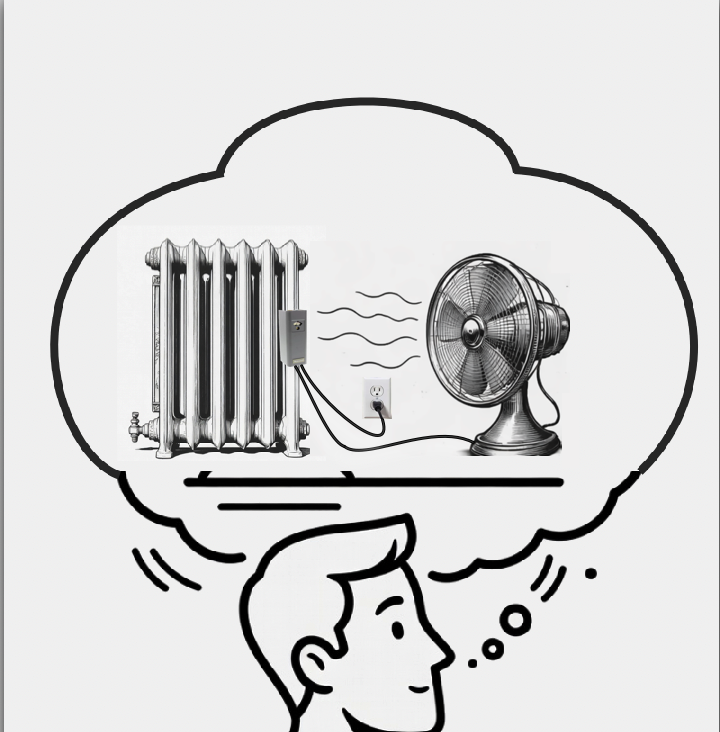
…and it will look great too.
let me just imagine it
Edward Young Retired
After you make that expensive repair and you still have the same problem, What will you check next?
1 -
Now there you go with your fancy thermostatic control and snazzy table fan. I was thinking 'muffin fan duct taped to the unit' :)
Seriously though, what about a nice metal radiator enclosure with proper decorative grill, and fans built into the enclosure. And apparently there are companies that make fans specifically for radiators (see radfan.co for one example)
1









Categories
- All Categories
- 87.8K THE MAIN WALL
- 3.3K A-C, Heat Pumps & Refrigeration
- 60 Biomass
- 430 Carbon Monoxide Awareness
- 133 Chimneys & Flues
- 2.2K Domestic Hot Water
- 6K Gas Heating
- 124 Geothermal
- 170 Indoor-Air Quality
- 3.9K Oil Heating
- 79 Pipe Deterioration
- 1.1K Plumbing
- 6.7K Radiant Heating
- 397 Solar
- 16.1K Strictly Steam
- 3.5K Thermostats and Controls
- 56 Water Quality
- 51 Industry Classes
- 51 Job Opportunities
- 18 Recall Announcements