Opinions on DHW options

In a few other posts, I have been gearing up to specifying a new hot-water boiler (likely a mod-con) for a large old duplex. I presently have two conventional tanked water heaters with natural, atmospheric draft. Once we get rid of the 70-year-old boiler, I want to also get rid of the natural-draft water heaters and decommission the flue. I am seeking opinions on replacement DHW equipment.
We use this duplex as a large, single-family home, so I probably will get rid of one water heater. Our hot-water loads are actually quite modest, as we are just 3 adults who don’t take lengthy showers.
As I see it, we could use:
- Conventional direct-vent or powervent tanked water heater
- Tankless
- Indirect from the new mod-con
- (I am not really considering a heat-pump at this time.)
I installed a tankless in my last house, and was pleased. I have installed a powervent in my in-law’s house, which seemed fine. I have no experience with an indirect, but it seems like an interesting option to me. In fact, I only really “know about” these from this forum. I wouldn’t mind NOT having to run more venting lines and punch more holes in the wall.
Is an indirect a no-brainer in my situation, where I am about to have a mod-con installed? Seems like the only downside is the added complexity of the boiler system and a bit higher expense.
Thanks for any thoughts.
Trying to keep Bernie burning!
Comments
-
If you lived with a tankless, then you could consider a mod con combi boiler. A 150K could supply 4 gpm or so depending on incoming water temperature.
Like a tankless they need ocassional descaling, so install it with service valves.
Will it ever be a duplex again? If so you may want more dhw capacity.
Bob "hot rod" Rohr
trainer for Caleffi NA
Living the hydronic dream1 -
the combi is easier to install, the manufacturer baked in the complexity but the parts tend to be more proprietary if it breaks. the indirect the install is more complex but the parts tend to be off the shelf parts.
with the combi you're replacing the dhw when you replace the boiler, with the indirect they could end up failing at different times and stagger the replacements.
check your incoming cold water temp in winter before deciding on a tankless or combi. in my area 200,000 btu/hr in is more like 2-2.5 gpm because the incoming water is nearly frozen.(i'm doing the math again and coming up with around 4gpm, i don't know why i was thinking about 2 gpm before, i may be missing something)
you do need a big gas supply for a boiler and a tankless
 2
2 -
500xFx∆T
500 x 4 x 85=170,000
Assuming water at 35°- 120°
199,999 btu/hr X 87% = 173,000 btu/hr
Bob "hot rod" Rohr
trainer for Caleffi NA
Living the hydronic dream 1
1 -
maybe i was looking at something like rinnnai's table and it was doing something weird
0 -
I prefer indirect bc its more consistent with a recirc line and I dont want my water heater to determine my flow. HOWEVER, if you already have the domestic hot water pipe separated since it was a duplex, you could use 2 tankless heaters and not really have to worry about it BUT, thats a lot of gas required to the locations even though you wont use it all the time, if ever. Sorry, my opinion probably only murkied the waters further.
1 -
Thank you all for the feedback and thoughts. I apologize because my following thoughts are a bit disjointed, and perhaps even somewhat random! :)
I have not looked into combi's, for whatever reason. Somehow, I had the impression from reading this forum that they were the red-headed stepchild (i.e., not viewed very favorably by this group). Maybe I am wrong?
In my last house, I was an "early adopter" of tankless. I put in a Bosch 250SX in about 2003. It was okay, but LOTS of cold-water sandwiches, failures to ignite, and requests from my cold/naked wife in the shower to go reset the water heater. When that gave up the ghost in about 2020, I replaced it with a Rheem RTGH-95. That was a different kettle of fish — instant lighting, reliable, basically indistinguishable from having an infinite capacity water heater.
However, the gas supply piping is marginal for supporting a tankless in this house. The good news is that currently there are three gas meters (!): one for the boiler, and one for the DHW, dryer, and range for each of the units. The boiler gets 1" piping, but the other trunk lines are 3/4" pipe, and are over 40' (and some elbows) away from the meter. I think that means that those two could only handle ~130 to 170 kBTU/h?
Will this be used as a duplex in the future? Not sure. The neighborhood supports SFH this large, and many duplexes in the area have been converted. We have decided NOT to physically convert ours, but just use it as a SFH. My feeling is not to worry too much about potential future duplex needs, but to deal with that when the time comes (i.e., by adding, for example, a tanked powervent for one of the units if necessary). I'm even hypothesizing that the faster recovery time of an indirect would make using one shared tank more feasible.
There will NOT be a recirculating hot water line added. I really ought to replace the original galvanized on all the water lines, but that will be enough of a bear in this large, 3-story, 5 baths, 2 kitchens, 2 laundry rooms 1925 house. I am avoiding that for as long as possible!
Trying to keep Bernie burning!
0 -
(I am not really considering a heat-pump at this time.)
Unfortunate!
NJ Steam Homeowner.
See my sight glass boiler videos: https://bit.ly/3sZW1el0 -
The capacity for the tankless or combi comes from the capacity of the service too. Running a new line from the meter isn't a big deal, running a new service could be very expensive, or even just upsizing the meter can be expensive with some utilities.
0 -
What worked out best for me and my family was a powervented gas water heater with a separate heat only boiler. I like indirects on a high efficient boiler, I sell them all the time, I could get one for free, but I went with the gas water heater that way if one breaks I don't lose both systems at once. and a tank water heater is really cheap to replace IMO. wake up to no heat? at least I can still shower! no hot water? at least its still warm!
 5
5 -
The biggest load determines the size of the boiler. In some cases the DHW is a larger load than the heating.
With a large indirect, the boiler goes to priority for maybe 20 minutes or more to recovery.
The math is the same regardless of the type of heater 500 X flow X delta T
The selling feature, and sometimes downside of the tankless is the amount of BTU/ gas supply to make a lot of DHW instantly.
The other option is to reduce DHW demand. Low flow shower heads, reduce water pressure to 45-50 psi are two way to lower the DHW load, and cost of DHW generation.
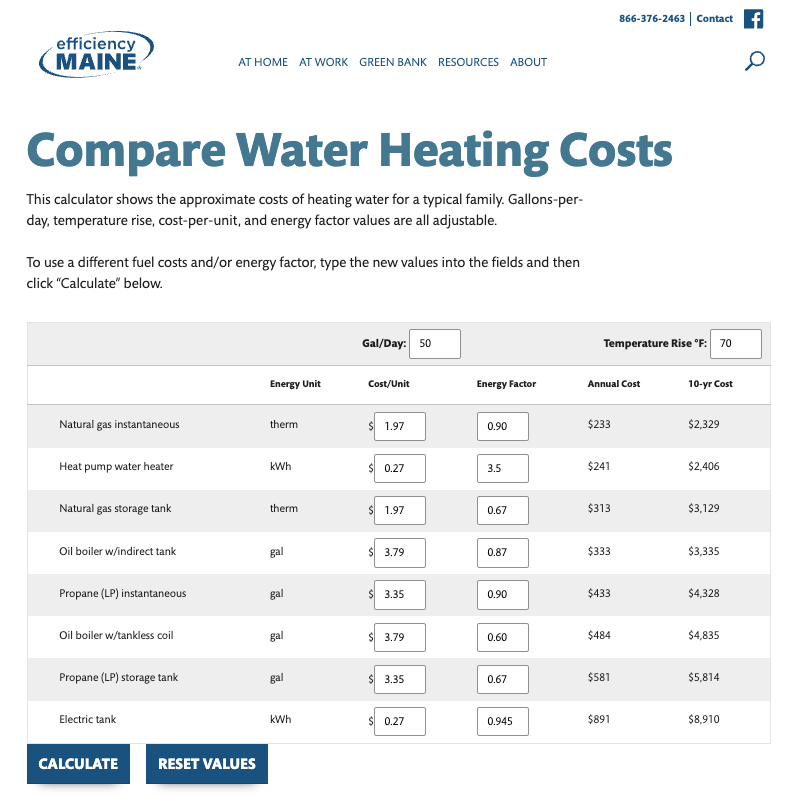
If costs are a concern, plug in you actual numbers here.
Hard to beat operating cost of a HPWH or tankless.
 Bob "hot rod" Rohr
trainer for Caleffi NA
Living the hydronic dream0 -
Hi, I know you're looking to get away from tank-type water heaters, but have you considered a power vent heater? That would let you skip using the chimney and have good hot water without a bigger gas line or much added complexity. 😺
Yours, Larry
1 -
Well, let me explain why. When I went into this project to replace the boiler, I was intent on getting a heat-pump boiler and heat-pump water heater. But then I worked out the economics on Excel, and then verified it with the kind of comparison tool Hot Rod just posted. The "problem" is that natural gas is so cheap: I was looking at spending a lot more to install the equipment, and then my utility bills would just about double! (I pay about $0.69/therm and $.202/kWh.)
Trying to keep Bernie burning!
2 -
Thanks for the reminder.
Yes, that is the first option I listed. And still a strong contender, in fact, perhaps it is the default choice. The reasons I am perhaps leaning towards indirect were the quicker recovery time, higher efficiciency, and also not having to provide another vent. That last factor may seem trivial, but there is a reason I am giving it weight. My boiler and water heaters are in the center of the basement, i.e., not close to any exterior walls. I want to run the vent through a joist bay, over the center beam, to the back wall. There is really only one available joist bay that goes to the wall where a penetration could be placed. (Many joist bays are already "occupied," and there are a few basement windows that suck up available wall space.)
Trying to keep Bernie burning!
0 -
I'm not a huge fan of side vented gas fired appliances. It seems you or a close neighbor often end up smelling them, and some of the non variable speed WH types are quite noisy.
The mod cos, or condensing style tankless, with 2" pvc vents are not as much an issue if you can get the vent up high on a side wall.
Bob "hot rod" Rohr
trainer for Caleffi NA
Living the hydronic dream0 -
the powered vent conventional water heater i had was super loud, you could here it in the basement all throughout the house.
0 -
I would do a Mod /Con with an indirect. You just can't beat the recovery times of an indirect water heater. A properly sized boiler matched to the indirect and you'll never run out of hot water. And don't forget the warranty. All the indirects that i have installed have come with a lifetime warranty on the tank to the original owner. So if you plan on staying awhile you have to factor that into the process. no additional venting. No additional gas lines. A simple sensor or aquastat to initiate a call for hot water. i have one and would never do any other.
1 -
that’s all good, but I was referring to a heat pump water heater…a whole boiler could be a very different scenario
I shudder to think of the upfront costs of an indirect, plus having to run a boiler all summer to heat a few gallons of hot water every day
NJ Steam Homeowner.
See my sight glass boiler videos: https://bit.ly/3sZW1el0 -
you have to make sure the water quality, especially the chloride content, of your water doesn't void the warranty.
0 -
I was including HPWH in my discussion. Looking only at the water heater, and assuming a 3.5 efficiency factor, it pencils out to more than 2X the cost to heat via heat pump than NG with my utility costs. And you DON'T run a boiler all summer. It comes on only when the tank temperature is low. You know, like every other tanked water heater on the planet, including HPWH.
Trying to keep Bernie burning!
0 -
Probably a naive question, but how do you get the vent high on a sidewall? In my case, you would have to have a pipe runing through living space somewhere.
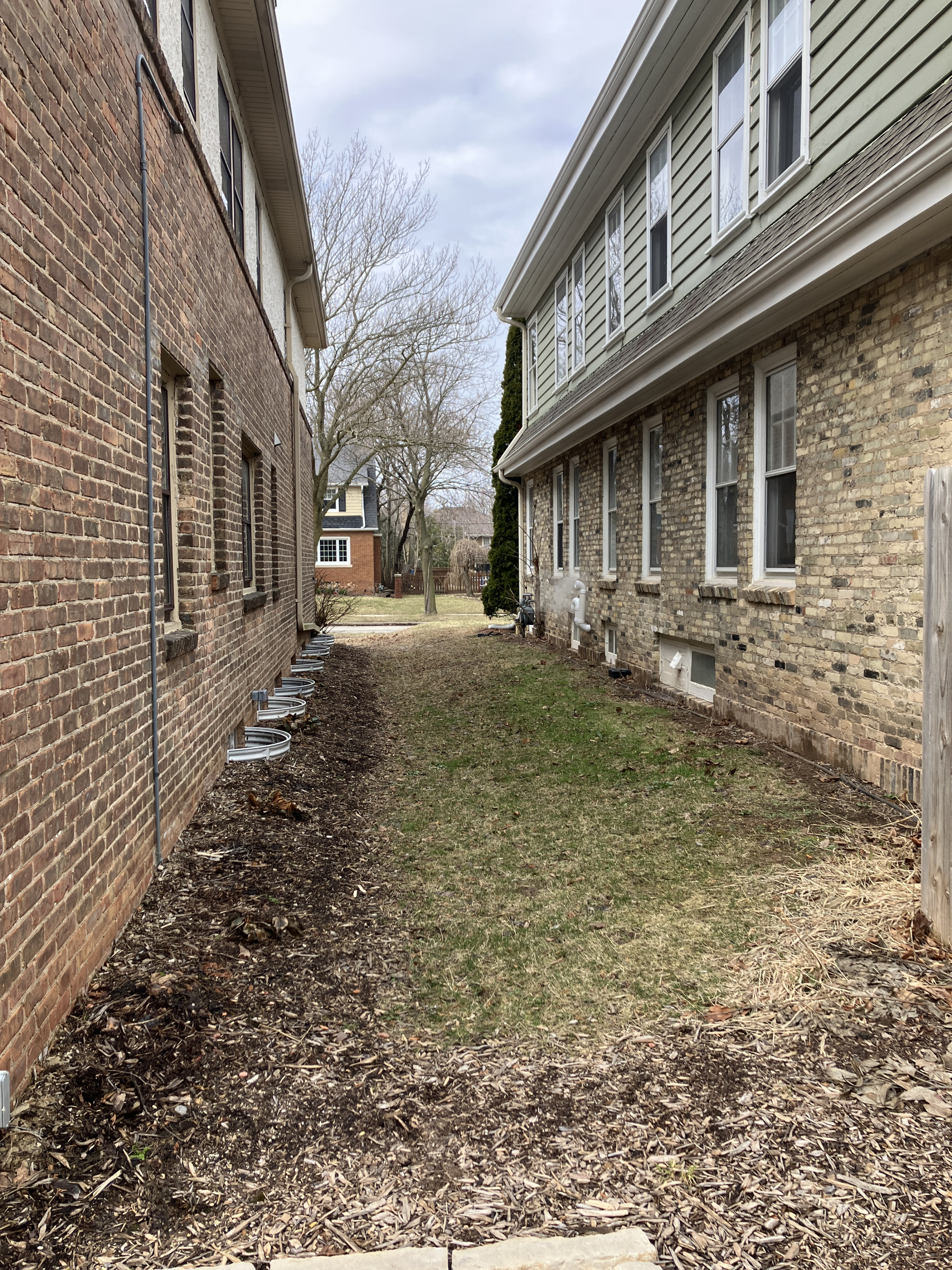
Where I would like to vent is in the sort of "back" space between my house and the neighbor. It is only ~10' separation, and isn't used at all by either of us. That is where HIS mod-con vents, for example, and I have never noticed it.
Trying to keep Bernie burning!
0 -
I'm with @GGross , power vented gas tank. The combination of modcon and power vent tank is very common around me both because of lower cost and decoupling. I run an indirect and was doing some re-plumb a while back, having the heat off was fine, but management made me temporarily hook up back up to re-heat the tank.
Cost wise, the only way an indirect makes sense if the modcon has a built in pump and 3 way valve (ie NTI TRX085). This way there is no external bits, just couple of short runs of pipe.
1 -
Where will you pull the intake air from? You do not want to recycle either the neighbor or your own exhaust gas. Does the neighbors exhaust and intake on the side wall?
Bob "hot rod" Rohr
trainer for Caleffi NA
Living the hydronic dream0 -
I would vote for mod con/ indirect. Power direct vent or power vent water heaters only last 10 yrs appx and cost $$$. Modcon boiler will last 15-20 if taken care of maint wise. Indirect maybe 20-30 as long as not heavy on chlorides. Sometimes longer. My .02 worth
1 -
Test you water for chlorides if you do go with a stainless tank or tankless. if you are on a public supply they should have a report like this available.
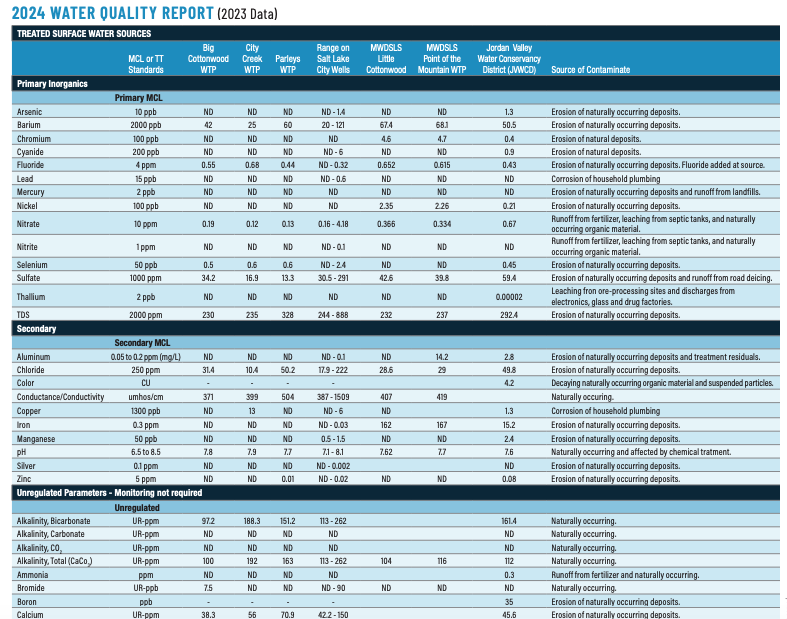
Here is a water quality spec for a stainless indirect. Over-softened water can drive chloride levels up. Chloride levels tend to be high in snow belt areas where the road deicers enter the aquifers.
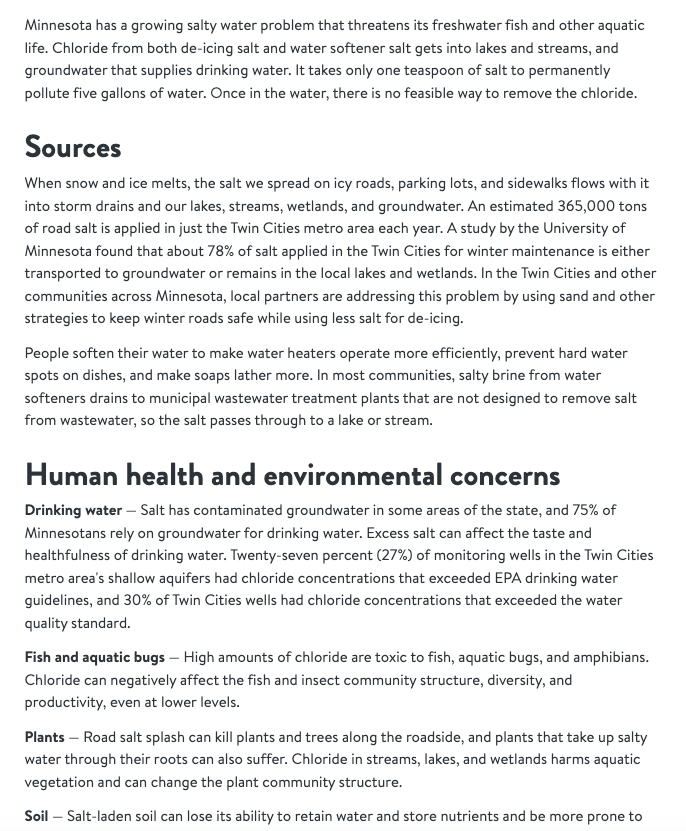
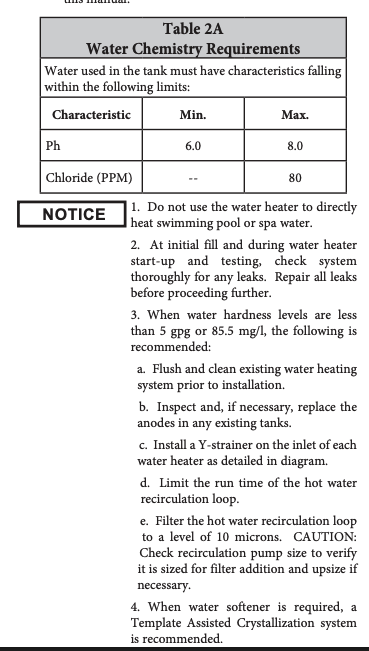
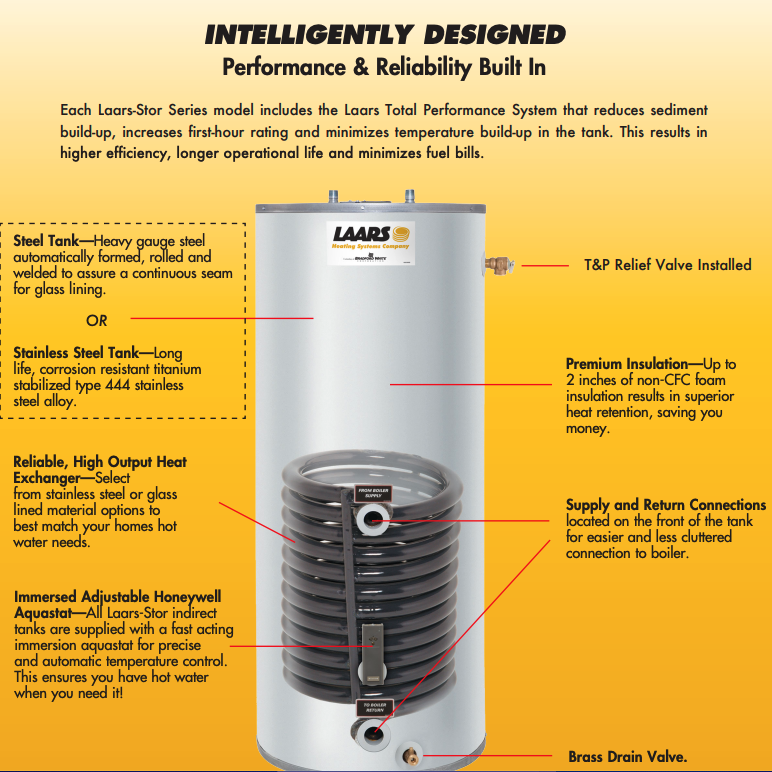
I've found the glass lined steel tanks have the longest life expectancy, if anodes are maintained.
Bock, LAAR, Lochinvar offer this large diameter coil steel tank. The smooth coil works best in hard water areas also.
 Bob "hot rod" Rohr
trainer for Caleffi NA
Living the hydronic dream 2
2 -
Here is a view of the space between our houses (which are about 15' apart). And here is a shot of his intake/exhaust. My proposed intake/exhaust would be located between the two closest window wells, which would be about 18' as the crow flies from the neighbor's. Does that seem acceptable?
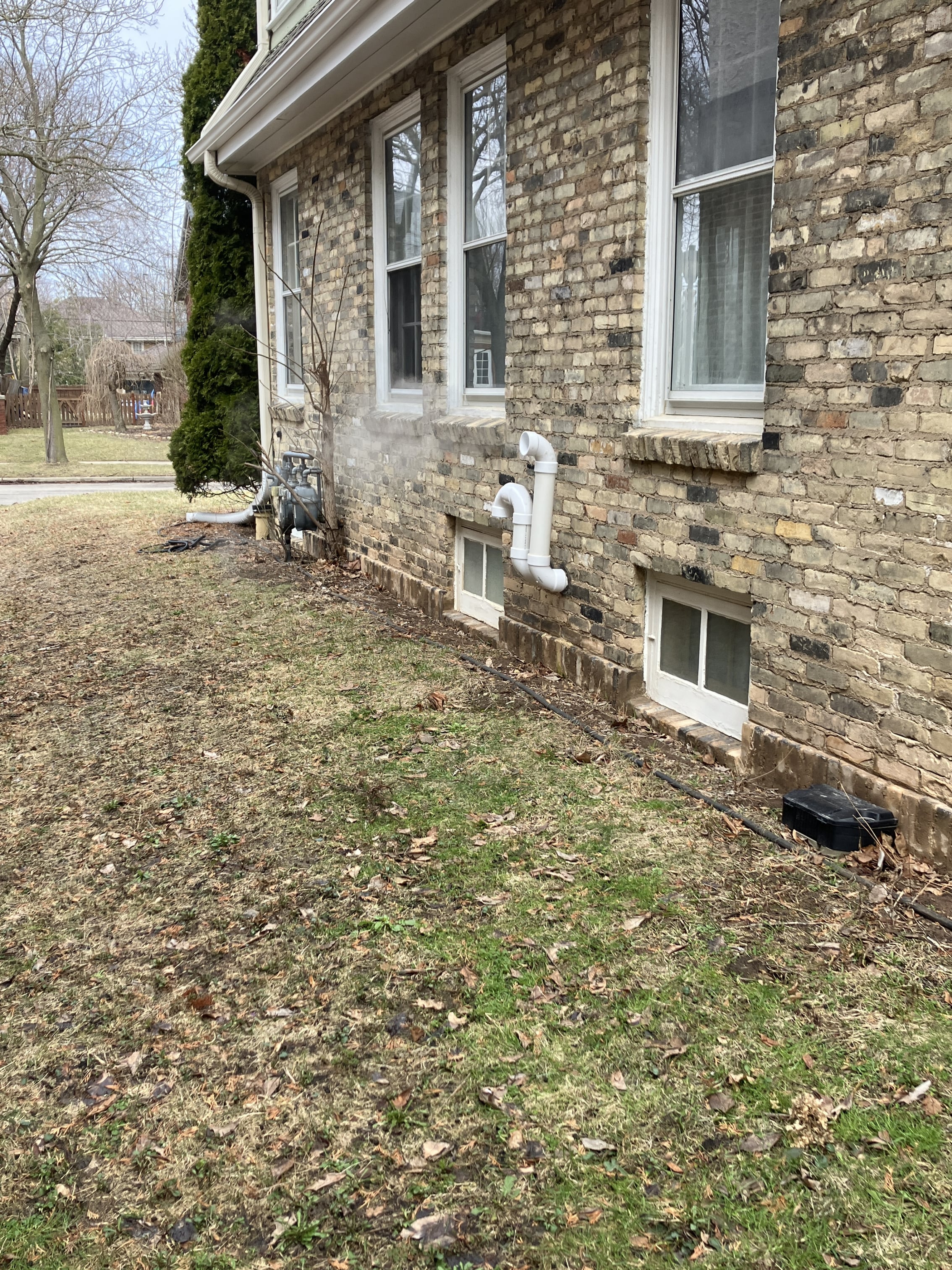
Trying to keep Bernie burning!
0 -
Thanks for this. Our water source is Lake Michigan, and our chlorides are about 15 ppm. Hardness is 8 grains per gallon.
Trying to keep Bernie burning!
0 -
As long as it meets the manufacturers venting dimensions.
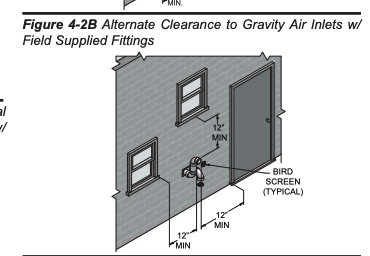
In some cases wind can drive the exhaust condensate against the walls and windows.
Bob "hot rod" Rohr
trainer for Caleffi NA
Living the hydronic dream1 -
Every system is going to have its drawbacks. In my area indirects far outshine any type of system that's installed. On demands are high maintenance items and we change warranty heat exchangers all the time. Commercial water heaters like the cyclone? 3- 4 years top. Residential any style. one day past the warranty period. If i match up the numbers i probably replace 100 other style water heaters for every one indirect. chlorides or no chlorides. To me it's not even close
1 -
But could that be because there are a lot more standalones installed than indirects?
beware confirmation bias
NJ Steam Homeowner.
See my sight glass boiler videos: https://bit.ly/3sZW1el1



Categories
- All Categories
- 87.6K THE MAIN WALL
- 3.3K A-C, Heat Pumps & Refrigeration
- 59 Biomass
- 430 Carbon Monoxide Awareness
- 124 Chimneys & Flues
- 2.2K Domestic Hot Water
- 5.9K Gas Heating
- 120 Geothermal
- 168 Indoor-Air Quality
- 3.8K Oil Heating
- 78 Pipe Deterioration
- 1K Plumbing
- 6.6K Radiant Heating
- 394 Solar
- 16K Strictly Steam
- 3.5K Thermostats and Controls
- 56 Water Quality
- 51 Industry Classes
- 50 Job Opportunities
- 18 Recall Announcements