New Gorton # 2 Main Vent Arrived - Installation Assistance Please

Hello -
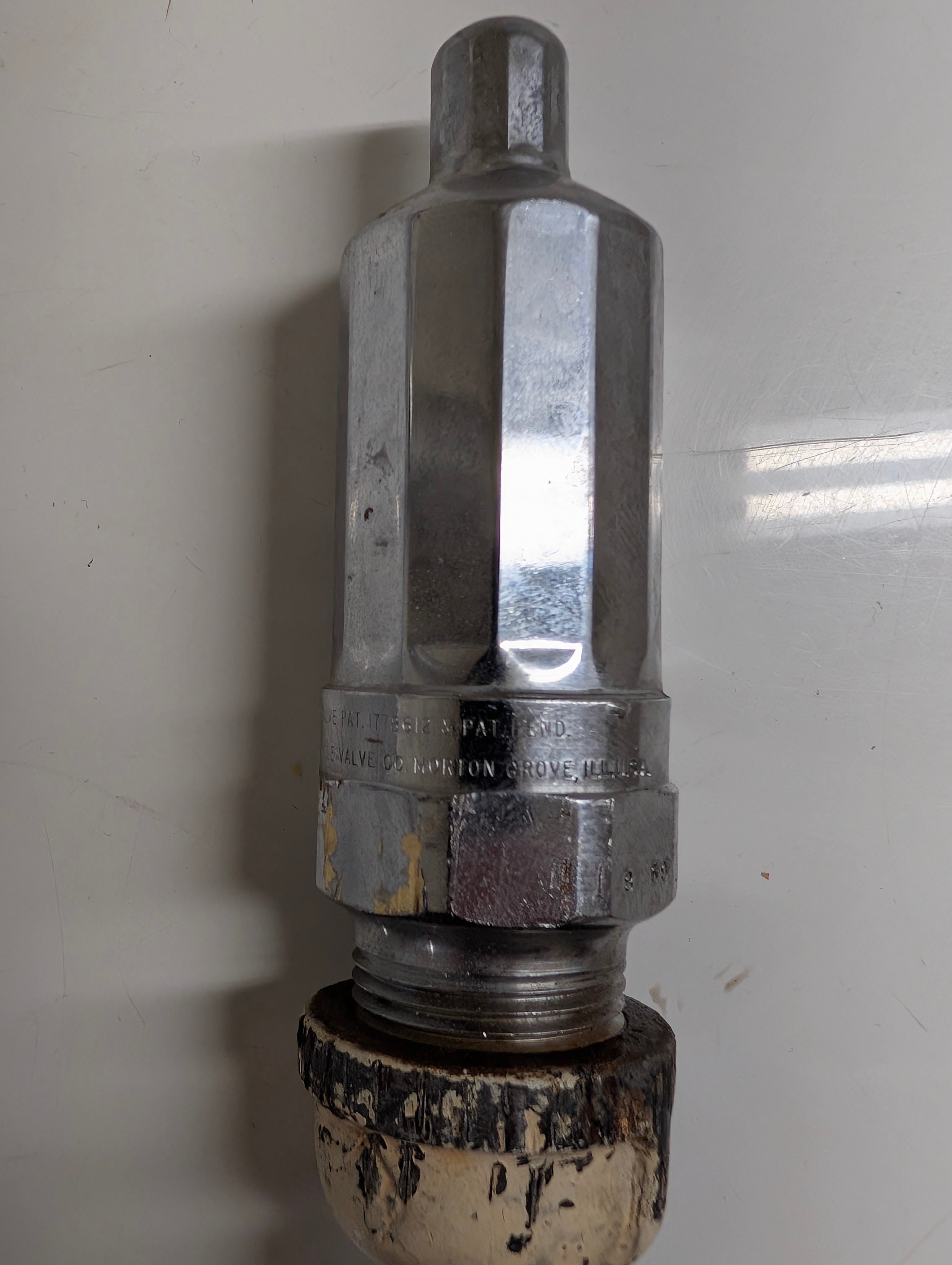
Ordered and received my Gorton # 2 as recommended .
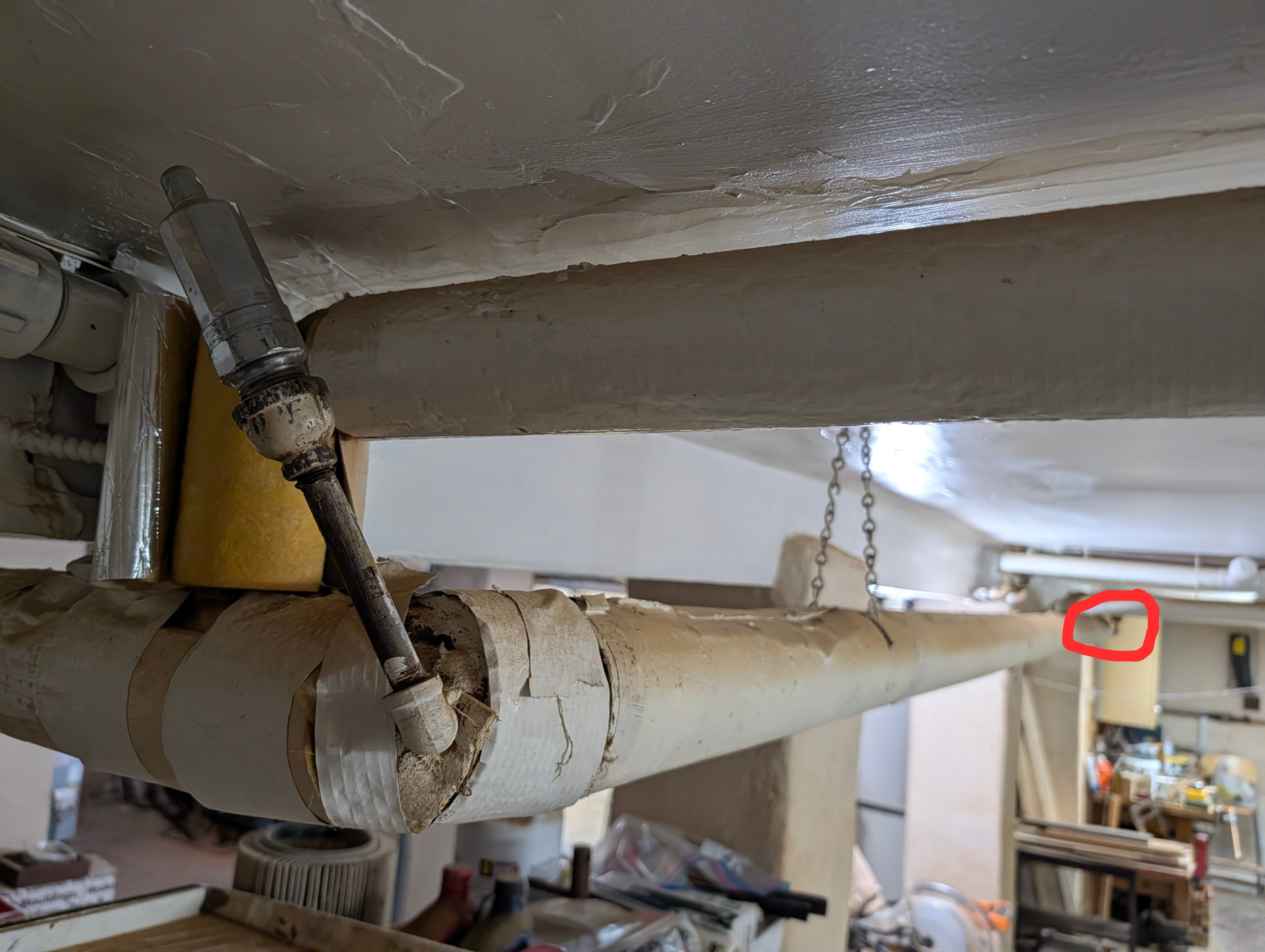
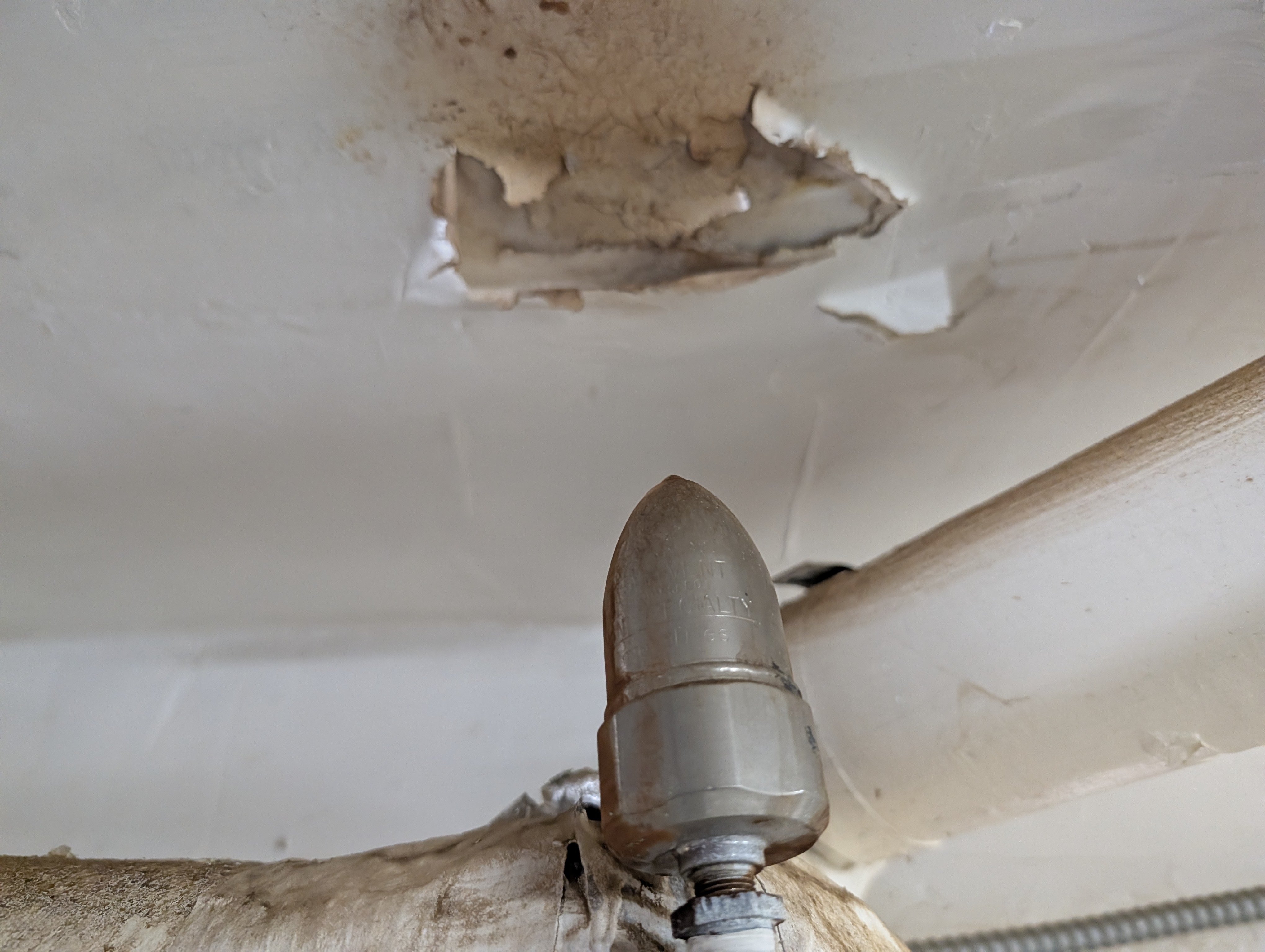
Since my previous post, I've had the opportunity to further explore over at my mother's. There are currently two vents on the main - one Hoffman # 41 about 12 feet from the boiler and then an unmarked, ancient Dole perpendicular to that one about an additional 12 feet away. I highly doubt that either of these is doing very much venting at all resulting in extremely high gas usage and bills this winter. Usage began to noticeably climb last winter, but prior to that, they were about a third of what they are now.
I will preface this that I am not looking for perfection, just a marked improvement to avoid having a 5 figure heating season bill.
My plan is to replace the 3/4" Dole furthest from the boiler with the Gorton as it will be the simplest by just adding a reducing coupling. Does having the Hoffman prior to the Gorton cause any issue? Like I mentioned, it doesn't seem to be venting anything, but if need be I could remove it and plug the tap. Right now, both of them get extremely hot very fast. Or, is there a benefit to having two vents in series? If there is, I could then replace the Hoffman with a 1/4" Gorton D say, for a little extra.
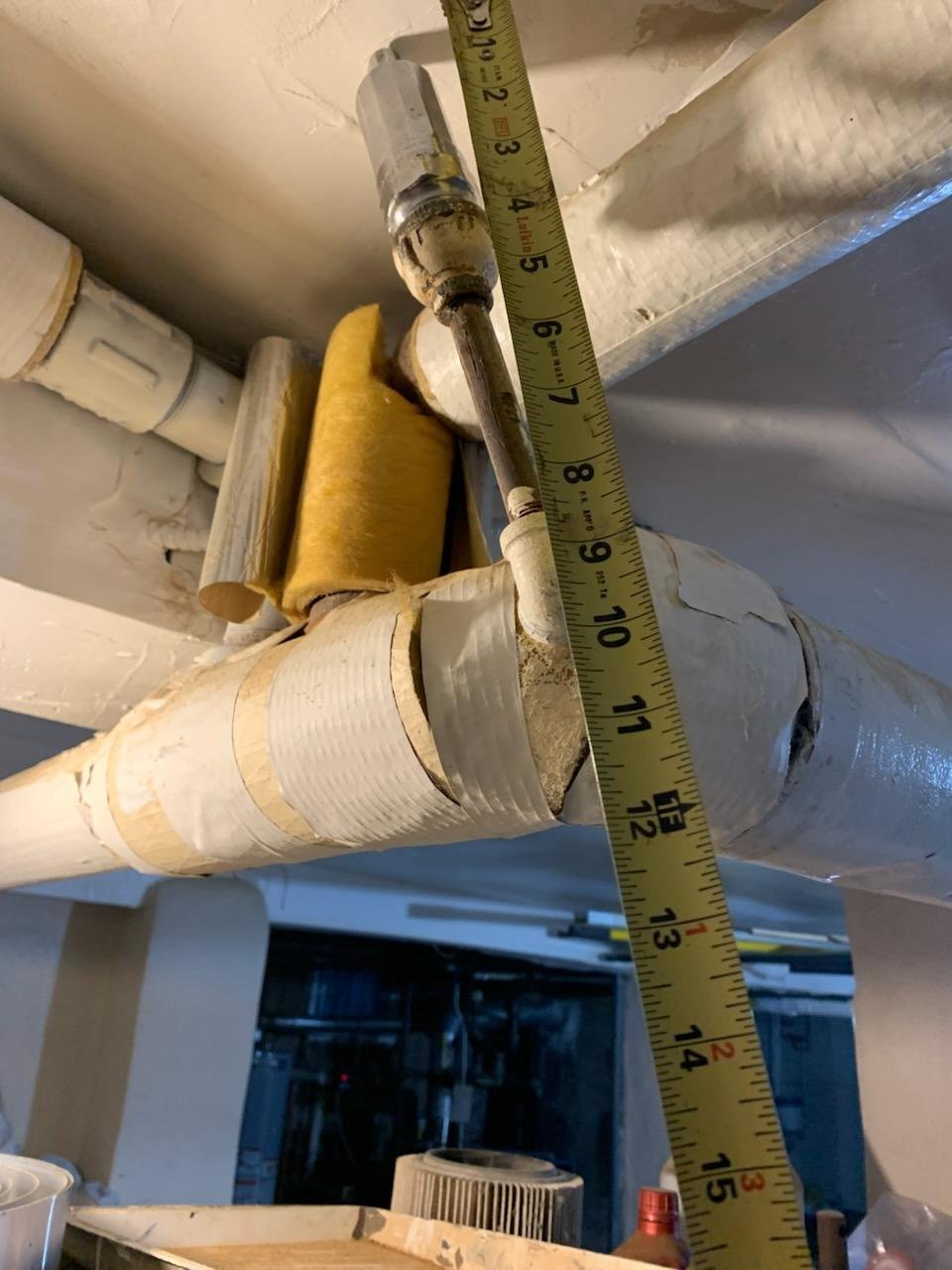
Secondly. what is the absolute minimum height for the Gorton to function properly. Right now I have approximately 9 inches from the tap to the ceiling. I could cut away the sheetrock and gain about another 2 inches — which would allow me to install the Gorton at about a 10 inch height. I would rather not mess with whatever original ceiling is above that.
Thanks again for all your help!
Comments
-
Having the Gorton last in line is fin3. No problem there.
But.
They have a float in them, and they really don't like to be anything off vertical. You may need to get a little creative… also an elbow isn't the best possible place….
Br. Jamie, osb
Building superintendent/caretaker, 7200 sq. ft. historic house museum with dependencies in New England0 -
I can use a shorter nipple so it will be vertical, it just will be only around 9 inches above the main.
0 -
are the vents getting extremely hot before the main is?
0 -
No, they are getting hot along with the main - they are cool to the touch until heat reaches that point.
 1
1 -
venting wont noticeably lessen your bill - warm weather will. everyone hot hit with higher than last year bills this season because the longer cold season with numereous sub-freezing days.
»»» See my steam heat YouTube videos:
https://www.youtube.com/@HeatingBlog
 1
1 -
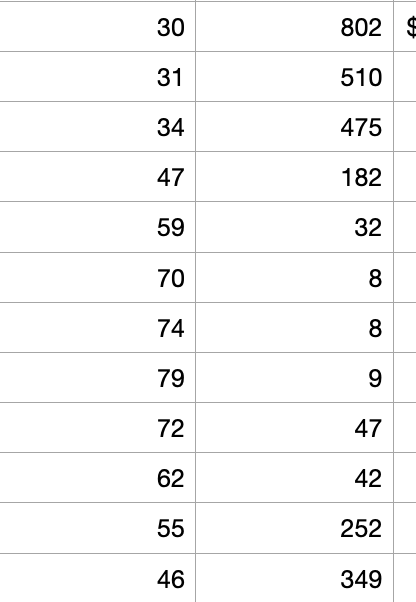
$1800 for almost 700 therms or whatever this month seems a tad high considering last Feb it was half that and only 3 degrees warmer on average (34 vs 31).
Soaked the Dole in hot vinegar, got a ton of filaments out of it and then blow through it. Far from perfect but only using 125 per week since and it was just as cold. Maybe just luck?
 1
1 -
Don't forget you need to compare the amount of gas used not the price. The price is very high.
0 -
Do you have a hole in the boiler and your $$$ are going up the chimney ? Seems like something more than main vents slowly becoming inoperative changed rather quickly to see such an extreme change in fuel usage.
National - U.S. Gas Boiler 45+ Years Old
Steam 300 SQ. FT. - EDR 347
One Pipe System0 -
Yeh that's why I mentioned that over 700 therms was used last month and on track for less than 500 this month.
0 -
There was a clogged pigtail that contributed to it, but that was promptly fixed. Boiler is only 3.5 years old.
 0
0 -
Neither a clogged pigtail, nor a bad main vent, will waste any noticeable amount of fuel. (I will edit myself to say if the main vent is failed shooting a lot of your steam into the basement, that could be some lost heat)
When the boiler is firing, BTUs are going into your house. A vent or pigtail cannot divert those BTUs out of your house. As @patrykrebisz said, it's the colder winter this year that is freaking everyone out.
But it's good to have good operating main vents. But since you said your existing main vents heat up very quickly, they may be operating OK already.
NJ Steam Homeowner.
Free NJ and remote steam advice: https://heatinghelp.com/find-a-contractor/detail/new-jersey-steam-help/
See my sight glass boiler videos: https://bit.ly/3sZW1el0 -
Wind velocity ? Wind direction ? I assume the chart is average monthly temperature and Therms.
National - U.S. Gas Boiler 45+ Years Old
Steam 300 SQ. FT. - EDR 347
One Pipe System0 -
It just seems odd that a Hoffman #41 and whatever that vintage Dole one is (that was definitely clogged) is sufficient for a 3-story, 18 radiator system. Are the radiator vents doing all the work?
0 -
It's not the height of the building or the number of radiators, it's the volume of the main. And yes if a lot of radiators have large vents, they could be doing a lot of the venting.
I've told this story before but my good friend has all Gorton D vents on her medium-sized house and a frozen closed main vent, and no one could ever tell—everything heats fast.
NJ Steam Homeowner.
Free NJ and remote steam advice: https://heatinghelp.com/find-a-contractor/detail/new-jersey-steam-help/
See my sight glass boiler videos: https://bit.ly/3sZW1el0 -
No, you were correct the with the first one - wind velocity. Isn't that what most gas bills measure?
0 -
That could be what is happening. About 3/4s are #41's, some Warcos and another brand that are adjustable that I can not recall at the moment.
1 -
I meant Wind velocity ? Wind direction ? Influencing the fuel usage.
Is the chart average monthly temperature and Therms ? My gas bill does not use Therms, I think it is CCF.
I see a big difference between 47, 182 and 46, 349 So I'm not 100% sure what the numbers mean.
National - U.S. Gas Boiler 45+ Years Old
Steam 300 SQ. FT. - EDR 347
One Pipe System0 -
Sorry, thought you were being sarcastic — yes, average temperature. National Grid converts CCF into Therms for billing. The last three months are the most telling 34/475 31/510, 30/802.
0 -
OK but how does that explain 47, 182 and 46, 349 ?
I assume 46, 349 was last year, last winter, where this year 47, 182 was better (less fuel).
National - U.S. Gas Boiler 45+ Years Old
Steam 300 SQ. FT. - EDR 347
One Pipe System0 -
Statistically speaking, this is probably a case where the average isn't the best way to compare. The standard deviation would tell us that. This year's 47 was November where the daily temperature was probably closer to that number. The earlier one was March when the first few weeks (like this month) can dip below 30.
0 -
normally total degree days is how yo measure the severity of a winter
0 -
if the main vent is faster than the steam can heat the mass of the main then it is as fast as it can get
 1
1 -
Just plot your total monthly degree days vs total monthly fuel usage. With enough data you can establish a regression and determine whether your recent months are above or below. Not perfect, wind etc… but about the best you can do. I have been doing it every month for over 15 years.
Use degreedays.net
1 -
Are there any sites that also factor in solar insolation, using local weather station data? There's so many variables. I did a spreadsheet once, about 18 to 20 years ago, to prove that I was saving money with a 9 deg. setback at night. I used "degree hours" for that. It definitely showed a savings.
 1
1 -
@MikeC_3, you mention that there are 18 radiators in the house. Do you know what the EDR of all the rads is? What is the EDR of the boiler? Is the boiler properly piped per the manufacture's manual? Is the boiler well matched to the load or is it oversized/undersized? You mention that this is your mother's home, what temp does she set the thermostat to? What brand thermostat is being used? Is it properly set up for steam.
Mark
 1
1 -
@Mark N I am unsure about all of that. All I know is that since the installation of a modern boiler replacing a converted coal one almost 40 years ago, and over the last 4 plus seasons with this one - the house has always been at a consistent temperature on all floors +/- a few degrees. Additionally, usage rarely topped out at over 500 Therms as far as I can go back in her stash of bills.
Had an issue with a new thermostat (no steam setting) that the service company upsold her on last year, so on the advice of this forum, purchased a mercury T87 off of EBay and used that for the remainder of last season. She preferred the heat coming up in the AM at a consistent time, so I reinstalled the original simple programmable Honeywell and set that for 70 during the day and for a slight setback to 68 at night. And yes, it is dumbed down as much as possible and set for steam heat CPH.
As I mentioned, I am in no way striving for absolute perfection - just a consistent, comfortable house without bankrupting her.
Thanks!
0 -
The main vents make a huge difference. We've logged fuel savings of a third on a few jobs after a main vent upgrade.
Your friend lucked out. Putting large vents on one-pipe rads can make them bang and spit, because the steam rushes up the runout so fast that the condensate can't drain back. This is why we use large main vents- to get the steam to the runout connection quickly, so it can rise to the rad more slowly so the condensate can drain.
All Steamed Up, Inc.
Towson, MD, USA
Steam, Vapor & Hot-Water Heating Specialists
Oil & Gas Burner Service
Consulting2 -
@MikeC_3, the heating season is nearly over now. It gives you time before next winter. Your mother's steam system is on the larger size with 18 radiators. Tightening up the envelope of the house will reduce heat loss leading to using less fuel. Invest in "We Got Steam Heat" or the "Lost Art of Steam Heat" to better understand steam heat. Post pictures of the boiler with the near boiler piping and a picture of the rating plate on the boiler. Also, maybe some pictures of the radiators to figure out what the EDR of the system might be.
1 -
@Steamhead you know I hate to disagree with people but…
Your friend lucked out. Putting large vents on one-pipe rads can make them bang and spit, because the steam rushes up the runout so fast that the condensate can't drain back.
This has not been my observation. It doesn't matter how big the vent is on a radiator—it can even be an open port. The steam doesn't rush up the runout fast. It is condensing as it heats the cast iron and it progresses rather slowly.
Just like a properly heated main, or even a main with an open 3/4" port with the vent lying on the counter will only fill so fast.
The main vents make a huge difference. We've logged fuel savings of a third on a few jobs after a main vent upgrade.
Where do you think 1/3 of the BTUs were going when the inadequate main vents were on there? They had to be going somewhere.
NJ Steam Homeowner.
Free NJ and remote steam advice: https://heatinghelp.com/find-a-contractor/detail/new-jersey-steam-help/
See my sight glass boiler videos: https://bit.ly/3sZW1el0 -
| Where do you think 1/3 of the BTUs were going when the inadequate main vents were on there? They had to be going somewhere.
@ethicalpaul In my case, it seemed like the upper two floors as they had larger vents and were about 15 degrees hotter than the first. I originally posted about this scenario and the consensus was it was a main venting issue and the steam was taking the path of least resistance.
1 -
@ethicalpaul said: "Where do you think 1/3 of the BTUs were going when the inadequate main vents were on there? They had to be going somewhere."
They were raising the water temperature. Remember, if you build pressure on the water, it has to get hotter to boil. One of the effects of inadequate venting is the steam does not circulate at lower pressures- it has to work harder to push the air out.
Also, if you build pressure like that, the steam takes up less volume, and the boiler has to make more steam to fill the system. That takes more BTUs, and can also cause water-level issues.
All Steamed Up, Inc.
Towson, MD, USA
Steam, Vapor & Hot-Water Heating Specialists
Oil & Gas Burner Service
Consulting1 -
Yeah. And every minute that the boiler has to burn longer to satisfy the tstat where it isn't condensing steam in the radiator is another minute where a certain percentage of the BTUs in the fuel is lost up the flue and lost into the basement where it heats the walls, windows, and slab and only a very small amount is making it's way upstairs through the floor to the tstat room.
@ethicalpaul Try reducing the size of all of your girlfriend's radiator vents substantially and keep her main vent clogged and see what happens to her fuel bill.
0 -
Those extra BTUs going into the additional steam pressure end up going into the home…as the steam gives up its heat in the radiators at the end of the call for heat, the pressure is relieved as the heat goes into the radiators.
That takes more BTUs, and can also cause water-level issues.
I can't imagine water level actually being measurably affected by the additional steam that might build up in the time before the main fills with steam but <shrug>
We are just talking about that relatively small time between start of call for heat and when the main fills with steam—which takes time even with perfect main venting.
Anyway, have a good rest of your weekend!
NJ Steam Homeowner.
Free NJ and remote steam advice: https://heatinghelp.com/find-a-contractor/detail/new-jersey-steam-help/
See my sight glass boiler videos: https://bit.ly/3sZW1el0 -
She's not my girlfriend, she's my friend, and I do plenty of experiments where I clearly show things and people still don't believe them so I'll stick to doing ones that I find interesting, not ones that you won't believe anyway. Feel free to do your own experiment.
NJ Steam Homeowner.
Free NJ and remote steam advice: https://heatinghelp.com/find-a-contractor/detail/new-jersey-steam-help/
See my sight glass boiler videos: https://bit.ly/3sZW1el0 -
@ethicalpaul , in some cases, the extra water being boiled to build pressure can cause the LWCO to trip. If there is a feeder it will come on to maintain a safe level, but when all the water comes back, the boiler can flood.
All Steamed Up, Inc.
Towson, MD, USA
Steam, Vapor & Hot-Water Heating Specialists
Oil & Gas Burner Service
Consulting0 -
that I’d have to see since a full system of steam and condensate tends to be about 1” on the gauge glass, it would have to drop another several inches to go low water.
If it started low water and then filled some, it wouldn’t overflow.
But you’ve seen a lot I’ve never seen before, but still that’s a lot of water we’re talking about.
We are still talking about less than 2-3 psi right?
NJ Steam Homeowner.
Free NJ and remote steam advice: https://heatinghelp.com/find-a-contractor/detail/new-jersey-steam-help/
See my sight glass boiler videos: https://bit.ly/3sZW1el0 -
Not always. The short answer is "It depends".
All Steamed Up, Inc.
Towson, MD, USA
Steam, Vapor & Hot-Water Heating Specialists
Oil & Gas Burner Service
Consulting0 -
There is alot of heat loss in most of these old home basements including mine. Slow main venting has the boiler running longer before steam gets to radiators on most cycles where the mains are still warm. During this time more btus are lost up the chimney and through basement windows and brick foundations. I have full winter data posted before showing even moving vents from end of returns to end of mainstream made difference in Mcf steam vs HDD.
0 -
most of the heat in the basement goes out through the area between the sill and foundation. it wasn't until the 80's that they started making even a half hearted attempt at sealing that area.
0 -
Figured I would report back with my results and thank everyone for their input.
As mentioned, was averaging over 200 Therms per week prior to my initial post mid-February.
Cleaned the existing main vents that were installed and the following week used approximately 150 under similar temperatures
Swapped out the Hoffman #41 that was being used as a one of the main vents with a Gorton D. Began changing every radiator vent and attempting to balance them between floors. Over the course of the next two weeks used in the upper 60's per.
Completed replacing all the radiator valves and installed a Gorton # 2 in place of the ancient Dole as a main valve and on track for the low 50's this week - maybe even less with the warm temperatures.
System cycles shorter, radiators take less time to heat up and the temperature between the first and second/third floors is now only between 3 or 4 degrees different. So thank you - that mission seems to be accomplished.
HOWEVER, I've now uncovered a few other (new?) issues that you'll be hearing about down the road. Nothing major, but a few hissing radiators and whatnot. I swapped vents, so I am sure they aren't faulty. Possibly pitch but I need to investigate that.
Much appreciated.
.
0




Categories
- All Categories
- 87.6K THE MAIN WALL
- 3.3K A-C, Heat Pumps & Refrigeration
- 59 Biomass
- 429 Carbon Monoxide Awareness
- 124 Chimneys & Flues
- 2.2K Domestic Hot Water
- 5.9K Gas Heating
- 119 Geothermal
- 168 Indoor-Air Quality
- 3.8K Oil Heating
- 78 Pipe Deterioration
- 1K Plumbing
- 6.6K Radiant Heating
- 394 Solar
- 16K Strictly Steam
- 3.5K Thermostats and Controls
- 56 Water Quality
- 51 Industry Classes
- 50 Job Opportunities
- 18 Recall Announcements