Is this my main line radiator air valve?

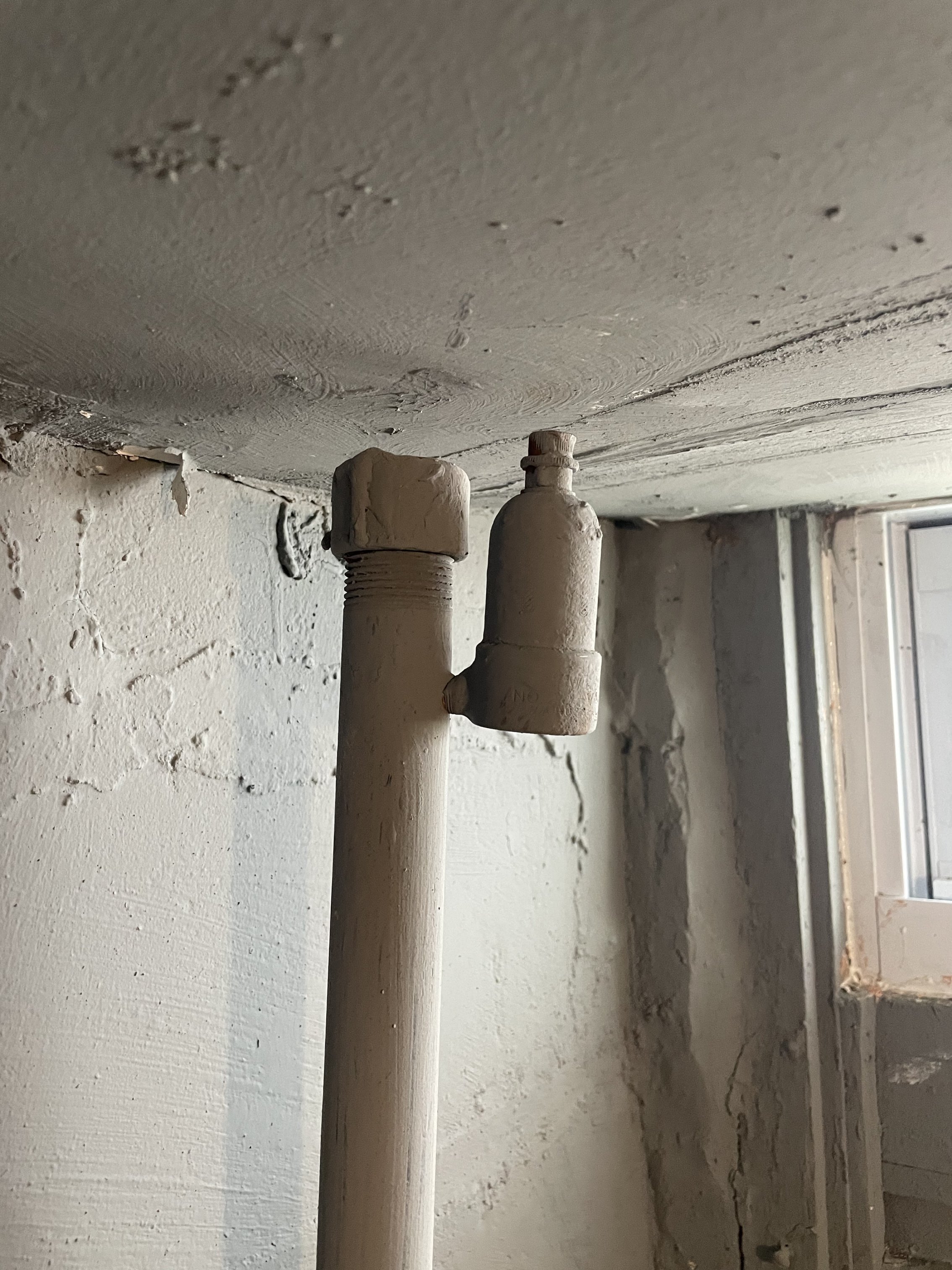
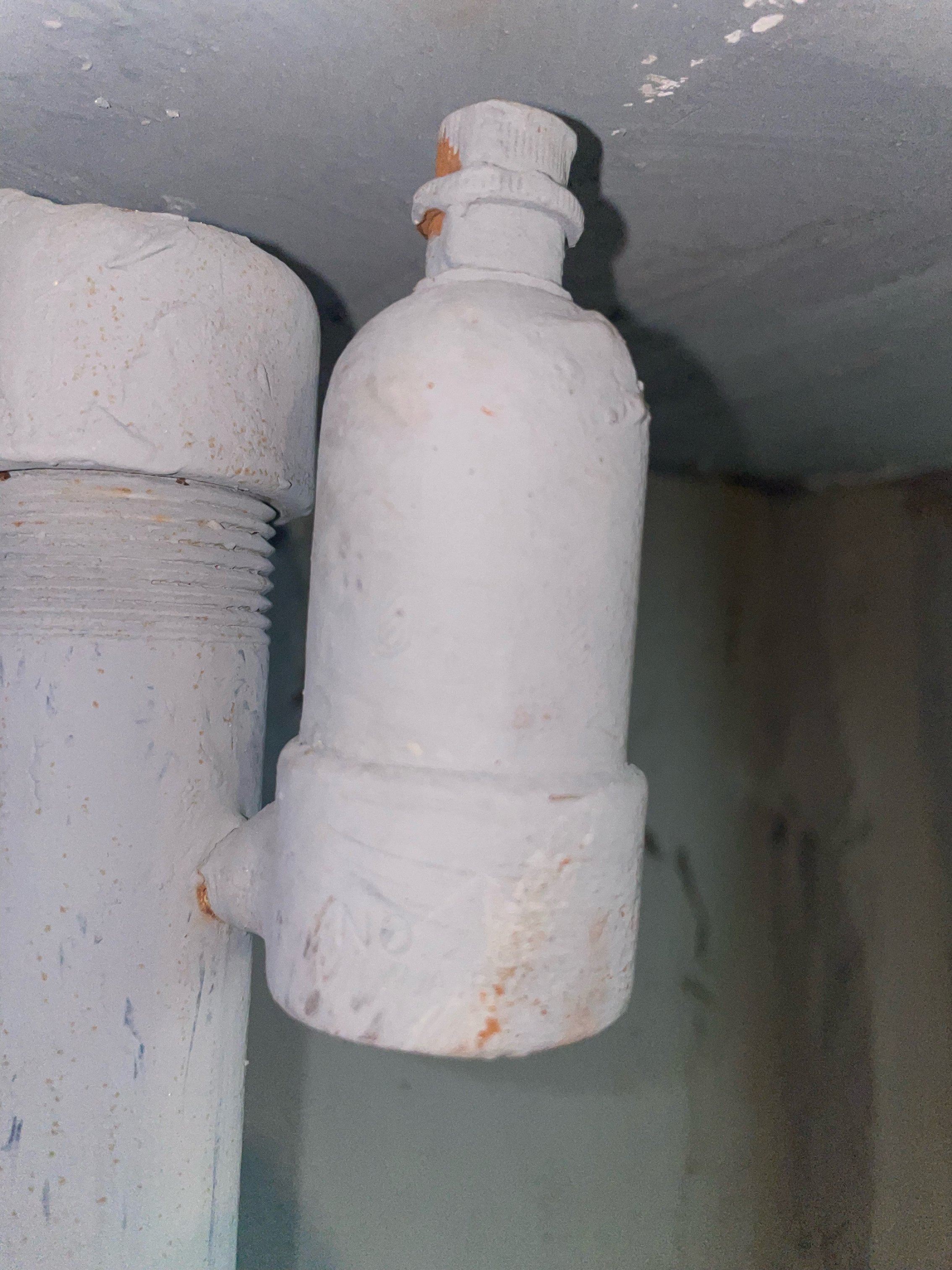
Hello all, I want to replace my air valve on my steam man line in my residential home? This is what is currently there from the previous owner. Plumbers have told me that this is a riser pipe on the return main pipe. What is a good replacement? And how do I replace this? I believe it reads No. 20 on it and it looks like a 1/8 inch thread size. I have been reading that gorton #2 is a good air valve to place here? Or is a Gorton #2 too big for my residential home, and maybe I should go with a gorton #1?
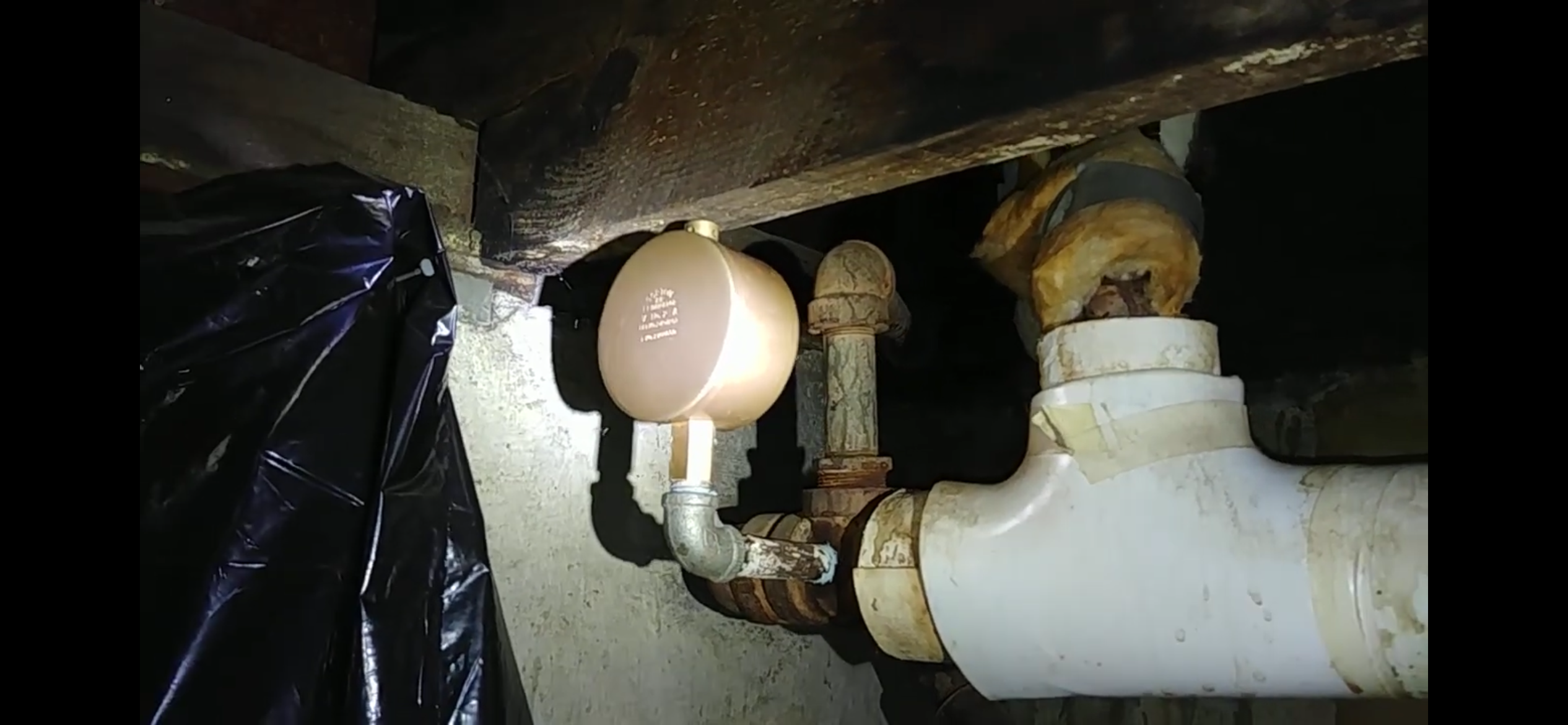
if I were to replace this with a gorton #2 which is a 1/2" thread, what additional piping will I need? since there is 1/8 thread hole currently there, do i need to drill a 1/2 inch hole on the existing 1/8 inch hole then use a 45 degree or 90 degree elbow → 1/2" diameter Nipple → 1/2 bushing, then Gorton #2? Image #3 is an image I found online that resembles this configuration.
Or is there another configuration that stops the air valve from hitting the ceiling?
Thank you.
Image 1 and 2: My current set up
Image 3: Something I found online that could be applied to my system.
Comments
-
Argh. Well, it was a vent once uon a time. Not with all that paint on it, though.
And yes, replacing it with a Gorton #2 ight be just the thing — but there's some terminology here to figure out. What does that stub pipe really connect to at the bottom end? Is it a steam main? Is it an extension of a steam main back to the boiler? Is it a true dry return? Makes a difference.
In any event that cute bit of modern art probably is on a 1/8 in NPT tapping, and you have to drill out the hole and tap for the correct thread for the new vent. Easy — if you have the tools.
Br. Jamie, osb
Building superintendent/caretaker, 7200 sq. ft. historic house museum with dependencies in New England0 -
Hi Jamie,
thanks for responding. to answer your question, its a vertical pipe and the bottom end is connected to the return main back to the boiler. It above the water level line of the boiler so I am assuming that this is a dry return. Knowing this, is a gorton #2 still recommended? or gorton #2 overkill and just go with gorton #1?
0 -
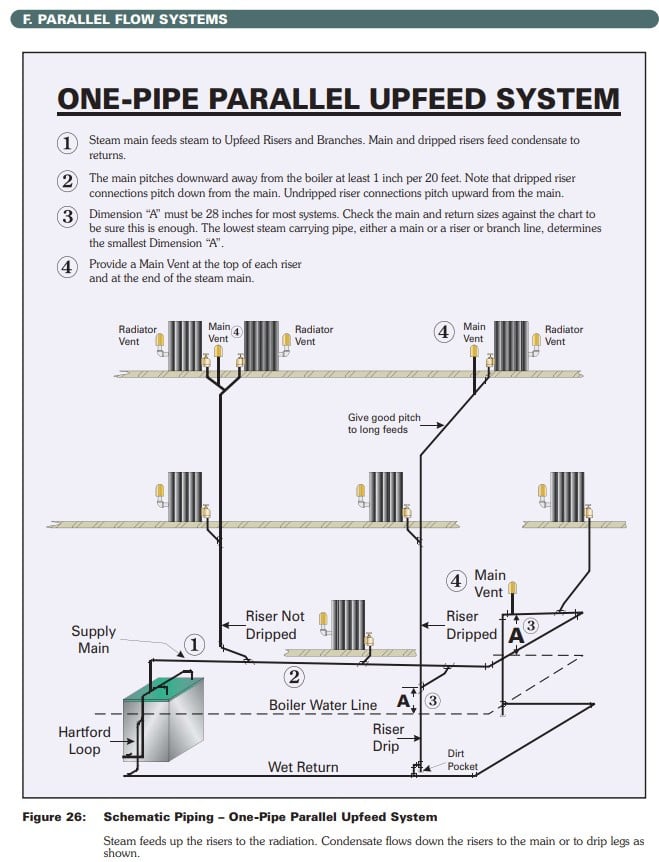
I think we have a problem with terminology here. What floor is it on? Can you tell us which vent on this diagram it would correspond to? I'm thinking it is at the top of one of the vertical risers, with drip or without drip.
 0
0 -
Is this a one pipe or two pipe system (is there a pipe at just one end of the radiators or are there pipes on both ends)? Is there more than one steam main? I see from your last picture you have a Gorton 2 at the end of what looks like a steam main. I would actually suggest trying to raise that vent higher but what I am getting at with the other questions is whether you need another vent to replace the painted over one or not.
0 -
Definitely a terminology problem here…
Br. Jamie, osb
Building superintendent/caretaker, 7200 sq. ft. historic house museum with dependencies in New England0 -
on my way home now and will provide a better picture of the pipe.
0 -
That first photo looks like the riser pipe is intended to function as a small radiator in the corner of the room, which would mean the vent at the top is an ordinary radiator vent. This is how New York City apartment bathrooms were traditionally heated; the riser ran up through the stacked bathrooms in the building, and on the top floor there was a radiator vent at the top of the capped pipe. Cheaper than radiators and just as effective.
—
Bburd0 -
I think we need that — but I think we also need pictures of how that pipe ties into the main lines running around the basement and how they tie into the boiler.
Br. Jamie, osb
Building superintendent/caretaker, 7200 sq. ft. historic house museum with dependencies in New England0 -
here you go all.
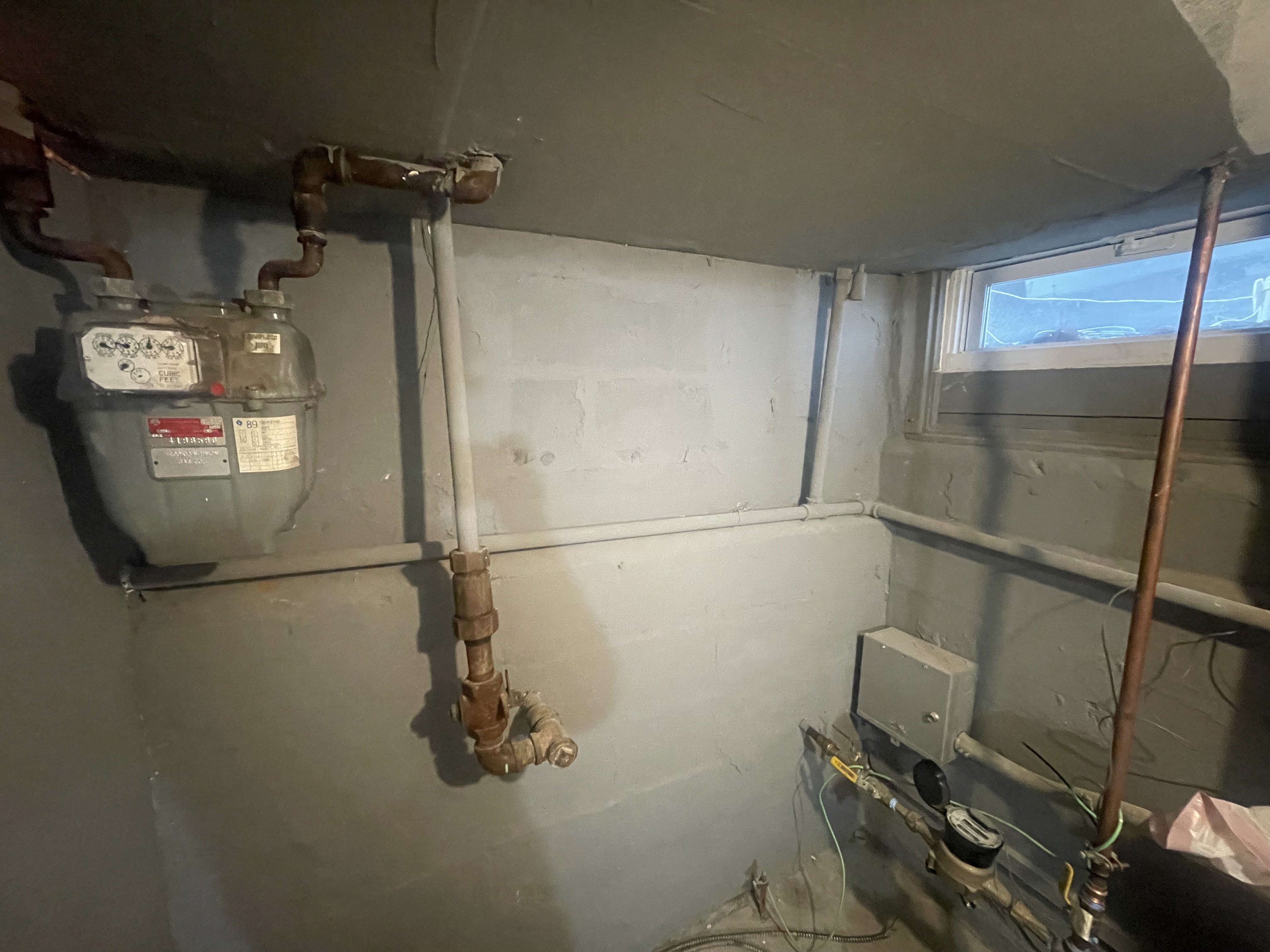
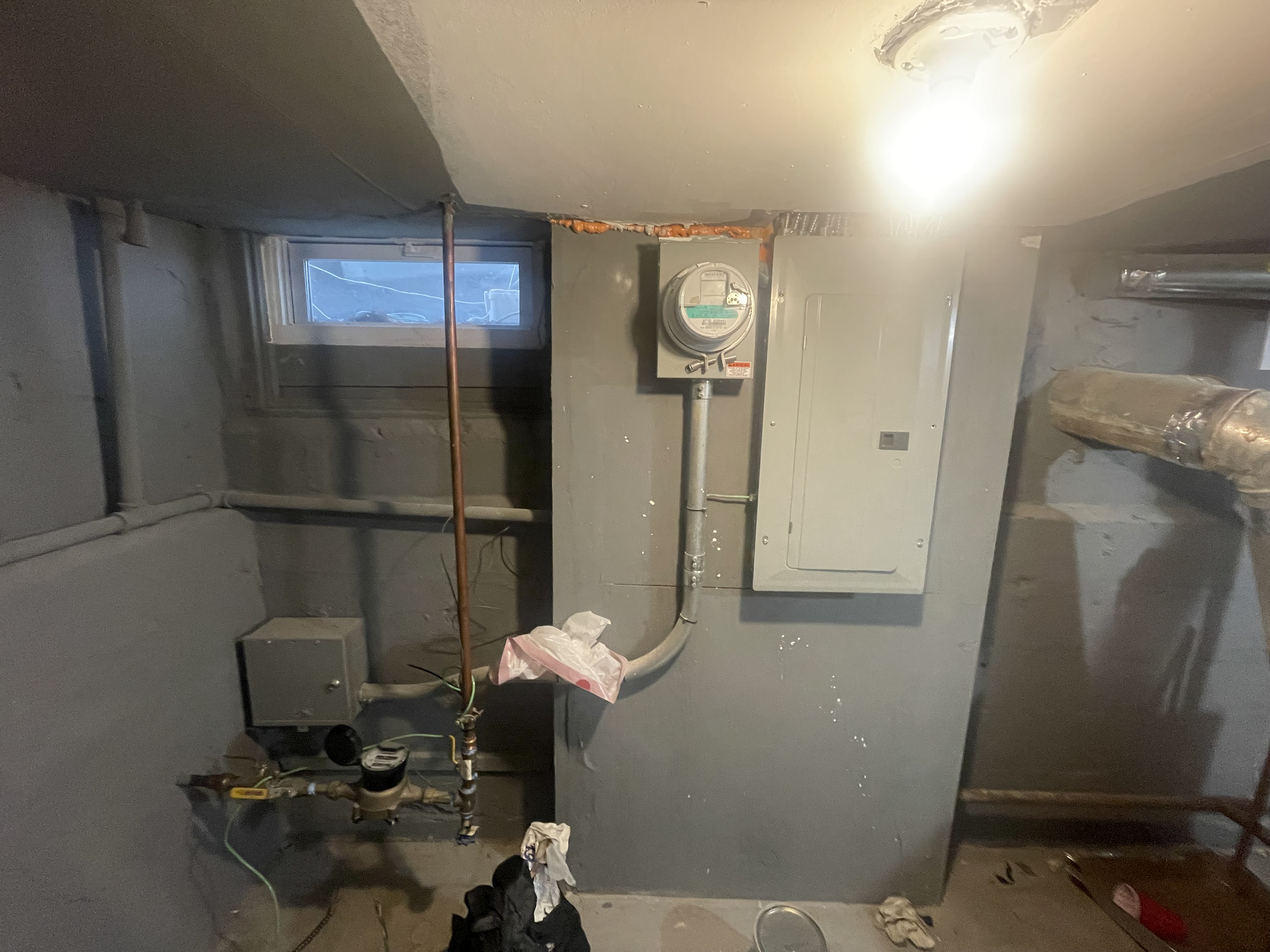
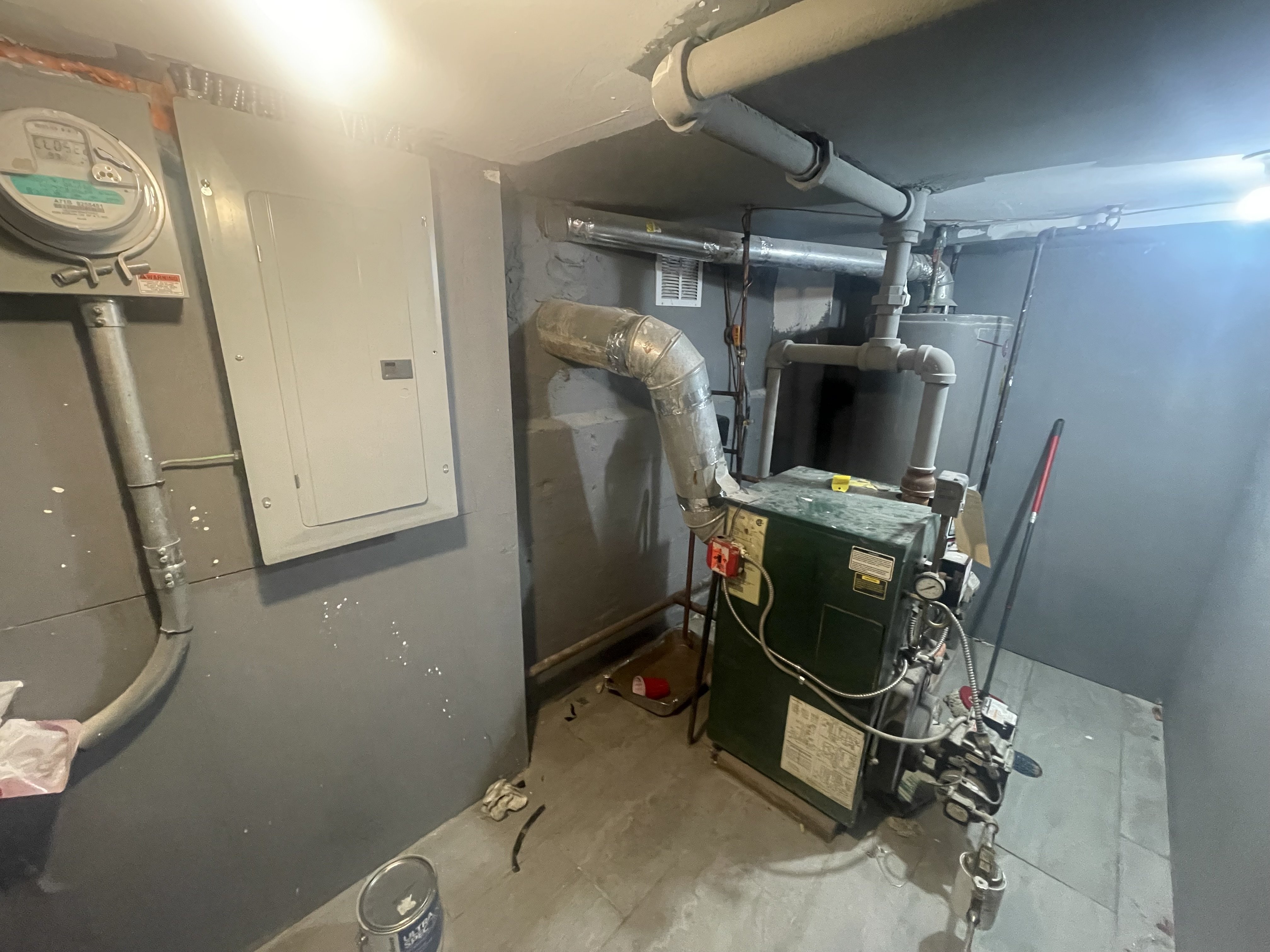
ok. Do these pictures help?
0 -
So that riser stub does not look like it's meant to be a radiator. It's a very strange place for a main vent though, and that is a strange height for a gravity return.
—
Bburd0 -
The one on the riser is a radiator vent that is venting the riser. Without being able to see what else is going on, I would honestly just replace it with a normal, "angle radiator vent". I would throw a Maid O Mist #D (or really any Maid O Mist with the orifice removed from the top) which will be equivalent in size to a Gorton #1 main vent.
It won't require any tapping or additional fittings and it costs like $14 from Supplyhouse.com
NJ Steam Homeowner.
Free NJ and remote steam advice: https://heatinghelp.com/find-a-contractor/detail/new-jersey-steam-help/
See my sight glass boiler videos: https://bit.ly/3sZW1el0 -
This is single pipe steam right? Your radiators only have one pipe going into them? Definitely looks like a main vent that was placed on the dry return, although they are usually placed a foot and a half before it drops down into the wet return. Probably been non-functional for a long time. The pipe leading up to this vent never gets very hot, right?
What is upstream of it? Is there a main vent at the end of the main where it turns down into this dry return? Maybe someone abandoned this dry return vent and put a main vent in that spot. Maybe it is the one you show in your other photo?
We need more info.
0 -
There is nothing connected to that riser. Buy your new straight vent. Figure out the height you want the vent at. Go to a plumbing supply or big box and have them cut you a new pipe. Take the old pipe out of the tee and put the new pipe and vent on with a reducer from the pipe to the vent.
If you don't want to have a new pipe cut you can buy nipples and couplings to make up what you need. Looks to be about 2' long.
You need a working vent there because that pipe drops down making it a wet return behind the electrical panel.
0 -
it’s a single pipe. And yes the pipe leading to this and the air valve does not get hot after a steam cycle.
0 -
so people are saying to just put a regular D valve, would this be enough. Or should I put a gorton #2? Unfortunately I don’t have access to the rest of the main pipes, as it is inside the basement ceiling. This air valve is the only one that I can visibly see.
I have a 1 pipe system into my radiators and this air valve never gets hot after a steam cycle. The horizontal pipe that is perpendicular gets hot and it does get warm at the beginning of the T but as I go up the riser pipe, it’s get colder and then the air valve is cold also.
Again plumbers told me that this vertical pipe is connected to a return pipe that delivers water back to the boiler. (As seen in the pictures).
0 -
Why does he need the vent there if he has a vent at the end of the main?
0 -
Does the house heat evenly, quietly and reasonably quickly? If so, that existing vent can be left alone, there's no reason to mess with it.
And what about the third photo in the original post? Where in the system is that?
—
Bburd0 -
Are the radiators on that main heating well? So it is a finished basement and you don't have any access to that end of that main to see if there is a main vent there?
Like I said previously, it very well may be that the painted up (radiator vent?) on the dry return wasn't sufficient and/or plugged up and someone may have put a vent in at the end of the main instead of this one. Then they painted it up because it wasn't needed, instead of removing it and plugging it.
0 -
I think there is confusion with the third photo that shows a gorton #2 valve. That third photo is NOT in my boiler room or home. It’s a photo that I found online to use as a reference IF I were to replace this air valve with a gorton #2.
So again I don’t have a gorton #2 anywhere in my mains. I can’t see my mains since they are between the basement ceiling and first floor. 1
1 -
Yes I did assume that main vent was yours, sorry. If you can't' see the end of your main then I hope you don't have a vent hidden there somewhere. If it failed closed then no big deal but if it failed open that wouldn't be good. Assuming you don't have one (I would find out) then whether you replace the painted over one depends upon whether you are having any concerns balancing your system or dealing with excessive radiator vent noise. It should save you some fuel to have good venting so I personally would do it but you didn't mention any system concerns in this post. How big of a system is this (boiler size, number of radiators, sqft of the house etc…)? Normally to recommend the vent size we would ask the length and pipe size of your main and in this case the main extension as well to the vent but sounds like you might not be able to get that due to lack of access although maybe an estimate would do.
As mentioned a MoM "D" would be your easiest winter time replacement. Anything more you would probably want to remove the entire vertical pipe and do as @EBEBRATT-Ed said.
0 -
That is one of the odder setups. But… since that pipe is a return of sorts, and is above the boiler,, it should be able to carry air OK. You can take that cute little vent off and either get your plumber to drill and tap bigger and add a Gorton #2 there (or do it yourself if you have the tools!) of take that riser off and add a shorter riser with the Goroton on the top of it and you'll have a perfectly usable,, if slightly odd, main vent.
Br. Jamie, osb
Building superintendent/caretaker, 7200 sq. ft. historic house museum with dependencies in New England0 -
@erics_guerron123 If the system heats ok with the bad vent it means the radiator air vents are doing all the venting (unless you have other main vents)
But if you replace the bad vent you may save some fuel and the system will work better
0 -
Whoever did that; sealing off the main may have done a disservice to future owners if there is a main vent there that can't be accessed now.
Are the radiators heating well that are on that main? What vents do they have and orifice size? Does steam reach their supply valves quickly after the boiler fires up? Then I'd say you probably have a main vent but the only way to find out is to cut an access hole.
0 -
do you still a gorton D is better for this configuration or a gorton 2?
0 -
What do you recommend I replace it with? A gorton D or #2?
0 -
what do you recommend I replace this air vent with? Gorton d or #2?
0 -
Try a Gorton D first since that's a one-for-one swap with no modifications.
All Steamed Up, Inc.
Towson, MD, USA
Steam, Vapor & Hot-Water Heating Specialists
Oil & Gas Burner Service
Consulting 1
1 -
yeah. It’s difficult to say from here if that vertical pipe is at all valuable to be venting, but it’s an easy thing to try.
NJ Steam Homeowner.
Free NJ and remote steam advice: https://heatinghelp.com/find-a-contractor/detail/new-jersey-steam-help/
See my sight glass boiler videos: https://bit.ly/3sZW1el0 -
If you can answer any of the questions I asked earlier then maybe we could give you better guidance on an optimal vent size.
0 -
I do have water hammering on my radiators and I made sure to pitch the radiators toward the service valve. I currently have 7 radiators in my home (4 on the first floor, and 3 upstairs in each bedroom).
0 -
OK, based on 7 radiators not a huge house. Probably a Gorton #1 of which a MoM "D" is equivalent would be sufficient. Boiler size or length and size of mains would give better guidance.
The hammering is usually caused by takeoffs/runouts (steam supply going from the main to the radiator) to the radiators under the floor not having slope that they need to allow condensate to return to the boiler. I'm assuming since you don''t have access to your main that you also probably don't have access to some of these takeoffs. You can try raising the radiators under which you think the hammering may be originating. Try putting a 1" block of wood under the service valve side legs. May need to add to the blocks you may already have under the vent end of the radiator to maintain level or slight pitch back toward valve.
1 -
how does raising the entire radiator help with water hammering? In one of these radiators, the service valve started leaking so I replaced the service valve. When we did this work, the plumber had to lift the service pipe so the service valve can connect with the radiator coupling. Could this have lead to water hammering?
0 -
Raising the supply valve and thus the piping attached would probably have helped, provided it didn't pull up on the main and didn't adversely affect the downward pitch of the main. It helps the condensate to flow back to the main and from there to the return. If condensate piles up it interferes with the steam getting into the radiator and steam can get trapped between waves of condensate and basically implode. You want to have a minimum of 1/2" per foot downward pitch from the radiator to any vertical riser and the same downward pitch from the bottom of the riser (if present) to the main.
Another possible aspect is that, if you don't have a main vent, then the venting is entirely being done by the radiators and someone may have put a very large vent on the radiators to compensate. That could cause condensate to be made too rapidly, which could give you water hammer.
What vents do you have on the radiators?
 1
1 -
Is the valve you replaced with the same as the valve that was replaced? Particularly its vertical height? Not sure when you say you had to lift the pipe whether this is just the normal drop into the floor that you will tend to see when you disconnect the radiator or whether the new valve is shorter than the old valve thus raising the pipe from what it was with the old valve in order to make the connection. Assuming the takeoff piping to the radiator is counterflow which most all are (except mine which has drip legs under every radiator and again unfortunate you can't see from the basement any of your first floor radiators) then rising the radiator would raise the pipe and increase the counterflow pitch to return condensate. Hammer is caused by stagnant water in the takeoff. Some ticking or popping noises can also be due to expansion of the radiator, movement of the legs on the floor while expanding (sliders made of cuttings from plastic milk containers can help) or pipes rubbing against wood flooring or joists when expanding.
0


Categories
- All Categories
- 87.6K THE MAIN WALL
- 3.3K A-C, Heat Pumps & Refrigeration
- 59 Biomass
- 429 Carbon Monoxide Awareness
- 124 Chimneys & Flues
- 2.2K Domestic Hot Water
- 5.9K Gas Heating
- 119 Geothermal
- 168 Indoor-Air Quality
- 3.8K Oil Heating
- 78 Pipe Deterioration
- 1K Plumbing
- 6.6K Radiant Heating
- 394 Solar
- 16K Strictly Steam
- 3.5K Thermostats and Controls
- 56 Water Quality
- 51 Industry Classes
- 50 Job Opportunities
- 18 Recall Announcements