Powdercoating steam radiators

Has anyone had any experience powdercoating steam radiators? Anything to watch out for?
Seems alike a "permanent" solution if it works without outgassing.
Comments
-
A "Powdercoating radiators" search gives you lots of answers.
8.33 lbs./gal. x 60 min./hr. x 20°ΔT = 10,000 BTU's/hour
Two btu per sq ft for degree difference for a slab0 -
This has come up from time to time, and powder coating does work. It is also an appalling amount of work just to get the radiators to the shop and then reinstalled.
As an alternative, many people — myself included — have had excellent results by very thoroughly cleaning, including wire brushing, radiators, leaving them in place, and then painting them with a high quality acrylic, such as Benjamin Moore's Aura series (I use a brush). I've never had a problem with outgassing or failure of the finish — and the beauty of it is that one can select whatever colour one wants, including matching the walls.
Br. Jamie, osb
Building superintendent/caretaker, 7200 sq. ft. historic house museum with dependencies in New England

 3
3 -
One of the problems of powder coating radiators is the high baking temperatures. The baking has set aflame paper gaskets often separating sections of some old radiators, causing leaks. While powder coating is often trouble free and produces a beautiful finish, it can damage a radiator in some cases causing leaks.
 1
1 -
I recently was told that Castrads the UK radiator manufacturer also does powdercoating of legacy radiators. The person I spoke to had success. Does powdercoating have off-gassing problems? It seems like after the baking step there wouldn't be any gassing left to be offed.
NJ Steam Homeowner.
Free NJ and remote steam advice: https://heatinghelp.com/find-a-contractor/detail/new-jersey-steam-help/
See my sight glass boiler videos: https://bit.ly/3sZW1el1 -
Some thoughts from Captain Overkill.
Powdercoating radiators is really only an option for radiators that use nipples between the sections, such as push-fit or threaded. Sections with paper gaskets in between are likely to fail.
I don't have a sand-blaster or powder coater near me so I am considering doing this myself. A few options I have come across. Both labor intensive but will have a good outcome (I think). My radiators have many many layers of latex and oil paint….so consider this the extreme option. Lead in the paint is probably a guarantee…so caution should be taken.
Paint Stripper
- Take your radiator outside and put it in a small kiddy pool. Get some "Aircraft Remover" from the hardware store. It is an aggressive, toxic chemical that is great at dissolving paint. Lather the radiator with the aircraft remover and let it do its thing per the instructions. It should lift the paint.
- Hose it off gently, trying to keep the paint chunks inside the kiddy pool. Scrub with a brush to remove any stubborn spots.
- Drain the water into a bucket with some sort of strainer to catch the chunks of paint.
- Might have to repeat a second time. Should get you to bare metal.
- Neutralize the radiator per the instructions, prime and paint.
Electrolysis
- A little daunting but easier than it sounds. You essentially fill up the kiddy pool with water, submerging the radiator. Or fill it half way up the radiator and after it is done you'll have to flip it over to do the other side.
- Hook a battery charger up to the radiator (and water) in a specific way. The rust and paint melts off of the radiator. Might take up to 24-48 hours.
- Relatively safe in terms of chemicals….but the electrical reaction releases some hydrogen gas so this is better done outdoors.
- Drain the water into a bucket with some sort of strainer to catch the chunks of paint.
- Clean, prime, paint.
0 -
Hose it off gently, trying to keep the paint chunks inside the kiddy pool. Scrub with a brush to remove any stubborn spots.
Drain the water into a bucket with some sort of strainer to catch the chunks of paint.
What do you do with the liquid component? It is full of lead dissolved by the stripper, right?
NJ Steam Homeowner.
Free NJ and remote steam advice: https://heatinghelp.com/find-a-contractor/detail/new-jersey-steam-help/
See my sight glass boiler videos: https://bit.ly/3sZW1el0 -
The last I checked, you won't be finding any more "Aircraft paint stripper" that contains methylene chloride. I have a few cans at the shop still, but I suspect that's the last I'll ever get.
With that said, I doubt you'll find any paint stripper worth the effort anymore.
Single pipe 392sqft system with an EG-40 rated for 325sqft and it's silent and balanced at all times.
0 -
@ethicalpaul I'm sure we'd need the EPA to give us the correct response but the paint doesn't really dissolve and disperse into the liquid. It lifts off and remains somewhat intact. Another method could be compressed air to blow the chunks off followed by a brush or scraper. The point was to contain the paint within the kiddy pool so you don't shoot lead paint chunks all over your lawn and then create a lead dustcloud when you mow it.
I'm stripping some 100 year old doors with an indoor, environmentally friendly chemical… "Smart Strip Advanced" made by Dumond. It goes on as a gel, sits for 24 hours and lifts/loosens the multiple layers of paint. Then you scrape the gunk off. The directions say any paint removed can be disposed of in the trash, including lead based paints.
@ChrisJ The "good" Aircraft Remover with the Methyl-Deathyl is banned to regular consumers but the replacement stuff is still about as aggressive as it gets these days. Stinks bad and is probably still pretty hazardous so use it outside.
1 -
Can you share, or maybe PM a link to the product or similar?
I used to use it in the shop quite a bit, and need a source of a decent stripper.
EDIT :I just noticed you mentioned the name above.
Single pipe 392sqft system with an EG-40 rated for 325sqft and it's silent and balanced at all times.
0 -
@ChrisJ The Smart Strip Brand by Dumond makes three different versions. I've used them all. All three are safe to use indoors and do not produce any hazardous or objectionable odors. You need to cover all of them with butcher paper or plastic wrap to prevent the product from drying out so it can take time to do its work.
The "Peel Away" version is like a dry-ish paste and is very basic (pH). I think it is lye based. After removal it needs to be washed/neutralized with something acidic. I think they sell a product for that, but a water/vinegar solution also works.
The "Smart Strip Advanced" goes on like a thick gel and is thick enough to stay put on vertical surfaces. It is my favorite. It is pH neutral and can be washed off with water.
The "Smart Strip Pro" is similar to the Advanced version but is a little chunkier. It doesn't spread as easy as the Advanced and didn't seem to work as well either. It is pH neutral and can be washed off with water.
I've also used "Citrustrip" from your local hardware store or even Wally World. It works well but is a little thinner than the Smart Strip products and will be slightly drippy on vertical surfaces. Keep it covered in plastic wrap to prevent it from drying out. It does stink pretty bad though! A chemically/citrus smell that was pretty strong. The wife was not enthusiastic about this one. You also need to scrub with mineral spirits to clean off the Citrustrip residue. Then wipe with Acetone or denatured alcohol to clean up any mineral spirit residue.
Franmar makes an environmentally friendly product called "Blue Bear Soy Gel", formally just known as Soy Gel. It works great but like Citrustrip is a little drippy on vertical surfaces. Same story, cover with plastic wrap to keep if from drying out.
For all of these products, the latex gets wrinkled quickly and lifts up from the surface making scraping them off easy. Oil paints tend to just get mushy and need to be scraped with a little more attention. If it is only multiple coats of latex or oil one thick layer of these stripping products for 24 hours usually does the trick. When there is latex on top of oil (my doors) the first coat really gets the latex off but the chemical does not penetrate well enough through the latex and into the oil coats. A second coat then gets the oil layers.
For rusty metal things I have a 3.5 gallon bucked of CRC's Evaporust that comes with an internal parts basket. Let it soak overnight and the parts come out brand new!
 1
1 -
The stuff I use is PTI Sure Strip. PTI-S112
There's no need to cover anything, the paint literally shrivels up and almost becomes a liquid if you let it set long enough. You can usually wipe it off with a rag.
Obviously gloves are required and very good ventilation. But, it does it's job extremely well.
I'm using this in a shop, so not DYI or residential. But., once what I've got on hand is gone, I guess it's gone.
Single pipe 392sqft system with an EG-40 rated for 325sqft and it's silent and balanced at all times.
0 -
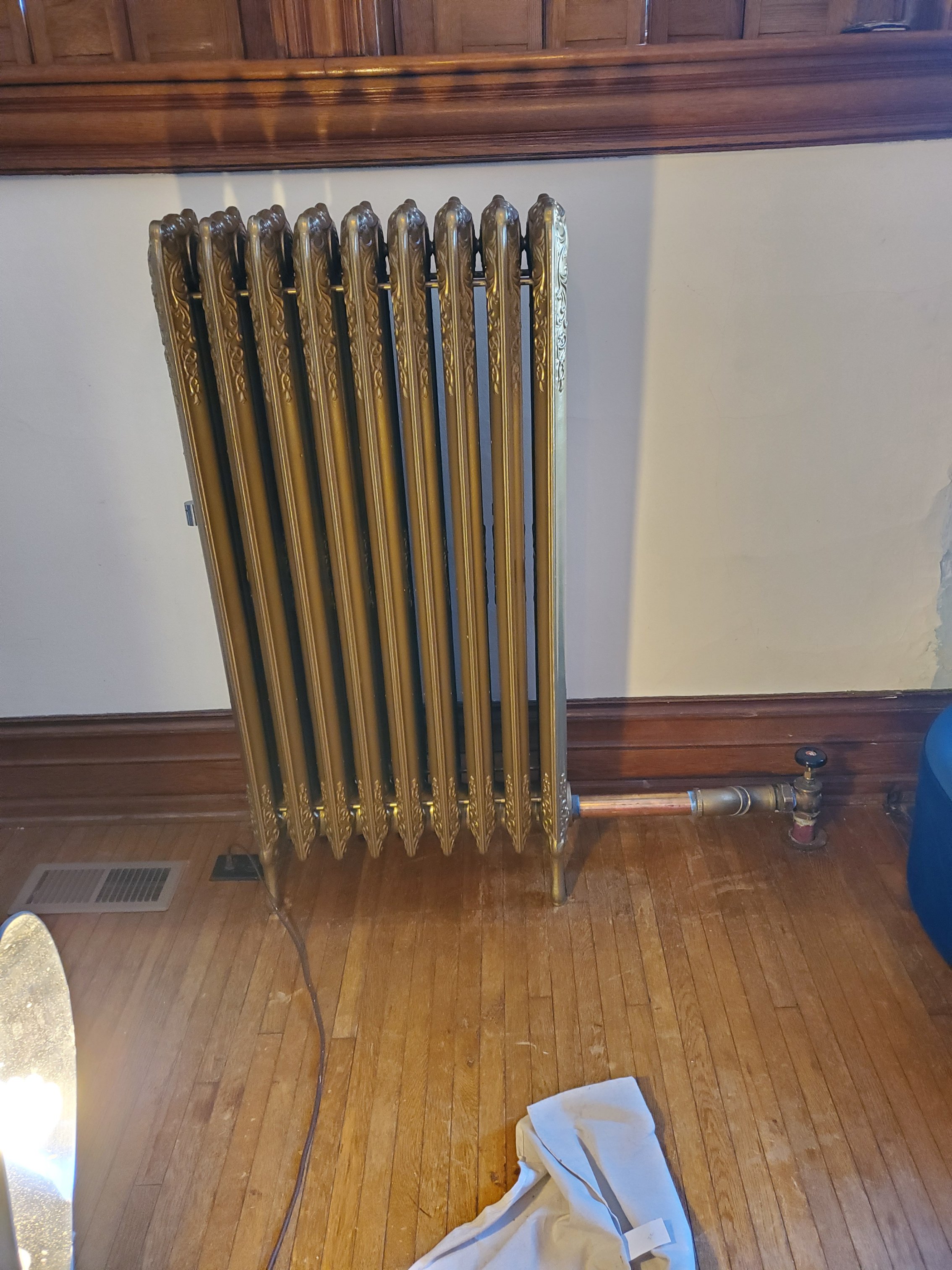
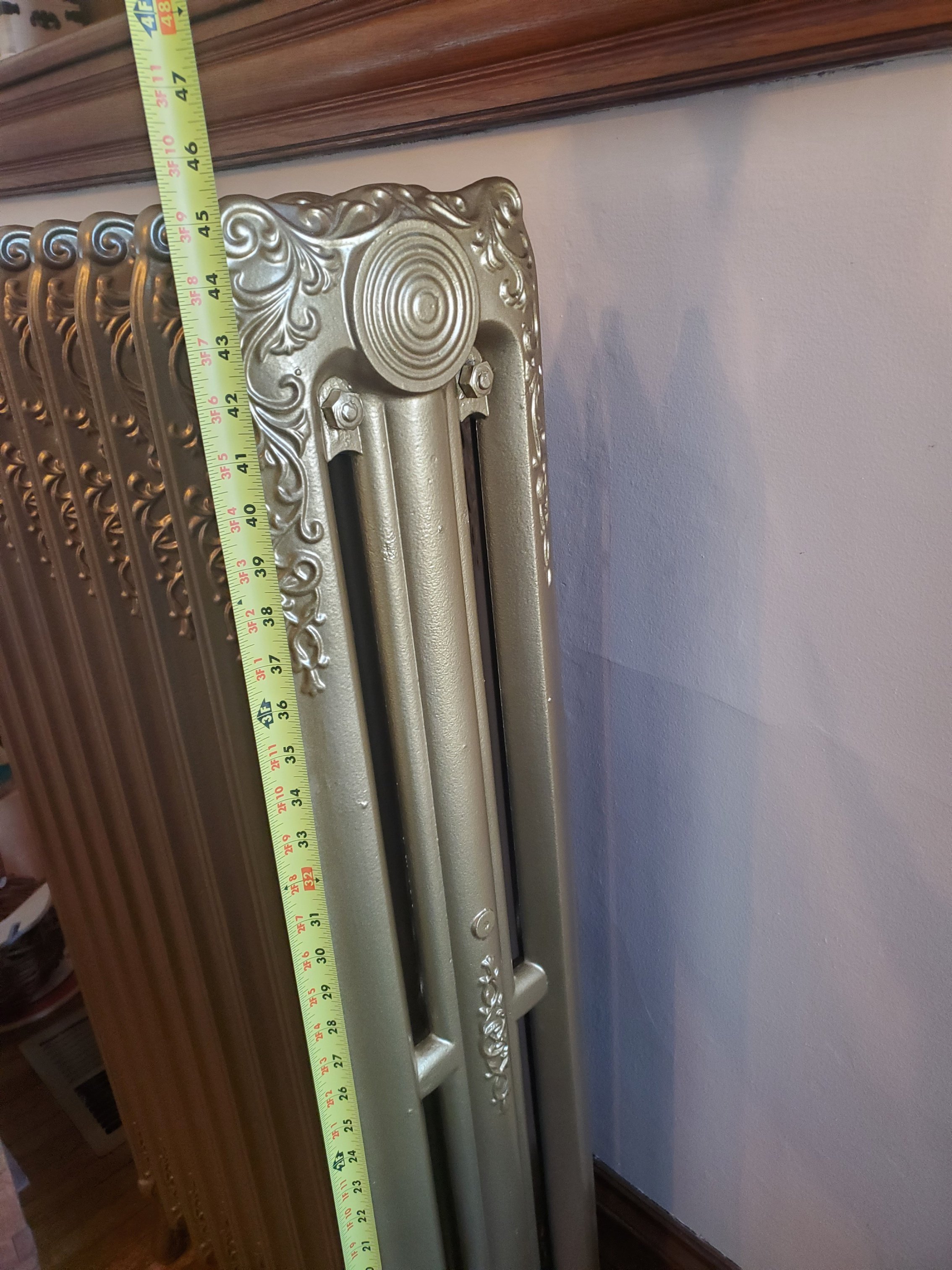
My wife and I recently had a very tall(45 inch) Rococo radiator sandblasted and powder coated and we are very happy with the results. As stated above they are extremely heavy, so I would have 3 or 4 guys to help. This was a first floor radiator and only required going up/down 4 or 5 stairs.
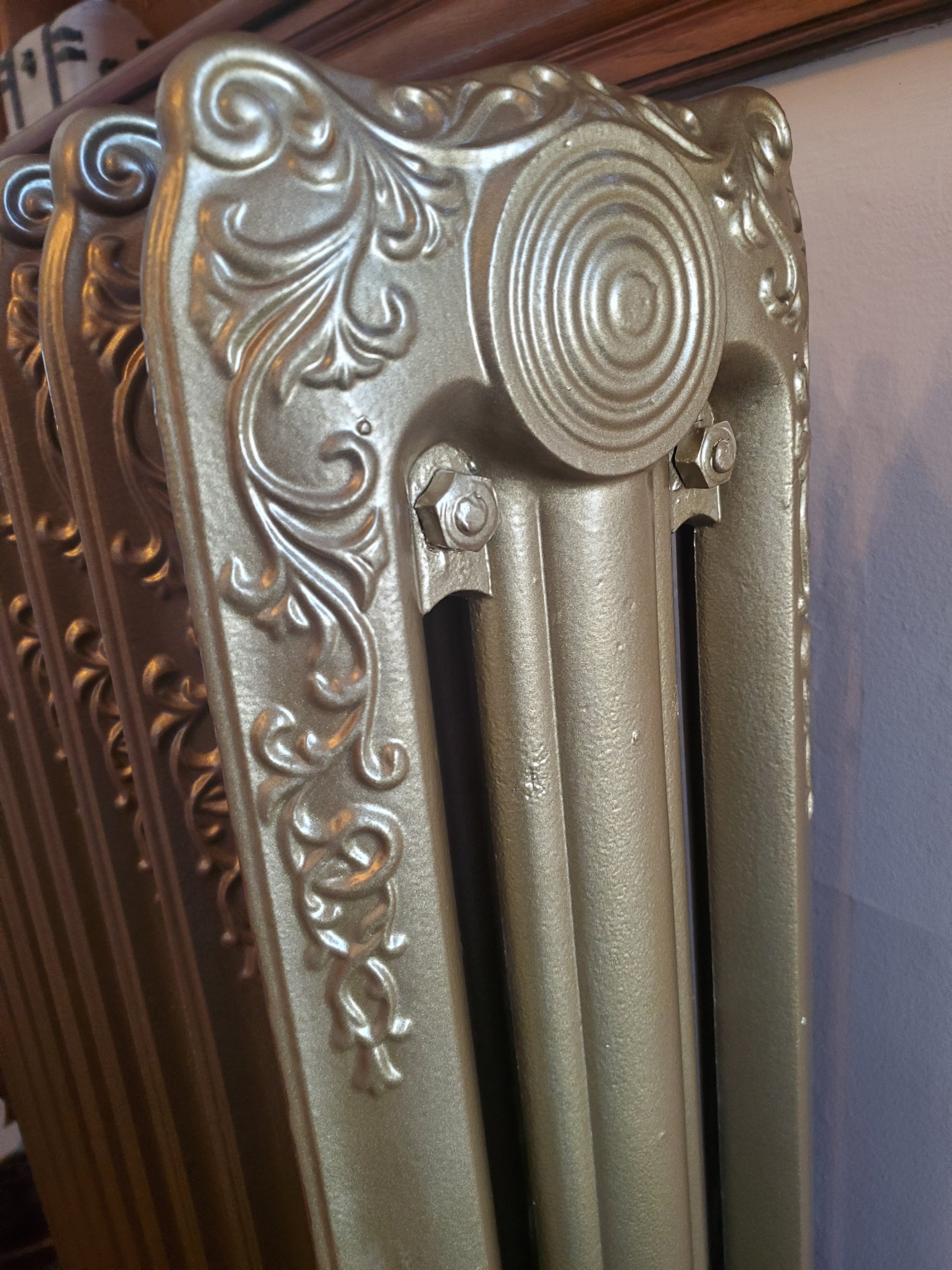
 1
1 -
Other minor things:
I used a short nipple with a cap for the steam inlet side and an 1/8 inch plug for the air vent side, to prevent any damage to threads.
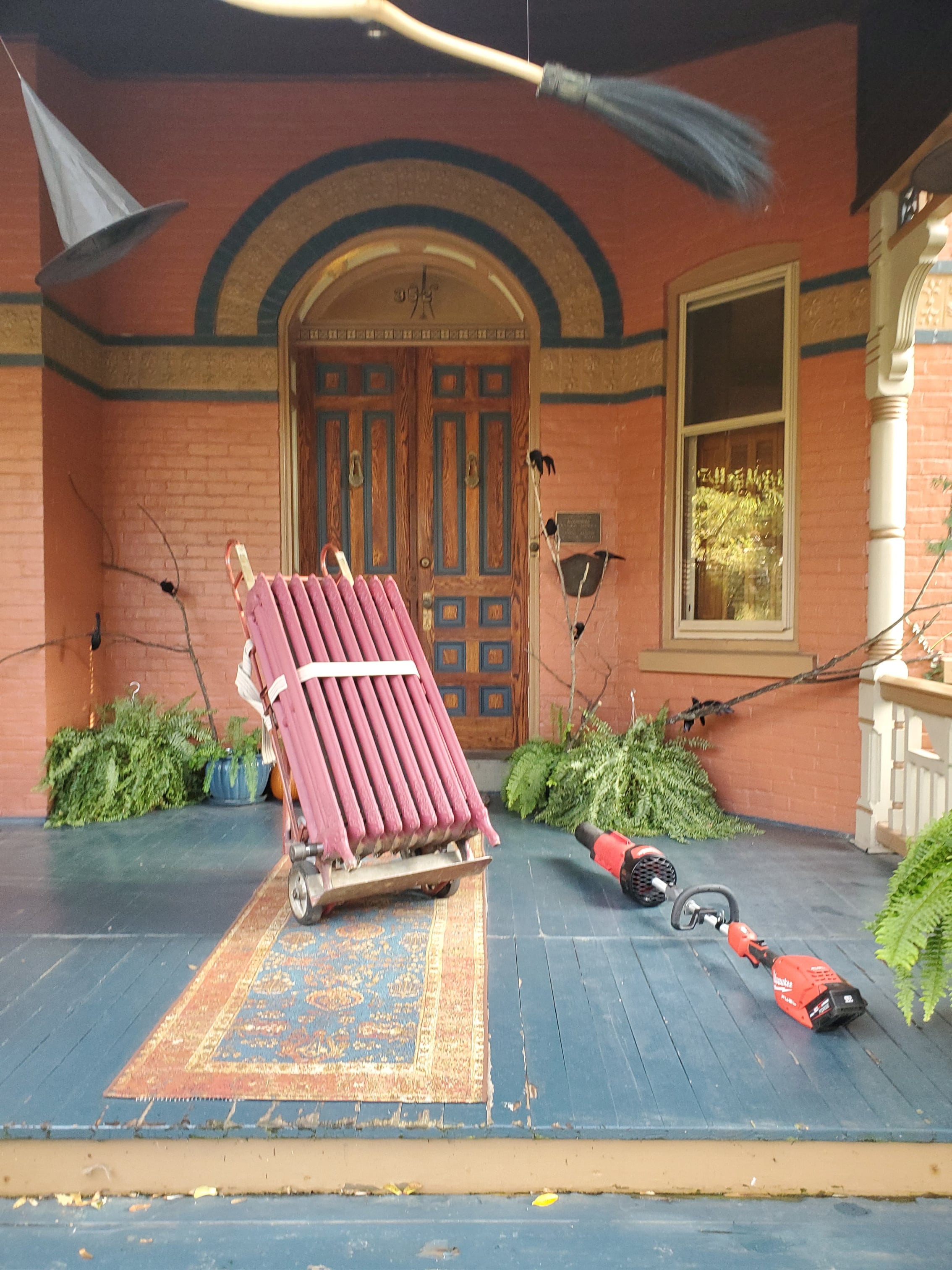
A heavy duty appliance cart is very useful.
I rented a very small trailer from Home Depot so we did not have to lift into my truck bed.
Start looking at finishes well before you remove the radiator, there are thousands of options and it is very difficult to decide. Prismatic Powders will send you 5 samples, you just have to pay for shipping.
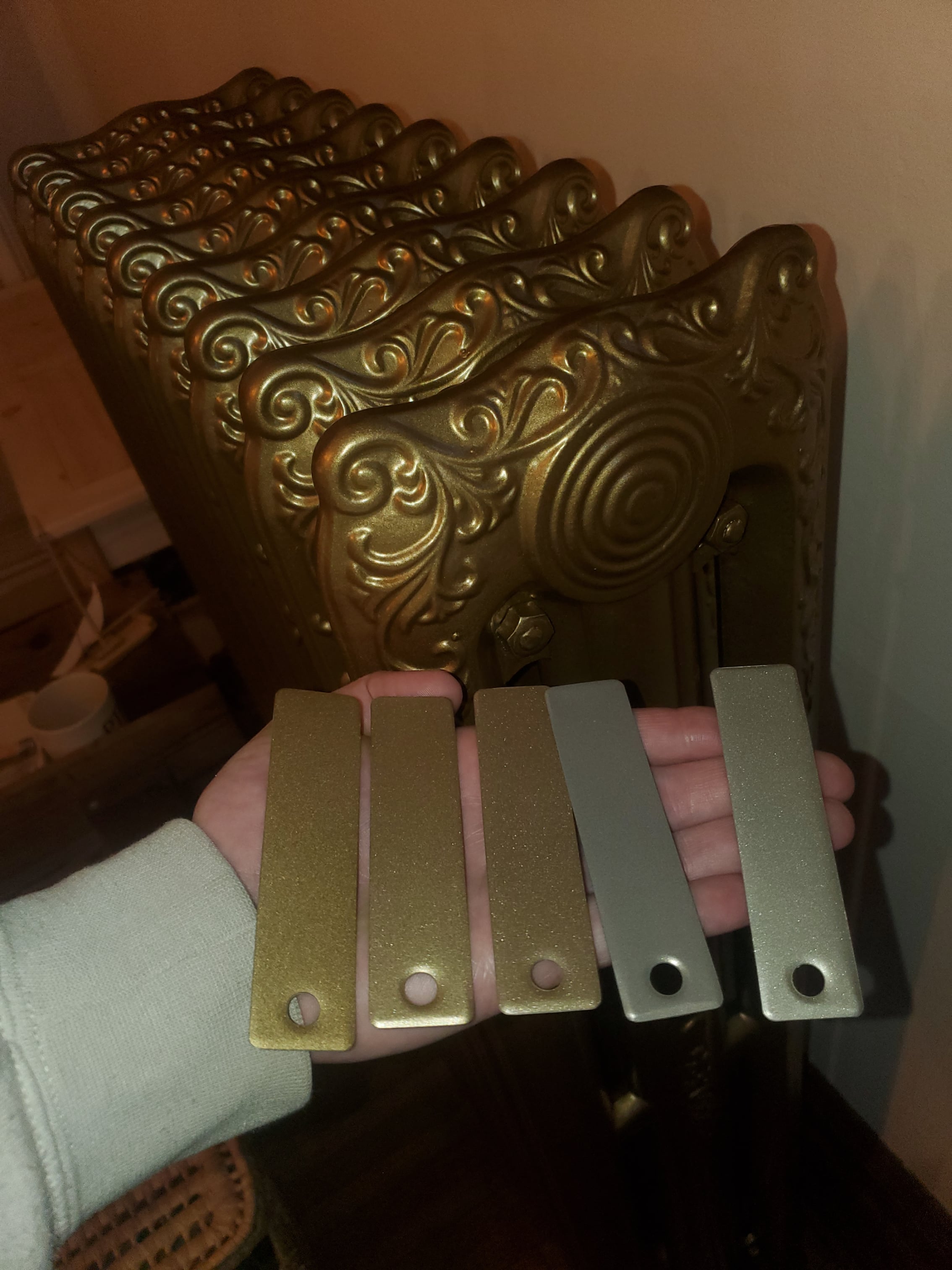 1
1 -
You've made 4,670 posts here, and this was the best answer you could come up with?
Yikes.
 0
0 -
Your sarcastic comment is uncalled for @TheClevelandSteamer. Please follow site rules and be respectful of others.
Forum Moderator
0 -
That came out beautiful.
If you don't mind me asking, what was the reason for the 8 or so inch nipple to move the radiator over?
Single pipe 392sqft system with an EG-40 rated for 325sqft and it's silent and balanced at all times.
0 -
I happen to think that one of the more experienced visitors offering a completely unhelpful answer is uncalled for as well. Perhaps you - as the moderator - might want to address that as well.
0 -
Powder coating radiators is amazing. We have had 7 Rococo radiators done in the past 3 years and I'm having an 8th one done as I type this.
Sand blasting removes the paint mechanically rather than chemically. I'd recommend sending it to a professional shop. That way you're not polluting your own property, equipment and house with harsh chemicals and likely lead-based paint.
Zero off-gassing, much more durable than paint. I'd still do it even if it cost 3x as much as painting.
0 -
what radiator uses paper gaskets? they either use push nipples or left-right nipples. powder coat "paint" isn't paint at all, it is powdered plastic and it gets melted on to the surface, there isn't really anything to off gas.
1 -
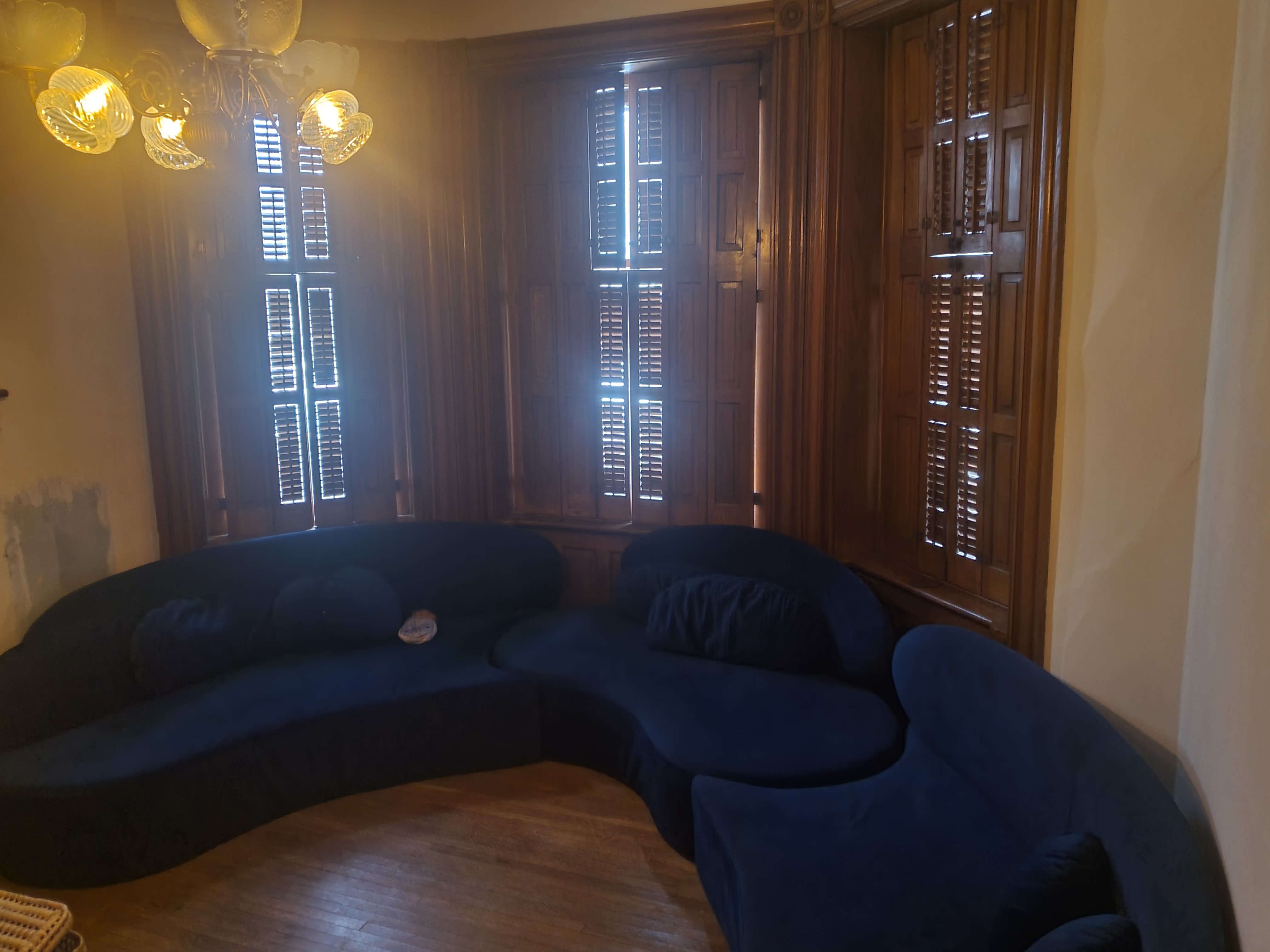
This is our Tv room/library/ playroom for our son. My wife wanted a curved couch in this room, at least until our son grows up, so we rotated the radiator to accommodate. You can see the plaster and painting that will need to be done.
Adding a 10 inch nipple got the radiator further from the couch and centered it on the windows. Pitch was still ok, so we figured we would give it a try. I replaced the black iron nipple and elbows with brass once we finally found someone to sandblast and powder coat. In hindsight I would have just had the 10 inch black nipple and elbow fittings powder coated to match.
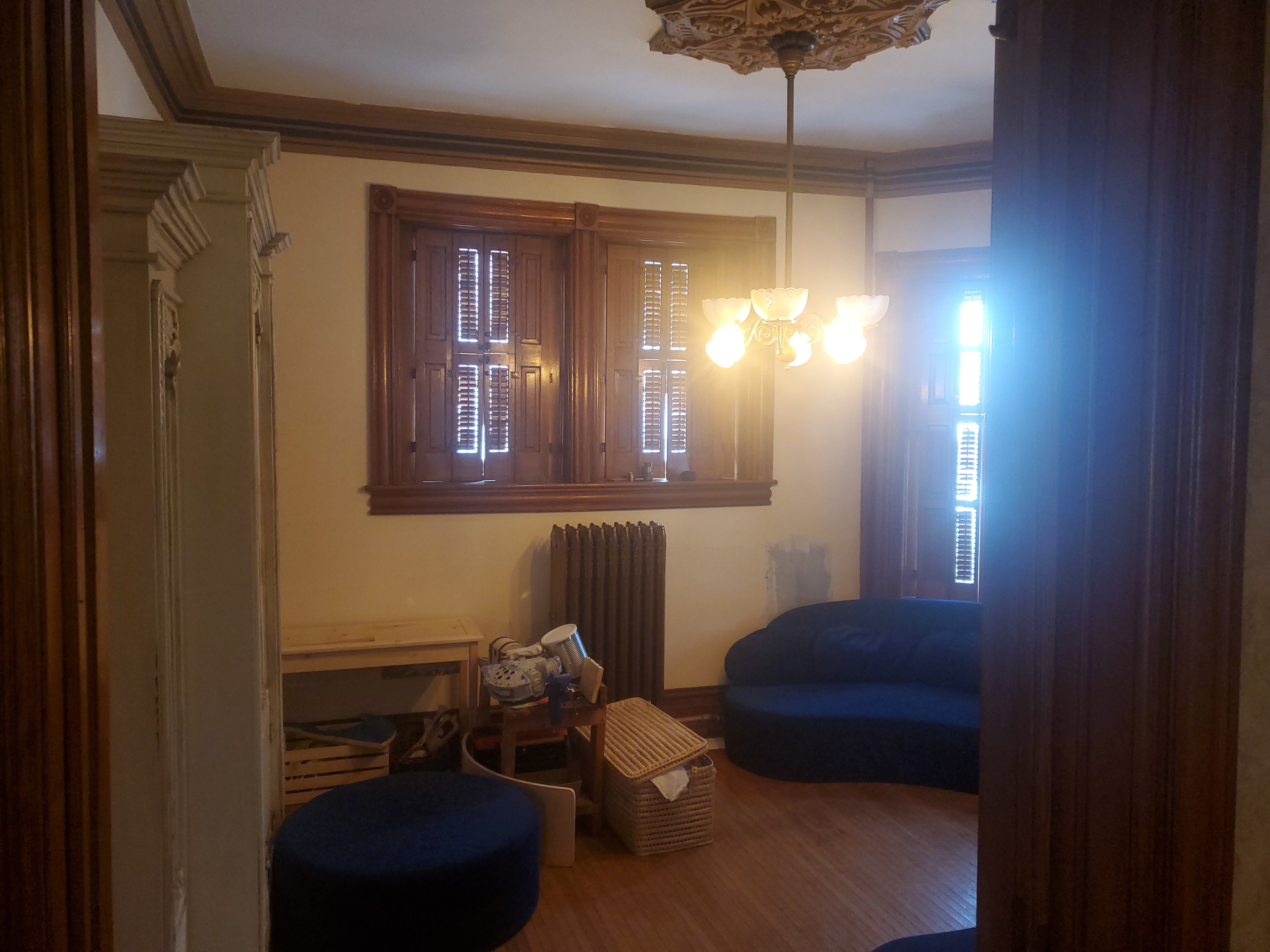
 3
3 -
Is that a combination gas / electric chandelier?
Single pipe 392sqft system with an EG-40 rated for 325sqft and it's silent and balanced at all times.
0 -
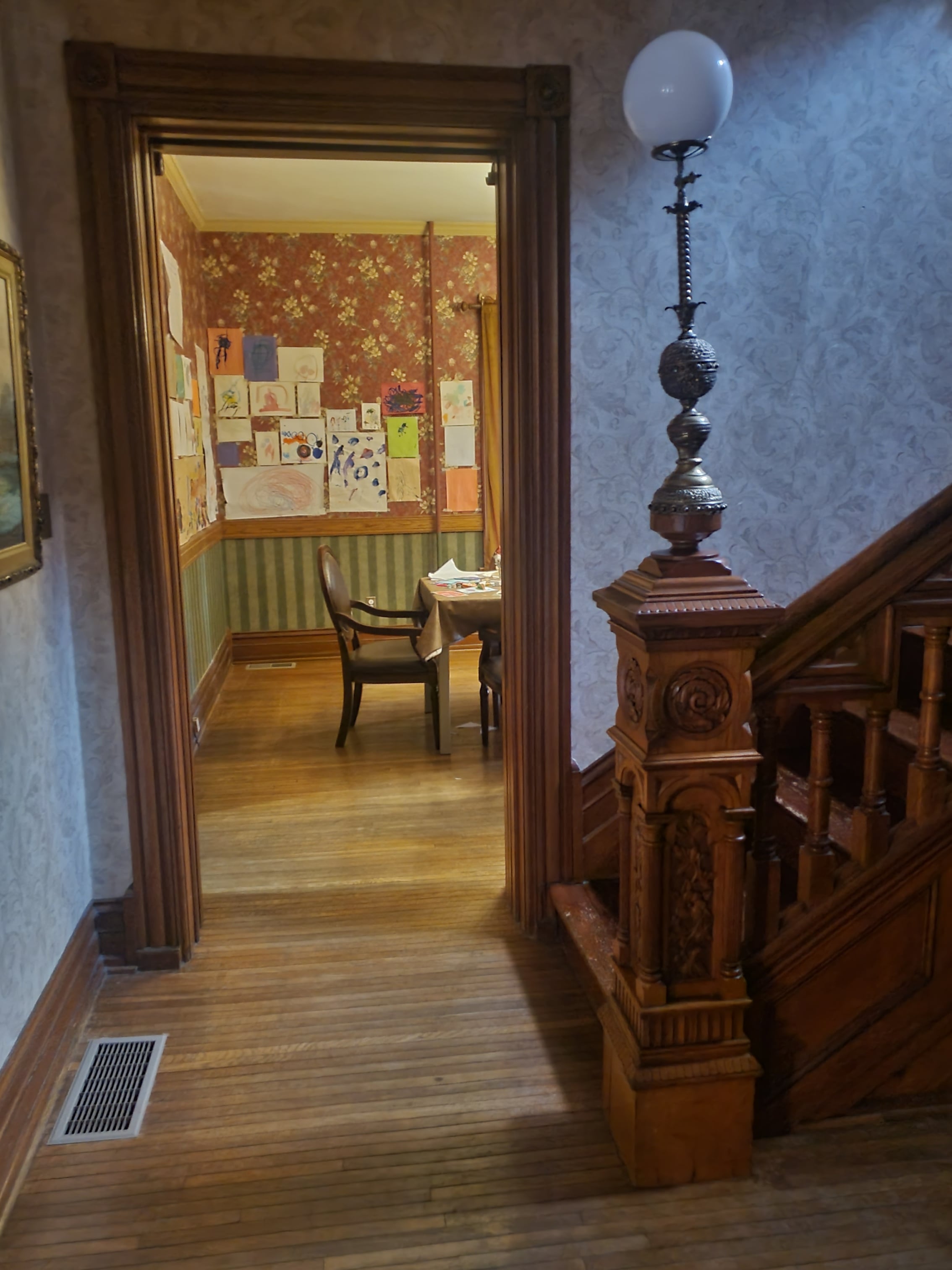
I believe a converted gas chandelier to electric . The gas is not connected. Same thing with our newel post. I am not sure if they are the original or not.
 2
2 -
methylene chloride metabolizes to carbon monoxide so if you're using it you really should have both ventilation and protective equipment such that you com in to contact with almost none of it.
sodium hydroxide solutions will strip most paints.
very hot water or steam will too.
0 -
I would LOVE to have a home with this amount of charm! So happy that no one painted over the stained wood or tore up/covered those floors!
2 -
@TheClevelandSteamer, he was advising the OP to search for that term within our forum because this is a discussion that comes up a lot here and, as an experienced forum member, he knows that. It was not an unhelpful answer because it was leading the OP to additional resources. It's not uncommon for our experienced members to recommend a search on topics that come up frequently. In the future, please give other members the benefit of the doubt before jumping in with sarcasm. We get a lot more done together when we're respectful.
Forum Moderator
1 -
We have had 100s powder coated over the years, yes sometimes the oven gets the section joint and will get a leaker. Used the same powder coater for years. He early on had some problems with bake temp/time that did cause some issues. once dialed in, no problems. It is seriously not cheap but they are things of beauty when done. I wire brushed mine in my garage with grinder wheel brush. Then rattle canned it, did not look quite as good at the powder coater but I was fine with it and my wallet was a little thicker. Just be aware that once in awhile either during sandblast or bake you may lose a radiator. Then it can be a slog to find a match.
1 -
the sandblast vs grinder is probably more the difference in finish vs powder coat vs paint. paint is not too hard to spray on to something like that but getting all the rust and paint off with a wire wheel is almost impossible.
1





Categories
- All Categories
- 87.5K THE MAIN WALL
- 3.3K A-C, Heat Pumps & Refrigeration
- 61 Biomass
- 430 Carbon Monoxide Awareness
- 122 Chimneys & Flues
- 2.1K Domestic Hot Water
- 5.9K Gas Heating
- 118 Geothermal
- 170 Indoor-Air Quality
- 3.8K Oil Heating
- 78 Pipe Deterioration
- 1K Plumbing
- 6.6K Radiant Heating
- 395 Solar
- 15.9K Strictly Steam
- 3.5K Thermostats and Controls
- 57 Water Quality
- 51 Industry Classes
- 51 Job Opportunities
- 18 Recall Announcements