Radiant under concrete floor?
Does anyone make a system to install under a concrete floor, similar to the systems for under wood flooring?
Looking at an 8" thick concrete floor over a basement. 24" bays.
Single pipe 392sqft system with an EG-40 rated for 325sqft and it's silent and balanced at all times.
Comments
-
you wouldn't want to do that because the heat would end up below the floor instead of in the living space.
0 -
2" thick styrofoam panels on the bottom?
Single pipe 392sqft system with an EG-40 rated for 325sqft and it's silent and balanced at all times.
 1
1 -
if you came up with a way to fasten the aluminum heat transfer plates. That would work. Probably want 8 or more inches of insulation
8” concrete is about R 1.6 so about the same as 3/4 plywood with 5/8 hardwood.
But it will be a monster to control, a massive flywheel. Constant circulation and temperature modulation would be needed to help over shot and long ramp up
What type of structure with 8” concrete floors?
Bob "hot rod" Rohr
trainer for Caleffi NA
Living the hydronic dream 1
1 -
if you can do it without it becoming a carpentry nightmare, pouring a 2" or so lightweight slab on top would work better.
0 -
ChrisJ, could you be more definitive about what you are trying to do. I don't understand, I'm kinda on the dumb side.
1 -
Heat the concrete floor so it's not ice cold.
Single pipe 392sqft system with an EG-40 rated for 325sqft and it's silent and balanced at all times.
0 -
This wasn't clean at all but I did a project adding snowmelt to an outside dining patio that was a suspended slab setup. we used joist trak plates screwed to the underside of the slab and insulated as best we could under the slab, and on the sides. It was completely out of normal install recommendations but it works even on our coldest, snowiest days. I forget what temp we ended up running the supply at, it was a bit of trial and error on that end. I think our slab was only about 4" thick though
Looking back one of the challenges was the joist trak being for 1/2" tubing, with so much load we had to keep the lengths to 150' approx. that portion had a 300,000 BTU/hr load, and I calculated a 162 supply temp, I think we settled on a little lower than that when all was said and done. that was for snowmelt so you should need a lower temperature. it will be very unresponsive though with that much slab between the tubing and the surface.
0 -
Heat the concrete floor, or use the heated floor to heat the room? Because they aren't the same thing and usually people want to do the second.
0 -
Floor warming is what I think he is after, the building has heat already.
Standing on cold concrete really saps energy from a person, besides being uncomfortable.
I just bough my first pair ever of heated socks for outdoor winter activity. They work great for old people with diminishing circulation :) Three temperature adjustments up to 8 hr on low setting before recharging.
I'd wear these in a shop with unheated concrete slabs.
Bob "hot rod" Rohr
trainer for Caleffi NA
Living the hydronic dream 1
1 -
maybe you would just constantly circulate 80-100f water through the tubing and let the slab get up to whatever temp felt comfortable over a couple days. might need all sorts of things if you're not heating it with a mod con.
0 -
floor warming is a good application for slab sensors, it can be a low btu load just to take some chill from a cold slab.
Bob "hot rod" Rohr
trainer for Caleffi NA
Living the hydronic dream1 -
What I didn't get was what the heat source that you were thinking about. How is the room heated, forced air, boiler, etc. What activity is on top of the slab. Perhaps, an insulated floor covering on top would make it more comfortable like engineered wood flooring with foam underlayment. I don't see how heating an 8" slab with possible edge loss can be done economically.
0 -
The slab is fully inside the conditioned space, you're heating it whether you want to or not.
It just needs to be heated a little more than it is now, which probably means heating the air below it. For energy efficiency that probably means insulating the heated space. The question is how large that heated space is, it could be the whole basement or it could just be an inch or so below the concrete.
0 -
If it were a shop, for example you may be able to just put tube under areas where workers stand. No need to heat under machinery, toolboxes or benches for example.
Similar concept to just doing tire tracks in a driveway snowmelt instead of the entire driveway.
Bob "hot rod" Rohr
trainer for Caleffi NA
Living the hydronic dream0 -
Yes, the slab may be at room temperature, but the conductivity of heat energy is higher in concrete than other materials because of the low R value.. So, it can conduct heat energy away from your body rapidly making it seem cold. It's like standing in front of a bay window in winter even tho the room is at 65 degs. You feel cold. Put a sweater on and you feel warmer. Walk barefoot on a tile floor even when the room is at 68 degs and see the results. Your feet will tell you.
0 -
The "something else" has yet to be determined, but considering oversized unit heaters running from a mod con.
Single pipe 392sqft system with an EG-40 rated for 325sqft and it's silent and balanced at all times.
0 -
Kind of completely a different direction but have you looked at residential approved radiant tube heaters?
0 -
No, not yet anyway.
Why residential approved?
Single pipe 392sqft system with an EG-40 rated for 325sqft and it's silent and balanced at all times.
0 -
I just made an assumption it was attached to living space. If it's not you can use any of them
0 -
How about a suspended ceiling below the floor, with rolled out attic insulation on the ceiling tiles. Then Ultra-fin between the insulation and the concrete.
0 -
No, no living space.
But, we do like to breath in there. Any idea what the difference is between them? I.E. is it venting related or just approvals etc? If the residential ones tend to be vented better, I'd definitely go for that.
Single pipe 392sqft system with an EG-40 rated for 325sqft and it's silent and balanced at all times.
0 -
The answer is yes. But getting the heat to travel upward will require a significant amount of insulation below, and it's not a whole lot of fun to drill and pound in all the anchors over your head. I have done this 4 times now and the most memorable was a precast 8" garage floor over a theater room. I ran 1/2" tubing at 8" spacing with Joist-Trak extruded plates only 1" apart throughout (aside from the bends, obviously) and then 2" of closed cell followed by 2" of open cell foam sprayed directly to the underside. With 120* SWT we were able to squeeze about 24 BTU/SF through the slab and completely heat the garage with it. Another commercial space adding a storage room above a laundry room, we did the same 8" spacing and Joist-Trak but built a 4" soffit below and filled it with rockwool. That did surprisingly well also but was even less fun due to the Rockwool.
2 -
for the low intensity tube heaters I think it's approvals on the burner. The ones I have dealt with are all vented similarly, and I work in a building with many of the commercial tube heaters running I'm not worried about them. I obviously prefer my boiler systems but I deal with tube heaters a ton and they work very well for many applications, I also barely sell any parts for them and we sell tons of tube heaters. at our shop I like that they are far quieter than unit heaters (and a little quieter than our office furnaces!), and the radiant heat tends to just feel nicer. If you look at them make sure to check the clearances below the tube, they are quite substantial, 4 feet or more depending on the exact model. I have always preferred re-verber-ray, there are a few other brands and they all seem pretty similar in quality with a few different types of product, schwank has some nice stuff
1 -
The only concern with overhead radiant tube is they are line of site, So you would not feel much heat sitting at a bench or desk, etc. Whereas the floor system would warm wherever you chose to place the tube.
A Hilti gun could shoot pins into the steel or concrete and just condiut clip the tube to the bottom of the steel that the concrete is poured on.
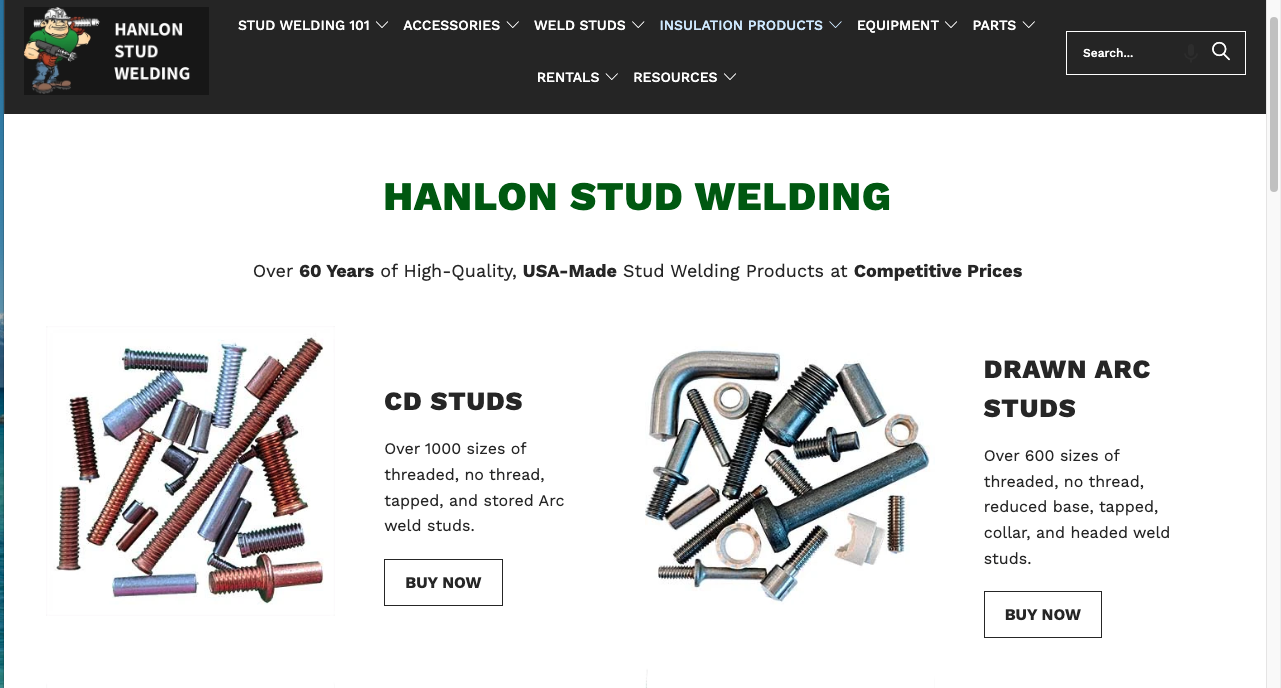
No need to add $$ transfer plates of you have the transfer plates already built in. You can also get a stud welder tool to attach threaded studs, to the metal decking.
I'd use a Pex Al Pex for more rigidity between clips.
The R-value of 8" concrete is about the same as 3/4 plywood with 5/8" hardwood flooring. The thermal mass "flywheel" effect could be mitigated with ODR.
 Bob "hot rod" Rohr
trainer for Caleffi NA
Living the hydronic dream2 -
it is fairly common. I have been in a hangar with radiant floor heat. It was nice. Warm air rises and the top of the hangar doesnt need to be heated.
Also been in a house in Quebec that was on a slab with floor radiant heat. It was really nice while -20 outside. So much snow, the top of a stop sign was knee high!1


Categories
- All Categories
- 87.6K THE MAIN WALL
- 3.3K A-C, Heat Pumps & Refrigeration
- 59 Biomass
- 429 Carbon Monoxide Awareness
- 124 Chimneys & Flues
- 2.2K Domestic Hot Water
- 5.9K Gas Heating
- 119 Geothermal
- 168 Indoor-Air Quality
- 3.8K Oil Heating
- 78 Pipe Deterioration
- 1K Plumbing
- 6.6K Radiant Heating
- 394 Solar
- 16K Strictly Steam
- 3.5K Thermostats and Controls
- 56 Water Quality
- 51 Industry Classes
- 50 Job Opportunities
- 18 Recall Announcements