Weekend Puzzle - Ceiling Radiator - Pipes

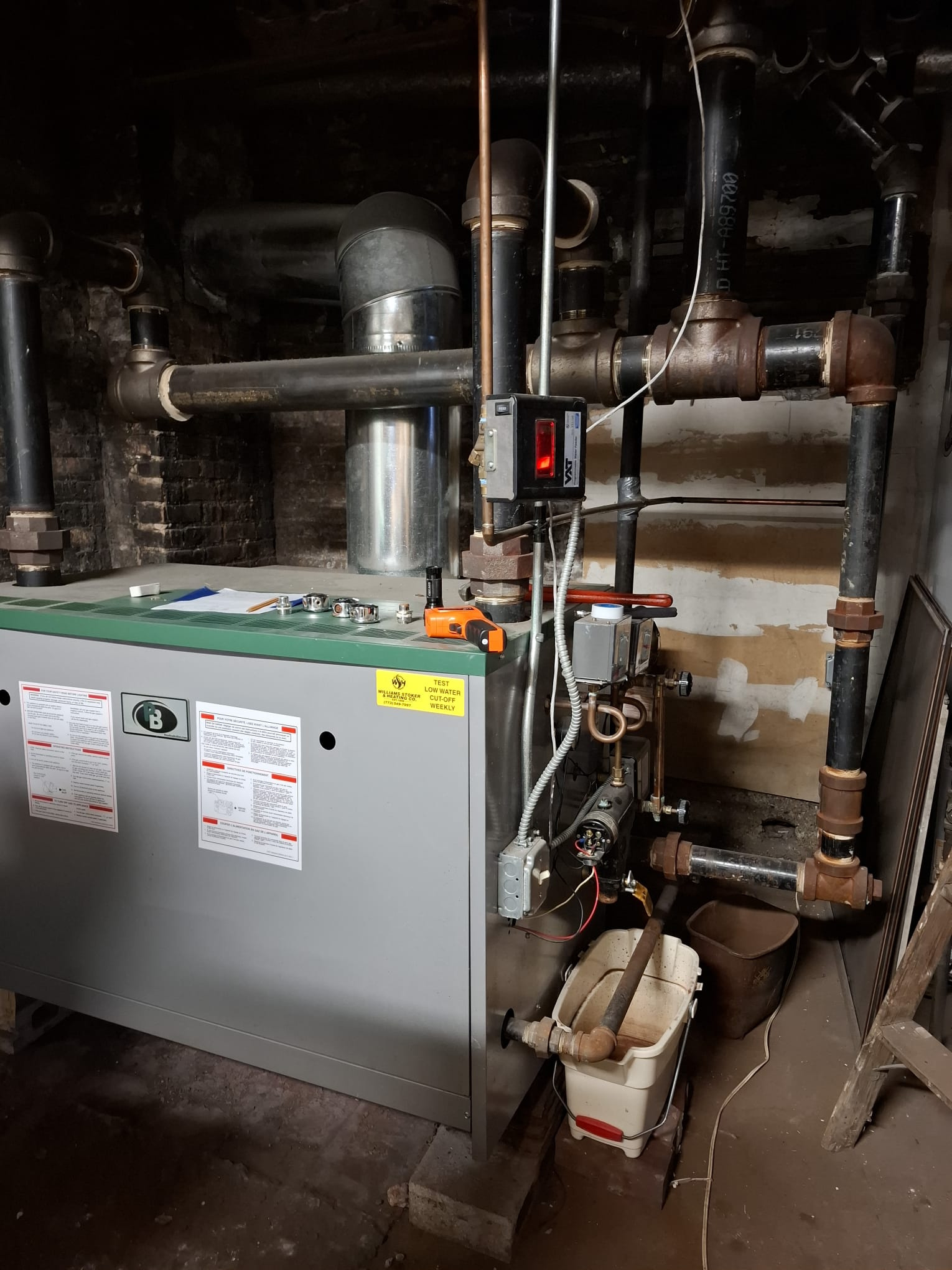
Came across that set in the building, as far as I can understand one side feed/supply to those organ pipes, its kind hard for me to wrap around that bridge from the main to the vent side,
Its one of the 'loops' on classic C shape 3 stories 6pack apt building, also 19in 14x6 rads above wont getting enough heat even without vents,
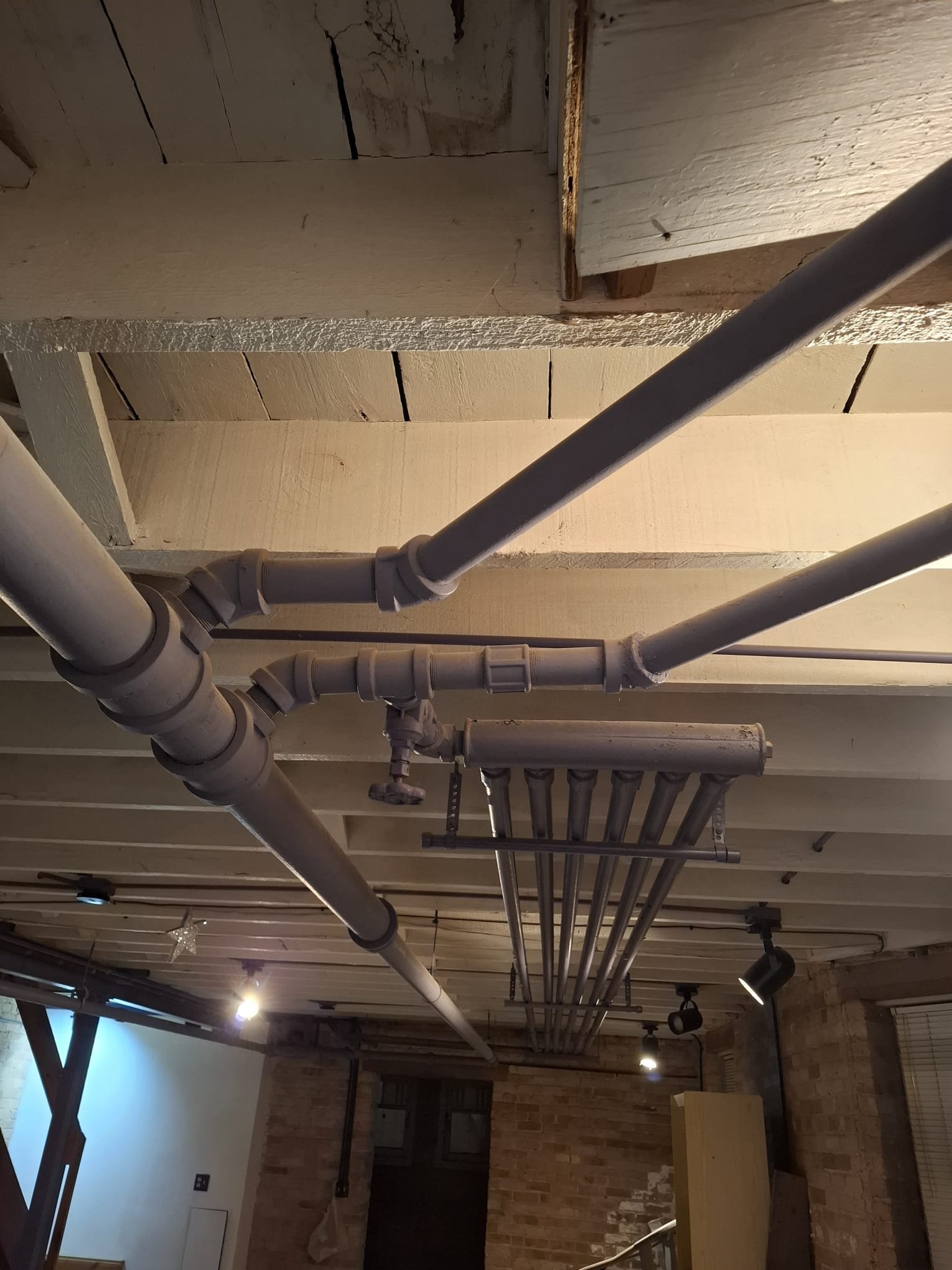
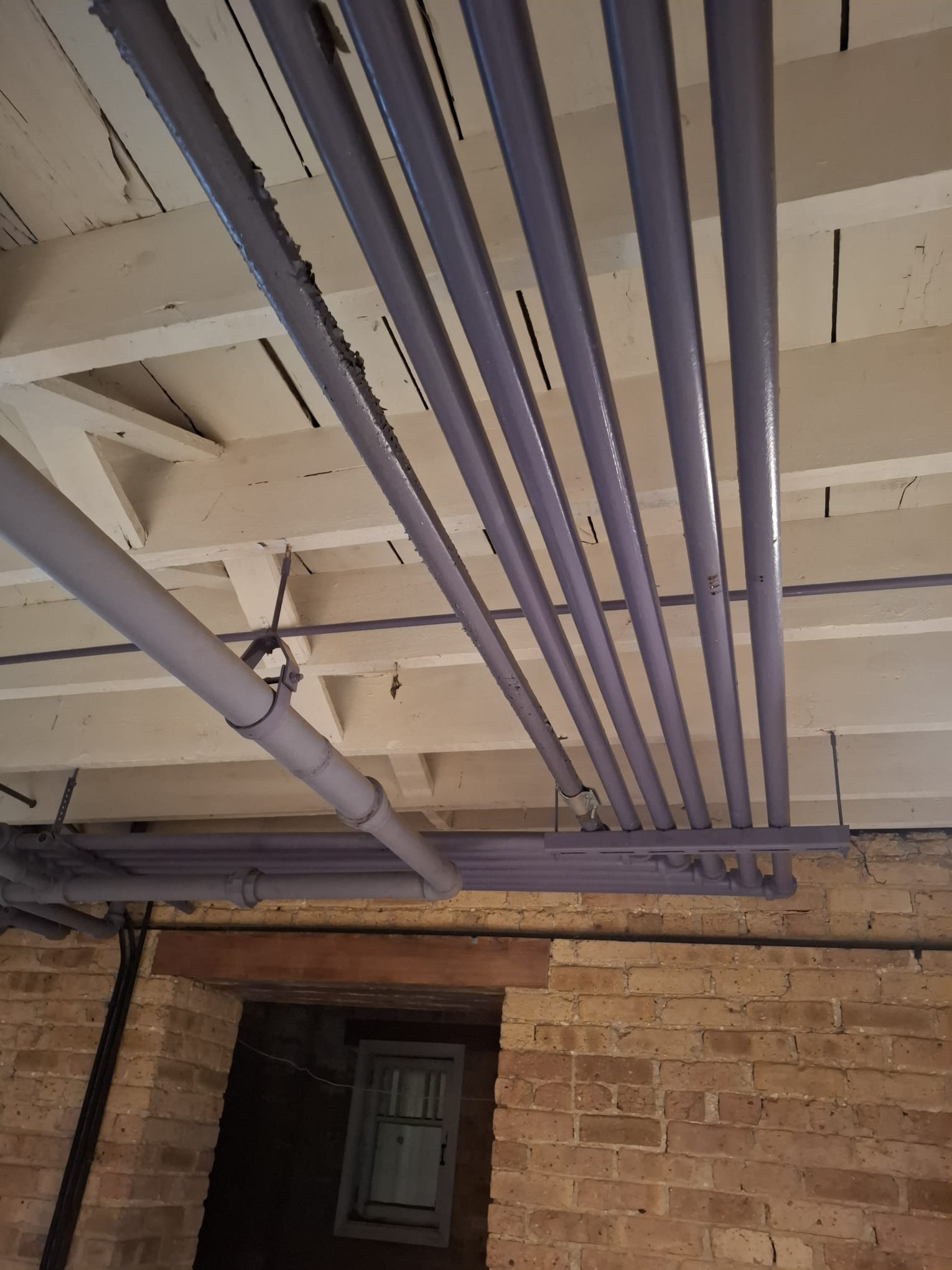
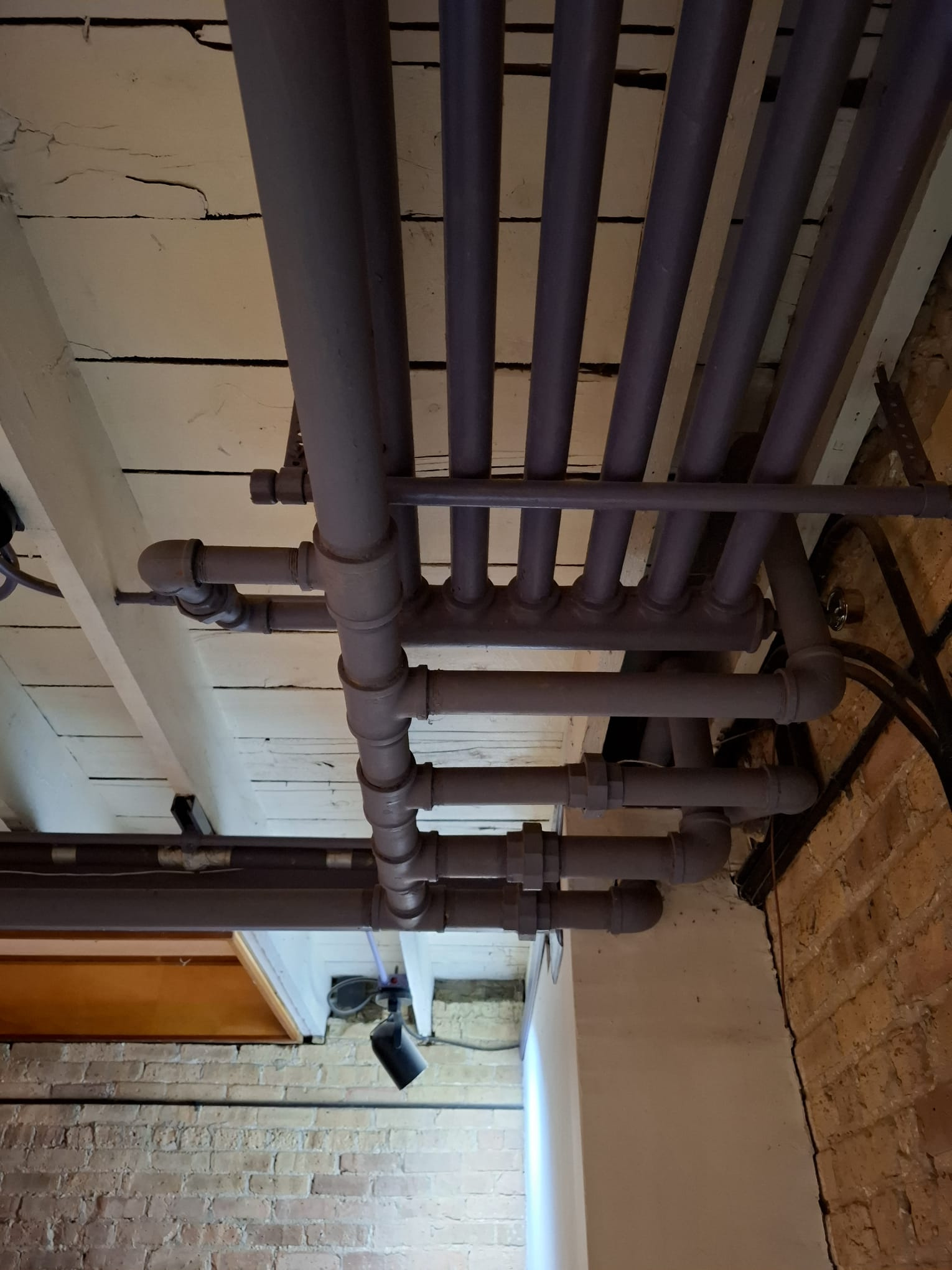
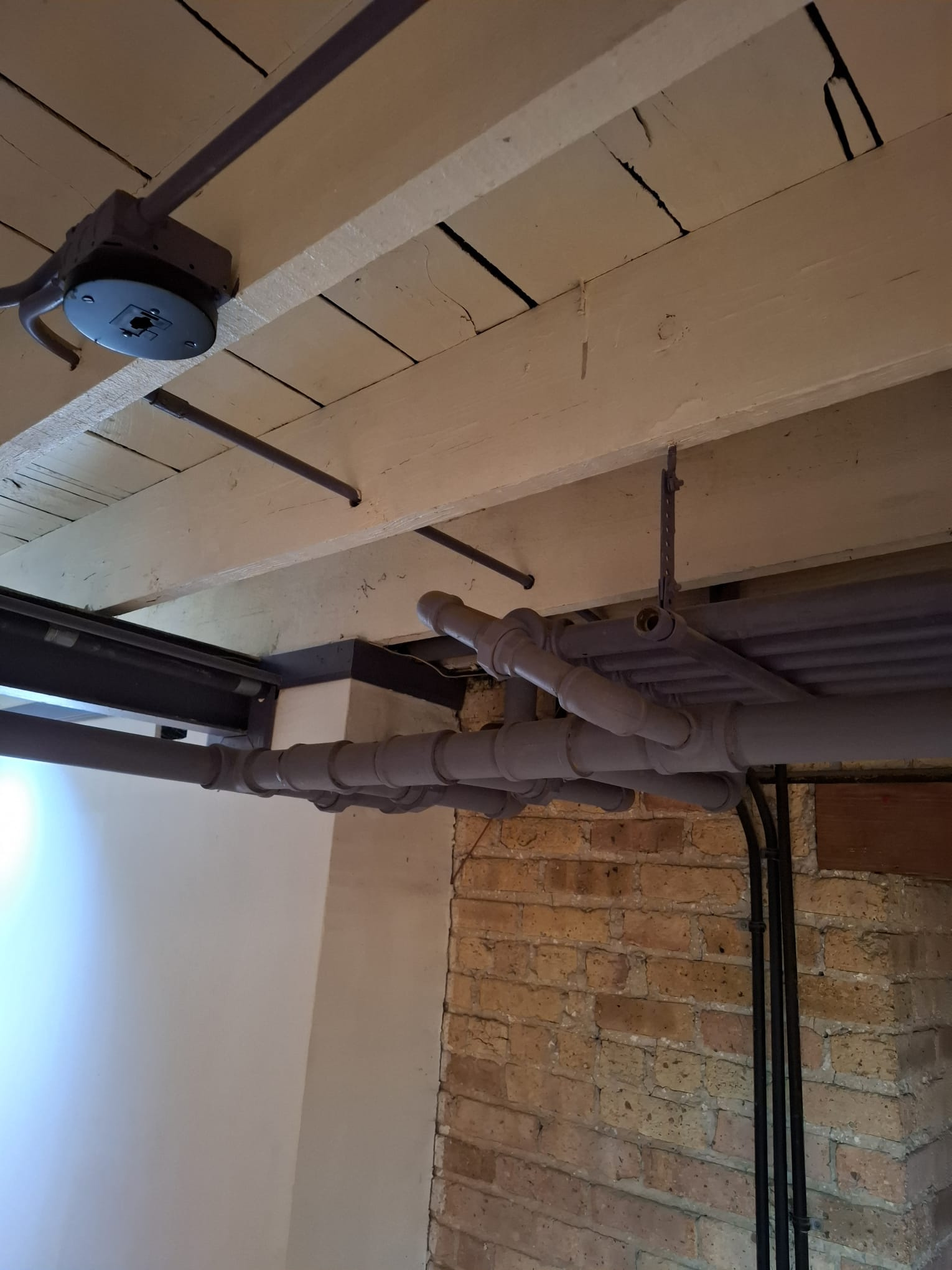
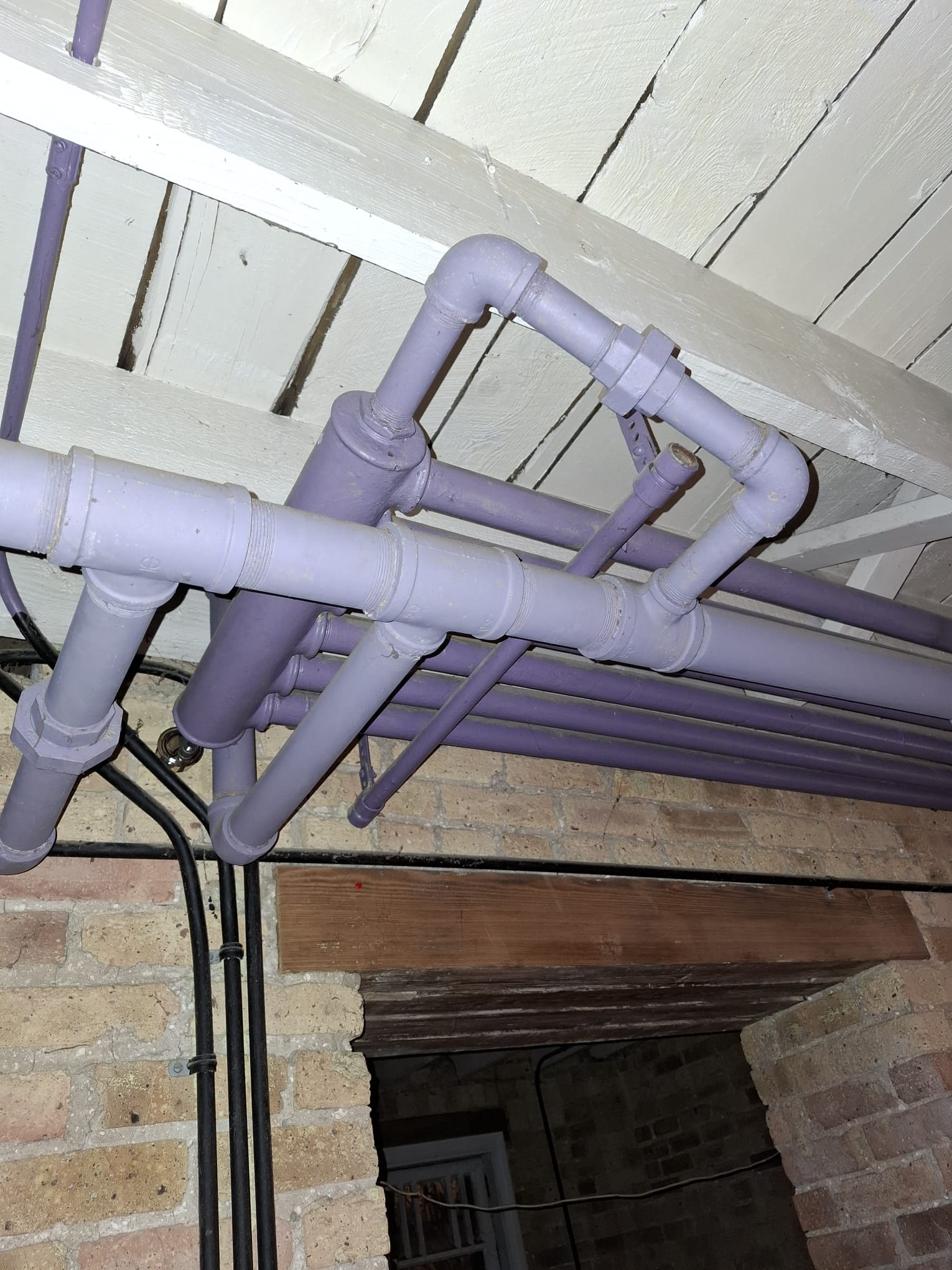
Supply side is getting warm, and the top on the vent side, middle is cold,
2 of those T are supply for directly above 2 'puppies' 3rd goes to 2nd & 3rd florr 'puppies' and 4th for small corner 4 sections rads on 2nd & 3rd,
Below are the puppies:
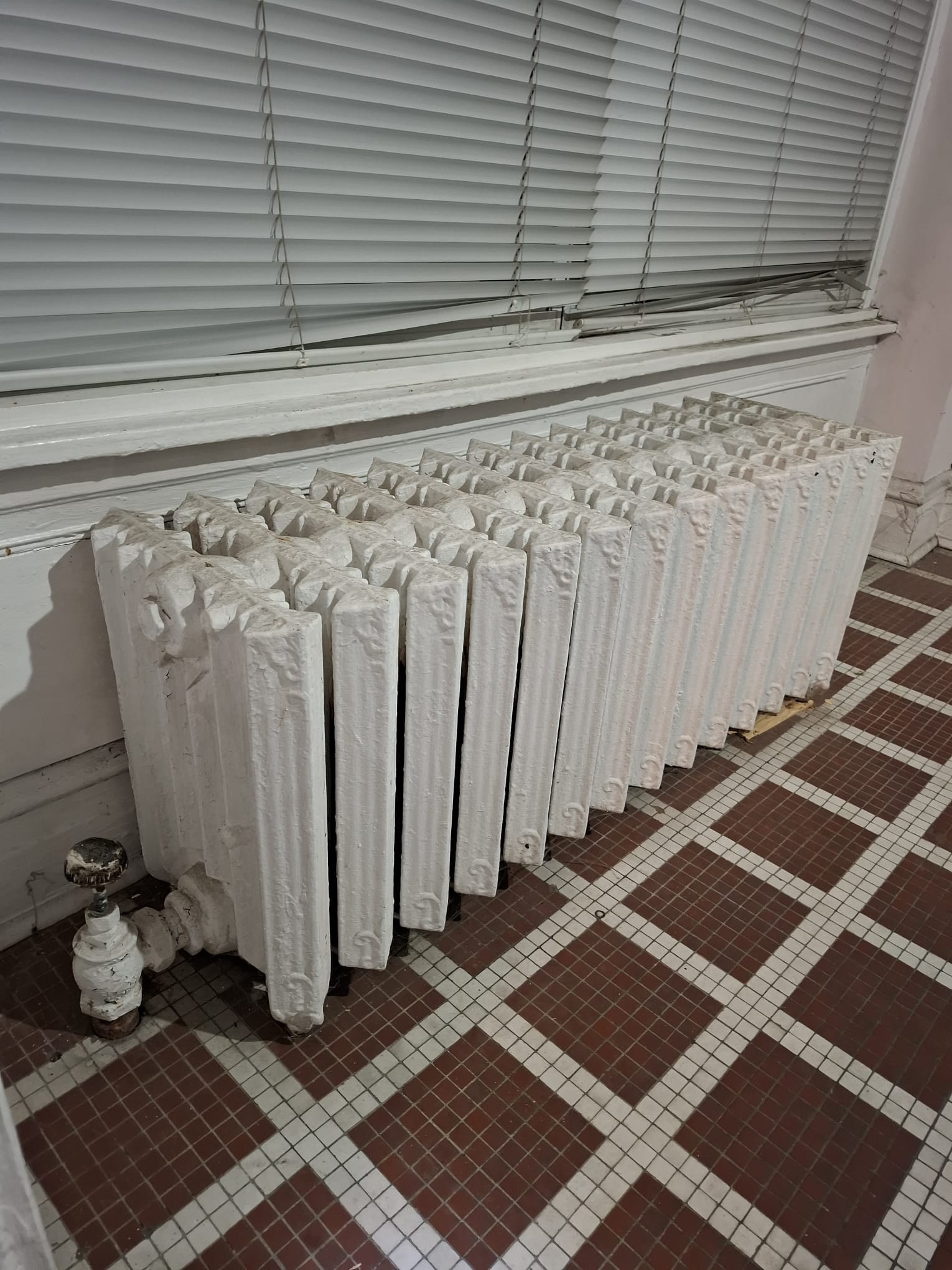
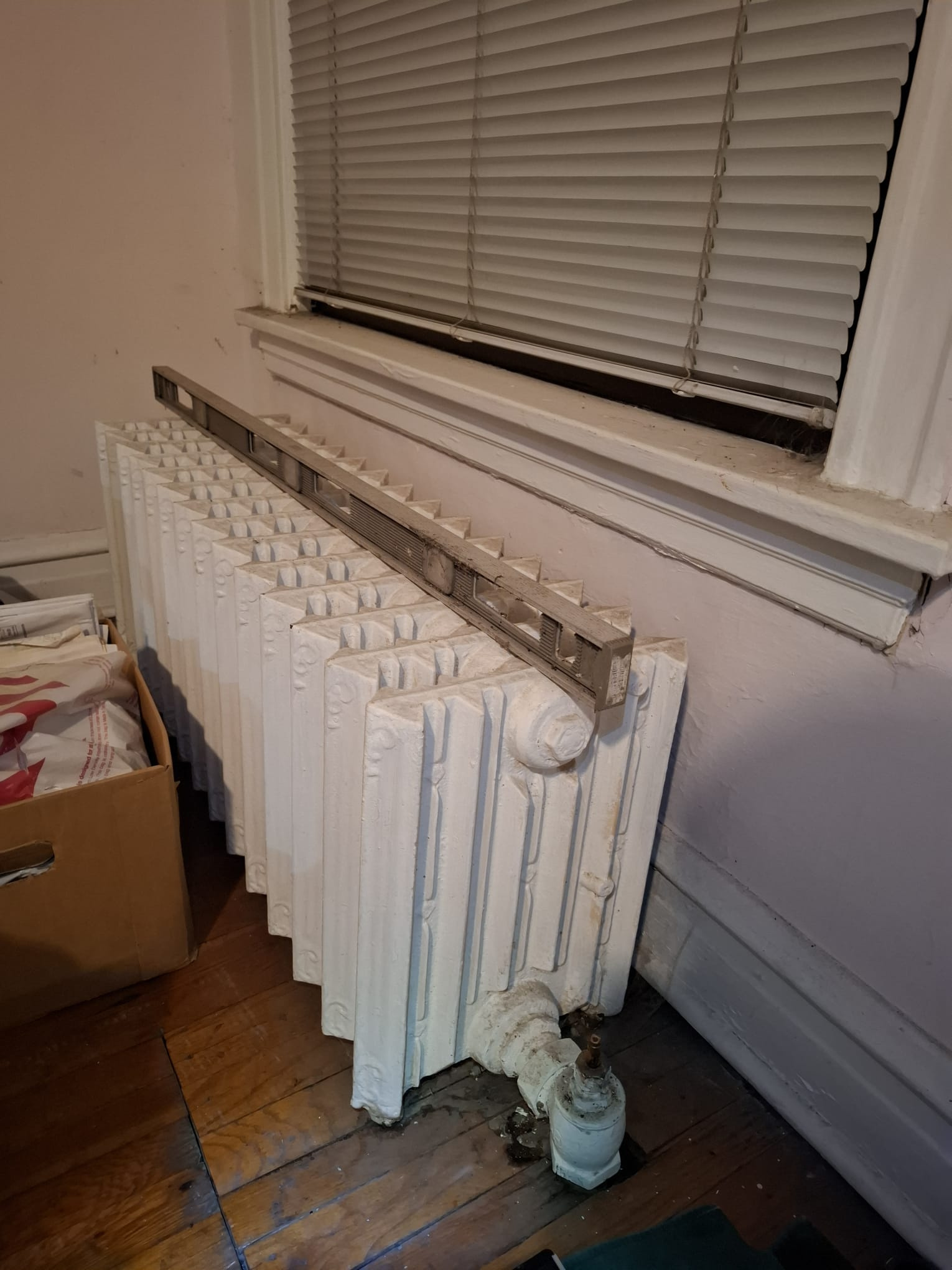
My main concern is Puppies are not getting hot, 1hr15min cycle, dry return is coming hot, main is not insulated coming throu boiler room part, i shimmed Puppies for slop, new Mist-o and Valverine, but it doesnt matter vents or no vents, next thing tonight I will close the pipes off, there is only one supply valve on the feed side and union on the vent side (shall I disconnect it too)?
Anyhow, happy Friday night, be grateful for any ideas, explain of those pipes connection
P.S.1
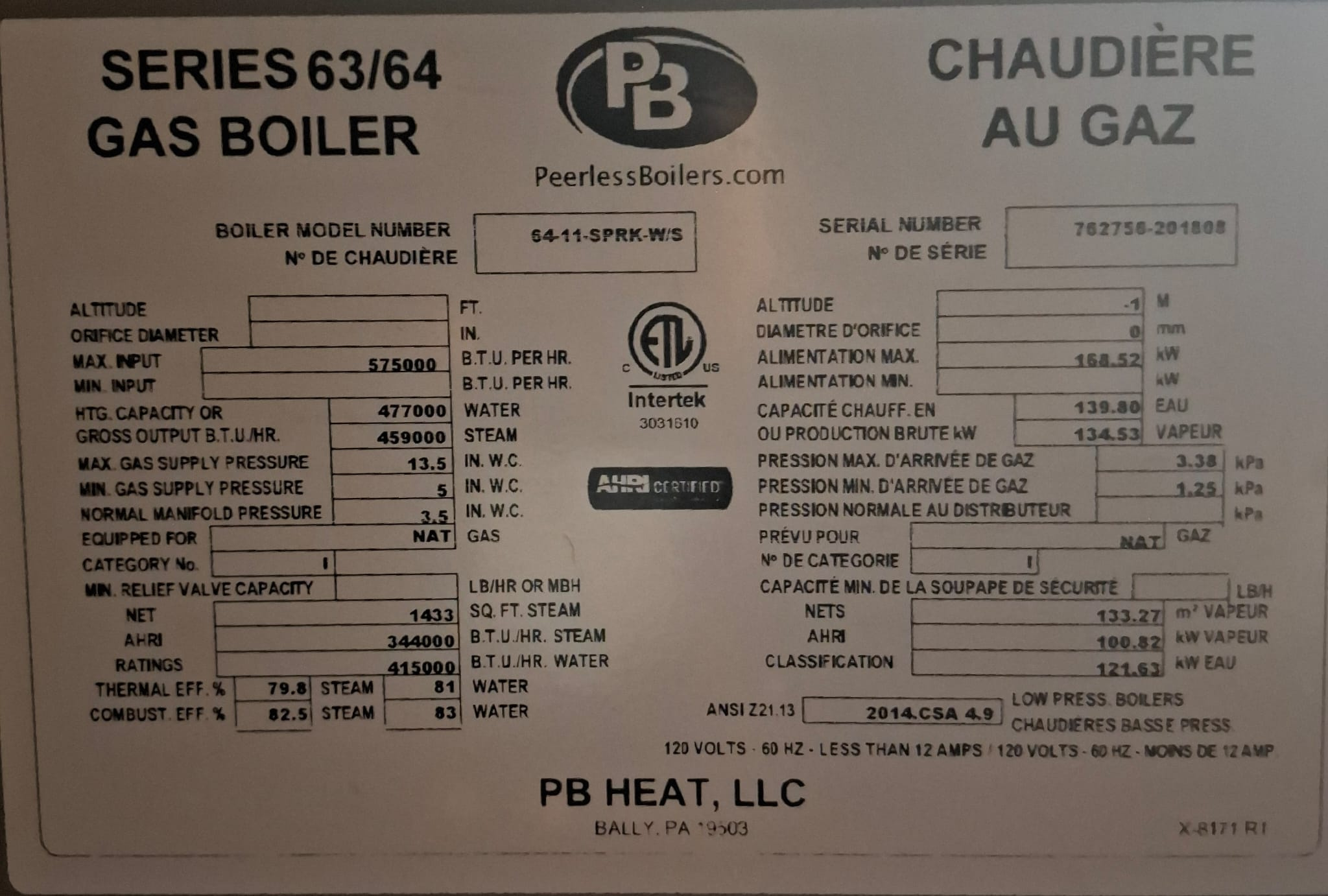
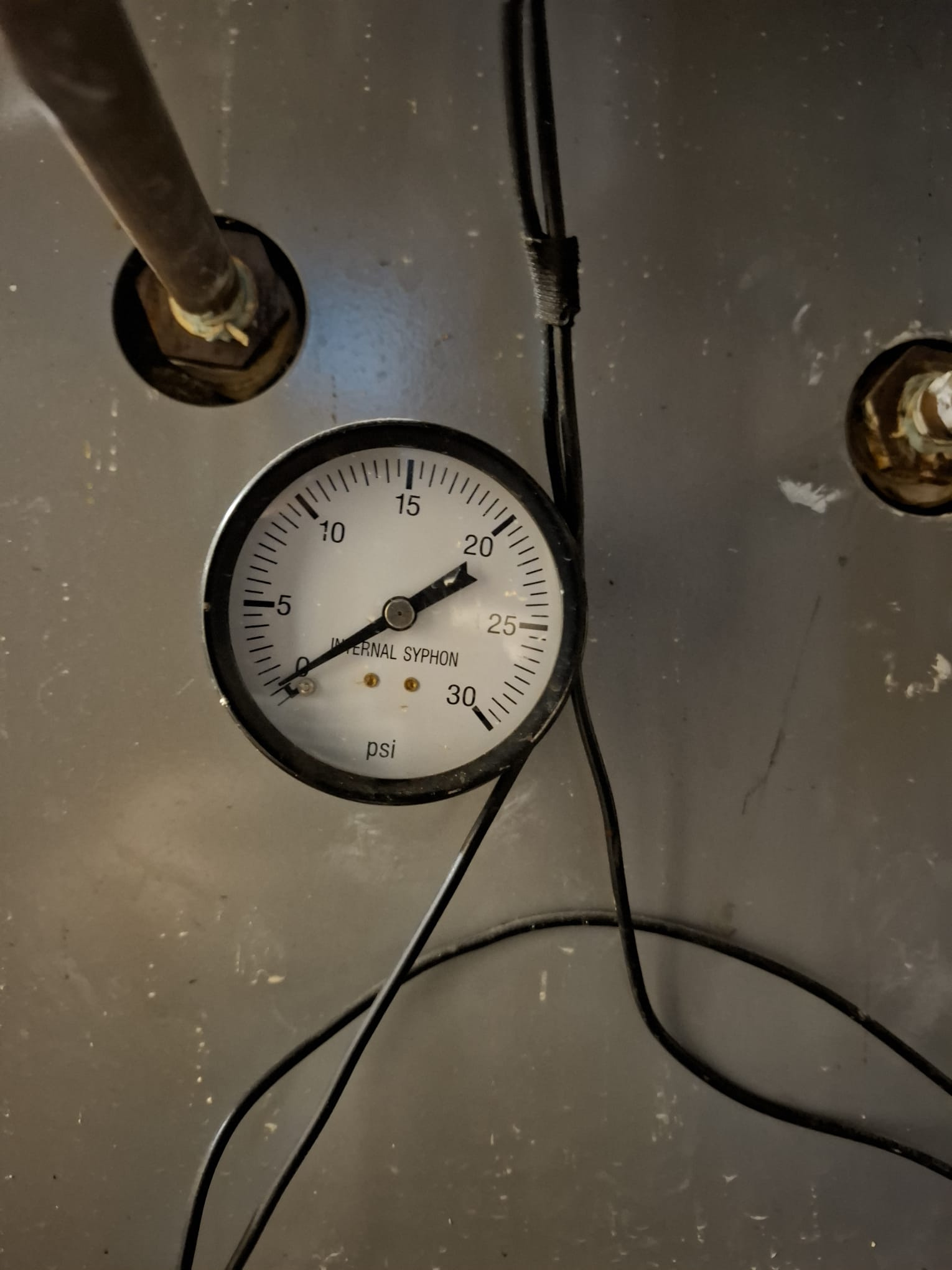
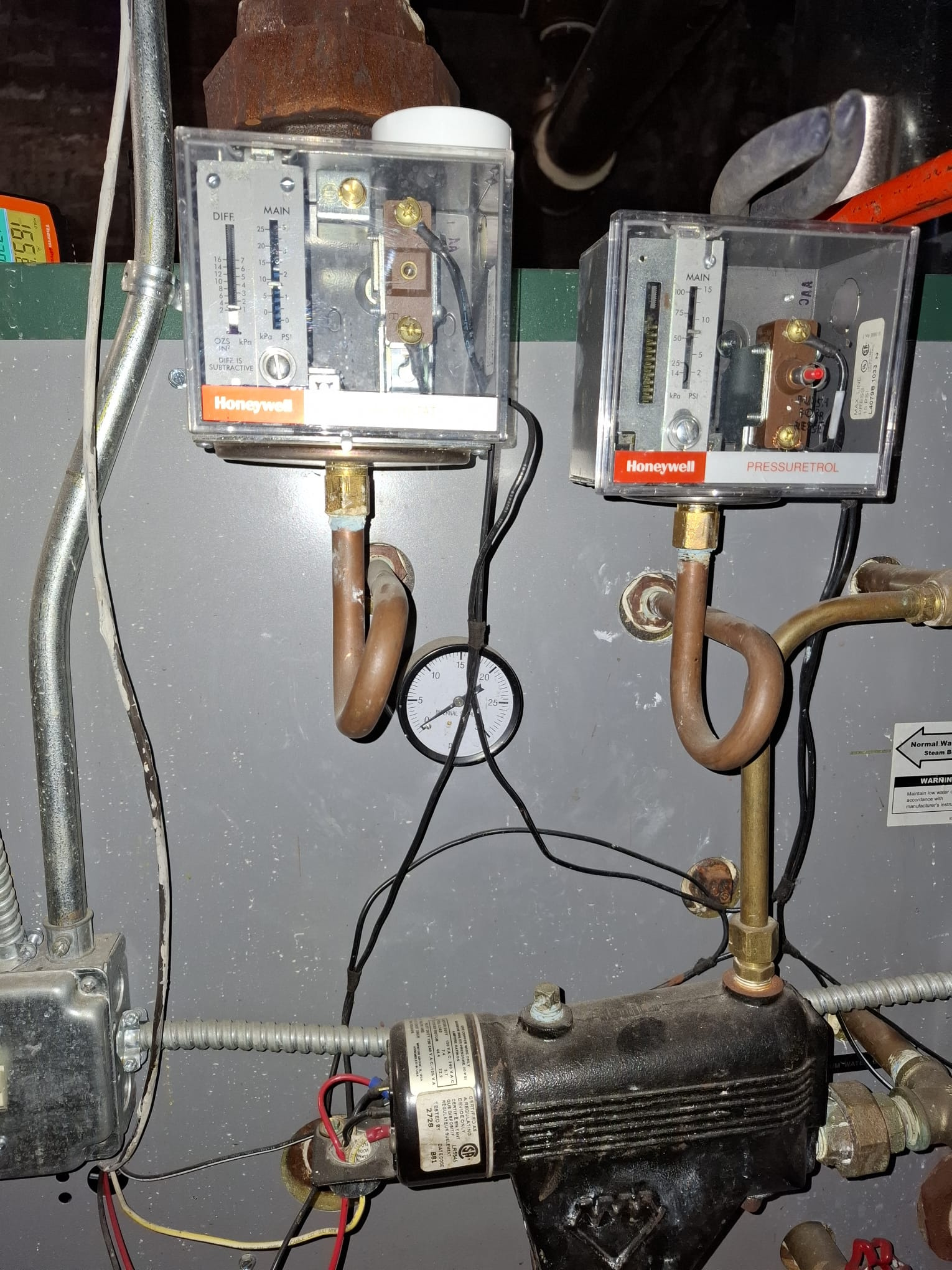
Yes - 1 pipe, dry return, 575BTU Peerless 5yo, Looks like guys installed it and run away in the middle of the job, all pipes bare, vents upside down or painted or sideways, some rads closed up, gauge improper, didnt check the pigtails will clean them up tomorrow, cout off was cleaned up weekly at least,
Comments
-
- Basics:
- If there is air there is no steam
- If there is no steam there is no heat
- You have no heat!
- Therefore you have air
- Get rid of the air and you will get steam
- When you get steam, you will get heat.
You can tell how far the steam has traveled thru a pipe because that pipe will be hot. when you get to a place on the pipe where you have cooler pipes, that is where the air is trapped and the steam pressure can no longer push the air out of the way. Look at venting to get the air out of the way
Now think about this: If a vent is completely removed and you have no pressure pushing the air out of the way, then you need more heat to make more steam. If the steam is condensing before it gets to where you need it to go and the steam turns back into water (condensate) then that rapidly removes pressure from that location (where the condensation is happening). If you are condensing more steam than the boiler can produce then your boiler is too small for the connected radiation and piping.
Have you counted the square feet of radiation connected to that boiler? Is there more than 1800 Sq Ft of radiation? Did you count that pipe radiator in the ceiling in the calculation? If you are trying to heat 2000 sq ft of radiators with a boiler that is only rated for 1433 NET sq ft steam, then you need a bigger boiler.
If the boiler is big enough, then you have an air venting problem.
Edward Young Retired
After you make that expensive repair and you still have the same problem, What will you check next?
 1
1 -
Looks to me like steam is heading up the return end & closing the vent before all the air is expelled. That doesn't look like much vent for all that piping, either.
 1
1 -
Here is an illustration that shows that condensate (water) can get trapped in a pipe or radiator that has settled.
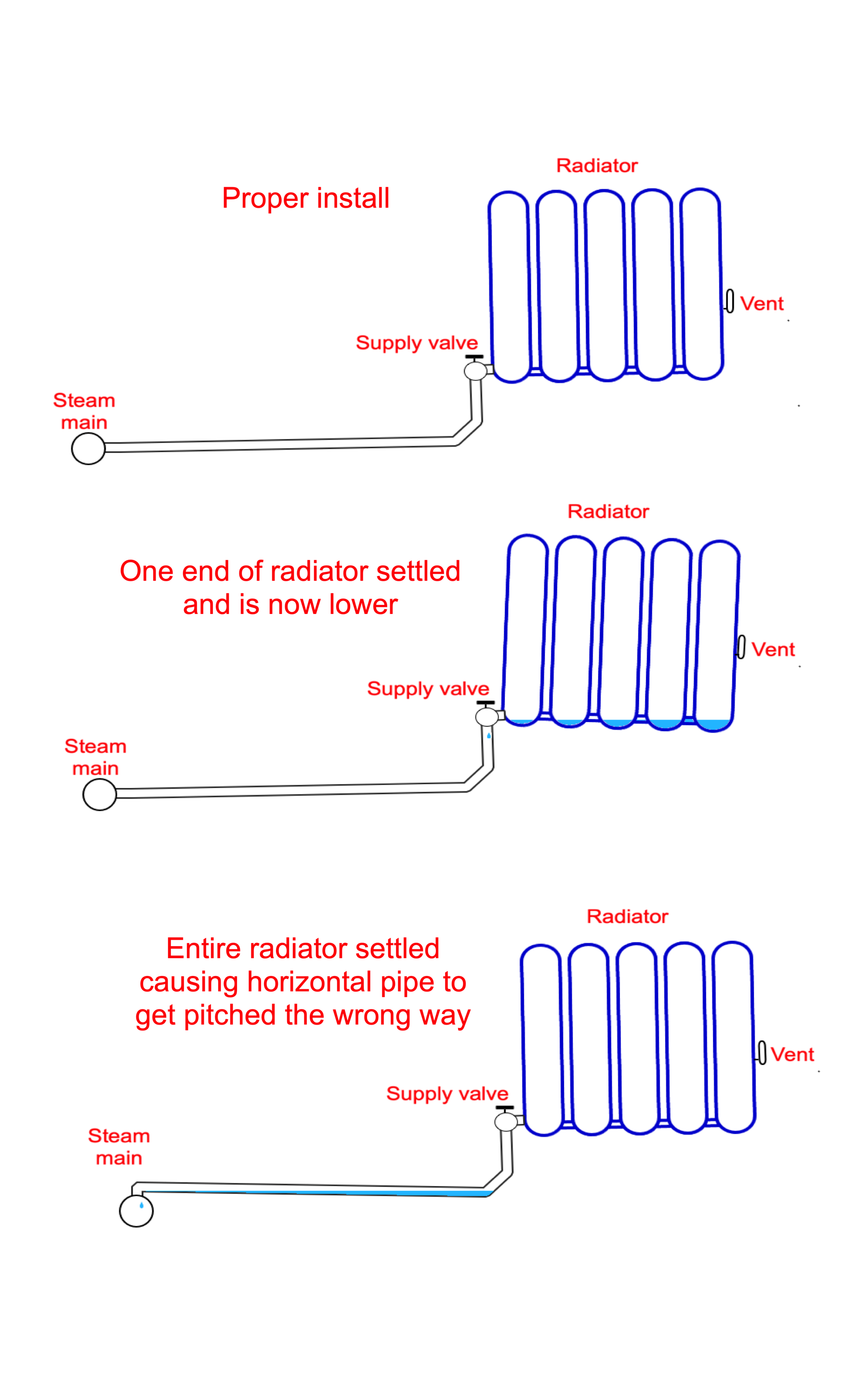
This is not always a problem as you can see in @ethicalpaul's video below. But it can be a problem in some cases. Paul's video shows that the built up condensate falling into a bucket will have no problem. But the experiment fails to show what will happen if the condensate drips onto a hot steam pipe.
Consider this: In the video the water in the bucket is room temperature but as the condensate and steam pass into the bucket the water in the bucket gets too hot really fast. When you heat water it expands and that may cause the condensate in the bottom of that radiator to expand and burp a significant droplet or two of water to heat a hot steam pipe and flash into steam causing a minor explosion. You see, water turning into steam expands to 1700 times its liquid size. Dynamite on the other hand only expands about 970 times its solid size and that always makes a bang, even if it is just a fire cracker size.
So have a professional look at your system. It may involve opening up that dining room ceiling where you are hearing the noise come from.
This is Paul's Video about wrong way pitch and there is not hammer
Edward Young Retired
After you make that expensive repair and you still have the same problem, What will you check next?
0 -
does the end of the main have pitch? Does it have venting? the main could be holding condensate where those tees branch off horizontally if it doesn't have pitch. Is it parallel flow or counterflow?
Could be a bunch of valves that came apart internally too but since it is several radiator that is rather low on the list.
That pipe radiator isn't going to heat but that shouldn't be the problem with the other radiators. Actually, if the pipe radiator does heat other than a little at the ends, that means you problem is water in the main.
The pipe radiator can be fixed by adding a water seal at the end with the vent to keep steam from the main from coming in through the return and closing the vent.
EDIT: By moving the vent to the low end and putting a water seal at that end. Looks like the vent is at the high end which is wrong. Supply and vent need to be at opposite ends and return needs a water seal.
0


Categories
- All Categories
- 87.5K THE MAIN WALL
- 3.3K A-C, Heat Pumps & Refrigeration
- 59 Biomass
- 429 Carbon Monoxide Awareness
- 124 Chimneys & Flues
- 2.2K Domestic Hot Water
- 5.9K Gas Heating
- 119 Geothermal
- 168 Indoor-Air Quality
- 3.8K Oil Heating
- 78 Pipe Deterioration
- 1K Plumbing
- 6.6K Radiant Heating
- 394 Solar
- 15.9K Strictly Steam
- 3.5K Thermostats and Controls
- 56 Water Quality
- 50 Industry Classes
- 50 Job Opportunities
- 18 Recall Announcements