GE downfire

I can’t seem to find where the library section that has the manual. I only ever saw one of these boilers and unfortunately it it. I would love to see what the burner a better understanding of how it operated why it was thought to have been a good idea and why they were all removed
Comments
-
the burner and the controls worked very well and were i believe more efficient than a standard oil burner. the problem was that all of it was proprietary so when ge stopped supporting it you had to retrofit it to a standard burner and controls if you needed to repair it.
0 -
In the 1970s about the time General Electric stopped supporting the GE oil fired Boilers they manufactured. In the Philadelphia area, FP Young company took over servicing that boiler. You could get a service contract on that boiler for $21.95 that included the annual tune up which included vacuum cleaning the heat exchanger and cleaning out the strainer, nozzle and electrodes and a combustion test. We covered the Master Control, Flame Rod, Compressor (combustion air and fuel oil pump), the nozzle and electrodes, and some other miscellaneous parts.
All the parts were rebuilt since GE was no longer making new parts (except the flame rod) . We had over 1000 GE boilers under contract. As the parts became more and more scarce, we would install a Carlin CRD 100 in the down fire opening in order to keep the boilers operating. The new burner would not increase the efficiency very much because the GE’s flame was already very efficient. The only thing that was beneficial was the fact that the customer did not need to pay over double the price for a new complete boiler.
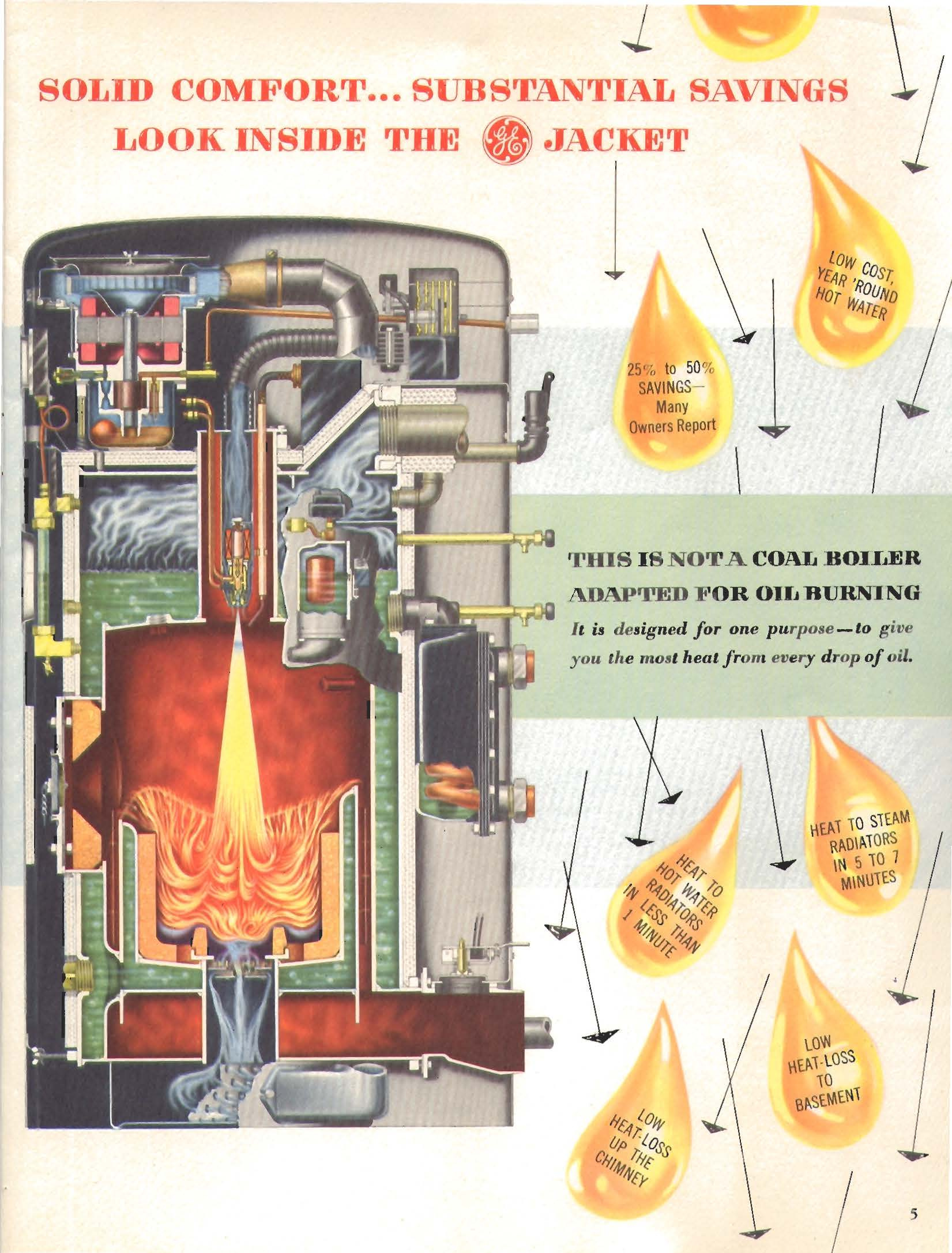
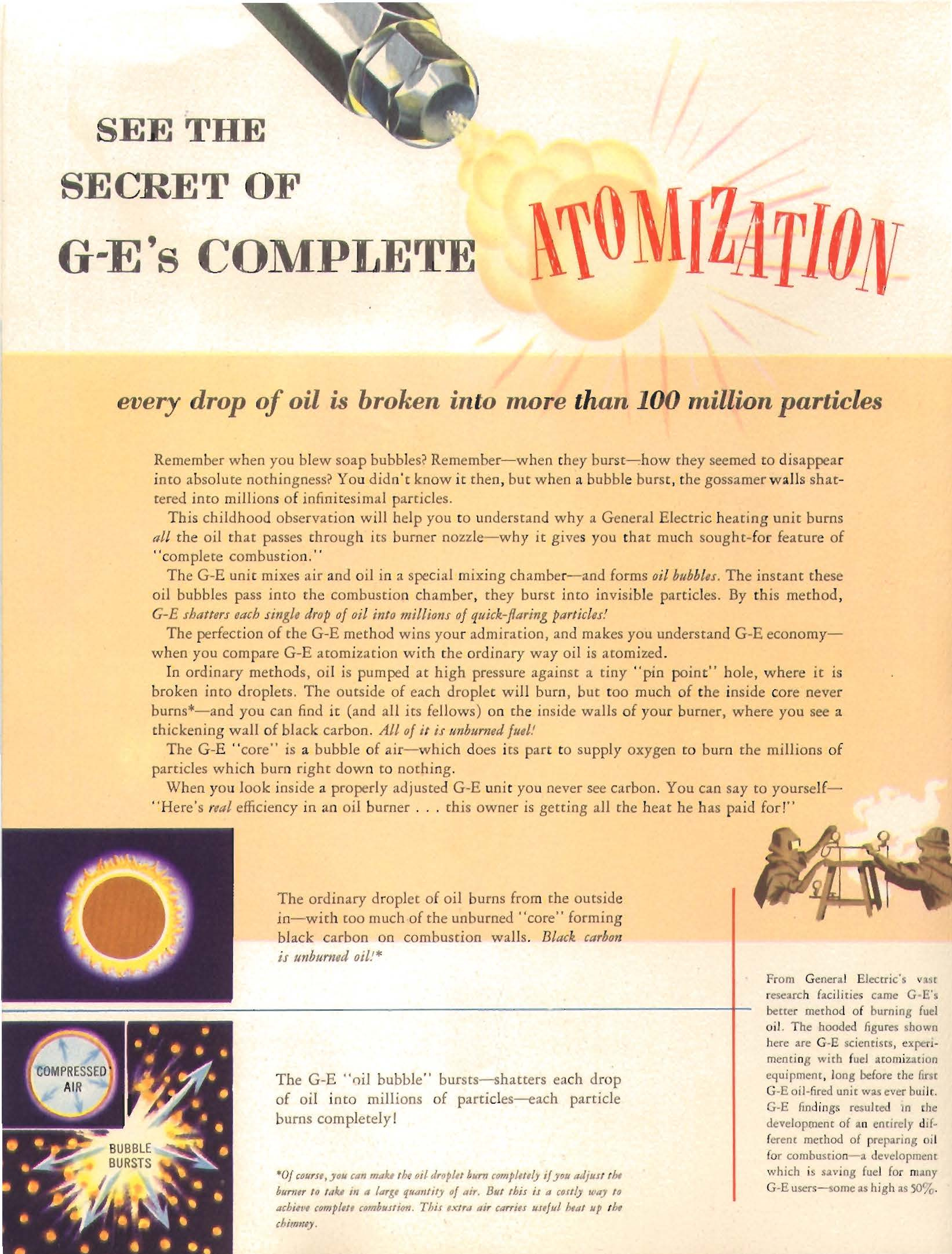
I don't know where to find the literature you want about that burner/boiler system. I can tell you that the compressor was a low pressure oil pump that mixed air with oil under pressure so the oil spray would atomize. There is a fan on the compressor that forces primary combustion air through a 1-1/2" steel flexible tube into the nozzle / electrode assembly just like a standard gun burner. A secondary air duct would force more combustion air to the bottom of the boiler thru a turbulator at the bottom of the combustion chamber
So there were three ways the combustion air got mixed with the fuel. Primary air from the top, secondary air thru the bottom and pressurized air with the oil thru the nozzle. This was the reason the burner was so efficient.
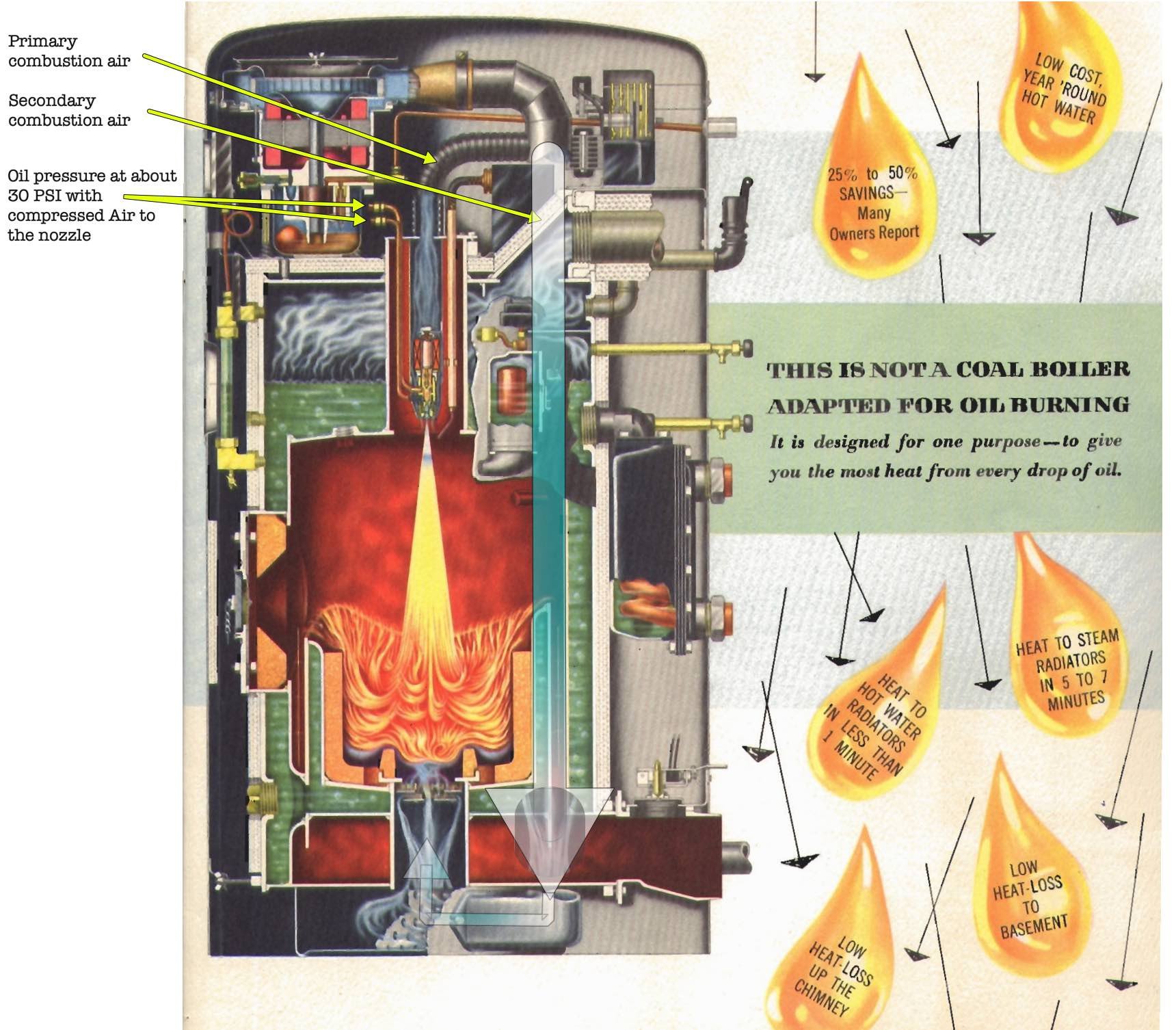
Hope this info helps you @Jnawskon
Edward Young Retired
After you make that expensive repair and you still have the same problem, What will you check next?

 4
4 -
is that white stuff aircell?
0 -
This was a special design boiler with a lot of water surface exposed to the flame
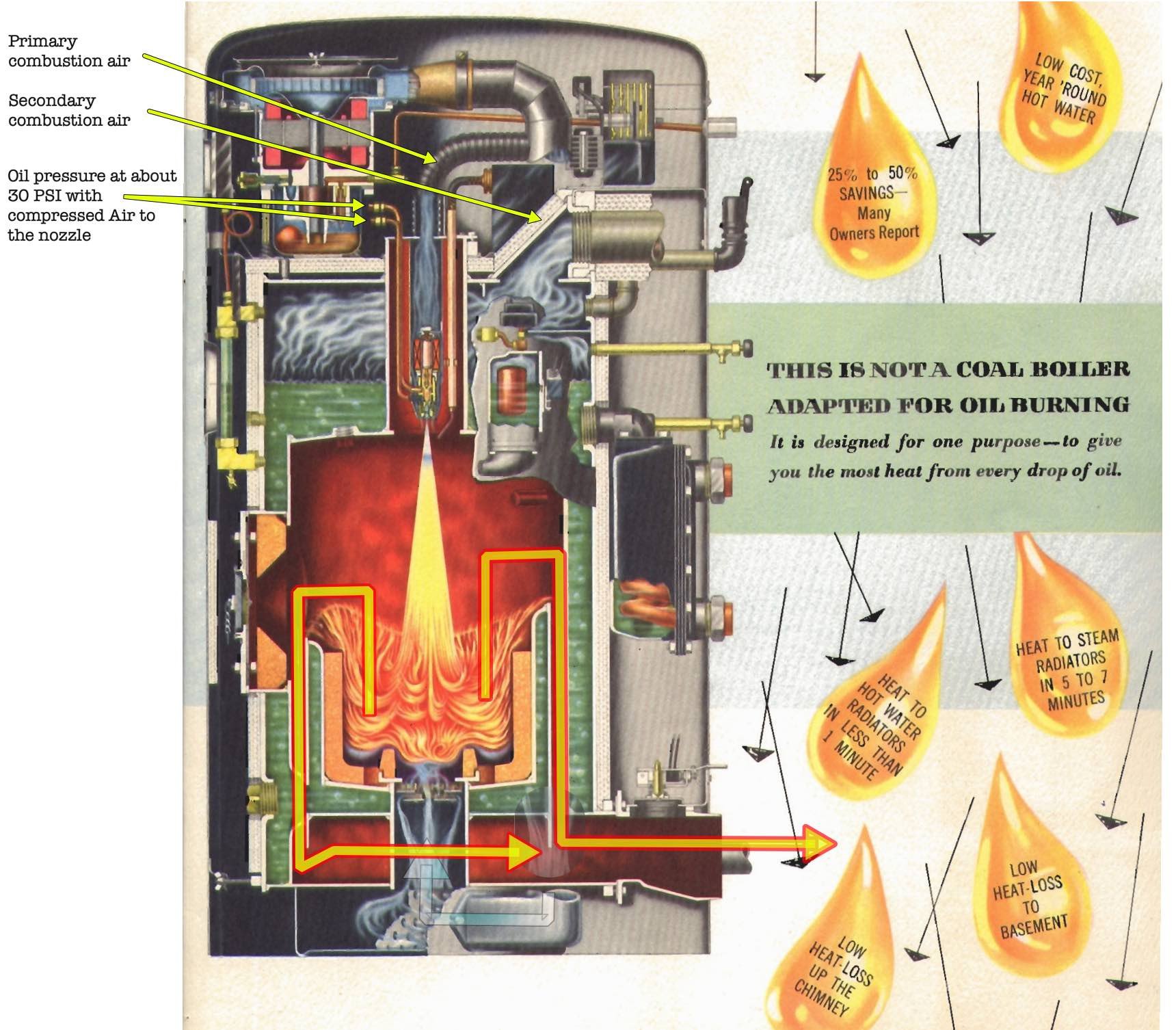
See the combustion gasses path with the yellow arrows?
Edward Young Retired
After you make that expensive repair and you still have the same problem, What will you check next?
0 -
I only worked on one of those and it had already been converted to a Beckett AF.
Who said steel boilers didn't last?? Those things were tanks.
When parts were fading there was a retired guy in Hartford, CT who mad a living off of keeping those running but I only ever saw one of them
0 -
was the larger rectangular version also oil? i remember what i think was a rectangular hot water boiler that was ge in an office building when i was a kid.
0 -
Havey boiler , thick boiler plate .. . Levittown used them and hung it in the Kitchen..
They were short lived .. they all converted to a Beckett …. Low pressure was dead ..too much could go wrong..
There was an error rendering this rich post.
0 -
My grandparents in Bellerose, NY had one of these GE boilers. I was fascinated with them when I was a kid in the 1960s…
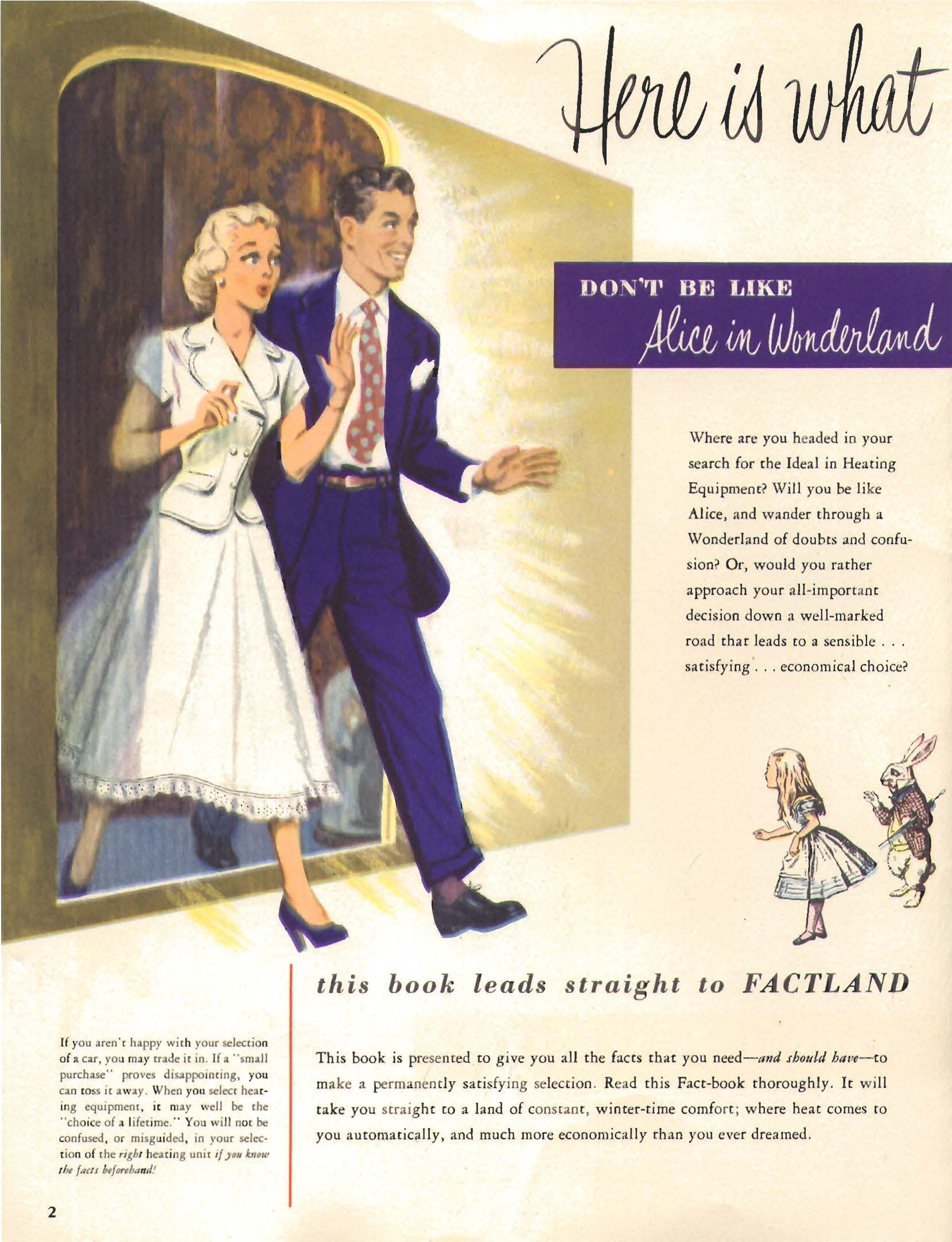
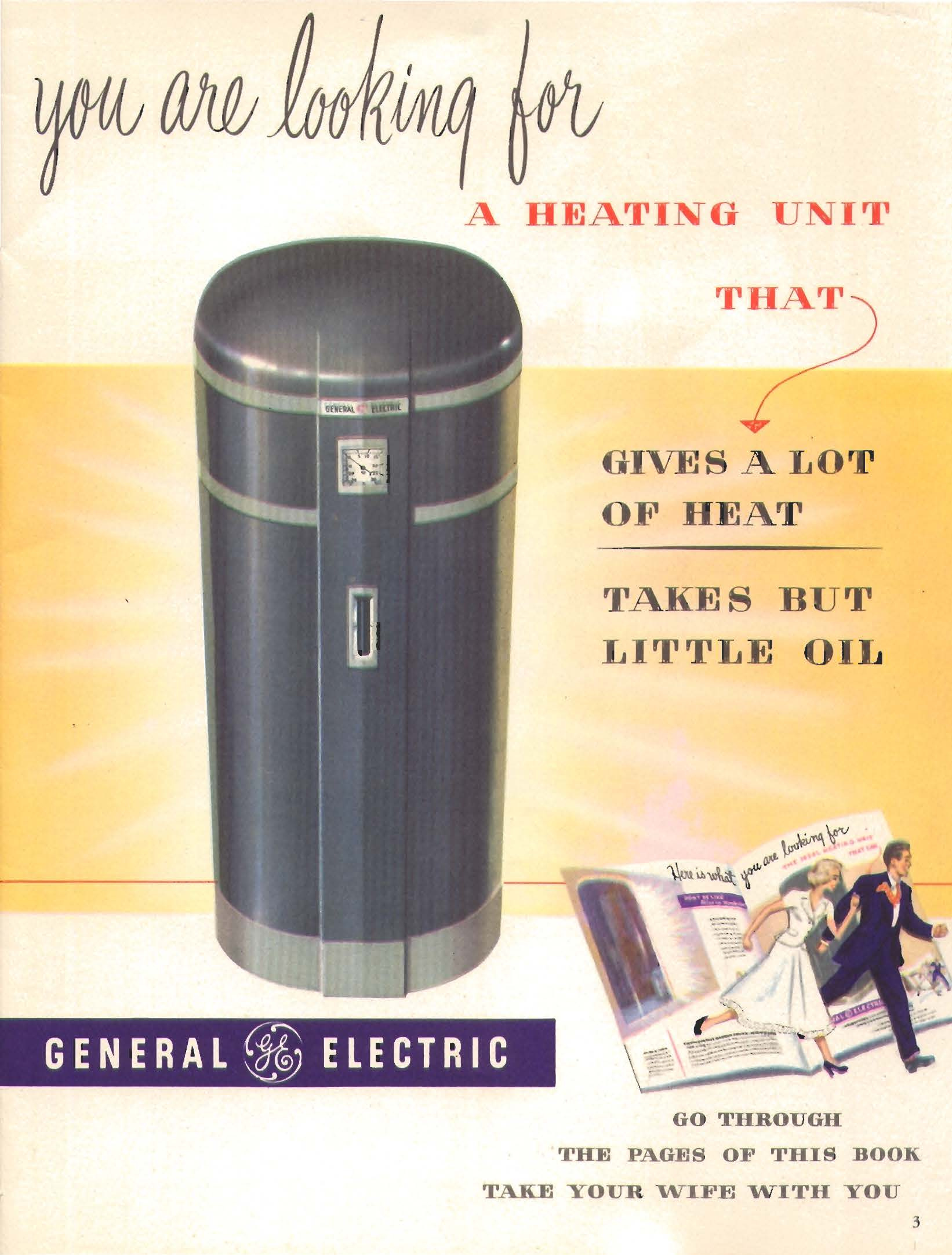
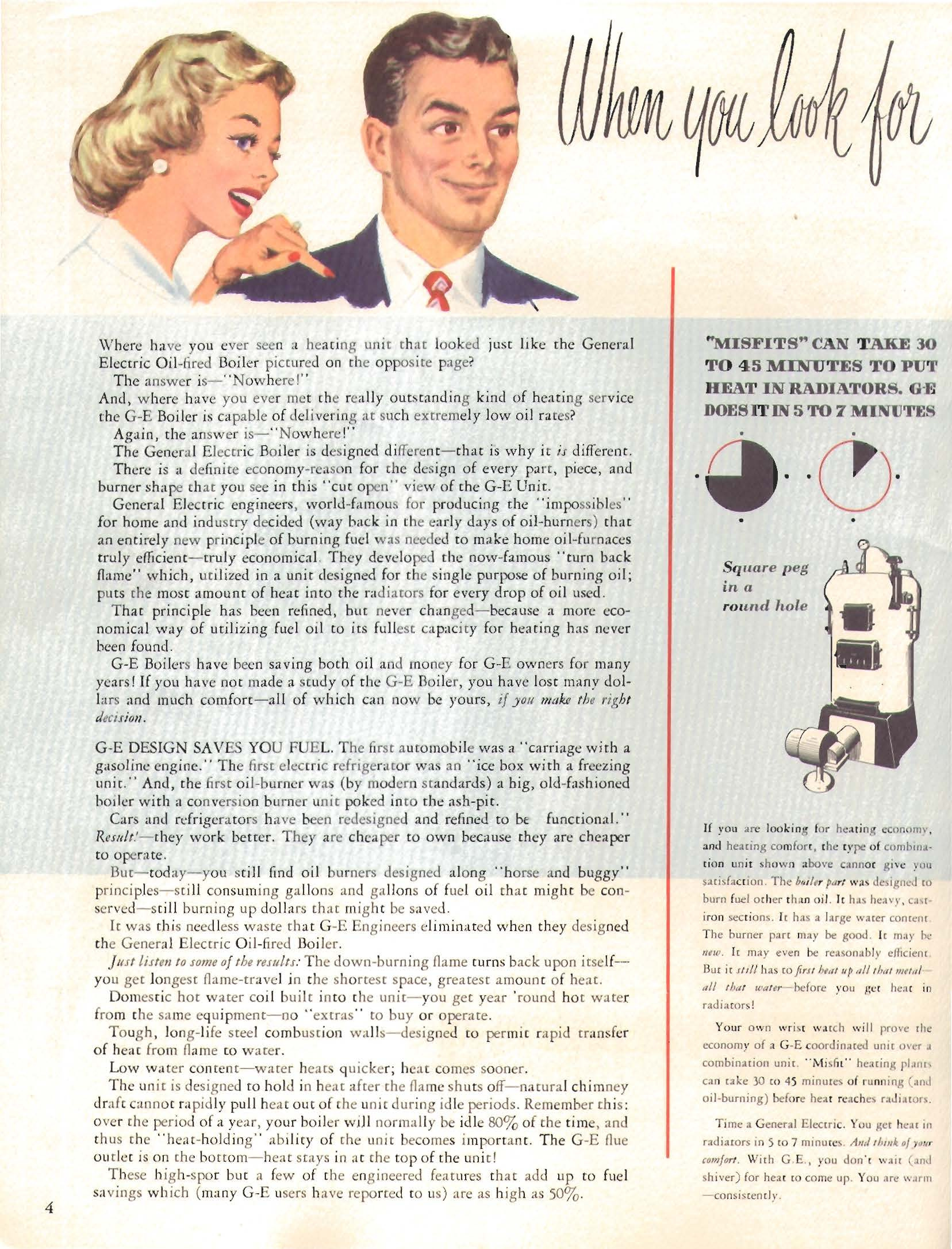
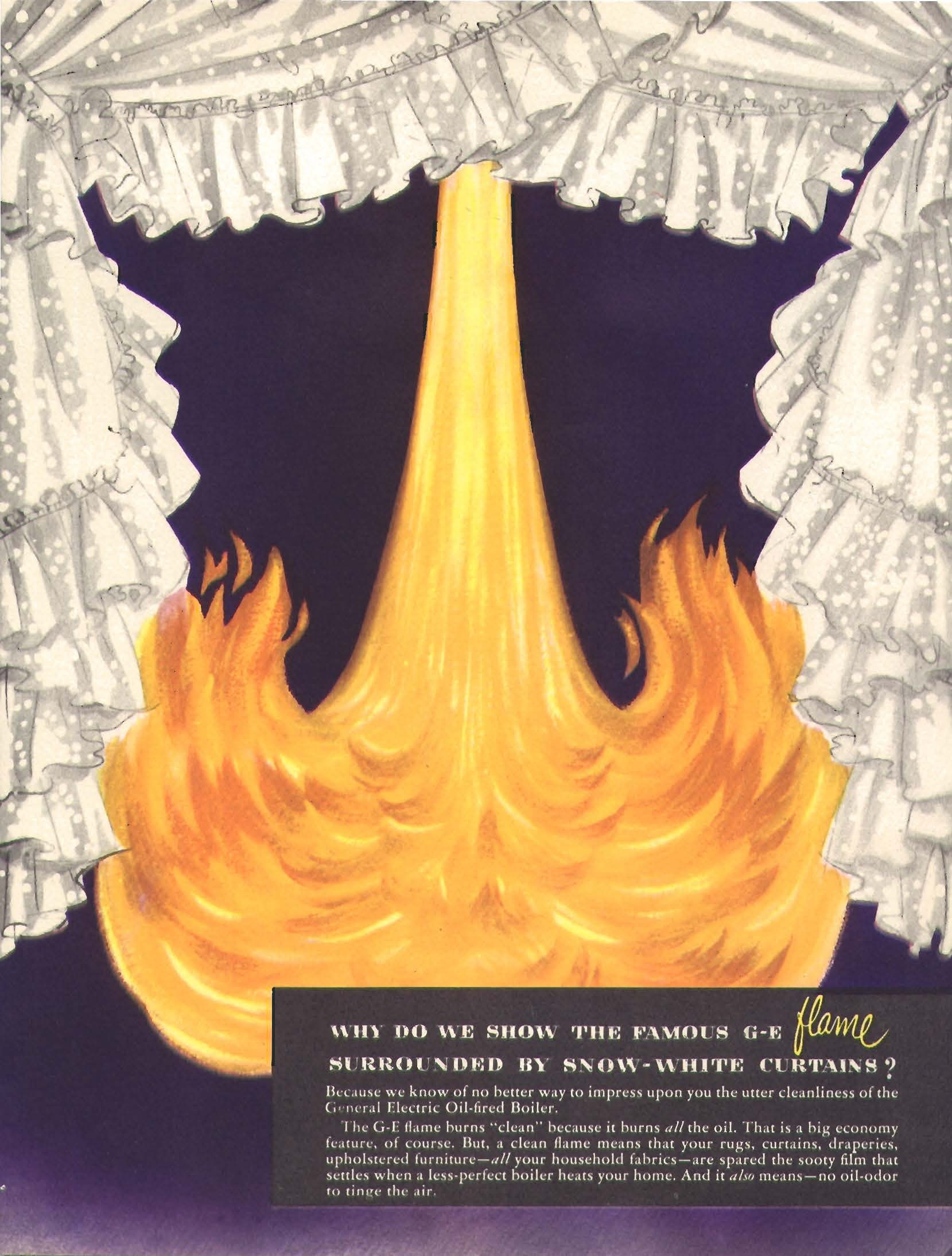
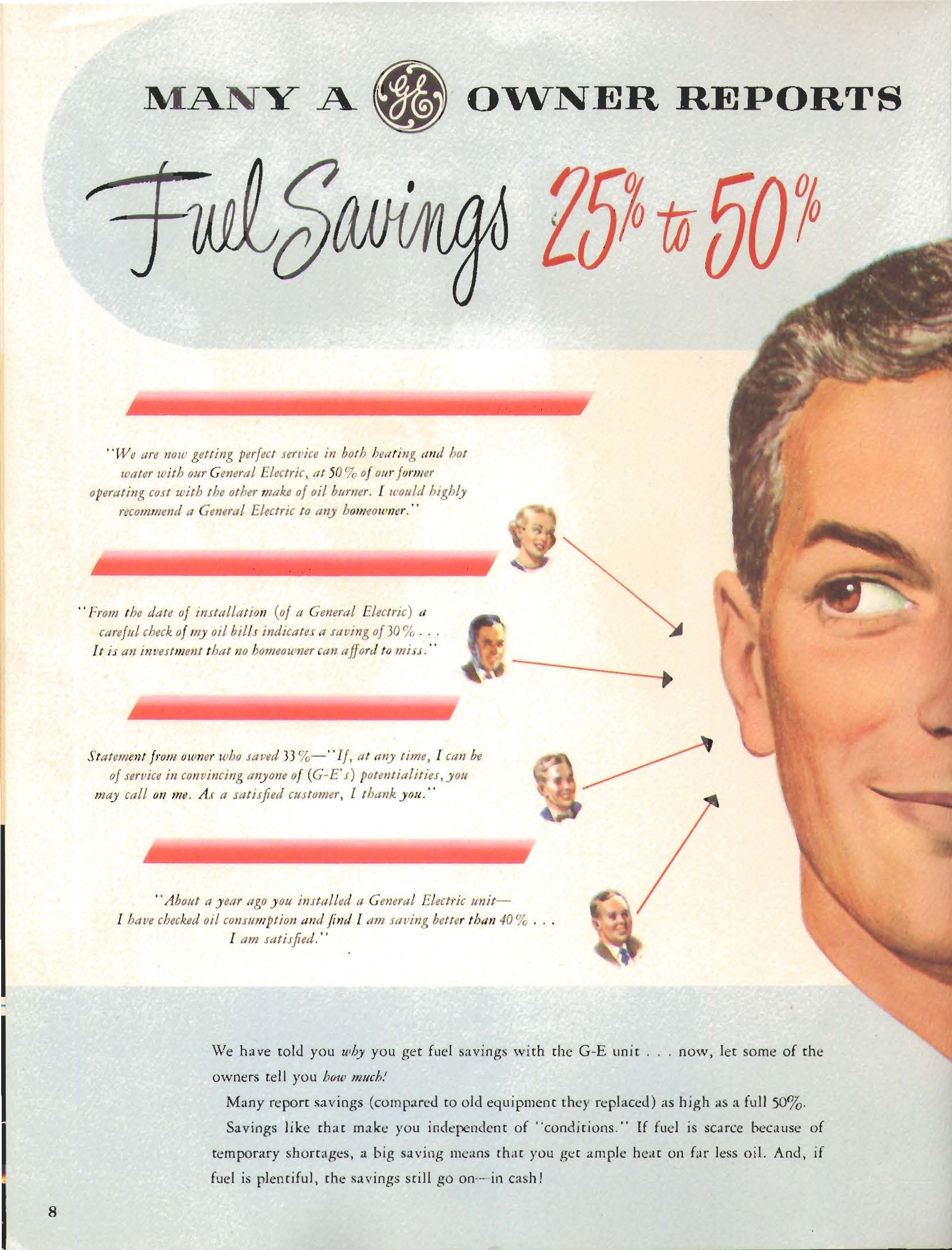
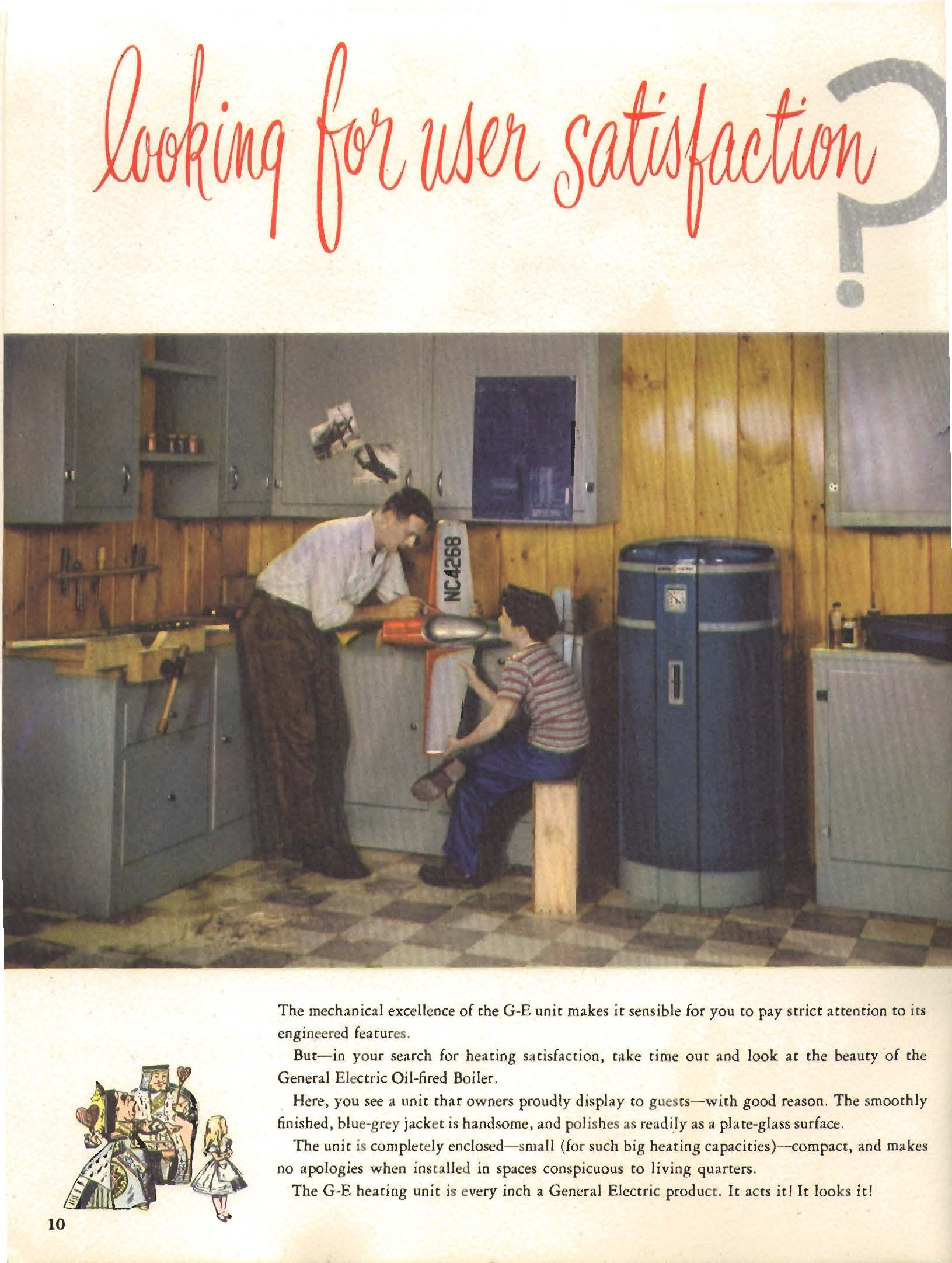
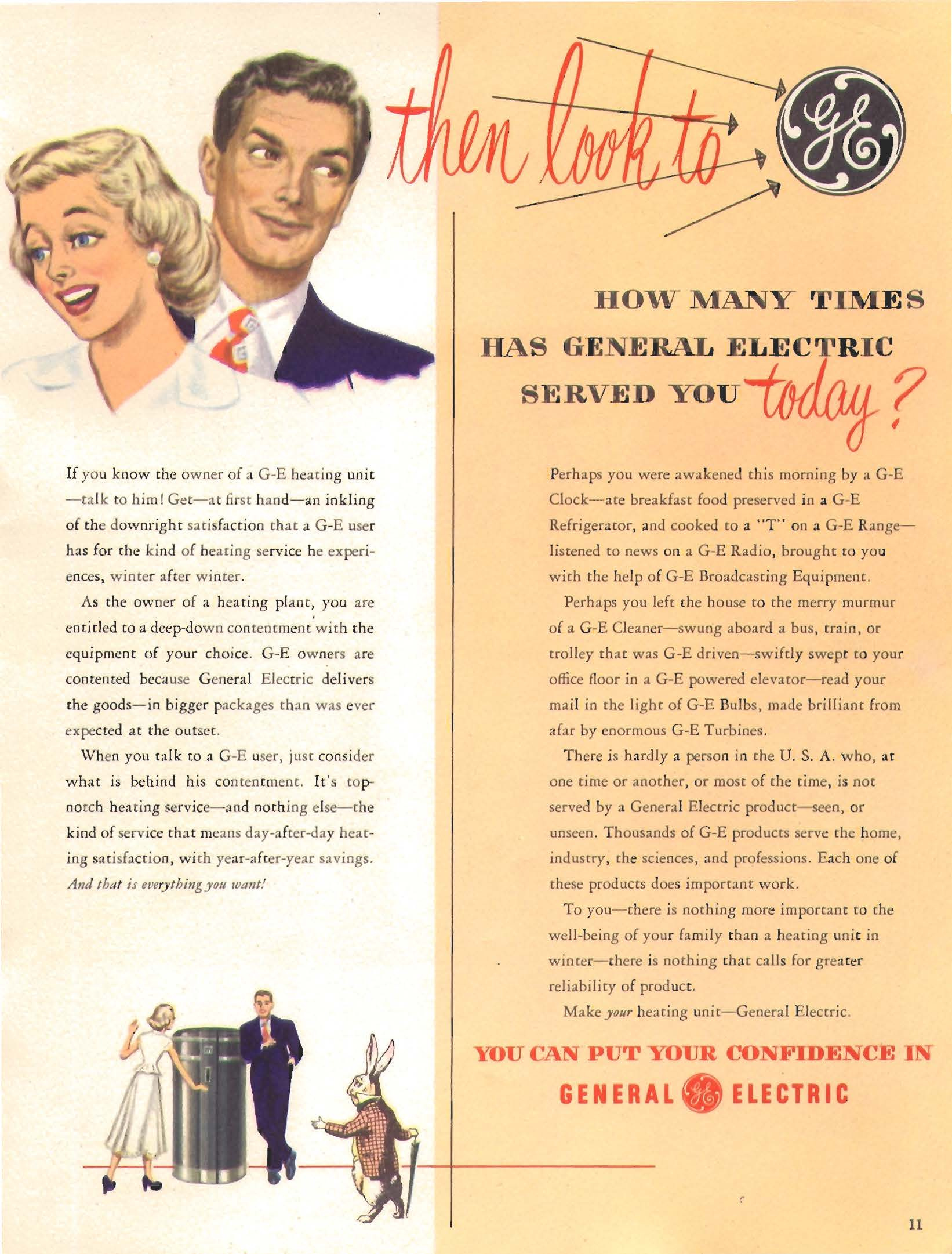
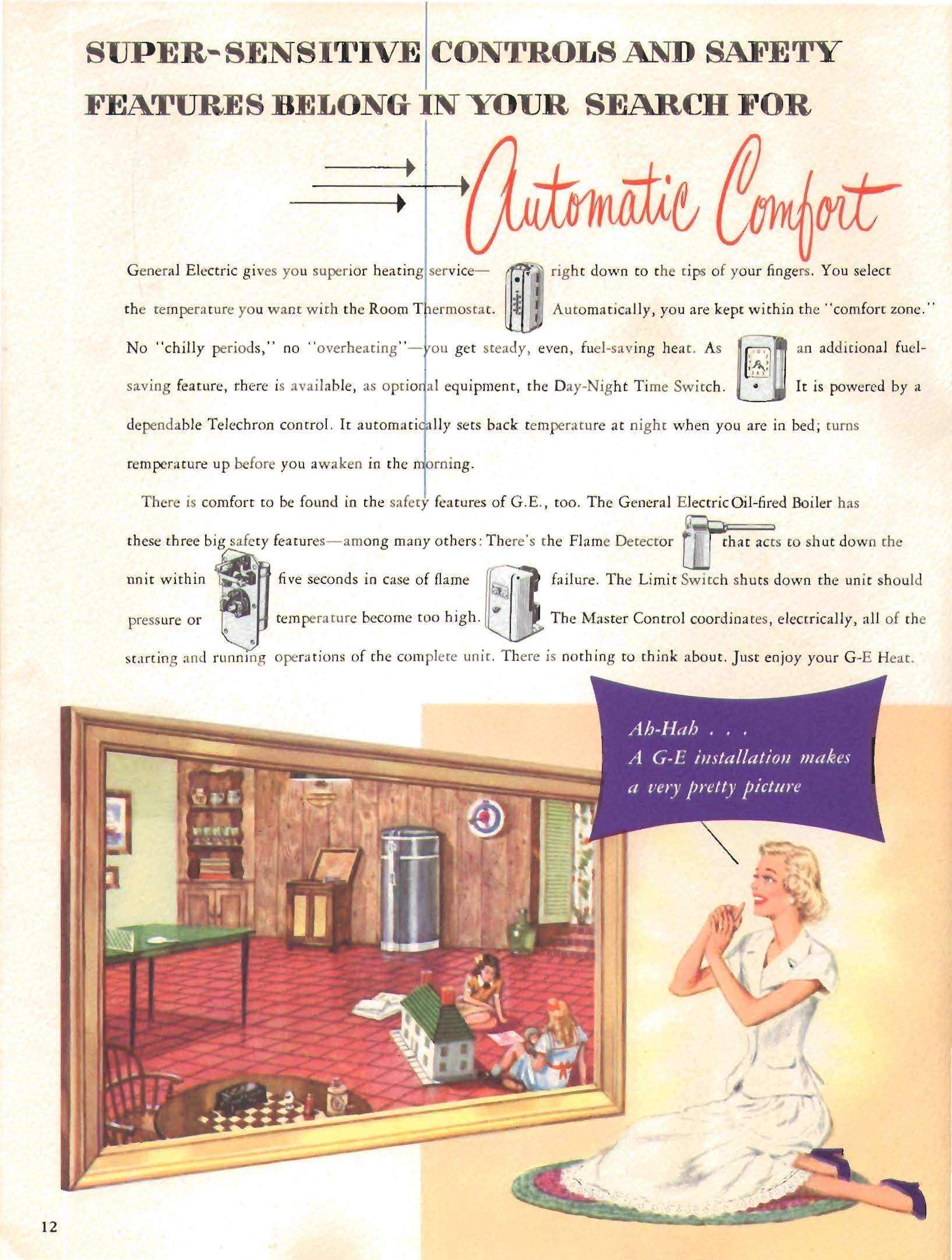
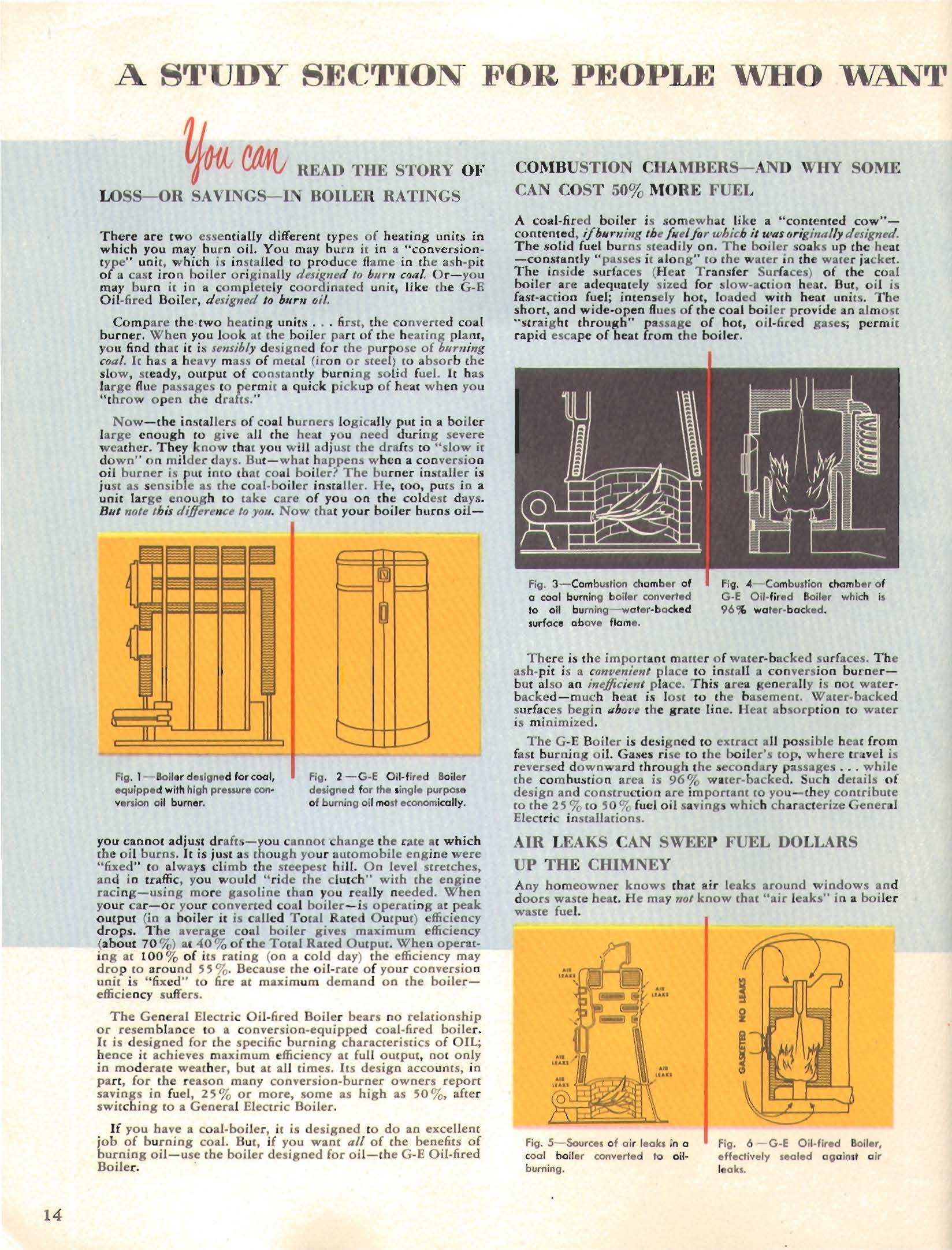
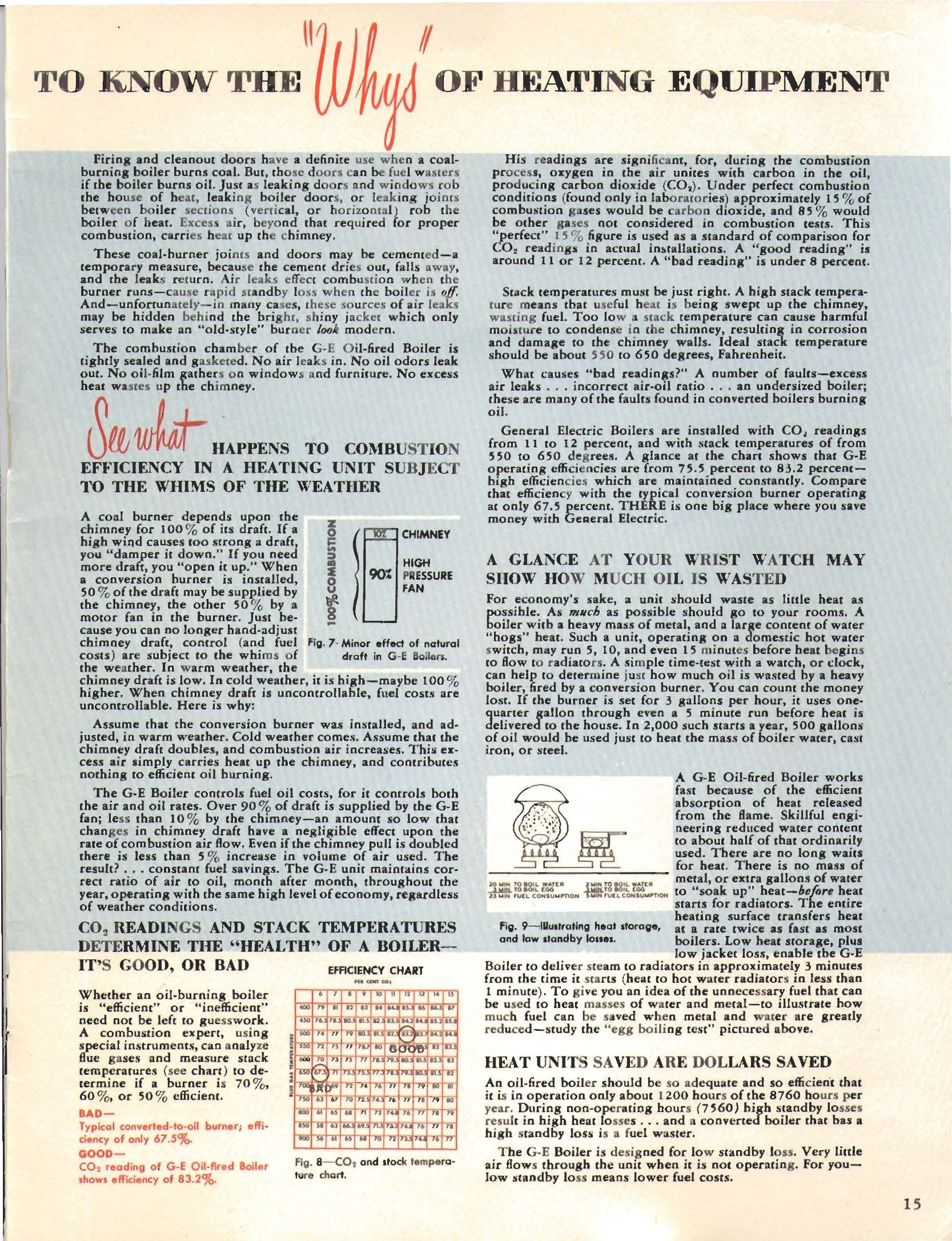
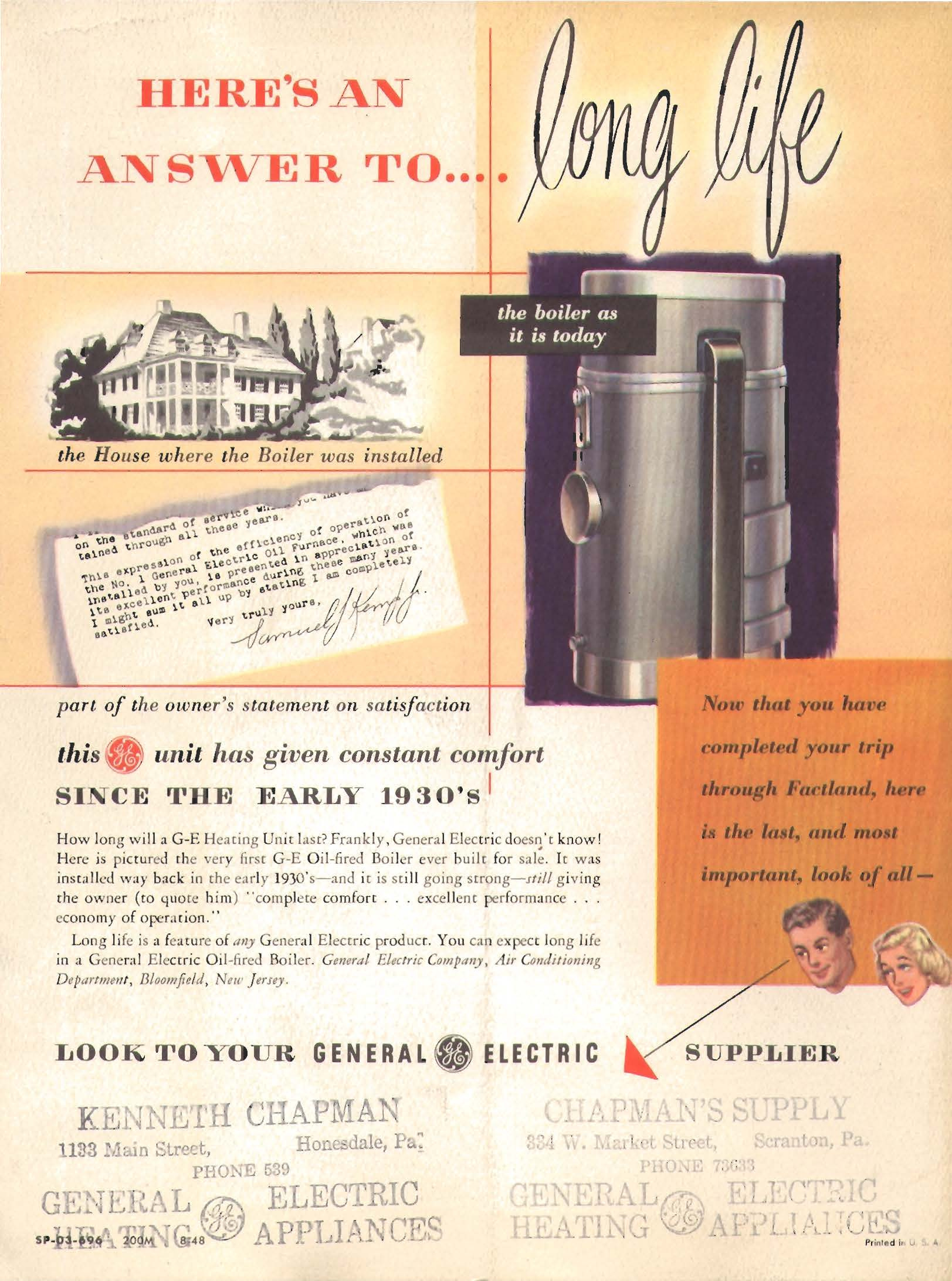
I hope that these attachments are fun reading on a winter night…. Great marketing literature…!
Page 10 is way cool…. Was it really that short…?
Paul
 2
2 -
@HeatingHelp This brochure would be a good library addition.
Trying to squeeze the best out of a Weil-McLain JB-5 running a 1912 1 pipe system.0 -
there is a brochure somewhere, if it isn't this one, it is very similar.
0 -
The original file for this brochure is a 13MB .pdf. If the system will accept that size & type, I would be happy to upload it. Adobe Acrobat should allow me to shrink it a bit.
Just let me know how to proceed.
Paul
0 -
It is already here
Edward Young Retired
After you make that expensive repair and you still have the same problem, What will you check next?
 1
1 -
-
@mattmia2 GE manufactured a few rectangular models.
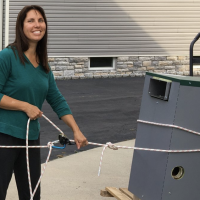
The oil fired boilers with this shape were the LA25 that were hot water only (not steam) and included a tankless coil. These were very popular in the NJ Levittown style radiant slab homes that I grew up in and eventually purchased one myself in the 1990's. These homes were built in the early 1950's. The units looked similar to a smaller refrigerator, nothing exposed.
The oil fired warm furnaces of this shape were typical size and shape for the same timeframe. Much larger than modern furnaces, but so were the other manufacturers.
The gas fired warm air furnaces were slightly larger than typical, especially the earlier ones.
GE made oil fired boilers from the 1930's until at least the late 1950's. The majority of them were not rectangular.
As far as the reasons for GE to stop production there are a few (many) theories.
- Cost of production was too high. Almost every component was made in house, with a GE label on it. The boilers required a lot of welding and precision.
- In my area of NJ (with the exception of the Levittown houses) only the wealthier clients could afford the GE oil boilers. I am only guessing, but I suspect a GE boiler was about one and a half times or even double the cost of other boilers.
- Most if not all of the factory trained technicians retired or died. My father accidentally got into the heating business thanks to his knowledge of how the GE boilers functioned. Before Dad went into business, there were literally no local contractors that would work on a GE boiler.
Hope this helps.
1







Categories
- All Categories
- 87.8K THE MAIN WALL
- 3.3K A-C, Heat Pumps & Refrigeration
- 59 Biomass
- 430 Carbon Monoxide Awareness
- 132 Chimneys & Flues
- 2.2K Domestic Hot Water
- 6K Gas Heating
- 124 Geothermal
- 170 Indoor-Air Quality
- 3.8K Oil Heating
- 79 Pipe Deterioration
- 1.1K Plumbing
- 6.7K Radiant Heating
- 396 Solar
- 16.1K Strictly Steam
- 3.5K Thermostats and Controls
- 56 Water Quality
- 51 Industry Classes
- 51 Job Opportunities
- 18 Recall Announcements