Is a small water heater an acceptable solution for extra heat on a heat pump system?

My 4 ton heat pump purchase fell through.
Manual J is around 31K for heating, but seems quite optimistic to me. I was happy to be slightly oversized as it was an inverter and I can throttle down easily enough, using ODR.
Now I am looking at a Calorek 3 ton inverter that has all the things I need, it has an ODR module add on so I can set up the curve.
It has a pump control relay for the source side or the load side.
Mitsubishi rotary compressor and coaxial heat exchangers.
If I came up short on heating degree days, could I plumb in either a boiler or a small water heater as a buffer for that little boost?
The small water heater inline seems simple enough to add.
My goal is to use water only if I can on the source ground loops, and water in the load side based on several recommendations from here. It would act like heating strips in the air handler.
Comments
-
It seems like if you did that, a lot of your expensive created heat would end up trying to warm up the earth.
In my CT house, it was a 2100 sf expanded cape that called for a 3.5 ton unit. I asked the engineer if I could get by with a 3 ton on a single 500' deep well and he said probably, so I went that way with the goal to continue to air seal and insulate the house to get it to be a better match with the 3-ton.
I found the 3 ton heated the house well, I never had a problem. But I also had a wood stove just in case, and that's the kind of additional heat source I would recommend to you. Note also that I never used a setback in that house to make things as steady as possible.
PS: I never installed heat strips into my air handler because I was repelled by the idea of a pathetic 100% heating efficiency using electricity.
NJ Steam Homeowner.
See my sight glass boiler videos: https://bit.ly/3sZW1el1 -
Does the HP have an electrical element for boost? I have the Vitocal and the indoor module has a resistance element built in for some boost. Although the program allows you to lock it out, which i did.
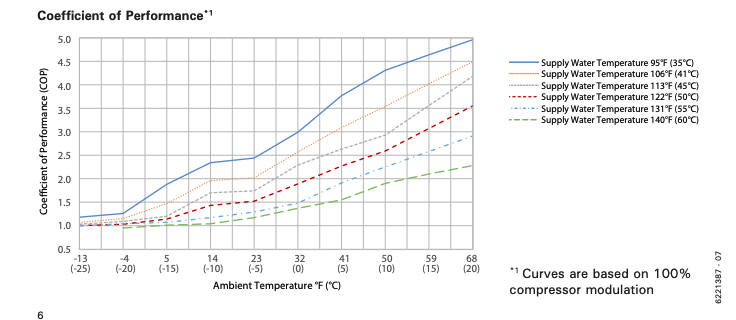
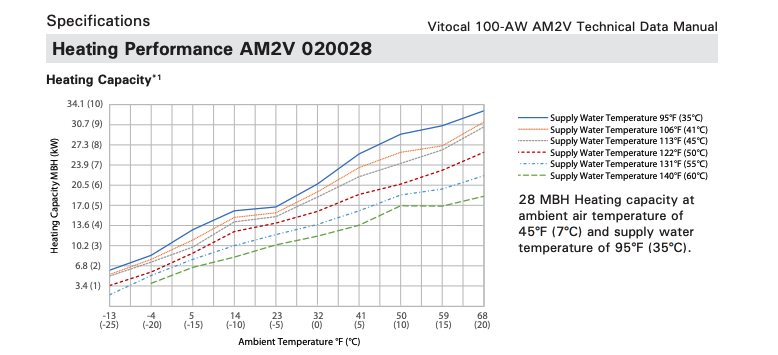
I do have a backup boiler and if the outdoor temperature drops the COP to 1 the control in the Vitocal calls on the boiler.
The output curves for the HP should show you the cross over point that makes sense.
 Bob "hot rod" Rohr
trainer for Caleffi NA
Living the hydronic dream2 -
The heater would be on the load side, not the source side. Nothing would get into the earth.
i have no qualms about some 100% assistance for a week or two, and having the efficient heat pump for the other 50 weeks handling it without help.
We do not and will not have a wood burner or gas anything for help, I have no gas there and for me, trucking in propane is the odious solution. :)
To be clear I will not add anything until I come up short. I am just asking so I can get that 3 ton inverter with the knowledge I could give it a boost besides those 100% space heaters LOL.
I have a really nice dedicated equipment room so adding a little heater on a stand or something would be cake. I can put a couple of unions in the copper with a spool in there, or just cut and pro-press it in if I had to go that route. If it would work it is a reasonably easy thing for me to do. The breaker panel is surface mounted in that equipment room.
I am with you on the steady, hence going for an ODR controlled system and just dogging down or tweaking the loops to get the comfort right. In an extreme snap I can shut off the upstairs loops at a pair of manifolds, without fear of freezing anything up there. Our heating degree day is 23 so a frost is not going to invade a partially heated and fully insulated envelope.
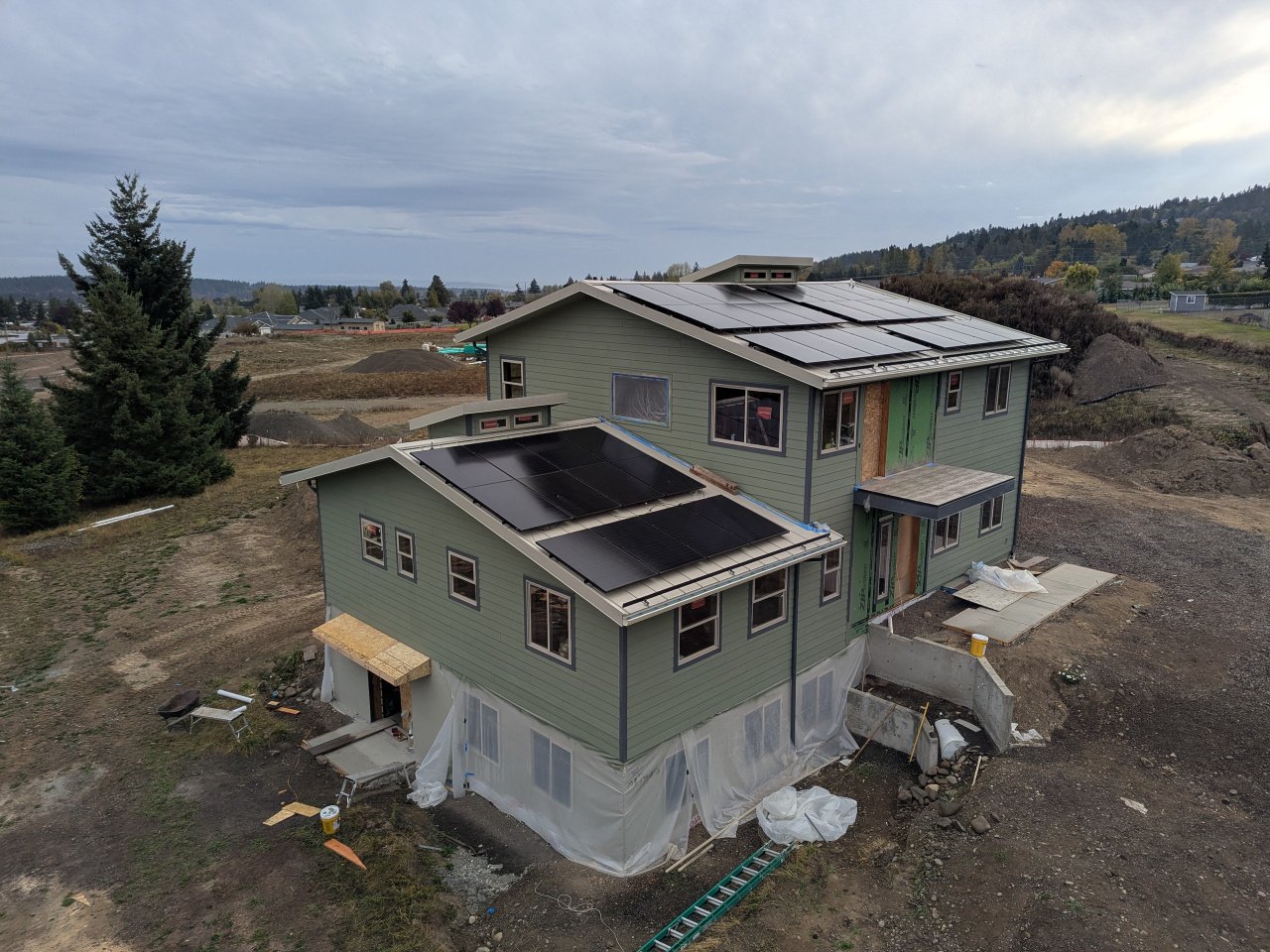
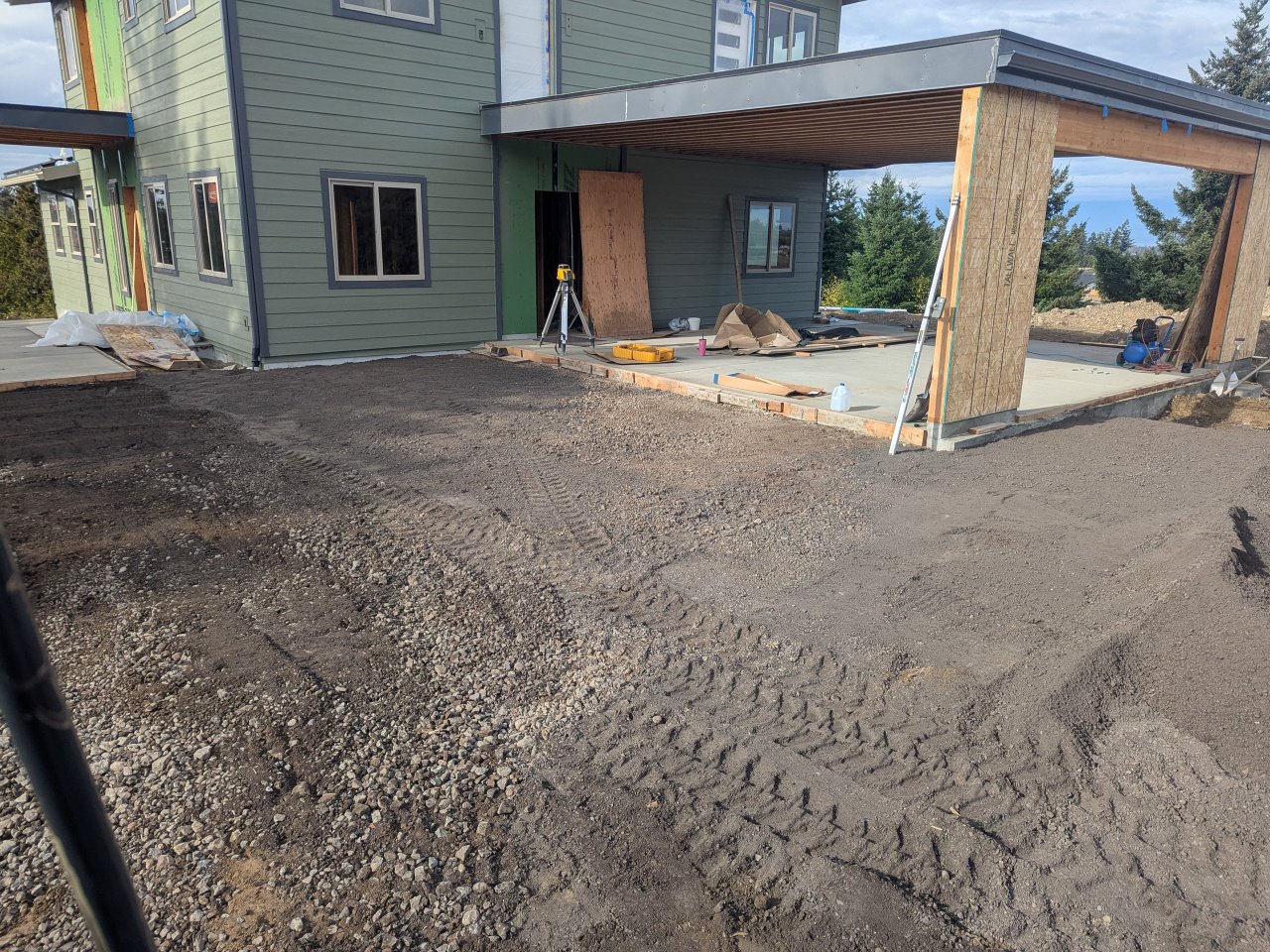
Here is an updated view after paint and gutters, the carport and roof decks.
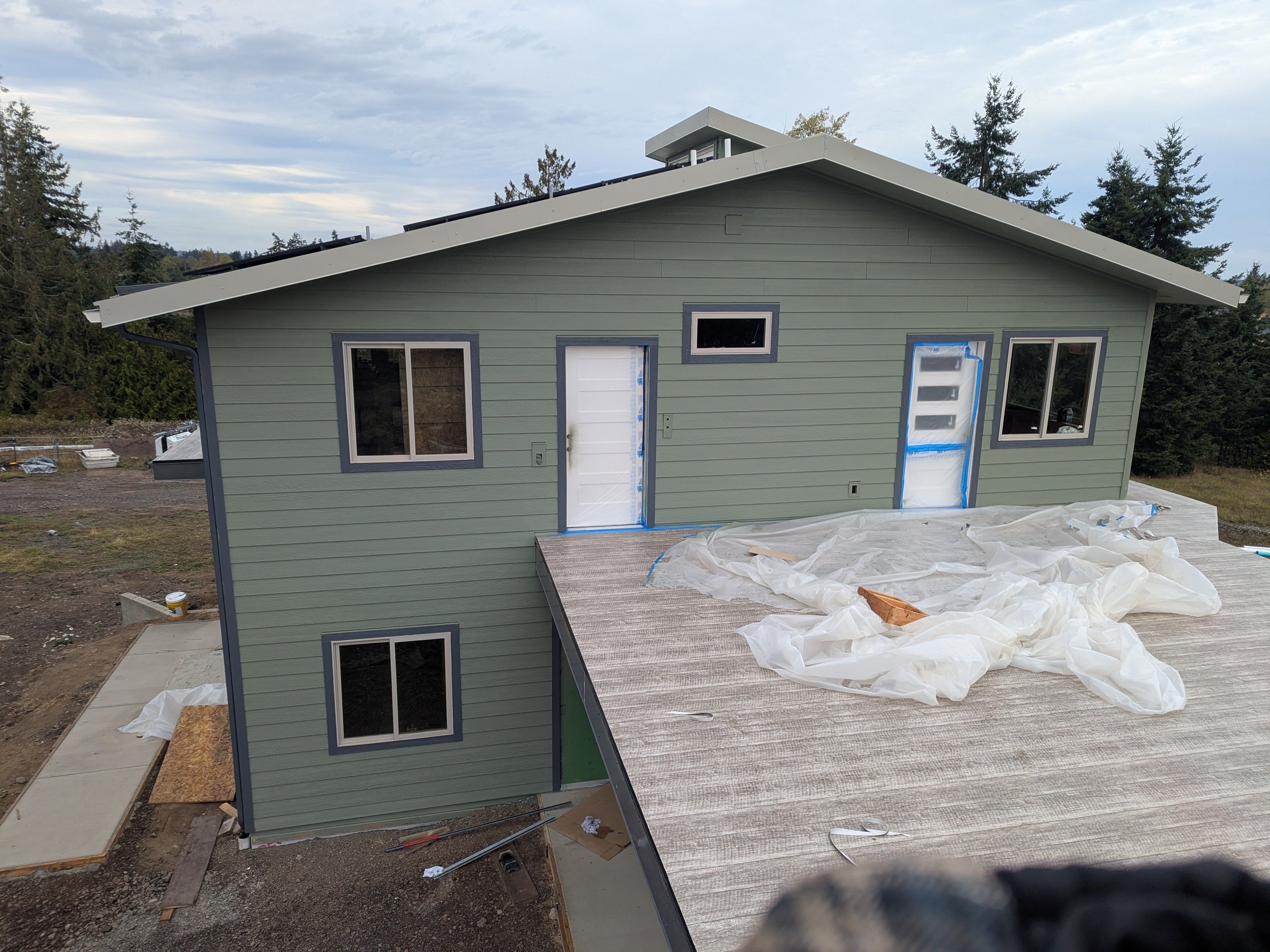
I have no current pics of the equipment room. It is about 6x14 and all mine < evil laugh>
I need to cover the ICF for occupancy, and had the good idea to ask if 3/4 CDX would suffice, rather than sheetrock. He said sure, so the whole thing is lined with plywood for easy mounting of what-have-you.
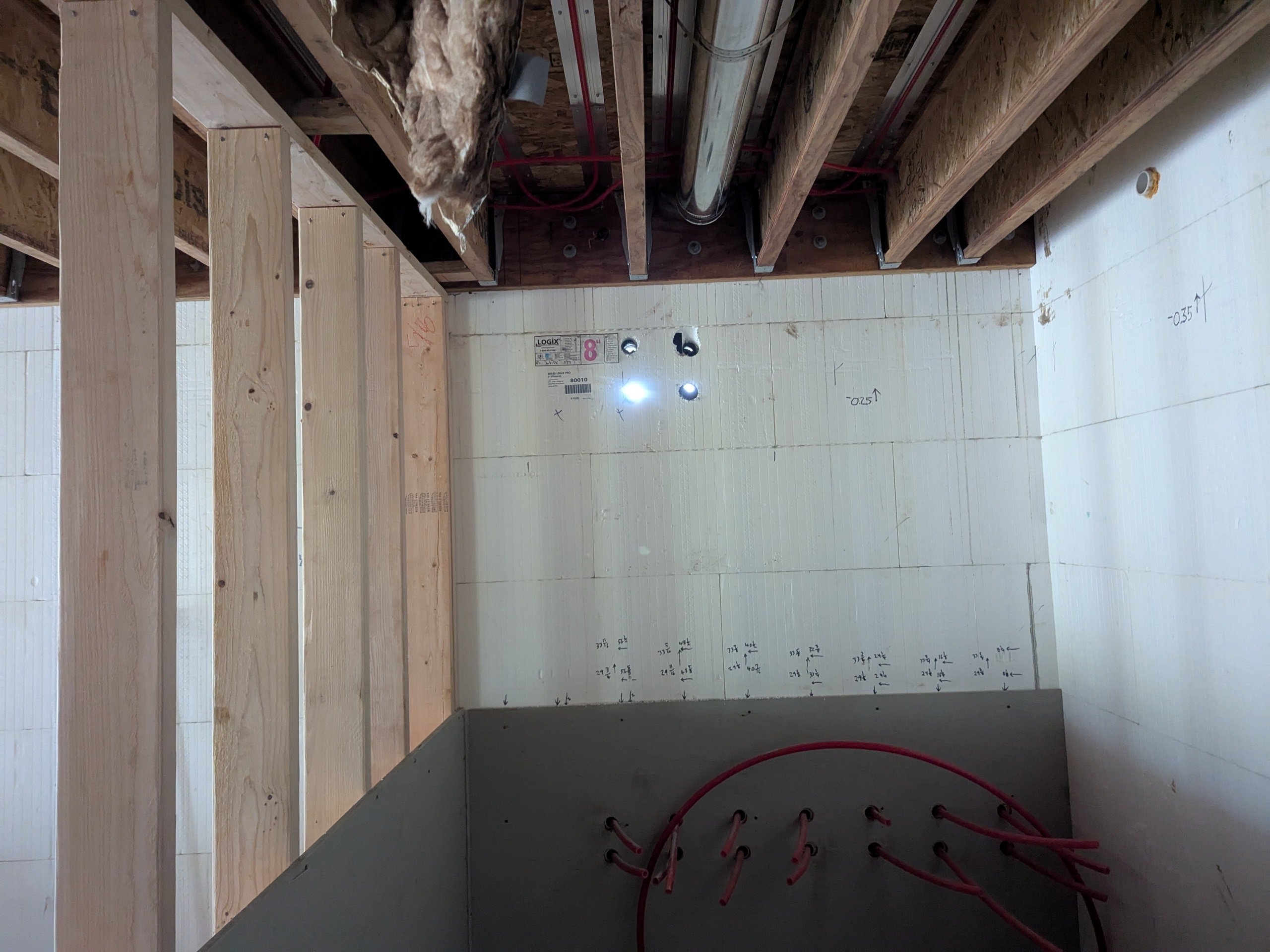
 2
2 -
@hot_rod none of the ground source water to water I am looking at has an additional strip in them.
One of of the possible units is made in Florida by Miami HP. I can get a two stage upgrade, but it is still a direct driven unit not an inverter.
The cool thing about the inverters, they run on a 20 amp breaker and soft start by the nature of them, so there is no big LRA surge.
I can put them in my critical loads panel and power the heat with my inverter, panels and batteries in the event of an extended power outage. They are not common here but it is not a thing if I go with an inverter unit.
I wanted a Bosch TW035 but they are still 26 weeks out on production. At this late stage it is not going to work. It is also a traditional non-inverter, but two stage.
0 -
Would you plumb that in downstream ( load side ) of the HP? It seems the right spot for it.
0 -
The heater would be on the load side, not the source side. Nothing would get into the earth.
That makes sense, thanks, I'm sure I missed that
Nice looking modern build! From the looks of it, you won't have a lot of gains to be made from additional insulation and air-sealing, I'm thinking!
Your degree day is 23, that is very nice and moderate! Are you sure you don't want to add a nice little wood burner? 🙂
NJ Steam Homeowner.
See my sight glass boiler videos: https://bit.ly/3sZW1el1 -
my wife has bad allergies so bringing in wood and the like are just not a thing. We have hard floors too. Just some rugs in the current home.
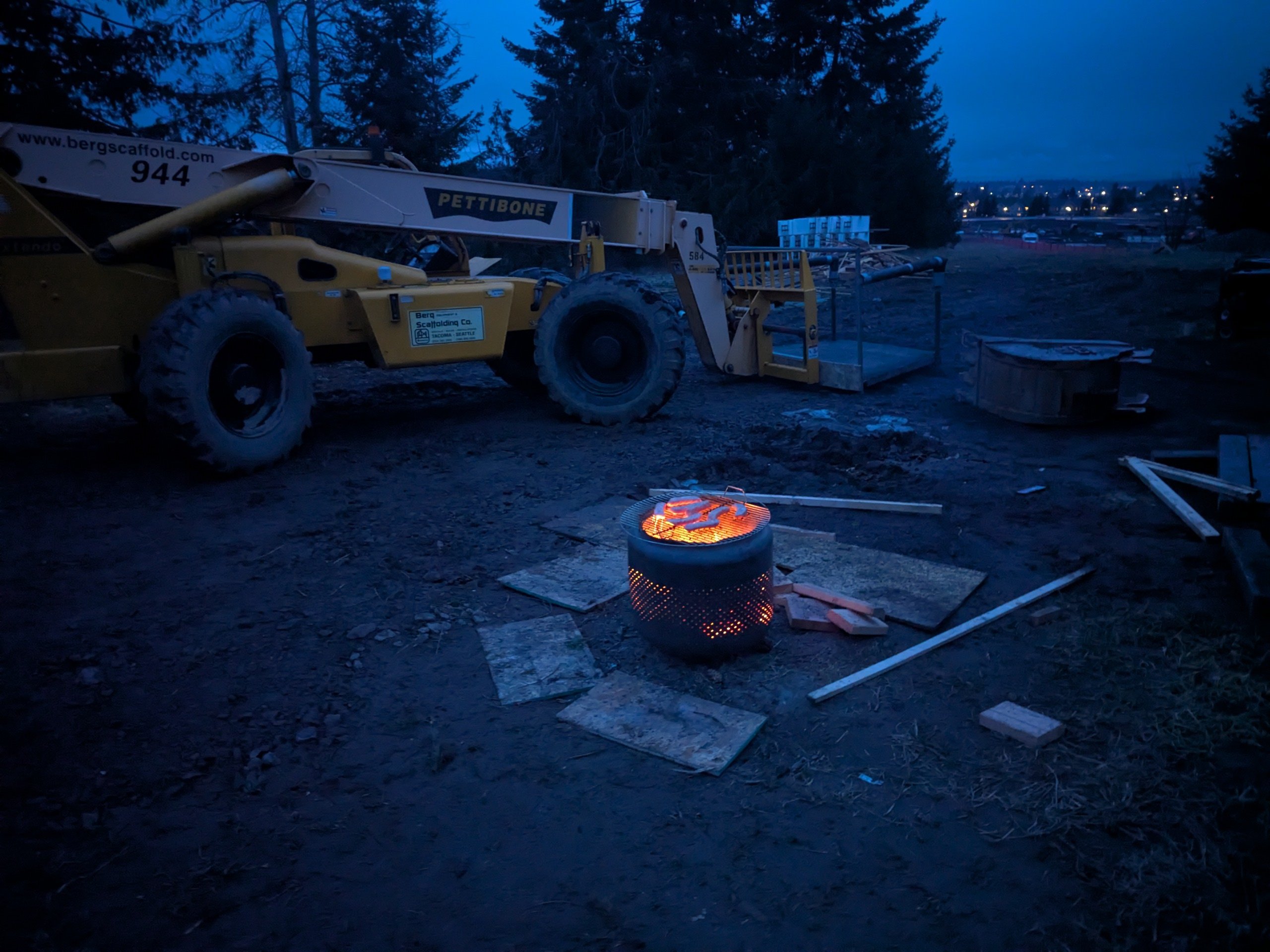
I like a little fire myself so we burn them outside. One of the fun things to do with an old washing machine tub.
Bratwursts last winter when we were finishing the roof and solar panels.
 1
1 -
Is this a water to air system or water to water system?
0 -
water to water hydronic tubing plus an air handler for a very brief AC season.
I am getting the multiaqua 3 ton air handler for that.
I have 3500' of 3/4" ground loop on 7 loops that I can select. My plan is to run 3 and then 4 of the loops alternately and see how much the ground temperature recovers in a <week, month, etc> .
The common value of 600' loop per ton, I have about 5.5 tons of loops.
0 -
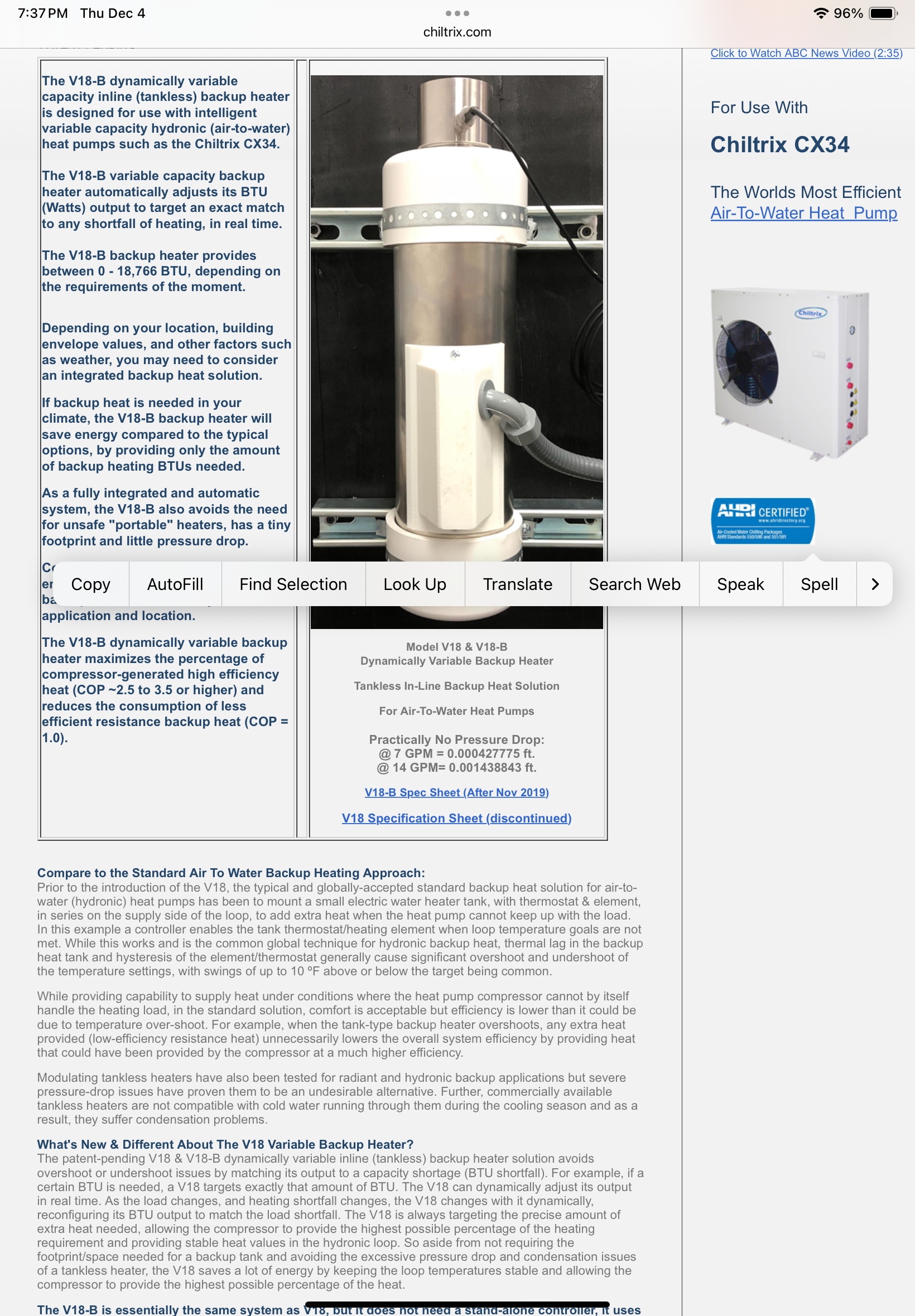
Chiltrix has an inline heater that is used in this way:
And it looks like it's really just a repurposed spa heater.
The tricky part about this is going to be the control logic. You want it to run only enough to meet the part of the heating load that the heat pump isn't delivering. What you don't want to happen is the heat pump to see warm water coming back and think the load has been reduced and reduce its output. Then the backup coil produces even more and you fall into a cycle where eventually the heat pump is off and the backup coil is providing 100%.
I don't know what kind of controls your heat pump has. The Chiltrix has a control output for the backup heat, if always minimizes the use of backup.
1 -
Is that heating degree days or something else? I've never seen it that low!
It's around 8,000 here and something like 15,000 north at work.
0 -
My AWHP unit as a backup heater built in. It is downstream of the heat pump and both will run together.
The way the controls works is bellow a certain temp which I can set, if the heat pump doesn't make its ODR setpoint, the heater kicks in. The heat pump plus heater will then slowly bring the heating loop up at which point the heater shuts off and the heat pump continues to run.
You can get similar controls with an outdoor thermal switch and an aquastat on supply in series, but it might be better to go for one of the small electric boilers that has an outdoor sensor and does ODR instead. You can set the curve on the backup boiler a bit bellow the ODR of the heat pump so it will only ever run if the heat pump can't keep up. This avoids the two fighting each other.
0 -
sorry, I mis-typed Design Day
NJ Steam Homeowner.
See my sight glass boiler videos: https://bit.ly/3sZW1el0 -
I started that, sorry guys. you know what I mean I think. That was about the coldest low I saw too, last year.
The hot day last year was 91 and then a few high 80's. We are just heat wimps so I did put in ducting and all that.
That is an excellent point and thank you. The heat pump I am looking at has y1,2,3 and O for standard inputs.
y1 low heat
y2 medium
y3 for domestic hot water. It goes Balls-out on y3 with the swt. I do not intend to use if for domestic water.
O for reversing for cooling.
It has a 5 wire group to connect their own ODR module.
It has some relay functionality for controlling a pump, but it consists of power in independent of the main unit power, power out, an a control connection for that relay.
I think putting a tank inline past the heat pump and having a narrow operating range for it is the ticket.
when SWT is not high enough, turn on the heat. I think I'd be on my own to create a control and logic for it.
@Kaos lined out a good plan of attack there.
 1
1 -
Skipthewarehouse has those units for sale for $633
Coincidentally they will provide the air handler.
EDIT:
I just had a moment looking at the install manual. I can use y3 with an external thermostat to command high heat plus the add in heat. Here is what y3 does:
"Y3 terminal: If Y3 terminal is energized in heat mode (O terminal not energized), the compressor will modulate to keep the load side water out temperature as high as possible. If Y3 terminal is energized in cool mode (O terminal energized), the compressor will modulate to keep the suction pressure at 110psi (high power cooling)."
So when the house is just a bit too chilly running the ODR loop, I can turn on that thermostat input to y3 and the heat pump is going to run. That takes care of it loafing and offloading to the backup heater.
Then all I need to do is set up an SWT sensor downstream of the backup and it would infill the needed heat.
Second EDIT:
To be clear I want the house to run on ODR as much as possible, and also when we are away. This added heat( if needed) would not be an unsupervised automatic function. I see no need for that. This would be the electric equivalent of stoking up a fire.
0 -
The Chiltrix website has it for $399. If you search on Amazon for "spa heater" you can get something that looks similar for about $150. The value that Chiltrix seems to add is the control logic, if you have to figure out your own control logic you may as well just go with the bare spa heater.
1 -
-
One suggestion if you have not bought equipment already is to skip hydronic cooling. If you look at the cost of a regular ASHP VS just BOM of hydronic air handler and bits to hook it up, the heat pump will be cheaper.
By adding the ASHP, you now have an extra heat source, so you don't need any backup for your geo unit. You also have independent backup heat.
You can still use the geo unit in the summer time for radiant cooling but you will significantly simplify your life if the supply can be kept above dewpoint. You now no longer have to deal with sweating pumps, manifolds, valves and fittings.
0 -
I really do not have a good location for the outside unit in this house, nor a good route for the lineset. It is a good suggestion though.
The air handler is about 3K. I could get a GSHP that might be similar in cost from a scratch and dent. I have the loops in the ground to support it. I never did intend to use radiant cooling.
If I went that route I would not need additional heat either for the same reasons.
0 -
I would look into the Chilltrex unit DC mentioned. If it in fact has ODR in the control that is a bargain price. Even a basic control with outdoor temperature sensing would make it worth the $$
If you do run cold chilled, below dewpoint water, the stainless housing needs to be insulated.
Insulation detail on chilled water piping can be crucial, and not easily accomplished. A square inch of uninsulated pipe or even a valve stem exposed can make for a wet mess. Insulating valves and pump bodies is a challenge.
Bob "hot rod" Rohr
trainer for Caleffi NA
Living the hydronic dream1 -
It is.
I would do what I can to minimize the run to/from the air handler. Even the strut gets drippy, so pre-wrap pipe as you hang it, etc.
I'd three way valve right at the heat pump and cut all the hydronic plumbing out of the air handler circuit. That would include things like the chilltrix. Wrapping the pump itself is a pain.
I can also gutter below that area and drop it in the floor sink or the condensate trap. I plumbed for all that. The 12x12 floor sink is in one end of the equipment room and there is a condensate drain vented and plumbed in the other.
I'll have to do the same insulating on the source side plumbing all the way to the wall, because when I drag that down extracting heat it will be a drippy mess too.
TANSTAAFL
0 -
Sounds like you can just use Y₃ & !O to enable the booster heater, size it carefully & you might not even need an aquastat on it (other than a high limit of some kind). One relay tied to O, go from Y₃ through C→NC on the relay, to the booster heater.
0 -
You could put the unit here:
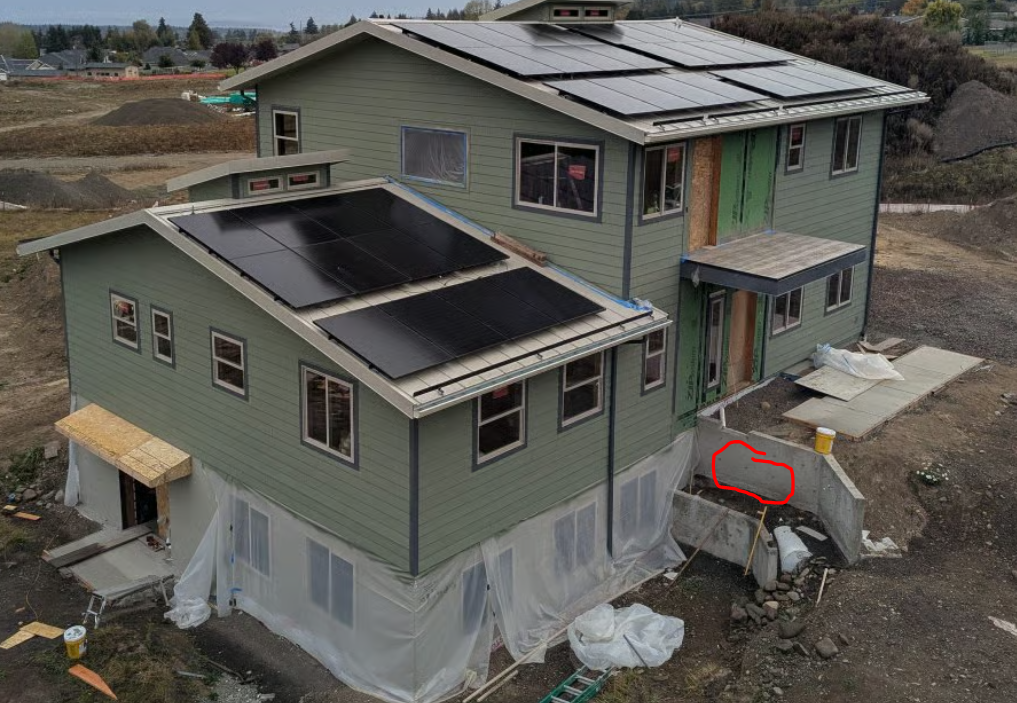
Could even build the deck by the door to have an overhang and cover the outdoor unit. The new inverter based outdoor units are pretty much silent about the only time I can here mine outside the house is when it is running at full heat in the depth of winter.
To me it is a lot easier to run a lineset than dealing with chilled water. The direct geo air handler is also a good option.
1 -
notice the notch in the wall above your location? That is a waterfall feature.
There is a similar location on the north I could use though.But my joists are already holed to the maximum extent possible so the lineset just does not compute for me. I worked really diligently to contain everything in the joists so there is no bump on the lid in the basement. I'd have to core drill the concrete, and then make a chase. Screw that! :D
0 -
Grundfos actually has pump insulation. I don't know if they are offered in the U.S. market however. Perhaps on some of the GEO specific pumps?
This came on a sample Euro pump I received from Caleffi Italy.
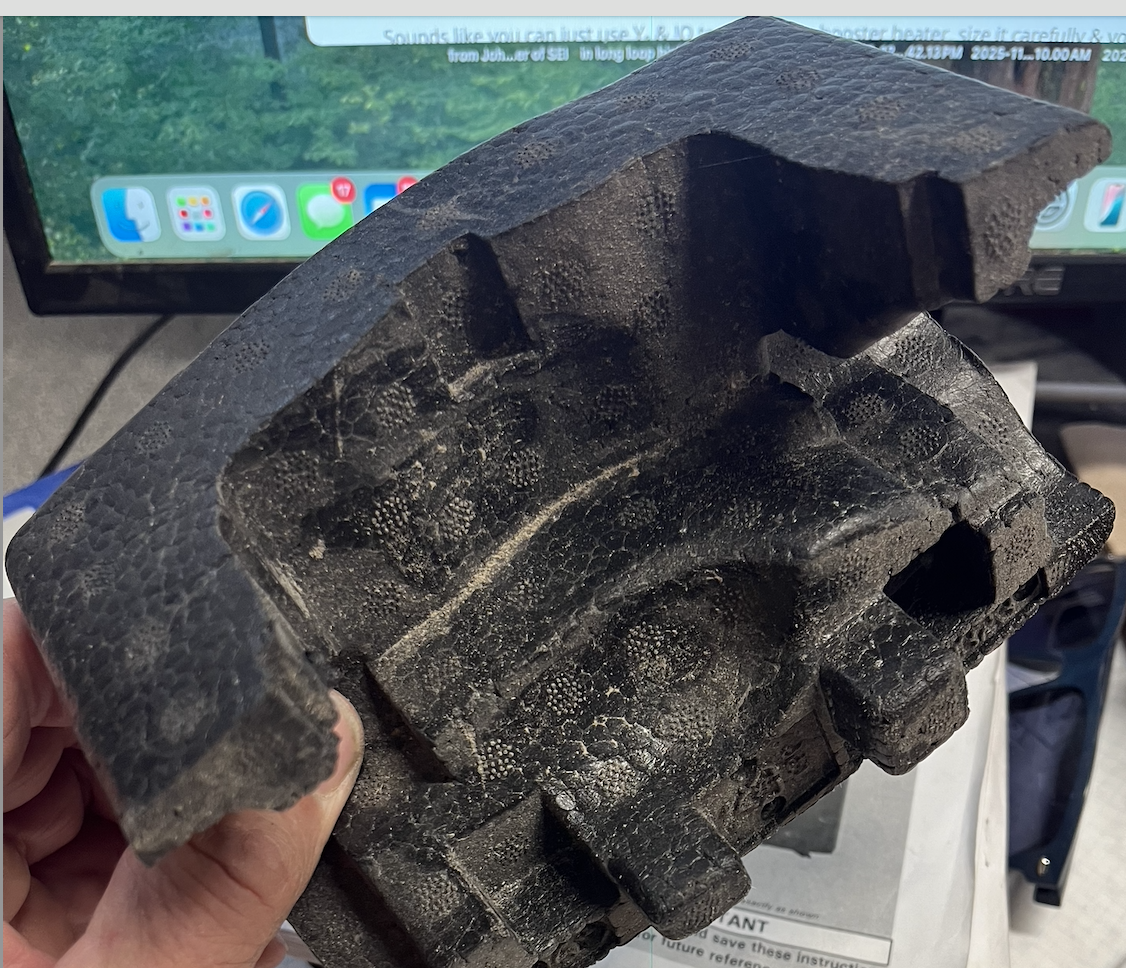 Bob "hot rod" Rohr
trainer for Caleffi NA
Living the hydronic dream1 -
I just got some bad news. The Calorek heat pump is going to be unavailable till mid year now due to the new refrigerant change. Talk about a big rock in my geartrain!!
I think I will build out the hydronics and use something small to test the system, perhaps that spa heater or a small boiler. I would do it manifold by manifold and take each zone up to the predicted operating temperatures before cover. I want to run the loops for a while under a load and make sure it Is secure and quiet.
I will install a 3 ton water to air HP and use that for my occupancy inspection.
I can drop in the water to water when it becomes available.
0 -
what about air to water
0 -
That would be a significant backwards step
This came on a sample Euro pump I received from Caleffi Italy.
Is that insulation or packing material? 😅
NJ Steam Homeowner.
See my sight glass boiler videos: https://bit.ly/3sZW1el0 -
I can get a 4 ton inverter water to air unit for ~6K. a basic single speed 3 ton is 4.1K.
Pretty sure I will opt for the former.
0 -
I'm assuming the temporary water-to-air in in place of the air handler for cooling?
0 -
No, it would be the permanent AC solution. This would also provide for backup heat on the hydronic system and therefore eliminate the original premise of the OP.
It would allow me to get occupancy while waiting on the water to water unit also.
0 -
I think that is a good plan. Definitely go for the inverter unit, turn down on these is still limited so make sure not to oversize.
What you'll find with a low load home that none of the surfaces will be cold even with just air heat. When you try the floor heat, since the house load is low, the emitter temperatures will also be pretty low, you'll bearably notice the heated floors.
What you might want to do is get a larger boiler/tank for the hydronic setup that can carry a reasonable fraction of your space heat and use to heat only the areas you want extra warm. The air handler can carry the rest of the load. My feel is the operating cost of this will be low enough that buying the water to water unit in the future might not be worth it. If you use something like a 100gallon electric tank for the floor heat, that can store about 50-60kBTU of heat which would cover partial space heat load for a long time. If you set the tank to run when the sun shines, would be almost free heat even though COP1.
1 -
With a 500' deep vertical well you are going to be fine with input water temperature. I think you'll find that your input water temperature is 55 degrees all the time, even late in the winter after you have run the system to heat your house for 4 months.
0 -
Why not just look at another brand of water-to-water heat pump? I have a GeoStar single-stage (with a soft start) and with a 180 gallon buffer tank and an ODR it basically makes any type of inverter turn-down on output not necessary.
1 -
I doubt they are available to me as just a homeowner DIY.
I don't have a vertical well I have closed loop horizontal loops.
Interesting idea @Kaos
I will have time to mull it over.
0 -
low heatload homes/ rooms are not an ideal match for radiant floors, as Kaos mentioned . Panel radiators are a nice option as they are easy to zone and you still get the radiant effect.
The math works like this 2 btu/ square foot for every degree difference. Difference between the floor surface temperature and room ambient.
So if the floor is maintained at 80° surface, and the room ambient at 70°, 80-70= 10 X 2 = 20 btu/sq ft.
So if loads are in the teens, or in some cases single digits on efficient homes, you cover the heat load with lower floor surface temperature.
75° floor in a 70 room 75-70= 5 X 2 = 10 btu/sq ft so that floor will not give you the "warm floor" feeling with skin temperature around 86- 90°F at your feet bottoms :)
Radiant walls and ceilings are another option, but it may be too late for that option.
Bob "hot rod" Rohr
trainer for Caleffi NA
Living the hydronic dream0 -
Two thoughts on this:
First, the reason they call it "air conditioning" and not jut "cooling" is that you want to remove humidity too, not just cool the air. A water temperature of 55F is probably not going to be cool enough to give satisfactory humidity removal.
Second, the amount of heat moved by the water is given by the flow rate times the temperature change. Without a heat pump you can't get the water warmer than the interior temperature, so you're limited to about a 20F temperature change. With a heat pump you can get the water hot enough for a 2-3 times greater heat change, which means you need 2-3 times less flow. With a 600 foot well the energy required to pump the water is going to be meaningful.
If your heat pump has a desuperheater you can use that heat to create domestic hot water instead of sending it back down the hole.
0 -
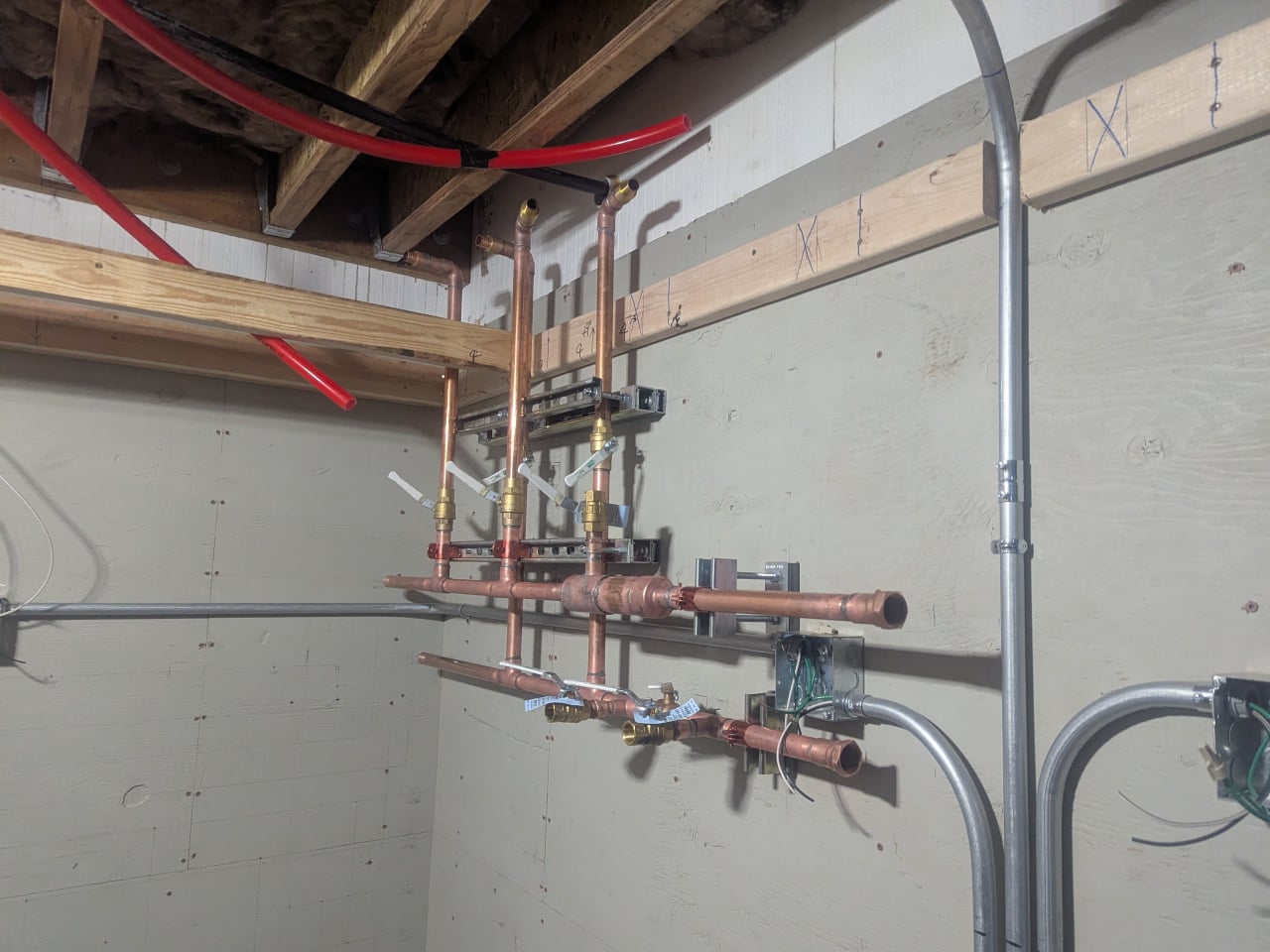
things are moving along. I started framing in the chase and manifolds at the east end. We will land those 9 runs early next week and the other 11 later.
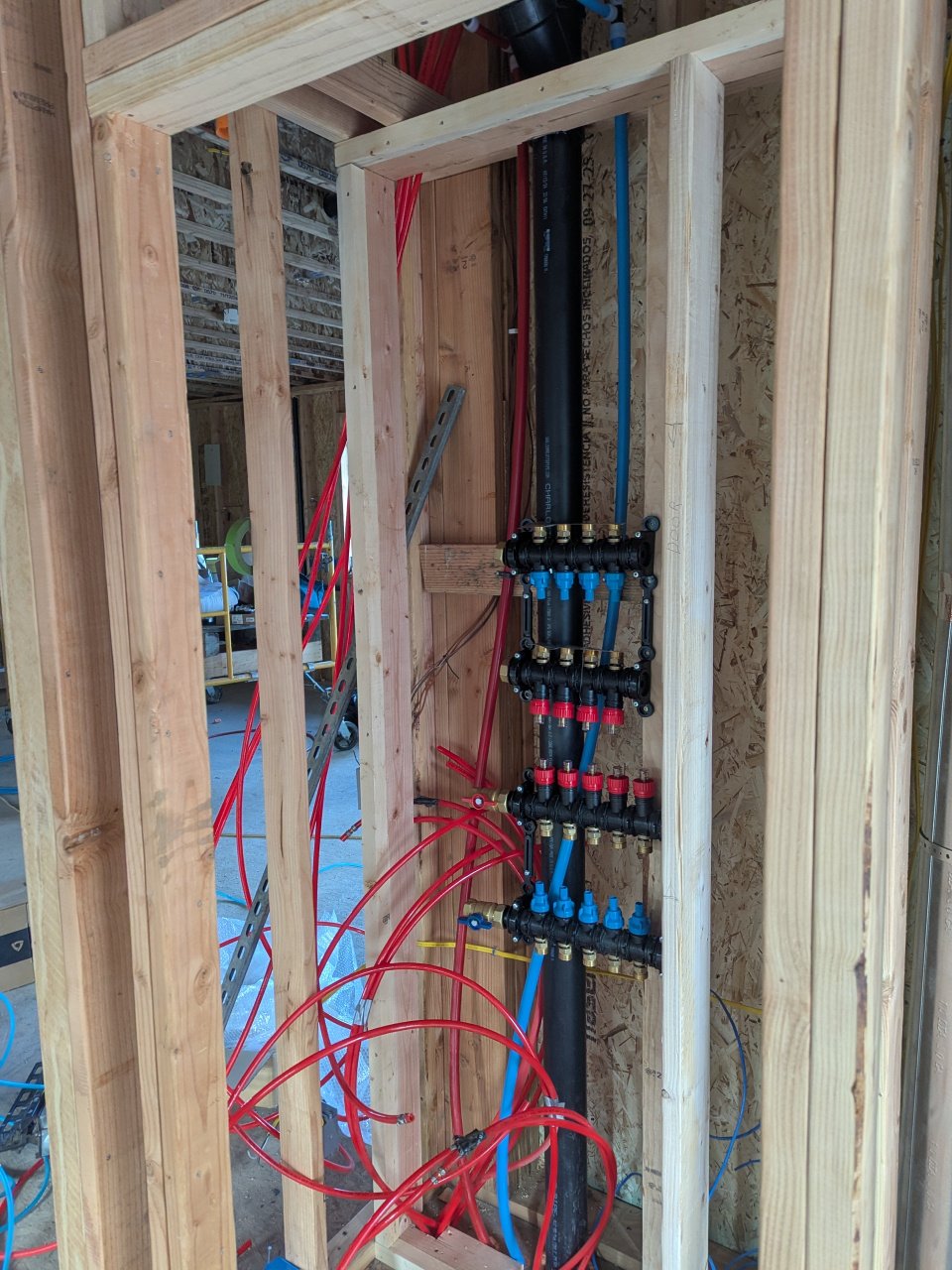
I passed electrical inspection late last month and solar panels and inverter yesterday, it is on a separate permit.
@240 V low for the HP and 120V high out of the way for circ pumps and stuff.
All that is on the critical loads panel.
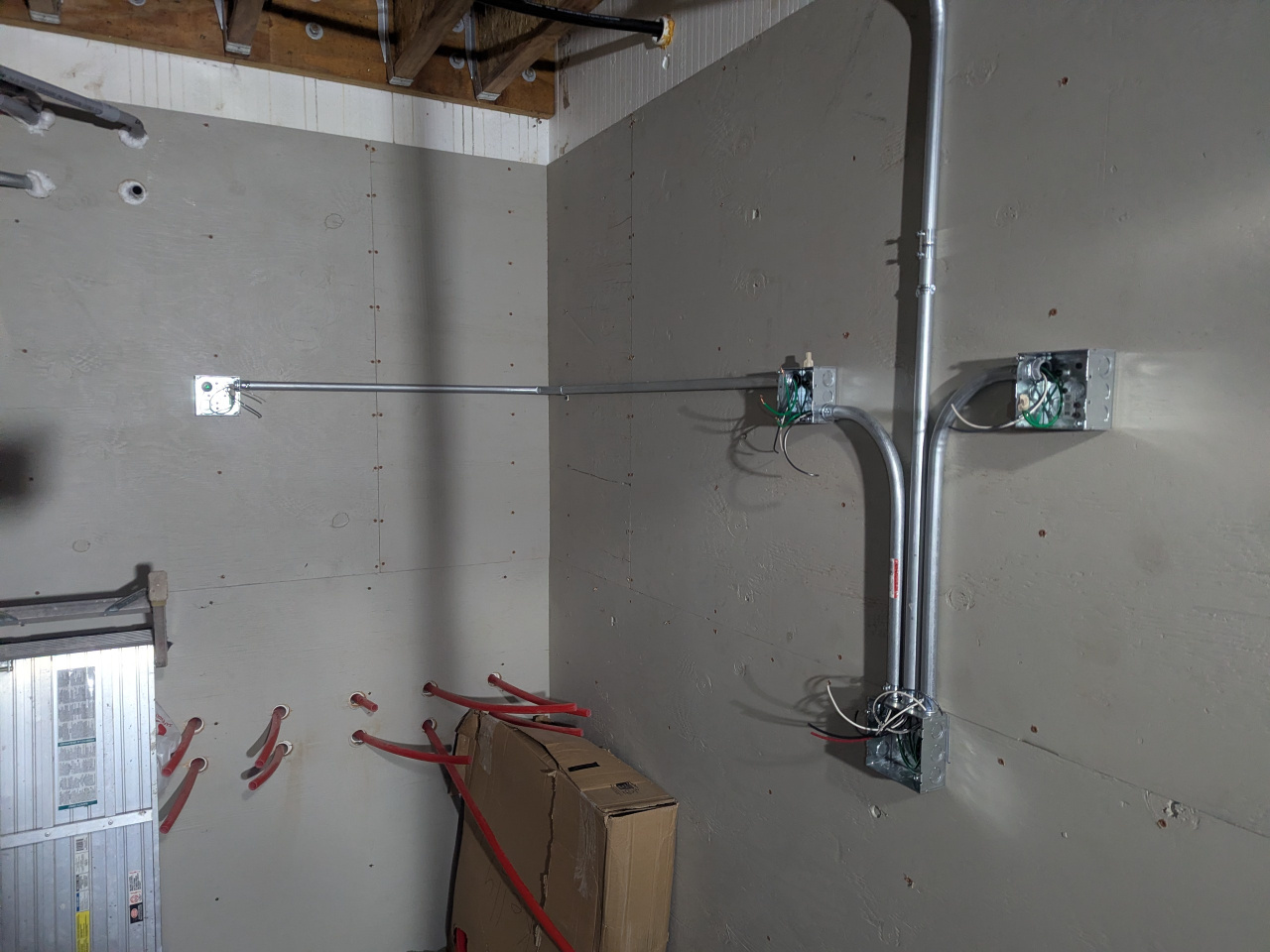
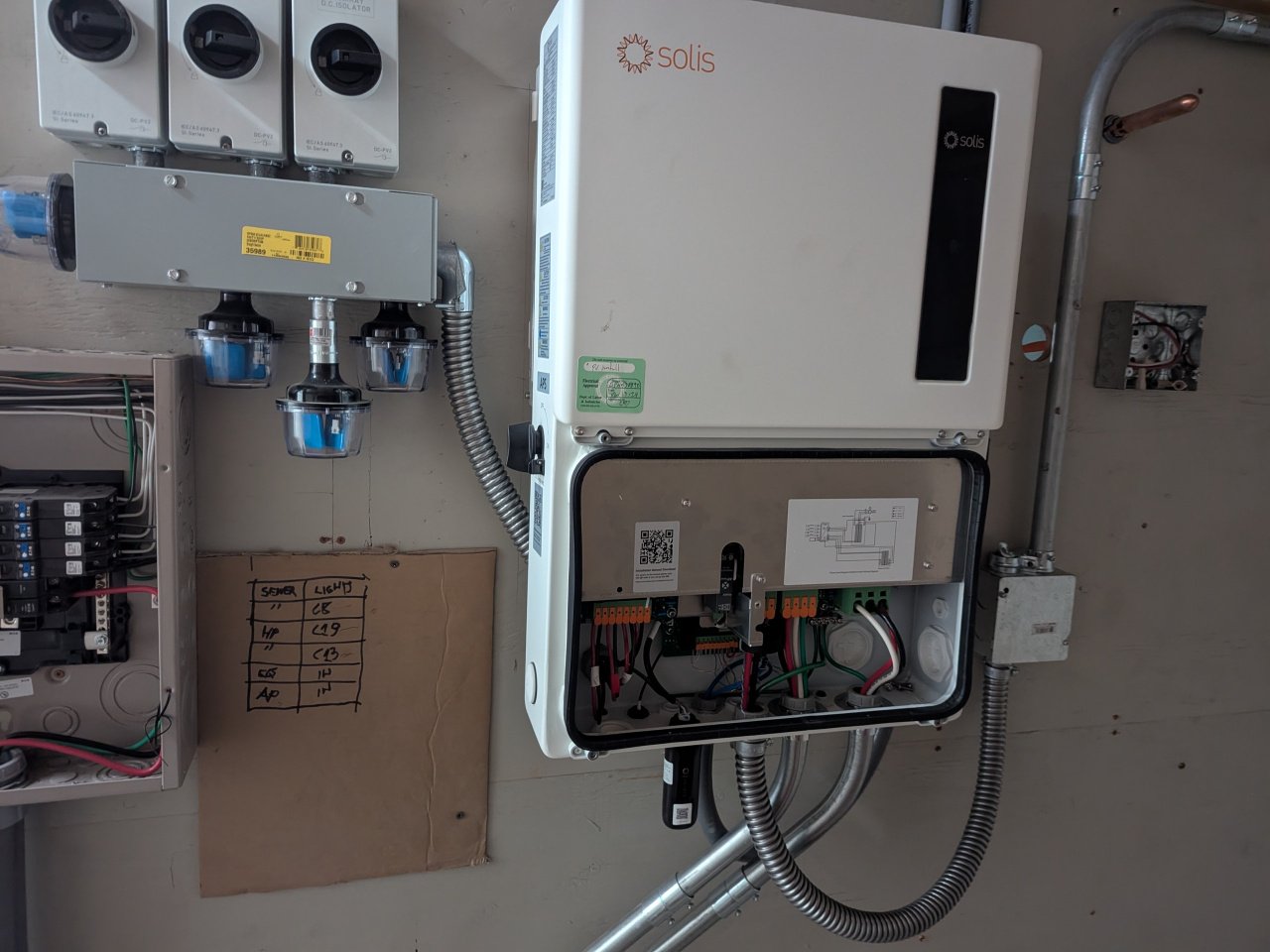
Inverter with the green sticker. IMO first means of disconnect, blue Midnite Solar Surge Protection Devices.
Remote battery vault outside on the 1" to the right. I don't trust those batteries under my house.
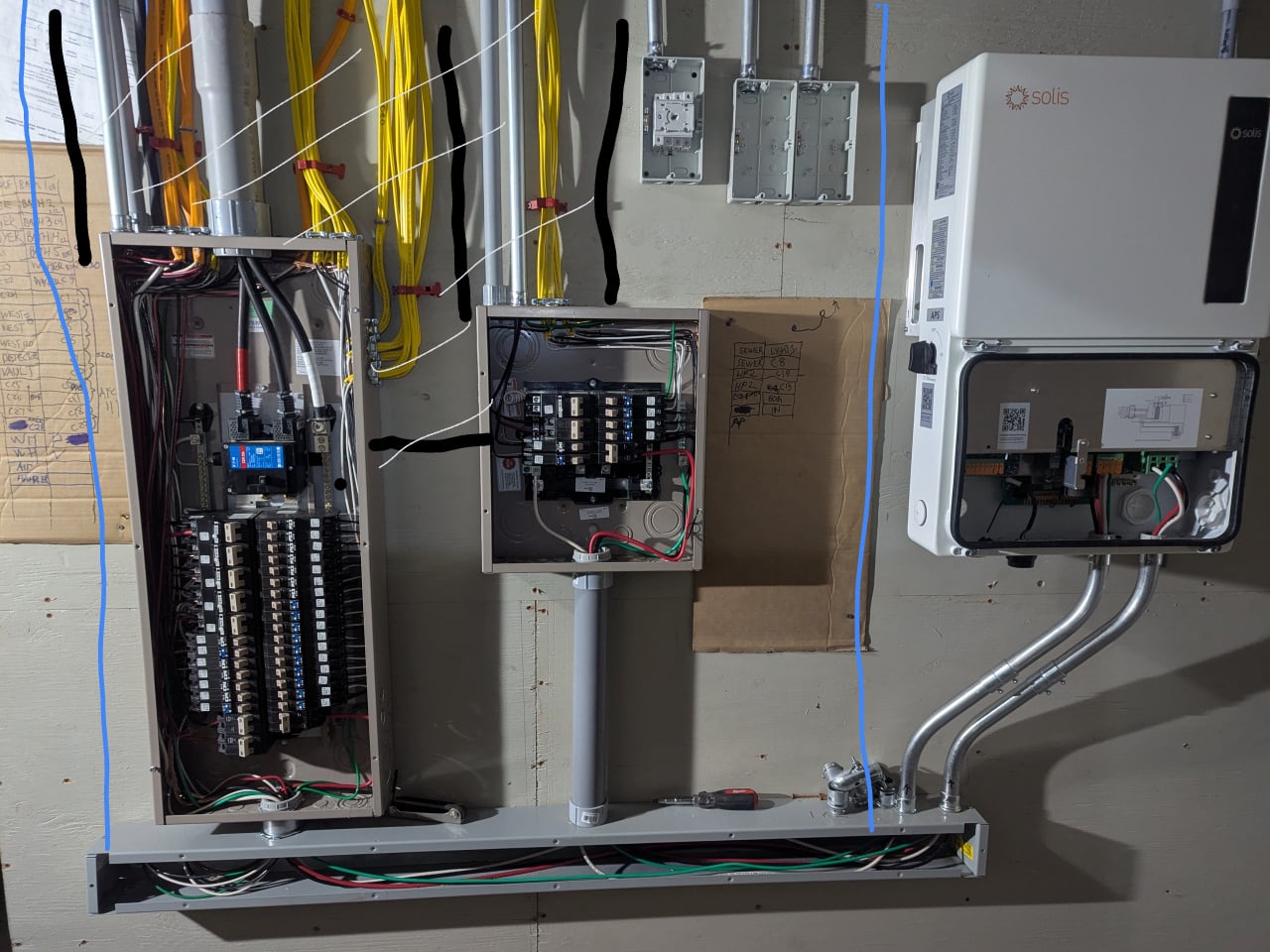
I used a gutter for the back and forth. The diagonal lines are a cover over the exposed romex.
Critical Loads panel fed through the Solis 11.4 KW hybrid inverter.
All the lighting, ceiling fans and bathroom fans are 51VDC low volt out of this cabinet.
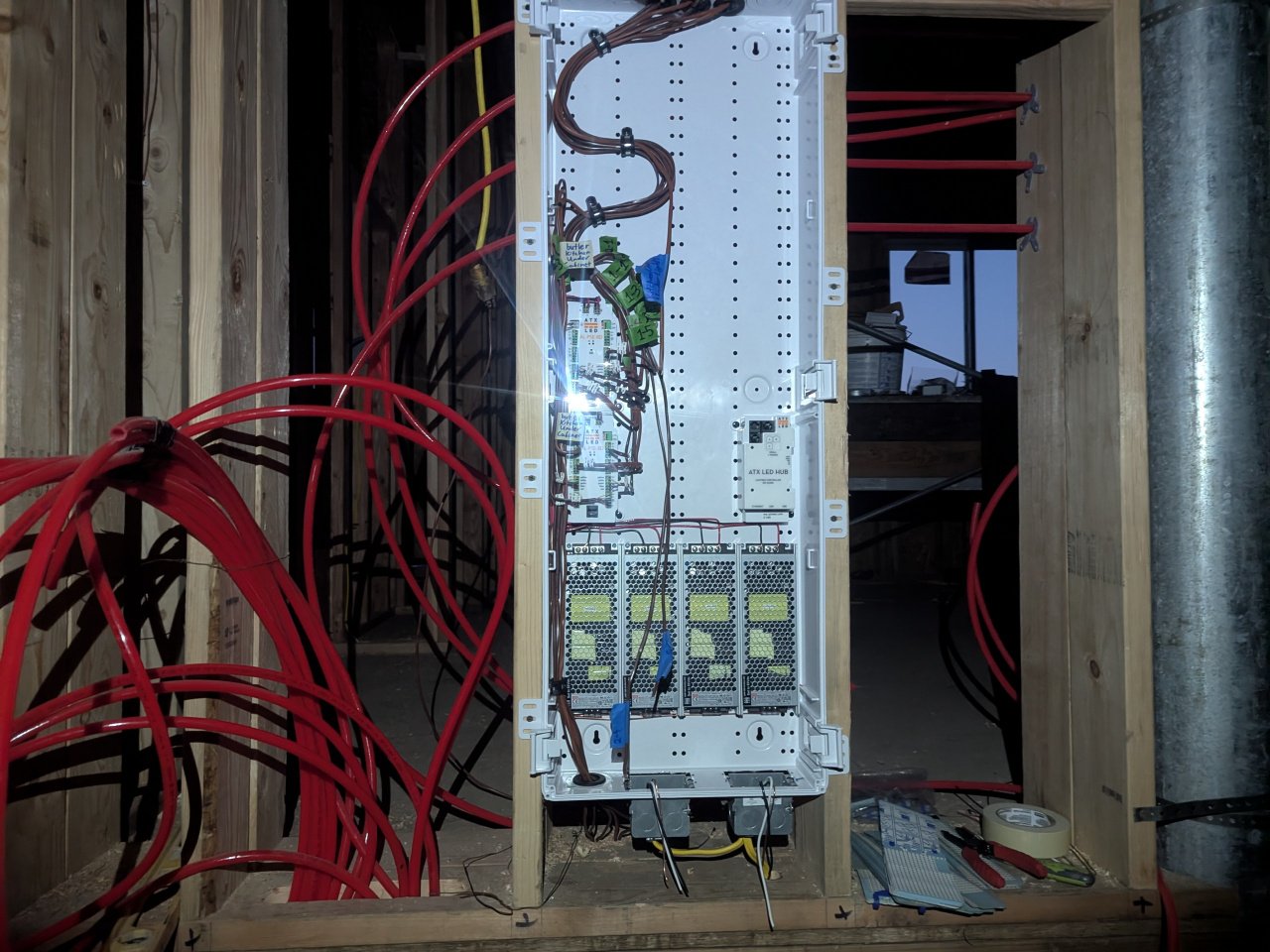
There are the other 11 runs.
 1
1 -
-





Categories
- All Categories
- 87.8K THE MAIN WALL
- 3.3K A-C, Heat Pumps & Refrigeration
- 59 Biomass
- 430 Carbon Monoxide Awareness
- 132 Chimneys & Flues
- 2.2K Domestic Hot Water
- 6K Gas Heating
- 124 Geothermal
- 170 Indoor-Air Quality
- 3.8K Oil Heating
- 79 Pipe Deterioration
- 1.1K Plumbing
- 6.7K Radiant Heating
- 396 Solar
- 16.1K Strictly Steam
- 3.5K Thermostats and Controls
- 56 Water Quality
- 51 Industry Classes
- 51 Job Opportunities
- 18 Recall Announcements