Water stain in the ceiling below a bathroom. Do you scan before cutting?

I do residential plumbing service. One of the hardest questions to answer is, “Can you keep the hole small?”
There is a bathroom upstairs and a water stain on the ceiling below. The darkest part of the stain is not always under the leak. Still, you have to pick a place before opening the ceiling.
I am thinking about adding a thermal camera to my service tools. My plan is to scan the ceiling first. Then I would use a moisture meter on the areas with a clear temperature change. I would check a few normal looking areas too, just for comparison.
If that can narrow the search from half the ceiling to one small area, it would be useful to me. I know the camera will not tell me if the water came from a supply line, a drain, or somewhere else. That part still has to be checked.
For the service plumbers here, have you ever changed where you planned to cut after looking at a thermal image? What did you see on the image, and what did you find after opening the ceiling?
Comments
-
I usually make a small hole and use an inspection camera, ridgid makes a great one. I haven’t used a thermal camera but I think I do have a cheap one I got off amazon lol
0 -
Thermal imagers are fun and useful, although I have never tried your exact scenario. You may want to explore Borescopes too. A small hole and you can actually look around in the void. Some you can steer and also some have multiple viewing angles.
National - U.S. Gas Boiler 45+ Years Old
Steam 300 SQ. FT. - EDR 347
One Pipe System0 -
This is the first thing I say to the client, "Hey…its just sheetrock"…usually. I guess in some cases it could be plaster. Do as much verbal fact-gathering as you can. Past history of the installation i.e. "what's IN THERE"? Hot/ cold supplies, to what, shower/tub, toilet, vanity etc.? Type of plumbing? Pex, copper, PVC, cast iron etc. Don't rule out RAIN WATER if there is a vent or access to roof etc. How big, how recent is the leak? Episodic or long-time? Gauge the amount of moisture. Do your best first with words and info gathering. Then…make a hole. The damage you see, may be the lowest spot where the water has accumulated and NOT very near the leak! So I suggest making a BIGGER HOLE than you or the client want. After all…"Its JUST SHEETROCK." It can be repaired. I just did one of these. It was a bad pex crimp fitting done recently in a renovation of a vanity supply. The "stain ring" on the ceiling was quite a ways away from the drip—in a very deep ceiling cavity from the upper floor. Forget the thermal imaging, Get out your sheetrock "stab saw" and mind the electric wires.
 1
-
More or less agree with all of the above… except I'd like to add to @psb75's comment a bit. Do all the research you can before you start bashing at things. The problem may not be something "in there" — it may be a more or less obvious (usually less…) problem in the exposed plumbing in the bathroom overhead. I've seen serious water staining from condensation on a toilet tank which dripped on the floor (in quantity), travelled along the floor, slipped down a water pipe though the floor and wound up three feet away…
Br. Jamie, osb
Building superintendent/caretaker, 7200 sq. ft. historic house museum with dependencies in New England 1
-
I agree that a large Sheetrock opening is no harder to patch than a small. If you need room to do the repair, a small hole gets bigger.
Sheetrock sells by the 4x8 or larger size, even for small repairs.
Ovviously check wax seals, leaks around tub trim, spouts and shower heads. Waste and overflow calking around the tub, etc.
Yes to an IR camera for this and many other uses.
Bob "hot rod" Rohr
trainer for Caleffi NA
Living the hydronic dream0 -
Does the leak stop when the fixtures aren’t used. If yes, it’s a drainage issue. Replace the wax ring on the toilet, check the overflow gasket on the tub, check the tub caulking before you open the ceiling.
If the leak is always there, it may well be a pressurized water pipe and you will have to open the ceiling to find and repair it.
Good luck!8.33 lbs./gal. x 60 min./hr. x 20°ΔT = 10,000 BTU's/hour
Two btu per sq ft for degree difference for a slab 1
-
I know you have to keep the customer happy, but drywall comes in 4'x8' sheets and it's really no more work to tape a 4x8 patch than a 1x1 patch. How does your hourly rate compare with the drywall guy's?
0 -
And on the drywall… if it's lathe and plaster, that's easy to patch too — if you can find someone who knows how. But — it's not a bad idea to get that someone who knows how in on making your hole, too, as going after lathe and plaster with a sawzall or any reciprocating device (except a hand saw) is likely to do a LOT more damage than you bargained for.
Br. Jamie, osb
Building superintendent/caretaker, 7200 sq. ft. historic house museum with dependencies in New England
 2
-
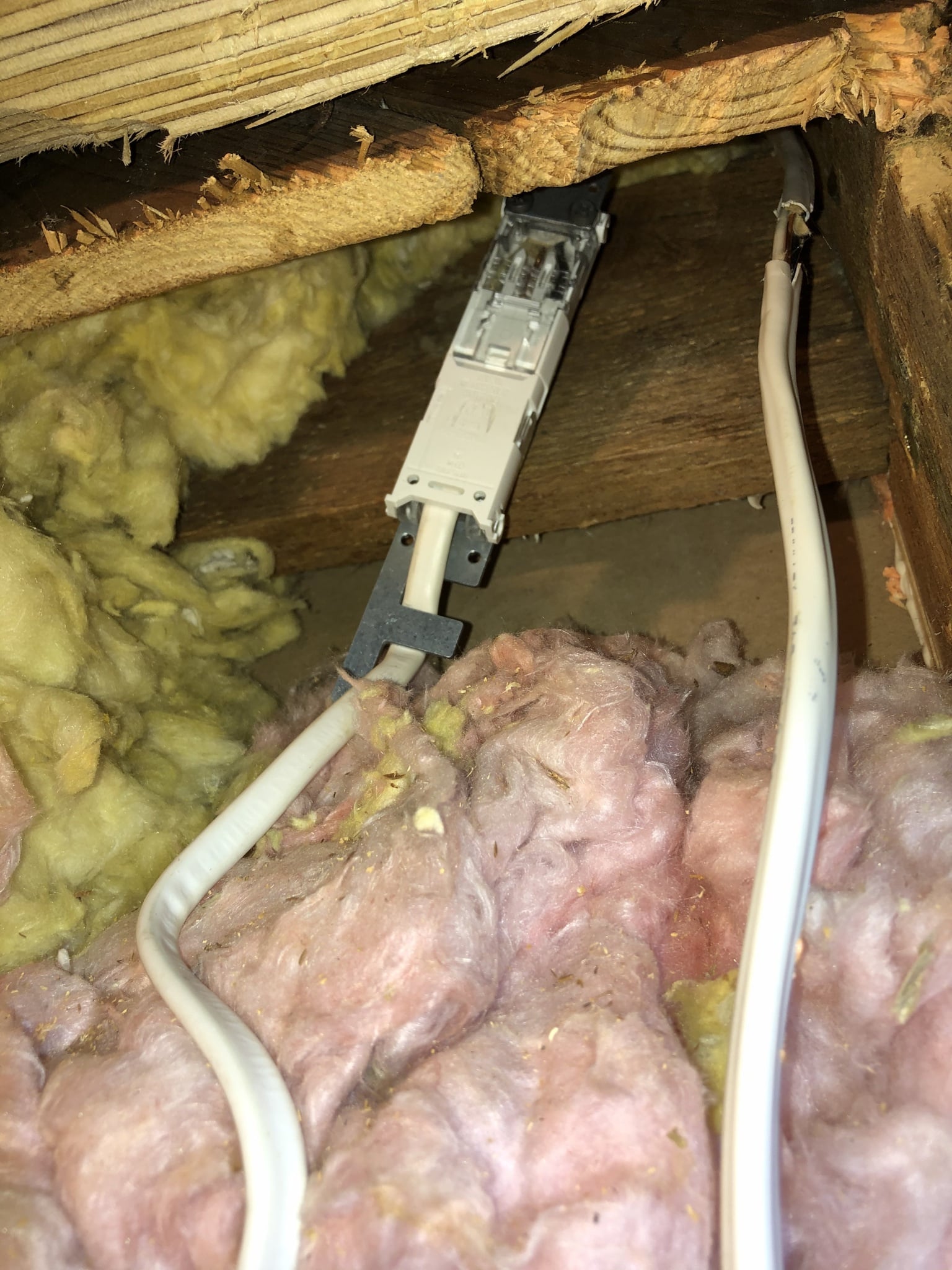
Yes………., the drywall prep guy didn’t bother to asked before using a recip on this wall. Wires, what wire?
 0
-
it is very important you know what you're doing if you are tearing in to plaster with wood lath. you could pop a whole ceiling loose if you don't know how to properly support things when cutting through the lath. they also tend to have plaster cornices and coves that are much harder to patch than the flat sections. a drill and borescope is a good idea here. maybe even bring in the plasterer before hand if you're tearing in to detail.
0 -
@wedaken I tried the thermal camera and moisture meters years ago and found they are not the best way to spend your time troubleshooting this type of issue. Water always seeks its own path and its own level, and there is almost always something in the way in the ceiling or a wall, etc., that will not let you get the best reading.
Do what @Alan (California Radiant) Forbes says above. And start small and go bigger if you have to. Often the sheetrock is already damaged and will have to be replaced anyway.
0 -
I think the hardest thing to patch is popcorn ceiling sprayed on drywall especially if it is in an obvious spot.
I usually take a scrap piece of drywall and practice getting the texture right weather using a brush, a sponge or whatever to try and get a match. trouble is you think you have something pretty good until it dries and doesn't match and neither does the paint.
0 -
textured ceilings are probably something you want to hire a good painter to match the texture.
0 -
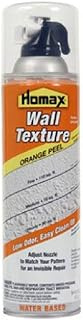
This works well on ceilings and walls when textured paint and drywall patches need to be fixed.
 0
-
Yes, you can absolutely use a thermal imaging camera (TIC) to spot an active water leak in a ceiling. My fulltime job as a firefighter I use it all the time to see the contrast of heat against a background. Cool water for example will show up differently vs the contrasting wall/ceiling.
In choosing a TIC get the best that you can afford . You want to look at the processing speed and the color palette options. Most TICs will have the color pallet iron bow. This is the traditional range of colors like orange purple etc. One with a black and gray scale can be useful as well. The spot temp on the display you need to take with a grain of salt as it's not always accurate depending on how far away you are standing from an object. Once you get it play around with it to see contrast in colors. One great exercise I use when I train new hires to use the TIC is to scan a counter top to see what it looks like normally. Then take a cold glass of water and pour it on the counter to see the contrast it makes. Then take warmer water and do the same thing. This way you get a good feel for what you are actually looking at and can interpret the image. Keep in mind any shiny objects will reflect back to the lens on the TIC and skew the image. Stainless steel sinks, glass, etc will not yield good results. (Cliff Notes version)
For my side HVAC business I have a FLIR and a Himicro. Both are at good price points under a grand. TICs can go up to thousands of dollars depending on the application. I would stay away from ones that clip on your phone. Those don't have the best resolution and can be flaky depending on your choice of operating system. The devices will pay for themselves and showing customers a visual of an issue pays dividends.
I use mine for infloor radiant heat, baseboard heat, steam systems, AC condensers, over heated motors or loose connections on electrical panels to name just a few. Trutech Tools has a great selection of TICS to check out.
Owner of Grunaire Climate Solutions. Check us out under the locate a contractor section. Located in Detroit area.
0 -
You don't need a moisture meter if you're using a thermal camera. The wetter, the cooler.
0 -
Popcorn texture in older houses can contain asbestos, a muli-tool works great to cut a hole in drywall, and Home Depot carries smaller pieces of drywall for sale.
If I am going to cut a piece of drywall to make a repair, I cut a square and make a 45 deg cut rather than a straight cut thru the drywall as I will replace the piece that I cut out smearing drywall mud on all the cut surfaces and replacing the plug. I have placed strips of 1/4 or 3/8" plywood strips across the hole and screw the plug into that if nothing to screw to..
 1





Categories
- All Categories
- 87.9K THE MAIN WALL
- 3.3K A-C, Heat Pumps & Refrigeration
- 60 Biomass
- 430 Carbon Monoxide Awareness
- 136 Chimneys & Flues
- 2.2K Domestic Hot Water
- 6K Gas Heating
- 124 Geothermal
- 170 Indoor-Air Quality
- 3.9K Oil Heating
- 80 Pipe Deterioration
- 1.1K Plumbing
- 6.7K Radiant Heating
- 397 Solar
- 16.2K Strictly Steam
- 3.5K Thermostats and Controls
- 56 Water Quality
- 52 Industry Classes
- 51 Job Opportunities
- 18 Recall Announcements