Roth indoor tank: Is a Tigerloop necessary or is annual purging enough?

Hi everyone,
I’m looking for some advice regarding an issue that just came up with my oil-fired boiler system, and whether a recommended upgrade is truly necessary or if it's going to cause new problems.
Background on my system:
- Tank: Indoor Roth oil tank installed about 3.5 years ago (top-drawn/upward routing supply line).
- History: This is the absolute first time I’ve had an issue with the system since the tank was installed.
The Issue:
We recently had a no-heat call. The technician found that the burner had tripped on safety. When they opened the bleeder valve, no oil came out initially. After a bit, oil flow returned, but they noted a large air pocket in the line that was blocking oil delivery. They purged the line, ran a combustion analysis (everything came back within normal ranges), and the boiler has been running fine since (last 24 hrs).
Because of the upward routing from the top of the Roth tank, the tech noted the system might be susceptible to air accumulation. They provided an estimate to install a Tigerloop de-aerator (including two new flexible oil lines). The technician did note on the invoice that this appears to be an isolated incident for now, but recommended it if it becomes a recurring issue.
My Concerns & Questions for The Wall:
- Annual Maintenance: Since my system gets serviced every year, would a thorough annual purge of the oil line during routine maintenance be enough to mitigate this air accumulation risk?
- Is it a "Must-Have"?: For those familiar with Roth top-draw setups, is a Tigerloop considered mandatory to prevent this, or should I wait to see if it actually happens again before spending the money?
- Oil Smell: Since this is an indoor tank setup, I am very concerned about the oil smell a Tigerloop can emit when it vents air to the atmosphere. For those with indoor Tigerloops, do you experience a persistent heating oil smell in the room? Is venting it strictly to the outdoors an absolute requirement or common practice to avoid this?
Thanks in advance!
Comments
-
 1
-
Removed per request.
1 -
This one is a "well, maybe". In principle, if the burner is below the oil level in the tank (even when the oil is low!) and all the joints are tight, you can run a single line from a top draw tank such as a Roth and not have any problems. It may be a bit of a pain to prime the first time it's used, but unless you run out of oil it should be fine.
In principle.
In practice, the slightest vacuum leak at a joint somewhere of even a pinhole in the suction line in the tank and it will give trouble — which always gets worse. It may not show up if the burner is in frequent use, but if it sits it can lose prime.
And this is where a Tiger Loop can help — without going into ho it works, it helps the burner pump create enough vacuum, even with some air in the line, to prime the line and flow without further attention.
Br. Jamie, osb
Building superintendent/caretaker, 7200 sq. ft. historic house museum with dependencies in New England0 -
It used to be that Roth tanks came with a rubber suction line in the tank. Is this still the case? Regardless I included a Tiger Loop in all my Quotes to avoid suction issues. They also eliminate the need to disconnect fuel lines for boilers with swing out doors. Generally make service easier quicker with less likelihood of a mess.
Miss Hall's School service mechanic, greenhouse teacher, dog walker and designated driver
0 -
@KC1 asked:
2. Is it a "Must-Have"?: For those familiar with Roth top-draw setups, is a Tigerloop considered mandatory to prevent this, or should I wait to see if it actually happens again before spending the money?
NO this is not a Must Have! but they do solve problems like the one you experienced. I included Tiger Loop deaerators on all new oil heat equipment installs. It was just something I did to reduce the problems associates with t he poor quality of fuel piping that I experienced in the field.
If you have a technician who is relentless in his pursuit of a leak-free fuel piping system, then you probably don't need a Tiger Loop. Unfortunately, it's becoming increasingly difficult to find an oil-burner technician with that level of attention to detail today. That's why the Tiger Loop has become a common go-to solution for problems like yours.
Your situation is not going to resolve itself. It will only get worse over time as connections are disturbed during filter servicing, fuel deliveries, and the various vibrations associated with equipment operating around your fuel system.
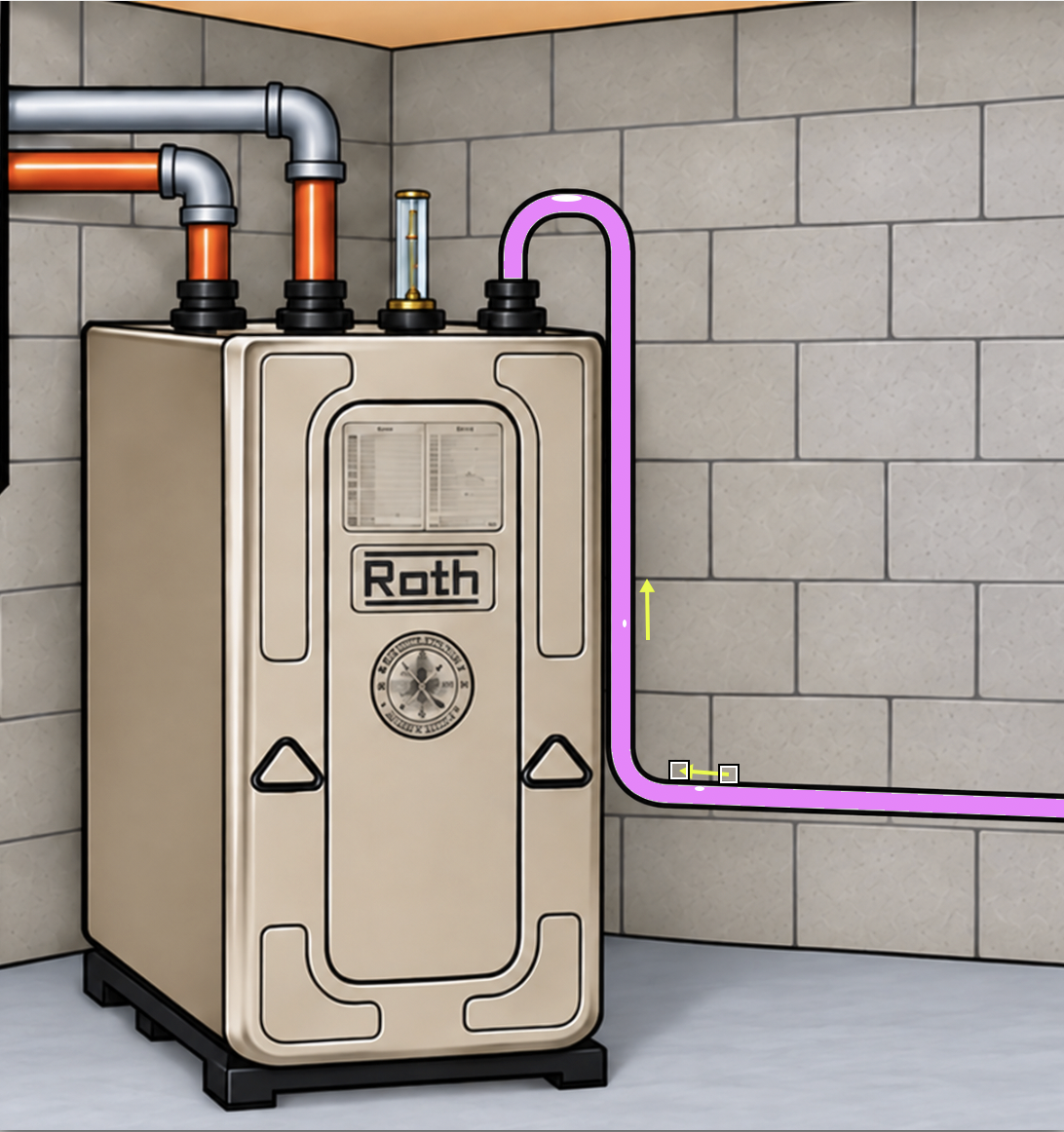
A tiny pinhole air leak in the fuel piping will not necessarily stop the flow of oil immediately. Initially, the small amount of air entering the system may collect at a high point in the fuel line while oil continues to flow past it.
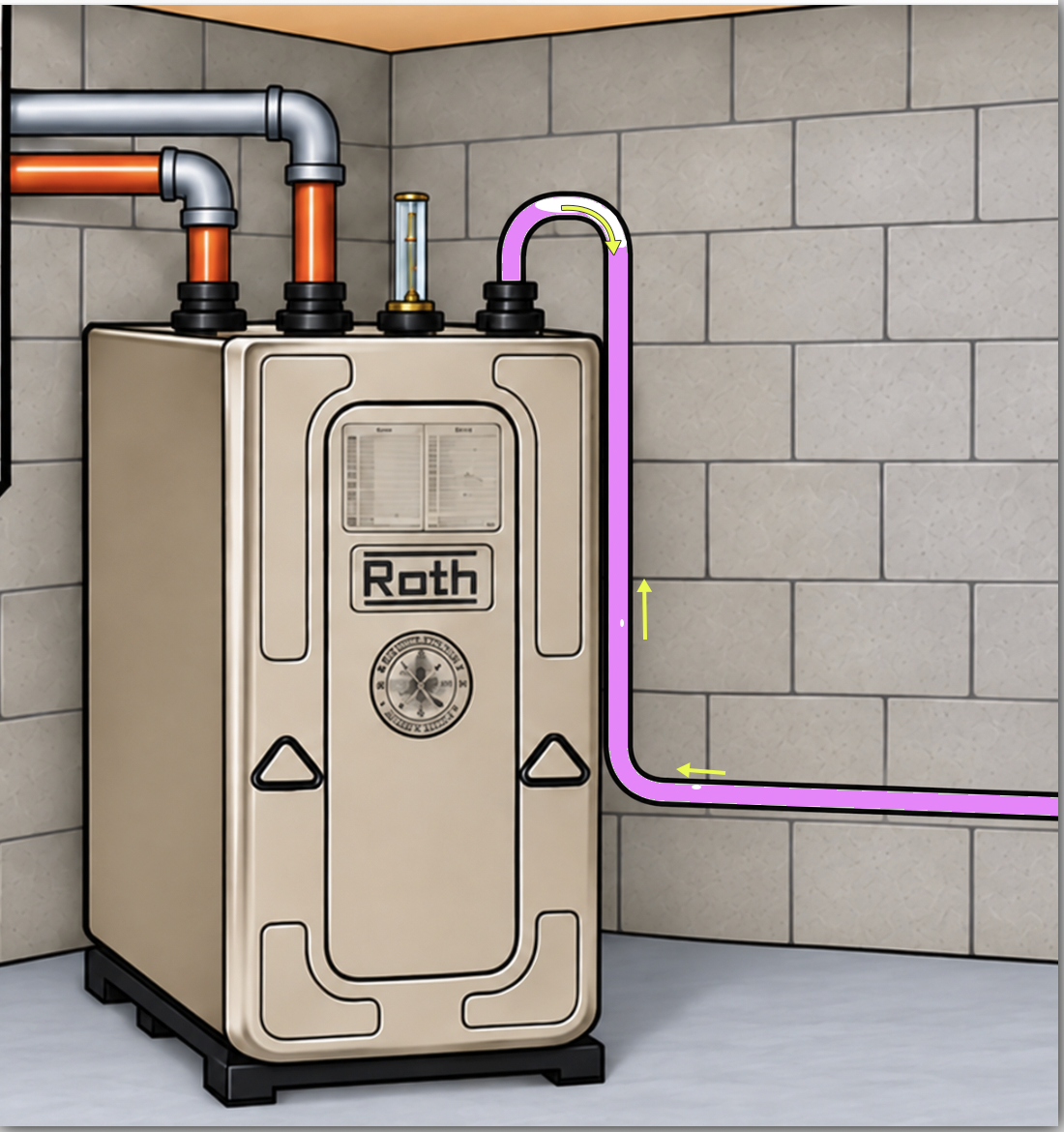
As that air pocket grows, the problem becomes progressively worse but hte fuel water falls over the high spot.
The fuel must eventually move past an increasingly large air-bound section of the piping.
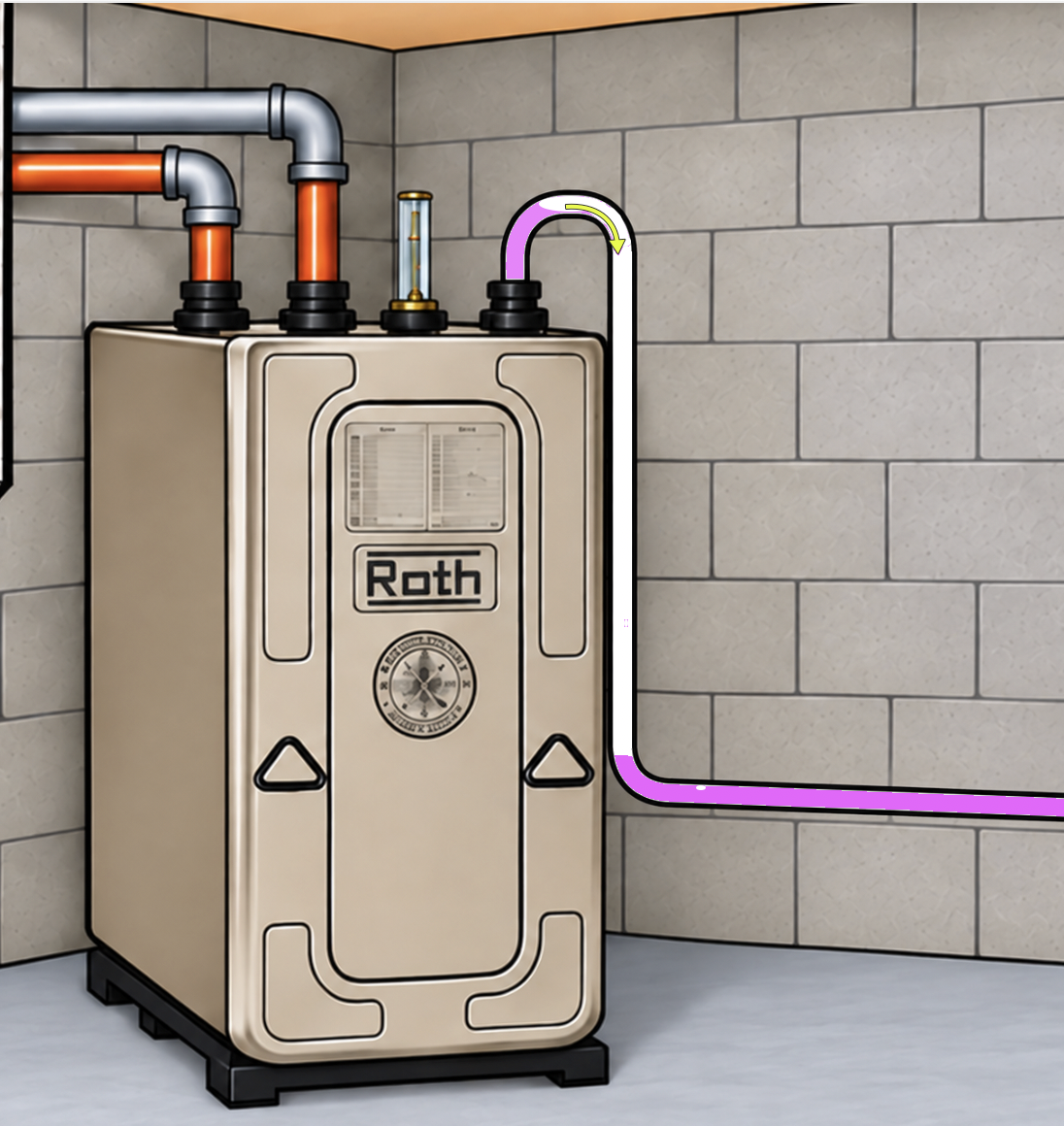
Eventually, the air pocket becomes large enough that air reaches the fuel pump, resulting in a loss of prime and a no-heat condition.
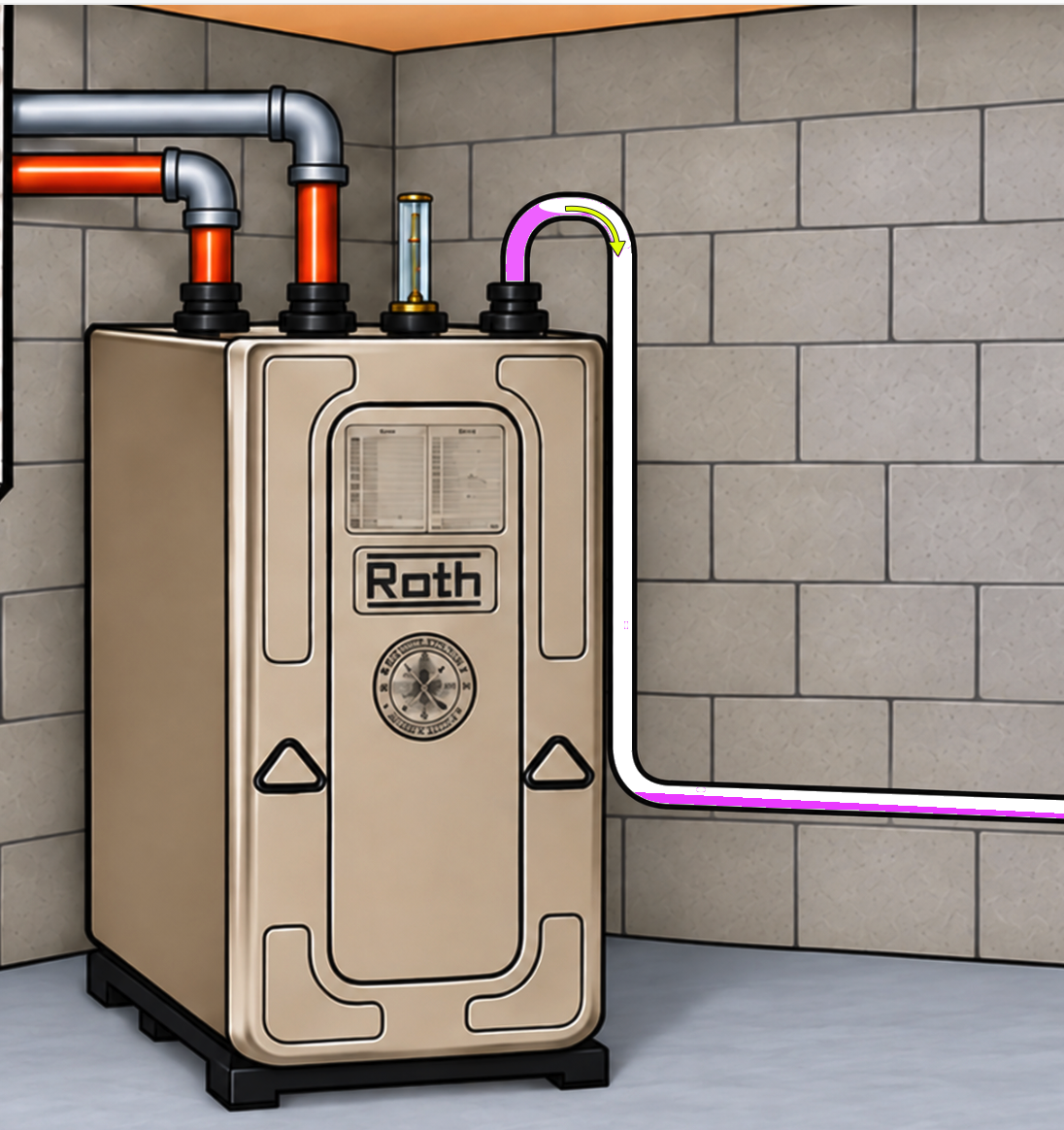
It took 3½ years for your particular problem to develop to the point of causing a shutdown. The next occurrence may take considerably less time. Eventually, the air leak may become significant enough to cause a problem within a month or two.
It's really just a matter of time.
Edward Young Retired
After you make that expensive repair and you still have the same problem, What will you check next?
0 -
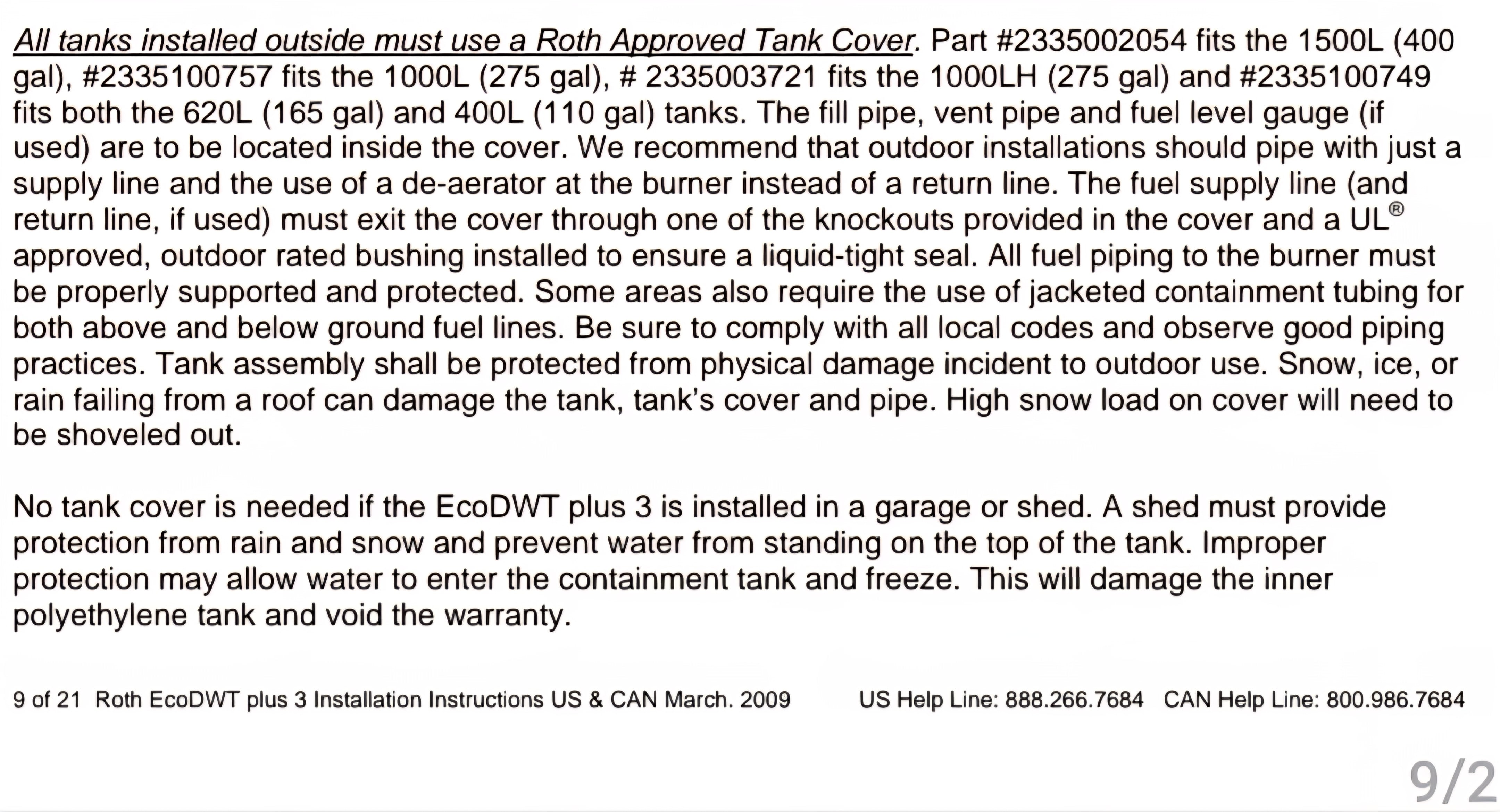
The manual refers to an outside tank, but Roth recommends a de-aerator with single pipe. I've never lost prime on my burner with my Roth tank and single pipe. No vacuum leaks, but I've got a Tiger Loop Ultra.
There's no odor because the oil line will never jam up with an air pocket and suddenly release. It vents miniscule amounts when it needs to. If the lines pass a vacuum test, you'll never notice any odor from it.
 1
-
LOL My absolute favorite subject.
Why fix the cause of the problem when you can just use a band aid?
as @EdTheHeaterManmentioned if the oil line is 100% tight (and that's a big if) you wouldn't have an issue.
If an oil line collects enough air in the line andin the pump usually cannot pump and will be air bound.
Fix the leak would be #1 (except they won't know how to find it). How would I find it if it was persistent? Refrigerant and a electronic leak detector pressure test
or you could put in a TL or
2d best IMHO convert it to a 2 pipe system.
In the old days before Tiger Loops were invented if you had to lift oil higher than the burner oil pump you would use a 2 pipe system and they worked fine. Now people demand using a Tiger Loop which just causes more issues.
0 -
Hi everyone,
Thanks for the great feedback.
To add some context, my system uses a coated saftey sleeve line, so a tiny suction leak at the flare fittings wouldn't leak oil onto the floor. Since I already have my routine annual maintenance scheduled for later this month, I've decided to ask the technician to perform a formal suction line vacuum test during the tune-up.
My plan:
- If it passes: The fittings are tight, the air pocket was a fluke, and I will save my money.
- If it fails: There is an active leak that will inevitably cause another lockout, so I will go ahead with the Tigerloop install or replace the line/reflare the ends.
Does this sound like the right diagnostic step to take before spending the money?
0 -
One major wrong assumption there, @KC1. A "tiny suction leak" at the flare fittings won't spill any oil anywhere. A common enough error — many technicians make the same mistake.
The flare fittings are also a very common place for a vacuum leak to occur. Worse, a vacuum leak may not show up with a pressure test (the reverse is true too — a fitting which leaks under pressure may not leak under a vacuum).
A vacuum leak test may or may not pick up a problem. If it's a big enough leak it will. The only sure test, however, is to have the oil level in the thank higher than the burner and turn the burner off. Let it sit for a few days — the longer the better. If there is ANY air in the line after that, you have a leak.
Br. Jamie, osb
Building superintendent/caretaker, 7200 sq. ft. historic house museum with dependencies in New England 1
-
Thanks for that critical catch, Jamie. I didn't realize a vacuum test could miss a microscopic suction leak like that.
To add one more important piece of context that I realized: I actually missed my annual tune-up last year, meaning the oil filter wasn't changed and the lines weren't purged/bled for roughly two full years leading up to this lockout.
Given that it took about 24 months of continuous operation for this air pocket to finally trip the burner, does it sound reasonable to just have the tech closely inspect/re-flare the fittings and thoroughly purge the line during this month's upcoming tune-up, and see if regular annual maintenance keeps it at bay?
0 -
By missing an annual filter change, that may have allowed enough time for a minor problem to develop into a no-heat situation. You may never have noticed this for many years if the oil filter change had been performed on time.
When opening up the oil filter to replace the refill cartridge, you would expect to encounter air in the fuel line and not even realize that some of that air was coming from a vacuum leak. So I would let it go without the TL for now.
One service call comes to mind from the days before the TL.
I was taught to use a clear 3/8" vinyl tube on the bleed port. Run the pump until there was no foam in the purged oil. Then count to 10 while continuing to purge air-free oil with no bubbles or foam. That way, you could be sure that all the air had been purged from any high spots in the fuel line between the tank and the pump.
After about 8 seconds of purging with no air, a small flurry of micro-bubbles passed through the vinyl tube. I started the count again. At about 8 seconds, another flurry of micro-bubbles passed through the tube. I started the count again.
After filling a 2-liter bottle with fuel, I put the fuel back in the tank and tried again. Same result. Another 2 liters of oil, and I was still getting that flurry of air after 8 seconds.
This drove me nuts, so I pressurized the fuel line by closing the tank valve and using a hand pump to add a little pressure. I found that a small amount of fuel was seeping from a flare fitting. I re-flared the end, and the problem went away.
That was one that would have been a slow vacuum leak and eventually caused a no-heat situation. No one would have ever noticed it if they hadn't followed that 10-second rule I was taught.
Edward Young Retired
After you make that expensive repair and you still have the same problem, What will you check next?
0 -
Thanks everyone. We are actually on vacation through the next couple of days, so the peace of mind you all provided is huge.
Just to make sure I am understanding the physics of my top-draw Roth setup correctly: if there is a microscopic crack or a loose flare fitting on that oil line, it means the system will only ever suck air in (causing a safe shutdown/lockout) rather than leaking oil out onto my basement floor, correct?
When the technician was at the house a few days ago, they didn’t find any active fluid leaks or oil odors. After purging the line, the combustion test came back good (I think based on some google-ing): 85.8% gross efficiency, 33 ppm CO, 9.9% CO2, and 58.8% excess air.I just want to confirm that a suction/vacuum leak on this type of setup doesn't equal an oil leak on the floor.
0 -
Correct. A suction leak will not spill oil. That, in fact, is one of the selling points of overhead line setups!
Br. Jamie, osb
Building superintendent/caretaker, 7200 sq. ft. historic house museum with dependencies in New England0 -
Thanks Jaime.
Last question (I promise :)).
Given the tech that came to the house earlier in the week successfully purged the oil line, ran a combustion test (85.8% gross efficiency, 33 ppm CO, 9.9% CO2, and 58.8% excess air) and monitored the system for 15 to 20 minutes, are the odds of another air pocket large enough to lock the boiler being created over the next week very low?
I think the answer is the likelihood is really low, because the tech would of noticed air bubbles when going through the above diagnostics, but wanted to confirm with the group.
Really appreciate the insight.
0 -
As long as the tech has enough experience to understand the proper way to search for a leak, and the proper way to bleed air from the fuel line, there is a very, very small chance for a fuel leak and for a no heat resulting from air in the fuel line. Cant rule it out completely but I believe you are safe for a 2 week vacation.
Edward Young Retired
After you make that expensive repair and you still have the same problem, What will you check next?
0 -
When Roth first came out I really liked them-as I got more experienced I grew to despise them, not as much as overhead lines but pretty darn close.
0 -
9.9% CO2 seems awfully low to me. I'm usually able to obtain a true zero smoke at around 11-12% CO2. What were the draft measurements over fire and in the stack?
0 -
Hey everyone-
So it's 3 weeks later and the boiler is locked out again likely because of air in the line. This is only the 2nd time in 3 years this has happened and our oil tune up hasn't been completed (is scheduled for Friday).
Given the situation, is the Tiger Loop the right answer? Based on all your feedback and the lock out happening again, it sounds like there is likely an air leak in the line.
The tech is coming today—how should I approach the problem with the tech? Should I bite the bullet and buy the tiger loop?
Thoughts?
Thank you
0 -
Make it two pipe
 0
-
Lets confirm why it locked out a second time.
1 -
Depends where it is. If it's in a part of the oil line that is in gravity, not suction, it could.
0 -
Did anyone check vacuum? High vacuum can also look like air in the line.
Confirm it's not high vacuum. If it's not, find the vacuum leak. If they don't know how, or can't, put on an oil deaerator.
Don't ever make it two pipe.0 -
Tech is here now. Air in the line again. They couldn't find the leak but suspect the oil pump may be the source because of overuse tied to having a roth. Full recommendation is to replace the pump and add a tiger loop.
What would you recommend? I don't have infinite money :).
Should I see if the tune up fixed the issue, if not…go with the tiger loop…and then replace the pumpnif needed?
0 -
You might be experiencing ignition problems due to the burner being adjusted for too much excess air. 9.9% CO2 is too low. Usually a true zero smoke is obtained around 11-12% CO2. But yeah, let's confirm why it locked out. That shouldn't be difficult for a good oil burner tech.
0 -
Don't let them 'suspect'. Make them test. Pumps have standard, industry prescribed test methods. If they change the pump and that doesn't work, what's next?
0 -
Spoke to the tech, the pump was tested and works.
Also chatted with a few other HVAC companies. General consensus was I should of got the tiger loop installed when i got the roth tank put in. Documentation on Roth Americas website would agree with that view.
Cutting the check for the tigerloop…
0 -
You want braided oil lines, and the TL mounted on the same side as the burner door hinges if any. This way the oil lines don't need to be disconnected when opening the door to the chamber. And get the Ultra.
What model boiler and what burner? I think the fuel pump is fine. If that was the cause you'd see oil on the outside or at the seal.
I Just hope the diagnosis was correct, that there was air. One would hope it was tested correctly.
1 -
I hope so too.
It's a Buderus 115 with riello burner.
The tech showed me the air in the line when the system was purged. Tech also said that the oil filter was half full of oil when she pulled it off during the tune up which looks to be normal based on some googling.
Based on the above is it fair to say the TL will solve the issue of lock outs, but maybe not totally fix the driver of the issue (potential air leak somewhere in the system)? Back to the band-aid analogy…
0 -
I'm not a smart man. I've dropped the filter canister on hundreds of jobs with single pipe from a buried tank during a normal maintenance, and the canister is only half full. I don't know why the burner runs fine that way. It just does. Same reason I don't know why a burner can get air locked when there are no leaks. But it can. That's exactly why Roth recommends a TL with single pipe. That's exactly why I put one on my own single pipe with a Roth. I'm not smart, but I can read. You can still develop suction, vacuum, air issues even when there are no leaks. Lift and vacuum can play games. The TL is not a band-aid in your application. It's an enhancement.
0 -
As @EdTheHeaterMan always says what happens if you replace parts and (the TL) in and it doesn't fix it? Foam and air means one of two things. Air leak or extremely high vacuum which I doubt.
0 -
Quick update on where things landed:
We had the Tigerloop Ultra installed 2 weeks ago, and it ran fine for about a week until we came home from Thanksgiving to another lockout—this time with the Tigerloop bowl completely empty of oil while the Roth tank was still nearly half full.
A senior tech came out today on a warranty callback and caught two mistakes from the original install: the internal bypass plug was never installed in the Riello pump (so the oil in the bowl was just sitting still instead of circulating), and they installed a Tigerloop Ultra while leaving the existing spin-on filter at the tank in place.
He installed the bypass plug today—now the oil visibly rotates in the bowl when the burner runs—and they are coming back next week to swap the Ultra for a standard non-filter Tigerloop so we only have the single filter on the line. Thanks again to everyone here for the helpful advice!
0 -
Well, that's progress, but I think most of us would agree there's still an air leak somewhere…………….
0





Categories
- All Categories
- 87.9K THE MAIN WALL
- 3.3K A-C, Heat Pumps & Refrigeration
- 60 Biomass
- 430 Carbon Monoxide Awareness
- 136 Chimneys & Flues
- 2.2K Domestic Hot Water
- 6K Gas Heating
- 124 Geothermal
- 170 Indoor-Air Quality
- 3.9K Oil Heating
- 80 Pipe Deterioration
- 1.1K Plumbing
- 6.7K Radiant Heating
- 397 Solar
- 16.2K Strictly Steam
- 3.5K Thermostats and Controls
- 56 Water Quality
- 52 Industry Classes
- 51 Job Opportunities
- 18 Recall Announcements