Hold-off control for Burnham 206 gas boiler?

Trying to improve cycle efficiency of sister's Burnham 206 gas boiler. The boiler is properly sized for heat loss, but the house is over-zoned, resulting in short-cycling. I've done the following to reduce short-cycling:
- Installed new thermostats with adjustable differential/swing, and set differentials higher.
- Disconnected some thermostats at the zone controller and jumpered the disconnected zone terminals to be controlled by one thermostat centrally located in those zones.
- Turned the aquastat high limit down to 160. We will monitor during the winter and adjust if needed.
I've checked the supply water temp during boiler runs to verify the aquastat make/break temps, and it does break at 160 and make after SWT drops to 125. So the built-in differential is 35.
I would like to improve on that by effectively increasing the differential so that SWT has to drop lower, say to 100, before the boiler can fire again. So on a call for heat, the zone controller would energize the circs, but the boiler would not fire until the SWT has dropped to 100. This reduces average water temperature and increases boiler run time, both of which should improve cycle efficiency.
What controls are available to accomplish this?
Comments
-
@jesmed1 you're looking at either a HydroStat or some sort of outdoor-reset control. What aquastat is on the boiler and where is it mounted? What zone controller does she have?
0 -
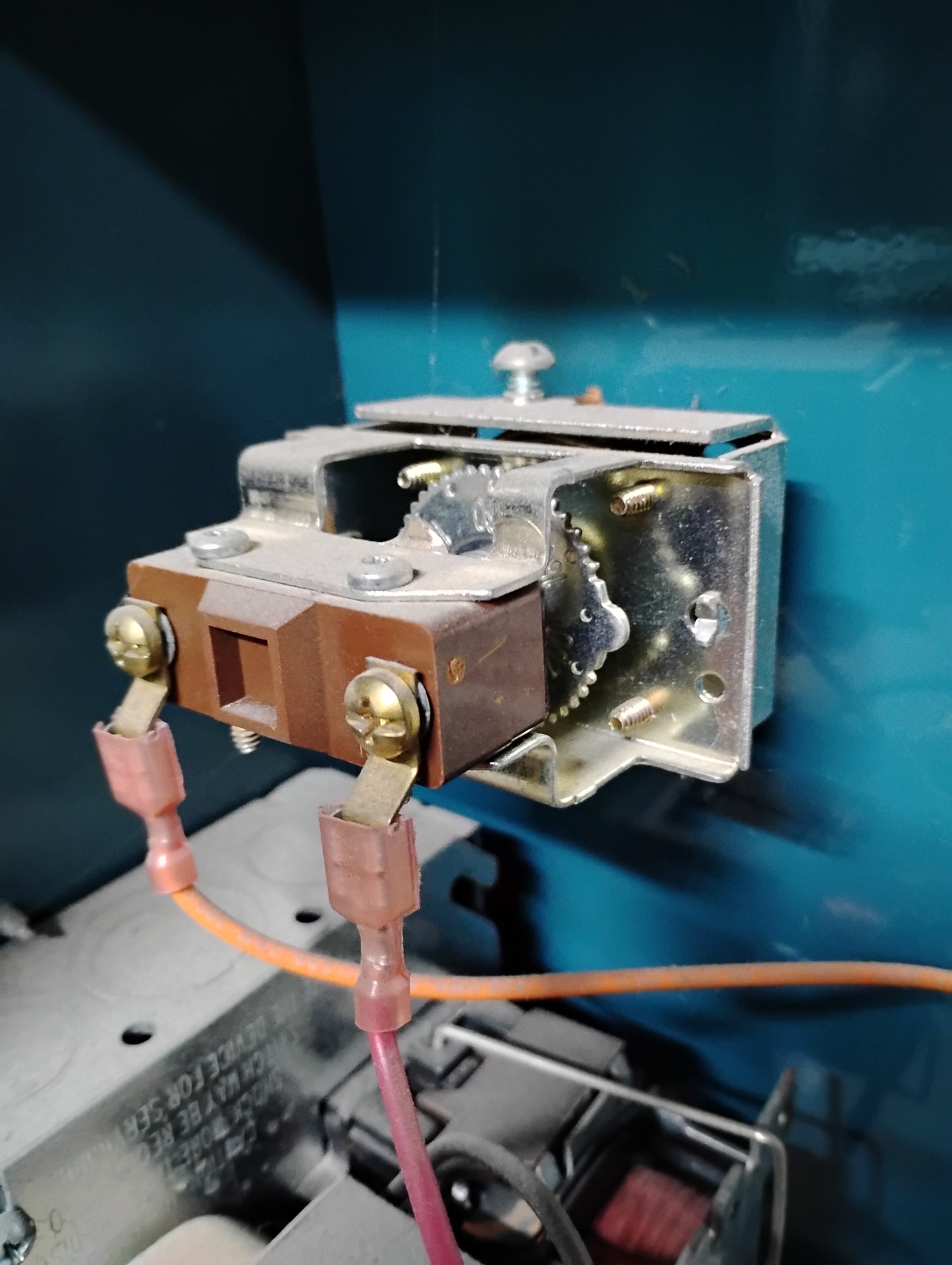
@Steamhead The aquastat has no cover, no label, no markings. I assume it's whatever Burnham puts in their Series 2 boilers at the factory. It's located in the upper left corner on the front of the boiler, behind the cover. Zone controller is a Taco SR506.
 0
-
You don't want the boiler temperature too low it will cause condensation. You may be better off coming up with a control strategy that waits for when more than one zone needs heat before the boiler is activated, although comfort may suffer.
National - U.S. Gas Boiler 45+ Years Old
Steam 300 SQ. FT. - EDR 347
One Pipe System
 3
-
@jesmed1 with that setup I'd use a reset control such as a Tekmar 256. This control adjusts the boiler water temperature according to the outdoor temperature. If the boiler has its own circulator, I'd wire the 256's boiler contacts in series with the boiler's aquastat, so the circulator would continue to run even when the 256 shuts the burner down.
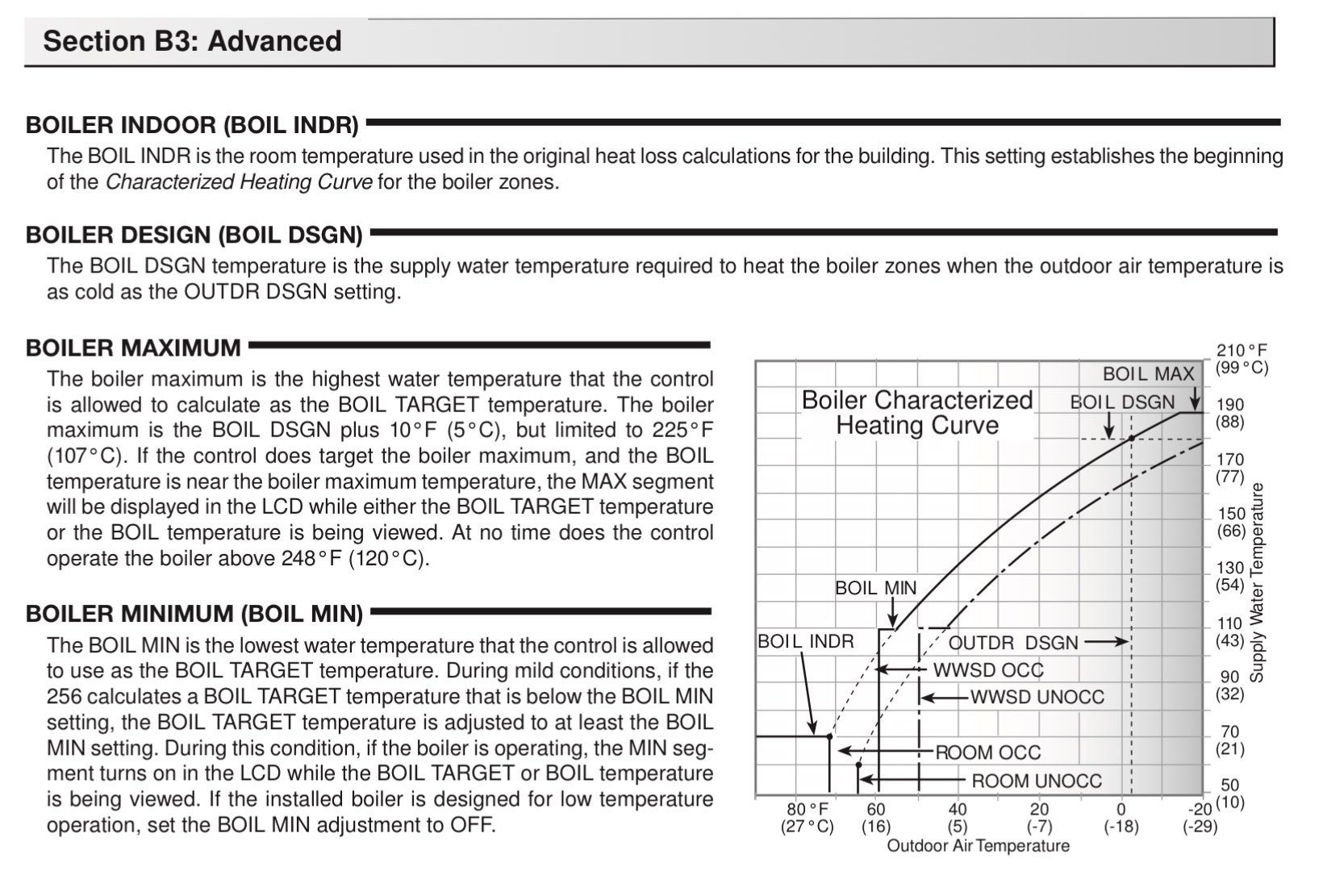
The 256 has a minimum boiler temp setting which can be set so the boiler doesn't cool down enough to cause condensation.
You didn't mention if her 206 has a stack damper. If not, I'd add one, so the boiler would not cool down so much between burner firings.
Here's the manual:
 2
-
@Steamhead Thanks, that sounds good. I've already installed a new vent damper to replace the one that came with the boiler but at some point had been removed.
I understand the condensation concern and will try to mitigate that by programming the reset so the boiler always finishes above condensing temps. Because of low water volume (and mostly baseboard rads), the boiler heats up quickly, so regardless of starting water temp, it will finish at whatever the reset target temp is. So I would program reset target at 140 minimum and 160 maximum. The largest differential I could program into the 256 would be 42 F, so (for example), at the lowest point on the reset curve, the boiler would start at 98 F and finish at 140 F. At the highest point on the reset curve, the boiler would start at 118 F and finish at 160 F.
But if that still isn't adequate protection against condensing, I could use the minimum temp setting as you say and set the minimum to 130.
0 -
Limit the number of micro zones or install a Buffer Tank or both.
1 -
@pecmsg Yes, thanks, I've combined some zones and have also discussed installing a buffer tank. We decided not to go with the buffer tank for now because she will probably replace this boiler in a few years with a mod-con, and if she still needs a buffer tank with the mod-con, it can be a much smaller one.
I picked up the Tekmar 256 this afternoon and will install it tomorrow.
0 -
You should also get some shielded 2-wire cable to run to the outdoor sensor, if you haven't already. This is mentioned in the manual.
 1
-
a buffer tank is relatively cheap.
it can still be used with a Mon con0 -
you are aware mod cons are only highly efficient when supplying below 140° water.
0 -
@Steamhead Ah, thank you. I hadn't seen that yet.
0 -
Yes, thank you. One of the zones is high water volume gravity conversion pipes with cast iron radiators that will provide sufficient heat year-round with sub-140 water (and don't need the buffer). The other zones are baseboards that might need 140+ water in the coldest months (and do need the buffer), but a mod-con condensing for a good portion of the season would still be better than what she has now.
And yes a buffer tank could be installed now and used later with the mod-con, but there are too many other priorities with a major house remodel happening, mini-splits being installed, etc, and a buffer tank was on the bottom of the list. So we decided to make incremental improvements with the system as currently plumbed, installing the vent damper, combining some zones, increasing thermostat differentials, and now installing the Tekmar 256 for ODR. Re-plumbing the system (adding a buffer tank, fixing a lot of piping hackery, and possibly replacing the boiler) will have to wait for another 1-2 years.
Incidentally, the Tekmar 256 will give us a good read on required water temperature in colder weather, as I plan to start with the reset curve set to fairly low temps and only reprogram if/when the system can't keep up in colder weather. Then I can get a better read on how much of the season a mod-con would condense.
0 -
When you do get a mod con, it will have ODR on the control. So you will not need the 265.
Don't spend more on upgrades that what a mod con would cost.
Bob "hot rod" Rohr
trainer for Caleffi NA
Living the hydronic dream1 -
-
@Steamhead I installed the Tekmar 256 today and it's working well. I set it for a min SWT of 140 and max of 160. I left the differential on "auto." Under today's conditions (outdoor temp of 55) it targeted the "min" SWT of 140 with what appeared to be a differential of 20, centered on the 140 target. So the SWT cycled between 150 and 130. Then on a design day when the target is 160, it should cycle between 170 and 150.
Previously almost every boiler firing cycle would end with a SWT of 180 with the aquastat hitting the high limit. So I think this is going to make a significant difference. Thanks for the tip.
0 -
With a 140 boiler min, what was the boiler return?
 Bob "hot rod" Rohr
trainer for Caleffi NA
Living the hydronic dream0 -
@hot_rod From previous data collection runs, return water temps with one zone running are typically around 5 degrees lower than supply temp. This is consistent with most of the zones having only low mass baseboard radiators. The only zone where there will be a significant delta is the one "Frankenzone" with mostly original gravity conversion piping and cast iron rads. That zone typically has return temps about 30 degrees lower than supply.
So yes, that one Frankenzone is often going to make the boiler condense, but that's the way it's been running for 20+ years with no obvious ill effects.
0 -
Viessmann CI boilers came with a simplistic boiler return protection. A second aquastat would stop the circulator when the block dropped to the lowest setting you set, 130 or 140 for example.
So basically bang bang control on the pump instead of the boiler.
Have you examined the upper reaches of the flue piping. Condensation could be taking a toll there even if nothing is suspicious at the boiler.
I think there is another thread going on that shows the acceptable flue gas temperature.
Bob "hot rod" Rohr
trainer for Caleffi NA
Living the hydronic dream0 -
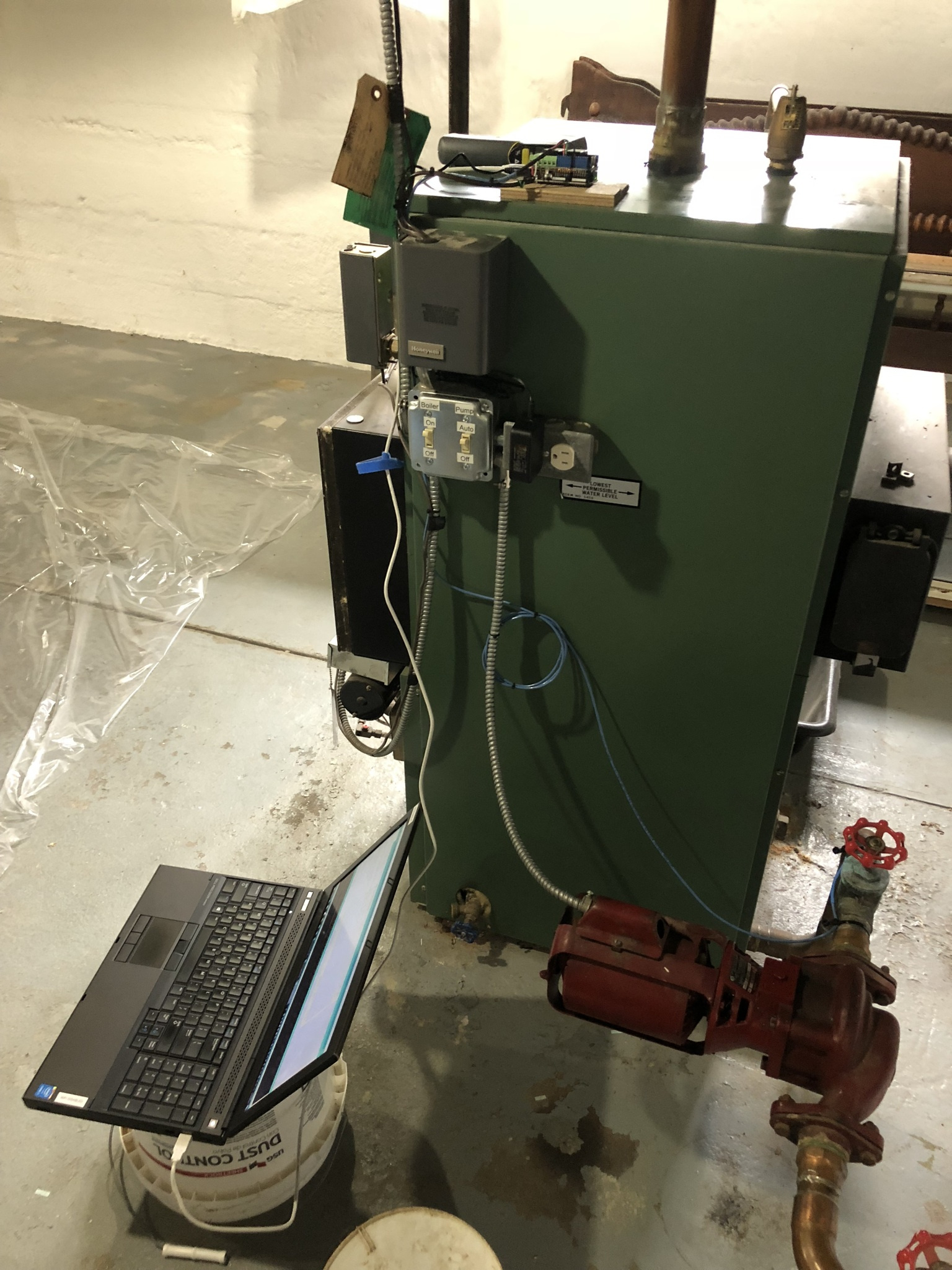
Before I replace the New Yorker with a modcon, I controlled the old boiler circulator based on return and stack temperature using a Arduino based relay circuit.
Stack temperature was used to determine if boiler was firing, return water temperature was used to control the big red BG circulator cycle times to slowly bring up temperature of SWT when Tstat called for heat.
Previously the large circulator on 2” line would cause pipes to clang like a cowbell chorus as the Aquastat controlled 180f boiler water rapidly heated the mains and supply lines.
Mrs. PC especially did not appreciate the noise at 3am. It was a fun project.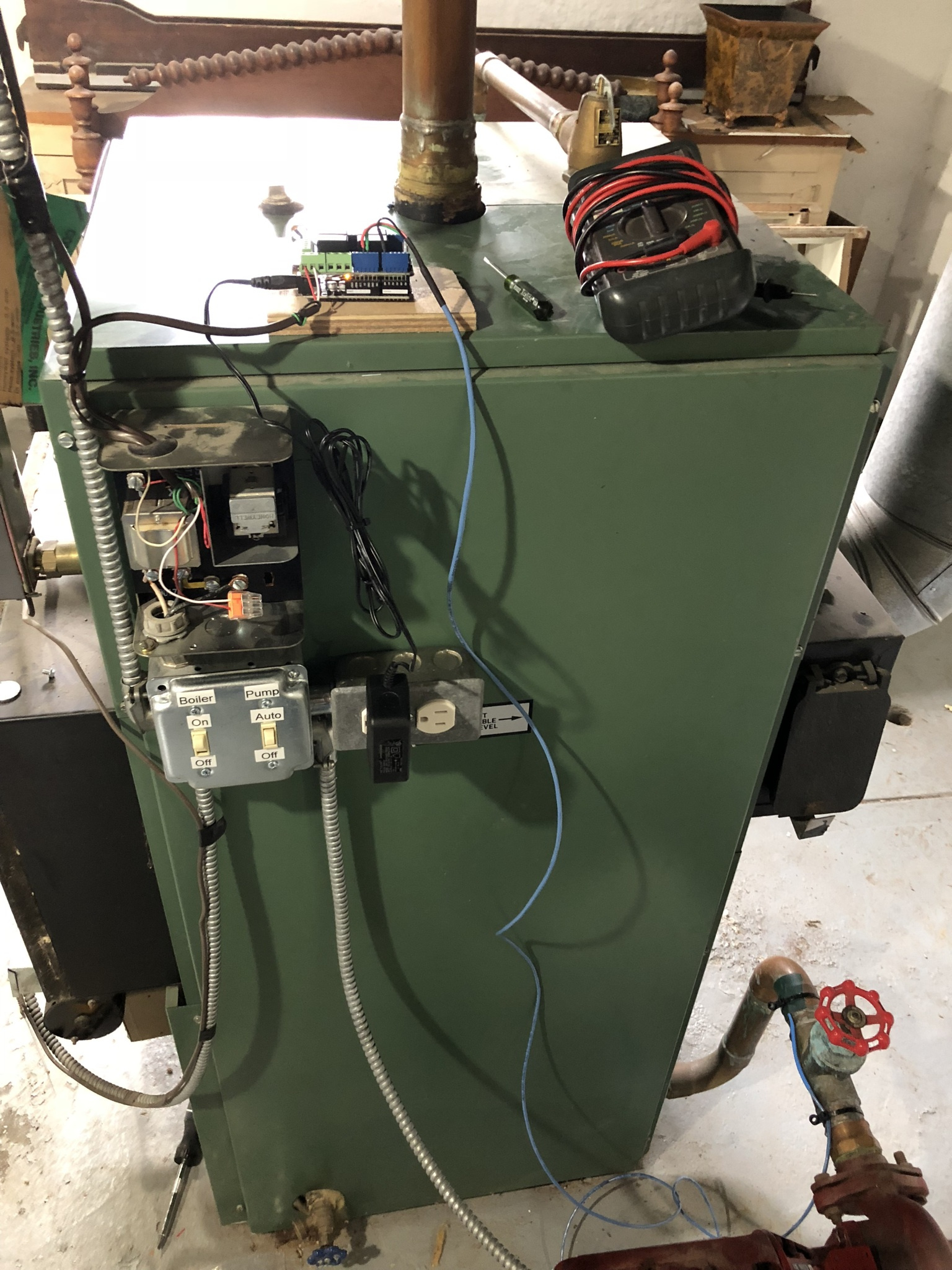
 1
-
@hot_rod The flue pipe comes up out of the boiler, goes up into the vent damper and draft hood, then turns sideways for about 8 feet to reach the brick chimney. I haven't taken the flue pipe sections apart, but there are no drip marks or rust spots that would indicate condensation, and no drips on the brick where the pipe enters the chimney. I could take it apart and look in the chimney, but on the surface there's no indication of problems.
Also, now that I have the Testo I can check flue gas temps. I did run a combustion analysis the other day, and from cold start, stack temp was 400+ in less than 10 minutes. Now with the Tekmar 256, the minimum SWT on a restart is going to be 130 (vs a cold start from 70), so I expect stack temp to be 400+ within just a few minutes of restart, but I can verify that.
0 -
@PC7060 That is awesome. Now I have to learn Arduino…
0 -
Lots of examples on the web.
0 -
https://a.co/d/024tA7zA
TMP36 / TO-92, from Amazon (of course)
The sensors worked well.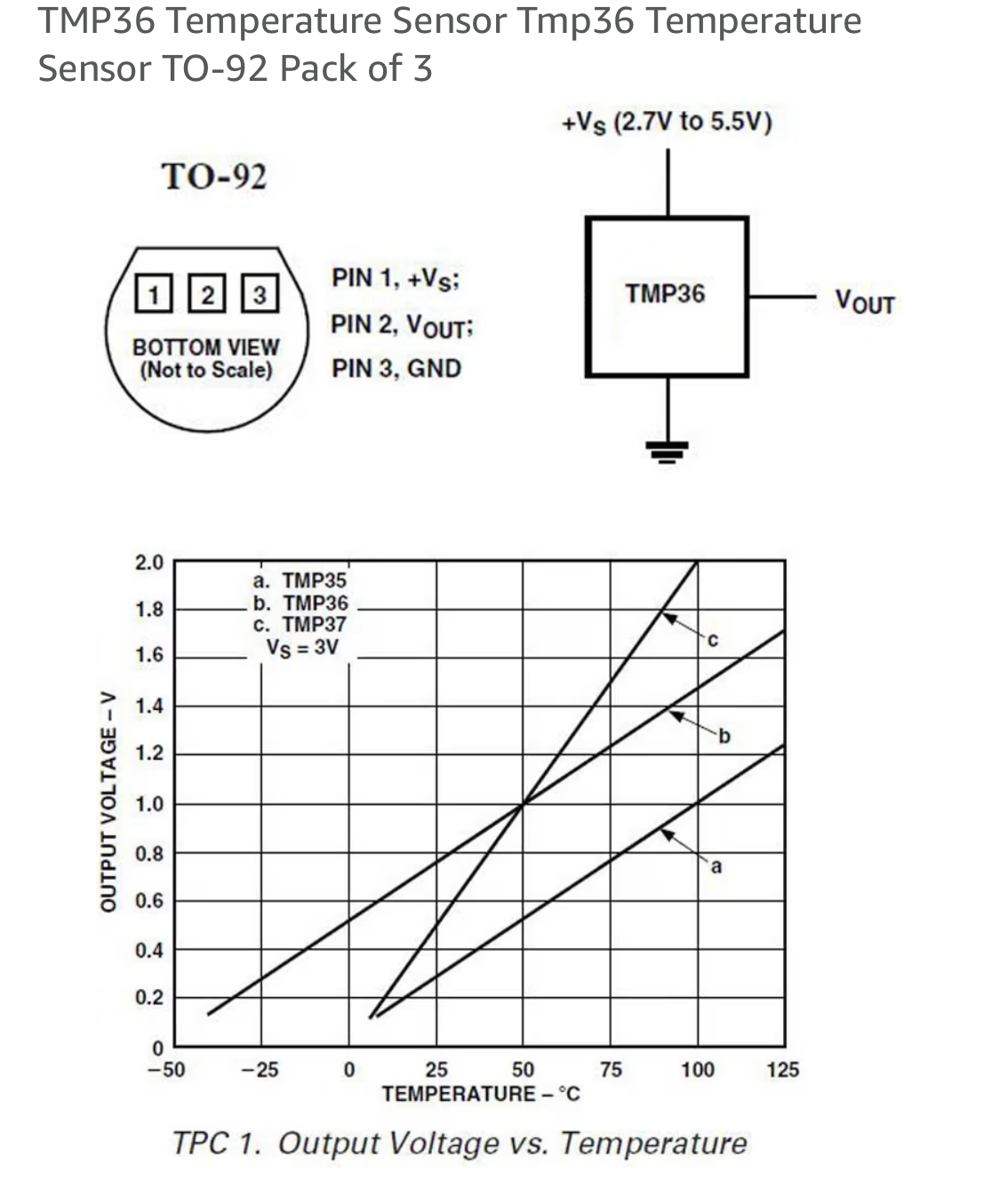
Did have problems initially with processor resets caused by poor design of the COTS relay shield backfeeding noise from power relay controling the B&G circ.
Ended up making a custom relay board with better isolation. Board was designed and CNC from 2 layer blank by good friend Wayne, a circuit card designer wizard.0 -
OK, never had the processor reset issue, I did not use relays with coils. I buffed all the Arduino outputs used with a FETs that worked with the logic levels and used Solid State Relays (SSR) that I had for the large AC loads. There was AC and DC loads with that project.
Yeah those sensors seem similar to the LM34 or LM35 series.
National - U.S. Gas Boiler 45+ Years Old
Steam 300 SQ. FT. - EDR 347
One Pipe System1 -
good approach, thanks for feedback.
0


Categories
- All Categories
- 87.9K THE MAIN WALL
- 3.3K A-C, Heat Pumps & Refrigeration
- 60 Biomass
- 430 Carbon Monoxide Awareness
- 135 Chimneys & Flues
- 2.2K Domestic Hot Water
- 6K Gas Heating
- 124 Geothermal
- 170 Indoor-Air Quality
- 3.9K Oil Heating
- 80 Pipe Deterioration
- 1.1K Plumbing
- 6.7K Radiant Heating
- 397 Solar
- 16.2K Strictly Steam
- 3.5K Thermostats and Controls
- 56 Water Quality
- 52 Industry Classes
- 51 Job Opportunities
- 18 Recall Announcements