Two Pipe System Clarification

Two pipe steam/vapor system.
I need a refresher.
All things being dandy, boiler makes steam, steam fills the piping system (hopefully without too much loss due to cold pipes). As the steam reaches each radiator through the top valve at one end and fills the radiator, the air escapes through the bottom valve and heads down the dry returns back to the boiler and continues its escape through the large return vents back at the boiler.
There is no visible devise at any radiator to prevent the steam from following the air through all the dry return pipes and out the return main vents back down to the boiler.
This is a 1920's system with virtually no changes other than the boiler and the deletion of radiators. One that was on the ceiling in one of the rooms in the basement and one on the second floor landing.
My question is how did the steam stay in the radiators back when in 1925?
Comments
-
There are probably orificing devices in the radiator shutoff valves that keep the steam from reaching the rad return connections, as long as the boiler pressure does not exceed 4-8 ounces or so depending on who designed the system.
Or, there might be devices inside the radiator return elbows that you can't see without disconnecting the radiators. These kept the steam from reaching the dry returns.
0 -
and just to add to @Steamhead 's remark — provided that the orifice or regulating valve is correct, and the steam pressure is kept down where it belongs, all the steam which can get into the radiator is condensed by the radiator before it has a chance to escape. Simple and elegant.
Br. Jamie, osb
Building superintendent/caretaker, 7200 sq. ft. historic house museum with dependencies in New England0 -
The thing that may be missing is a means to purge the air in the steam main efficiently, I see a water seal which will return any condensate in the main to the dry return but no path for the air. To me burning fuel to push air out of the main through the radiators is not helping with efficiency.
Purging the air in the main through the radiators may be a comparably slow method. As @Steamhead mentioned the radiator valve and any orifice on the return side of the radiator is used to slow down the flow rate.
 National - U.S. Gas Boiler 45+ Years Old
Steam 300 SQ. FT. - EDR 347
One Pipe System0 -
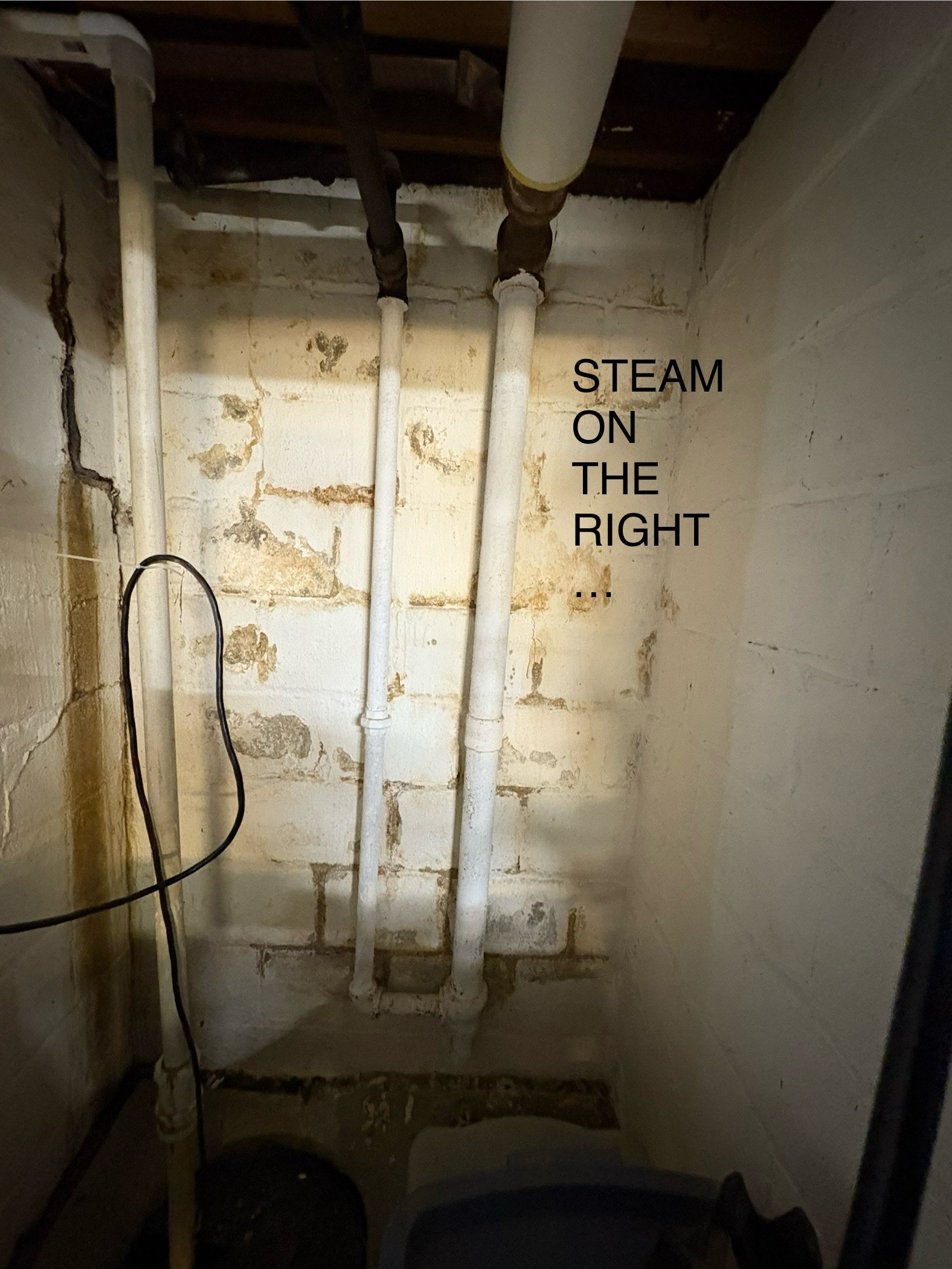
Steamhead - showed you the pictrue above over 10 years ago. Based on the information I provided you determined this was a Tudor System.
0 -
Your memory is better than mine….. Tudor it is.
0 -
So the Tudor System works based on not creating too much steam and it will condensate within the radiator?
0 -
It appears with the Tudor system there is no dedicated means to purge the air from the main except through the radiators.
National - U.S. Gas Boiler 45+ Years Old
Steam 300 SQ. FT. - EDR 347
One Pipe System0 -
That was not uncommon in the coal-fired days. Now we add main vents.
0 -
Yes, looking at the patent dates that would make sense.
National - U.S. Gas Boiler 45+ Years Old
Steam 300 SQ. FT. - EDR 347
One Pipe System0 -
The main vents you mentioned Steamhead are located where?
0 -
they probably need to be added because someone converted the boiler to oil or gas then replaced the boiler but never added the vents.
with the coal boiler there was probably a device to equalize the pressure between the mains and returns and that won't work with the mains vented, that type of system needs a single vent on the return. the output of the coal boiler would vary depending on if it had just been stoked or if it had been burning for a while so there needed to be a way to automatically control the pressure across the radiator so the orifice could allow a known amount of steam in to the radiator
the amount of something that passes through an orifice is a function of the orifice size and the pressure.
since you are controlling the burner with a vaporstat, you can keep the pressure under control that way and you can have main vents.
0 -
I do have two locatioins at the ends of the dry return from "opposite" directions on the system. One side has a Gorton #2 - 1/2" and the other side has two of the biggest size vents made by the "other mfg"
0 -
Exactly. But this is true not only of the Tudor system but is the true distinguishing characteristic of a vapour steam system as opposed to the general class of two pipe steam systems.
Br. Jamie, osb
Building superintendent/caretaker, 7200 sq. ft. historic house museum with dependencies in New England0 -
@simon_skove you need to keep the pressure low. Start the boiler from cold and when the supply pipe gets steam hot see how long it takes for rads to heat. If it take a long time you may need more venting. The vents on the mains should be on the steam line at the end of the mains before it drops to the loop seal
0 -
The alternative to steam line main vents is crossover traps to the returns. They both work.
Br. Jamie, osb
Building superintendent/caretaker, 7200 sq. ft. historic house museum with dependencies in New England1 -
Near the ends of the steam mains, after the connections to the last radiators.
0 -
So far I don't see either in that system.
National - U.S. Gas Boiler 45+ Years Old
Steam 300 SQ. FT. - EDR 347
One Pipe System0 -
How hard is it to tap that 90 at the end of the steam main in that pic with a vent…what size vent?
0 -
@simon_skove length and diameter of the main decides the size of the vent. look around for a tapping first. You can tap the elbow 1/4" I wouldn't go larger than that to drill and tap.
Other options are:
1. to take the elbow off and put a tee in its place. There is a union in the drop pipe to help with this.
2. Or tap the tee that feeds the last radiator on the main
3. Take the radiator valve off the last rad fed from the main and put a tee where the valve is with a vent on it
Drilling and tapping the tee that feeds the last rad is probably the easiest if you can get a large enough vent on it.
0 -
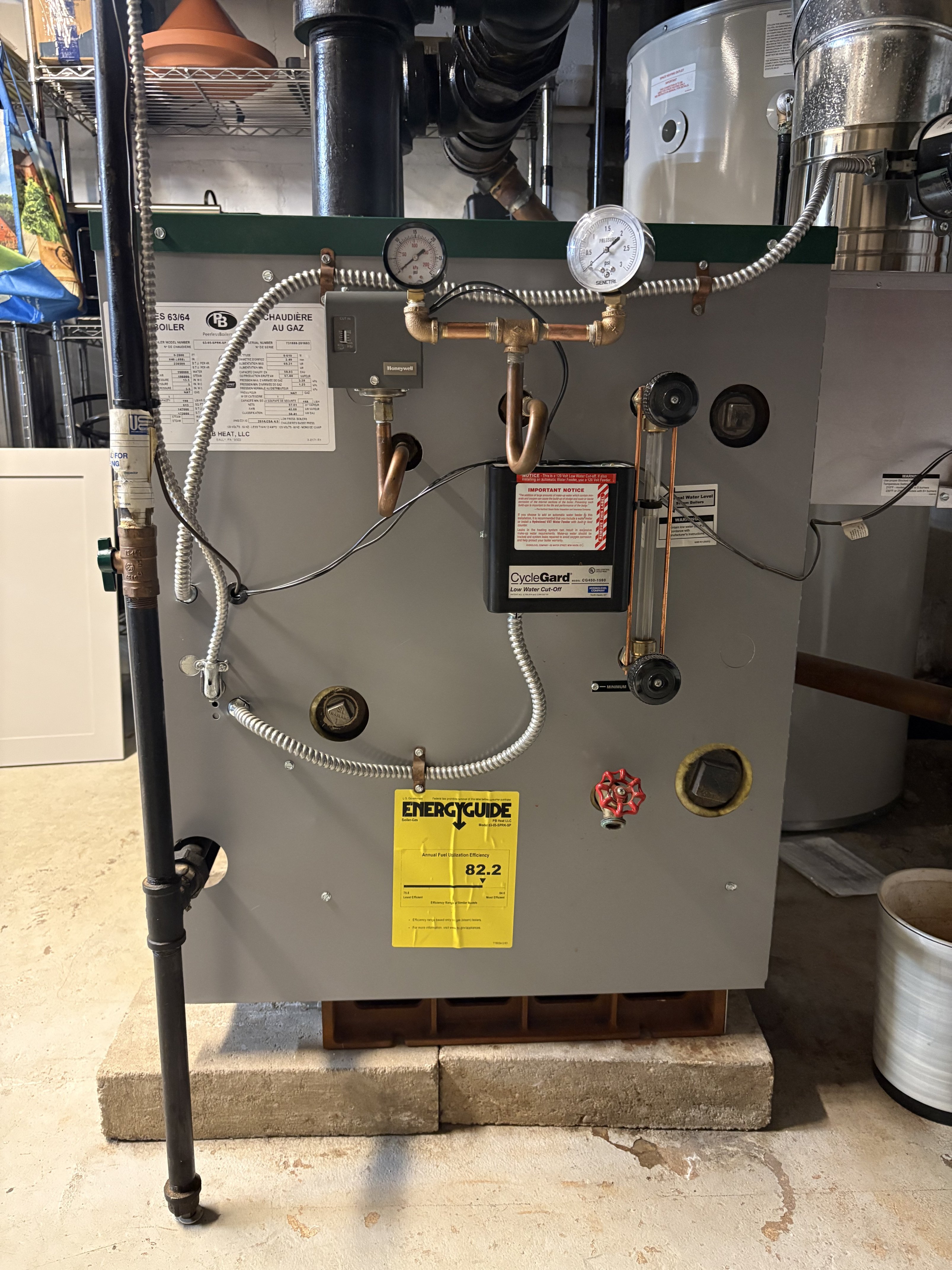
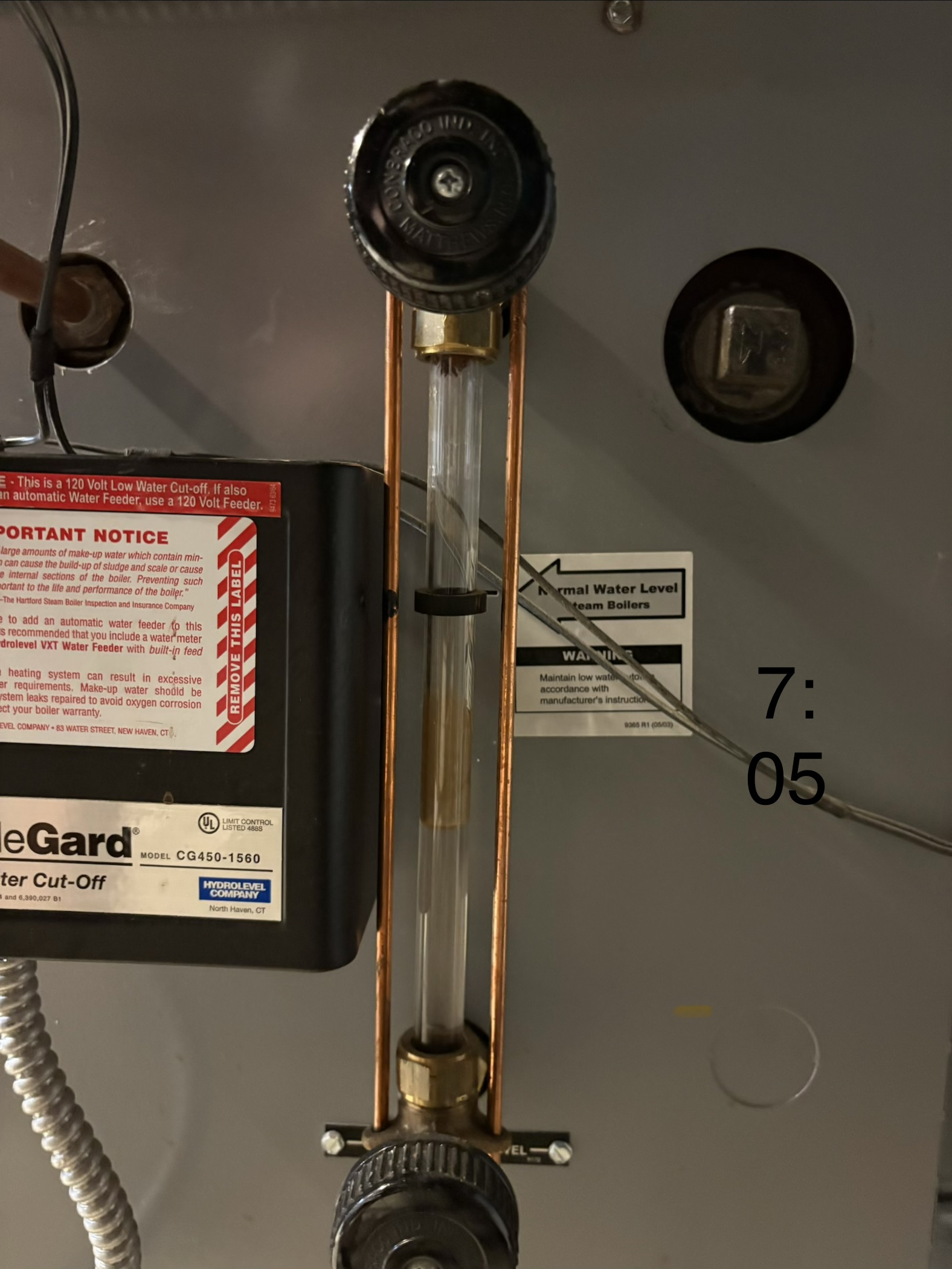
ok….no new vents on the steam mains yet….life got in the way. However, freshly skimmed and new pig tail protected gauges (0-3 and 0-30) put the t-stat up 5 degrees so as to not have it satisfied too quickly. After making steam for 25 minutes, did a walk around and had good heat all the way across all but one radiator on the second floor (pretty sure I have a valve issue here) including great results all the way on the third floor for the how three. My question is, the 0-3 gauge never moved. Not at all. In theory should the two huge vents back at the boiler on dry returns eventually close to create some pressure and have the pressuretrol cut off the boiler due to pressure even though the t-stat is not yet satisfied? Water in site glass went down. See photo, it started the cycle at the black band.
0 -
third floor has three radiators
0 -
-
That the gauge never moved isn't necessarily a problem. Might check and make sure the pigtail is clear, but if the boiler is well matched to the radiation you will have to wait until all the radiators which can heat at all are hot all the way across. Then the gauge may start to rise. Patience…
If all your traps are working properly those vents on the returns will never ever close. You have to have them in case of a bad trap or something, but otherwise… they will just sit there looking decorative.
Br. Jamie, osb
Building superintendent/caretaker, 7200 sq. ft. historic house museum with dependencies in New England0 -
the pressure rising means the boiler is making more steam than the system can consume. ideally that won't happen.
0 -
vapor system gents with those long deep pipes connecting the steam main to the dry condensate. No traps on the individual radiators.
0 -
Still if there are orifices in the radiator returns the steam may never get to the vents in normal circumstances. If your house heats just fine with only a pressure of only a few inches of water column, all the better, don't wish for excessive pressure.
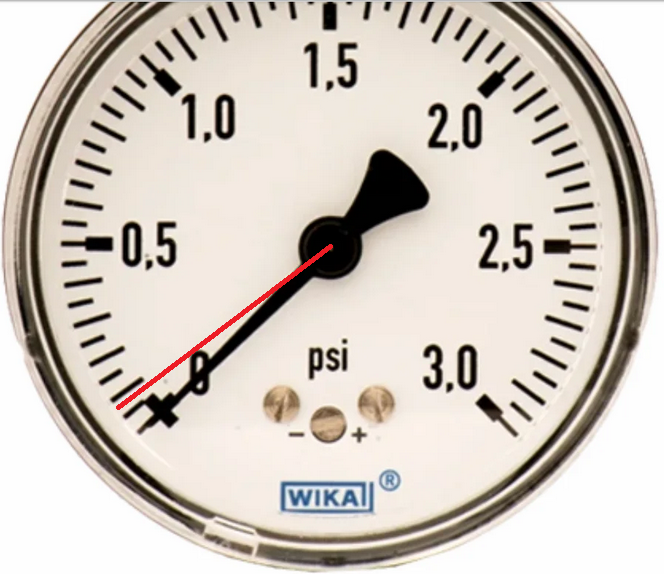
You have to discover what is normal for your system. My system never goes over 2 Inches of water column so with a 0-3 PSI gauge it would never go past the red line I added to the gauge image.
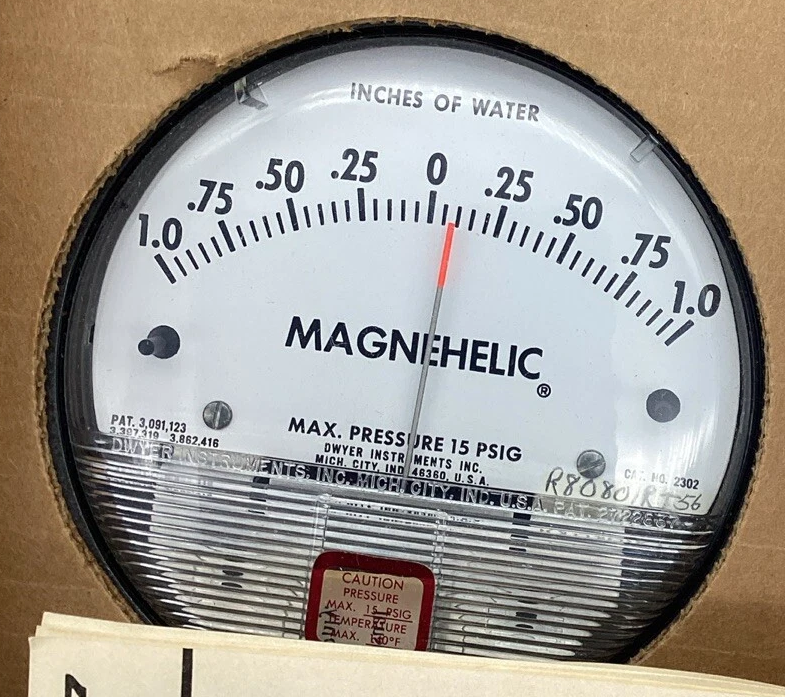
I use a gauge similar to this below to see anything meaningful on my boiler, I have multiple gauges with different scales. Note the scale is in 'Inches of Water' not PSI.
So 1 PSIG = 27.68 inches of water column or 1 inch of water column = 0.036 PSIG.
 National - U.S. Gas Boiler 45+ Years Old
Steam 300 SQ. FT. - EDR 347
One Pipe System0 -
Not a good generality. Some systems don't have them. Some do.
Br. Jamie, osb
Building superintendent/caretaker, 7200 sq. ft. historic house museum with dependencies in New England0


Categories
- All Categories
- 87.9K THE MAIN WALL
- 3.3K A-C, Heat Pumps & Refrigeration
- 60 Biomass
- 430 Carbon Monoxide Awareness
- 133 Chimneys & Flues
- 2.2K Domestic Hot Water
- 6K Gas Heating
- 124 Geothermal
- 170 Indoor-Air Quality
- 3.9K Oil Heating
- 80 Pipe Deterioration
- 1.1K Plumbing
- 6.7K Radiant Heating
- 397 Solar
- 16.1K Strictly Steam
- 3.5K Thermostats and Controls
- 56 Water Quality
- 51 Industry Classes
- 51 Job Opportunities
- 18 Recall Announcements