Converting Old Finned Baseboard to Panel Radiators on a One Pipe System?! Please help....

Last fall I converted 3 old metal finned baseboard heaters in my basement to the (pex universe.com) beacon-morris type panel radiators that have a the two 3/4" inlet and outlet on the bottom. (spaced 2" apart)
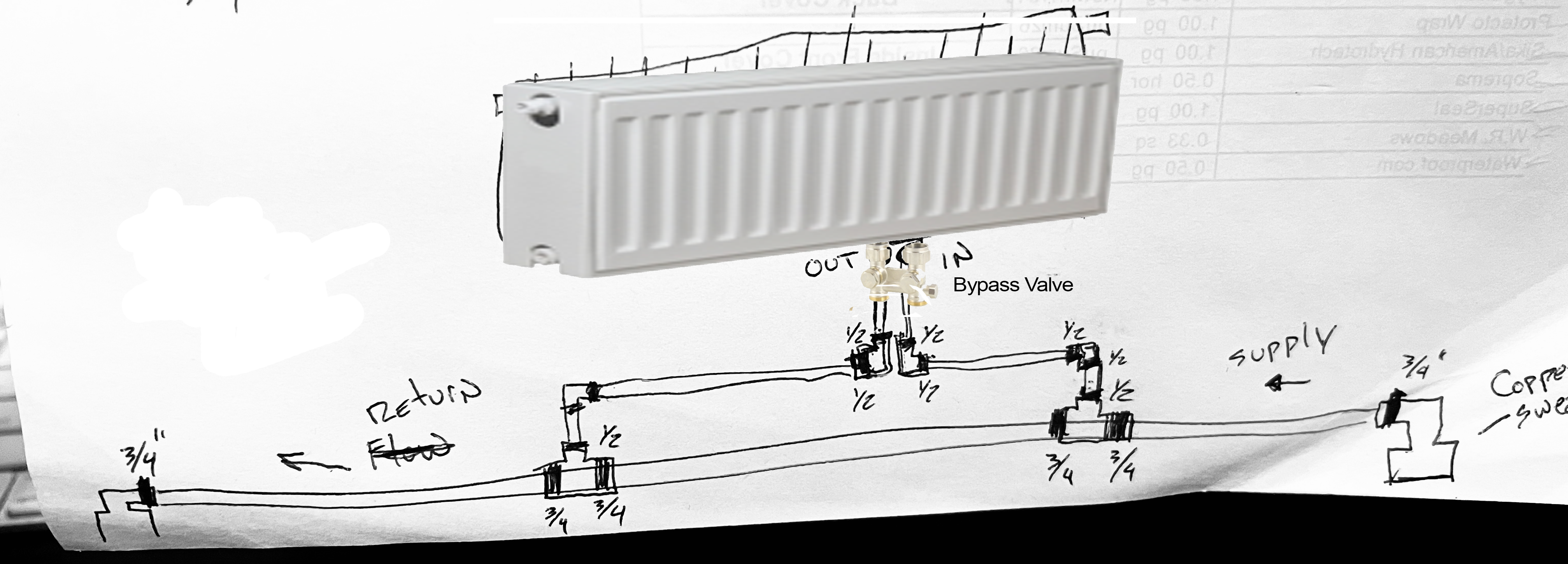
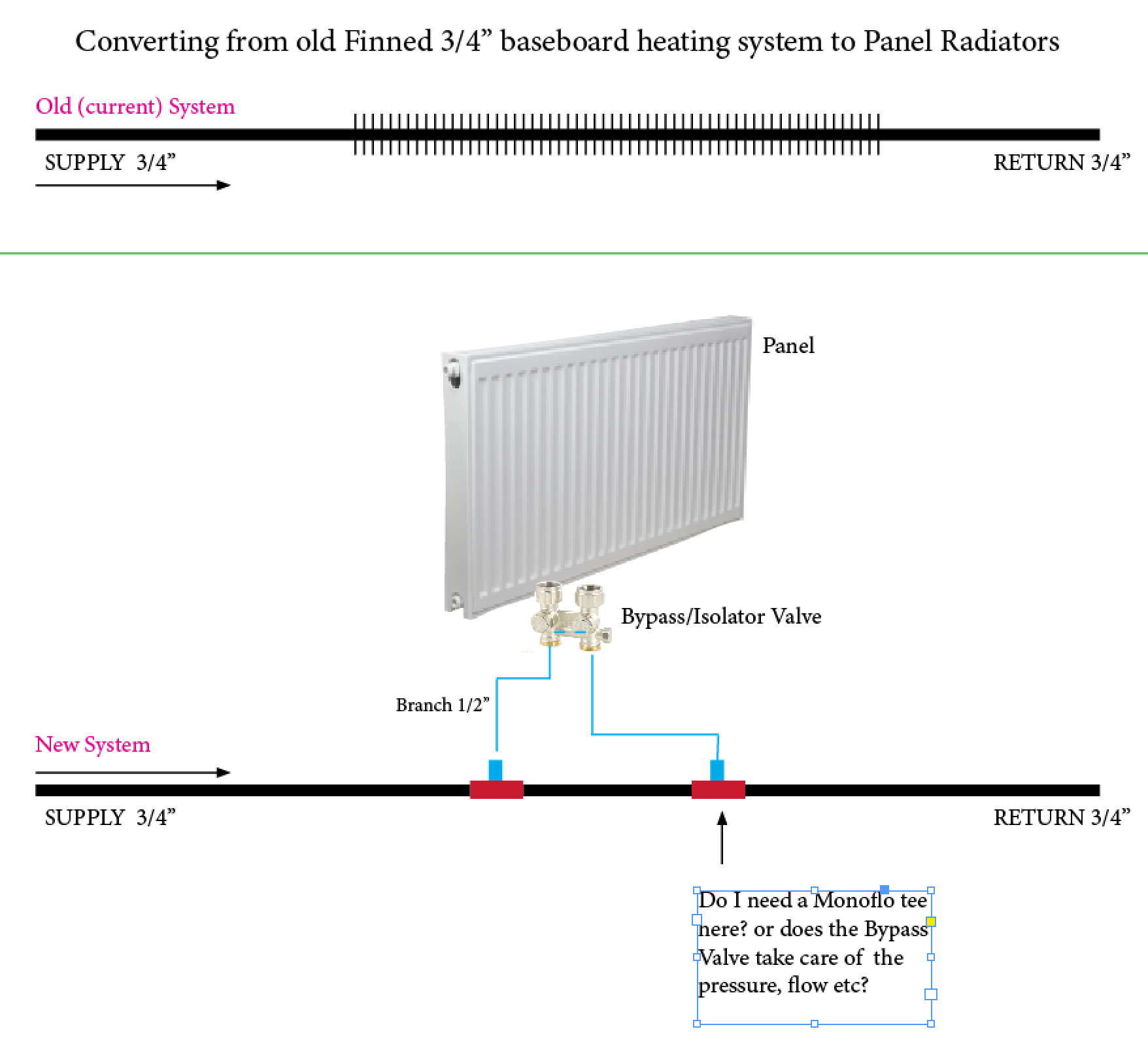
My main circulating line is 3/4" copper, so I just branched off of it using 2 standard 3/4 x 3/4 x 1/2" tees (not monoflow) spacing them roughly the same width of the radiators and then sending the 1/2" lines out of the wall 2" apart to go into the Isolator/By-pass H-valve on the bottom of the rad.
They seemed to work fine and heat up nicely after I fiddled with the flow screw in the bypass valve (If I remember right I think i may have nearly had to shut it off completely, like barely a 1/2 turn open) …
So did I just get lucky and created enough pressure drop by spacing the standard tees or do I still need to use monoflows on the tee returning back into the main 3/4" line? (I thought the bypass took the place of the monoflow??!!) I see the diagrams for a standard single run line system but I'd like to replace several of the finned baseboards. and it seems to make perfect sense to branch off of the main 3/4" to run through each rad and let the bulk of the hot water keep flowing on the the other rads down the line…
The 3 I installed work soooooo much better than the old finned baseboard that I want to replace all of them (well some of them and I'm going to delete others.) About 14 total radiators on 2 floors in 3 different zones. Anyone that can help me I'd greatly appreciate it. I've been scouring the internet for more info on my particular system with no luck. I can provide any and all information you may need to help me! - thanks, brad
Other misc info: Boiler is in the basement and has 3 circulation pumps pulling the 3 zones into the boiler (cold side) It runs at 15 psi max and about 160ºF.
Pex Universe Radaitor:
Isolator/Diverter H-Valve:
Comments
-
the monoflo tees divide the flow between the main and the emitter. 2 plain tees with a valve to throttle the flow in the main will do the same thing.
a boiler replacement may have changed the circulator or zone valves or other things so that the monoflo loop no longer has enough flow. if there is not enough flow in a monoflo loop the water will mostly only follow the main and won't divide to the branches to the emitters.
typically it takes more flow to make the monoflo work properly than it takes just to move the heat load of the zone so people not familiar with monoflo usually don't give it enough flow
0 -
so do you have a monoflo system or just a series loop of fin tube baseboard?
0 -
I am trying to understand some things you are saying: "Last fall I converted 3 old metal finned baseboard heaters in my basement to the (pex universe.com) beacon-morris type panel radiators that have a 2" inlet and outlet on the bottom."
Do the radiators have a 2" opening? The specifications for that radiator do not support this statement. It appears that the bottom openings are on the side of the panel radiators and they look like 3/4".
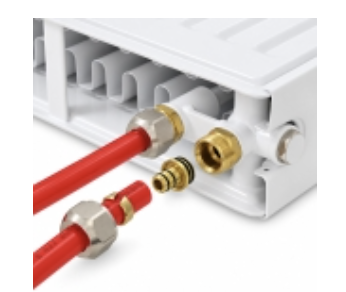
There is also a bottom connection that is designed for that bypass valve arrangement you indicated. Those openings are not even close to 2".
Can you betteer explain what exactly is 2" in your system or radiator
Next, you explain that you have a one-pipe system. That usually indicates that there is one main pipe for the system, or for each zone, that starts at the boiler supply and ends at the boiler return. Each radiator, baseboard, convector, or other heat emitter has a standard tee from the main pipe to the supply side of the heat emitter, and the return side of the emitter is connected back to that same pipe using a MonoFlo® tee or another brand of diverter tee.
Then you describe that you are connecting your new panel radiators without a diverter tee and show a drawing of a piping design that is limited in scope. It shows only the PEX connections to something that looks like a supply and return, which could be a larger-diameter pipe, but it does not show how that piping is connected to the boiler. That makes it a little difficult to understand the complete system.
A picture taken from farther back would be helpful. It is a little like a DIY auto-repair post that shows only a close-up of one part and does not show enough of the surrounding system to tell the whole story.
This reminds me of the post about the DIY auto repair where the person wanted to know why his tire was not getting full of air. "I have been putting air in this valve for over 30 minutes and my tire just won't fill up with air. can someone tell me what I'm doing wrong? "
Several different posts about what the pressure is the compressor set? Are you using a Bicycle hand pump? Is the compressor plugged in? and a lot of other helpful comments.

Then someone asked the DIY to take the picture of the car from farther back.
This tells a different story.
Edward Young Retired
After you make that expensive repair and you still have the same problem, What will you check next?
0 -
it is about the resistance to flow that controls where the water goes
Keep in mind also that multiple radiators piped like that are in series, so each radiator will see a lower temperature/ lower output
Bob "hot rod" Rohr
trainer for Caleffi NA
Living the hydronic dream0 -
@bradmoulton, welcome to Heating Help! I've combined your discussion on that older thread with this one here to prevent confusion.
Forum Moderator
0 -
Haha… I like the tire comment! Yea I'm not a HVAC guy by any means so I need to do better on my terminology. I'll try to answer your questions the best I can. By 2" What I meant is the the connection point on the radiator is the two 3/4" inlet/outlets on the bottom like your picture that are 2" apart. What I was trying to point out is that most radiator installs I see (albeit older ones) seem to typically have the inlet on one side of the rad and out on the other. (not using the bypass valve)
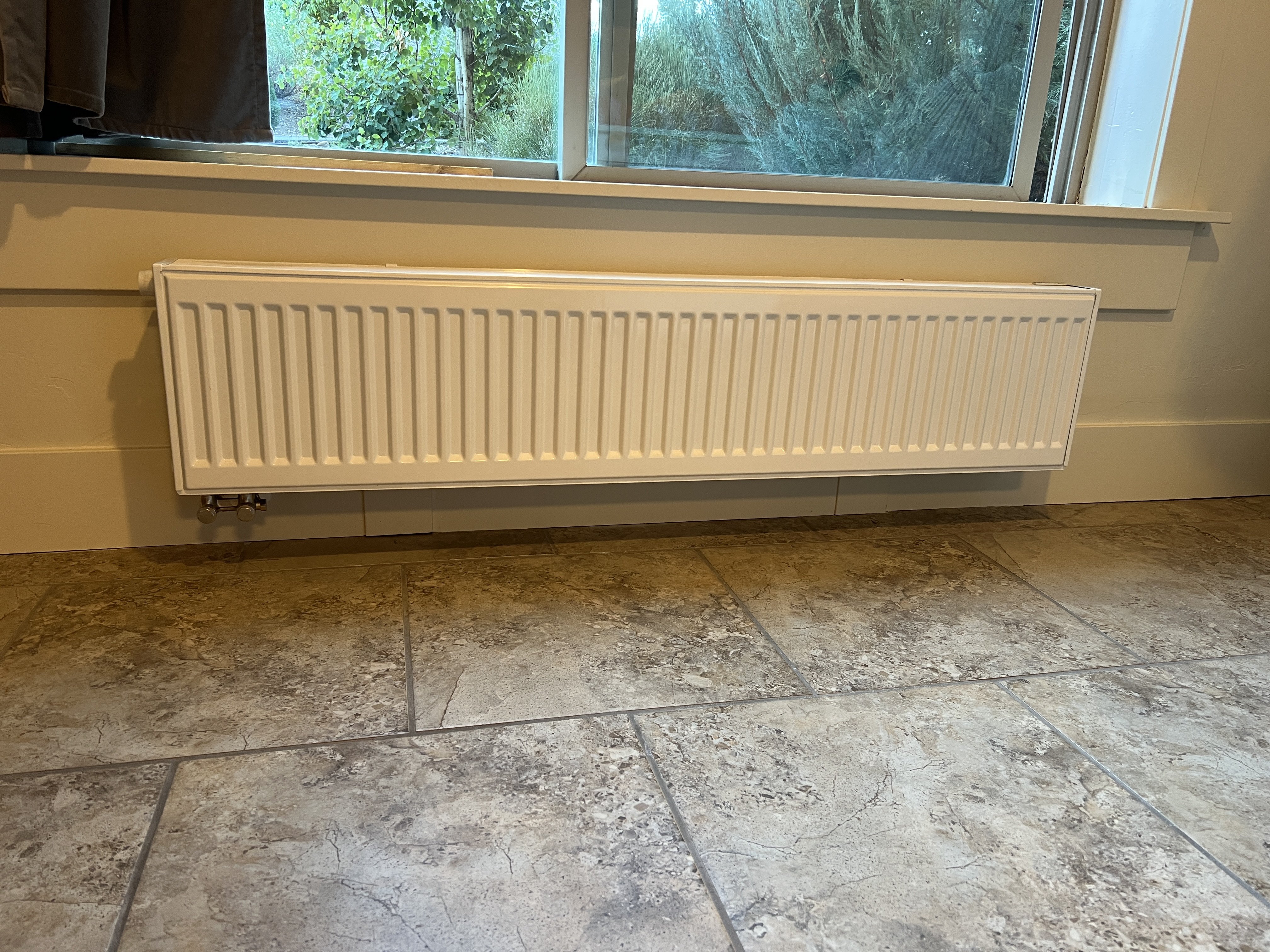
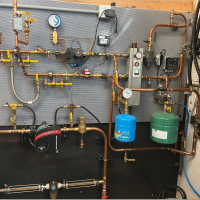
What i'm trying to accomplish: My entire home is heated with a boiler that circulates through all the old finned 3/4" copper baseboard heaters. I'm pretty sure none of them branch and it's all just a straight loop back to the boiler. So what I'm trying to do is replace some of the old baseboard heaters with the modern panel style radiators but cant seem to figure out the best way to ensure that each rad gets enough flow and heat. So far the only two options I can come up with are 1. The way I just did 3 of them by simply using regular tees and spaced about the width of the rads and into the bypass valve attached to the heater…(seemed to work) OR should I be doing it the same way (teeing off the 3/4' line to 1/2" and straight into the bottom of the rad (NO BYPASS VALVE) and use one monoflow on the return line? Now keep in mind that i'm not needing to do BTU calculations and size everything properly. Just trying to get a little more heat outta the system and get rid of the lousy metal baseboard heaters. Hope that helps? I'll include a couple of photos of one I already installed and my boiler set up.
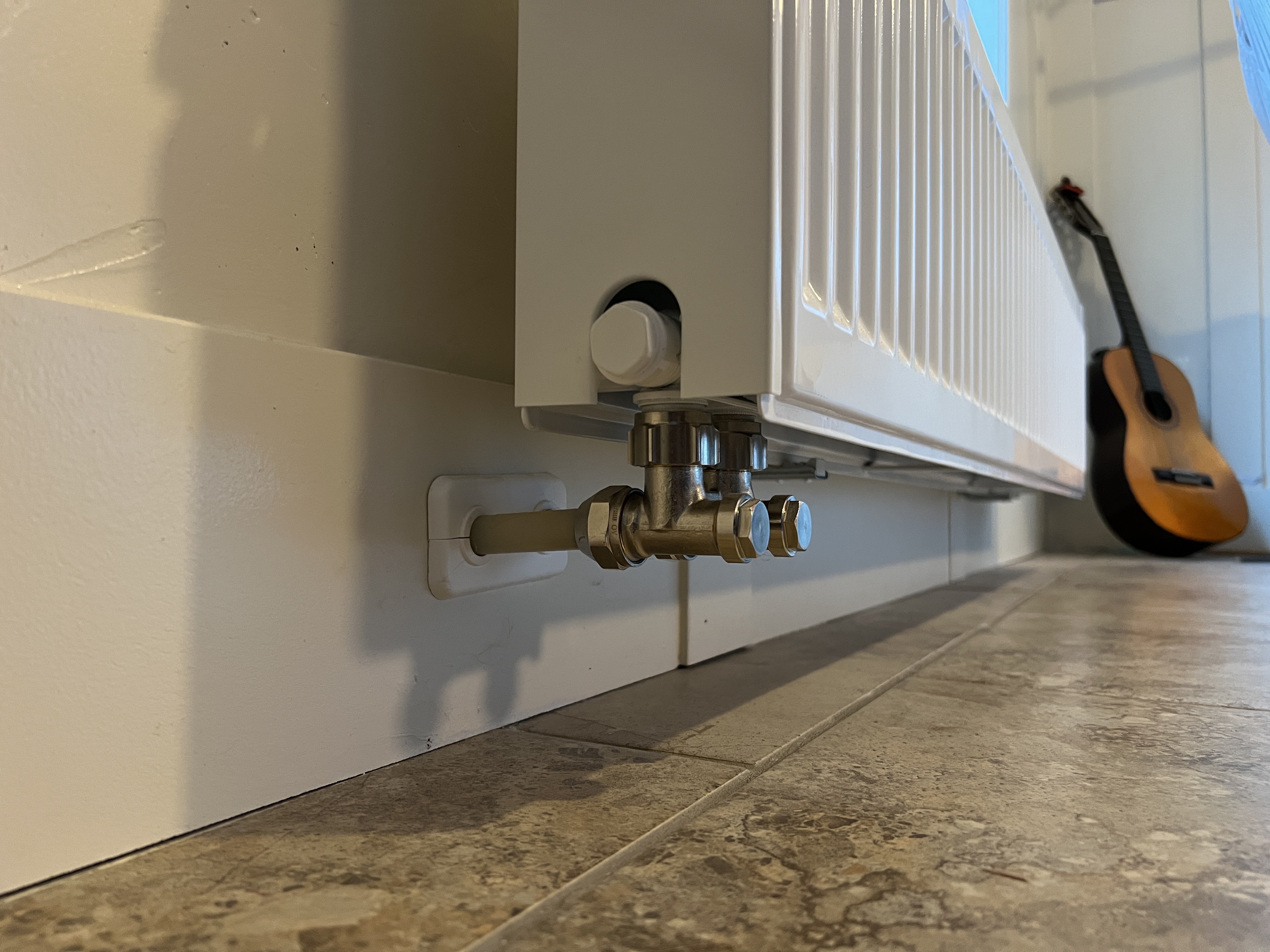
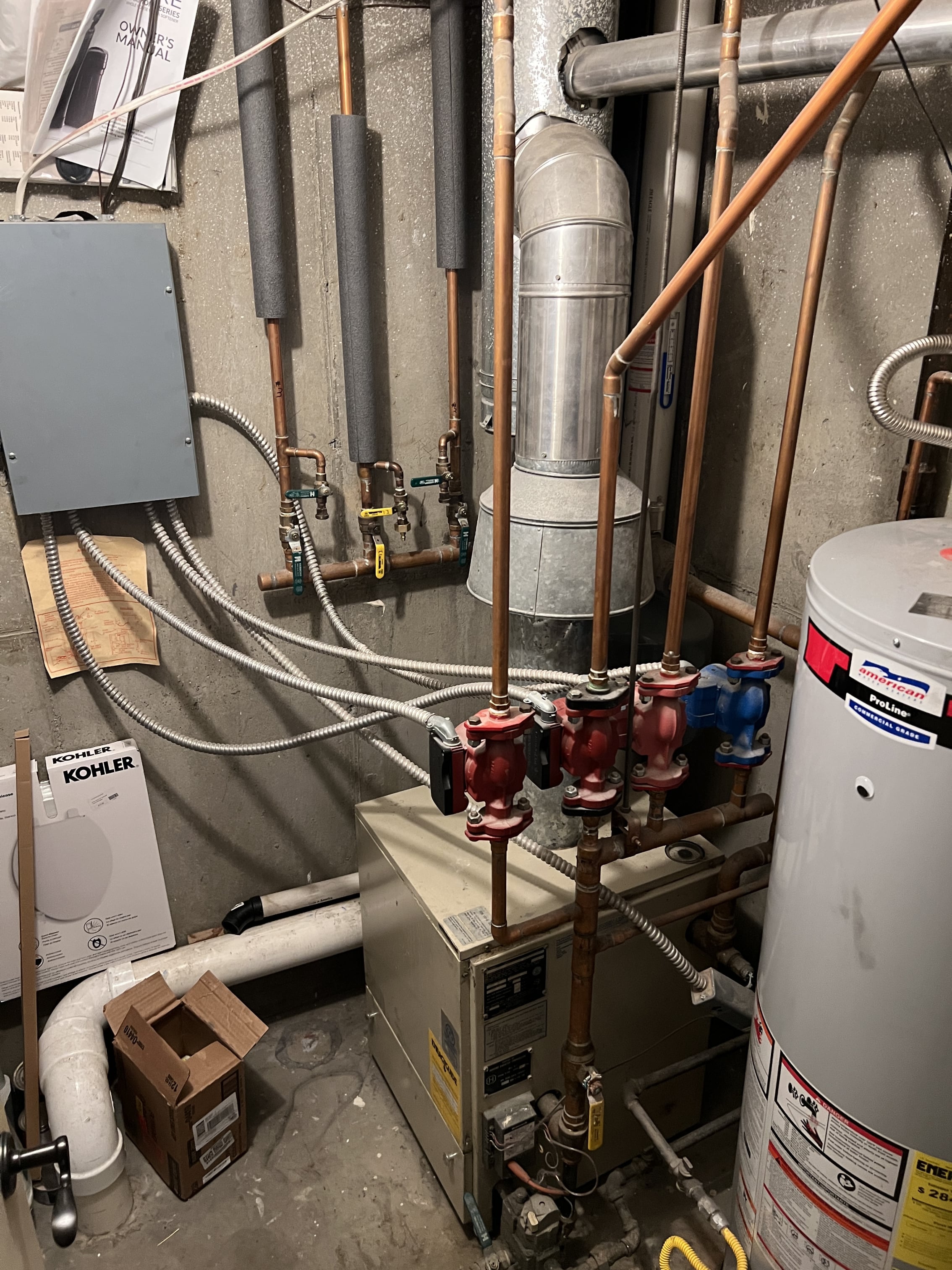 0
0 -
mattmia2: That was what I was wondering, "If the Valve would throttle the flow" Which I was assuming it would do (and by the outcome it seems to have.) As I only did 3 of them and am about to do 14 more and spend thousands I thought I'd better triple check.. Also no there is no monoflows anywhere on the system, I'm fairly certain its just 3/4" through all the finned pipe and back to the boiler..Question, How critical is the spacing between the two plain ol' tees? the beacon morris install sheet says minimum of 12-18" but is still a little confusing (like is that just for monoflos?). Also I did think it was a little weird that the valves are supposedly set to a default bypass ratio and I had to adjust it to just cracked open to get it to work correctly. maybe that's just the pressure needed? or friction etc? (this is where I go into the weeds) - Appreciate the help. OH and also the boiler is still the original installed from 1980. When it finally gives up ill replace it too.. see my photos I just took of the boiler set up. (dont laugh :)
0 -
If the H valve has an adjustable bypass pipe them like shown here. A diverter tee pipes a bit differently..
What is the output of the radiator at 180? The 3/4 copper may not feed a series of those radiators. Figure 4 gpm at 20∆ is 40,000 btu/hr.
Ideally you wouild want to kow how many btu rach room needs, size the radiator to that load. You don't want to put more radiator capacity in then what the tube can supply.
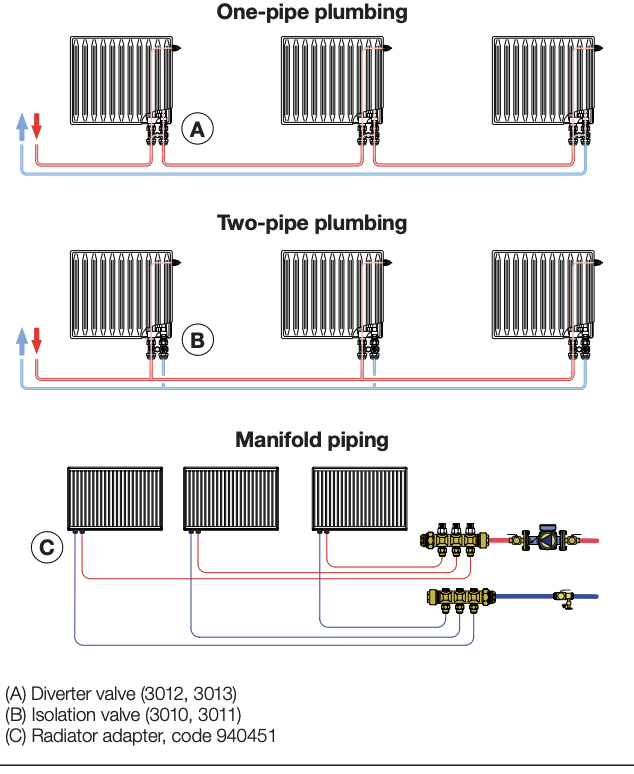 Bob "hot rod" Rohr
trainer for Caleffi NA
Living the hydronic dream

 3
3 -
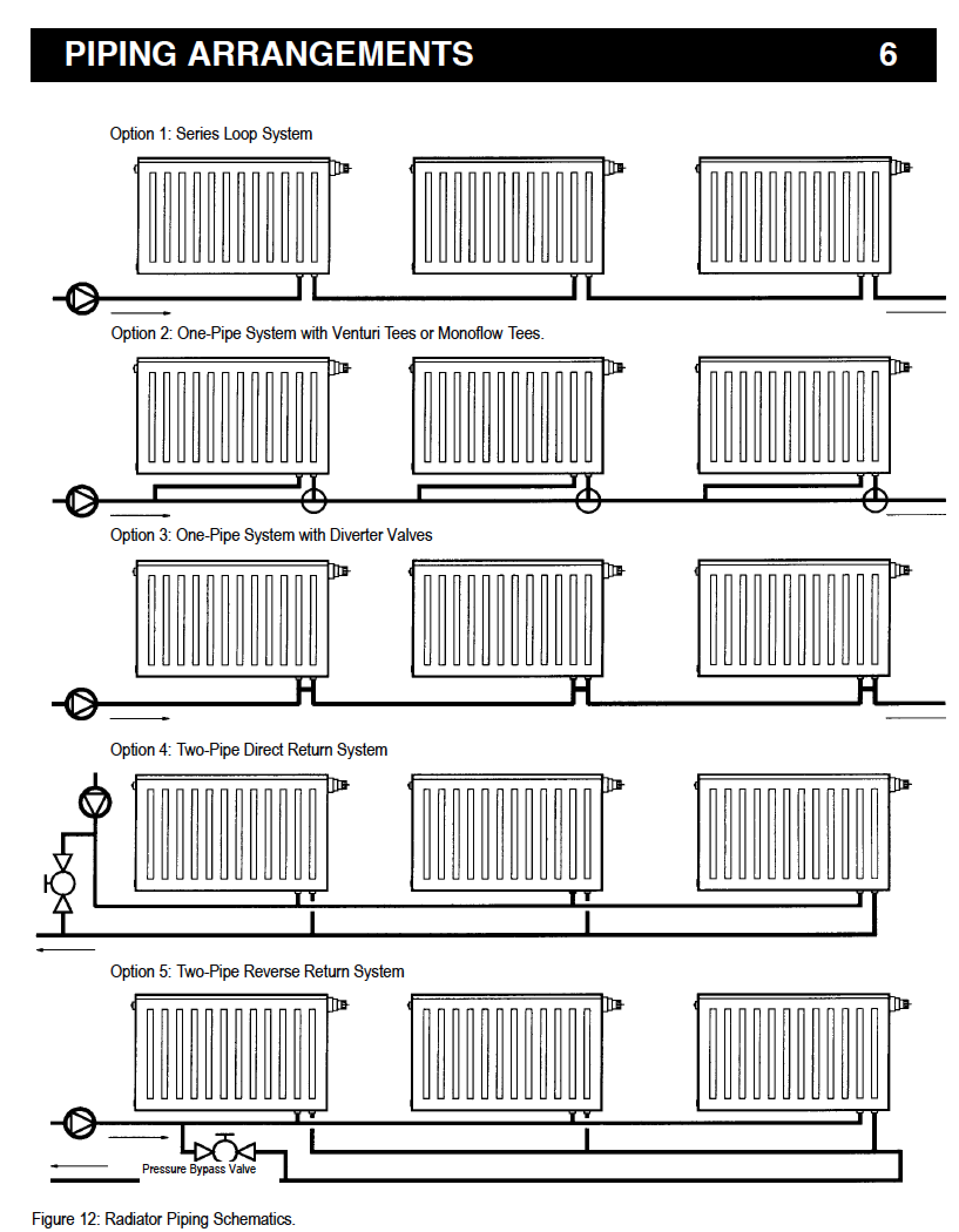
See the photo below: Basically What I did was Option 2 (one pipe system) but without the monoflo tee and used a bypass valve (like option 3) as the monoflo. (for looks and convenience) Would this work? My thinking was because I'm doing 5-8 radiators on a zone It would be nice the send more hot water on to the the next rads in line. dumb? impossible?
 0
0 -
hot_rod: oh boy… now were doing math…😫 I may have to break down and get real help. Problem around here (out west) NOBODY does these units. Maybe I could hire someone on here for an hour to facetime and help me get it set up right.?? I dunno.. I just want a little more heat outta the system and to eliminate the baseboards… thanks
0 -
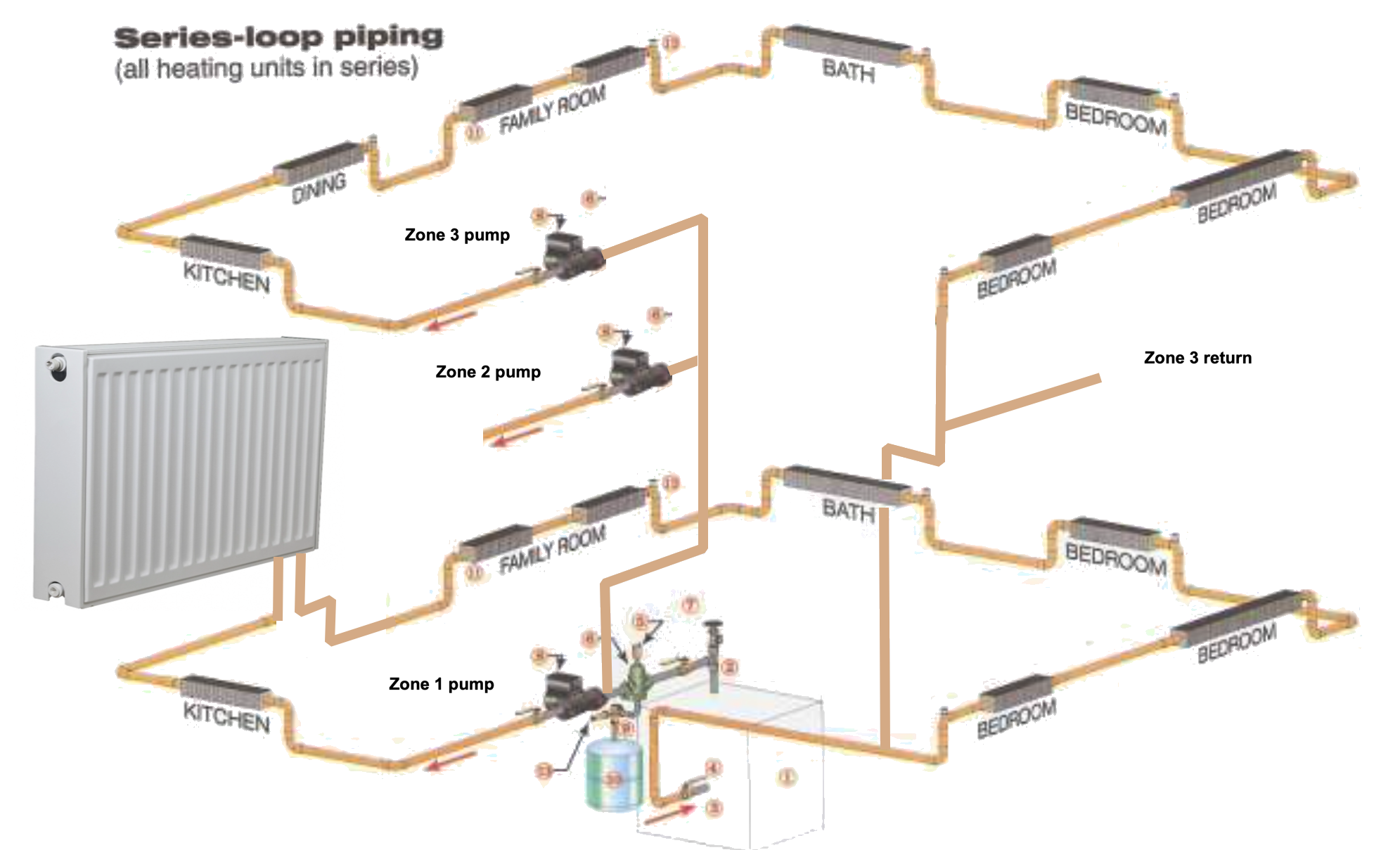
That makes more sense. now you have several zones of what we call a series loop. There re typically 4 standard piping methods.
Two pipe old gravity heating systems were connected as a parallel piping system pre 1950
Newer two pipe gravity and some circulator systems used a parallel reverse return design late 1940 thru 1960
MonoFlo or one pipe using convectors and diverter tees was popular in the 1950
In the 1960s (and a long ago as the 1940s once circulators were becoming popular) the series loop became very popular as the most economical hydronic heating system to install. here are three of the 4 different systems
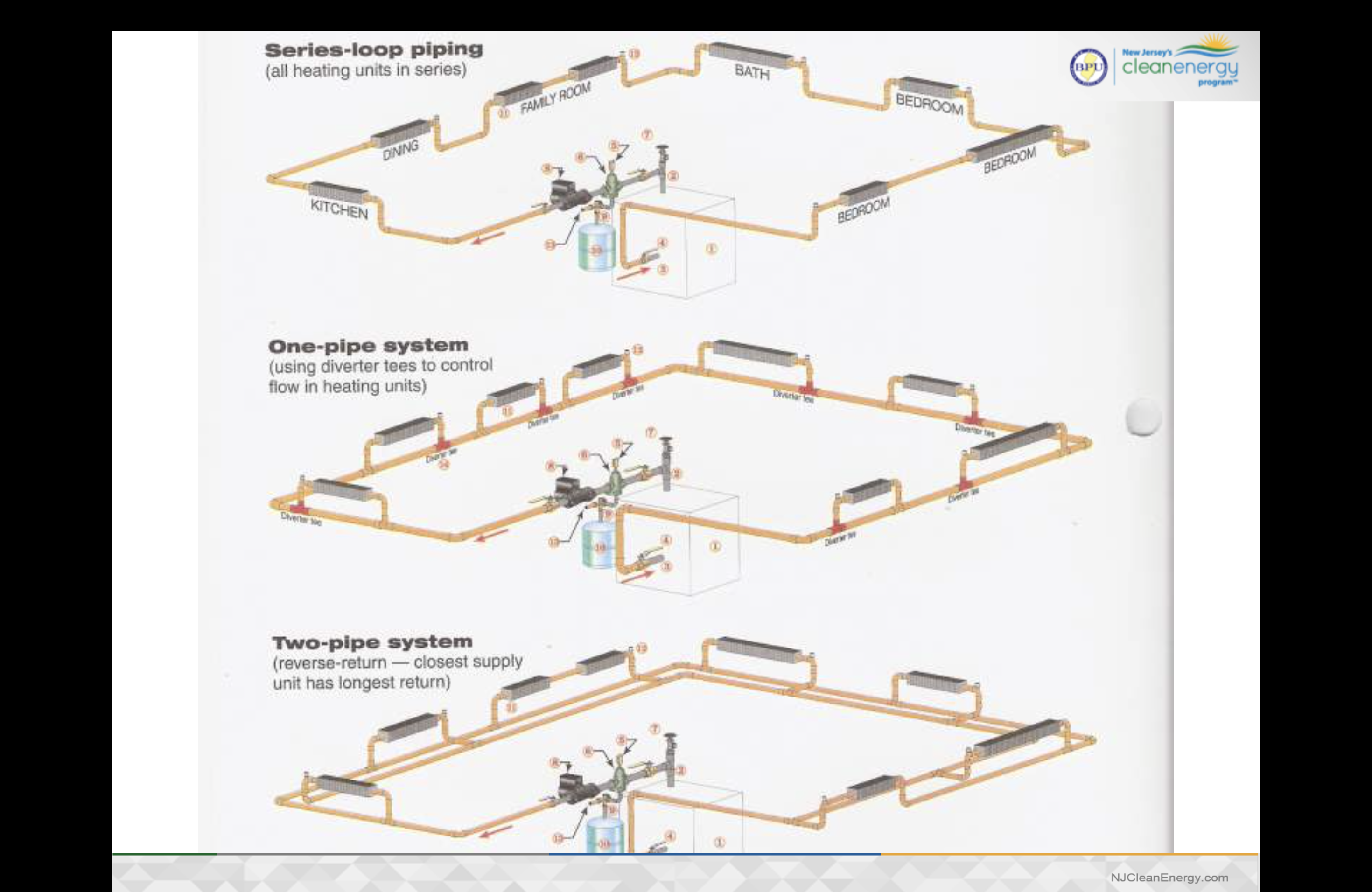
Now that we have established the system you have lets look at what you are going to do with it.
This will work however if you reduce the pipe from 3/4" to 1/2" yu will restrict the entire loop to what a 1/2" pipe capacity can carry which is a lot less BTUs
Edward Young Retired
After you make that expensive repair and you still have the same problem, What will you check next?
0 -
I just got off the phone with a wallie from Minnasota. I would be happy to help in real time. PM me your number.
Edward Young Retired
After you make that expensive repair and you still have the same problem, What will you check next?
0 -
PM'd thanks Ed!
ED, Yes I'm pretty sure it's the "Series-loop" system from what I've seen in the walls so far ( I have yet to see any old monoflo tees. And yes you are correct, IF I were to go straight in to and out of the radiator or the bypass It would restrict flow and heat down the line and supposedly you shouldn't do too many this way in the series??.. . However The way I'm trying to get there is to branch AND use the bypass valve.. like matmia2 mentioned above that the bypass takes the place of the monoflo.. ??!!
 0
0 -
David784: thank you that makes perfect sense! I'm pretty sure Ill be under the 40,000 BTU per zone. there are three zones Zone 1 will have 7 Rads on it. Zone 2 will have 5 and zone 3 has 3. note that several of these are small 20x16 (bathrooms). thanks for the confirmation on the Monoflo's v. H valves. I'm going to count up the BTU's on the Rads and make sure im under 40,000.
0 -
Find the cut sheet for the pnel rads to determine output.
I consider panel rads a mid temperature emitter, generally designed around 60C, 140 SWT. often a wide 30- 35∆. This allows them to work nicely with mod con boilers and heat pumps.
Add panels at the end of fin tube runs where they see the reduced temperature.
Consider a homerun system. I think your 3/4" one pipe approach may be a can of worms.
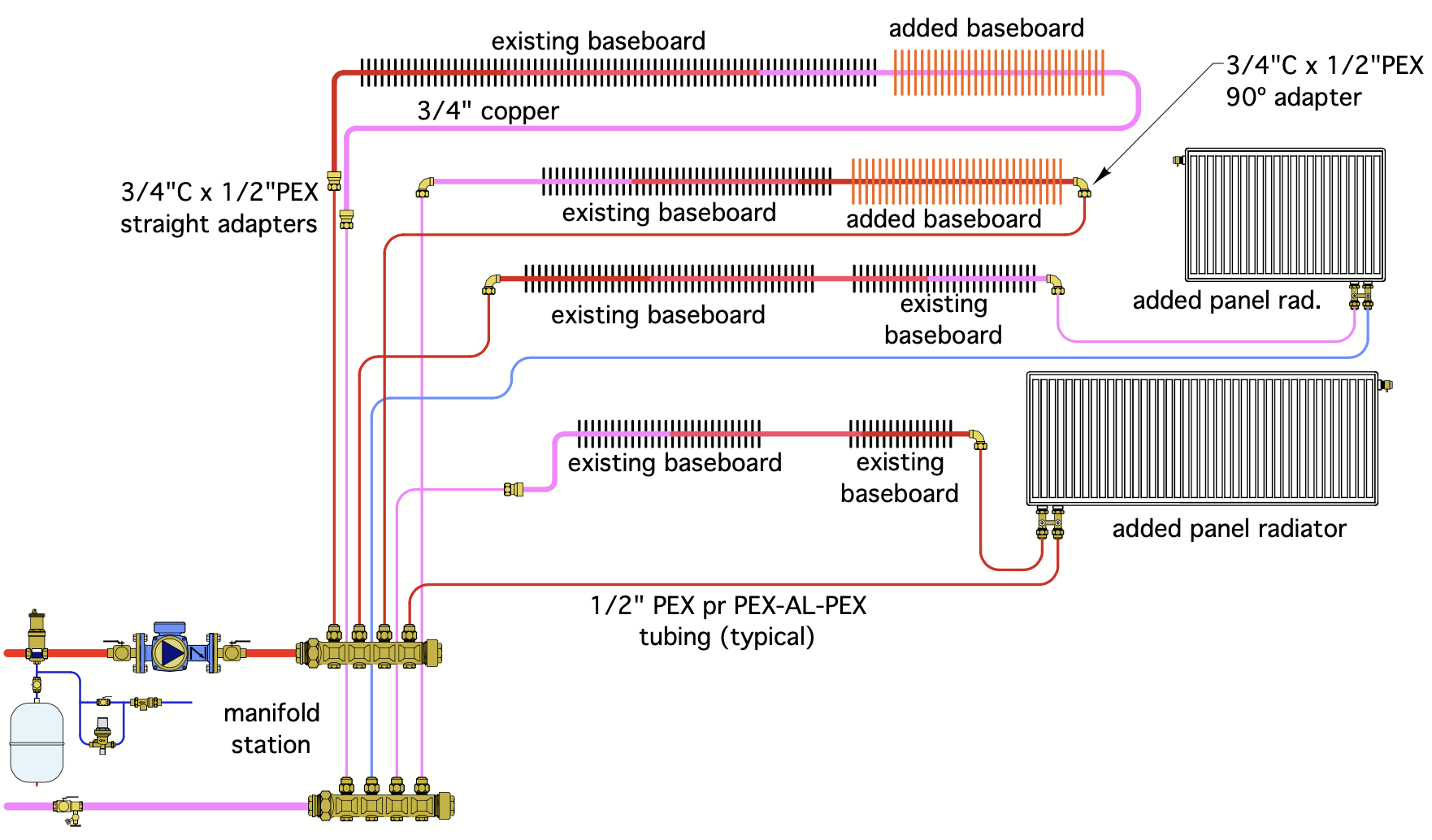
The heat emitters will dictate the boiler operating condition. So if your panels add up to more that the boiler net output, you may see low return temperatures which can damage a non condensing boiler.
The traditional design sequence is, determine the room loads. Select a heat emitter and size it to the room load based on the supply temperature you intend to send to it.
Bob "hot rod" Rohr
trainer for Caleffi NA
Living the hydronic dream0 -
Thank you hot_rod: Unfortunately I cant change the existing piping into a home run set-up. I added up each radiators BTU output (@180º) and each zone was under 40,000 BTU with all rads.
0 -
seven radiators is a lot on one loop. If the first one sees 180, and you drop 5 degrees at each one, the radiators at the tail end have their output based in a lower average temperature. So those may need to be a larger size?
When you use a radiator output chart use AWT for the output, average water temperature, not SWT, supply water temperature. The output will be a bit more accurate.
180 swt, 175 return = 178.5 AWTBob "hot rod" Rohr
trainer for Caleffi NA
Living the hydronic dream0


Categories
- All Categories
- 87.8K THE MAIN WALL
- 3.3K A-C, Heat Pumps & Refrigeration
- 60 Biomass
- 430 Carbon Monoxide Awareness
- 133 Chimneys & Flues
- 2.2K Domestic Hot Water
- 6K Gas Heating
- 124 Geothermal
- 170 Indoor-Air Quality
- 3.9K Oil Heating
- 79 Pipe Deterioration
- 1.1K Plumbing
- 6.7K Radiant Heating
- 397 Solar
- 16.1K Strictly Steam
- 3.5K Thermostats and Controls
- 56 Water Quality
- 51 Industry Classes
- 51 Job Opportunities
- 18 Recall Announcements