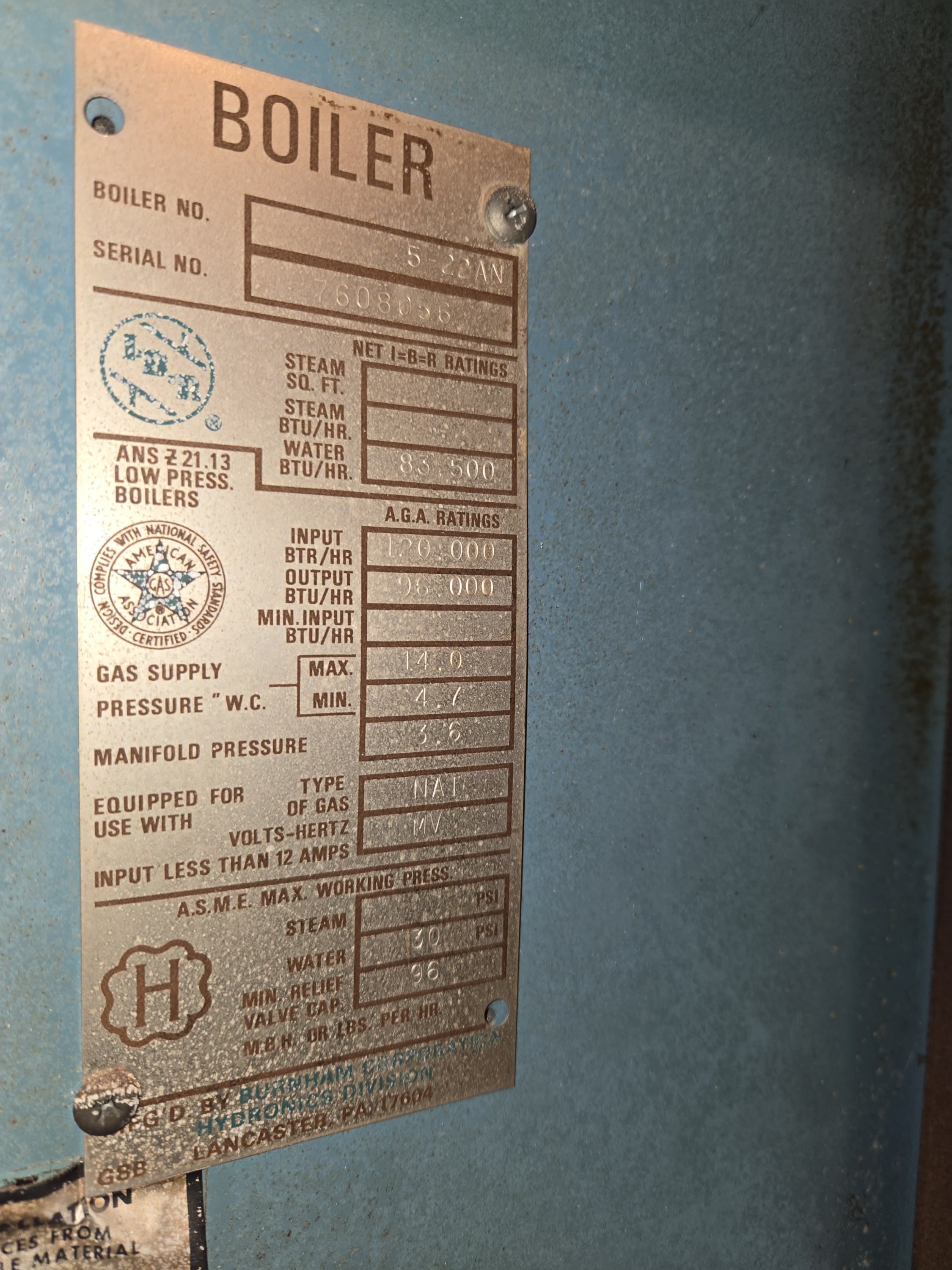
1976 Burnham 5-22AN: what temp to avoid condensing?

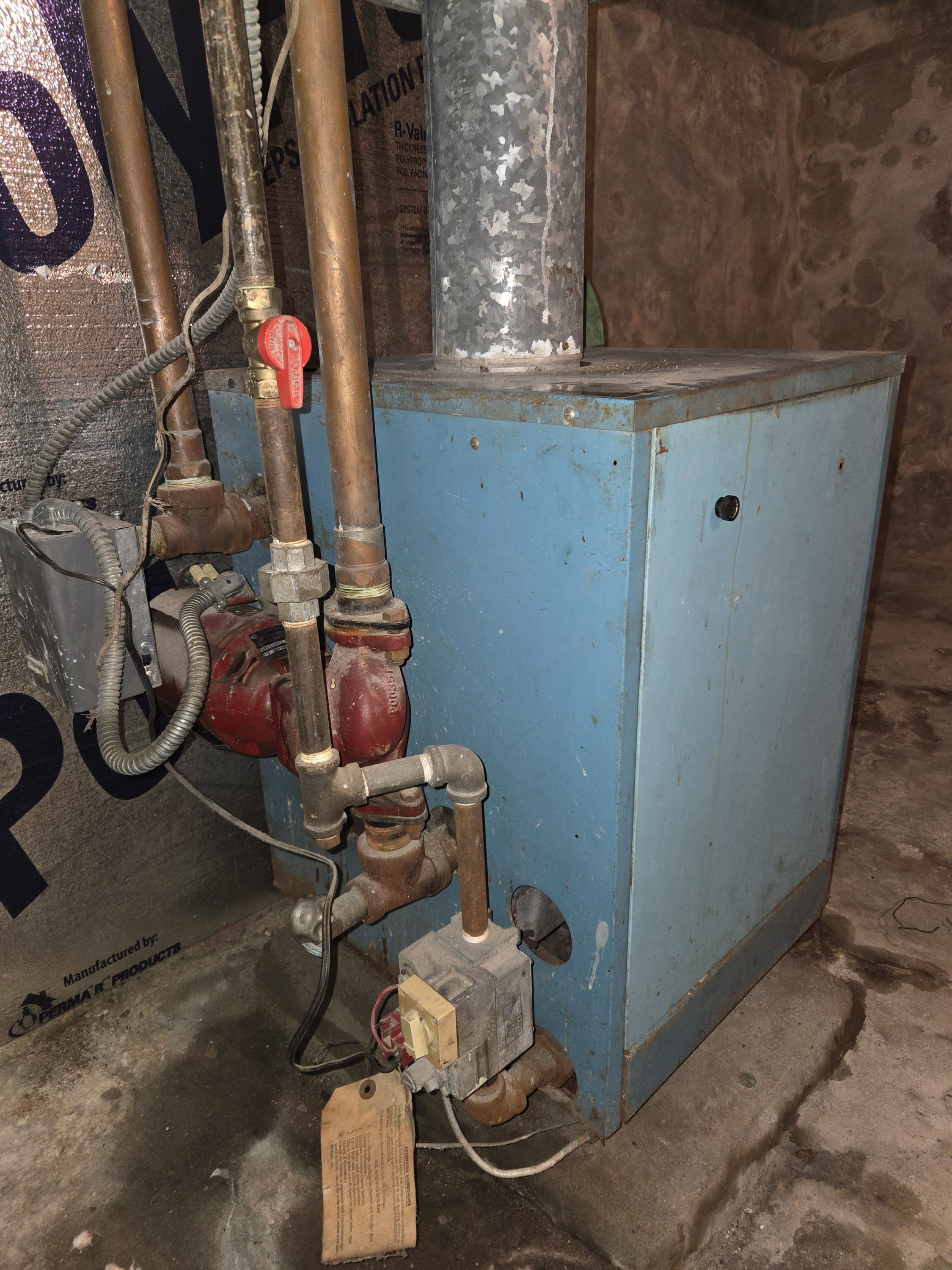
I recently bought a rowhome needing a lot of updating.
After cleaning and restarting this old boiler, I noticed that the high limit was set to 205. Maybe someone thought this was needed, maybe with the leaky windows it is on the coldest winter nights, but for the shoulder seasons I'd like to drop the high limit down to 155 or 165.
The baseray cast iron baseboards should be fine with the 150 degree water, and the B&G pump could likely run practically continuous duty for another 50 years as long as I keep up on the lubrication.
But I don't want the boiler to start condensing. What is a safe high limit to lower it to?
And, if I switched to a Hydrostat 3200 with condensation protection, would it work with the way this hydro well is mounted?
Thanks in advance!
Comments
-
I would set the high limit to 190. If you set the HL too low the boiler may cycle on and off on a cold day and make it more difficult to heat the home using more fuel. It will only get to 190 if the boiler puts out more heat than the radiation can output (which is usually the case).
If you find the boiler runs and cycles excessively on a cold day you may not have enough radiation. Try it and see you may need to go back to 205. Make sure the radiation is not air bound.
You could also check the radiation output of your boiler (see sq feet of radiation on name plate) and compare it to the radiation installed.
Condensation is not an issue if on a cold start the return temp gets above 130ish within 2o min of starting. Condensation is caused by low return temp.
0 -
As @EBEBRATT-Ed notes, the question isn't the high limit — that has nothing to do with it. The question is what is the return temperature. So long as the return gets over about 140 F or so, and runs there for at least 10 minutes, you won't have a problem with condensing.
Br. Jamie, osb
Building superintendent/caretaker, 7200 sq. ft. historic house museum with dependencies in New England0 -
And I suppose the return temp is controlled by the radiation and flow rate and so on…
I guess I should just strap a temp probe to it.That's helpful though, 130-140 for 10 minutes.
With these heavy radiators and the massive supply and return trunks, it is very slow to get warm and very slow to cool back down.
0 -
Its easy enough to strap a temperature probe onto the return — go for it.
The return temperature is governed by the supply temperature, the flow rate, and the radiative capacity of the system as a whole. The supply temp and the flow rate are easy to control — the radiative capacity not so much! Except, of course, in zoned systems. But the radiative capacity is determined by the average temp0erature of the radiation, so one can play with that (get it warm enough to get the heat out of the system you need) and then flow rate, which you can adjust to keep the return temperature up where you want it. We usually — for no good reason other than that it's always been done that way! — usually go for a return temperature about 20 degrees F less than the supply, but you may find that with a series system (where the radiation at the end of the line is cooler) you may want to go for a smaller difference — which can be done by increasing the flow rate.
And you can control that flow rate, albeit at some slight cost in efficiency (unless you are a fanatic, it's not worth worrying about), by throttling the flow from the pump, within the limits of what the pump can do. If you want to try that, though, the throttling valve must be on the OUTLET side of the pump, and your expansion tank on the INLET side. If it were mine I'd use a globe valve to throttle — and never a gate valve.
Br. Jamie, osb
Building superintendent/caretaker, 7200 sq. ft. historic house museum with dependencies in New England0 -
So the distribution, piping and radiators are in charge of the boilers operating condition.
Common rule is return reaches 130 within 10 minutes of run time. Ideally it runs at least 20 minutes once fired.
Now with a fixed output boiler those time vary based on the load of the home. Mild weather expect more on/ off cycles.
On a design, coldest day in a perfect world the boiler would run non stop, the output matching the radiation and the load of the home.
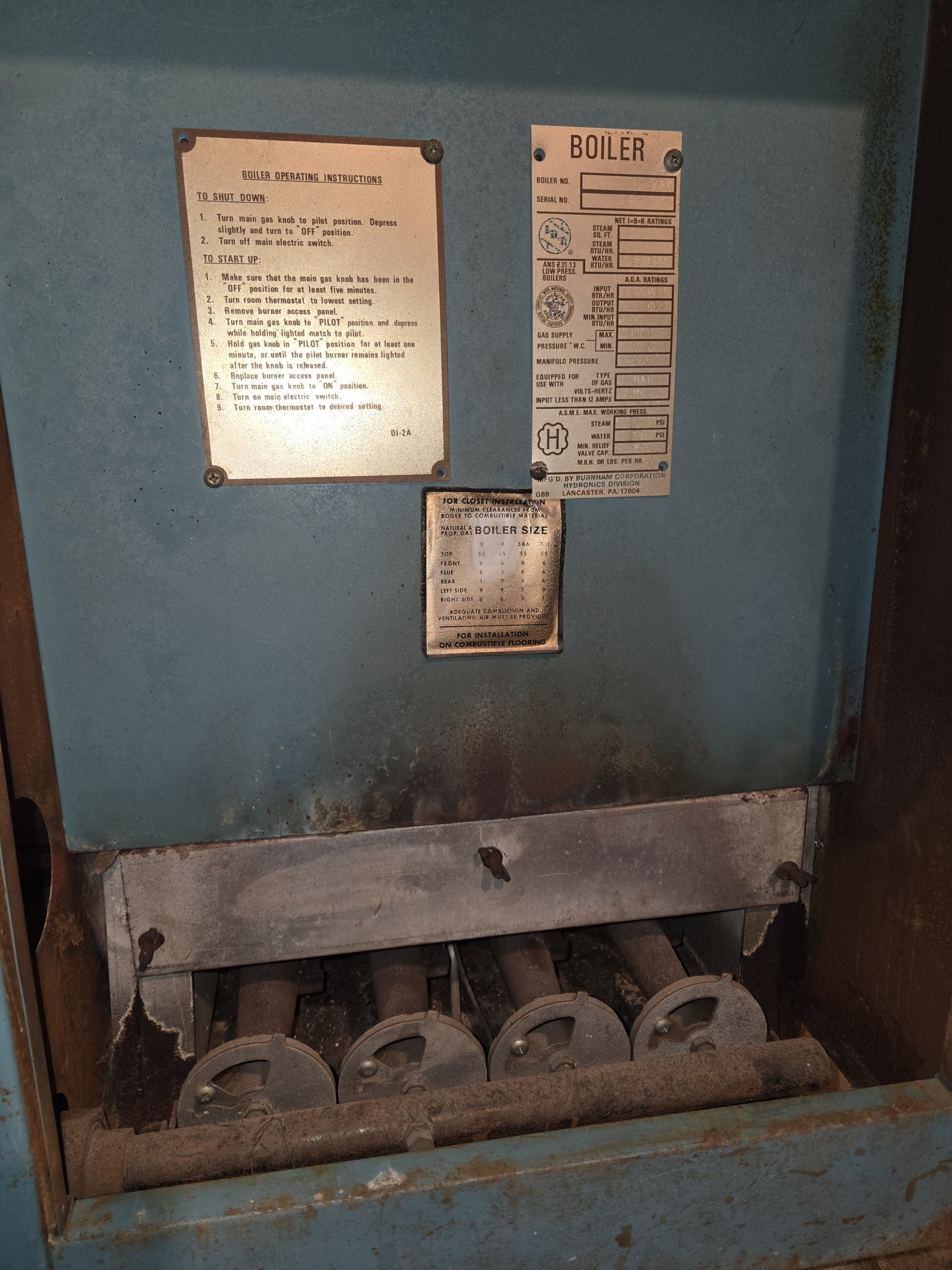
Also, some boilers have both an operating temperature and a high limit control. 205 sounds like a limit control setting, , operating may be more around 180? Usually a 20° differential between operating and high limit.
An outdoor reset control can save some energy costs and improve comfort.
If you want to spend some time number crunching, do a heat load calculation, then measure the CI baseboard to see how they match up, lastly see how the boiler matches those numbers.
Oversized boilers run inefficiently and could lead to excessive short cycles.
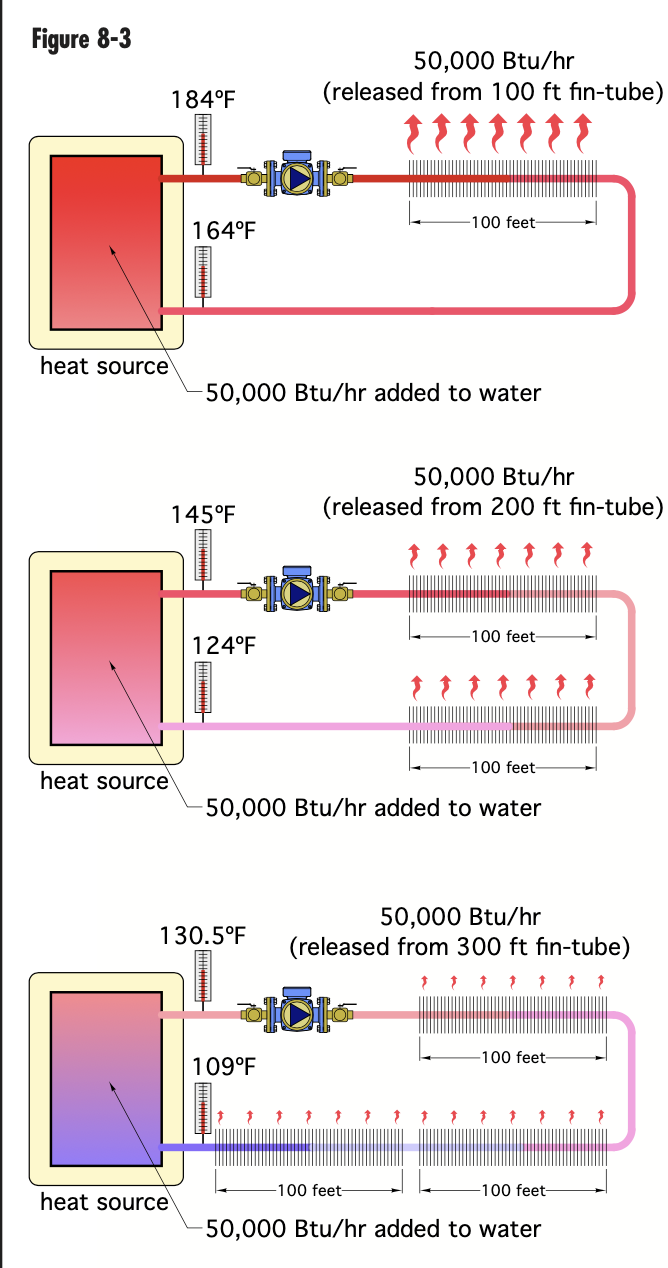
This graphic shows how the radiators control the boilers operating condition. As you increase the radiation size the boiler supply and return drops. A 50,000 boiler at a 5 gpm flow rate in all 3 examples.
 Bob "hot rod" Rohr
trainer for Caleffi NA
Living the hydronic dream0 -
@vilord if you find the return temp is too low there are ways to fix it.
0



Categories
- All Categories
- 87.8K THE MAIN WALL
- 3.3K A-C, Heat Pumps & Refrigeration
- 60 Biomass
- 430 Carbon Monoxide Awareness
- 133 Chimneys & Flues
- 2.2K Domestic Hot Water
- 6K Gas Heating
- 124 Geothermal
- 170 Indoor-Air Quality
- 3.9K Oil Heating
- 79 Pipe Deterioration
- 1.1K Plumbing
- 6.7K Radiant Heating
- 397 Solar
- 16.1K Strictly Steam
- 3.5K Thermostats and Controls
- 56 Water Quality
- 51 Industry Classes
- 51 Job Opportunities
- 18 Recall Announcements