Steam boiler and indirect hot water tank in the summer

I have a steam boiler and an indirect water tank, both installed about 15 years ago. It's my recollection that in the summer months when the boiler fired to heat hot water, the steam pipes close to the boiler remained cold and I would never hear air coming out of a radiator vent on the first floor.
This summer my gas bills have been almost twice as high as previous summers. The steam pipes within a foot or two of the boiler are warm (not hot) and at least on one occasion I heard air coming from a radiator vent.
My plumber checked out the system today and said that everything looked fine and there was nothing wrong with the warm pipes and an occasional sound of air from a vent.
Is this right? Is there something wrong with my aquastat?
Comments
-
Replace your indirect with a standalone water heater and shut off your boiler in the summer. That's my advice although most people in this forum (who dare reply here at least) will tell you to absolutely keep your indirect.
NJ Steam Homeowner.
See my sight glass boiler videos: https://bit.ly/3sZW1el1 -
If the indirect is 15 years old there could be some sludge around the sensing well of the aqua stat in the indirect. You or your plumber would have to drain the indirect and take the well out and flush the tank.
The other possibility is someone turned the aqua stat in the indirect up too high, but I would think you would notice very hot water if this was the case. Normal setting might be 120 ish.
0 -
The indirect aquastat is set at 120; I just checked.
Does it make sense that over the course of one year sludge could lead to a large jump in the gas usage?
Thanks
0 -
Ethicalpaul: I do have mixed feelings about my indirect system, especially given how much I've spent replacing circulator pumps which fail due to the boiler sludge. My plumber finally installed a Taco 100 series which seems to be better than the 007's I had before. Not sure I would go this route again with an indirect on a steam boiler.
 1
1 -
There should be two aquastats. One on the indirect, and one below the water line in the boiler. If the indirect is set to 120°, then the boiler aquastat should be set to 180° with a 20° differential. 160° minimum if you want good recovery. No wye strainer on the indirect loop?
0 -
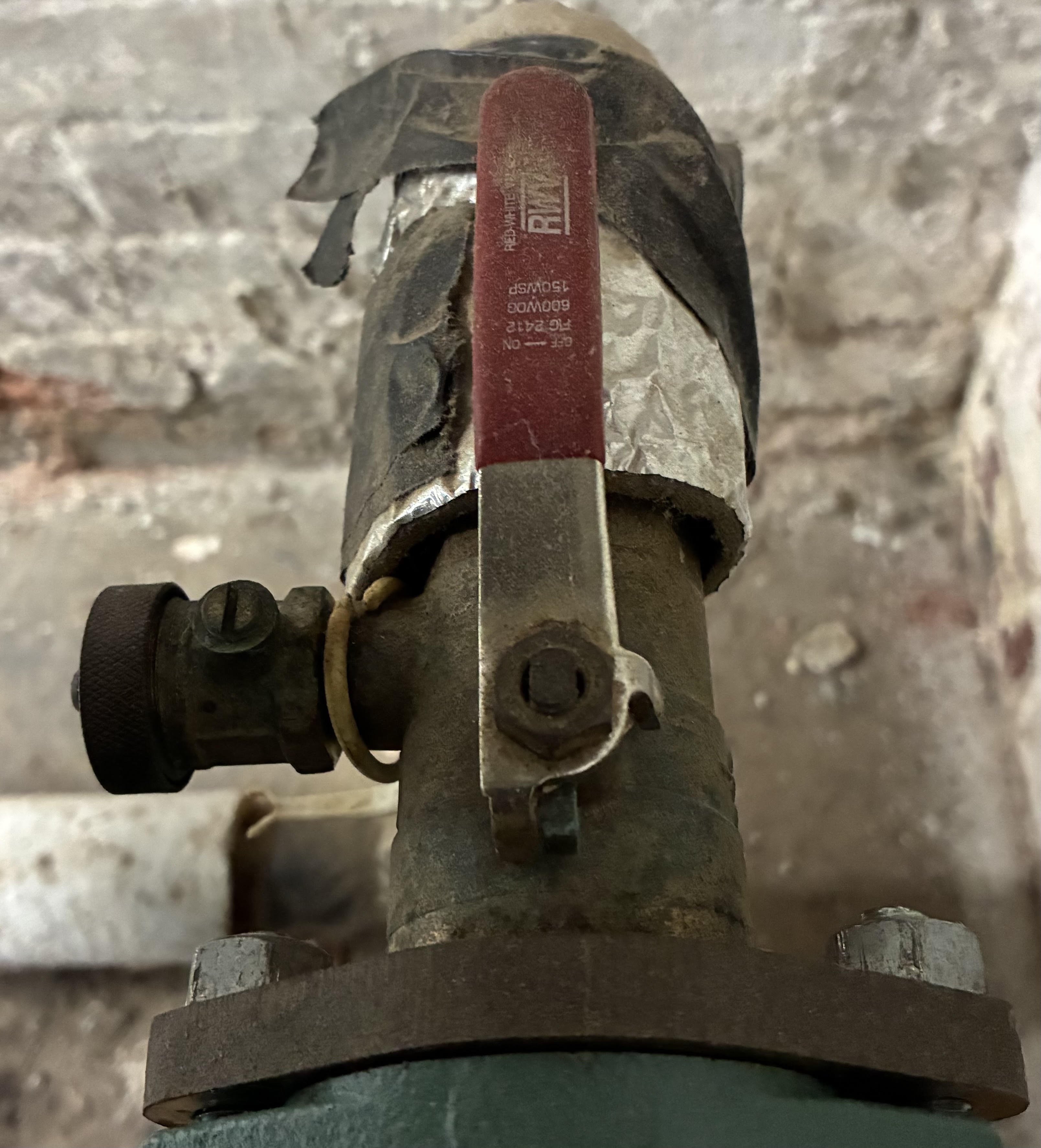
boiler aquastat is set to 160. Not sure I have a wye strainer. Is that what's combined with the ball valve? (see pic)
 0
0 -
A wye strainer will help save the circulator.
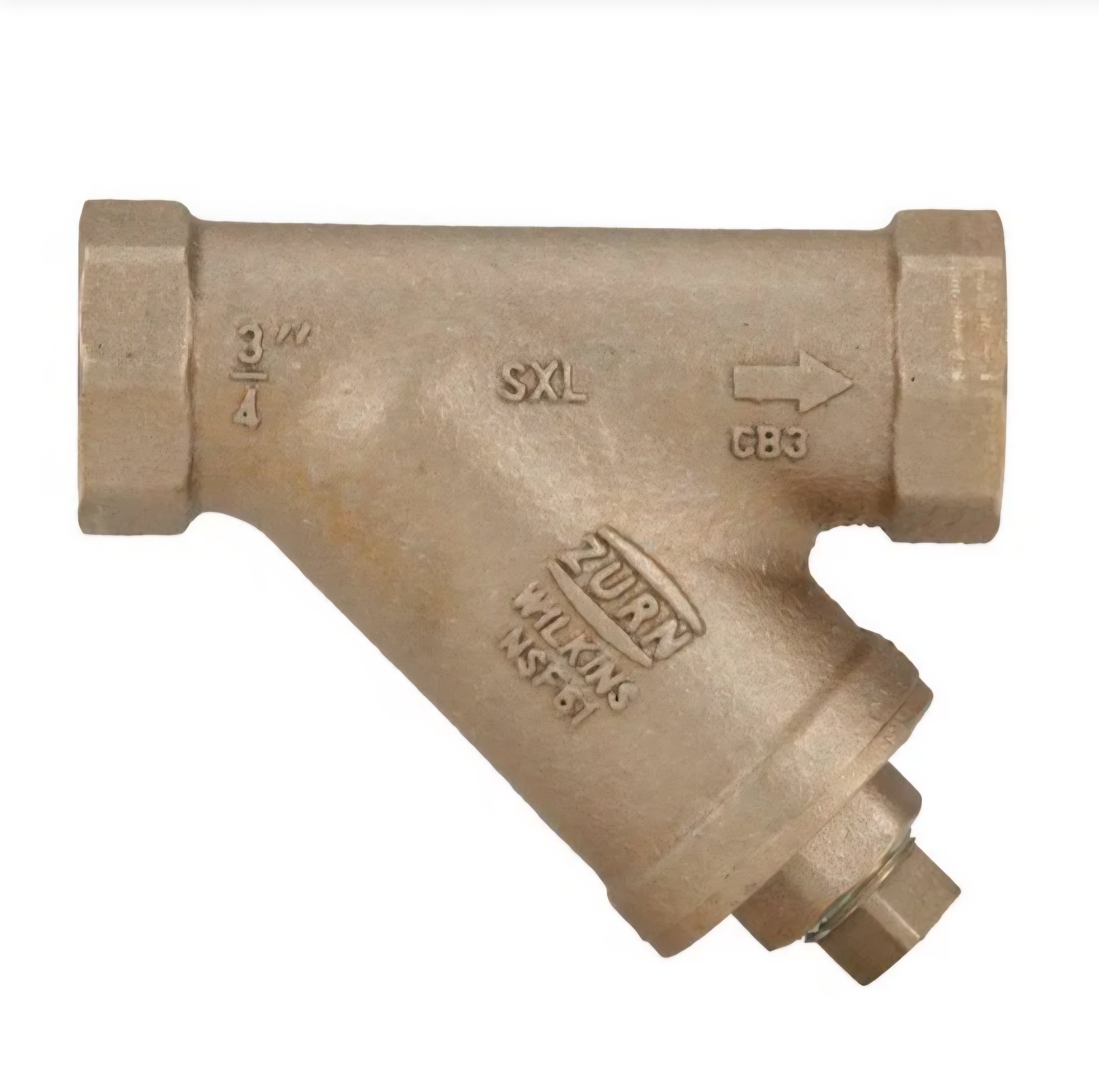
What model boiler. There's no tapping that's not off the bottom? Is the boiler periodically drained down?
0 -
Boiler is Burnham PIN6SNI-ME2. Boiler is drained down periodically by a plumber. The tapping for the indirect is on top.
0 -
@Bob_57-2 I would think if your gas usage is up (are you looking at the therms of gas and not the $$$$) that if it was sludge you would have noticed an increase in water temp.
Is the boiler maintaining water temp? It shouldn't be
0 -
I am looking at therms, not dollars.
The boiler has a pressuretrol, no temperature gauge. What do you mean by "maintaining water temperature"? Do you mean is the boiler always somewhat warm? If so, no. E.g., this morning when I woke up, I checked the boiler. It was completely cold as were all of the steam pipes and hot water leg.
0 -
The picture with your ball valve shows what looks to be a purge valve connection to purge air out of that circuit.
The screwdriver slot runs a ball valve inside the small connection.
They usually do not move very well after a few years unless they are exercised every year or so.
1 -
If the aquastat on the boiler is set to 160°, the steam pipes might be cold, but the boiler water should be between 160°-140°. If you raise the temperature on the indirect, the supply water from the boiler should be at least 140° right away when the circulator starts.
0 -
The system settings seem fine as is, in terms of how quickly we get sufficiently hot water in the kitchen and bathrooms. So from that perspective, I don't see a need to change. I've had these settings for the past 15 years. Still wrestling with why my gas usage has gone up so much every month this summer as compared to 2025. Our vacations and use of the gas cooktop have been nearly identical in 2025 and 2026. I guess it's sludge in the indirect tank?
0 -
My therms are up 50% this summer, compared to last year, adding about $80 to my summer bill thus far. So I think it will be about $100 extra this summer for hot water for the non-heating season.
0 -
the amount of hot water you use probably has more to do with the increase
Sludge is usually at the bottom if a tank, lime scale on the coils inside has more to do with inefficient heat transfer. But a 50% increase would be a lot in a one year period
Lime scale build up on coils happens over the course of years
A good indicator is how long the tank takes to recover when you use a lot of hot water
Bob "hot rod" Rohr
trainer for Caleffi NA
Living the hydronic dream0 -
Thanks, I will try to get an estimate of the recovery time.
0 -
" at least on one occasion I heard air coming from a radiator vent. "
The thing is, if you are hearing air from a vent you are making steam. If it is during and indirect only call for heat I would think the aquastat that limits the boiler's water temperature (to way below steam water temperatures) is not working correctly. Depending on where the aquastat is located it may not be an actual aquastat issue.
Excessive boiler water temperature equals higher fuel consumption.
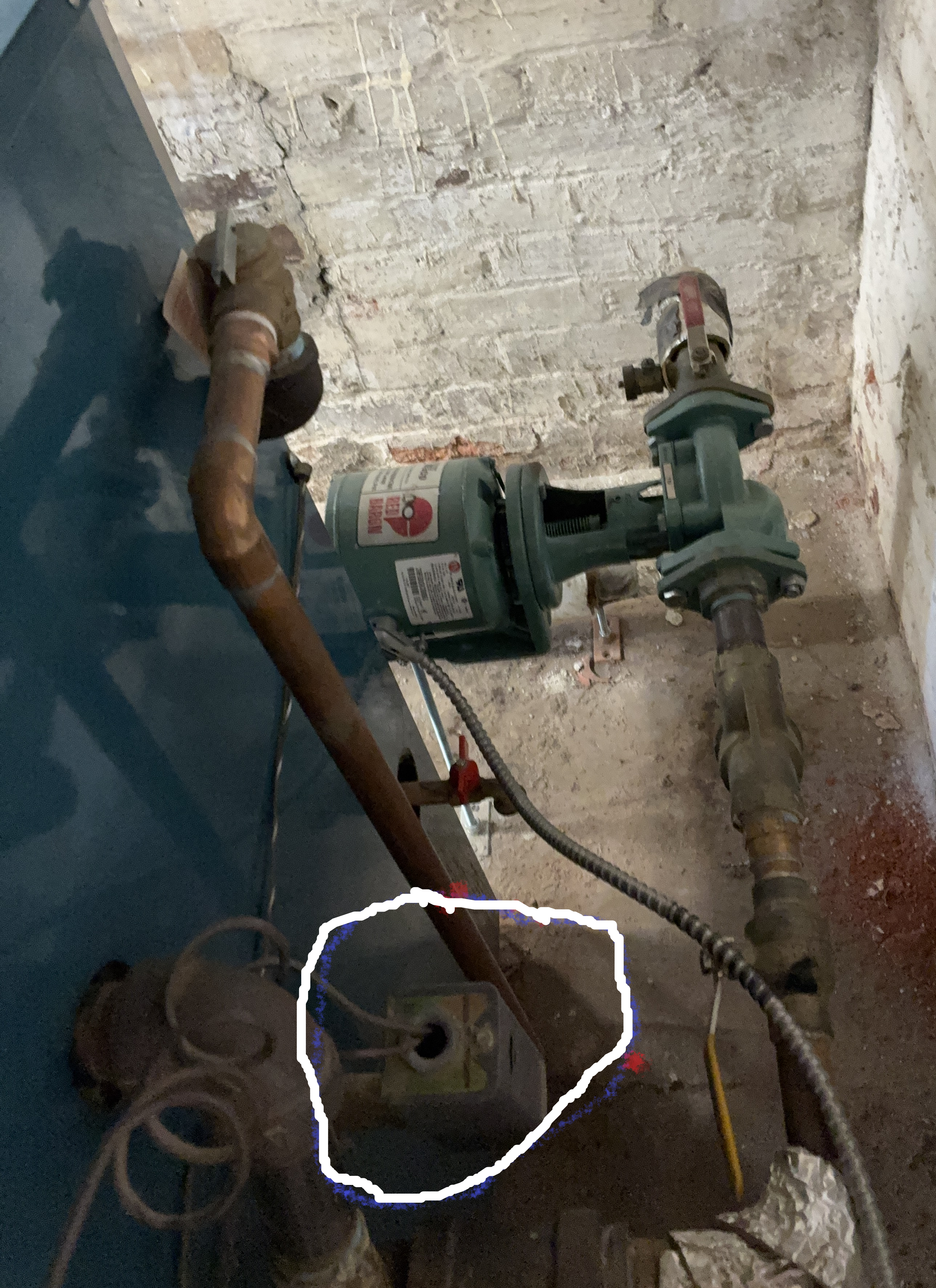
Picture of the aquastat.
National - U.S. Gas Boiler 45+ Years Old
Steam 300 SQ. FT. - EDR 347
One Pipe System 1
1 -
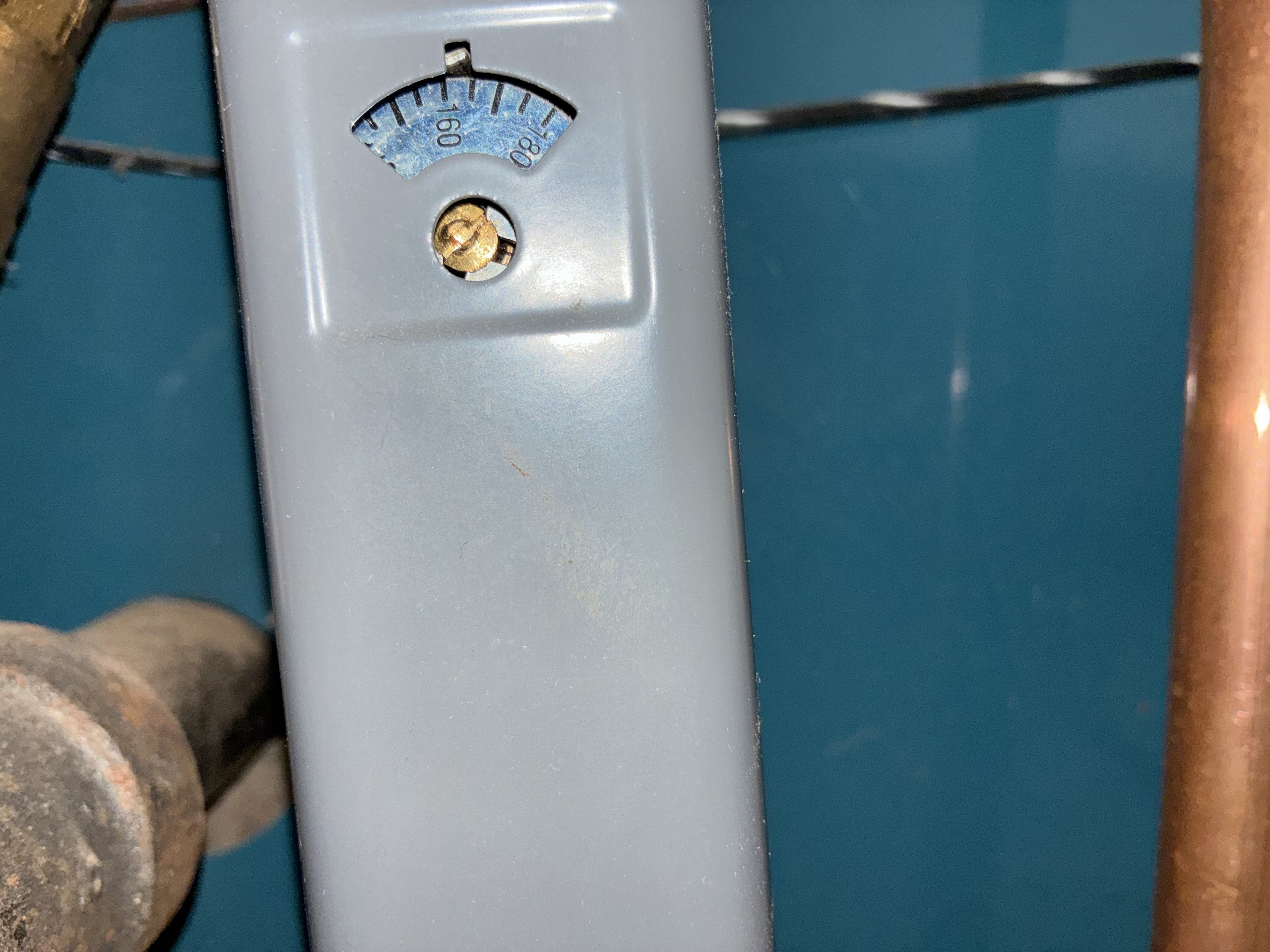
thanks. Here are some pics of the aquastat: view of where it's mounted on the side of the boiler with the circulator and a front view of the Honeywell 4006
 0
0 -
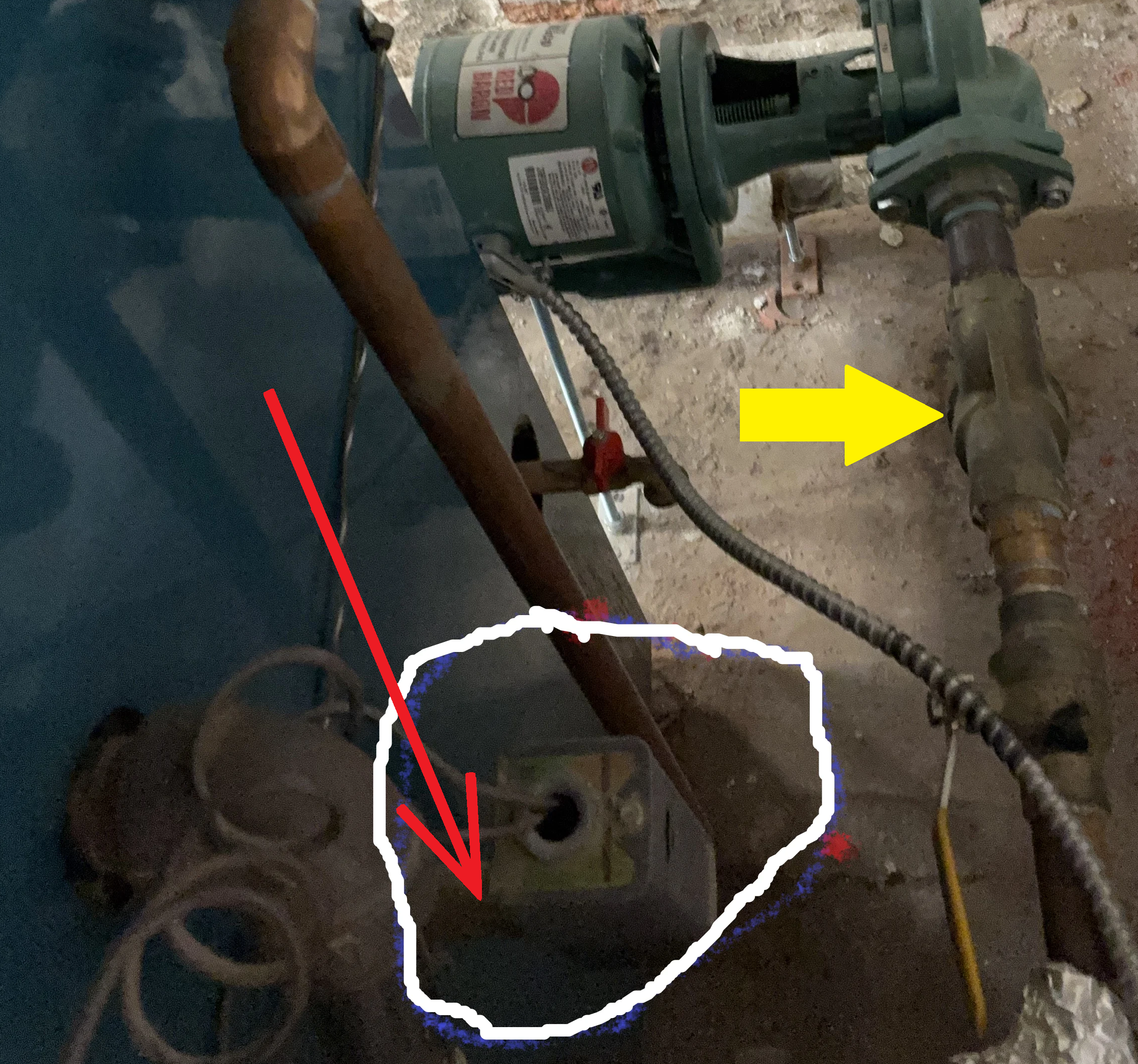
Looks like you have a Wye strainer (Yellow arrow). Has the strainer been cleaned ?
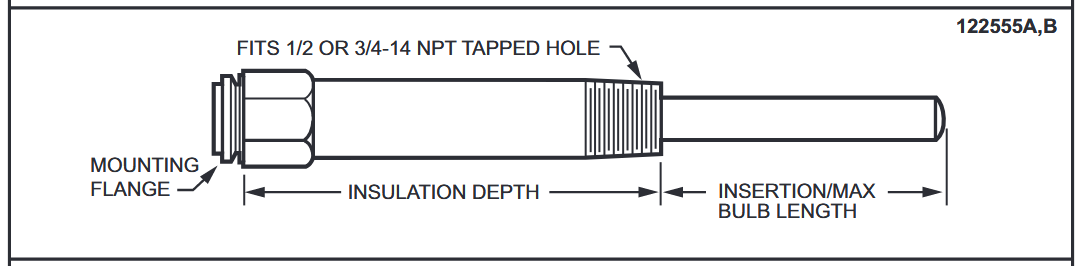
Could the temperature sensing part of the aquastat on the boiler (Red arrow) be above the boiler's present water line ? So the aquastat can't properly sense the boiler's actual water temperature.
 National - U.S. Gas Boiler 45+ Years Old
Steam 300 SQ. FT. - EDR 347
One Pipe System0 -
this periodic draining is causing the sludge. The fresh water corrodes the boiler making more of it. You can nearly eliminate creation of new sludge but it requires the use of ph boosting additive such as 8-way.
it can be tricky to implement in an old boiler, but for sure stop periodic draining
NJ Steam Homeowner.
See my sight glass boiler videos: https://bit.ly/3sZW1el0 -
The reason I don't think the temperature sensing part is above the water line is because this problem just began sometime over the past 12 months. The therm usage has gone way up sometime since last fall (hard to tell in the heating season) but the aquastat has been there for 15 years.
Thanks for pointing out the Wye strainer. I'll have to check with the plumber to see what's done. It's not on their boiler checklist for the annual maintenance.
0 -
@ethicalpaul and I have always been friendly and have some people in common but we part company on this topic. My experience is that indirects and steam boilers are misapplied as often as they are well applied.
Why I like them? The combustion efficiency of the boiler is much better than that of a standard gas water heater and, while the standby losses of the boiler are somewhat abysmal, the standby losses of the indirect are next to nothing. Even if those factors would amount to a wash, I still prefer the indirect route so long as it is of stainless steel construction (lifetime warranty) and prefer to have a single heat source and eliminating a second carbon monoxide maker.
Also, if Burnham has done nothing else, they have done a great service to indirect water heater installers across the universe by cutting the dedicated tappings into their end sections for the supply water and aquastat well. Your Burnham Independence series unit is as good as it gets for matching the two pieces together.Adding this….I love Weil-McLain but they've always been light on tappings, making a real of task of adding a second LWCO or a hydronic/DHW loop. I know. They've still got the optional gas-steam-tankless coil option but it's a very expensive way to make it work.
Contact John "JohnNY" Cataneo, NYC Master Plumber, Lic 1784
Consulting & Troubleshooting
Heating in NYC or NJ.
Classes 2
2 -
@Bob_57-2 A few things…
I never assume there is only one issue.
A restricted strainer can reduce the efficiency of the recovery process. So longer recovery time. And if the boiler's aquastat is not working correctly the boiler's water temperature is not limited like it should be in the summer. Using more fuel, and more heat going up the flue.
You mentioned " at least on one occasion I heard air coming from a radiator vent. " To me if you are moving air you are making steam. Your system should be no where near making steam in the summer time. Other than some odd cold weather.
So to me the question is why is the Boiler's water temperature rising way above the set point of the aquastat ?
1. The aquastat is defective. Not shutting the boiler's burner off at the 160 degree set point.
2. The aquastat can't properly detect the boiler's water temperature. With summer operation the boiler's water usage is minimal not like the dynamic usage during the heating season. You have not shown the rest of the boiler so who knows what is going on on the other side. The boiler's water could be excessively low, but I would think (hope) that would have noticed by someone by now.
3. Wiring error or an electrical defect with the switching relay. But why would that just start for the summer. And the system basically behaves normally, so I don't think that is very likely.
So possibly a restricted strainer causing longer recovery time. Since I would guess the Boiler's BTU rating is greater than the system can transfer the heat into the indirect tank, so the boiler's water temperature will continue to rise if not limited by the boiler's aquastat. The boiler's water temperature would rise faster with a restricted strainer. So the longer the recovery time the greater the boiler's water temperature will rise, and eventually making steam on longer recoveries.
Or the strainer is fine and the boiler's water level is fine and the boiler's aquastat is simply bad, not limiting the boiler's water temperature to 160 degrees in the summertime.
Or as mentioned above you just used more hot water this summer. Water bill data ?
National - U.S. Gas Boiler 45+ Years Old
Steam 300 SQ. FT. - EDR 347
One Pipe System0 -
Get rid of the sludge. Occasional drainings it certainly not helping. Dump a whole bunch of eight way into the boiler. Run the boiler until it starts to steam. Then stop right away. You want to keep the boiler hot for 30 to 60 minutes. Not a bad idea to turn it back on every few minutes. To keep it hot. You don't want it to steam much. Afterwards, drain fill drain fill drain fill.… You will see coffee and chocolate milk coming out. Once it comes clear, run the boiler for a good 20 to 30 minutes.
0 -
@109A_5 Replies to some of your comments:
2. The boiler water is not low. The sight glass has been at the halfway mark for years. I have an autofiller. Last winter (very cold here in New England), it added one gallon to my system to maintain that level.
3. There was a wiring error 15 years ago when the system was installed. But it was corrected and it's only this past year where the gas usage has gone up about 50% in the summer.
My water bill data is heavily influenced by summer temps and my use of my irrigation system. So I rely on my gas usage data and the fact that our time away from home this summer was comparable, if not greater than, last year. No out of town guests and it's just my wife and me in the house. Use of the gas range has been typical.
A defective aquastat seems the most likely culprit.
Thanks for thinking about my problem!
1 -
Inspect the wires to the boiler's aquastat, if they are erroneously touching that would prevent the boiler's aquastat from shutting off the burner when the water temp reaches 160 degrees.
Do you have a multi-meter ?
You could test the boiler's aquastat. Using the space heat thermostat to control the boiler, as the water warms up but before steam is generated the aquastat's switch should open consistently with each time the boiler is warmed up.
If the aquastat's switch has continuity when the boiler is producing steam the aquastat is defective.
National - U.S. Gas Boiler 45+ Years Old
Steam 300 SQ. FT. - EDR 347
One Pipe System0 -
I have a multimeter. Are these wires 120V or low voltage?
0 -
You mentioned the pipes were at the normal and expected temperature this morning. As most everyone is pointing towards, it seems the runaway heat is happening on a hot water call. Overheating the boiler.
Technically, the aquastat should be killing the burner when the aquastat sees 140. But evidently, that’s not happening. You might have two problems on your hand.
You know your house, and how much hot water is being used, your concerns are valid
It’s a little bit odd that your problem went from nothing to something in one season. Not shocking, but just note worthy
This is a little bit long, but if you really want to understand how this process works:
We did a steam boiler swap last week. The existing super stor indirect water heater remained. We had trouble at the end of the day getting circulation to flow through the water heater’s coil. It was late in the day, I suspect the circulator took a nap or the flow check was sticking. I could hear the old Taco 007 making a wurring sound (trying to do its job), so my hunch was flow check issue.This is getting a little bit in the weeds, but we could only force Water into the “open boiler“ with our hose. Also had to push in the opposing direction of the flow check (that’s how it was piped). I opened the flow check, but it was super sticky (very difficult to turn the spindle and it was making a rough creaking sound)—-my presumption was the flow check was hampering flow during our purge effort. After all, the flow check is iron, and, the steam system is open to the atmosphere.
The next morning, I cut out the flow check. But to my surprise, it was clanking when I shook it up and down. I wasn’t about to put it back in, I tossed in a new iron flow check. I also cut in another ball valve and boiler drain: a way to hook up street pressure to purge the coil with “full street pressure”. Now- I don’t have to purge “against” the flow check. Got it all back together and circulation was restored, back to normal. No more wurring sounds from the circulator. The “return” heater immediately.
That’s a long way to say, I’m wondering if plumber effectively purged the coil. When was that last 0010 installed ?He’s either purging into the “open boiler” or he’s pressurizing against an opposing ball valve. The latter option is tremendously more effective. Many indirects water heaters need a good amount of flow to fully purge the coil.
During the hot water production call, close the ball valve on the hot water loop, do you hear any velocity ? I lovingly call this the “swoosh test”. If you don’t hear anything, that’s not good, you’re not flowing (or, you’re flowing a minimal amount)
if my theory is incorrect, and you are flowing 100%, my next theory would be the wye strainer is gooped.
and your 140 setting may not be working well. Try turning it down to 120 or even 100. The aquastat may be losing its gas. You will have to experiment- once the boiler is heated up it will take hours for it to cool down and try again.Hope this helps
op/ed- for decades I was more pro-indirect on steam. For the reasons that John pointed out. Then, I think I did a job or two where the tappings on the block were unfavorable. It managed to sway my thinking about indirect/steam. Then it occurred to me- not all boilers have lots of taps. At this juncture in my career, I am 50-50. I am fine with putting an indirect on a boiler, I am fine with doing something separate. If need be, I’ll get a coin out and flip it.
If I bought some cool older home with steam, knowing me, I would probably have an indirect set up. And I would probably have a second water heater sitting to the right or the left, just because I like redundancy. Money is literally no object when it comes to mechanical stuff in my own.
0 -
If you're hearing the radiator vents, then it stands to reason the boiler is going past 160°. So I'd look at the boiler aquastat as well. But also look at the water side of the well.
0 -
@GW The current circulator was installed three years ago as an upgrade from the 007's that were failing every few years.
I will try the "swoosh" test. I assume you mean the ball valve on the pipe coming out of the boiler and not the one in between the circulator and indirect tank?
thanks
0 -
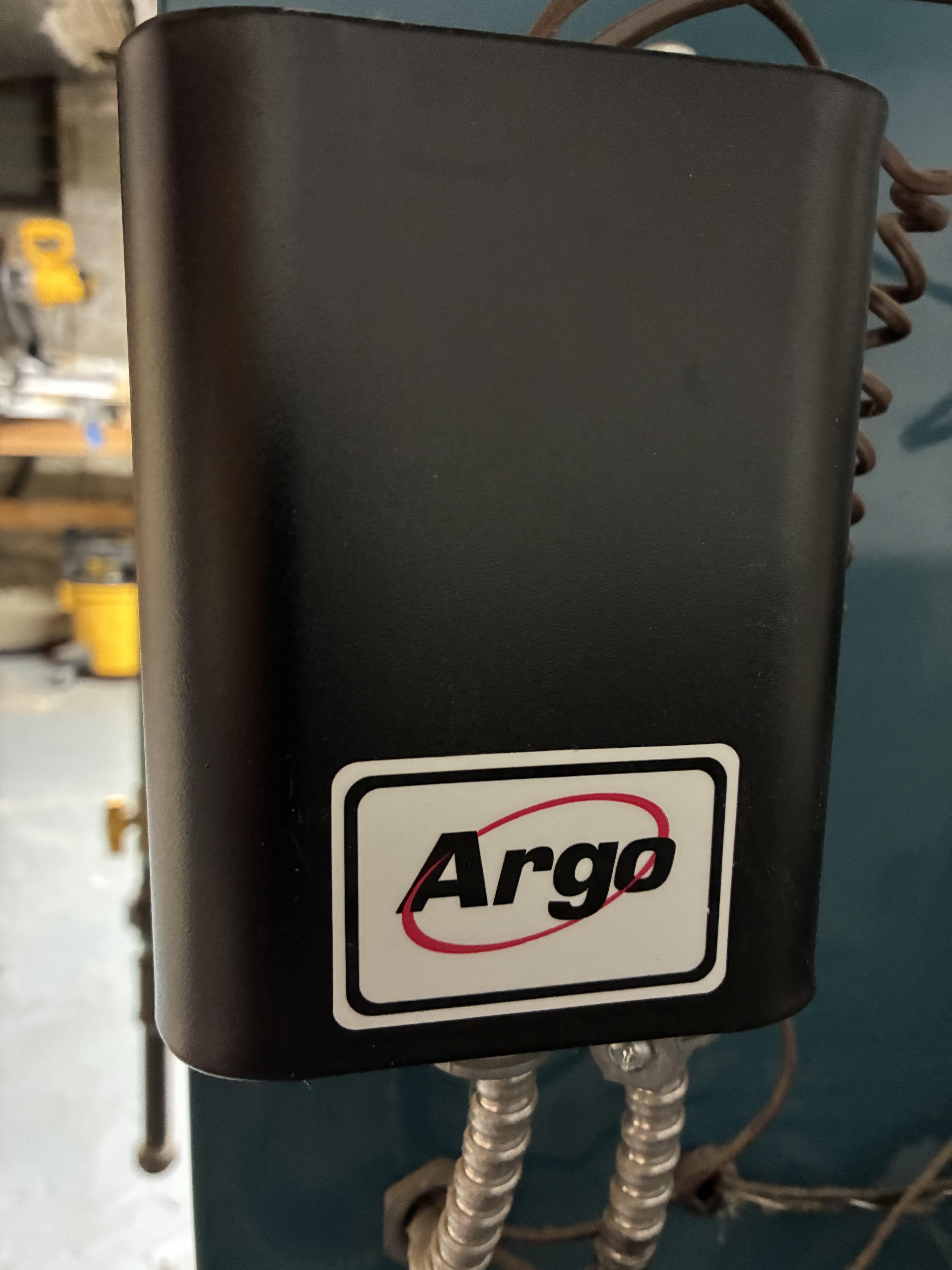
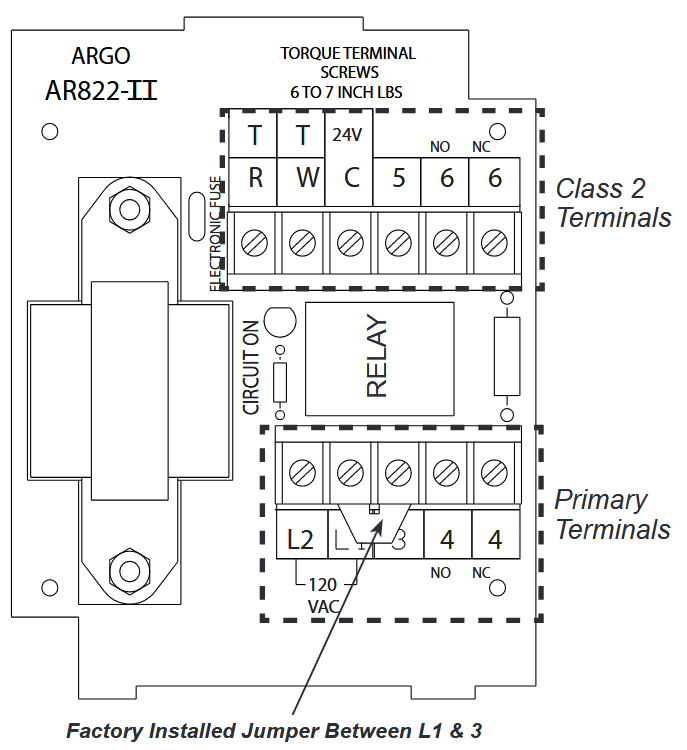
What role is the Argo relay playing in this setup? One of the wires from the Honeywell aquastat goes to the boiler, the other to the Argo.
 0
0 -
I mean the ball valve that interrupts the flow of circulation between the boiler and the water heaters heat exchanger.
three years ago, OK I guess that theory does not apply.
Still seems like you might have two issues going- perplexing.
0 -
@GW Just did the "swoosh" test, running hot water in a sink until the boiler fired. When I closed either ball valve (either in between the boiler and the circulator or in between the circulator and the indirect) I heard nothing. I did not leave either ball valve closed for more than a few seconds (I wasn't sure if it was ok to leave them closed longer). The pipe running to the indirect is hot.
0 -
Bob yes ok it would be just as the valve gets closed (about 80 to 90% I would guess) that you would hear the “swoosh”. Just like when you kink a garden hose. If you head nothing, that’s not sounding good. You really have to listen closely though. I would say a 1/2 a second to close it, maybe a full second.
It’s possible the circ is fighting sludge.
Did you try turning the other aquastat down to 130 yet? Making steam on a hw call isn’t good for a number of reasons
0 -
Bob that’s the relay control- it takes the low voltage signal from the tank’s aquastat and enable the circulator to operate and the boiler to fire up. I would suspect that is working normally
0 -
By the "other aquastat" you mean the Honeywell on the boiler currently reading 160 as shown in the picture above? I assume that means there could be a longer lag on getting hot water out of the faucets?
Thanks again.
0 -
The boiler aquastat should be wired in parallel with the heating thermostat. The aquastat for the indirect should go to the Argo relay along with the circulator wiring. Two seperate animals. The Argo relay has a 120 volt power source with a 24 volt transformer. All the Argo does is turn on or off the circulator based on water heater tank temperature. It has no way of controlling boiler temperature. The aquastat in the boiler does that. It should always keep the boiler water at 160° less the differential.
0 -
if your system is set up the way I would think it is, you’ve got two aquastats.
A- One is for your domestic hot water temperature, the temperature that comes out of your faucets. I believe you said it was set at 120 earlier.
B- The other is the aquastat keeps the boiler water from getting too hot/causing a boil. Two completely different functions. I believe you said it was set at 140 earlier.
It’s conceivable that the boiler loop (B) aquastat is not functioning properly. One hunch I have is simply turning down 140 down to 130, and see if the still boils. If it’s still boils, try turning it down another 10°. Obviously, it will take several hours for the boiler to cool down so this experiment may take a day or two depending on how much ambition you have, running up and down the stairs to your basement.
The trick is- You want the boiler water hot enough to get good heat transfer
but if it’s too hot, you start steaming, wasting fuel
0 -
Gary, That aquastat is set at 160, not 140 (see the picture above). That's the upper limit of the temperature range, right? I don't know offhand what the differential is.
Given what you've said, lowering that to 140 or even 150 sounds like a good way to start. For all I know, the tech who did last year's annual maintenance or the one who replaced my failed igniter and pilot, also last year, changed the aquastat setting.
0 -
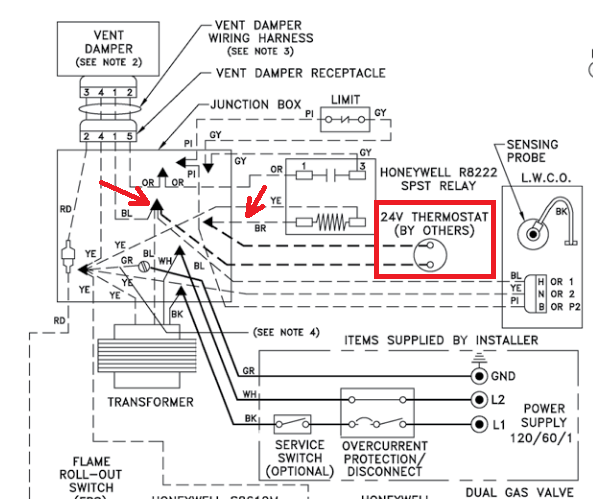
The boiler's aquastat looks like it its 24 VAC wiring. There are many ways to verify the boiler's aquastat's functionality. You could generate a long DHW (Domestic Hot Water) call for heat eventually the circulator should remain running and the boiler would shut down. You could disable the power to the circulator to speed up the process, disconnect the Argo relay's terminal 4 120 VAC to the circulator. Be safe shut the power off to the boiler when making any wiring changes.
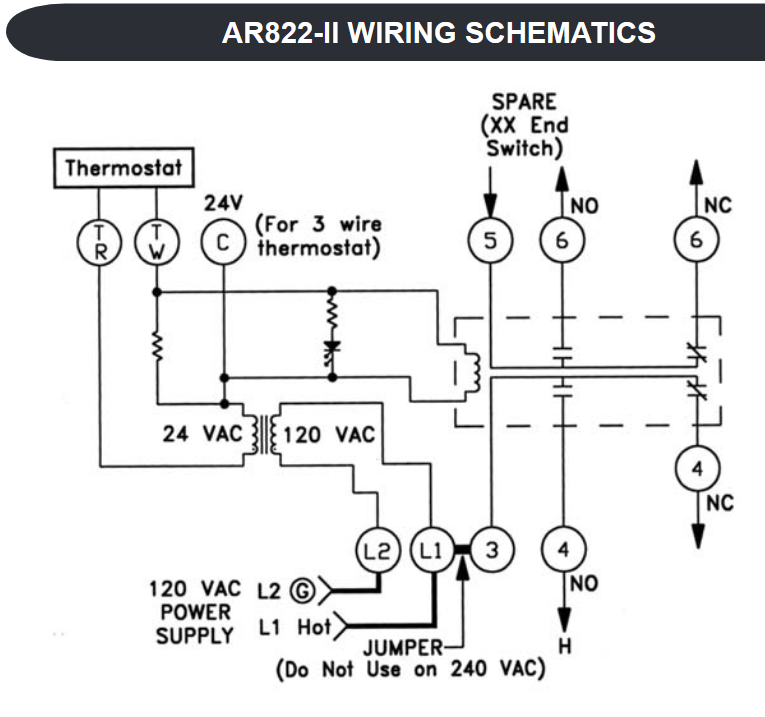
With that Argo switching relay I would suspect the system is wired like this.
The space heat thermostat goes to the Boiler's T-T terminals, which looks like it may be a Brown and a Blue wire (see below).
The "Spare XX" relay contacts of the Argo relay (two wires) with one side going through the Boiler's aquastat (in series), is also connected to the boiler's T-T wires.
So a space heat call for heat fires the boiler as long as there is a space heat call for heat making steam. This does not use the Argo relay.
When there is a DHW call for heat, the Indirect's aquastat closes which is connected to the Argo switching relay's "Thermostat" terminals TR and TW in the drawing below. This does a few things, it energizes the Argo relay, which in turn powers the circulator motor for the entire DHW call for heat, and also closes the "Spare XX" relay contacts firing the boiler. In the summer the boiler's water temperature is limited by the boiler's aquastat which is wired in series with the "Spare XX" relay contacts. So if either the "Spare XX" relay contacts open (DHW call terminated) or the boiler's aquastat contacts open (aquastat's set temp reached) the boiler's burner will shut off.
The space heat Thermostat could be wired through the 24 VAC side of the Argo relay (terminal 6, NC) to provide a DHW priority to help minimize circulator cavitation. That would let the Boiler's water cool down to the boiler's aquastat's setting during a DHW call in the winter. All depends on how savvy the person was that wired up the system.
 National - U.S. Gas Boiler 45+ Years Old
Steam 300 SQ. FT. - EDR 347
One Pipe System0






Categories
- All Categories
- 87.8K THE MAIN WALL
- 3.3K A-C, Heat Pumps & Refrigeration
- 60 Biomass
- 430 Carbon Monoxide Awareness
- 133 Chimneys & Flues
- 2.2K Domestic Hot Water
- 6K Gas Heating
- 124 Geothermal
- 170 Indoor-Air Quality
- 3.9K Oil Heating
- 79 Pipe Deterioration
- 1.1K Plumbing
- 6.7K Radiant Heating
- 397 Solar
- 16.1K Strictly Steam
- 3.5K Thermostats and Controls
- 56 Water Quality
- 51 Industry Classes
- 51 Job Opportunities
- 18 Recall Announcements