Boiler safety and startup tests, radiator replacement options

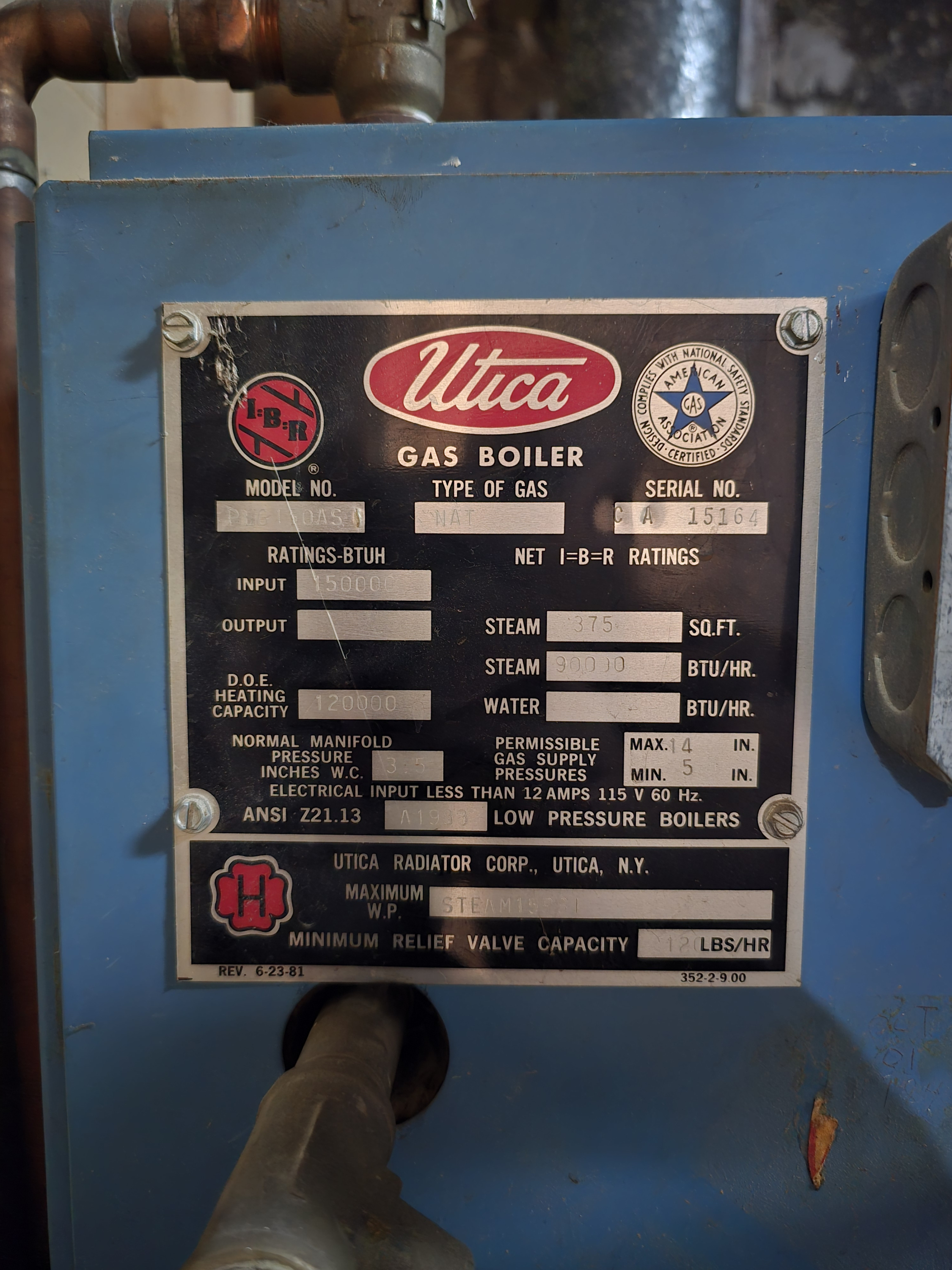
Hello, I've just been introduced to the world of steam heat, after buying a home that has a steam boiler and 1 pipe radiators. I read "We got steam heat", so now I kind of know what I'm looking at in my basement, but I was wondering what tests I should do now, before it gets cold, to make sure my system is fully operational come winter. We haven't needed the heat yet, since we moved in this summer. In the future I plan to install mini-splits, but for now I want to make the system we have work.
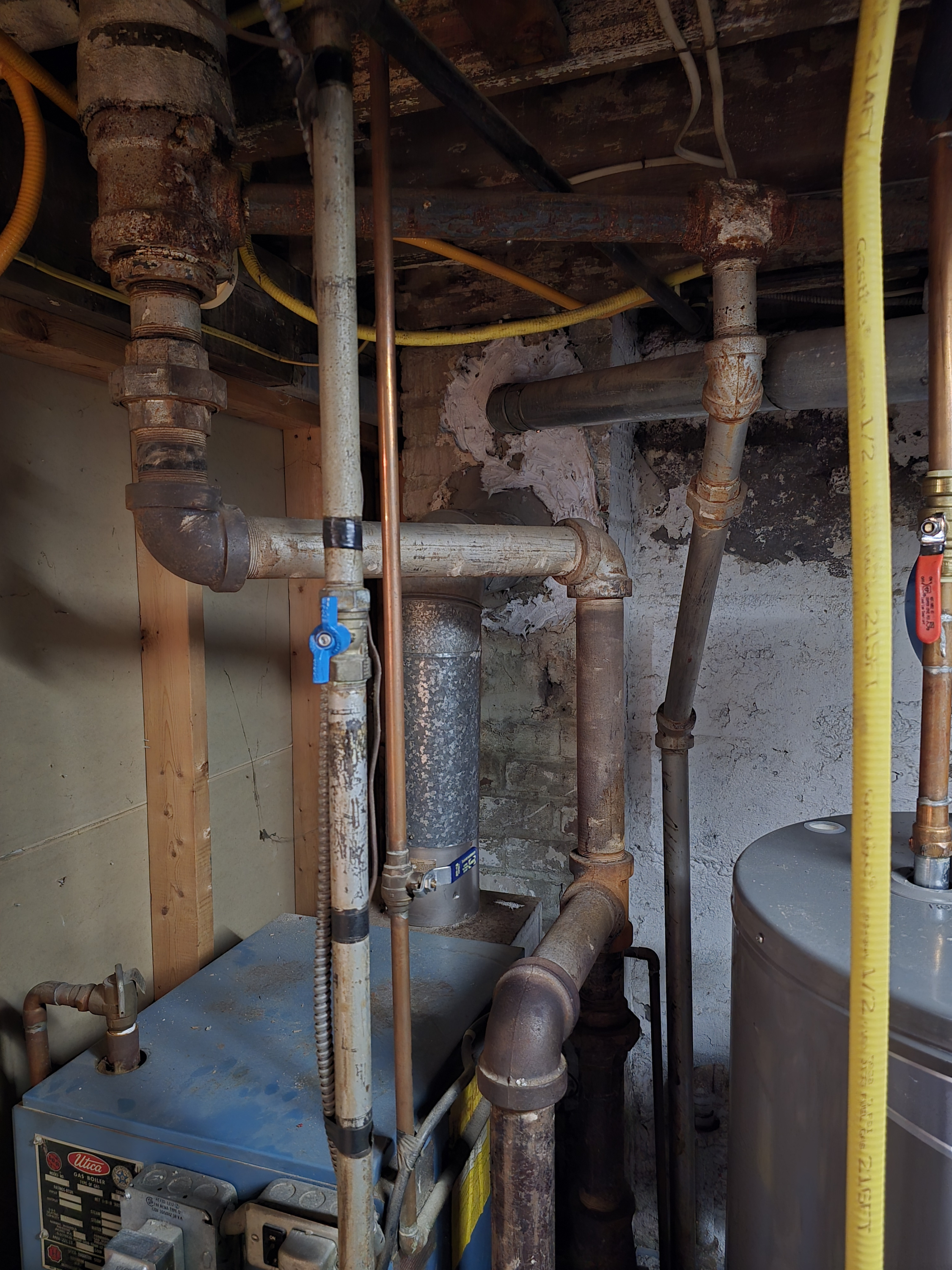
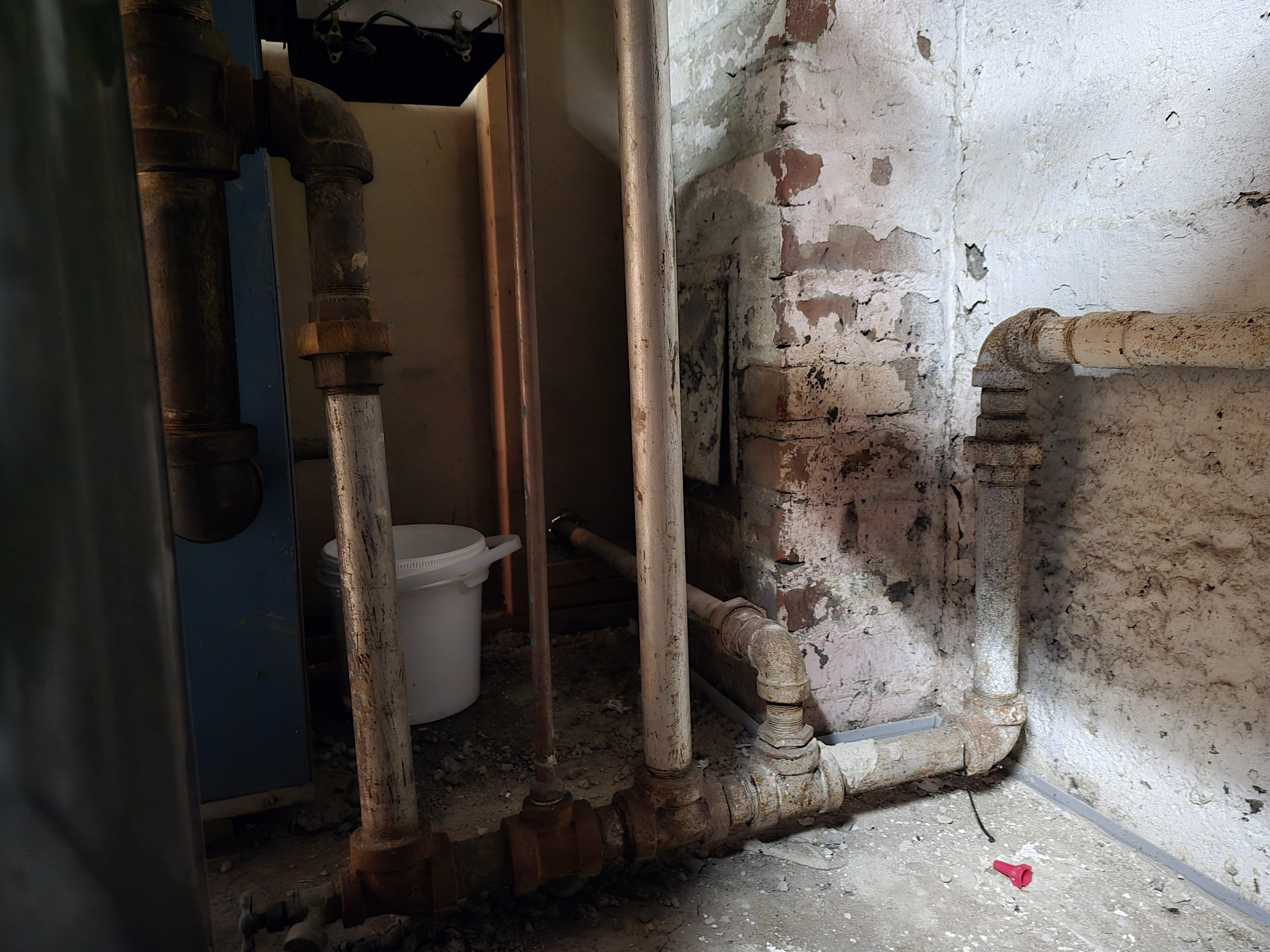
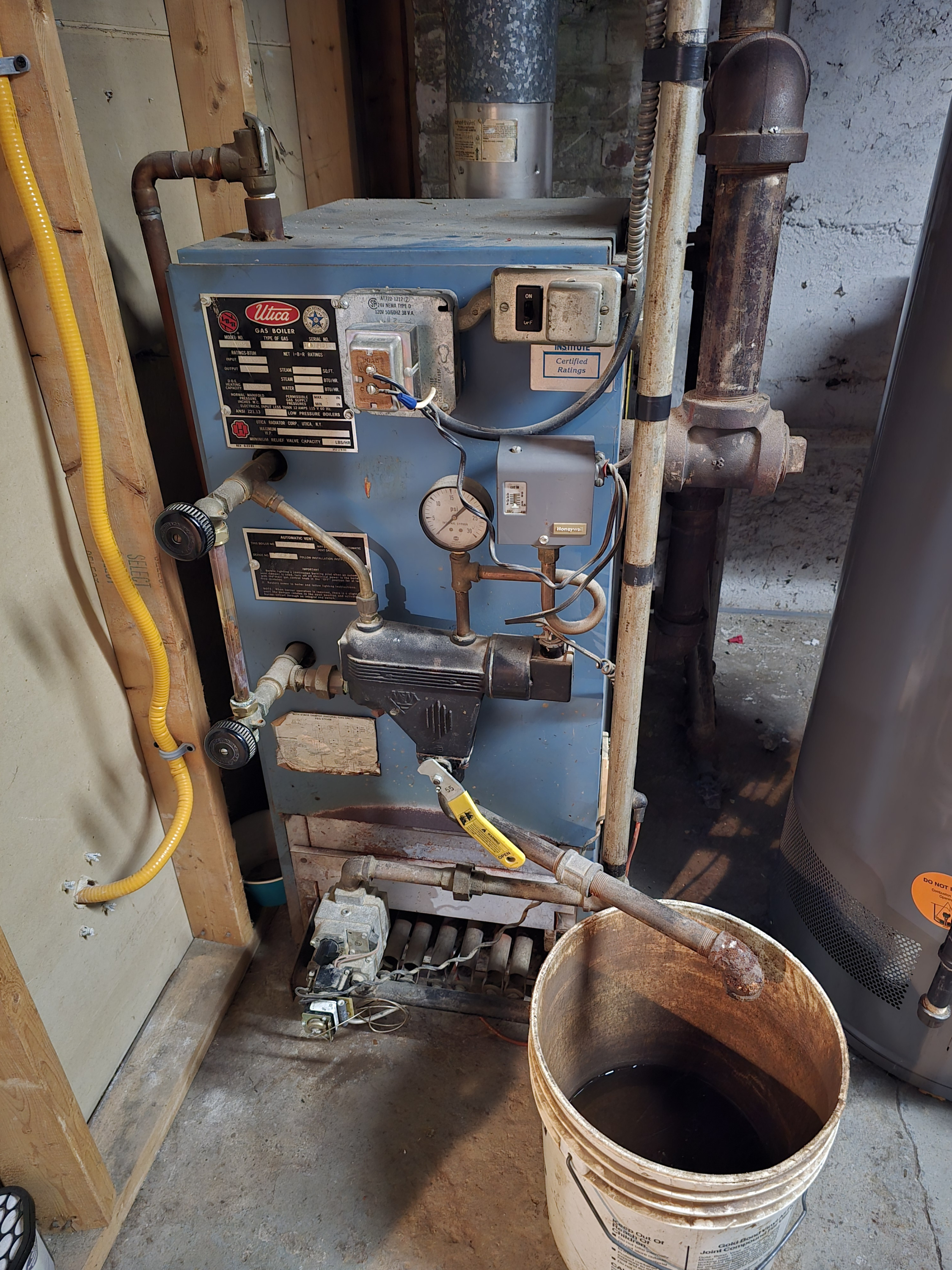
Details on my system: The house was built in 1951, Northeast PA region. It currently has 6 radiators, one cast iron baseboard, and two capped pipes where radiators used to be, but have been replaced by a standalone electric baseboard. Interestingly, there are 3 pipes leading into the wet loop from the radiators, seeming to make 3 separate loops. One leads from the main loop around the house, but the other two, while I'm not sure, seem to be from a radiator in the kitchen, and from the baseboard. A lot of the pipes are not insulated, which I plan to insulate once I know the system is working. Photos are attached.
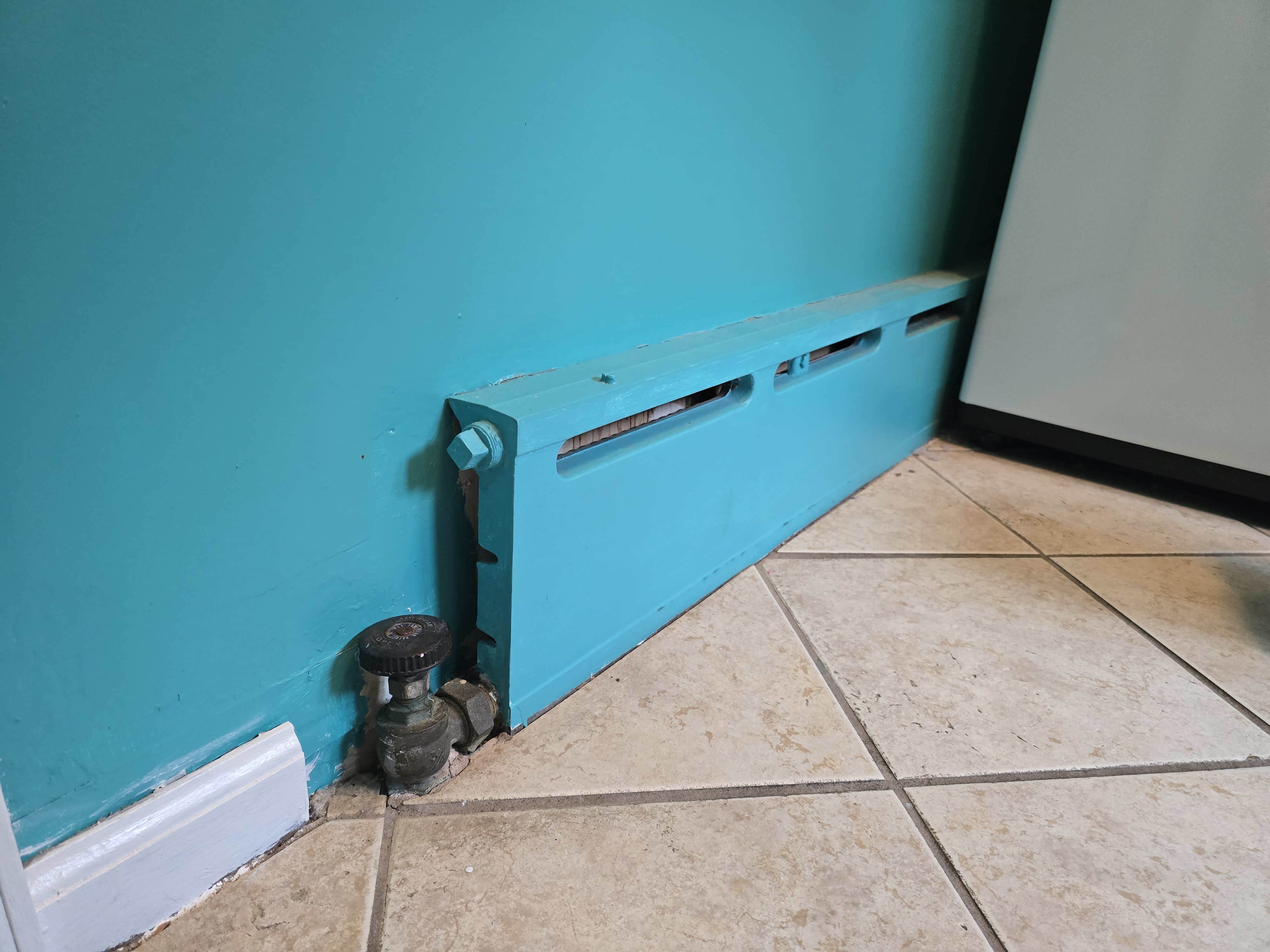
The cast baseboard has me worried, since it's a one-pipe, and in the book Dan mentioned that the setup can cause water hammer. Is it safe to have it on, or better to keep it shut? It's in the laundry room, so it's not really needed.
From what I saw in the book, I plan to do a leak test, and a low-water shutoff test. For the leak test, how do I know when the water has reached the header? And are there any other tests I should do, besides firing the system up and making sure every radiator gets warm?
Now, we are remodeling the bedrooms, and I found lead paint and plaster & lath, so the walls are getting stripped and replaced with drywall. The wife approval factor of the large radiators in each room is very low, and they take up a lot of space, so I was wondering what my options were to replace them. I found these slimmer, wall mounted radiators that I was thinking we could mount high up on the wall, both for floor space and so they're out of reach of the kids. I have experience with black pipe plumbing, so I'm not afraid of re-plumbing them a bit, but are these options that could work? Would the blitz ones, being aluminum, not cause extra corrosion? Or would I be better off leaving the existing radiators, and building a cabinet around them?
Thanks in advance!
Comments
-
Well let's see… for the boiler. There's no harm to filling it to the header. You can usually tell by the pipe getting cooler. Be sure to lower it back down, though, before you fire the old girl up!
The other two checks are the low water cutoff, and depending on the type of cutoff than can be variable. Some advocate lowering the boiler water level to below the cutoff; the boiler shouldn't fire. That's great — if you have a place to drain the boiler. If you don't… some (probe type) have a "test" switch which at least tests the electronics. Your type doesn't have the electronics, but it does have the valve with the big yellow handle. That should be opened once a week or so to blow any crud out — and if you do that with the boiler running, the boiler should shut off while you're at it. Be sure to have a bucket under it! Yo don't want water to get into the burners! Pressure control — the only reliable way to test that is to fire up the boiler and see what it does. The pressure control should shut off the boiler if the pressure goes to its setting. Simple enough — but if it's the code required 0 to 30 psig gauge, it can be hard to see any pressure building aat all!
Now on radiators. Yes, cast iron baseboard can be problematic, but it can also work. Make sure that it is slop0ed to the inlet valve so that it can drain — and make sure that that inlet valve is open and stays open. Don't close it! If it hammers — and it might — try putting a slower vent on it.
Not sure about some of the other piping. However, the big cast iron radiators put out wonderful heat. See if you can keep them… nothing else will do as well.
Now ONE OTHER THING. You mention lathe and plaster walls. Do NOT demolish them unless you absolutely have to. Drywall is a miserable low cost substitute. Lathe and plaster is quieter, provides decent insulation, and is much more stable. If they do have lead paint (I'd be a little surprised — trim yes, walls? Not so much — I've never seen it) you may be able to strip the paint without much trouble and without that much damage to the walls. Try that first.
Br. Jamie, osb
Building superintendent/caretaker, 7200 sq. ft. historic house museum with dependencies in New England1 -
OK, thanks for the advice!
I filled the boiler up, and no leaks presented themselves. Then I lowered the water to the top 3rd of the sight glass, turned the boiler on, and drained the boiler from the yellow handle, but the burner never turned off, and I got nervous before it was fully empty and shut the burner down. So I tried it the other way - with the boiler off, I emptied it completely, and then turned the burner switch and pilot on, and… the burner happily lit right up! I shut it off real quick, but I guess that means my low water shutoff isn't working. How do I go about testing and replacing it?
And regarding the lath & plaster: I do wish we could keep it, since my brother did a similar job in his own house and it was rough work. But the wife says the trim molding has to go, and the closet needs to be bigger, and attempting to take off the trim without damaging the plaster isn't working. Cap that with the discovery of the lead paint (yes, in the walls and not just the trim - the top layer of paint is fine but the layer underneath made my lead test kit go off the charts), and wanting to add in outlets and make sure the framing isn't balloon-style, it just makes more sense to take it all down and start fresh. I appreciate the tip though!
0 -
Where in NE PA are you located? You really need a pro………………..
 1
1 -
Argh. Well… I hate to tell you this, but 1951… does it have a basement? More than one story? May well be balloon framing. Now it may also have firestopping, in which case there's nothing wrong with balloon framing.
But two other things. The framing timbers are likely to be true dimension, or very close, and neither modern lumber nor dry wall panels are going to fit well. The modern lumber will be half an inch to three quarters of an inch narrower in all dimensions, and the framing may not be exactly 16 inches or 24 inches on center. Have fun.
Further, the original framing will be old growth, and much denser and harder than modern lumber — and you may find that floor joists are undersized by modern standards, because the old timber is significantly stronger and so narrower beams may have been used than modern code calls for (for instance true 2 x 8, where modern code would require nominal 2 x 10 — exactly the same strength) Remember — if you touch it, you have to bring it up to code.
Then there's that closet… be very very sure that one of the walls of that closet isn't holding the floor above up (bearing wall). Removing that can ruin your whole day…
Br. Jamie, osb
Building superintendent/caretaker, 7200 sq. ft. historic house museum with dependencies in New England1 -
Oh an one other thing. Your test of the low water cutoff indicates that it is not working, and the boiler is unsafe to run. It needs to be replaced.
Br. Jamie, osb
Building superintendent/caretaker, 7200 sq. ft. historic house museum with dependencies in New England 1
1 -
Good to know about the old framing, thanks!
I started disassembling the float, and testing each piece.
- The wiring, when disconnected, shuts off the burner.
- I confirmed with my multimeter that the switch opens and closes when the prong is moved up and down.
- With the float still in the housing, I tried wiggling it up and down by the stub that flips the switch, and it seemed to move freely.
- I pulled the float out, and mimicked the water rising by lowering it into water, and it floated properly, so no air leak.
- I looked inside the housing, and it seems pretty cruddy in there.
So every link of the chain seems to be operating fine, the only issue that I can imagine that caused it to not work is the crud build up in the housing (although the float itself wasn't actually too dirty, I suspect this boiler may have been serviced since its installation). My next step is to remove the housing and blow off valve, clean it out as best I can, and then reassemble and test it all together. Any tips for removing and cleaning it out, or just go at it with a wrench and elbow grease? Is it fine to use auto part cleaners (of which I have many cans), obviously with the housing removed from the boiler so nothing gets in it?
0 -
Update: I removed the float switch and housing from the boiler, cleaned it out well, replaced the gaskets, hooked it back up, and it works great! Didn't have to buy anything new except the gaskets and the 3/8" plug on the bottom to replace the old corroded one. Now, when the water is low, it shuts off as it should.
0 -
if you score the paint between the trim and wall and carefully pry with putty knives and small pry bars, maybe up against another putty knife or shim on the wall to spread the force out you should be able to get the trim off without damaging the plaster unless the plaster is actually gauged up to the trim.
balloon framing in 1951 would be unusual. i also would expect the plaster to be on rocklath or expanded metal lath, not traditional wood lath. by that point the plaster was a mill blended product that came to the job in sacks and frequently had asbestos blended in to it for various reasons or contaminating the mix, so test it for asbestos before you start tearing in to it. make sure you test a sample of the base and finish coats and the gypsum panels if applicable.
1951 lumber is likely to be the 3/8 below nominal lumber. IE a 2x4 is 1-5/8" x 3-5/8" whereas modern lumber is 1/2" below nominal so a 2x4 is 1.5" x 3.5". It is likely on 16" or 24" centers so 4' material will land joints at studs although there may not be blocking in some areas that a house framed for drywall would have because they could fill in areas with metal lath and base coat plaster that you would have to frame out to support drywall.
1951 isn't ancient history, we were mostly building houses the way we do now(although i question if it is that new if it has a steam system and not some form of hot water, new residential steam installations were becoming pretty uncommon by that point.)
 1
1 -
Virtually every old home has lead paint in under layers. Generally not a concern if painted over and not flaking up.
0


Categories
- All Categories
- 87.8K THE MAIN WALL
- 3.3K A-C, Heat Pumps & Refrigeration
- 60 Biomass
- 430 Carbon Monoxide Awareness
- 133 Chimneys & Flues
- 2.2K Domestic Hot Water
- 6K Gas Heating
- 124 Geothermal
- 170 Indoor-Air Quality
- 3.9K Oil Heating
- 79 Pipe Deterioration
- 1.1K Plumbing
- 6.7K Radiant Heating
- 397 Solar
- 16.1K Strictly Steam
- 3.5K Thermostats and Controls
- 56 Water Quality
- 51 Industry Classes
- 51 Job Opportunities
- 18 Recall Announcements