Radiant heat questions

I’ve done pretty much every type of Uponor radiant install over the years, from joist-track systems and Infloor-type heating systems to Quik Trak, Warmboard, PEX tied to rebar, and PEX stapled over foam.
On a current residential project, the GC is proposing putting the vapor barrier over the top of the PEX tubing before the reinforcing steel and concrete are placed.
That’s obviously ultimately the GC’s call, but I can’t say I’ve ever seen a vapor barrier installed over the radiant tubing, especially going into the pour. Typically I’ve seen the vapor barrier placed under the XPS/insulation, with the tubing and reinforcement above it.
Has anyone installed it with the vapor barrier over the PEX, and is there any Uponor guidance supporting that assembly?
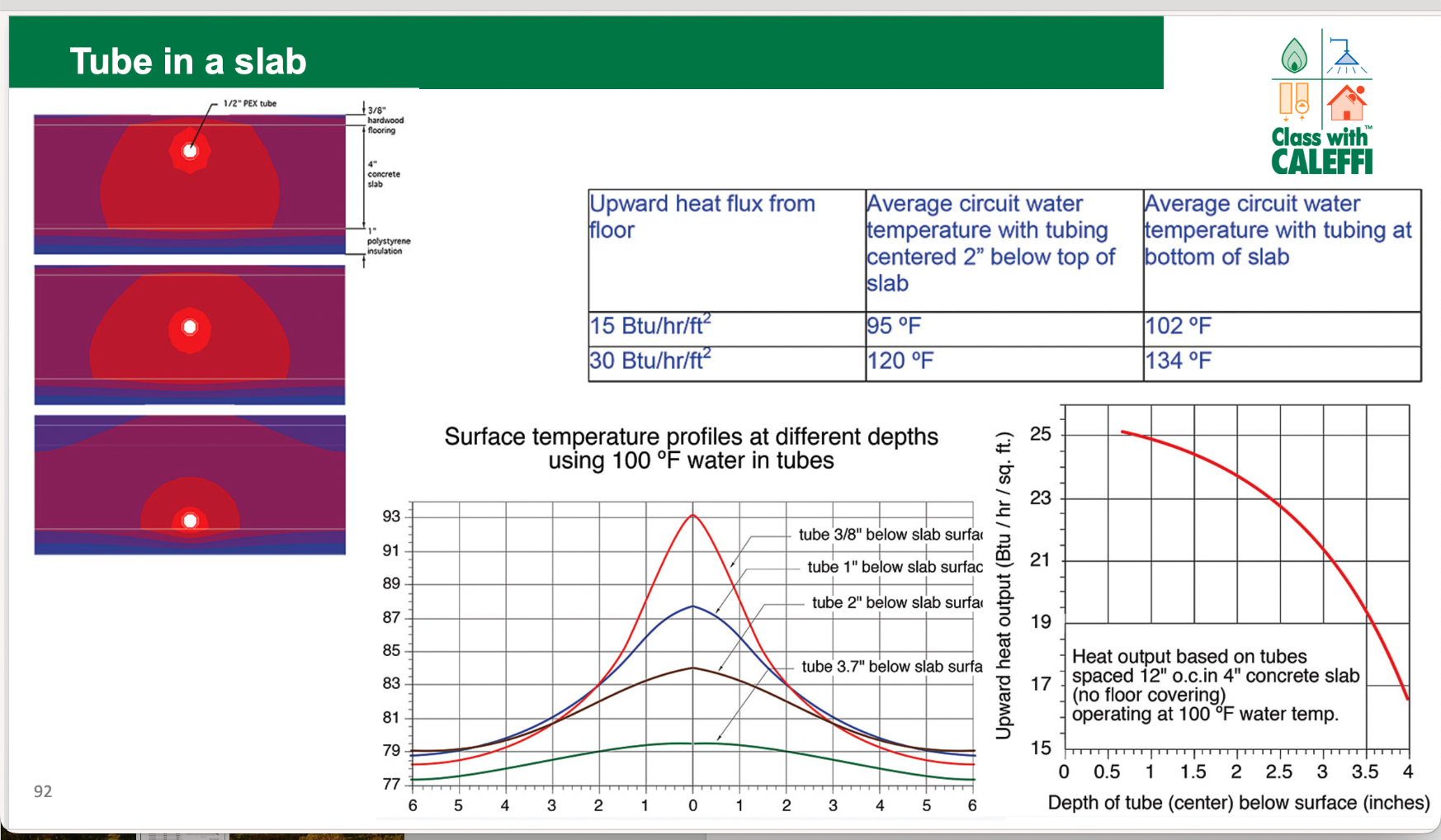
I’m also interested in the recommended tubing depth/cover in the slab. I normally try to keep the PEX at least 2 inches below the finished concrete surface for protection against future drilling, anchors, saw cuts, etc., while still maintaining good heat transfer.
Curious what others are using for:
- Vapor barrier location relative to the XPS and PEX
- Minimum/recommended concrete cover above the tubing
- Whether placing poly directly over the PEX creates any issues during the pour
- Best practice for protecting the tubing while still getting efficient heat transfer
Comments
-
It seems the barrier over the tube may result in voids around the tube, no direct contact between tube and concrete?
Steel over the pex?? That will put the tube pretty deep.
In a 4" pour with 1/2 rebar, pex over the bar ends up about 2" below the top.
What about just taping the seams of the XPS?
I also see spray foam used for under slab insulation, giving you an excellent barrier and whatever R value you want to pay for. 2" is common around here.
Concrete gets poured and pumped over concrete, maybe on a daily basis. I don't know what it needs protection from?? 6 mil plastic vapor barrier would not offer much protection?
2" of typical concrete mix is fine. Pea gravel mix, 3/8" aggregate can be 1-1/4- 1-1/2" over the tube.
One rule of thumb is 3X the aggregate size over the tube.
You have to really work to keep all the tube exactly 2" below. Mostly it ends up deeper unless you use a lot of bar chairs to hold up the mesh.
Tube 2" below allows for a 1" or so deep control joint saw cut
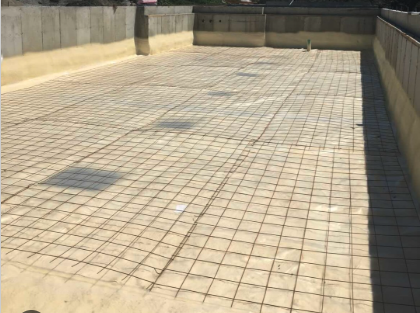
Spray foam and mesh
 Bob "hot rod" Rohr
trainer for Caleffi NA
Living the hydronic dream0 -
Poly goes under the foam. Always. Its entire purpose is to prevent ground moisture from migrating up into the foam, so putting it over the tubing provides nothing but a heat transfer barrier between the tubing and concrete.
We had an "engineer" spec a snowmelt system this way many moons ago, and were back after the first heavy snowfall to tear it up and do it again the right way. You wouldn't think that a layer of plastic would make much of a difference in heat transfer, but even with 180* SWT (trying to limp it through the winter) the slab surface barely broke 40*. Thing ran for several weeks straight with a 7-8* delta. When we tore it up, there were massive voids in the concrete around the tubing and almost none of it encapsulated the tubing properly due to the air under the poly. This same "engineer" had us do another one elsewhere without insulation or vapor barrier at all, claiming that the earth maintains a constant 54* and will aid in the snowmelt, while the concrete is permeable for drainage. We tore that one up too.
I would agree with the 3x aggregate size like Bob said. Response time and efficiency tends to be a little better with the tubing 2" down, but only when tied to a thin mesh. When tied to #4 bar (per typical), there are also a lot of voids happening in my experience and the tubing is better placed at the bottom of a <4" pour with a majority encapsulation. The bar and tube tied together create a "shelf" of sorts and often end up with air pockets below. When I do my own pours, I use cattle panels with a 6x6 grid of 4ga mesh and suspend it on 1" chairs with tubing tied on top, then sometimes run a 24" grid of rebar on top of the tubing if it's 5" or more. It might be overkill, but they never move and the heat transfer is unmatched.
0 -
Eh? The vapour barrier in a slab is to prevent moisture from the ground migrating into the slab. The vapour barrier is the bottom layer.
If the contractor is worried about tearing the barrier with the concrete pour (and he might well be) a sand or better foam insulation (spray or rigid) cushion will take care of that.
Br. Jamie, osb
Building superintendent/caretaker, 7200 sq. ft. historic house museum with dependencies in New England0 -
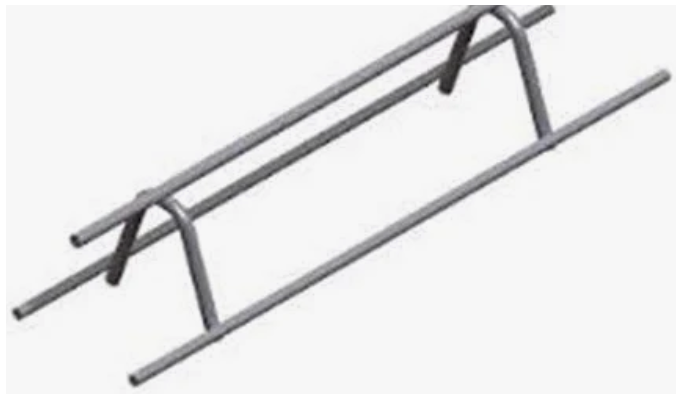
Here are some options. These are continuous strip bar chairs, 5' lengths. These work well for rebar, but even with heavy gauge 6X6 mesh, it will still sag even with these every 2'. And they are $$
Opinion varies on the best concrete slab. Some installers swear by poly or steel fiber in the mix instead of rebar. Some use just rebar, some use just the heavy gauge mesh panels. If it is an engineered design, you may be tied to the spec on the prints.
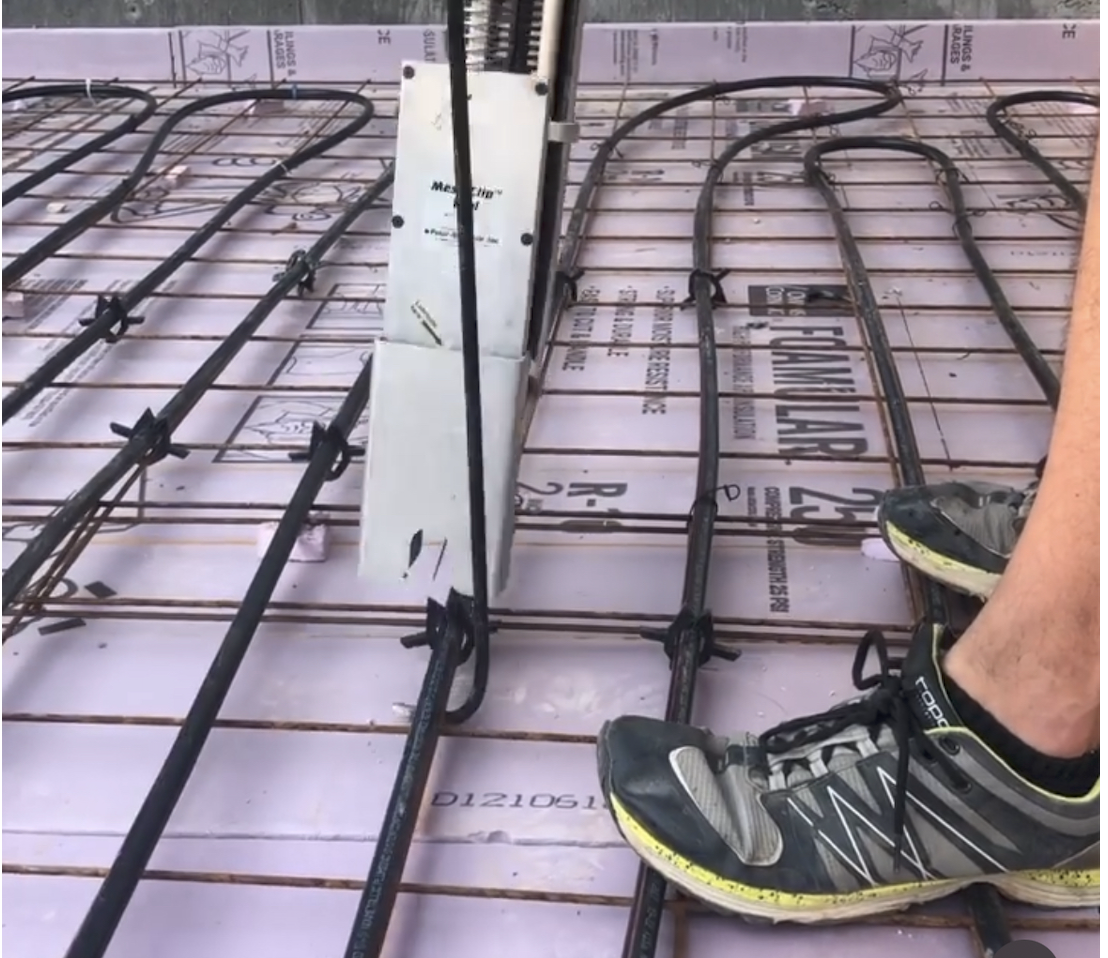
On my own slab poured recently I used small blocks of 1" foam under the 6X6 #6 mesh. The mesh comes in sheets 8x16 or 8X20' panels. Tube 6" on center makes a big difference in response and very low supply temperature needed. Ideal for heat pump slabs.
\
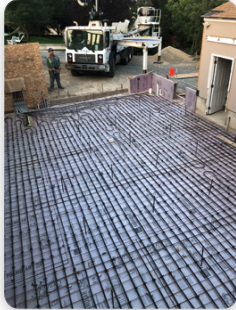
Do your best to keep the tube into the slab, at the bottom of the pour you will not get the concrete under the tube very well. Response and required SWT takes a hit with tube at the bottom of pours. See the output graph below.
Don't expect the concrete guys to lift the mesh as they pour! In one case they lifted a section too high and the tube was exposed in the pour. That was a mess to correct.
Bob "hot rod" Rohr
trainer for Caleffi NA
Living the hydronic dream1


Categories
- All Categories
- 87.8K THE MAIN WALL
- 3.3K A-C, Heat Pumps & Refrigeration
- 60 Biomass
- 430 Carbon Monoxide Awareness
- 133 Chimneys & Flues
- 2.2K Domestic Hot Water
- 6K Gas Heating
- 124 Geothermal
- 170 Indoor-Air Quality
- 3.9K Oil Heating
- 79 Pipe Deterioration
- 1.1K Plumbing
- 6.7K Radiant Heating
- 397 Solar
- 16.1K Strictly Steam
- 3.5K Thermostats and Controls
- 56 Water Quality
- 51 Industry Classes
- 51 Job Opportunities
- 18 Recall Announcements