Adding More Insulation to SpacePak Air Handler?

Hello Pros!
Had a question for y'all. We had a SpacePak system installed a few years back on the floor of our unconditioned attic of our 1912 home. During these really hot days in Chicago, the unit struggles to keep temp so I'm constantly upping the temp. In an attempt to stop the family from whining that it's too hot in the house, what can I do? I'm having the roof ventilation checked, and a most of the runs are buried under blow-in insulation. Have any of you experienced this with your customers? Can you wrap the air handler in some sort of insulation without bocking service doors\plate?
Thanks,
Lew
Comments
-
measure the and the air handler and again at the furthest location or 2°F is fine
The ventilation may be your issue if you’re not bringing in the same amount of hair that you’re exhausting it’s coming from the condition space and that you don’t want
My unit is in the attic for the second floorit runs about 25° below ambient but the humidity is very what I want
0 -
what thermostat setting are you trying to maintain and what does the system actually achieve on those hot days?
0 -
I usually start at 74/75 in the AM. By midday it won't hold that. By night, I'm at 78 and holding.
0 -
just double checking you weren't trying to get it down to sweater weather like I have seen a lot this year on forums lol. This been a consistent problem on the hottest days since install? sort of sounds like undersized, but that could be airflow/refrigerant possibly. If people have been up in the attic since install I would maybe investigate the round tubing to the outlets, make sure they aren't crushed. typically you will have big issues if those get stepped on though, more than your current issues anyway
0 -
HA! I know better to run the unit super cold like that. If I recall, it did struggle in the past during those hot days. The handler and compressor are 3-ton units to cool a 1400 sq foot house with 22 outlets. I'll head into the attic once this heatwave passes through Chicago. Thanks!
 1
1 -
4 f degrees difference in setpoint is a big difference in load when the delta to design temp is only around 15 f degrees.
0 -
is that 4* from duct leakage or the attic exhaust drawing in outside air into the condition space?
I haven’t seen an attic fan that doesn’t pull air from the conditioned space
0 -
Sorry….Can you explain it in non Pro terms? 😁
0 -
The outside design temp for chicago is probably about 90f. if the inside design temp is 75 f then the temp differential between the 2 is 15 f degrees. if the indoor temp is 78 then the differential is 12 f degrees.
The relationship between the heat gain and the temp differential is linear so the difference between trying to produce a differential of 12 f degrees vs 15 f degrees is a 20% difference in load.
It is probably actually closer to 100 in chicago right now but if the dewpoint is significantly lower than the design conditions then the latent heat will be less and you may still be within the design conditions.
 2
2 -
Thank you for that. So, if I understand, it's running as designed?
0 -
maybe. it could have a small leak and not be running at capacity too. that was very uncommon until around 20 years ago but newer stuff tends to come with leaks from the factory. It could be worth investigating if all of the coil is cold and possibly checking the subcooling or superheat. 3 tons for that space seems adequate but if you have any significant supply or return duct leakage it probably isn't.
0 -
Got it. I'll see if the group I used to install and service it can come out and check. Appreciate the help!
0 -
Soooo. Here's an update. Currently, the temp is 96 with a "Feel Like" of 105. The thermostat is set to 80 otherwise the system would not keep up. I'm having a tech come out tomorrow to assess and see if I'm leaking refrigerant and if there is anything going on with the system in the attic.
0 -
refrigerant level
Air flow too high or low
Duct leakage
Many things need to be looked at.
shut off the attic fan and see if it helps.0 -
duct leakage is very common and is a efficiency killer.
1 -
I don't have an attic fan.
0 -
the difference in return and supply temp could help you diagnose too. It could be anywhere from maybe 15 f degrees to 30 f degrees depending on outdoor temp and humidity and a few other things but if it is say 5 f degrees you know something is wrong.
0 -
Think about this for a half minute.
I was able to sell a 2.5-ton air conditioning system to someone in southern New Jersey when all the competitors were saying that a 3-ton unit was required. I did the same load calculation as all the other contractors did. The difference was that I also did a load calculation for the ductwork located in the crawl space under the house.
Long story short, as a result of Hurricane Sandy, the home was lifted about 9 feet above its original level. That made the previously unusable crawl space under the house about 11 feet above the dirt floor—plenty of room to install ductwork and an air handler above the minimum flood elevation.
When I changed the location of the ductwork from the unconditioned attic to the unconditioned crawl space under the house, the load dropped by 5,700 BTUs. A half-ton smaller unit would work fine. It took some convincing for the customer, because I was the only one proposing the ductwork in the cooler location.
Customer: The square footage of the home is why you need 3 tons of cooling, right?
Contractor: No... the amount of heat that infiltrates into the home is why you need 3 tons of AC. The attic can get to 120°, and that does a number on the temperature difference between the air inside the duct and the air outside the duct. The crawl space under the house was 45° cooler in the summer, and that created a much smaller temperature difference between the air in the duct and the air in the space around the duct. And it will cost less to operate a smaller compressor for the rest of the life of the equipment.
Customer: So it is less expensive to run too?
Contractor: Exactly!WHAT DOES THAT HAVE TO DO WITH YOUR SITUATION? In your case, you already have the ductwork in the attic.
Make sure it is not crushed. Make sure there are no air leaks in the ductwork. Make sure that the ducts are covered with insulation as much as possible. A person with an infrared camera can pinpoint those leaks in real time just by looking at the image.
Add an attic fan to bring in the 95° outside air through the attic ventilation and exhaust the 120° attic air. You may make the air around the ductwork 20° lower, and that may be all you need.
Hope this helps.
Edward Young Retired
After you make that expensive repair and you still have the same problem, What will you check next?
 3
3 -
@Sweet_Lew , is a few years, three? Does it get a yearly maintenance? Is the air filter clean? There should be an 18-22 temperature split between the supply and return taken at the air handler. If the system doesn't keep up when temps are higher than a Chicago design day, that's normal. If the system can't maintain on a design day or cooler, then it needs to be checked.
 1
1 -
an ir camera on the ceiling could give you a good idea about if the supply is dumping a lot of cold air in the attic too. I suspect it would be really easy for something to go awry at one of those escutcheons and send the air back in to the attic instead of out in to the room.
1 -
Space Pak ductwork and braches are pretty hard to screw up. Its based on high velocity, so the design prevents air leaks.
1 -
Duct air leaks (both supply and return)
air filter
18-20TD between supply and return
Ductwork insulated
check refrigerant charge if need be
cleanliness of indoor and outdoor coils
make sure condensate is draining
all return and supply grills open and clean
1 -
Hi. Just checked the contract. It was installed late 2020, serviced yearly, and using MERV 5 filters changed out monthly. I put a meat probe into one of the upstairs outlets and it's registering high 60s in all rooms. Downstairs I can reach. Have high ceilings. Company who installed and services the system is coming out tomorrow.
0 -
what is the temp at the return?
0 -
Temp at the return is 80.8. Thermostat is set to 80. Both are on the 2nd floor landing.
0 -
unless it is very humid that delta is too low, either it isn't running at capacity because of a charge problem or an airflow problem at the condenser or it is sucking in a bunch of attic air and the actual return at the evaporator is like 100
 1
1 -
I'm tempted to say it's a refrigerant loss, but there's no mention of freezing or decreased air flow. The condenser could be cycling on high head pressure. The compressor could be cycling on thermal overload. Last week I had an intermittent ECM condenser fan motor. First time I saw that.
0 -
i also have a Unico SpacePak, I'm a little north of you and it's not keeping up either, mine is above a 3 car garage. im getting low 60s out of the vents. on mine the restrictor was removed which I see is a problem. Need to go get my Amp clamp to see what to set it to so I can get the right flow. make sure your returns are actually trying to evac the room you are conditioning and not hot air. Last summer one of mine fell off and it wasn't working.
0 -
Morning everyone,
Will post the tech's findings. Currently, Temp outside is 85 with a heat index of 90 with 61% humidity. AC is holding well at 75.
0 -
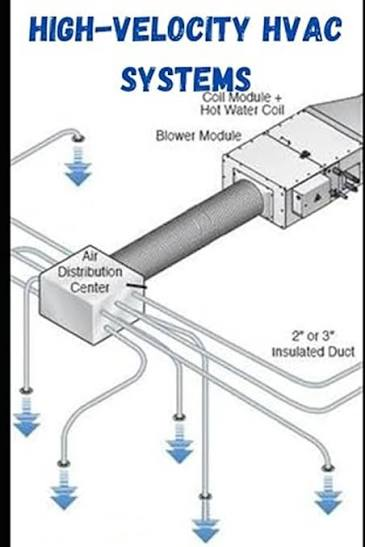
Hi velocity systems are straightforward if you've done your homework to determine room by room CFM/Cooling requirements based on a Manual-J and follow the rules for max/min tube length and takeoff placement on the main plenum.
The systems require the installer to read and follow the the layout instructions and verify static pressure versus the data sheet. Should be simple as piping a boiler but we've seen plenty of those installed with no regard to the manufacturer drawings.
Some installers think its a matter of running tube where ever you want. Hint, this is not the way to do it.
 1
1 -
Welp…That was a waste of $100.
Could not find anything wrong. No leaks anywhere, coil wasn't dirty, electrical readings were normal, refrigerant levels\pressures were normal, temp differential was fine (between 18 and 20 degrees difference between return and vents), changing the filter back to an OE metal mesh one didn't make a difference. Perhaps a 3-ton system isn't enough? I may call in another company that is NCI certified to get a second opinion. It is an old house with plaster walls and little to no insulation in them. Attic is insulated.
0 -
you could do a heat gain calculation and see what it comes up with.
also make sure the condenser fan isn't intermittently stopping or something. not 100% sure how to make sure the airflow at the condenser is right. especially if it has a txv it could have the plausible superheat and subcooling with reduced airflow.
looking at the coil itself and seeing if it is all sweating indicating it is getting enough refrigerant could tell you something.
the current draw on the condenser if it is way off would tell you if it isn't running at full capacity although it usually is a 240/208 rating so the current is inherently less on 240
1 -
what is the RH Outside?
What is the RH Inside?
How long has this system been installed?
We’re static pressure readings taken and compared to day one?
0 -
If RH means Relative Humidity, Outside currently is $40%. Inside is 42%. System was installed 10/2020. Don't believe static pressure readings were taken (it wasn't listed on the invoice).
0 -
it has been 100 since 2020, did it keep up then? any siding or roof work since then that might have covered up the intake or exhaust roof ventilation? change to a darker roof color?
0 -
I honestly can't remember that far back, lol. I noticed it last year. Just had a new roof installed a few weeks ago, same light grey color. I actually have more ventilation than before. I'm going to call an NCI certified company and have them assess.
0 -
Supply and return temps at the AHU and at supply and return registers should be close. If not that would show duct leakage or lack of insulation.
If the suction and discharge temps at the condenser are normal and the unit is making an 18-20 td it is probably doing all it can.
A quick check on any unit is to see how much condensate it is making. If it is dumping a good amount of condensate, it is generally working.
We used to get calls on roof top units in stores that had multiple units. They would say the "AC is down" but they never knew which unit.
First thing we did on the roof was walk around and look at the condensate output. If one was running and there was little or no condensate you found the unit…most of the time.
2 -
Thanks. The unit is dehumidifying quite well based on the large puddle it has left outside. So it sounds like a 3.5 or even 4-ton system would have been a better choice.
0 -
i don't know enough about how heat gain calculations work. with heat loss calculations you have a design temp that isn't the coldest it gets but it doesn't stay the coldest for very long. it seems when we have very high temps we stay there for several hours so if we design for say the 1% highest temp we are going to be short some days.
1 -
I’d be inclined to add more insulation / air sealing than upgrade unit size. Insulation will benefit you all year, hot or cold. Upsizing your unit will help you 1% of the year you need it.
1


Categories
- All Categories
- 87.8K THE MAIN WALL
- 3.3K A-C, Heat Pumps & Refrigeration
- 60 Biomass
- 430 Carbon Monoxide Awareness
- 133 Chimneys & Flues
- 2.2K Domestic Hot Water
- 6K Gas Heating
- 124 Geothermal
- 170 Indoor-Air Quality
- 3.9K Oil Heating
- 79 Pipe Deterioration
- 1.1K Plumbing
- 6.7K Radiant Heating
- 397 Solar
- 16.1K Strictly Steam
- 3.5K Thermostats and Controls
- 56 Water Quality
- 51 Industry Classes
- 51 Job Opportunities
- 18 Recall Announcements