Lochinvar WHN199 getting flame ignition fail regularly - only when propane tank was filled full

Hi! I've been struggling with this problem for a year or so.
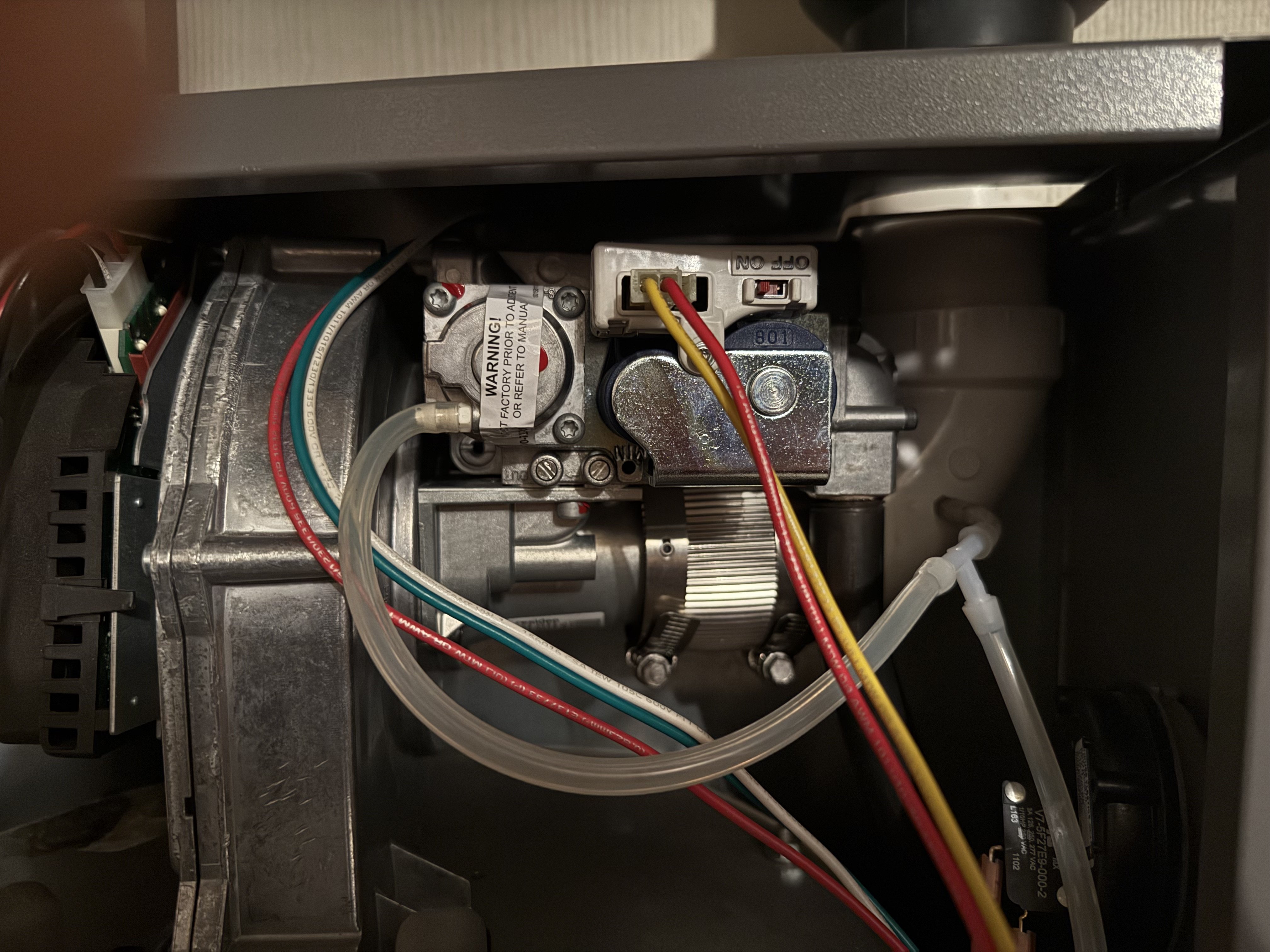
I have a Lochinvar WHN199 that is giving a flame lockout error. It tries to light four times and goes into lockout. It is converted to propane, and only happens when the propane tank has been recently filled full, and starts working properly after the tank has been used for a week or so. The inlet propane pressure seems fine; 12.4". I tried replacing the gas valve assembly, but the problem still persists.
The boiler will light immediately if I remove the clear air hose attached to the gas valve assembly and lightly blow into it as the ignition is sparking. specifically, I can disconnect the hose at the three way split (see photo below), and lightly blow into it towards the gas valve. When it is in pre-purge, I don't feel any air coming out of the white air inlet pipe, but it is clear (no obstructions).
Any ideas?
Comments
-
Have you checked the LP line pressure right after the tank is filled and before any appliances are used?
It seems that as you use the tank you may be dropping the pressure.
Is there a high gas pressure switch on the boiler?
0 -
Have you checked the LP line pressure right after the tank is filled and before any appliances are used?
I checked the pressure at the boiler, based on the directions that came from Lochinvar. At 12.4", it is within range. And to reiterate: the problem is when the tank was recently filled; it seems fine after the tank is a bit lower, and once it is working again I'll take another pressure reading.
>
Is there a high gas pressure switch on the boiler?No, I don't have that.
I did another test: simply pinching the line will make it also light. Super strange..
0 -
I had a run of issues with air in the LP tank after filling a few years ago. sounds similar. things a tech can check, static and dynamic gas pressure (12.4 is static according to your comment, what does it drop to at ignition high fire etc, needs to be within range but record the number), combustion (with analyzer set per the manual) venting clear and within spec and not holding any condensate
0 -
are you measuring the pressure while gas is flowing and it is failing to ignite?
0 -
Interesting! It seems to consistently happen though, right after a fill up. Maybe air would get in each time?
I'm hoping to not hire a technician and try to solve it myself.
Yes, I believe I measured the static pressure, per the manual's instructions: unscrewing the right hand port one full turn and using a manometer. I do not have an analyzer to measure the combustion. The vents are clear, and don't seem to be holding any condensate.
Even if I measured all these things…and assuming the pressure drop is within range…what else could be changed or modified to look at or replace? I'd hope that simply replacing the gas valve assembly would have fixed this, but it did not.
Other data points: I'm at ~6600' elevation.
0 -
No, I have not done that, but I can. What should I look for, other than being "within range" of what the manual says? What would be a solution if it isn't "within range?"
0 -
The item to look for when testing the dynamic pressure is that you don’t want to see a big pressure drop when the boiler ignites. Some boilers can’t tolerate more than a 1” pressure drop.
And if you find that there is a large pressure drop, the cause may be a bad pressure regulator or the piping from the regulator to the appliance (boiler) hasn’t been sized properly and the pressure drop is too high for the boiler to tolerate. These negative pressure gas valves are finicky.8.33 lbs./gal. x 60 min./hr. x 20°ΔT = 10,000 BTU's/hour
Two btu per sq ft for degree difference for a slab 1
1 -
or liquid propane is getting in to the regulator or there isn't enough space over he liquid to generate that volume of gas at that outdoor temp. does it happen after all the gas appliances have been off for a while or only after other appliances have been drawing from the tank?
if the dynamic pressure drops a lot, probably time to talk to the propane supplier about the tank setup.
 1
1 -
That li'l clear plastic tube is the vent for the gas valve regulator, it allows the gas valve to compensate for the pressure in the sealed combustion chamber. I'm having trouble seeing how the tank level and that would interact.
Take the outlet pressure of the gas valve (same procedure, but use the other teat on the valve). Make sure to zero you manometer before the inducer starts, in fact zero it with no hoses use attached to it, then watch the pressure thought an entire cycle. It should start out zero with the furnace idle,
drop slightly negative when the inducer starts, then jump up to high fire (should be on the nameplate, butnotthe natural gas number, which is 3.5 in wc).Edit: didn't realize it's a negative gas pressure regulator. Have to refer to mfgr's instructions to determine expected pressures.0 -
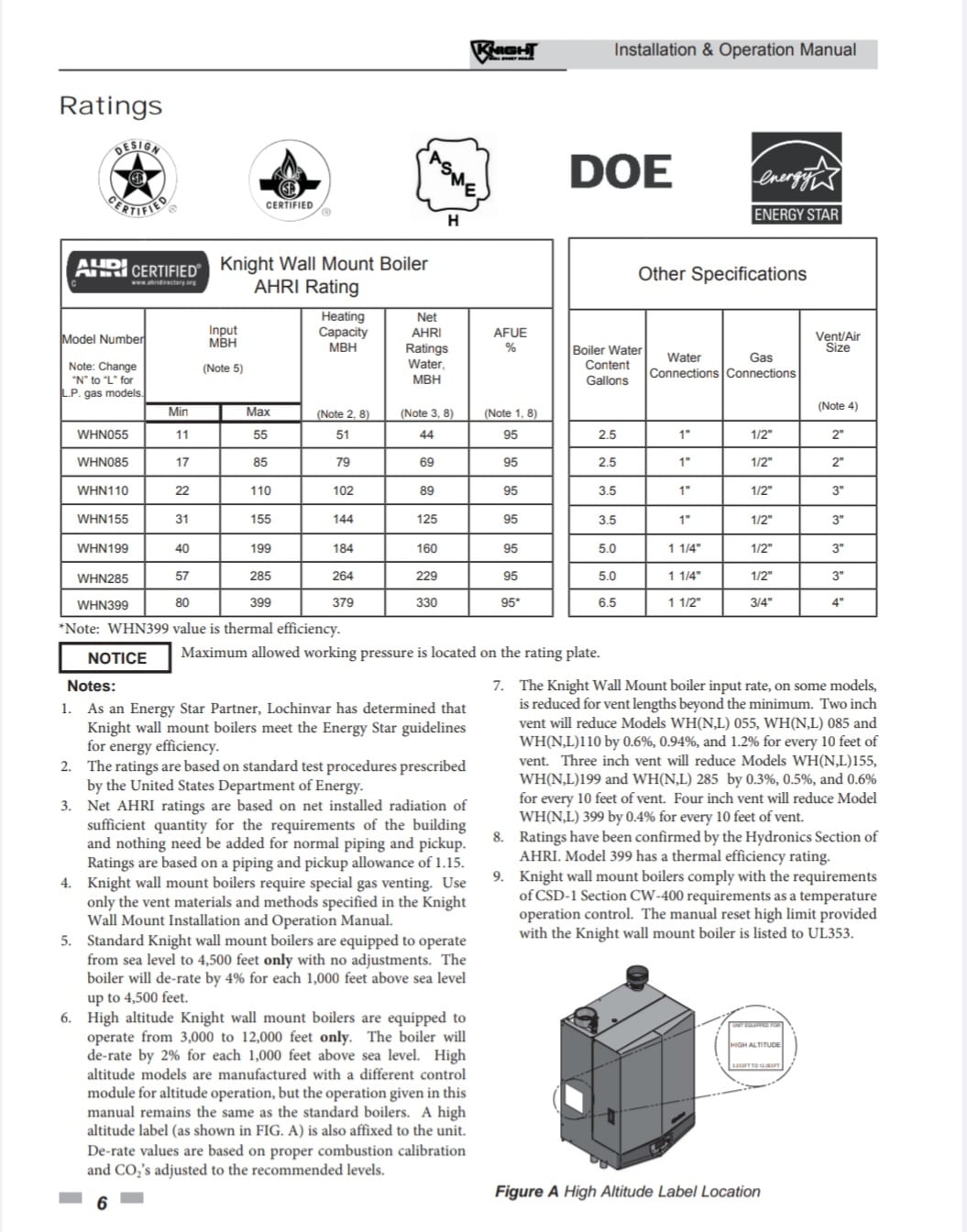
Do you have the high altitude model?
A combustion analyzer is needed any way you look at it.
0 -
Okay, I did some more testing and recorded numbers:
- Manometer attached to the inlet gas tap (right nipple on the gas valve, opened 1 full turn):
- Initial reading: 31 mbar (12.45 in wc)
- Attempting to light: 28 mbar (11.25 in wc)
So — it is dropping a little more than 1" of pressure drop when attempting to light. Maybe my second stage regulator is the problem…I could replace that and see if it fixes the issue. What do you all think?
- Manometer attached to the outlet gas tap (left nipple):
- Initially read 0 with the gas off and tube off. Turned the gas on, it went to 16 mbar in prepurge, drops to 5 mbar when attempting to light, then drops to 0.
The manual just says it should be in negative pressure when in prepurge, and when the valve is energized a change in pressure should occur. So, that seems to be working correctly, and the remedy to fix this is to "replace the valve", which I already did, so I don't think the valve is the problem. The manual doesn't give specific numbers on what I should see here.
- Initially read 0 with the gas off and tube off. Turned the gas on, it went to 16 mbar in prepurge, drops to 5 mbar when attempting to light, then drops to 0.
I didn't do any tests when it actually fires…because it isn't firing unless I force it to (ie: pinch the clear tube or blow in it). I'm not sure a combustion analyzer would help, as I'm not even getting to that point of firing.
RE piping size: it is 1" from the boiler and into the house, second stage reg is right outside the mechanical room wall; it drops to 3/4" not far from the boiler.
RE other appliances off for a while: It doesn't seem to make a difference; we've got a gas stove, some other gas furnaces, and on demand gas water heater -all those things work fine.
RE high altitude model: I'm pretty sure it is, but I'll re-verify (it's hard to see the left side as it is against a wall)
The boiler is probably ~13 years old, and this problem started happening a few years ago, so "something failed or is failing" more recently. I did clean the boiler chamber a few years back when I had problems, and maybe I should do it again.
I did email Lochinvar; they said to call their 800 number..I'll try talking to them monday.
I'm currently suspecting the second stage regulator; for $100 that is a cheap test to try out.
Corbin
0 - Manometer attached to the inlet gas tap (right nipple on the gas valve, opened 1 full turn):
-
Downstream from the gas valve should be in a negative at all times and should be at zero or a slight negative while running. all your numbers indicate you have to much gas and the gas valve needs to be throttle back. converted your numbers to inches of water column. 16 mbar = 6.42 " wc. 5 mbar = 2.0 . Start up pressures should be -1.7" wc and 0 to - .2" To properly set up the gas valve you need to perform a combustion test.
0 -
ow did yo set up the new valve? who set up the old valve?
0 -
New Valve: I just followed the directions to install it; I didn't change any parameters on it.
Old Valve: I don't know who set it up…I bought the house when it was about 10 years old and it came with the boiler.
0 -
Is your boiler set up for high altitude? There should be a label on the left side of the boiler if its rated for over 4,500 ft. And you're at 6,600 ft. Is the new gas valve rated for high altitude? This isn't DIY.
0 -
the valve needs to be adjusted with a combustion analyzer when it is installed. did it ever work with a full tank with the old valve? the pressure could dip more when the boiler tries to fire with a full tank and that could cause more problems with incorrectly set combustion
0 -
HAVACNUT asked this - I said I think so, but I can't see the left side as it is right against a wall. The boiler was installed when the house was built, around 2008 or 2009. It ran fine until a few years ago, and then started to have this problem. I'd really be surprised if it wasn't a high altitude model.
Is the gas valve rated for high altitude? According to Lochinvar, it is something programmed in the board, and not the gas valve, so that doesn't seem to make much a difference.
Why isn't this DIY? There isn't too much to the system.
Corbin
0 -
It would be great if it fired up and a combustion analyzer could be used! But it isn't even at that point.
The boiler was installed when the house was built around 2008 or 2009. It was fine until a few years ago, and then started having the ignition problems at full tank.
So, yes, it worked fine with the old valve. I could put it back in.
I still haven't had a chance to call Lochinvar yet to see what they say.
0 -
is the combustion chamber clean, are all the parts of the intake and exhaust path in good shape, are there any dampers in the ducting and are they intact? does it still get that big a droop in the regulator when the tank is not so full? it sounds like the combustion is off some so it isn't dealing with the droop well.
0 -
I just reread your post and you said you PM'd your own boiler. Did you blow out the mesh burner with compressed air? That hose that are pinching is the reference hose and it adds pressure to the gas valve. if the mesh burner is not cleaned it will affect how the gas valve functions as you don't get the same downstream exhaust pressure to work the gas valve. Do not get fooled by just looking at it and thinking its clean.
3 things need to be verified.
1) Clean mesh burner
2) Downstream gas pressure in WC ( should be in a vacuum, not pressure). My experience with zero governor gas valves is that you know they have failed when they will no longer adjust for you. i haven't seen any fail electrically and I have worked on quite a few zero governor gas valves.
3) inspect the venturi for any defects.
4) combustion test after you get it running.
oh. is that 4?
0 -
take photos of everything when you take the thing apart again. heat exchanger inside before and after cleaning, burner, igniter, inside of cabinet share with the class. You need air/fuel/spark to ignite, your control needs to read the flame signal to know there is flame to keep running. If it is really just happening after the tank is filled, I would be contacting the LP company to make sure they are properly purging the air from the tank. Typically they are fairly receptive to inquiries like this, they want you to heat your house so you can buy more fuel after all.
0 -
Yes - I do regularly maintain the boiler, and a two days ago I did completely disassemble it to clean the mesh burner with compressed air. I also cleaned out the heat exchanger.
- Yes it is cleaned
- It is in a vacuum, and the valve is new, and exhibits the same problem as the old valve.
- Venturi looks good
- Yeah….other's have said that. I don't have a combustion tester, and they seem to be at least $500, but this seems to be the thing I have to do at this point.
I did call Lochinvar, and they were stumped as to why a full tank would regularly cause this problem. The tech said "pinching the hose" is a trick they to do get a burner to light, and that I should do that and adjust the combustion.
0 -
I took it apart the day before, but unfortunately I didn't take any photos. The cabinet front is still off..but nothing looks strange there.
I did talk to the LP company delivery man about why this would happen, but he said he hadn't heard of such a problem. All the other appliances work fine, so it seems specific to the boiler. I've seen problems with ignition by having air in lines (not in this system), and it was pretty easy to purge the lines and get stuff working.
At this point…I'll probably have to hire someone with a combustion analyzer and see how that side of things are going.
0 -
Update: Yesterday I hired a technician to come out with a combustion analyzer and he adjusted the combustion (it took a few weeks to get someone to come out). The combustion was definitely off — which isn't a surprise since I installed a new gas valve, and it was probably adjusted for sea level and natural gas instead of propane. It seemed to be lighting fine at the time, but this morning it still failed to light, and still goes into Ignition failed lockout.
It's a bummer that the problem is still happening! I'll have to get the technician to come back out, but I'm still open to other ideas on what might cause this. It's starting to become a really expensive issue.
Corbin
0 -
which isn't a surprise since I installed a new gas valve, and it was probably adjusted for sea level and natural gas instead of propane
WHAT?
 1
1 -
Did you read through this thread?
I replaced the gas valve. I'm at ~6000' with propane. Lochinvar, as my guess, would pre-adjust the valve for gas at sea level.
0 -
pre-adjusted is a feel good story techs tell themselves to avoid setting up combustion. if the valve were set up for nat gas then you needed to convert the valve, or change whatever needed to be changed to properly convert the fuel type. tweaking the valves adjustment screws will not fix that.
I think the exclamation of "WHAT?" is in regards to the fuel type situation because if your unit is not properly converted to LP gas that needs to be fixed immediately.
 1
1 -
It is converted correctly for propane..it's super simple to do. There's just a different orifice to install.
1 -
Sounds good. I still think there is a fuel supply issue personally. Earlier you had said you were going to check the static and dynamic gas pressure (or maybe already had?) do you have your numbers from that test?
0 -
Yeah - could be! All our other appliances do work okay, but that doesn't mean there isn't a problem with the propane (stove and on demand DHW). I'd suspect many other people in our area would be reporting similar issues if there was a widespread bad propane going around, and the HVAC guy would have been aware of it.
I need to check the pressures again, but at this point I'm going to try to get the same technician to come back and look at it.Since pinching the small rubber tube on the valve makes it light: I'm wondering if the pressure switch has failed…although forcing it to actuate (ie: blowing in it) does give a pressure switch error failure (I forget which error).
I also might just start replacing more stuff. Pressure switch and ignitor (which is old, but is clean), and eventually the control board (high altitude model). It's cheaper than a new boiler to do those replacements, and my heat exchanger still looks good (no rust).0 -
let's get the static and dynamic gas pressures before changing parts. it should take around 15 minutes.
1 -
could be water in the tank, if i'm looking at the density right water will float on top of propane.
0 -
The negative pressure gas valve in your Lochinvar is way more finicky than your other gas appliances. You should be coming to realize that.
8.33 lbs./gal. x 60 min./hr. x 20°ΔT = 10,000 BTU's/hour
Two btu per sq ft for degree difference for a slab3 -
Update: TLDR: New igniter seems to have fixed it, but the tank is now not full.
Longer story: When the tech came last week he recommend replacing the ignitor and flame sensor every two years, but they charged a lot for relatively cheap parts I can get online, so I said I'd do it. I dropped in the new ignitor on Saturday, and the past two cold mornings (mid 30F) it has been igniting on the first try.
I didn't think it would be the ignitor because I cleaned it with sandpaper, and I could visibly see a spark happening in the inspection window. But the spark on the new igniter does look stronger!
Me replacing the gas valve was also part of the problem, as it really did need adjustment with a combustion analyzer hooked up (which I don't own), and it is likely the old one was a bit off at this point - I won't know for sure, as I'm not going to put it back on. It was probably a waste of money to replace the gas valve, but oh well!
However, my propane tank is now below 80%, which is the point when I never had an issue. I'm hoping it was an issue with the ignitor, but I won't really know until my tank gets filled again, which probably won't happen until the fall, as it is warming up a lot here in Lake Tahoe, California.
Just following up in case someone else runs into this issue!
Thanks again everyone for the advice! Many of you were correct about it needing a combustion analyzer and adjustment.
0 -
how many different contractors have you gone through?
0 -
Just the one, who came once for an hour. I'm a general handyman, and I have more time than money. Our local company charges $325 for the first hour, and $275/hr after that (off hours is $450/$410). At those prices it behoves me to try as much as I can, but buying a $800-$1000 combustion analyzer was a bit out of my budget.
Maybe I should become a HVAC repair specialist! Currently I'm a part time woodworker.
1 -
I don’t mind people doing their own work and I will help but you need to know your limitations. Converting a gas valve from NG to LP without a combustion analyzer is not safe. Having the tool without the training is also not safe.
 2
2 -
If it happens again take lots of pictures of the parts you are dealing with so you can post them here. It is pretty easy to look at a flame sensor or igniter and tell if it needs to be replaced in my opinion, it wouldn't hurt to have a spare on hand either way, they usually aren't too much money and as you know are a really easy DIY replacement.
0 -
It's not hard to learn new things. The analyzer looks incredibly easy to use.
0


Categories
- All Categories
- 87.8K THE MAIN WALL
- 3.3K A-C, Heat Pumps & Refrigeration
- 60 Biomass
- 430 Carbon Monoxide Awareness
- 133 Chimneys & Flues
- 2.2K Domestic Hot Water
- 6K Gas Heating
- 124 Geothermal
- 170 Indoor-Air Quality
- 3.9K Oil Heating
- 79 Pipe Deterioration
- 1.1K Plumbing
- 6.7K Radiant Heating
- 397 Solar
- 16.1K Strictly Steam
- 3.5K Thermostats and Controls
- 56 Water Quality
- 51 Industry Classes
- 51 Job Opportunities
- 18 Recall Announcements