Spacing/Clearance Around/Between Hot Water Heat Pipes

We recently remodeled a small bathroom which involved removing a smallish hot water radiator and installing hydronic heated floors. This necessitated not only a new separate zone but a “cooler” hot water than what the boiler produces. My contractor designed a system of manifolds, pumps and valves that blended boiler water with water from a new loop using the old bathroom radiator to cool or “temper” the return water. The salvaged radiator was relocated to a cool corner in our full unfinished, but regularly utilized basement. We previously relied upon the uninsulated heat pipes, along with two small salvaged radiators from an earlier remodel to keep the basement tolerable to work in with a sweatshirt. After one winter, I’m happy to state that the system works well-the bathroom stays warm and the basement is warmer.
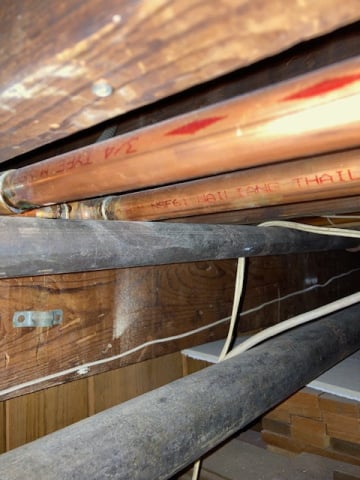
I have two concerns regarding spacing requirements surrounding and in-between the heat pipes going to, and returning from, the salvaged “tempering” radiator. There is a spot where one of the ¾” copper pipes that runs to the “tempering” radiator is in physical contact with, supported by, and perpendicular to one of the older cast iron heat pipes. These represent pipes from two different zones so they will heat and cool (expend and contract) at different times and in different directions. I believe the softer, thinner copper will wear and eventually fail unless this is corrected. I’m also concerned that there’s little, if any airspace between the supply and return pipes that go to the “tempering” radiator. In several spots the two pipes are bound together in copper strapping for a support. There appears to be plenty of space available. It seems wrong to allow direct heat transfer into water that just came from a radiator because we want to cool it. Are there any code requirements, or accepted professional practices that require physical separation of pipes that are intended to be at different temperatures or to prevent physical abrasion? Or am I making a mountain out of a mole hill? I look forward to getting your input. Thanks.
Comments
-
A mountain out of a molehill. A bigger concern than potential wear on the pipes is the possibility of noise as they expand and contract differently. If that's a nuisance, simply slipping a piece of polyethylene, such as cut from a plastic milk jug, in between will suffice.
Also there will be some heat transfer, but unless the pipes are deliberately strapped tightly to each other it will be minimal — and event then you'd be hard pressed to measure it.
Br. Jamie, osb
Building superintendent/caretaker, 7200 sq. ft. historic house museum with dependencies in New England0 -
This seems like overengineering and a real waste of heat that you could otherwise use elsewhere in the home.
"We recently remodeled a small bathroom which involved removing a small hot water radiator and installing hydronic heated floors. This necessitated not only a new separate zone but a “cooler” hot water temperature than what the boiler produces. My contractor designed a system of manifolds, pumps, and valves that blended boiler water with water from a new loop using the old bathroom radiator to cool or “temper” the return water. The salvaged radiator was relocated to a cool corner in our full unfinished, but regularly utilized basement."
This reinvention of the wheel sounds like someone has not read their radiant floor design guide.
You can get any boiler to provide two temperatures with the use of a circulator pump and a mixing valve, without needing any other design features like a tempering radiator.
This would be a simple design:
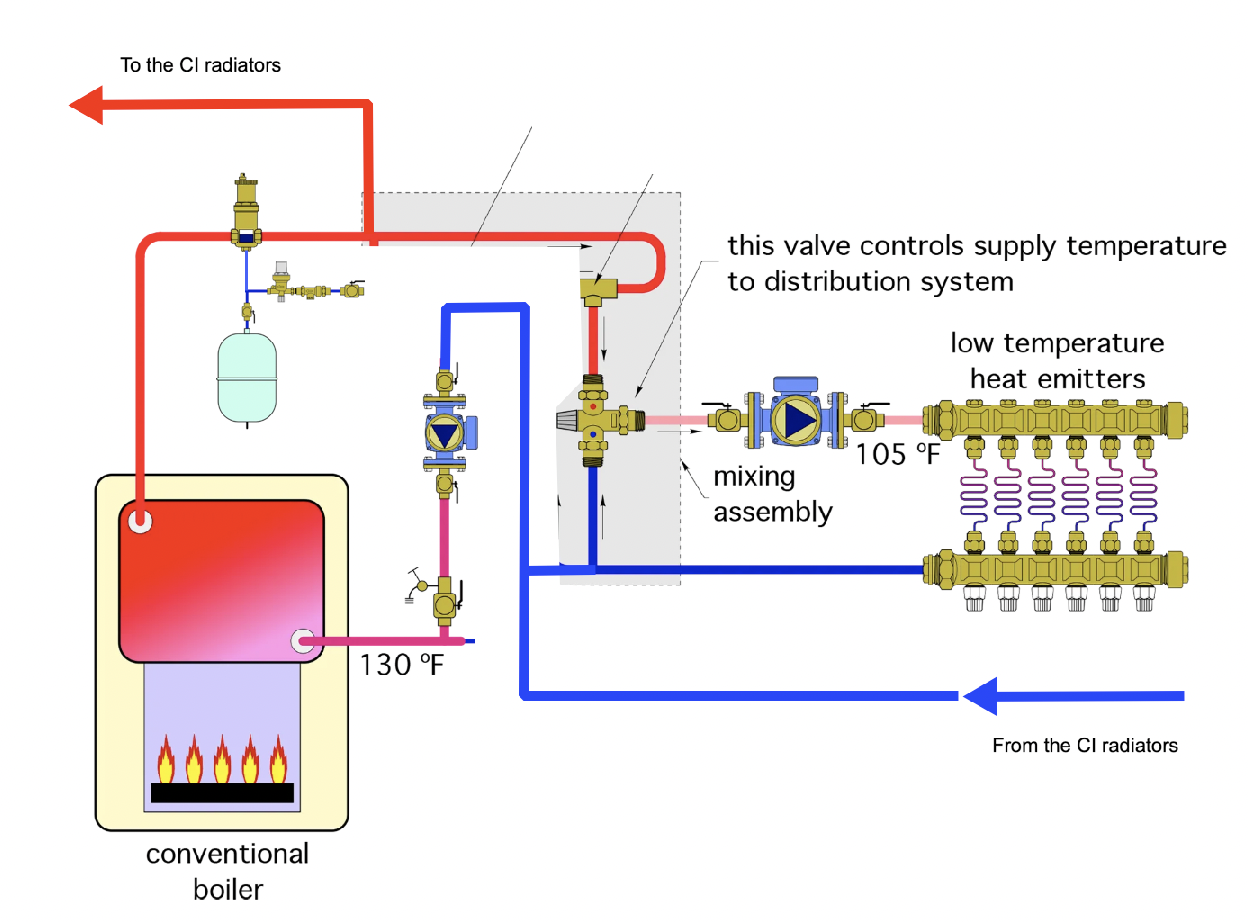
The high-temperature water flows to the radiators as usual. The low-temperature water is cooled by the return water from the radiant floor loops and only receives a small amount of heat from the boiler as the mixing valve detects that the radiant floor temperature is below the mixing valve setting of, say, 100°F or 110°F. No additional device is required to deliver low-temperature water.
If you are worried about condensation of flue gases causing a problem with your existing boiler, and there is no boiler temperature protection already in place, then this is the time to add boiler protection like the diagram shown below:
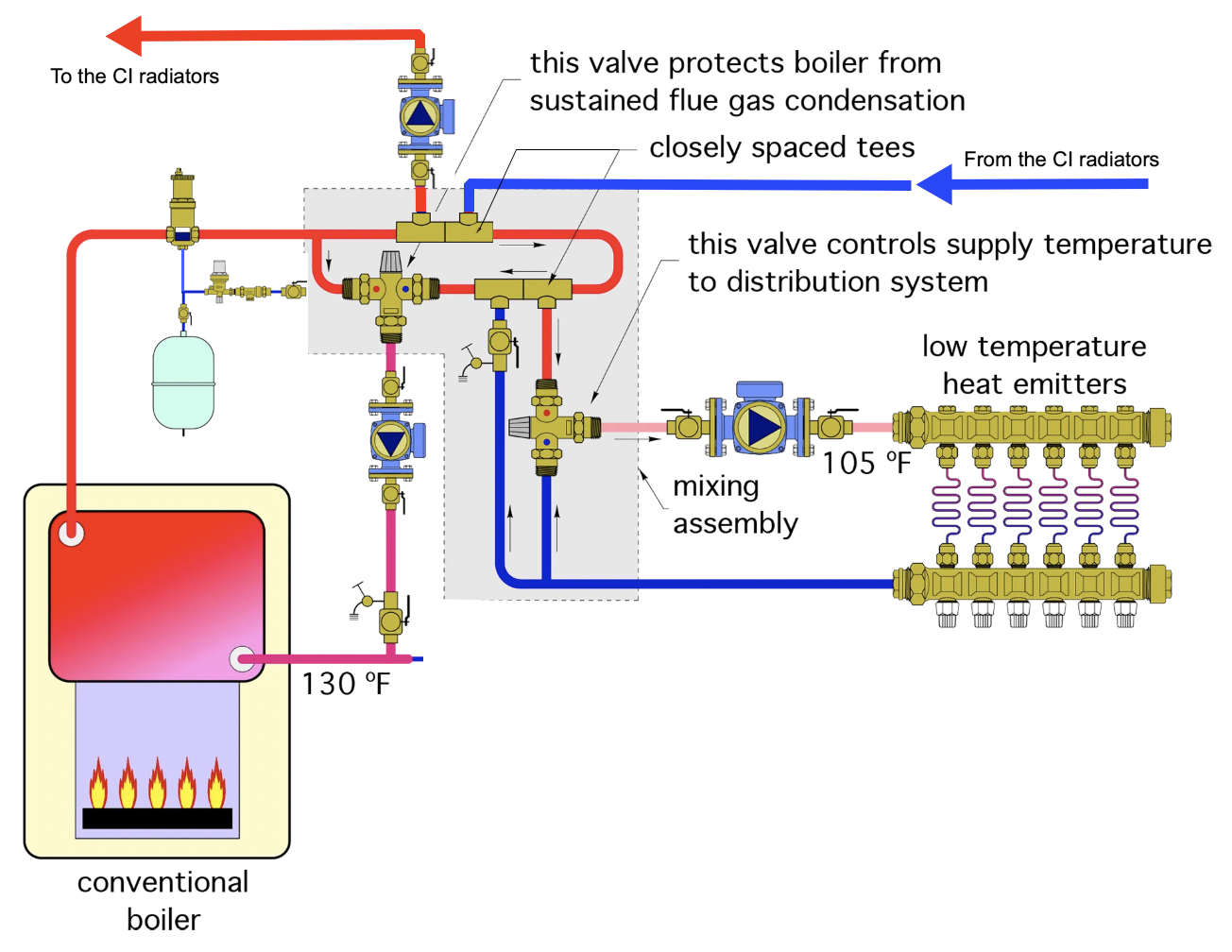
Edward Young Retired
After you make that expensive repair and you still have the same problem, What will you check next?
0 -
Jamie,
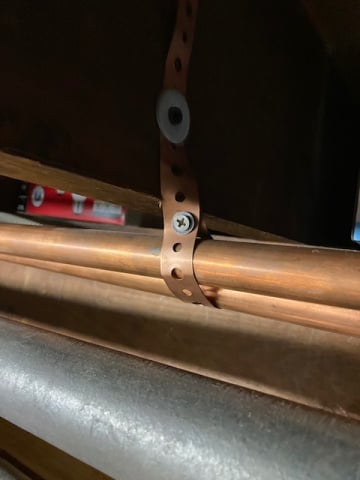
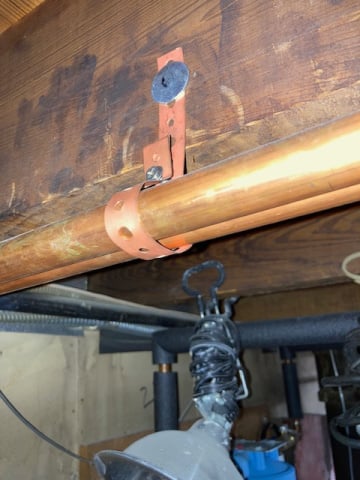
Thanks for the response. I should have included photos in my original post. The first two show what I would describe the copper pipes being "deliberately strapped tightly to each other". The third shows the new copper pipe (in the background) resting on and supported by the existing cast iron pipe. Hopefully this paints a better picture.
 0
0 -
i'd be concerned about noise, but not about heat transfer or chaffing. they are using the same hanger but they aren't tightly clamped together like you would if you were trying to do something like heat any residual liquid refrigerant on its way to a compressor. it is sloppy but not an issue functionally.
any heat that does transfer to the return gets circulated back to the boiler and back to the supply. maybe it makes the boiler run a degree hotter but that has only a very small effect on efficiency that would likely be difficult to measure. insulating the piping would have more of an effect on efficiency than separating the lines.
@EdTheHeaterMan i thik they did do a loop with a mixing valve for the radiant, i think the basement radiator is on a regular high temp loop, by "tempering" i think they just mean taking some of the chill off of the basement.
0 -
Ed, Thanks for the response. You didn't address my questions but you did provide me with an education. I'm not fluent in hydronic design so I had to re-read it a few times but I actually understand my own system better now and I believe I see your point. Appreciate the input.
 1
1 -
Mattmia2,
You are correct. My use of "tempering" may have been improper. I'm speaking merely as a layman describing the function of my basement radiator as a source for cooler (tempered) water to supply the mixing valve. I appreciate your input.
0 -
This is a short and sweet book on how Hydronic heating systems operate, there is lots of good info and it is explained in easy to understand language. I used it when i used to teach a one day seminar for the Eastern Heating & Cooling Council: Zoning Made Easy.
Edward Young Retired
After you make that expensive repair and you still have the same problem, What will you check next?
0


Categories
- All Categories
- 87.6K THE MAIN WALL
- 3.3K A-C, Heat Pumps & Refrigeration
- 59 Biomass
- 430 Carbon Monoxide Awareness
- 124 Chimneys & Flues
- 2.2K Domestic Hot Water
- 5.9K Gas Heating
- 120 Geothermal
- 168 Indoor-Air Quality
- 3.8K Oil Heating
- 78 Pipe Deterioration
- 1K Plumbing
- 6.6K Radiant Heating
- 394 Solar
- 16K Strictly Steam
- 3.5K Thermostats and Controls
- 56 Water Quality
- 51 Industry Classes
- 50 Job Opportunities
- 18 Recall Announcements