Seeking advice, new to boilers, boiler broke over winter

Recently purchased a home (have not yet moved in). It has a 47 (not 52) year old Burnham Series 4 (408), 200,000 BTU boiler. It was steam, and someone (long ago) converted it to water. It was working when we purchased the house, but inspector said "its old, replace it". I called a few people who really wanted to push me to replace it outright, but were quoting me crazy money quotes to replace it.
Just for notes, it is a two story house, four radiators upstairs, six radiators downstairs, boiler in the basement. It used to vent out the chimney, but that failed and they are now venting with a blower out the basement window.
Long story short, I have had two boiler techs come by and say things like "well, the cast iron boiler itself looks ok, but a lot of these other things were not maintained" or "gee the boiler can't be 52 years old, it looks good, maybe just clean it and let it run". Shortly after this, the gas valve failed, during some of our coldest times, so I drained the boiler as much as I could (boiler drain was locked up, in fact the water feed valve and auto-fill and bypass valves were locked up).
Here is the situation now: boiler mostly drained. Gas valve is bad. I was going to replace the valve with a universal pilot ignition (Honeywell Y8610U-6006/U). I would also need (I am pretty sure) to replace the autofill and back flow preventer (BFP), as well as the bypass valve and main inlet valve. There is a Aquastat on the side of the boiler, no idea if it works. The boiler pressure/temp gauge is also stuck as it did not move from 10psi after I opened the boiler and drained 80 gallons of water out of it, so that would need to be changed. The burners need a really good cleaning, and the manual gas valve is probably 100 years old (would change that too). Would probably add a rollout switch as it (from visual burn marks) had an issue with that in the past due to a broken chimney.
I know none of you can see it, but the boiler outside is in rough shape. Figure it would be approaching $1000 in parts to do what I mentioned above, and although I am handy and an engineer and have done a lot of electrical, I have never done boilers. Should I try to get this Burnham going? The three local heating / boiler places I called for quotes on a replacement boiler want outrageous money. They are asking what is essentially surgeon prices to yank and replace a boiler.
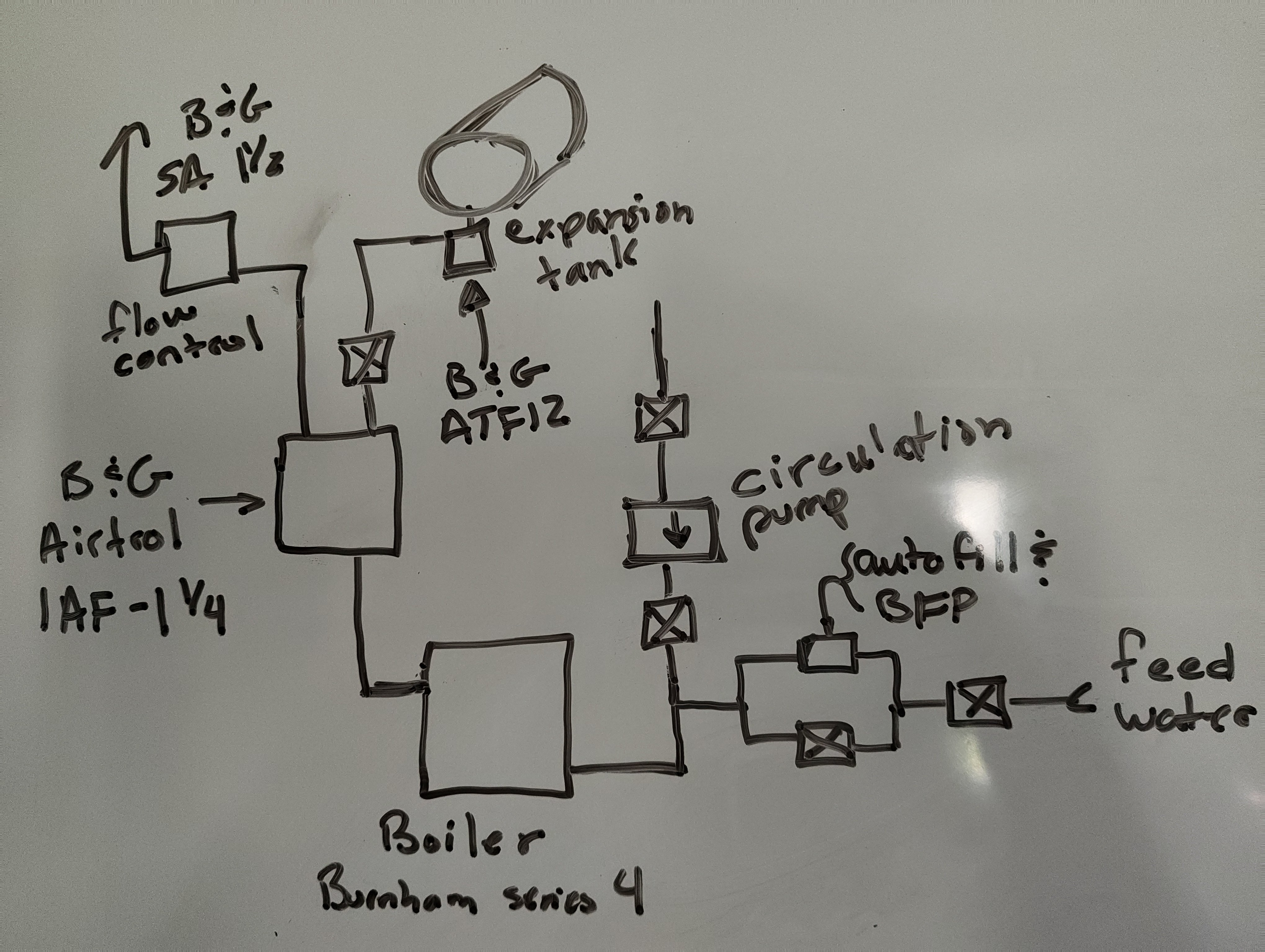
I am attaching a drawing of what I think is the current setup. I am not sure if I would need to change the B&G components: SA 1&1/2, 1AF-1&1/4, ATF12, but I have no idea how to test them. The system was "working" before the valve failure, in that it heated the home nicely, but not sure if it was "correct".
Again, do I spent $1,000, change the valves, auto fill, BFP and gas valve and fill it (would have to read about filling it) and hope for the best, or just call someone and say "take all of my money and then some" and have it replaced?
Comments
-
Welcome to NJ! (just guessing)
Show us some pictures. We like pictures!
Based on what you said, and your description of yourself, I would spend the spring learning about cast iron hot water boilers and their controls and get it going.
You will be able to use this knowledge for the next X years living with this boiler (or its eventual replacement), and you can always spend the big money later if you don't like the results of fixing up this old one. Or you can do like I (and several others) did and install your own replacement boiler.
PS: free hint: your expansion tank in your drawing looks like the old kind that they strapped up to the floor joists that is just a tank with no bladder. Which is fine, but it's probably flooded so drain it. You can't tell by tapping if it's full of water.
NJ Steam Homeowner.
Free NJ and remote steam advice: https://heatinghelp.com/find-a-contractor/detail/new-jersey-steam-help/
See my sight glass boiler videos: https://bit.ly/3sZW1el0 -
Hello,
The house is located in the midwest, actually.
Will grab some pictures next time, all of the pictures I have are just of nameplates.
Yes, the expansion tank is strapped up to the floor joists. It has 18 Gallons, 75lbs working pressure and D-1/86 written on it. I am guessing the drain on it is locked up. It is always amazing to me that most people never exercise a water valve and expect it to work years later. I am still confused about how this tank with no bladder operates (e.g. how does it not fill when you fill the boiler? You must have to shut it off somehow during the fill cycle, or is that what the B&G ATF12 does? It must be, right, otherwise the autofill valve would fill it, or are we just relying on compressed air in the tank for this?) 1
1 -
The air inside it has nowhere to go (that's why they put it in the ceiling), so it compresses to equal the pressure of the water in the system.
But after some years, all the air either leaks out or it gets absorbed into the water and so these old tanks are often waterlogged and then they don't provide any compression (because you can't squeeze water very easily)
But anyway, you will learn all kinds of other helpful nuggets of knowledge as you get your boiler operating again and you will not be subject to the whims of market pricing of scarce knowledgeable contractors anymore.
(the expansion tank example is an interesting one—I helped a friend drain hers which solved her leaking pressure relief valve issues after 3 different contractors were there and couldn't figure it out. Then 6 months later she had another plumber there and he was even old like me and told her "there are no expansion tanks that don't have bladders". You can't make this stuff up!!! She now knows more about her boiler than at least 4 different HVAC Plumber guys in her town! This is not a statement on her or my level of awesomeness, but rather a statement on how hard it can be to find knowledgeable contractors especially when it comes to older systems. But if you use the Find A Contractor feature on this site you will increase your odds significantly)
NJ Steam Homeowner.
Free NJ and remote steam advice: https://heatinghelp.com/find-a-contractor/detail/new-jersey-steam-help/
See my sight glass boiler videos: https://bit.ly/3sZW1el1 -
"just relying on compressed air in the tank for this". You got it. That's how it works.
Miss Hall's School service mechanic, greenhouse manager, teacher, dog walker and designated driver
0 -
Did any of the contractors perform a heat load calc? How many sq ft of home? A 200,000 boiler is quite large.
It is always a tough question when to start new or keep dumping $$ into old boilers and components.
You could do a heat load to at least get a starting point for the project.
How do you generate DHW?
Bob "hot rod" Rohr
trainer for Caleffi NA
Living the hydronic dream0 -
Funny, before I even knew anything about boilers, I know from my other work that when you put in an HVAC, you need to know the load. I asked them, and every contractor had some magic formula.
HVAC guy #1: 200,000 is very large, but just looking at your home i can tell you 150,000 is fine.
HVAC guy #2: The person who speced out this burnham must have know what they were doing.
HVAC guy #3: 200,000?!? Well, it is a large old house, I guess we should put that back in.
The house is about 2200 sq feet. It is drafty. I actually tried a load page I found, but it started going down roads I did not have measurements for (how long is each wall on each side, etc). The ceilings are 10feet high, walls are plaster, ceilings are plaster, windows need work and I am sure leak a lot.
0 -
There is no substitute for a load cals. Room by room is ideal to confirm all the emitters match the actual room loads.
Just a WAG with a fairly big load number of 30 btu/sq ft.
30 btu/ft. X 2200= 66,000 btu/hr required.
Your current boiler/ bid, 200,000 boiler at 85%=170,000 output.
How do you feel about these guesstimates?
As you plan on updating the building envelop , the load should continue to go down. As well as fuel use :)
A modulating type boiler is ideal for several reasons;
Efficiency, with outdoor reset, temperature always modulates
Comfort afforded by continuous circ via ODR
Boiler can derate as you continue to upgrade building, if you need 66K now maybe that load drops to 40K after upgrades.
A % of the year you will run in 90% + condensing mode
Combustion air grills can be eliminated
Rebates available in many areas for efficiency upgrades www.dsireusa.org for info on that
Bob "hot rod" Rohr
trainer for Caleffi NA
Living the hydronic dream 1
1 -
Just to note, I am watching this video: and at about the 1 hour and 17 min mark, he is talking about a small residential boiler with the circulation pump at the intake of the boiler at the feed line. This is very similar to my setup (which was, at least before the gas valve failure, working). Should I consider moving it? I have read posts before that it should be moved. That pump is on some old large iron steam pipe. I am guessing it would not be fun to move it, particularly because the return lines are much smaller than the outlet lines.
I will note that my feed line is after the circulation pump though, just like I drew it.
0 -
please edit to remove prices, we can't talk about prices of services. i will say if you're replacing the boiler you replace all of the trim and all of that and the fittings and wiring to connect it all up adds up pretty fast, even the big pipe fittings to connect it to the mains are pricey although if you do the load calculations you might find that you can adapt that down and use much smaller piping around the boiler.
are you sure this started out as steam and not gravity hot water?
if it is indeed a gravity hot water system a conventional boiler needs protection from the low water return temps, a modulating condensing boiler gets more efficient with the low water temps.
i would not change it to pumping away until you replace the boiler.
replacing the gas train with a modern combination valve would not be a difficult job for a competent tech however you do need combustion analysis equipment and know how to use it.
 1
1 -
"Just for notes, it is a two story house, four radiators upstairs, six radiators downstairs, boiler in the basement. It used to vent out the chimney, but that failed and they are now venting with a blower out the basement window"
Did the occupants survive?
Unless you are rebuilding chimney you are looking at a MODCON or a power vent boiler
0 -
mattmia2 said: "are you sure this started out as steam and not gravity hot water?" Absolutely. It had the glass sight next to it and a sticker on the boiler pointing to "lowest water level permissible". The top hole for the glass sight now has a gauge and the bottom has a plug.
PC7060 said: "Unless you are rebuilding chimney you are looking at a MODCON or a power vent boiler", the occupants survived, it was just the boiler front panel that was burnt. The unit now has a power vent (not sure what you call it, a blower motor hooked up to a vent that vents the top of the unit to the outside), but I am literally looking at rebuilding the top of the chimney and putting in a steel liner so I can just draft vent it.
Keep in mind, I don't know what I am doing yet. 1
1 -
What does a radiator look like? Someone could have accidentally ordered a boiler with steam trim and swapped the trim. Is the inside of the sight glass crusty? If the boiler is only 50 years old, compression tanks were kind of on their final days at that point, it would be weird if someone converted the boiler in the 80;s and added a compression tank instead of a bladder type tank unless @DanHolohan was their B&G rep.

 3
3 -
What year was the house built? Sounds like the boiler was when they sold the same block for either steam or hot water.
0 -
There are pros and cons either way. Your boiler (the block) could fail in 6 months or 20 years. The old stuff is relatively simple.
High tech stuff can fail too and gives Techs more grief to restore operation, and they need more annual maintenance just to keep them working.
How did you determine the gas valve is defective ?
National - U.S. Gas Boiler 45+ Years Old
Steam 300 SQ. FT. - EDR 347
One Pipe System0 -
mattmia2 said: "What does a radiator look like? Someone could have accidentally ordered a boiler with steam trim and swapped the trim. Is the inside of the sight glass crusty? "
I will get some pictures, but large, wide, ornate, probably sums it up. The sight glass looks like its ancient, and has so much rust its not funny.
4genplumber said: "What year was the house built?"
1891.
109A_5 said: "How did you determine the gas valve is defective ?"
An HVAC / boiler tech came over because I was smelling natural gas. Its a long story, but basically after we turned it off to check pressures and such, the gas valve did not want to turn from pilot to on, then the pilot did not want to stay on (kept getting smaller and going out), then they checked pressure in the upstream which was fine, they kind of got it to stay on, and two days later was off. Another HVAC / boiler tech came by after and fiddled with the valve with manometers and detectors and such and declared that it needed a funeral.
109A_5 also said: "Your boiler (the block) could fail in 6 months or 20 years"
That probably is true of everything in a house, but, you make me wonder, am I being foolish to have the boiler totally off? Will the block getting cold (its 55 degrees in the basement on a warm day right now) and then getting hot later when I fix it cause leaks, or are old cast iron blocks tolerant of wild temperature swings?
0 -
That's not too wild of a swing, it will be fine. We are gonna need pics to offer reasonable advice at this point...
1 -
109A_5 also said: "Your boiler (the block) could fail in 6 months or 20 years"
That probably is true of everything in a house
Indeed it is. Do you replace everything that’s true for? Just asking 😅
NJ Steam Homeowner.
Free NJ and remote steam advice: https://heatinghelp.com/find-a-contractor/detail/new-jersey-steam-help/
See my sight glass boiler videos: https://bit.ly/3sZW1el0 -
I'm not a heating pro, just a homeowner/mechanical engineer. But I agree with @hot_rod that your first step should be getting an accurate heat loss number so you can size a replacement boiler correctly.
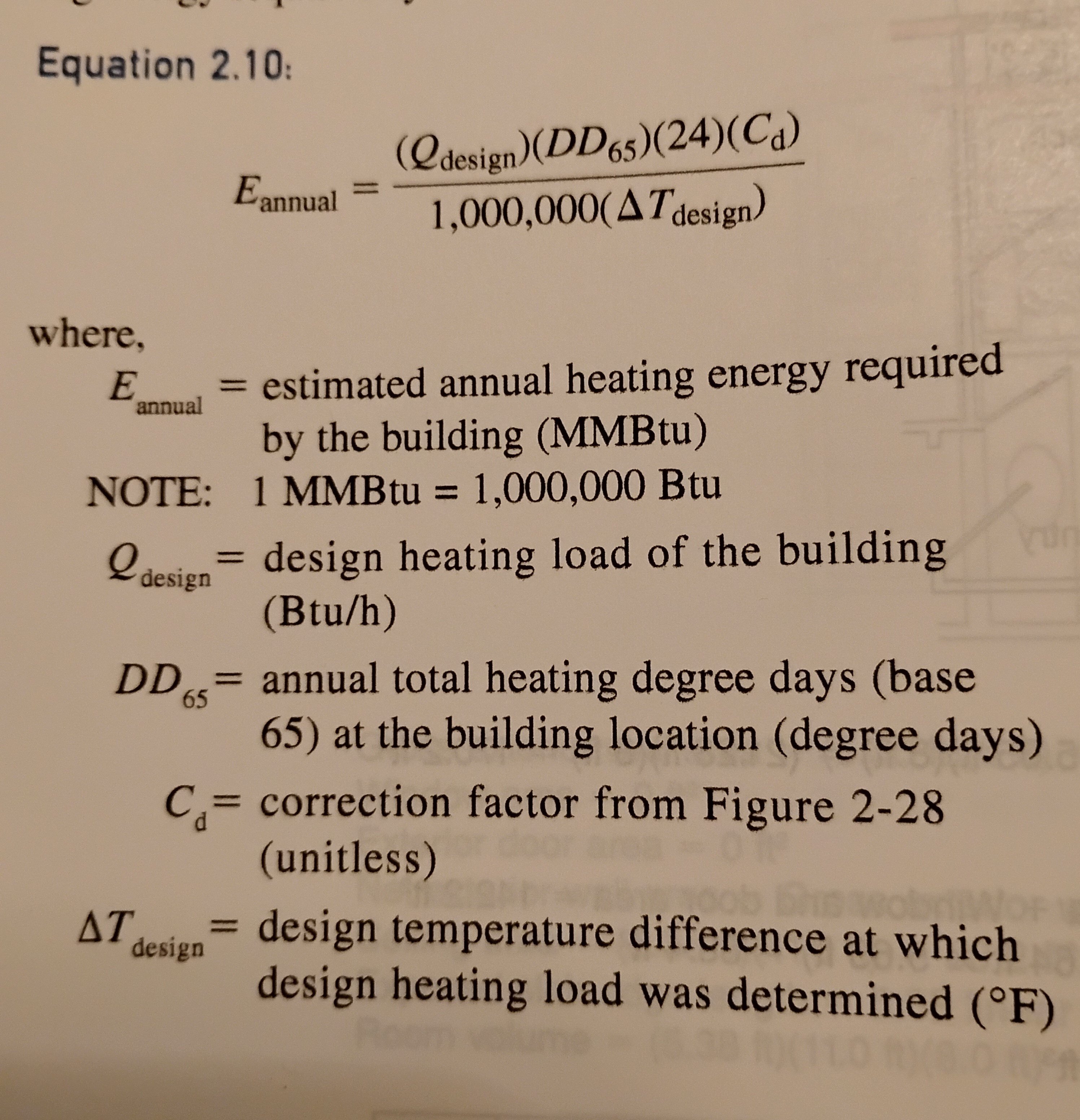
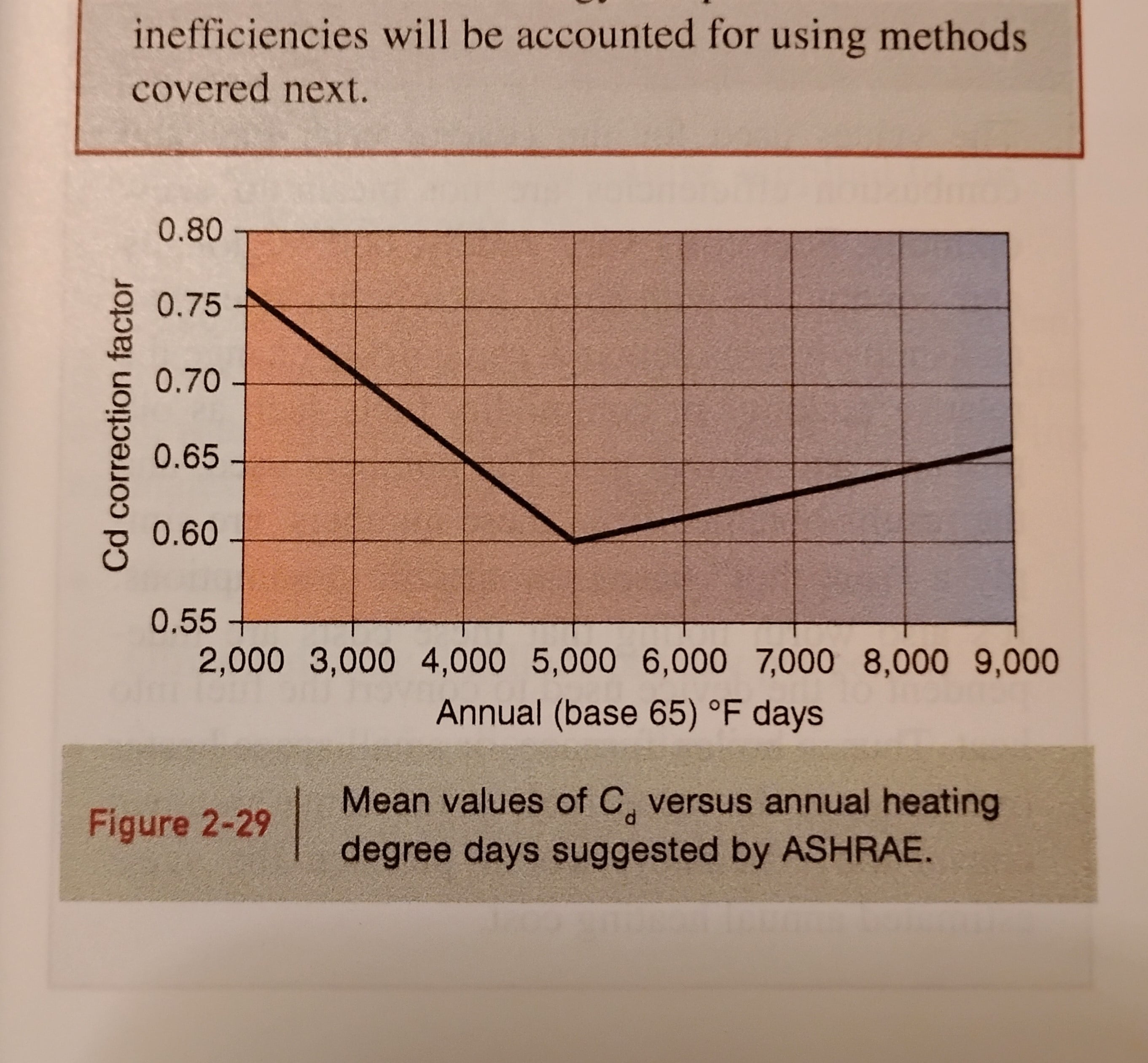
One way to do this very accurately is to fix your existing boiler and run it for next year's heating season, while keeping track of the total therms/BTU's it uses. Once you have that number, you can calculate design day heat loss quite accurately with the equation below, using the Cd correction factor for the number of heating degree days in your area. The value "E" in the equation will be the number of BTU's your boiler actually outputs into the house (in millions of BTU), which will be your total BTU consumption multiplied by the total efficiency of your old boiler. For a big old cast iron boiler like that, you'll have to guesstimate the total efficiency, which might be around 0.6 (60%). (Combustion efficiency will be around 80%, but then you have to subtract heat loss up the flue after shutdown, jacket loss, etc. For your boiler, a guesstimate of around 60% total efficiency will get you in the right ballpark.)
One other point is that your gravity conversion system probably has a massive amount of radiation, meaning you can heat the house with relatively low-temperature water (like around 120 degrees). This is favorable for a mod-con boiler because it means the mod-con will run in condensing mode all season, maximizing its efficiency. So unlike other cases where people have too little radiation that requires higher water temps that prevent the boiler from running in condensing mode, you have the perfect setup for a mod-con boiler.
So if it were me, I'd fix the existing system, run it for at least a year, add up your total BTU's used, calculate your design day heat loss from it, and plan for a mod-con boiler when the time is right. Meanwhile, you can spend the next year researching mod-cons and local installers.
 1
1 -
@triode Which ever boiler you choose you should also be choosing the company that recommends that boiler and will maintain that boiler.
The company you choose should do a complete heat loss calculation to determine the properly sized replacement boiler to properly heat your home. If they come in and say that they will just replace the boiler and do not do a heat loss calculation than they are not the right folks to do business with. That said, you can broach the subject yourself and judge there reaction. Either way the company that installs your new boiler should also be your maintenance provider. Hope you will keep us posted on how things go.
1 -
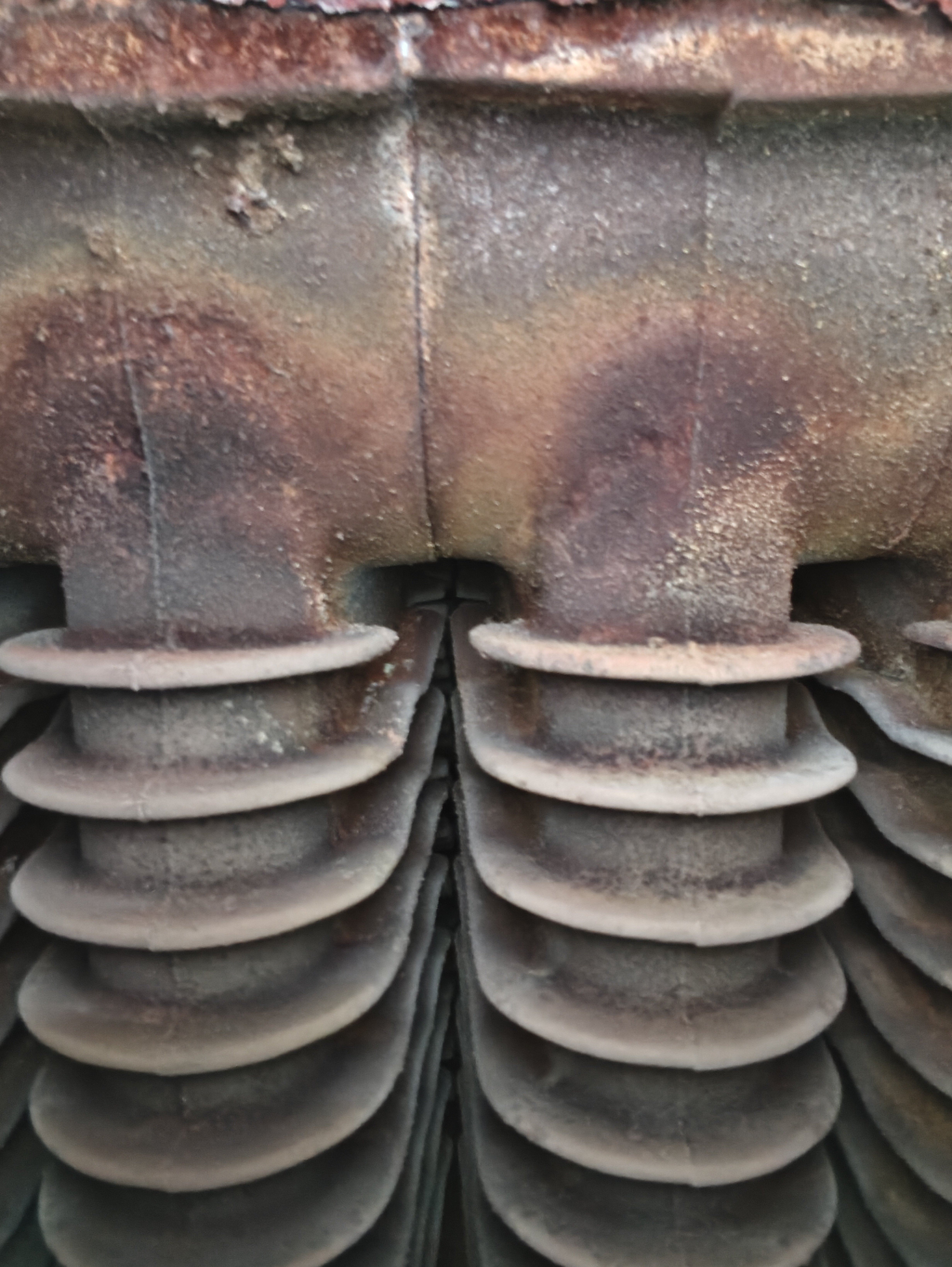
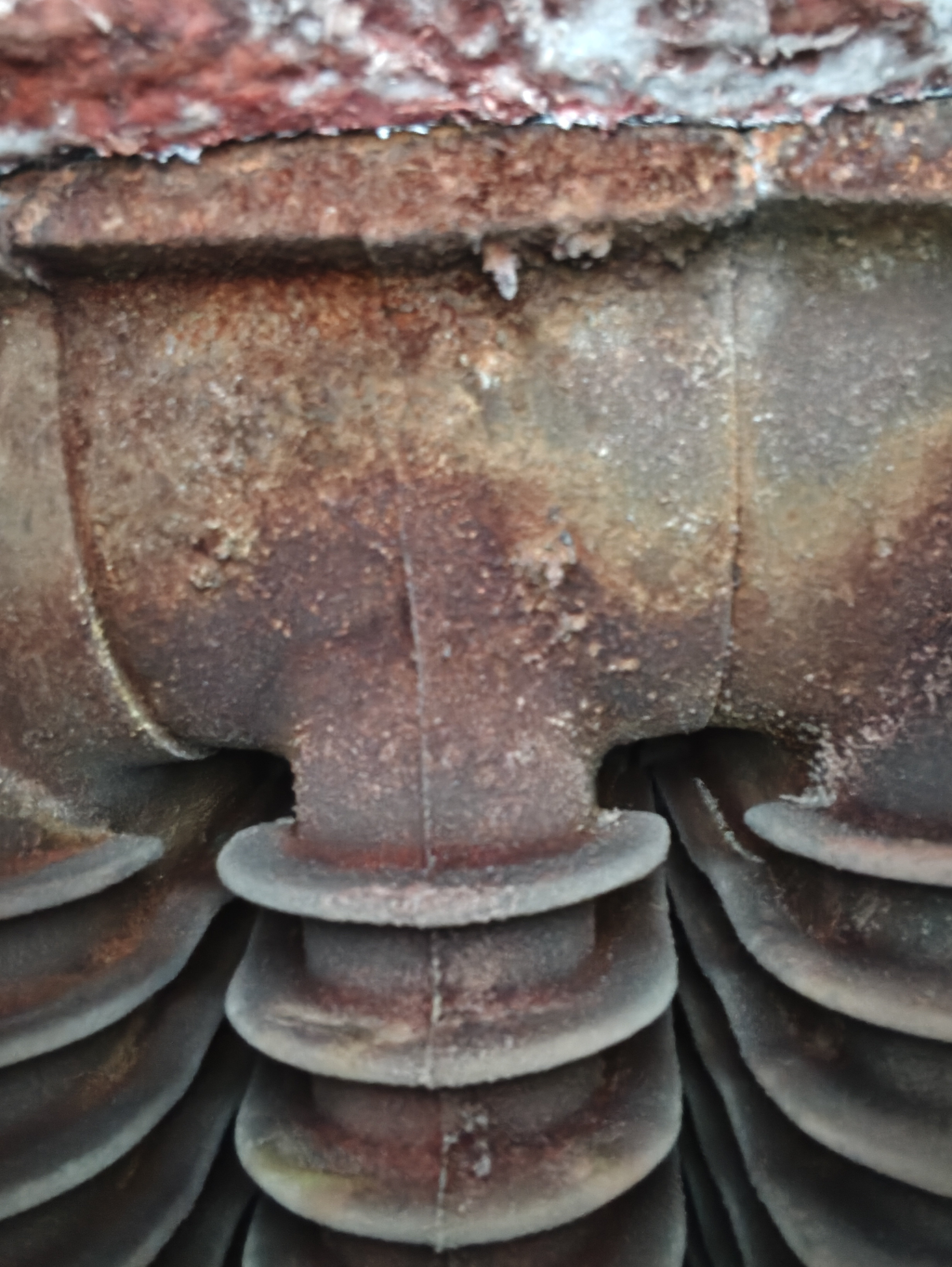
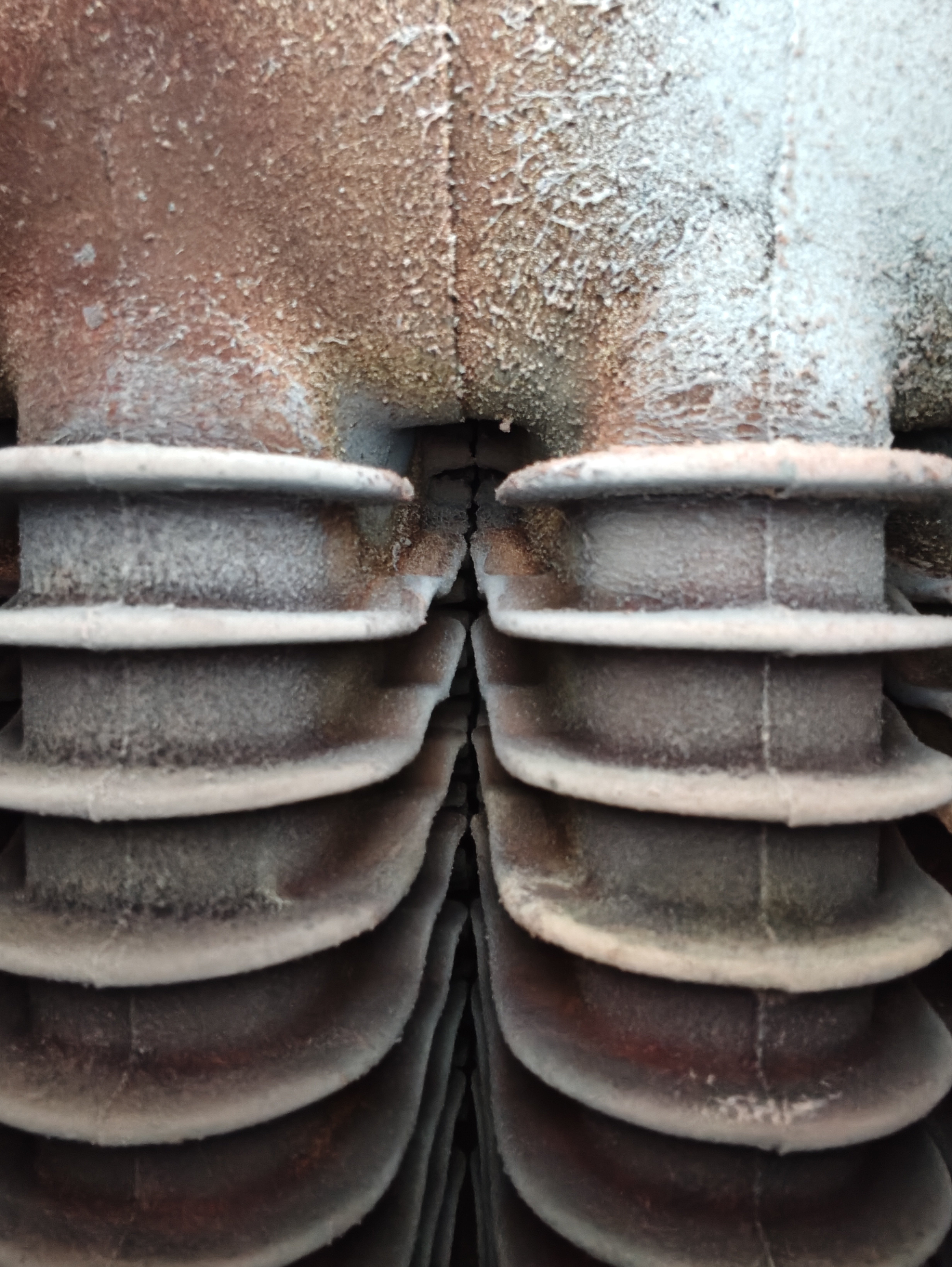
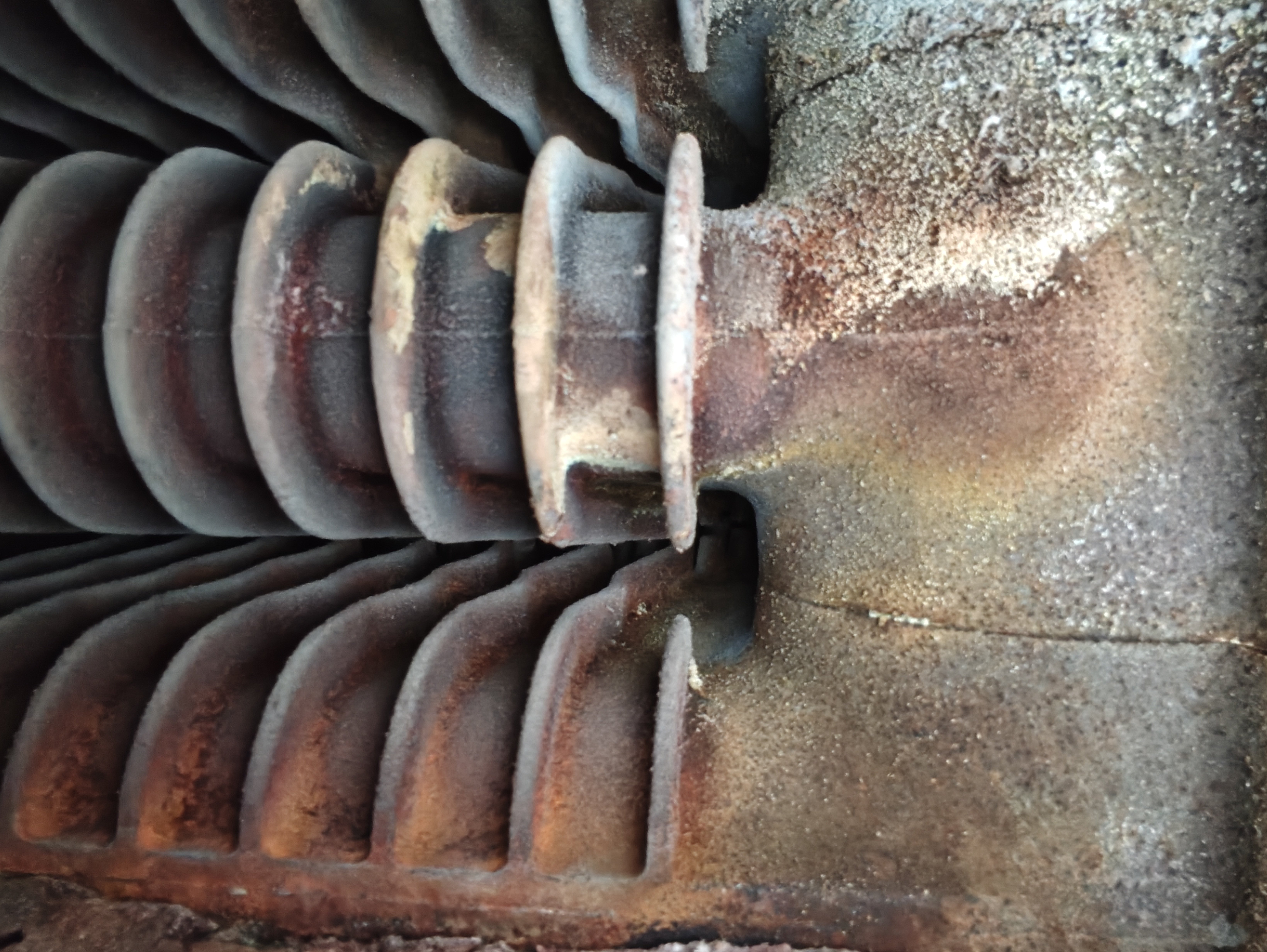
Some pictures of the burnham.
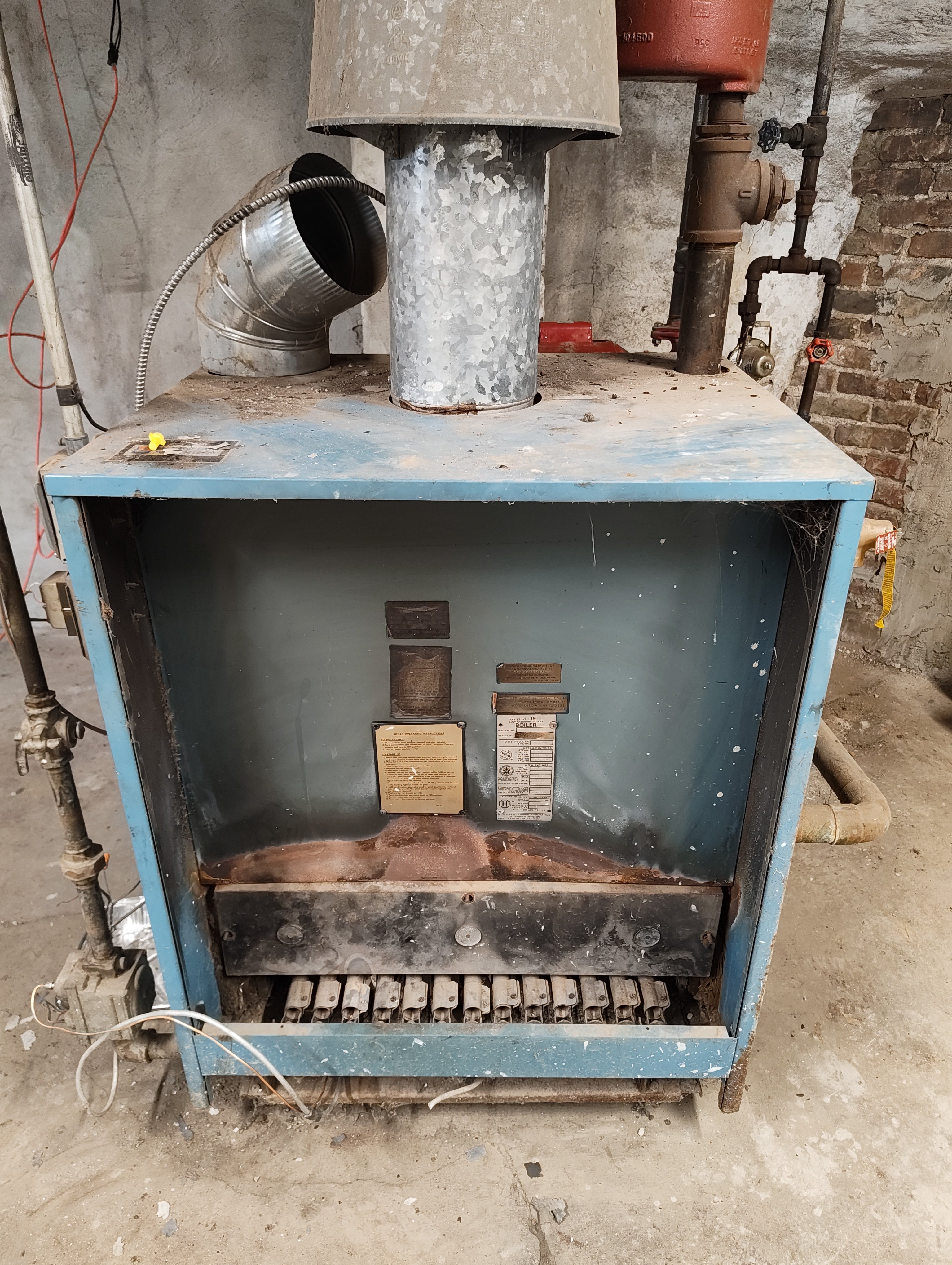
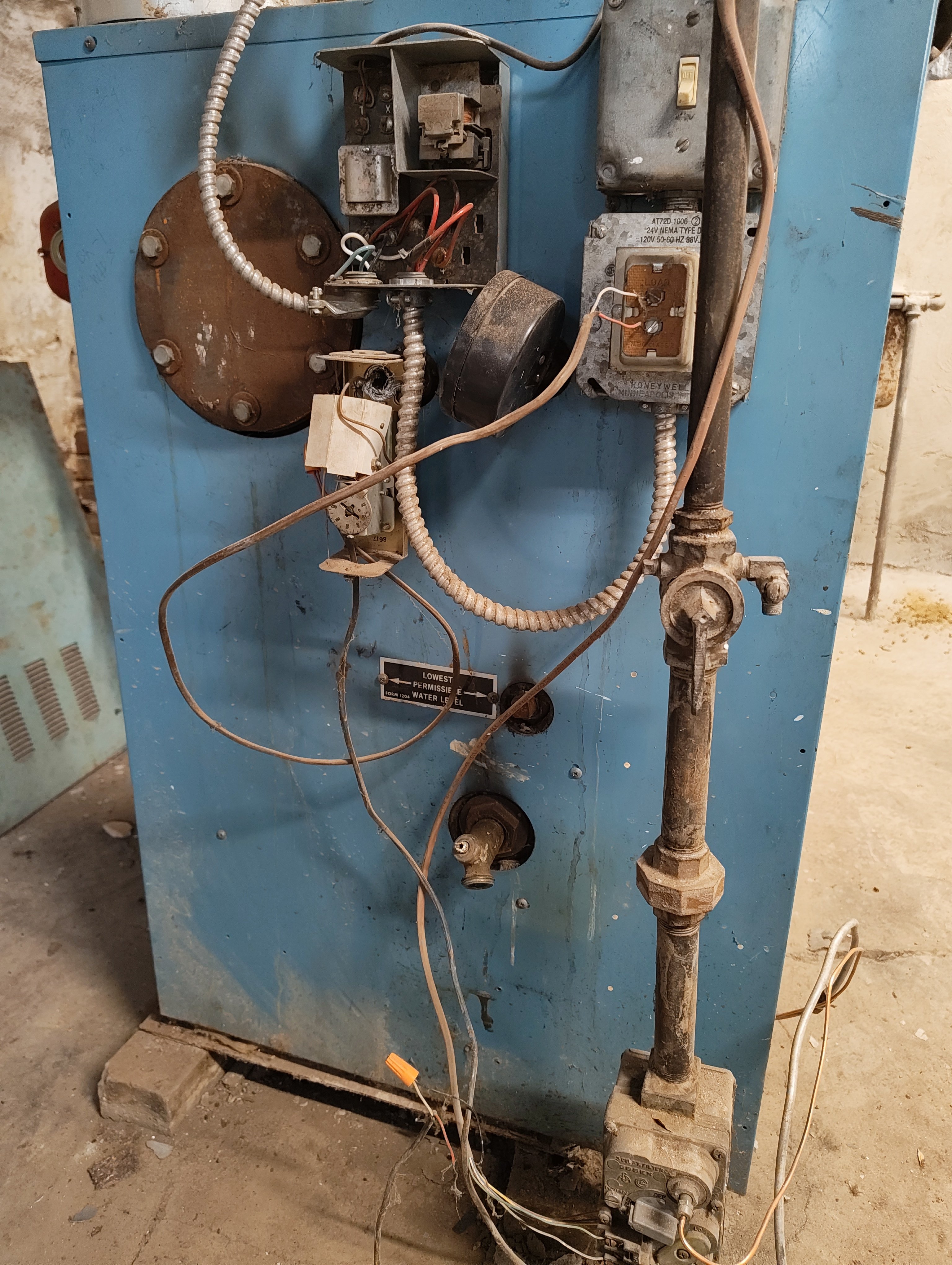
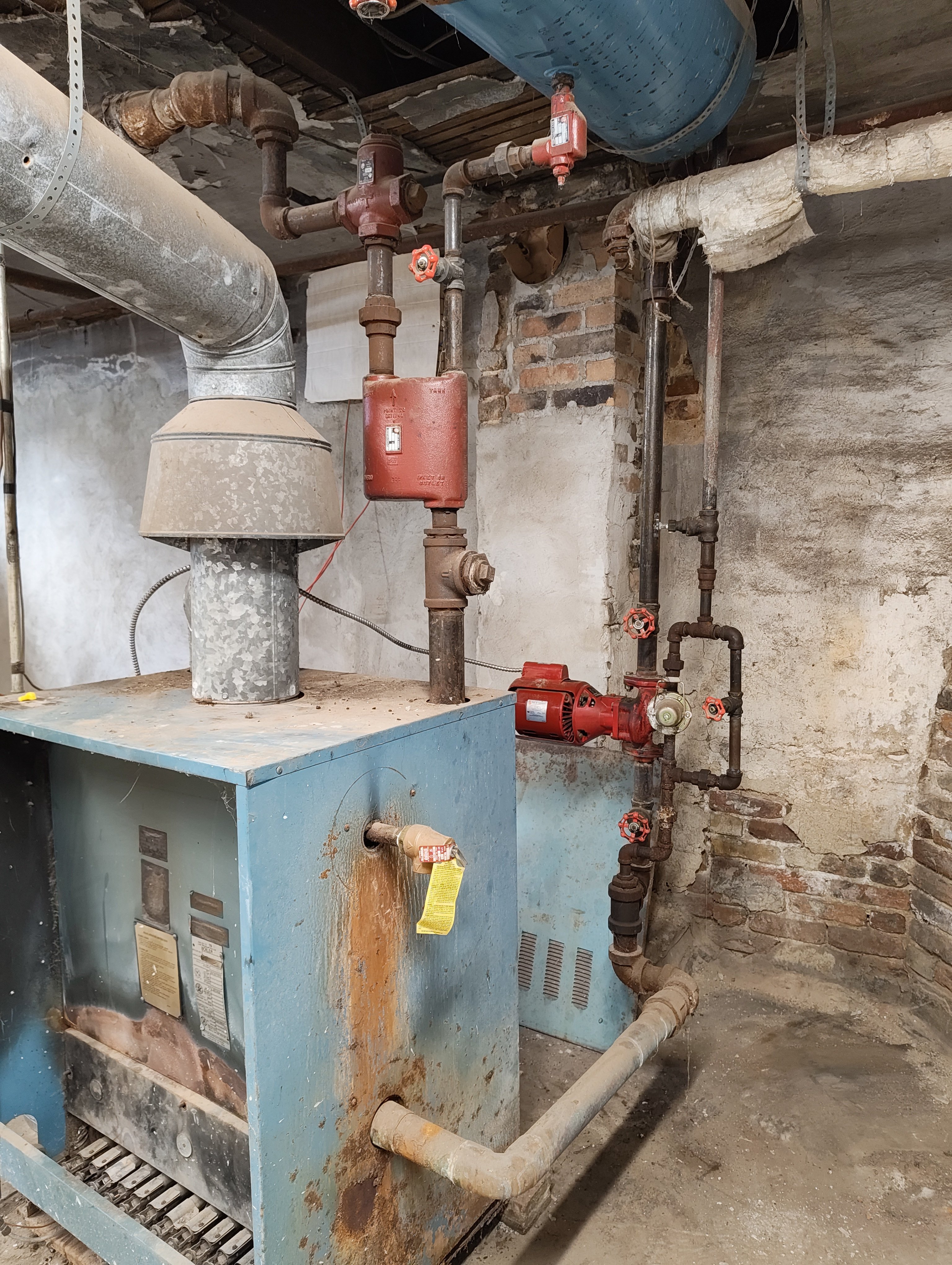
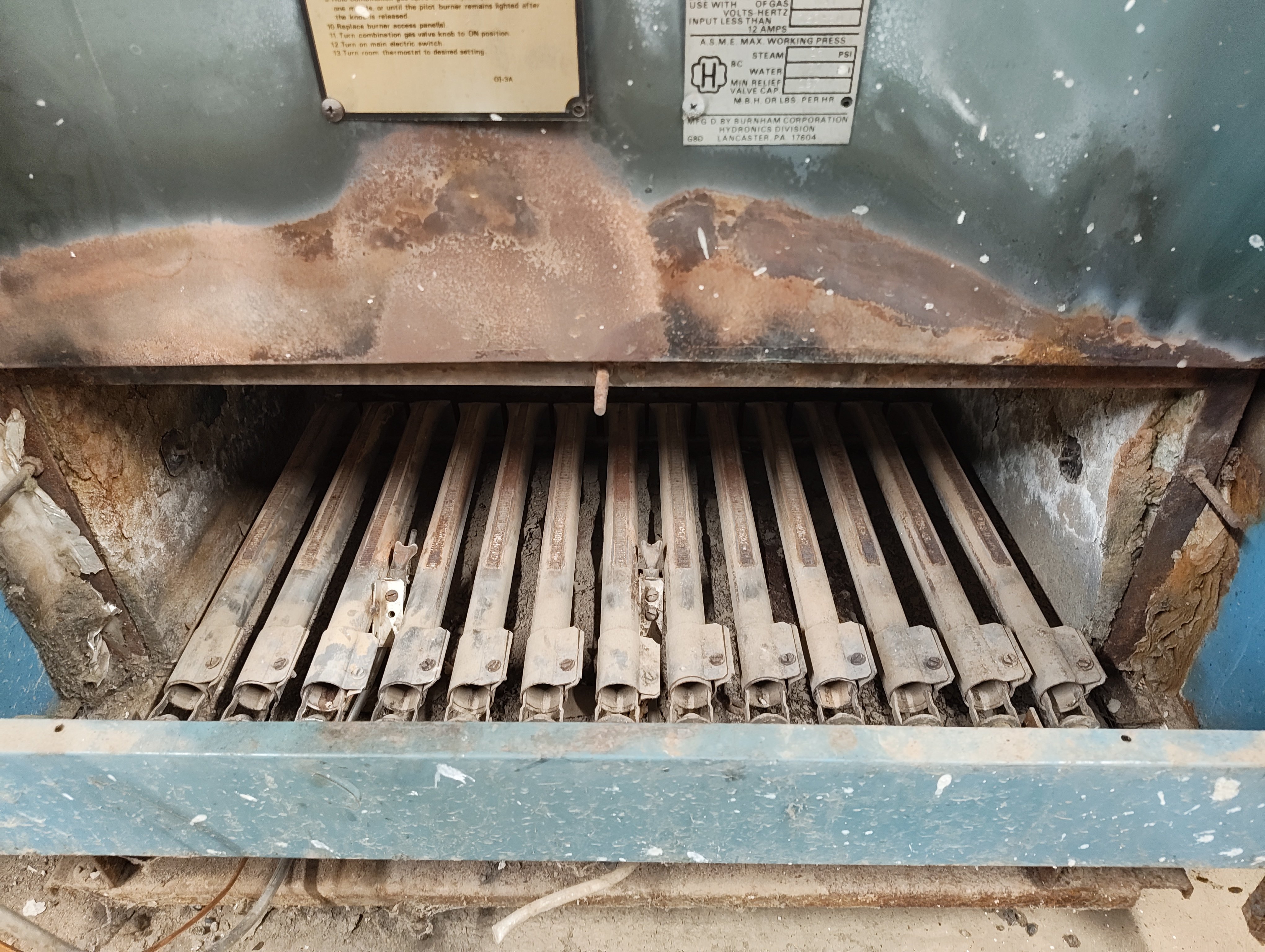
And the boiler inside.
 0
0 -
And the tag, and blower setup:
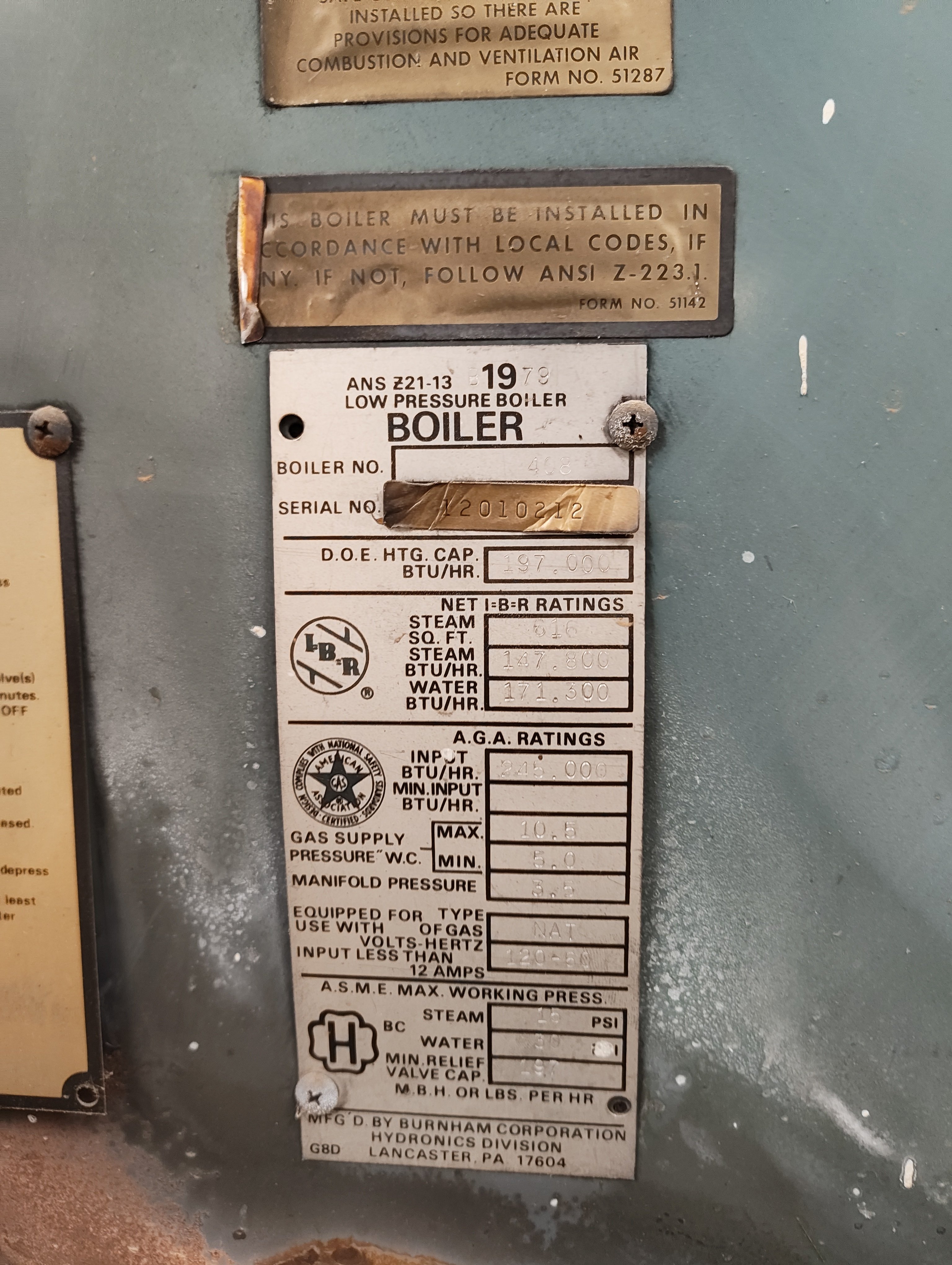
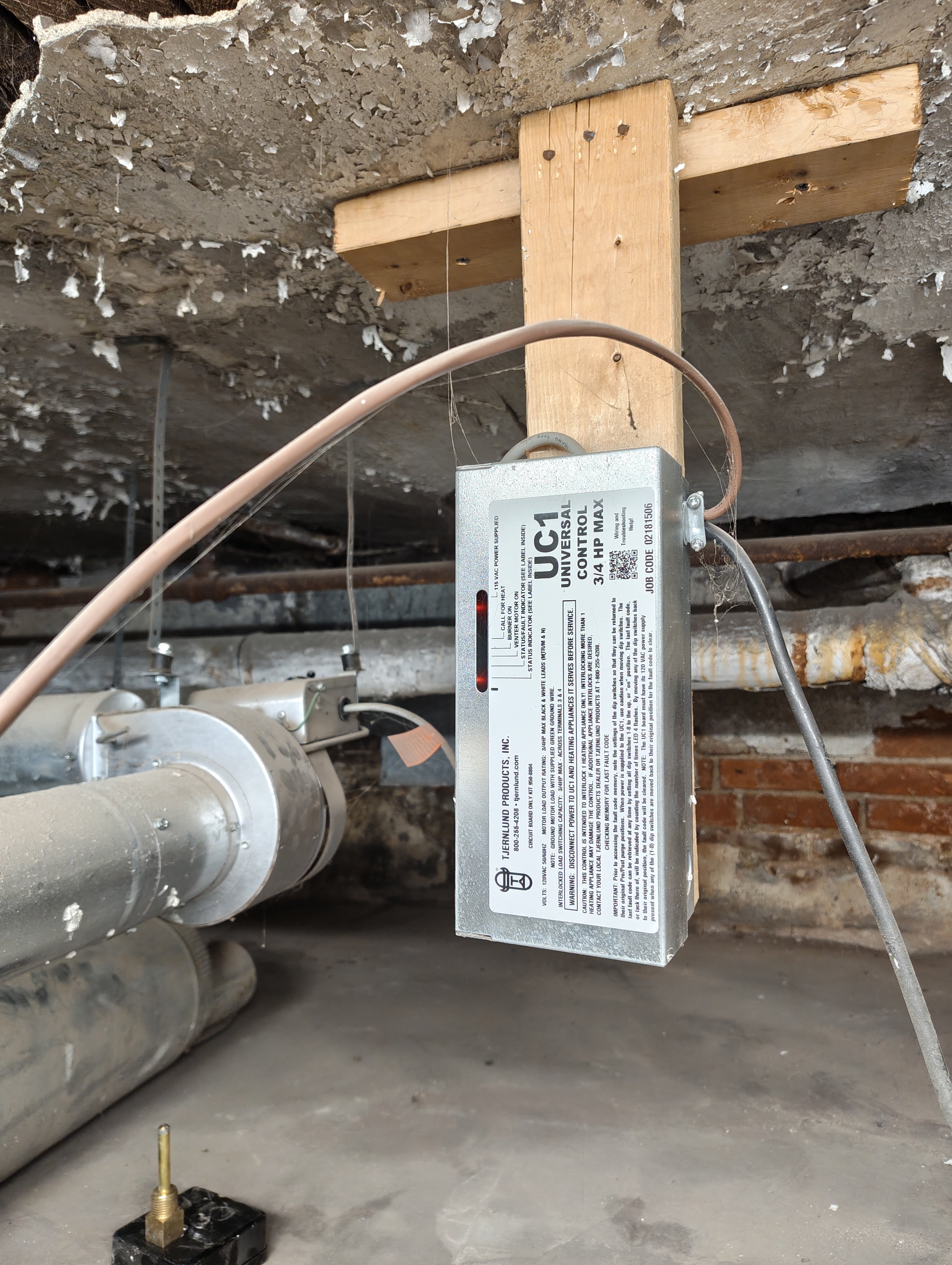
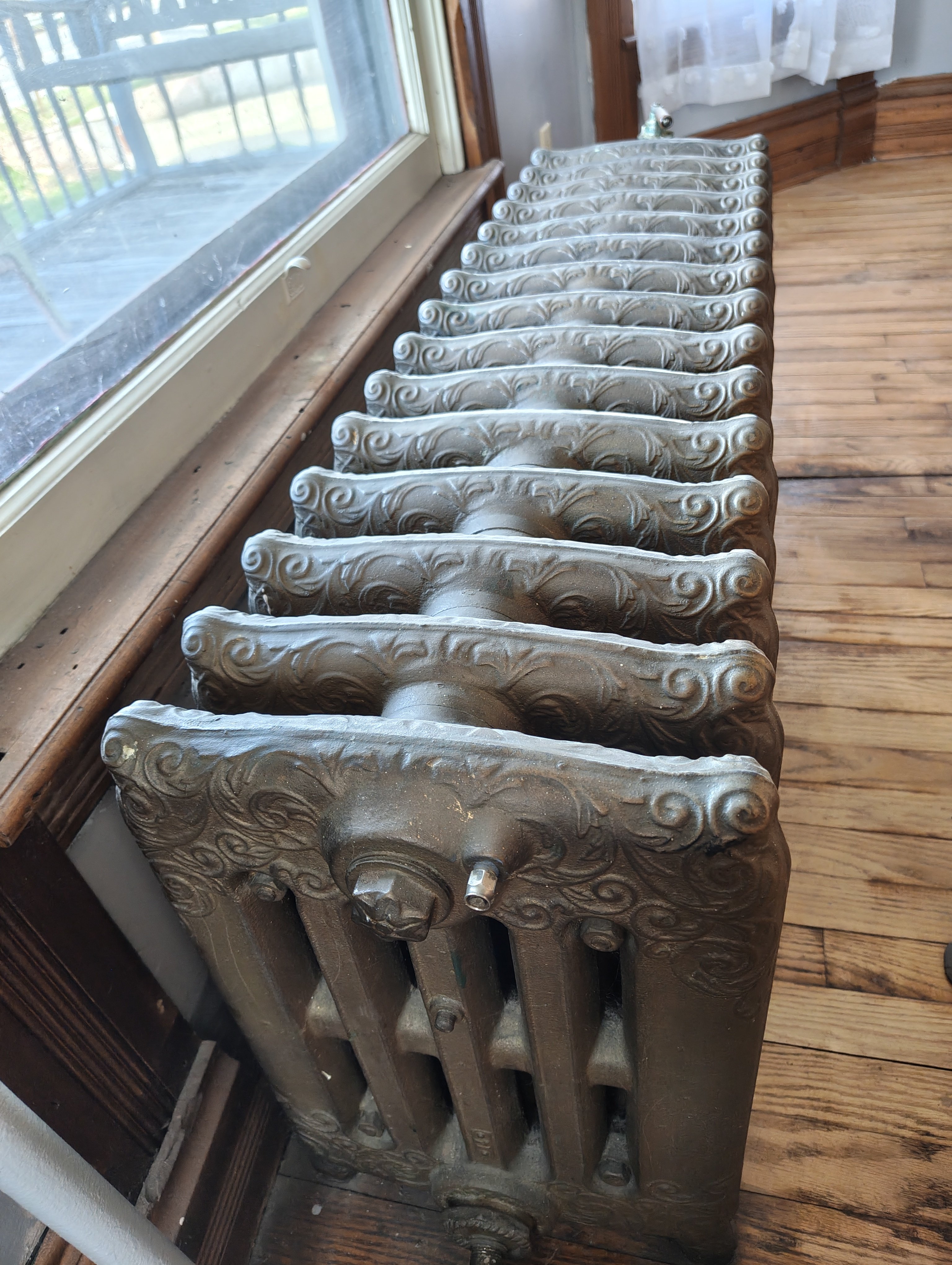
And two of the radiators downstairs: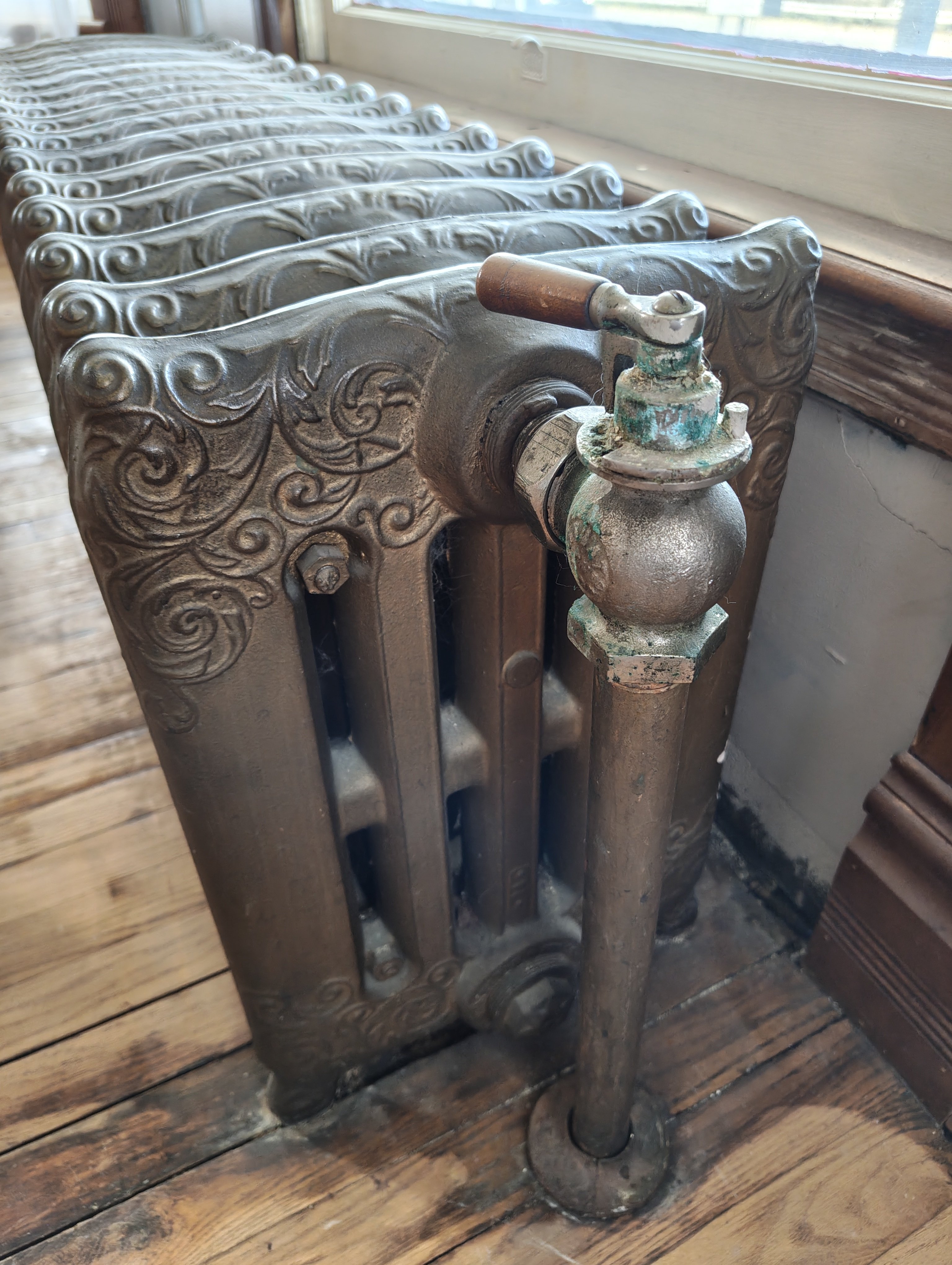
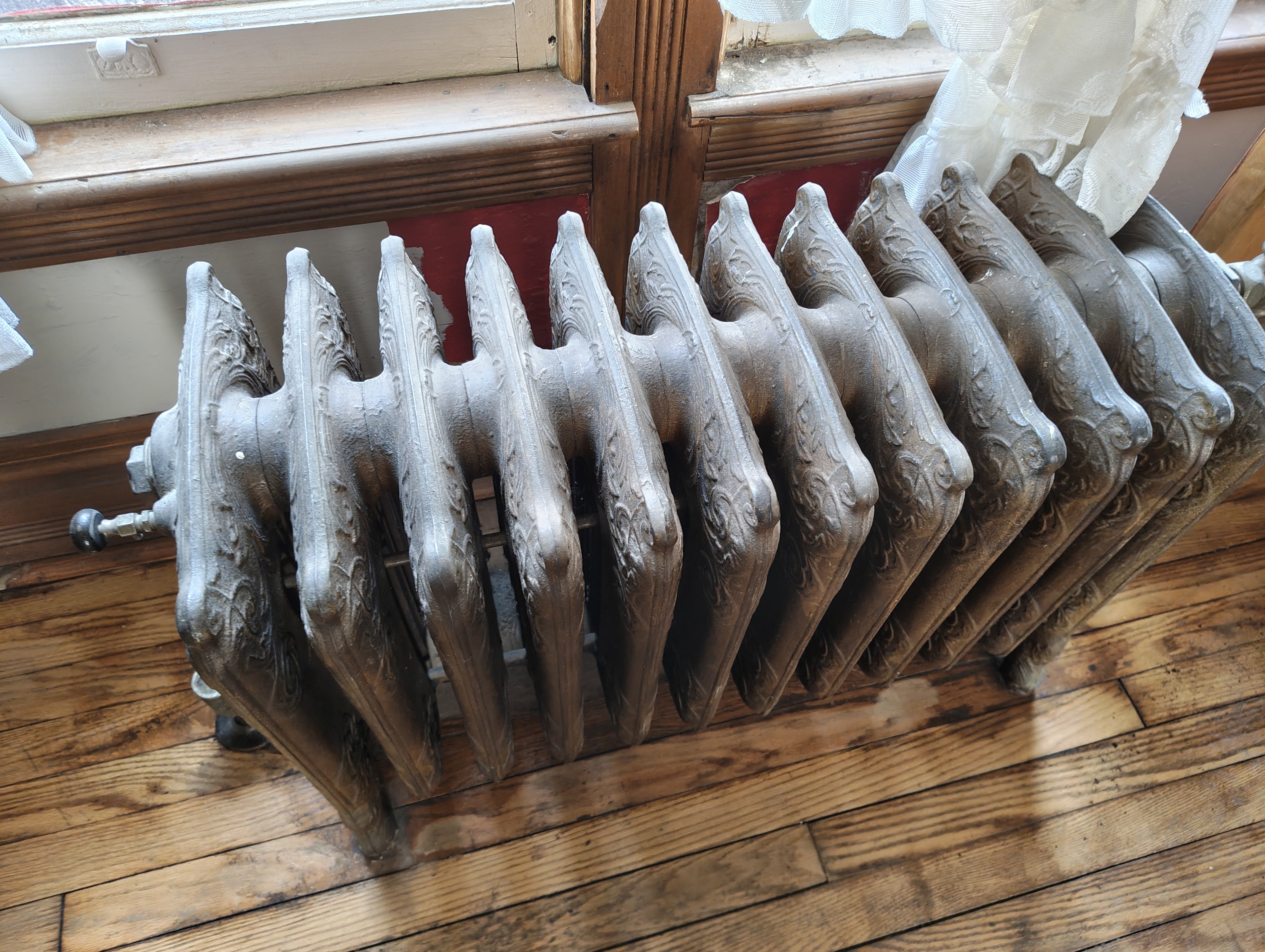 0
0 -
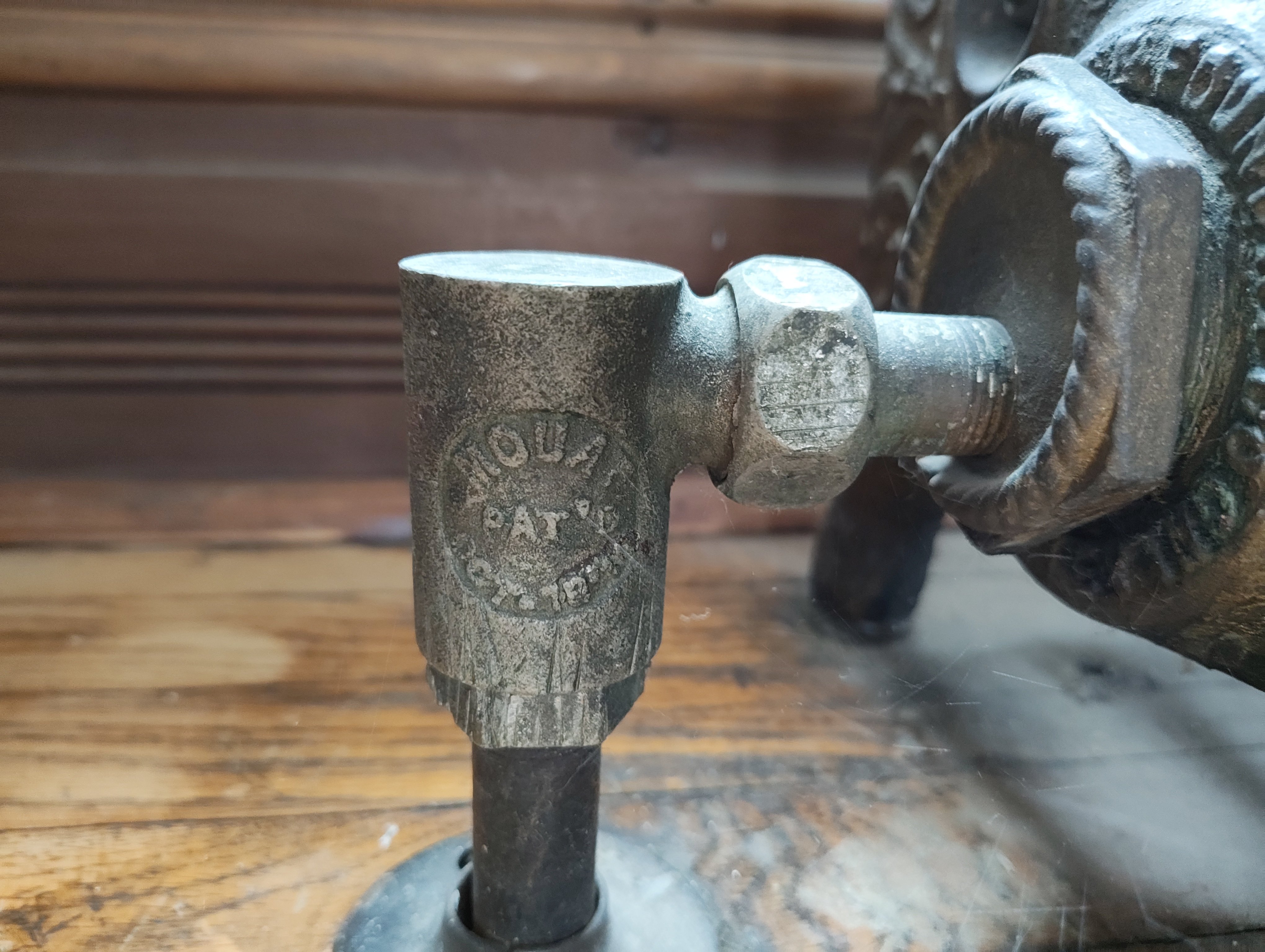
it was a vapor system that was converted to hot water. that radiator valve is a vapor valve, i recognize the specific brand but don't remember what it is, others will know exactly what it is. Syphon I think.
that boiler has been neglected. it will still clean up and run but it is in rough shape. I think both of those pilots should be connected and should have a dual pilot safety, that is probably what a lot of the rollout is from, from the delayed ignition of the right half of the burner.
that 100 series b&g could have been replaced with a wet rotor circulator for a lot less.
0 -
The controls look rough, but the cast looks good. I would check with the municipality to make sure the tjernlund is venting in an acceptable location out the window. When replacing the gas valve, @mattmia2 is right, the second pilot should be connected. The tridicator looks like its in an awful location and the wrong angle, and the relay looks like its not long for this world. You can do this though. Straighten out the wiring mess, im sure @EdTheHeaterMan can draw you a diagram.
0 -
the relay looks like it was in a structure fire…
at least they left both pilots so you know how they screwed it up. i think baso makes ]a device to connect 2 thermocouples to the pilot safety on the gas valve i know they make a standalone safety valve that can take 2 thermocouples.
you could put a standalone safety valve with a pilot tap before the combination valve. in that case you'd light the pilot on the standalone safety, that would provide gas to the combination valve, then you'd light the pilot on the combination valve.
0 -
one of the pilots was connected here:
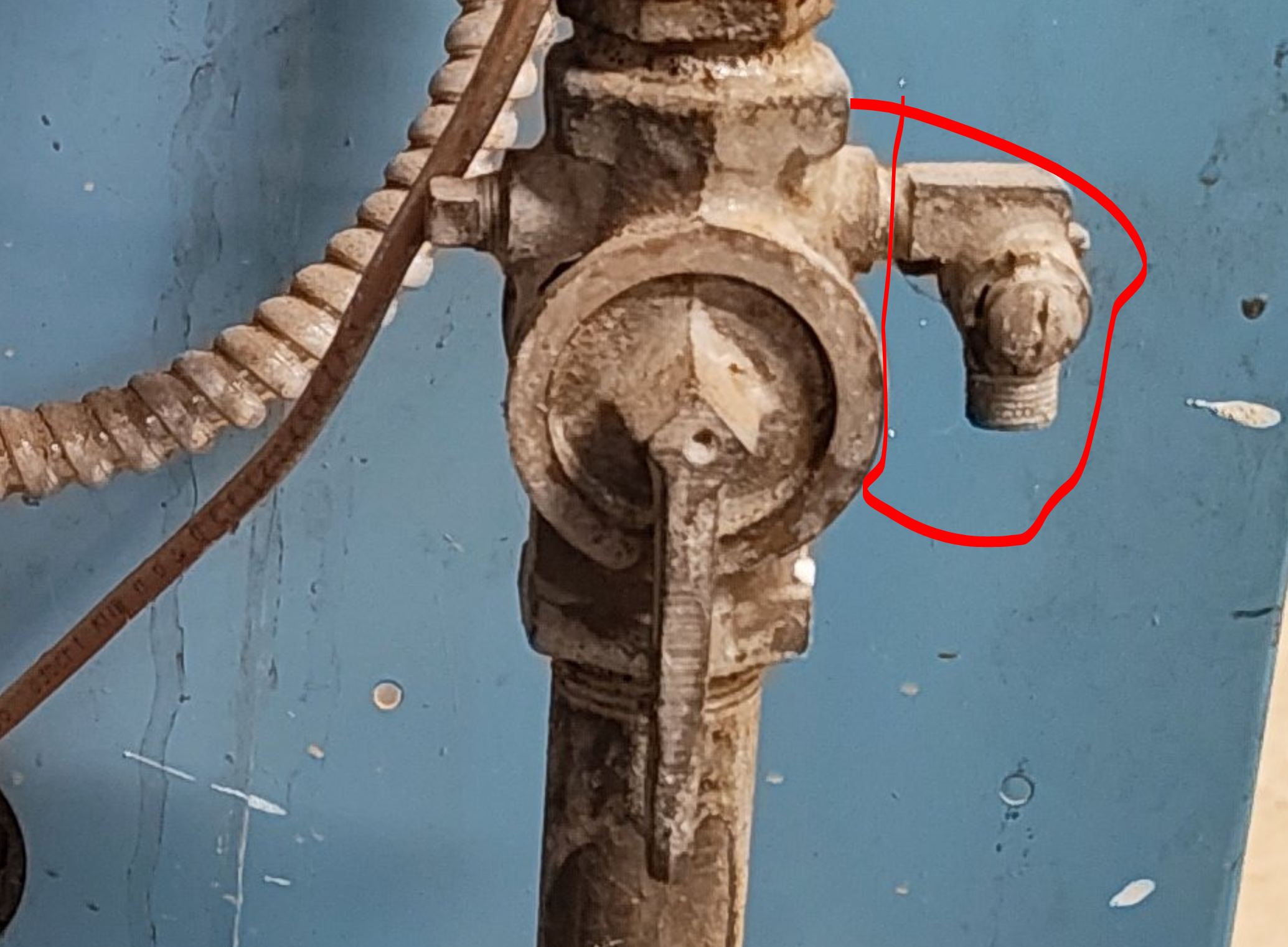
although i'm not 100% sure how, if there was a safety with a switch or what since it would need to interlock the burner and turn off the pilot gas if the pilot went out.
there may be a schematic inside the front cover that shows what was there.
0 -
I have a strong feeling that you have a Burnham Series 4 boiler
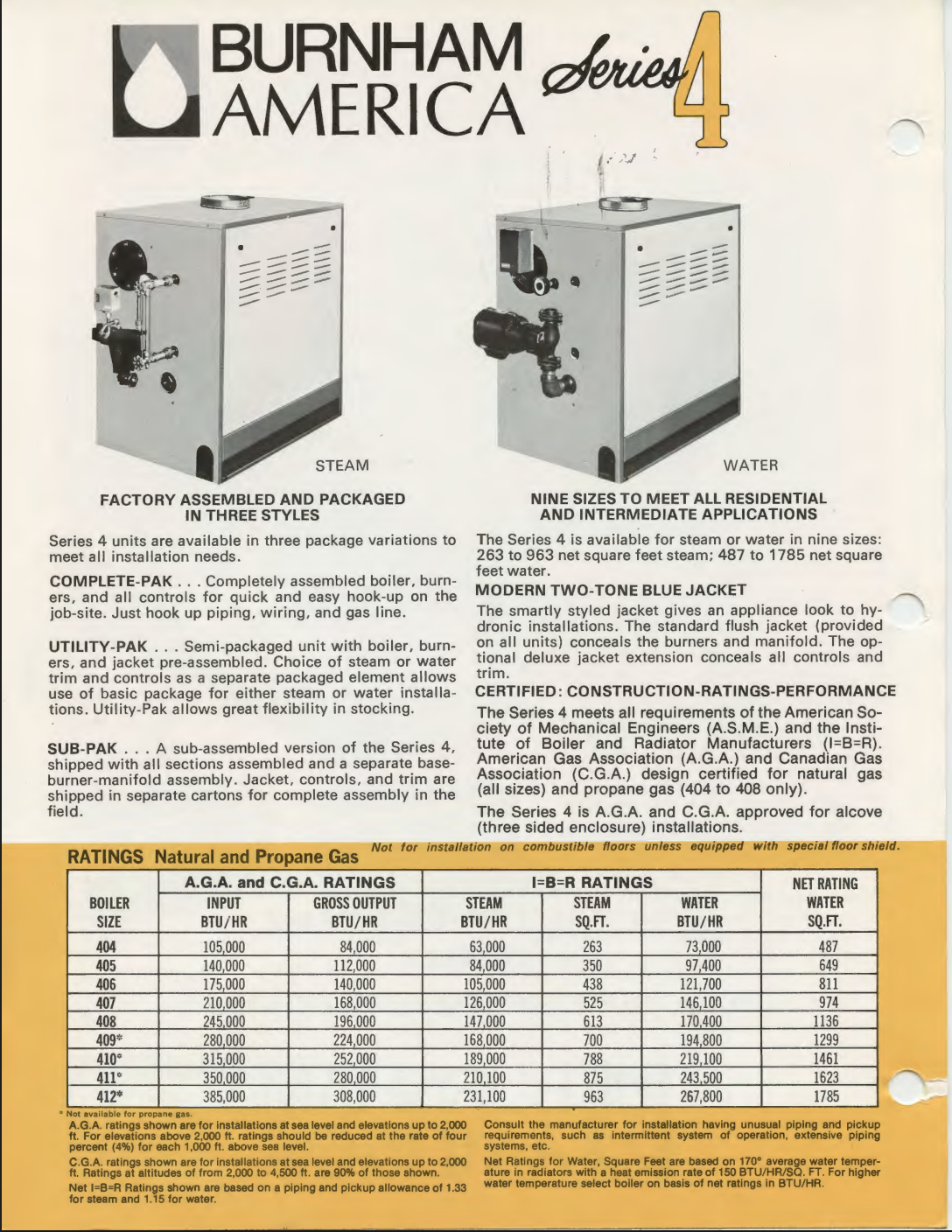
It was available in both hot water trim and steam trim from the factory. It appears the a Steam trim boiler was purchased and field converted to hot water (badly) The 408 seems to have the correct ratings for that boiler rating plate. With that information in mind you should look for a round plate with a 3/4" pipe thread tapping in the center of it to accompdate a new Aquastat. I would select a HydroStat combination aquastat, relay, LWCO control and mount is there, where the manufacturer designed it to be. It appears the the Tridacator (Boiler presure temperature gauge) was supposed to be mounted where the current Aquastat is located. I might make two change to the circulator location and the water feed location while the boiler has no water in it. as shown here:
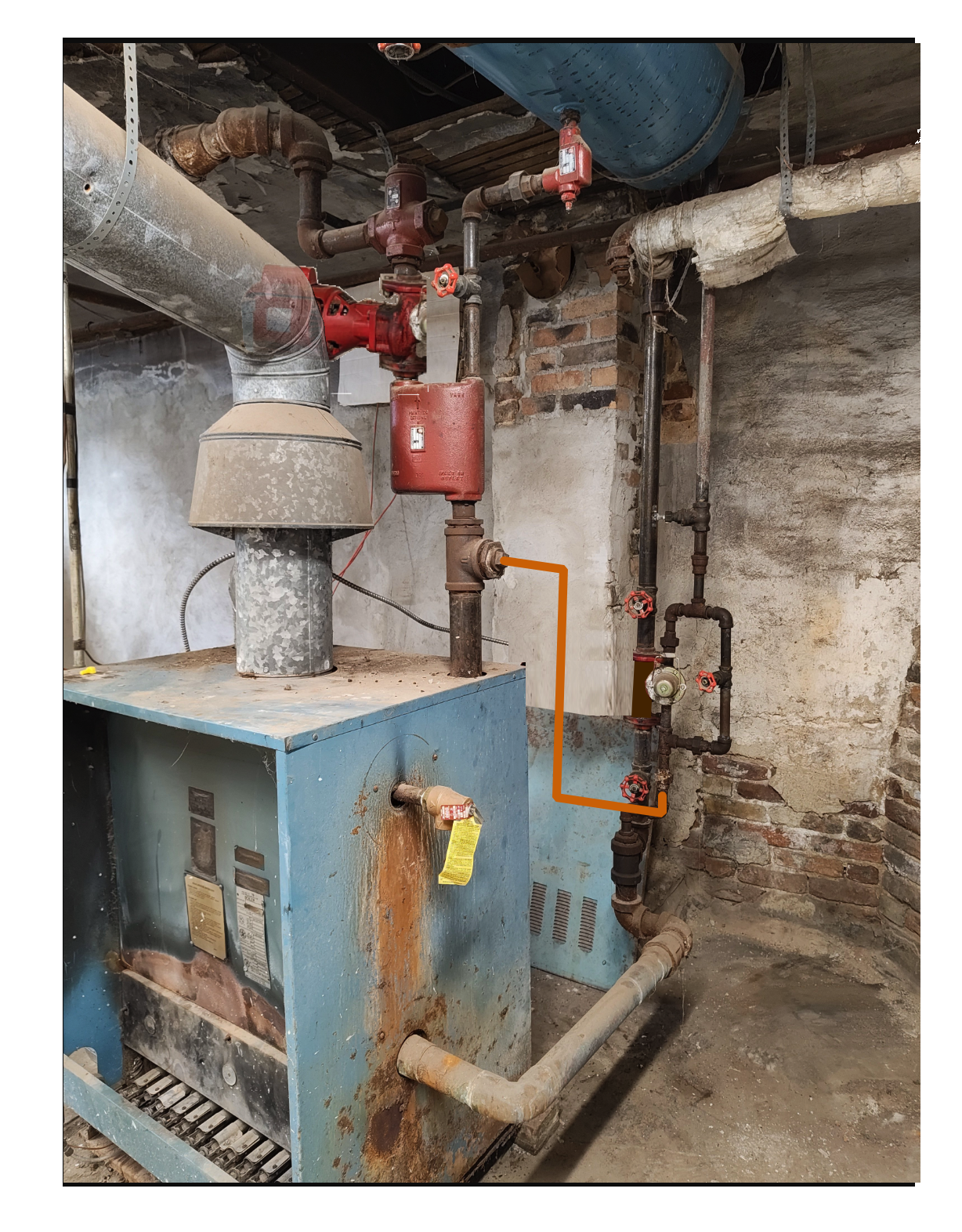
This will make the circulator location pump away from tne expansion tank and place the auto feed valve at the point of no pressure change as described in the book
Here are the links to the Tridicator and the Hydrostat 3200 along with the matching 3/4" Well Adaptor. You may drill and tap the existing cover plate for your Aquastat mounting or you can purchase blank plate with 3/4" tapping with gaskets if you don't want to purchase the drill and tap needed for that project.
After you add up all the miscellaneous parts and determine if you are going to tackle this as a DIY project, you should think about a coat of new baby blue paint to make your project look as good as possible.
Edward Young Retired
After you make that expensive repair and you still have the same problem, What will you check next?
1 -
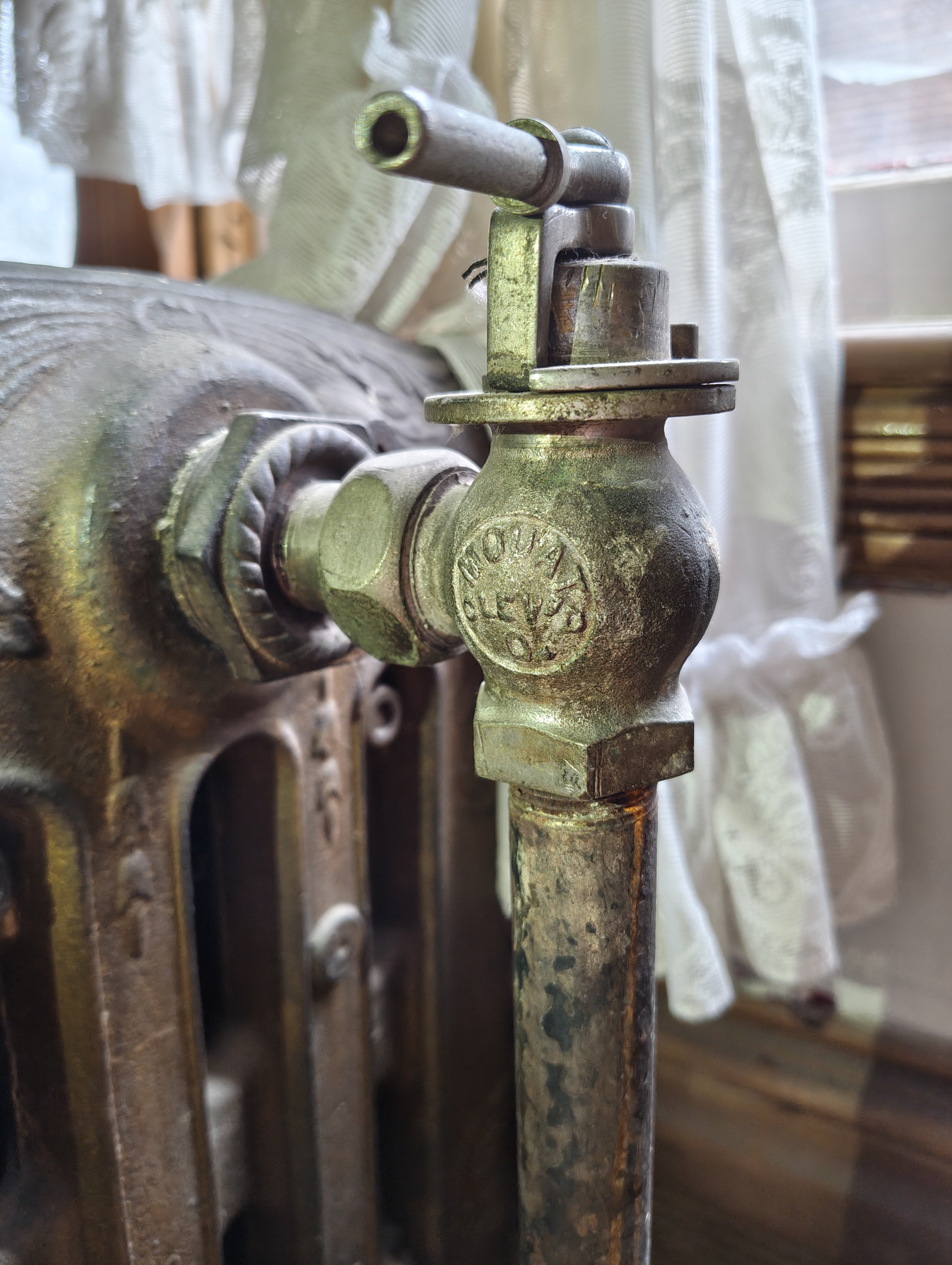
That was a Mouat system. If you enlarge the pic of the valve, you can see the name. @triode , if we can get a pic of the return fitting on one of those radiators, that would confirm it.
Tom Mouat is spinning in his grave…………………
All Steamed Up, Inc.
Towson, MD, USA
Steam, Vapor & Hot-Water Heating Specialists
Oil & Gas Burner Service
Consulting 1
1 -
Looks like someone screwed up a perfectly good steam system. Sad.
Can you take some better pictures of the return side of the radiators ? Maybe a Mouat water seal. How well will that flow hot water ?
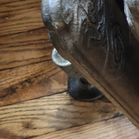
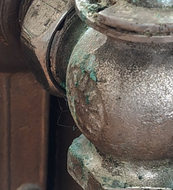
What is this name on the valve ? Maybe Mouat ?
 National - U.S. Gas Boiler 45+ Years Old
Steam 300 SQ. FT. - EDR 347
One Pipe System0 -
Since your existing Burnham boiler is probably grossly oversized, and you will be using this as your main source of heat, the total system efficiency may be as low as 50% after taking into consideration the 180°F water temperature you will be using and the fact that it will short cycle after reaching that limit temperature. This happens because your home cannot use all the heat the boiler can produce as quickly as it makes it.
When it was manufactured, the combustion efficiency was about 75%, and there are likely many uninsulated pipes in the basement or crawl space where you don’t necessarily need that heat. Your actual flame-to-room efficiency may end up costing you the price of a new boiler over the next 10 to 15 years.
At the end of those 10 years, you will still own an inefficient boiler and continue paying higher fuel bills. If you install a new high-efficiency modulating-condensing (mod-con) boiler, you will lower your fuel usage, and those savings will help offset the cost of the new boiler installation. At the end of that same 10-year period, you will continue to benefit from the lower operating costs.
Either way you look at it, you will be paying for a new boiler over the next 10 years—the difference is whether you actually own the new boiler or not.
Check with your natural gas supplier; they often offer low-interest or even no-interest financing for energy-efficient equipment, which can make a new boiler more affordable. However, you need a load calculation so you don’t buy a boiler that is too large. This form is a simple and easy way to find the boiler size you need—Form 1504WH. It is not a room-by-room calculation, but your whole-house load will still give you a proper boiler size.
Edward Young Retired
After you make that expensive repair and you still have the same problem, What will you check next?
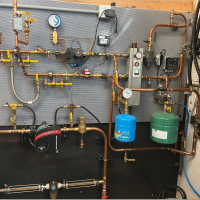 2
2 -
There are a lot of replies here and a lot of good info.
Yes, it is a burnham 408.
I am replacing the ancient manual gas shutoff that had the pilot connection with a modern gas shutoff.
A few boiler techs noted that they moved from 2 pilots to 1, but never noted anything more. I was going to use 1 unless it is a real problem. I was also going to a non-standing pilot (I think it is called pilot ignition) system with the honeywell universal unit.
@EdTheHeaterMan noted to move the water intake but I would also have to reverse the pump, as right now it is pumping into the bottom pipe in the burnham, meaning (unless I am mistaken) it is pumping into the boiler which is "pumping into the expansion tank" not away from it. Am I wrong? (see my whiteboard for the pump direction).
I do plan on changing the pressure/tmp gauge, and also the aquastat. And the wiring and transformer. Not sure what the relay is for, or how to wire up interlocks yet like rollout switches.
@EdTheHeaterMan suggests looking at a new boiler, which I have quotes for from three Boiler people here… they were astronomically more than I could afford. On the other hand, I could probably purchase a new Weil-Mclain (they were suggesting a GV-90 series 175,000 BTU input, 145,000 BTU output, which I would do a load calculation first), as I could swing that kind of money, but I would have to install it myself. Which would of course void the warranty.
Again, I guess as long as it does not get much colder (than this weekend), I can ride it out and read a lot and fix it over the summer. This forum and videos has been a tremendous help, even before I work on it. Thank all of you for your kind input and time.
Here are the pictures that were requested:
 1
1 -
Thought so. The Mouat was an excellent system. If that were my house I'd go back to the original Vapor configuration.
@gerry gill is our resident Mouat expert, maybe he'll chime in.
All Steamed Up, Inc.
Towson, MD, USA
Steam, Vapor & Hot-Water Heating Specialists
Oil & Gas Burner Service
Consulting 2
2 -
@Steamhead They are not all Mouat systems, I did not look again, but I think maybe 7 out of the 9 are (9 big radiators, one small baseboard unit). The baseboard radiator is in a back room that was added, but it puts out nearly zero heat compared to the rest of the radiators. I need to fix that also.
0 -
If you’re considering going back to steam, you need to think hard about what’s happened to the piping over the years. Those hangers have been carrying water weight, not steam conditions. Any sagging or loss of pitch is going to show up fast as water hammer once you put it back into steam service. The question isn’t just “will it run,” it’s “will it run quietly?” Pooled condensate in the mains or runouts will make it noisy in a hurry. @Steamhead and @gerry gill would have good insight there, but based on what you’ve described, I’d lean toward staying with water since that’s what the system has been operating as.
On the hydronic side, the load calculation is the key starting point. That will define the proper boiler size, and in many of these conversions you’ll find there is more radiation than you actually need at 180°F. That opens the door to lower water temperatures and better seasonal efficiency. If you introduce outdoor reset on a cast iron boiler, you must protect the boiler from sustained low return temperatures. You want to see 135°F+ return within the first 6–10 minutes to stay out of the condensing range. Given that you may only need 110°F supply on mild days and ~140°F at design, some form of boiler protection/mixing (bypass, 3-way, or variable-speed injection) becomes necessary.
Whether you go with something like a Weil-McLain GV90+ boiler or keep the existing unit, the load calc is really about right-sizing the replacement. The existing boiler is already past its prime, so it’s a candidate for downsizing. One option—if you want to experiment before replacing—is to stage the input. A two-stage gas valve can effectively “resize” the boiler by operating primarily on low fire. That said, this is not DIY territory. It requires someone who knows what they’re doing, with a combustion analyzer, to verify safe operation at low fire and high fire if needed.
If you undershoot slightly, high fire is still there as a safety net—but in most cases like this, the original boiler is so oversized that even low fire will cover the load.
Bottom line: You are going to pay for a properly sized boiler one way or another—either through higher fuel costs over the next 10 years or upfront with a replacement that actually matches the load. The difference is whether you end up owning an efficient boiler at the end of that period.
A load calculation is not required if you return to a Mouat steam system. Steam systems are sized based on the connected radiation, not the building heat loss. This is because you must produce enough steam to heat all of the radiation in the system in order to achieve proper balance.
With a hot water system, however, you can reduce the output of the radiators by lowering the water temperature. This allows you to select a smaller boiler that more closely matches the actual building load.
Hope this helps to make this as clear as MUD!
Ed Y.
Edward Young Retired
After you make that expensive repair and you still have the same problem, What will you check next?
1 -
that gas valve is probably the same age as the boiler. you should replace it with another one with the pilot tap and pressure tap. the 2 pilots are to allow the burners to light smoothly and at the same time. it would be difficult to convert it to intermittent pilot with the needed 2 pilots.
you need 2 pilots. the way it is now it almost certainly lights with a bang and a puff out the front as the gas builds up enough on the right side to get to the burners that lit off the pilot on the left side. the technical term for that is delayed ignition but it is actually a small explosion. i suspect that is why there is scorching all over the front of it.
I think the way it was installed originally was with this pilot safety controlling one pilot off the pilot tap on the manual gas valve:
https://www.supplyhouse.com/Baso-Gas-Products-L62GB-1-Safety-Shutoff-Device-100-Lockout
and the electrical connection in series with the safety chain to keep the combination valve from turning on if this pilot went out and the other pilot was controlled off of the combination valve.
this would let you light each pilot independently but it would only fire the main burner if both pilots were lit
0 -
Dont forget he has an induced fan on this. It probably does everything @mattmia2 said, except actually rolling out. More likely you are just blowing raw fuel out the side of your house without the proper pilot assemblies.
0 -
I'm looking at the Y8610 Kit. This has a single stage gas valve but has all the necessary parts to convert the existing boiler's standing pilot design, to the electronic ignition design. This is a good idea but, if you want to try the two stage idea to get the lower firing rate, then you may want to purchase all the components separately in order to get the low fire from the gas valve VR8345Q4563 2 stage valve. then you can purchase all the other parts in the kit separately.
- S8610U3009 ignition control
- 392431 Ignitor Sensor
- Honeywell 394800-30/U ignition cable
- Wiring harness field fabricate
- Control for second stage can be a two stage thermostat or an aquastat or an outdoor temperature sensor with dry contacts that make on temperature fall.
If you want the manufacturer's wiring harness and other hardware that comes in the Y8610U kit then you will need to purchase that kit and end up with 2 gas valves, a single stage that you can leave in the box and sell on eBay, and the two stage valve that you want.
Edward Young Retired
After you make that expensive repair and you still have the same problem, What will you check next?
1 -
Small updates:
Filling out Form-1504WH, I get 134,681BTU, this is with "Loose construction and air leaks" as the infiltration factor, given the bad siding and large gaps in windows that are present. If I use the "Older house good construction" infiltration number, I get 118,236, just doing that for a long term target if I fix the windows and such (that would be a long time in the future).
As for the delayed two pilot scenario, I was in the basement (for days) working on things when it was turning on and off. I never heard it bang or poof coming on. Quite a few times when I had techs come over to talk about replacement they would open it up and we would call for heat and it seemed to fire up fine. I hear what people are saying, but then they mention there is no way to go to two pilots and have a electronic pilot ignition. I really do not want a standing pilot in the basement, the venting is active, so when the burner is off, all of the pilot burnt fuel goes into the basement and then the house.
Would it be crazy of me to gravitate towards getting a new boiler and installing myself? This "dual pilot, everything outside of the boiler is bad" setup I have seems to be leaning towards "lots of custom duct tape and bailing wire" to get it running?
0 -
DIY boiler replacements have been done by others, with good success, on this site. You know your abilities.
Looking at the price of a GV90 and the price of a mod-con like the Weil-McLain Ultra, there is a significant price difference. The GV90 is a complicated cast iron boiler, and the Ultra is a complicated mod-con boiler. Both have sophisticated control systems, and both can accept cooler return water. I would give serious consideration to the Ultra, since it is a lower-cost boiler.
When I look at a boiler job that comes into the five-digit price range—and that first number is not a one (1)—I also add over $2,500 in hydronic accessories, piping, and fittings before I even begin to consider the total job cost to a customer. Those quotes were not unreasonable, considering the total parts, equipment costs, and labor needed to complete such a job. (I didn’t see them before you removed them, but I can imagine the prices were a real sticker shock.)
You can download the installation manual and review the installation procedures before selecting the boiler you want to install. You will still need to hire a professional with a combustion analyzer for commissioning the boiler. There are adjustments that require measurements you can only obtain with the proper instruments, and unless you plan on spending another $1,000 for those tools, you will need a pro for startup.
In your position I might opt for the Ultra and use the piping arrangement in figure 4 on page 11 of the manual
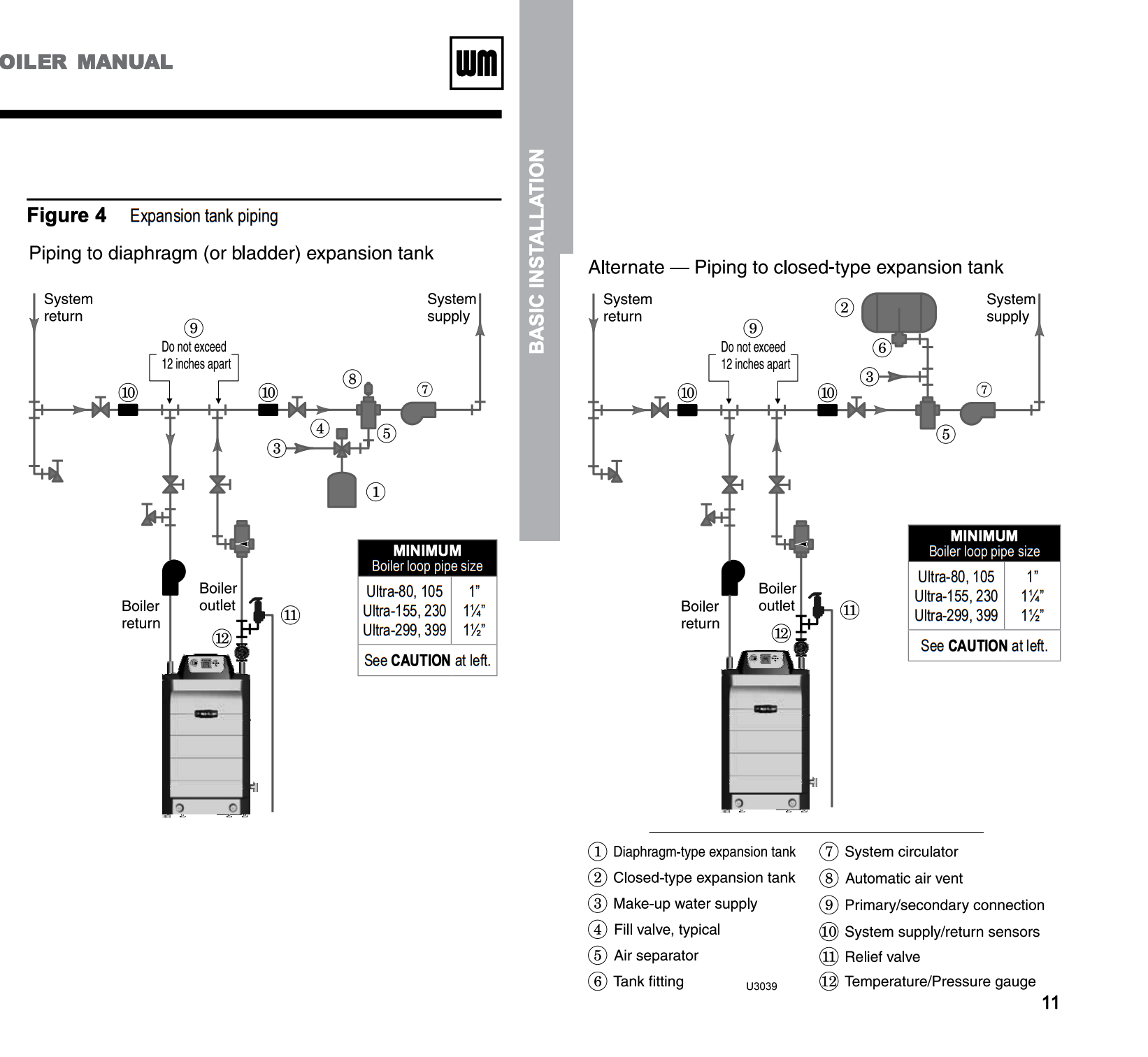
You will need to consider if you plan on using the existing B&G 100 circulator as your system circulator to save on costs. I always include a new thermostat with the job. You can use the existing thermostat and save.
You need to account some $$$ for venting the system. That will include PVC pipe and fittings. Some Electrical parts like a new switch, and some wire and wire connectors. All this adds up a little at a time.
Edward Young Retired
After you make that expensive repair and you still have the same problem, What will you check next?
1 -
The two pilot arrangement may be possible with intermittent pilot operation. I'll have to look at some larger commercial boiler manuals to see how they do it.
With your claimed loose building construction I would not worry about a standing pilot. Also there may some draft through the active venting even when it is not active.
I would not use "lots of custom duct tape and bailing wire" to get it running, do a nice job if that is the route you choose.
National - U.S. Gas Boiler 45+ Years Old
Steam 300 SQ. FT. - EDR 347
One Pipe System1


Categories
- All Categories
- 87.6K THE MAIN WALL
- 3.3K A-C, Heat Pumps & Refrigeration
- 59 Biomass
- 429 Carbon Monoxide Awareness
- 124 Chimneys & Flues
- 2.2K Domestic Hot Water
- 5.9K Gas Heating
- 119 Geothermal
- 168 Indoor-Air Quality
- 3.8K Oil Heating
- 78 Pipe Deterioration
- 1K Plumbing
- 6.6K Radiant Heating
- 394 Solar
- 16K Strictly Steam
- 3.5K Thermostats and Controls
- 56 Water Quality
- 51 Industry Classes
- 50 Job Opportunities
- 18 Recall Announcements