Is 6psi steam with no vents a problem?👀👀

Title is for attraction. I’m quoting a replacement boiler for a public library. At least that’s what they think they need. What they actually need is a venting/trapping plan for the building piping. Built in 1853 and a large addition added sometime in the 1950s. The homestead is now a large public building. Current boiler is an LGB 8 natural, with boiler feed pump, 3 zone valve header. Just obscene water hammer, crazy fuel consumption, eats a boiler every decade and has been since the 1950s. I’ve audited the building and can find no intentional venting of any kind. There are copper fin tube fan coils that have been repaired by brazing ruptures shut. And one active rupture that is acting as a vent currently I suppose.
2 pipe steam with thermostatic traps on all rads/fan coils. The larger zone main supply runs out about 80’ and deadheads a tee and splits to two separate runs on each exterior length of the addition. At the end of main drip connection there is no venting or trapping, simply drops down to a wet return and runs back to the feed reservoir.
The smaller zone is similar except it has a dry return and again no venting or trapping. Just drops to the wet return and back to feed reservoir.
The third zone is pointless, as it simply leaves the header and runs about 30’ to a point where it just tees into the smaller zone’s end of main supply. I have no ideas why this was ever done, but I had to put it out there. There is no radiation off this 3rd zone.
Now, in all these years all our local guys have done is replace boilers and crank the pressuretrol up to 6 psi, changed a rad trap or two along the way. I’m told by the maintenance man who monitors the boiler regularly that it actually build 6psi at times, and in the 8 hours I’ve spent there I’ve seen 3.5 on a mild day.
looking for opinions on venting and trapping. Currently thinking B&J big mouths at end of main and f&T traps to separate the supply from wet. Am I missing something? It seems so silly what I’ve seen so far, but there is always something to learn with steam heat. Thank you in advance fellas
THINK

Comments
-
Oh boy- where to start…………..
Especially where a return tank and pump is used, you need traps. I'm guessing there is likely a large trap where all the returns go into the boiler-feed pump. That's wrong. You need a trap on each drip so steam will not enter the return lines. These returns are not large enough to handle steam, and often will bang when someone uses a "master trap" at the tank.
Now….. assuming all these returns slope down to the tank, you can vent the mains through them. You'll need an F&T on each drip, and on longer mains a crossover trap as well to add venting capacity. If you're using an H-pattern F&T such as this Barnes & Jones:
you can use the extra tappings to mount a Big Mouth so it will pass air into the return, which saves some piping work.
Once everything vents out properly, you can grab the pressuretrol and CRANK IT DOWN!!
Where is this job located?
All Steamed Up, Inc.
Towson, MD, USA
Steam, Vapor & Hot-Water Heating Specialists
Oil & Gas Burner Service
Consulting0 -
As above. And in answer to your clickbait header — oh yes indeed it is!
Br. Jamie, osb
Building superintendent/caretaker, 7200 sq. ft. historic house museum with dependencies in New England0 -
thanks guys. As always appreciate your input. The job is located in Binghamton NY steamhead. Excellent advice on the h pattern. There is no master trap. Steam regularly dumps out the reservoir overflow. I just couldn’t believe what I was seeing and all the years this has been going on. I suppose it’s a fantastic testament to the amazing resilience of steam heat in general. After all the building does heat. Toasty warm in there.
Also want to note. After getting a good clean surface at the inlet of the supply header I only ever measured 210f at 2-3 psi. Must be really wet steam? I would expect 220/225 at that pressure. Your thoughts?
THINK
0 -
Why do they think they need a boiler, what changed ? I don't think you will build much pressure with a rotted out boiler.
Do you think they would go for the improvements if they think they just need a boiler ?
With the improvements (actually corrections) I could see less fuel and water consumption, quiet heat and a much greater boiler change out interval.
National - U.S. Gas Boiler 45+ Years Old
Steam 300 SQ. FT. - EDR 347
One Pipe System 1
1 -
@AndythePlumber said "Steam regularly dumps out the reservoir overflow."
Now we know why the boilers don't last. With all that steam leaving the system, you need a lot of fresh water coming in to offset the loss. That much fresh water will rot out the boiler quickly.
All Steamed Up, Inc.
Towson, MD, USA
Steam, Vapor & Hot-Water Heating Specialists
Oil & Gas Burner Service
Consulting1 -
the boiler sections leak when the boiler cools down. Refractory and debris smothered the flame sensor recently and that when we arrived to help. They will definitely do the corrections along with a the boiler. The library’s director is a sensible man and seems to have a new lease on life having someone who is capable of actual improvements. 😃 I agree. They will have some serious fuel savings, and the water hammer…it’s obnoxious. They have gotten used to it, somehow. I couldn’t believe my eyes and ears
THINK
0 -
Agree with @Steamhead 1000%. Steam out the boiler feed tank vent means a ton of MU water. It will rot the boiler and all the boiler feed piping (maybe the tank and pumps as well) and it will rot a boiler very quickly.
1 -
@AndythePlumber , the LGB boiler is not known for its longevity, nor does it have any provision whatsoever for the use of probe-type low-water cutoffs. We all know most folks don't blow down their float-type LWCOs, with sometimes catastrophic results. Look at the Peerless 211A-06, which should last longer if properly taken care of, and where at least the secondary LWCO can be probe-type.
You could also look at installing several smaller boilers, one for each zone. This would eliminate the zone valves and likely the boiler-feed pump too. Fewer moving parts and redundancy are worth the extra effort.
All Steamed Up, Inc.
Towson, MD, USA
Steam, Vapor & Hot-Water Heating Specialists
Oil & Gas Burner Service
Consulting1 -
I have a customer with a 2 pipe Webster system if I remember correctly. The house has been added onto multiple times. There are F&Ts at the mains and steam traps at built in convectors. The only vent on the system is the wide open vent on the condensate pump. Recently moved the pump for another addition where they dug out a deeper basement adjacent to the pumps old location. Still works like a charm. You sure steam isnt just blowing throw traps into the boiler feed pump? Especially since its cranked to 6 psi...
0 -
it’s definitely blowing through traps into the feed reservoir, and because it’s 6 psi it’s also pushing through a wet return to get there
THINK
0 -
@AndythePlumber , I wonder if @Mad Dog_2 would come up there to consult?
All Steamed Up, Inc.
Towson, MD, USA
Steam, Vapor & Hot-Water Heating Specialists
Oil & Gas Burner Service
Consulting0 -
I would love to meet any of you dudes, I don’t think a site visit is necessary though. Honestly, I think someone put the feed pumps in when they put the addition on in the 50s and erroneously removed main venting while doing so thinking the reservoir vent would now vent the system…it’s all I got. There are no provisions for end of main venting while doing fittings installed. Most of the time you see an ancient tee with a plug in it. Or crossover traps that have been removed and plugged but the tee remains. Not the case here. What boggles me is that my local area techs have just kept doing the same thing over and over for generations of techs now
THINK
0 -
I really like your idea about two separate boilers, not gonna lie. We are going to be giving options. Perhaps sectioning some of the building for hydronic, but I hadn’t considered multiple steam boilers yet. Thank you
THINK
0 -
Here's where we did exactly that:
All Steamed Up, Inc.
Towson, MD, USA
Steam, Vapor & Hot-Water Heating Specialists
Oil & Gas Burner Service
Consulting 1
1 -
@AndythePlumber Do you know if the original boiler was in a pit? Sunk into the floor? Have the replacement boiler, or in this case boiler"s" been placed above the pit?
0 -
That issue is why I've always wondered what the reason is for why steamers can't be built short and wide? (sorry for that clumsy sentence!!)
0 -
The 6 x 11/4” 90 is gorgeous steamhead. Thing of beauty and even cast iron to boot. Top notch work brother! There is no known pit installations. The feed pump is recessed in a pit. One thing I must mention that I’m beginning to think is more and more important here. Of the two separate zones…
The original homestead zone is the smaller, and the addition dated to the 50s is the larger and has the feed pump in a pit and the lions share of the wet return. Ok…
The original homestead zone has a supply and a dry return with no operational venting or trapping and a drip connection to the wet at its end..
The addition and larger zone has no dry return each radiator drops to the wet return all with rad traps in assumed failed operational conditions. Page 125 of the Dan’s Bible speaks on this and I’m trying to understand its significance here. I’m going to share some pictures soon…and wait till you guys see the pressure gauge it’s glorious and operational
THINK
0 -
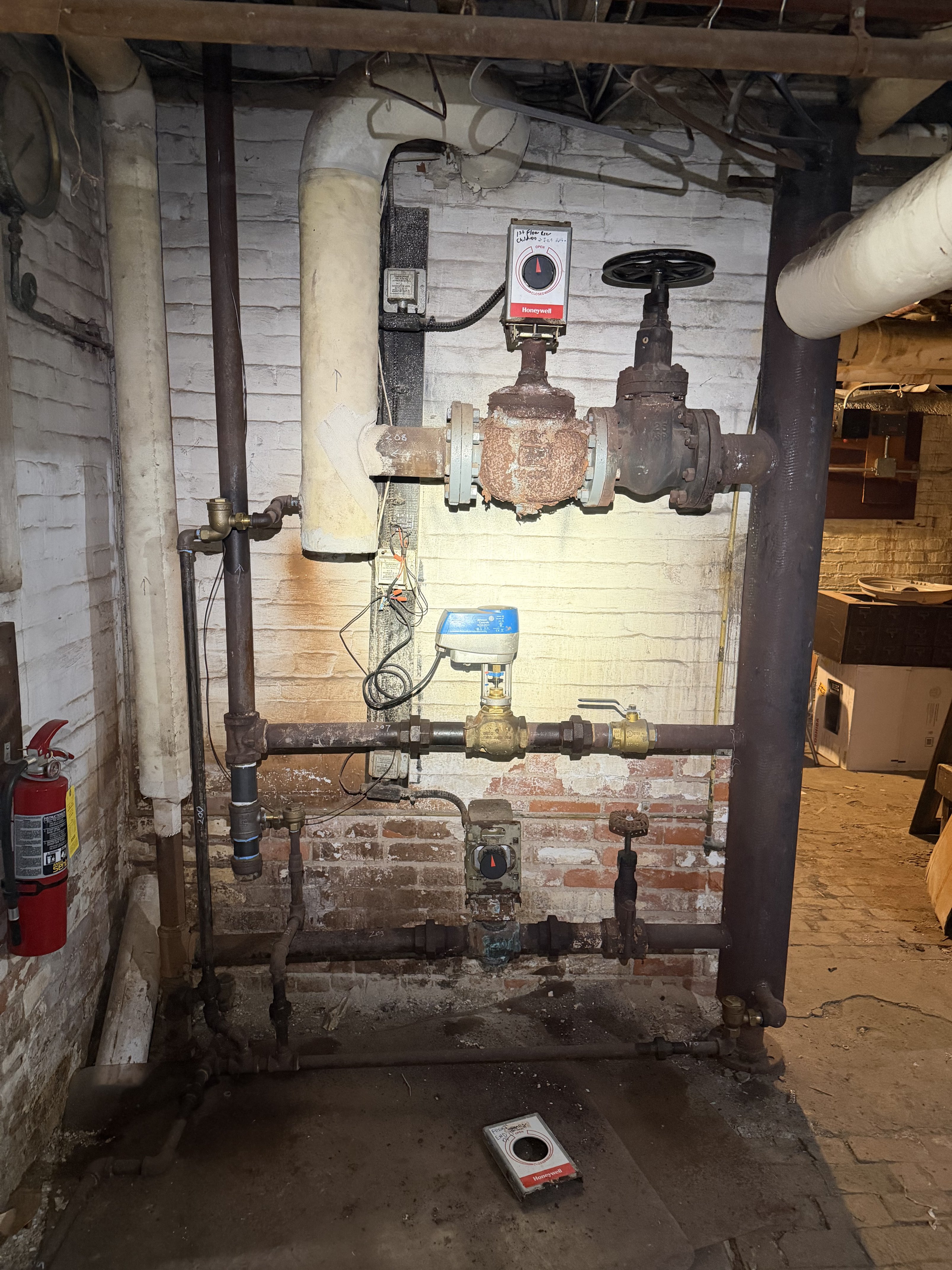
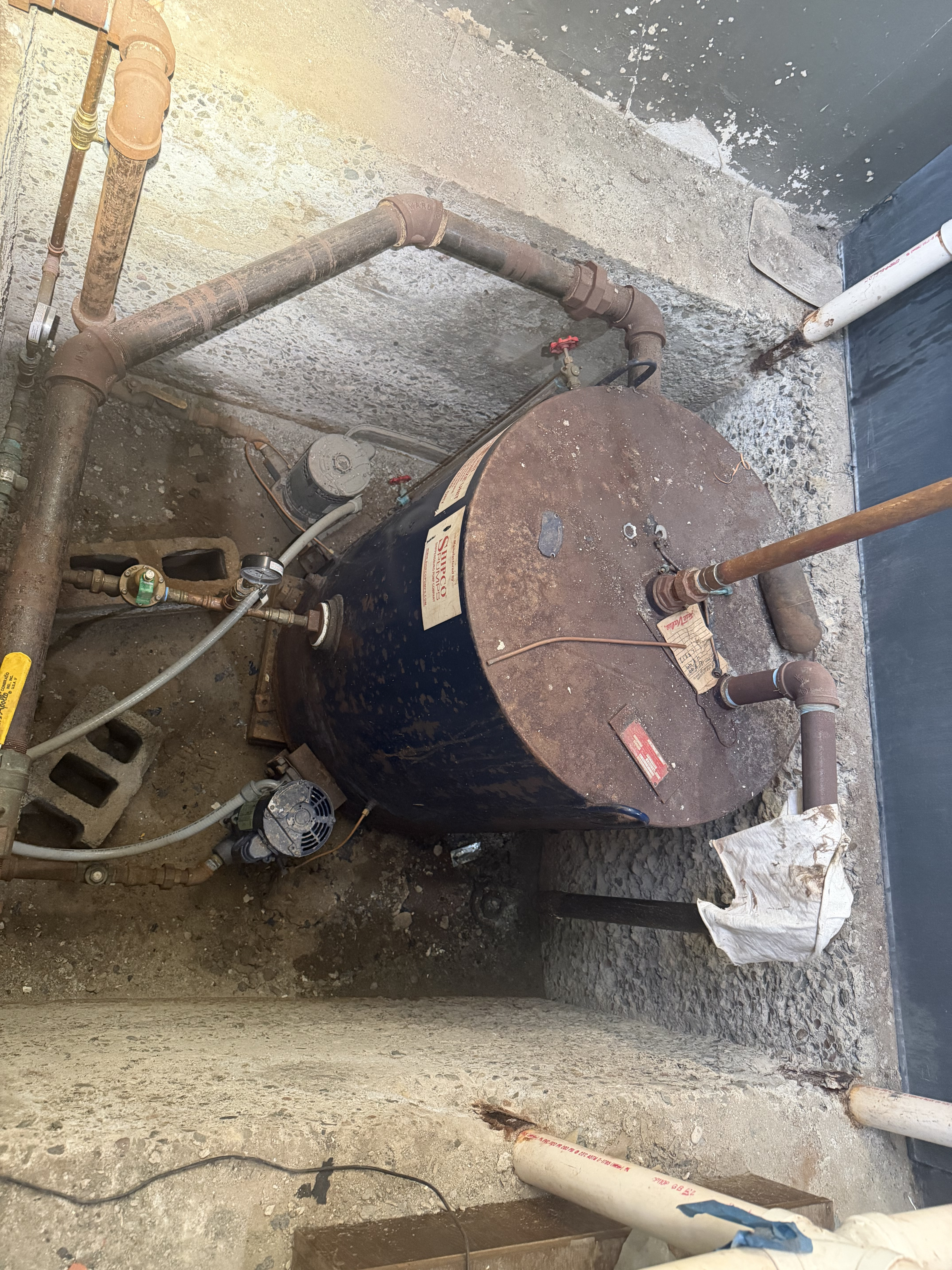
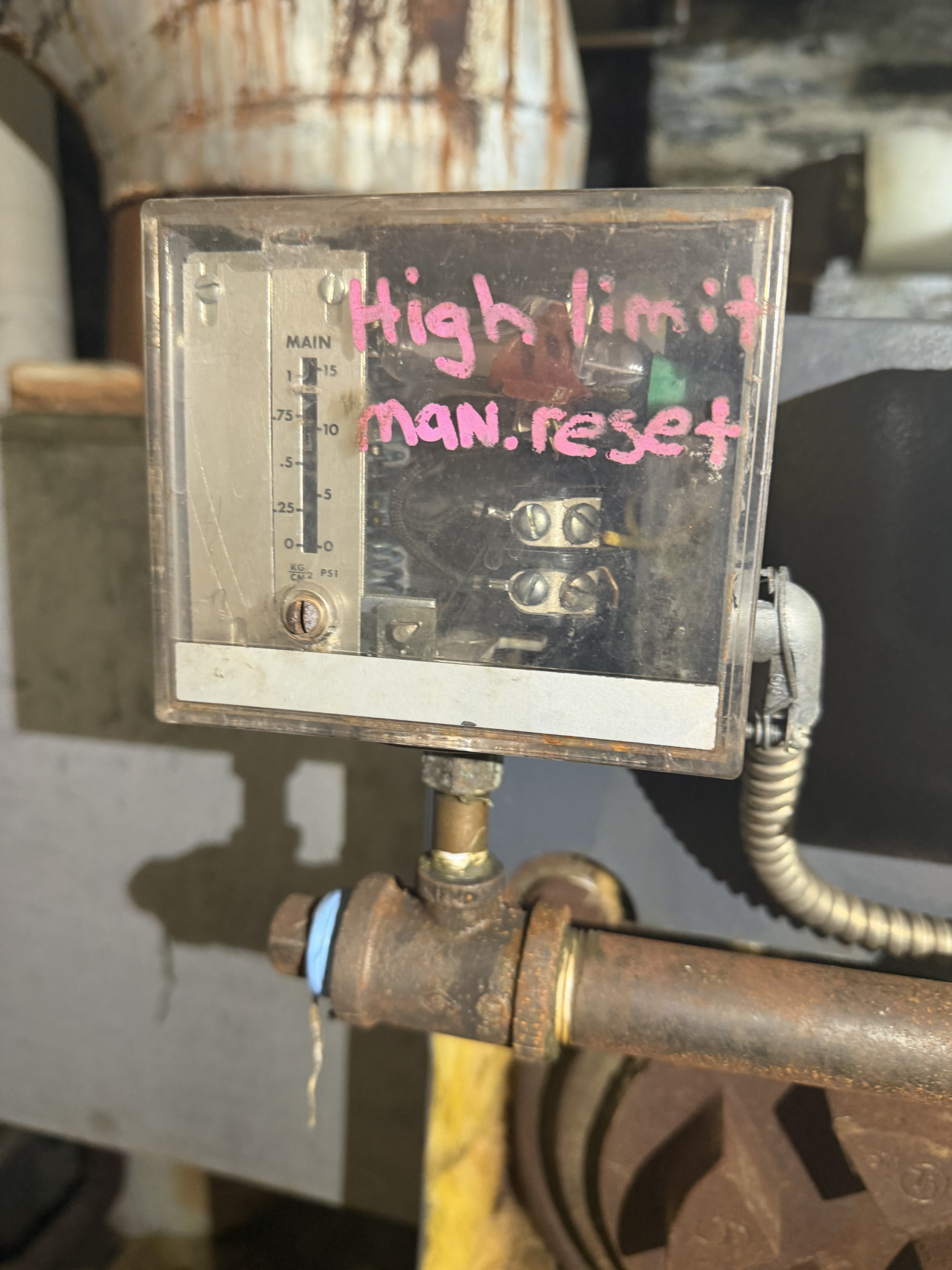
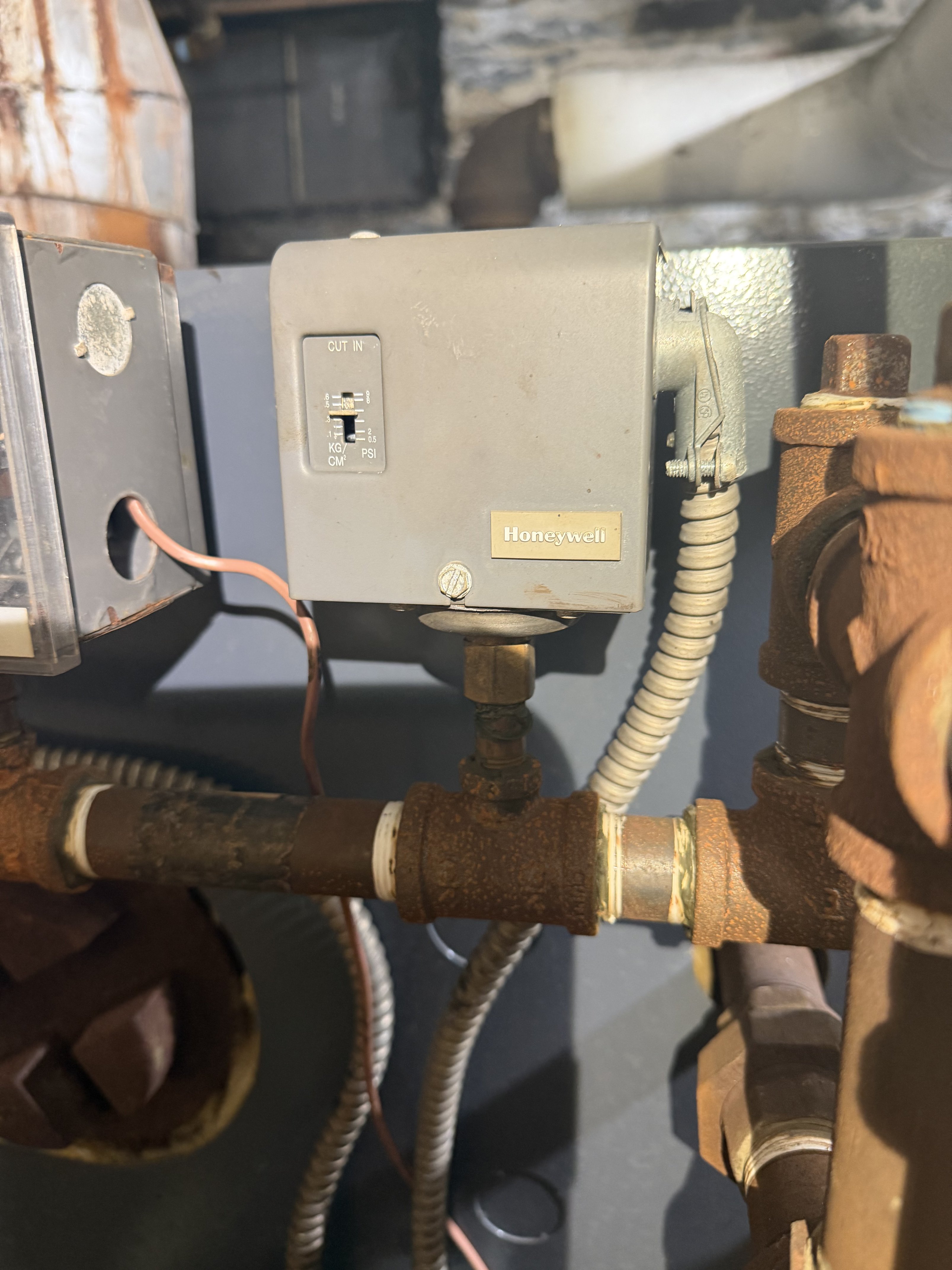
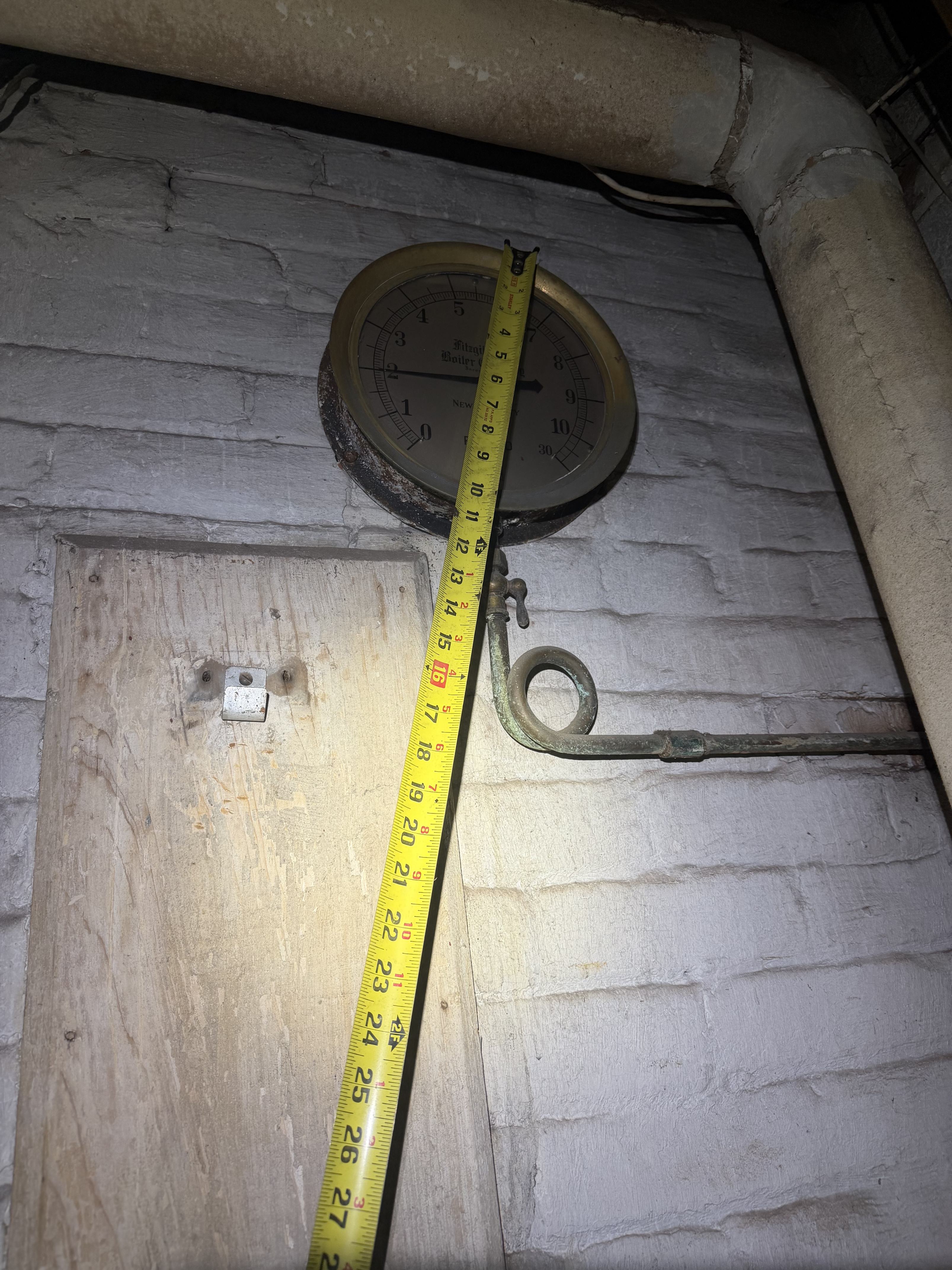
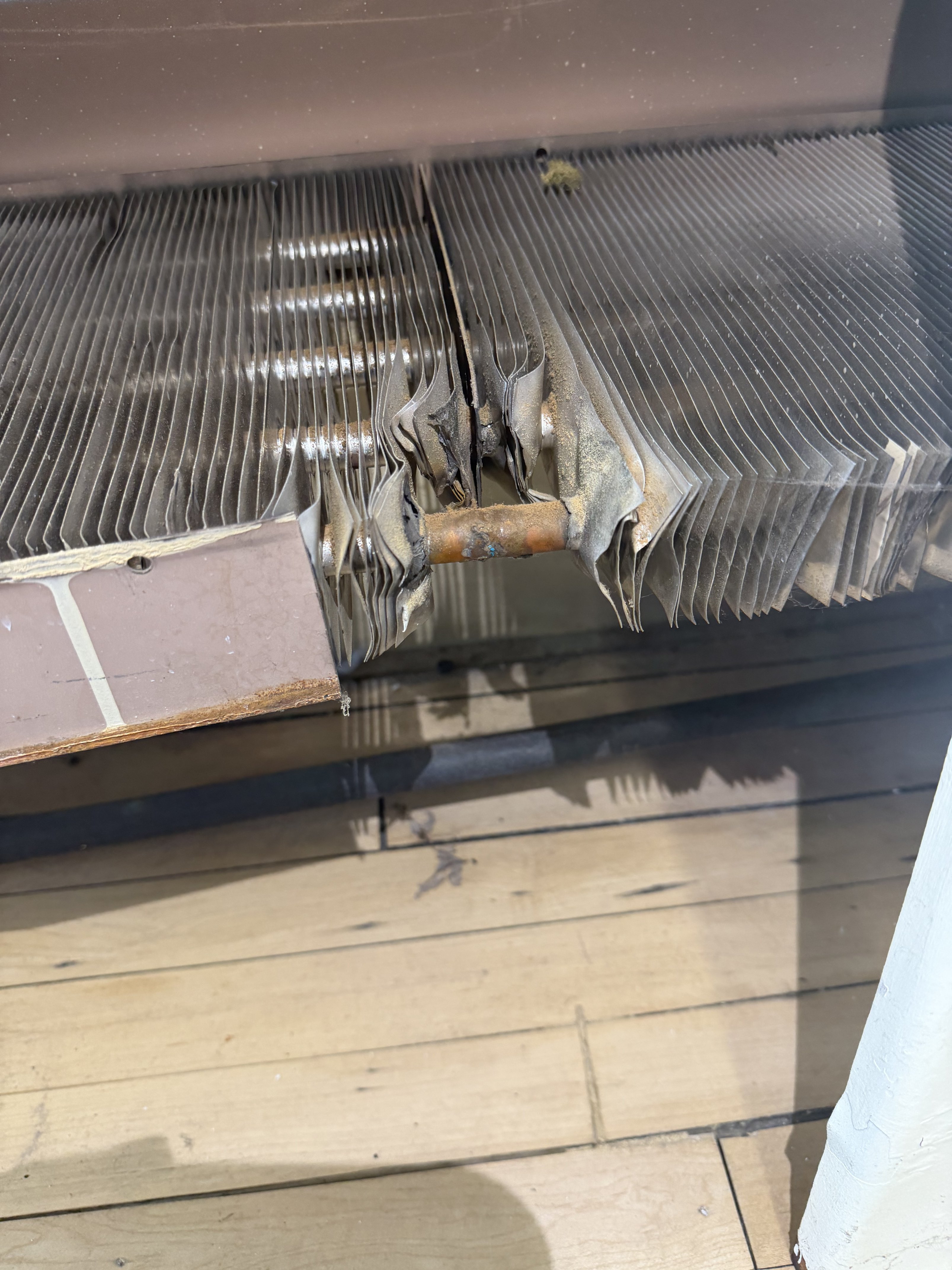
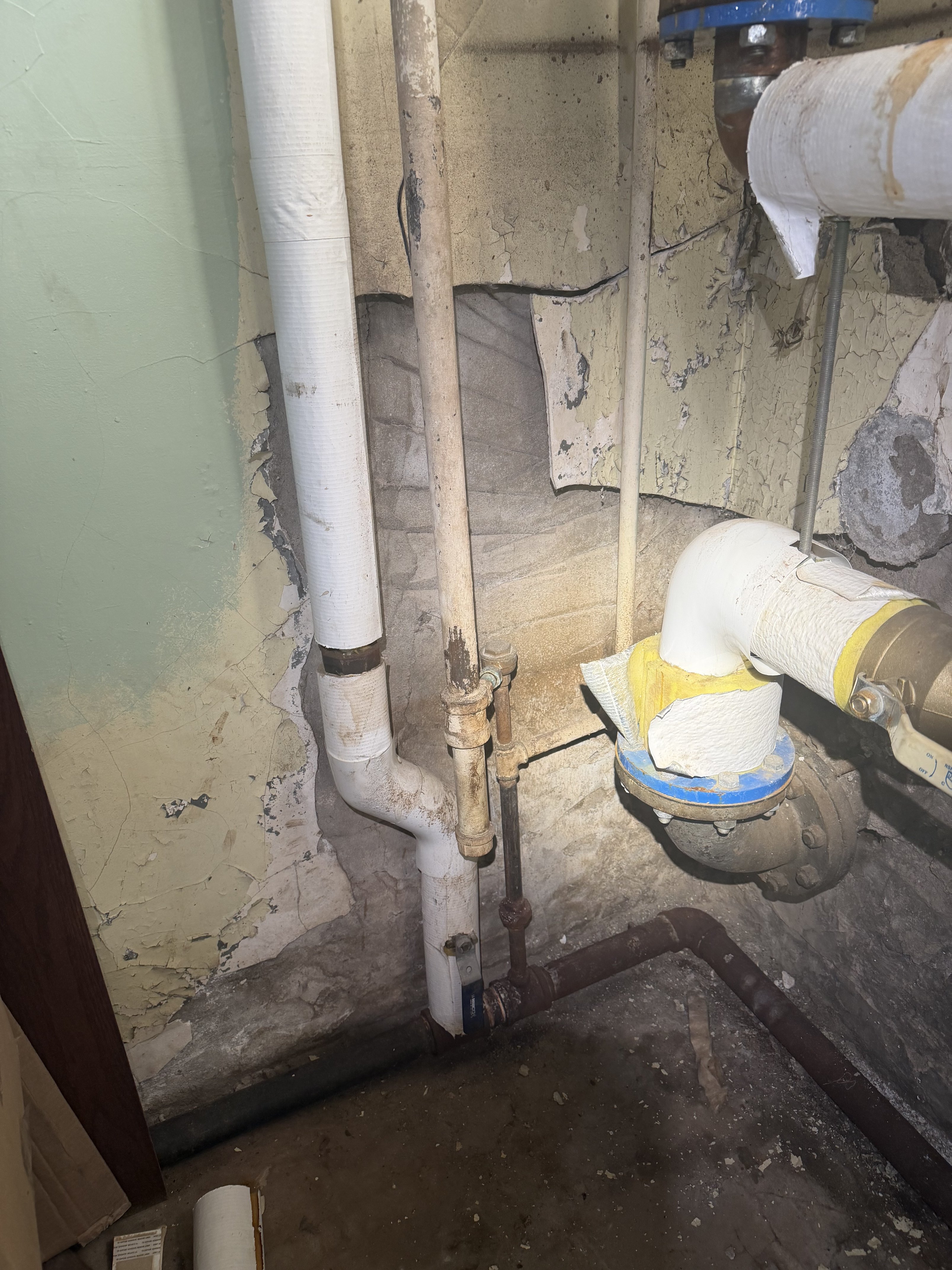
all I have for now. Is it possible to share videos?
THINK
0 -


these pictures illustrate what I mean about individual rads dropping to wet return. It’s the basement level of the addition. Wet return gravities to the recessed pump. Any basement level rads rad trap to the wet. All radiators have a trap in again unknown condition.
THINK
0 -
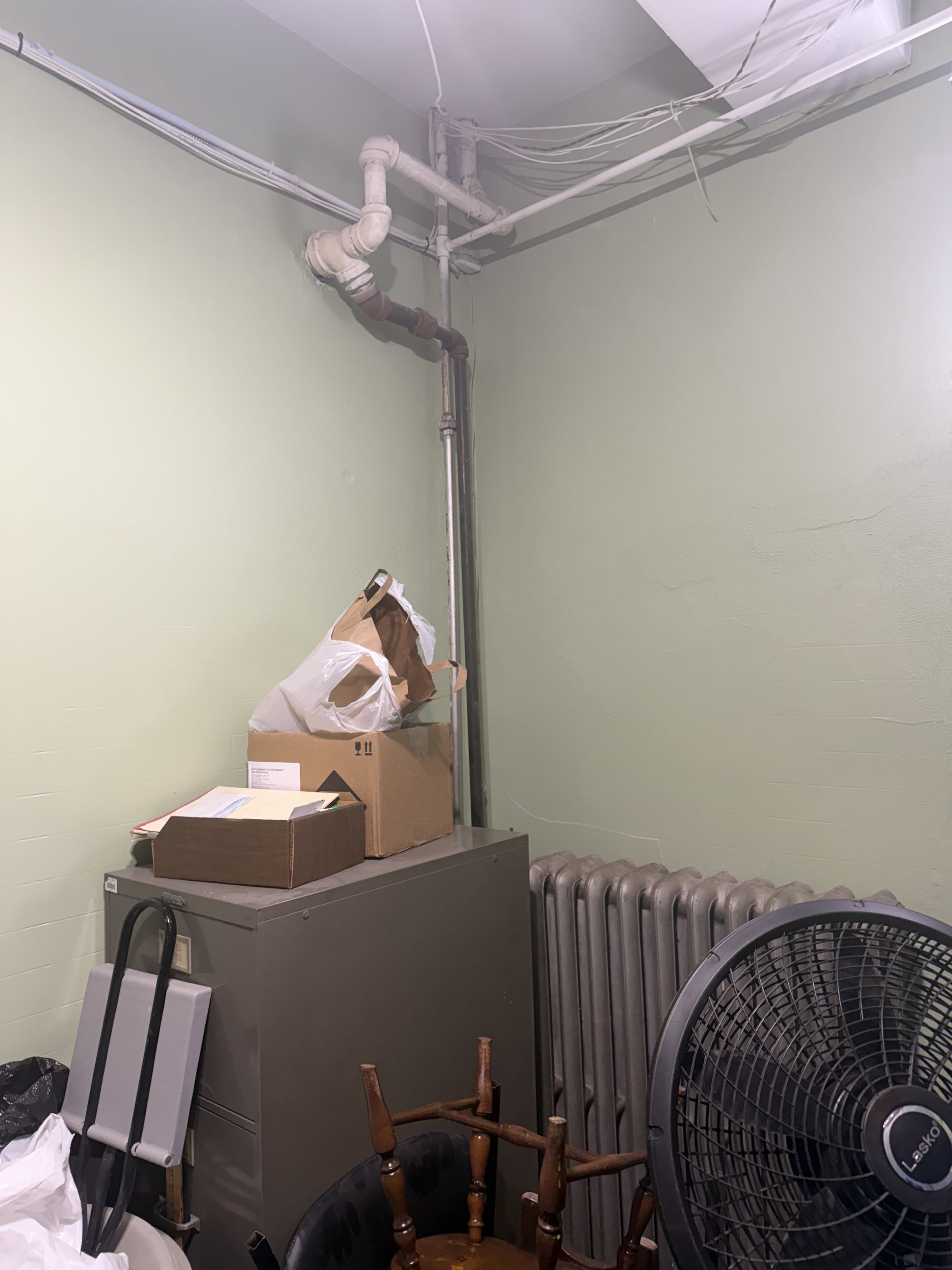
this is end of main on one end of the addition zone. Crazy water hammer can be seen here.
THINK
0 -
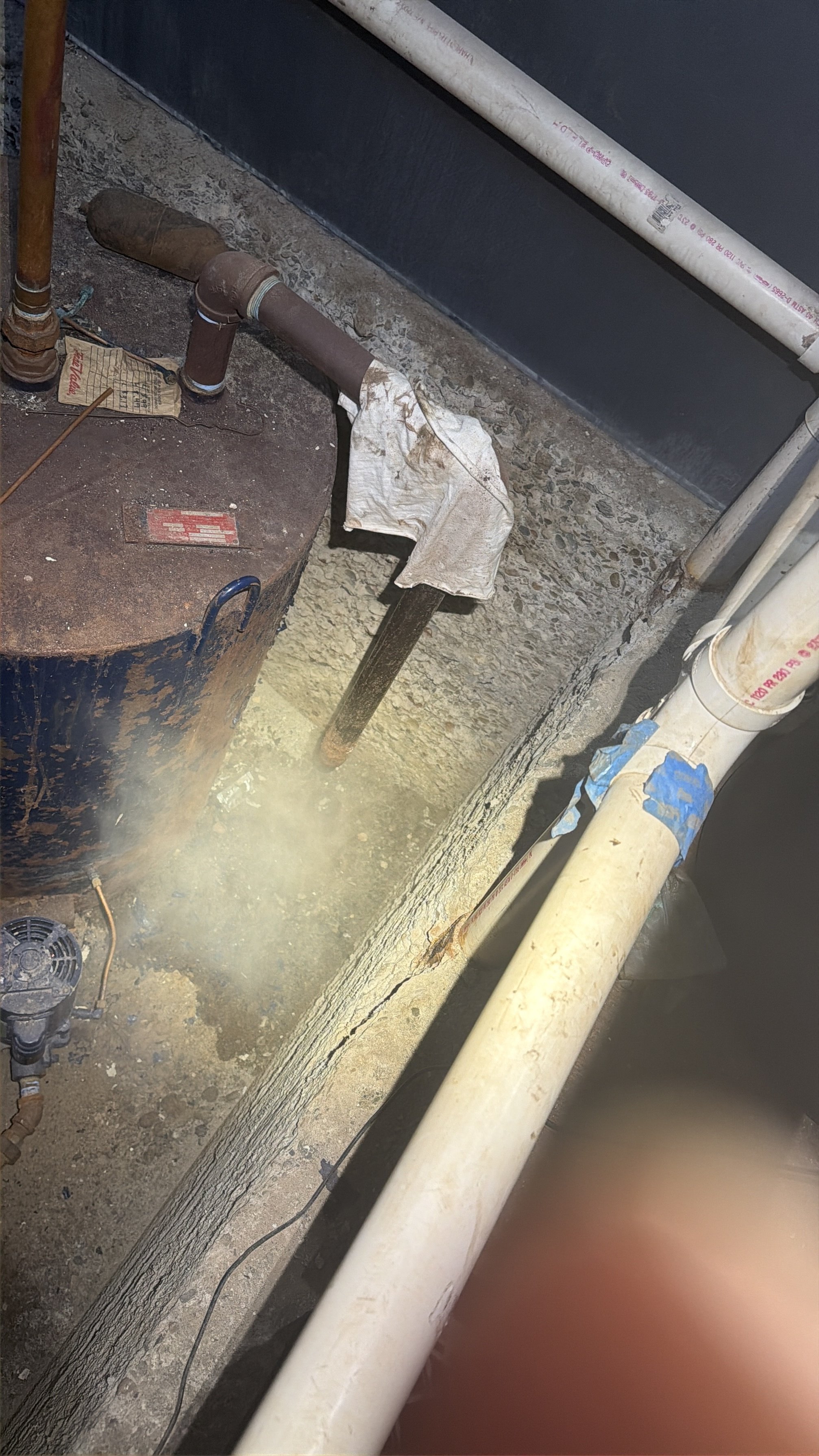
typically what you see at the pumps, I’m told it fills the room with steam a few times a week…
THINK
0 -
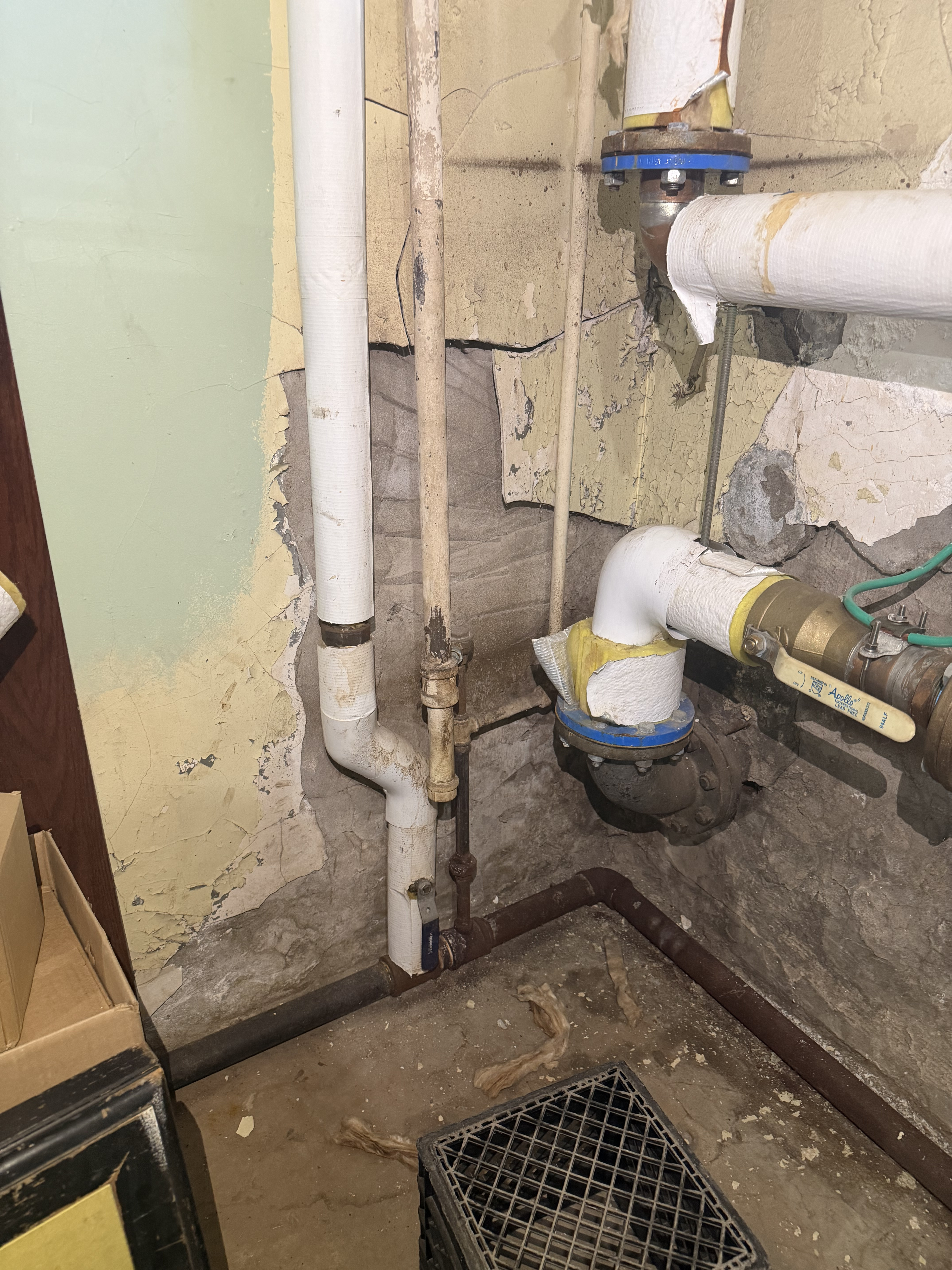
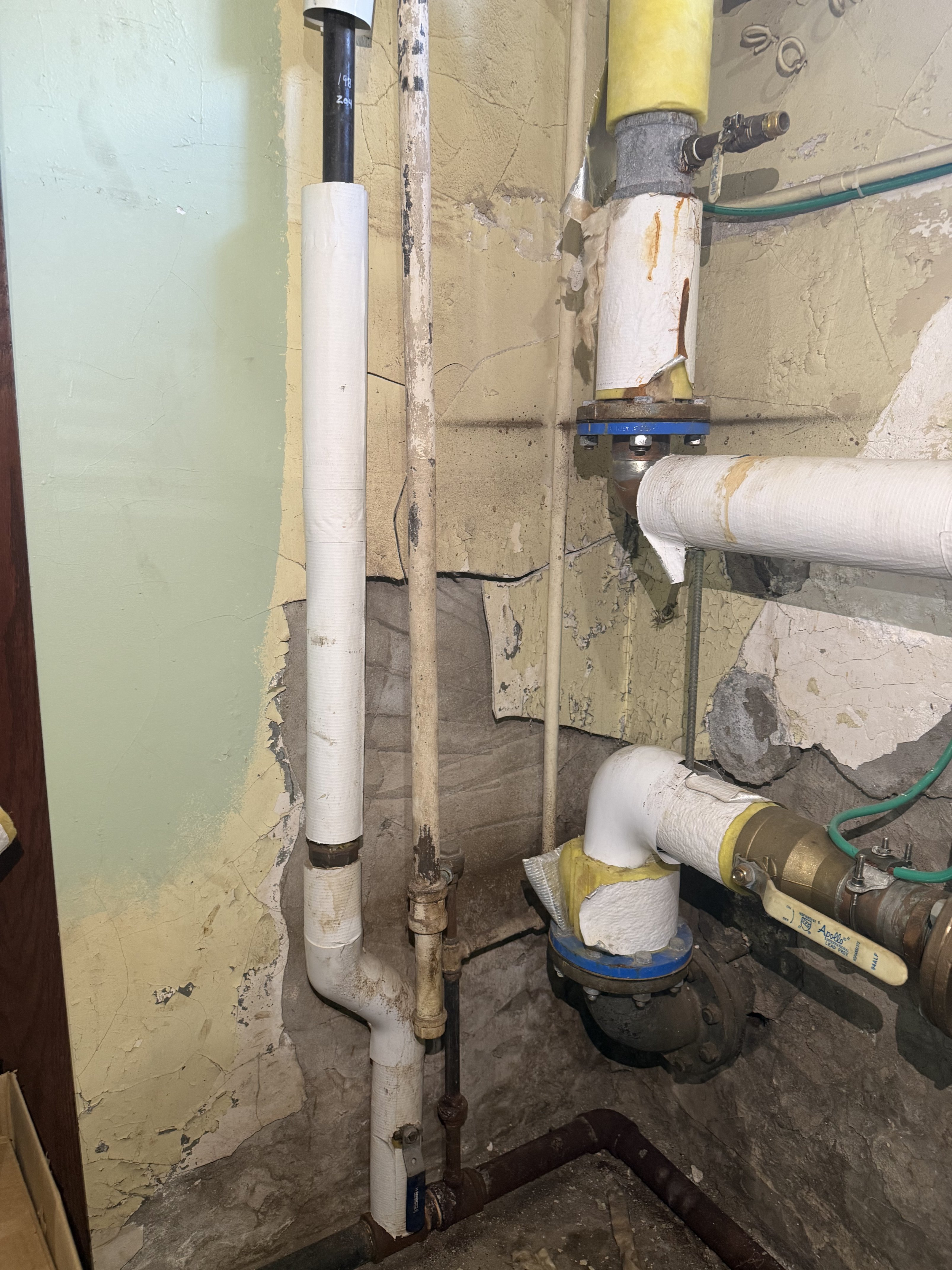
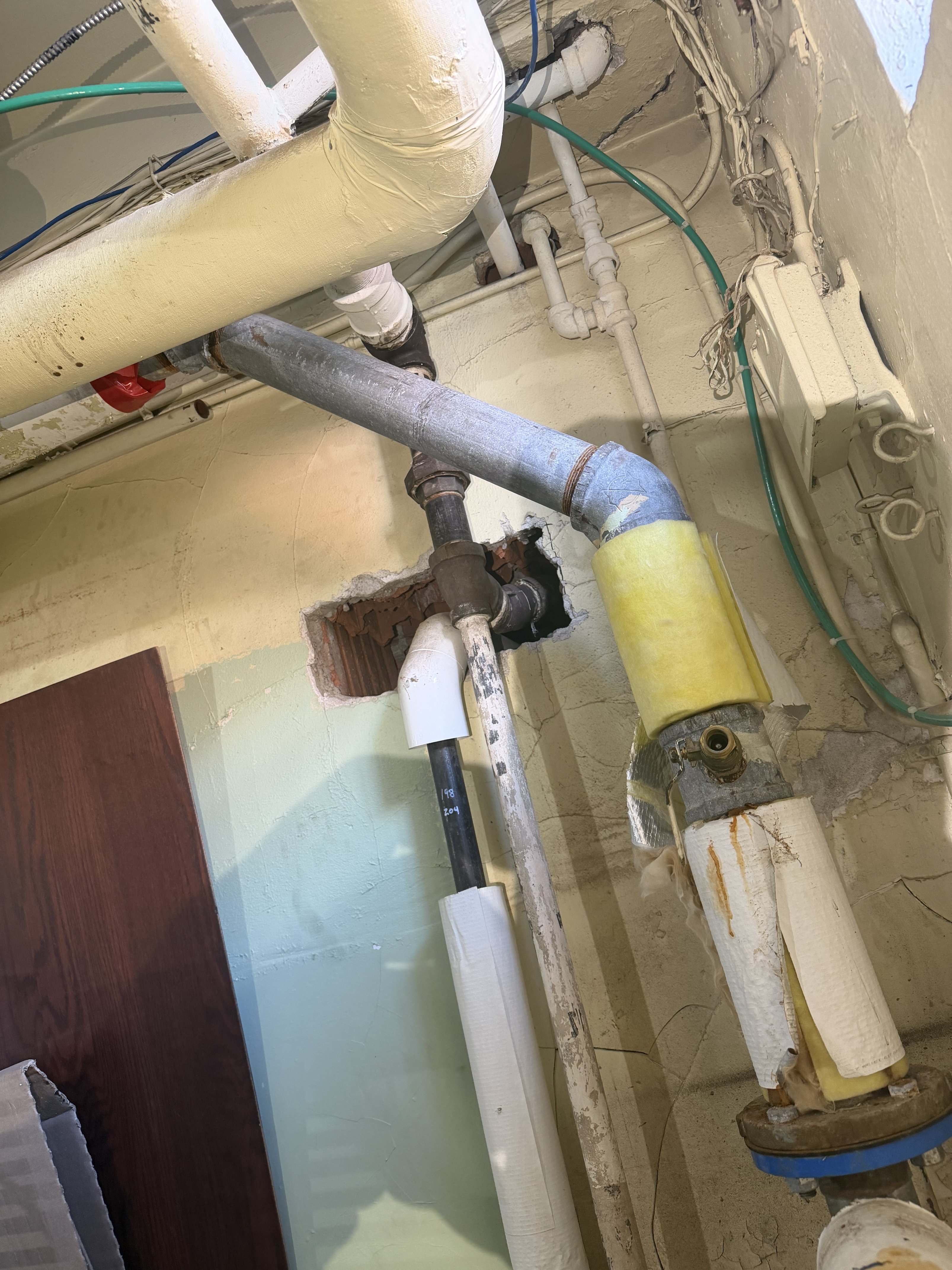
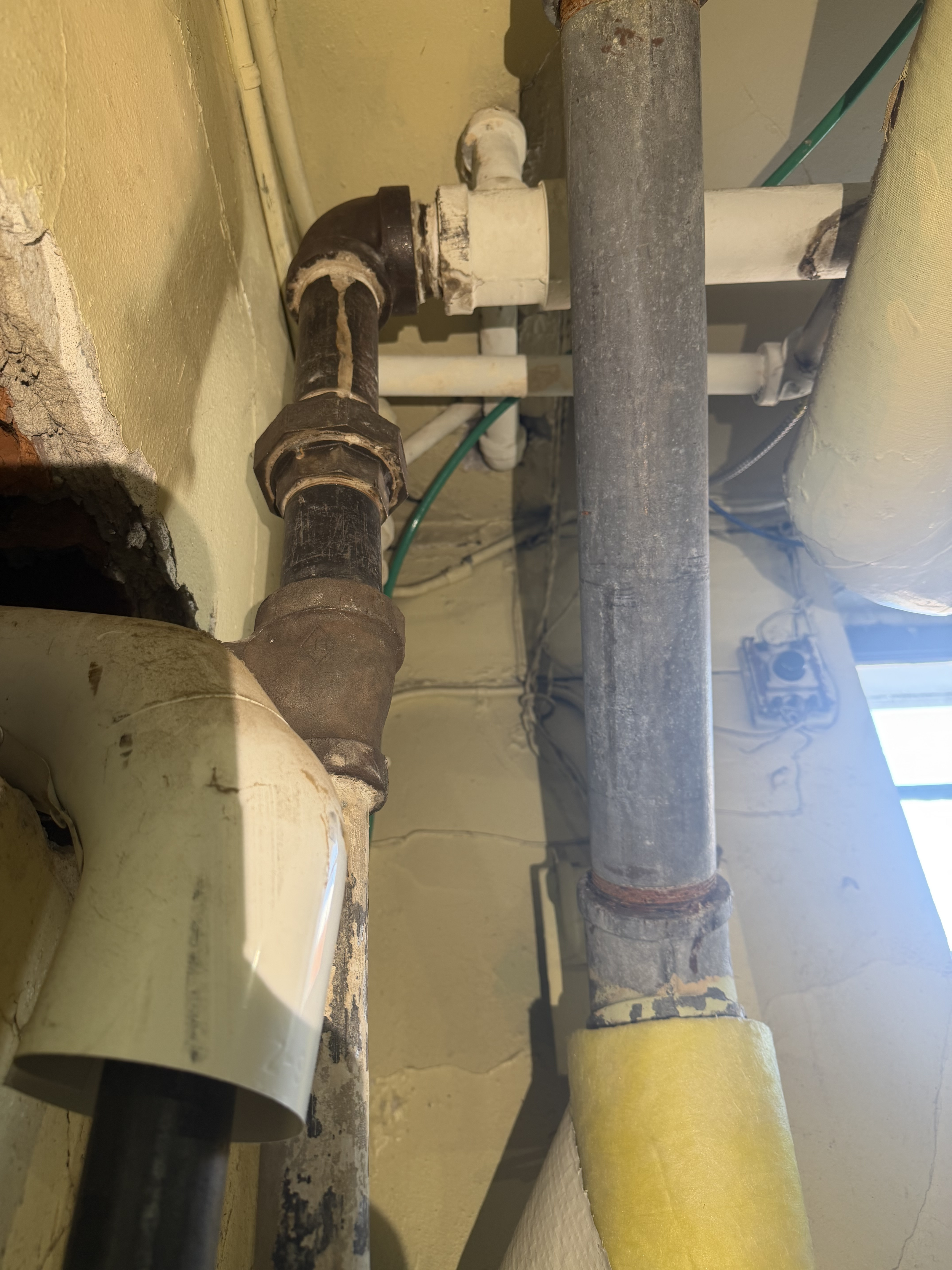
EOM and drip for the other side of the addition zone
THINK
0 -
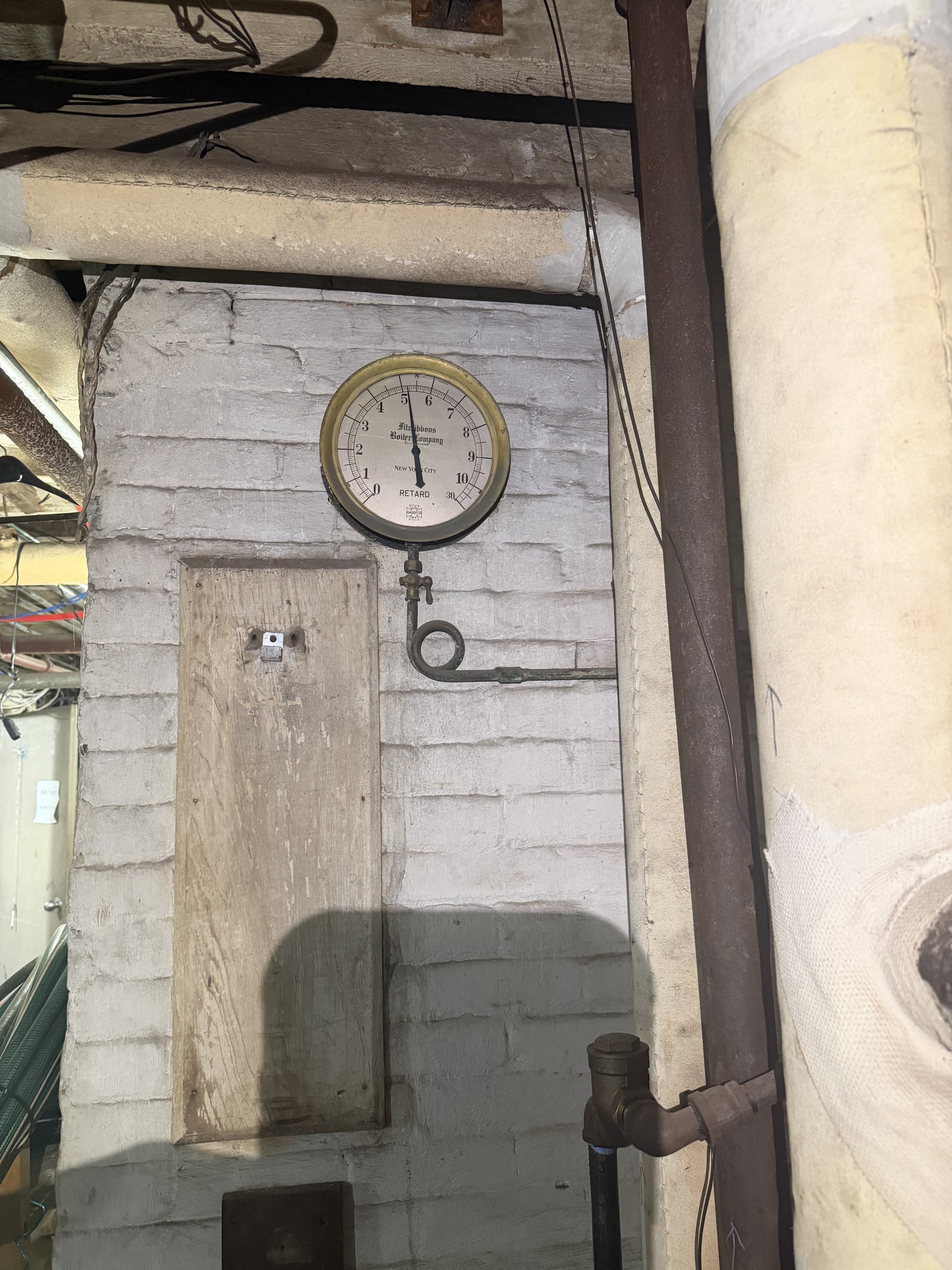
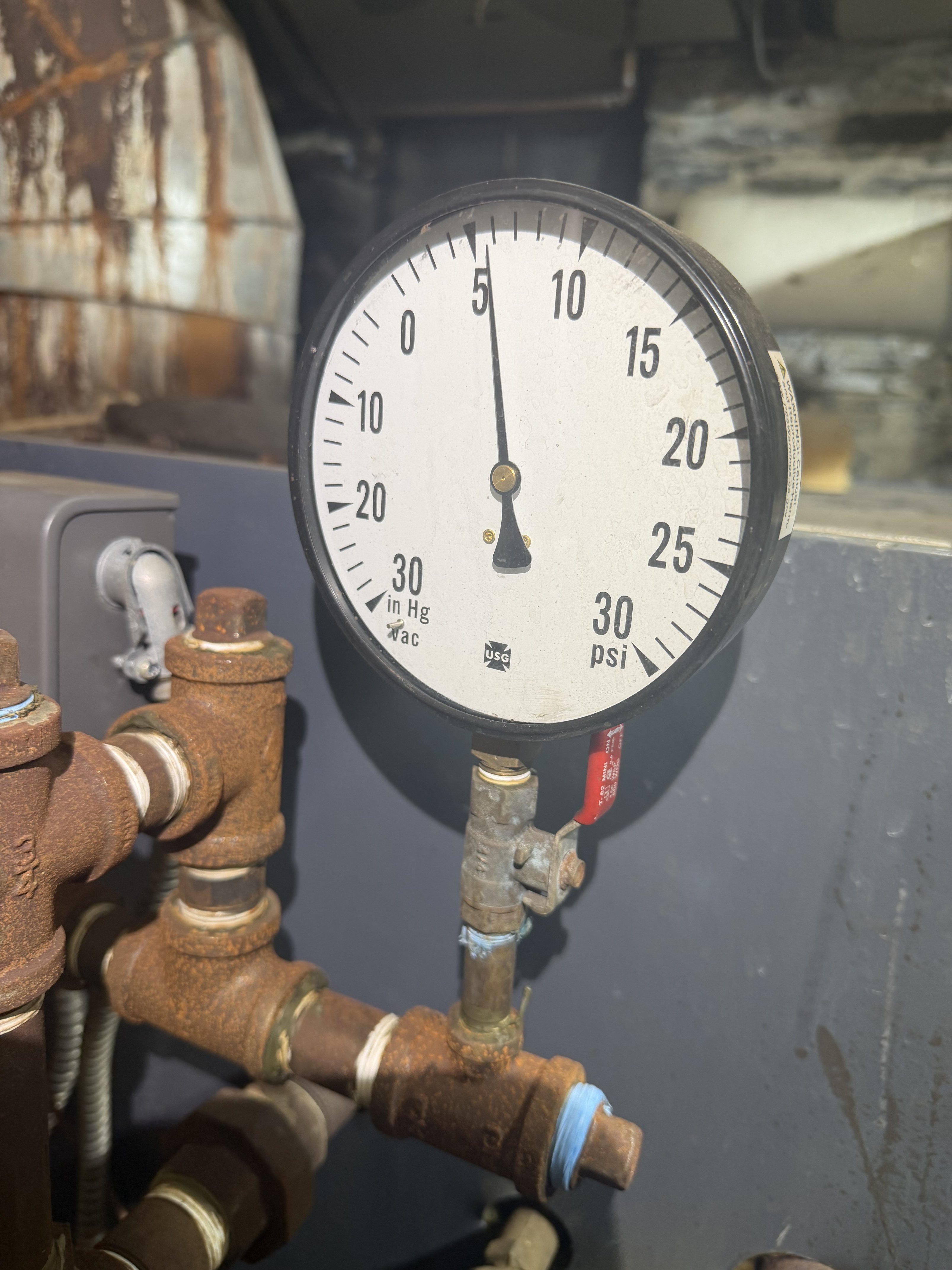
dang
THINK
0 -
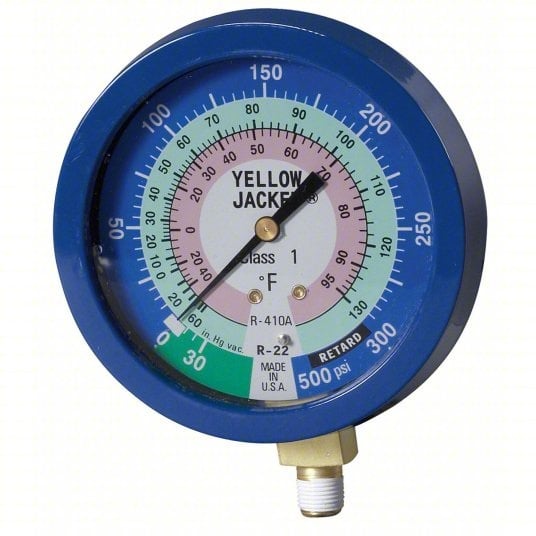
That's an interesting gauge.
It doesn't list it's units, but is obviously PSI, and it goes from 1-10 nice and linear and then that last 1 PSI amount of travel, ends up 30 PSI?
Single pipe 392sqft system with an EG-40 rated for 325sqft and it's silent and balanced at all times.
0 -
That is what RETARD means on that gauge. Once the pressure rises above 10 PSI the gear ratio changes to move the needle at a reduced rate. When you want an accurate gauge in the lower PSI increments, but code says you need a 30 PSI gauge, this is the best of both worlds.
Edward Young Retired
After you make that expensive repair and you still have the same problem, What will you check next?
 2
2 -
I thought retard meant if the needle exceeds 30 you need to reduce pressure.
Single pipe 392sqft system with an EG-40 rated for 325sqft and it's silent and balanced at all times.
 1
1 -
“RETARD” means the gauge movement is damped (slowed down) so the needle responds more slowly to pressure changes. A “retard” gauge has built-in damping or other modification to:
- Reduce needle flutter
- Smooth out rapid pressure fluctuations
- Modify the arc at one end or the other end of the scale.
- Make readings easier to see and interpret
- Protect the internal mechanism from vibration and pulsation
Edward Young Retired
After you make that expensive repair and you still have the same problem, What will you check next?
2 -
Holycow I never noticed that before…. I knew they always say it, but never noticed how fast the pressure goes up.
Single pipe 392sqft system with an EG-40 rated for 325sqft and it's silent and balanced at all times.
1 -
Are those wet returns? If they go to the condensate tank and the tank is lower than the return, won't they be dry returns, unless the pipe goes up then back down.
Radiators that drop down individually to a wet return are usually 2 pipe air vent systems but those are early 20th century systems normally.
0 -
I am considering them wet as they are just being ran across the floor and back pitched in many areas. By all means tell me if that’s flawed thinking. You can hear them just sloshing water around and hammering often
THINK
0 -
The back-pitch is the problem- those returns should slope down to the condensate tank. When that's done they will vent air as well. Then rebuild the traps and that zone should work.
All Steamed Up, Inc.
Towson, MD, USA
Steam, Vapor & Hot-Water Heating Specialists
Oil & Gas Burner Service
Consulting 3
3 -
well, that and the 70 years of water hammer and 6psig has destroyed every trap in the system.
0 -
^^^^^^^^^^^^^^^^^^^^^^^^^^^^^^^^ THIS ^^^^^^^^^^^^^^^^^^^^^^^^^^^^^^^^^^^^^^^^
0 -
 National - U.S. Gas Boiler 45+ Years Old
Steam 300 SQ. FT. - EDR 347
One Pipe System0 -
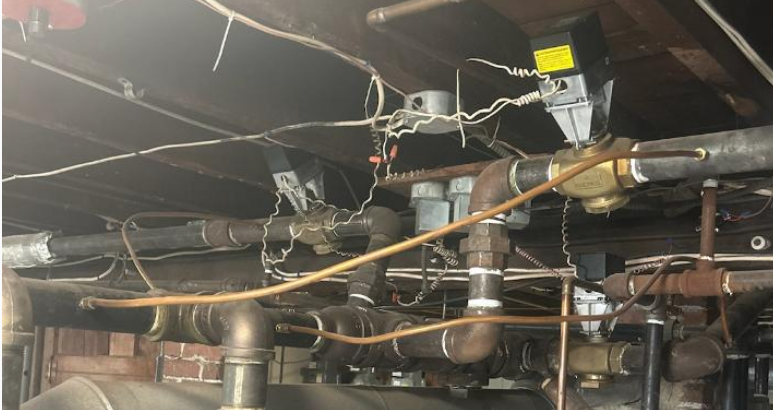
I have seen a lot of boiler installations that are similar to yours and most of them work pretty well. First, let me ask, what is controlling the operation of the condensate pumps? It has to be a water level control on the boiler itself. Next; looking at the picture of the 3 zone valves, they look OK but I would replace those thermostatic traps with an F&T trap, a ball valve and Y strainer before each of the traps. While you are at it I would replace all the thermostatic traps that are used on any line except those that are installed on the radiation. Now to the condensate return tank. The make-up line to the tank is controlled by a float which is part of that bushing fitting. The float level should be adjusted to it's lowest level to give the tank it's greatest capacity to store condensate water. The PRV on the make-up line should be adjusted to below 30PSI so water pressure will not push past the float valve. If possible, I would add a water meter to that make-up line so someone can record how much make-up water is being added. All of the steam traps should be checked and replaced if necessary .Any return line that is nit visible should be inspected to make sure it is not leaking and wasting water. One more item, those zone valves should have the slowest opening time possible to eliminate the possibility of pulling water from the boiler due to high steam velocity. Last item, a lot of these older steam systems need to operated a higher than what is considered normal steam pressure since there have ben so many changes to the system. (radiation and piping changes). In most cases air vents are not necessary if everything is operating properly.
6 PSI steam pressure is considered higher than normal but in this system it may be what is needed. You could try reducing the pressure gradually to see if a lower setting will work. These older systems can be challenging especially to a new service company since most of these building owners are used to repairs that are the cheapest and they are afraid to spend the money to correct all the problems.
1 -
penning a response but am currently inundated retiredguy.
THINK
0 -
I hadn’t seriously considered the feed pump controls. I just assumed they talk to the lwco or a float in the receiver tank. I did relocate an operable meter I found in the basement to the make up water line and we are monitoring,
Yesterday…. I added a Hoffman 62 vacuum breaker in the return near the basement ceiling. I did so because, each time during an off cycle when I cracked a union in the return it breathed in hard there.
further I found a bad, bad dirt blockage in a drip connection on the smaller zone.Shut off the zone that feeds into the smaller zone…idk..I can’t understand a meaningful reason for that ever being done
Turned the pressuretrol down to .5 and then tuned it up to 1.5-2 to get all of the radiation hot.
came in this morning and they were flabbergasted with the difference. The system is as quiet as a church mouse. I explained that it’s by no means repaired but it is operating much better.
the library needs time to beg for funding, and we have bought them some time.At this point I’m planning on
re pitching/piping the dry return/water leg feeding the tank
Replacing all traps regardless
Adding an f&t trap to EOM drips
A b&j big mouth on the dry, possibly others.?
New valves on all radiation
Various repairs to water hammer situations
Probably 2 separate boilers for two separate zones and piping schemes
God I really appreciate all you guys. What a great community
Tell me if I’m missing something
THINK
 1
1 -

😎
THINK

 2
2 -
the vacuum in the return is the water that is filling the pipe because of the bad pitch trying to get out but air can't get behind it because it is filling the full cross section.
0 -
I think vacuum can be an asset to a steam system, but it has to be part of the big picture.
 National - U.S. Gas Boiler 45+ Years Old
Steam 300 SQ. FT. - EDR 347
One Pipe System0




Categories
- All Categories
- 87.6K THE MAIN WALL
- 3.3K A-C, Heat Pumps & Refrigeration
- 59 Biomass
- 429 Carbon Monoxide Awareness
- 124 Chimneys & Flues
- 2.2K Domestic Hot Water
- 5.9K Gas Heating
- 119 Geothermal
- 168 Indoor-Air Quality
- 3.8K Oil Heating
- 78 Pipe Deterioration
- 1K Plumbing
- 6.6K Radiant Heating
- 394 Solar
- 16K Strictly Steam
- 3.5K Thermostats and Controls
- 56 Water Quality
- 51 Industry Classes
- 50 Job Opportunities
- 18 Recall Announcements