Replacing wet return on 1-pipe steam system
Comments
-
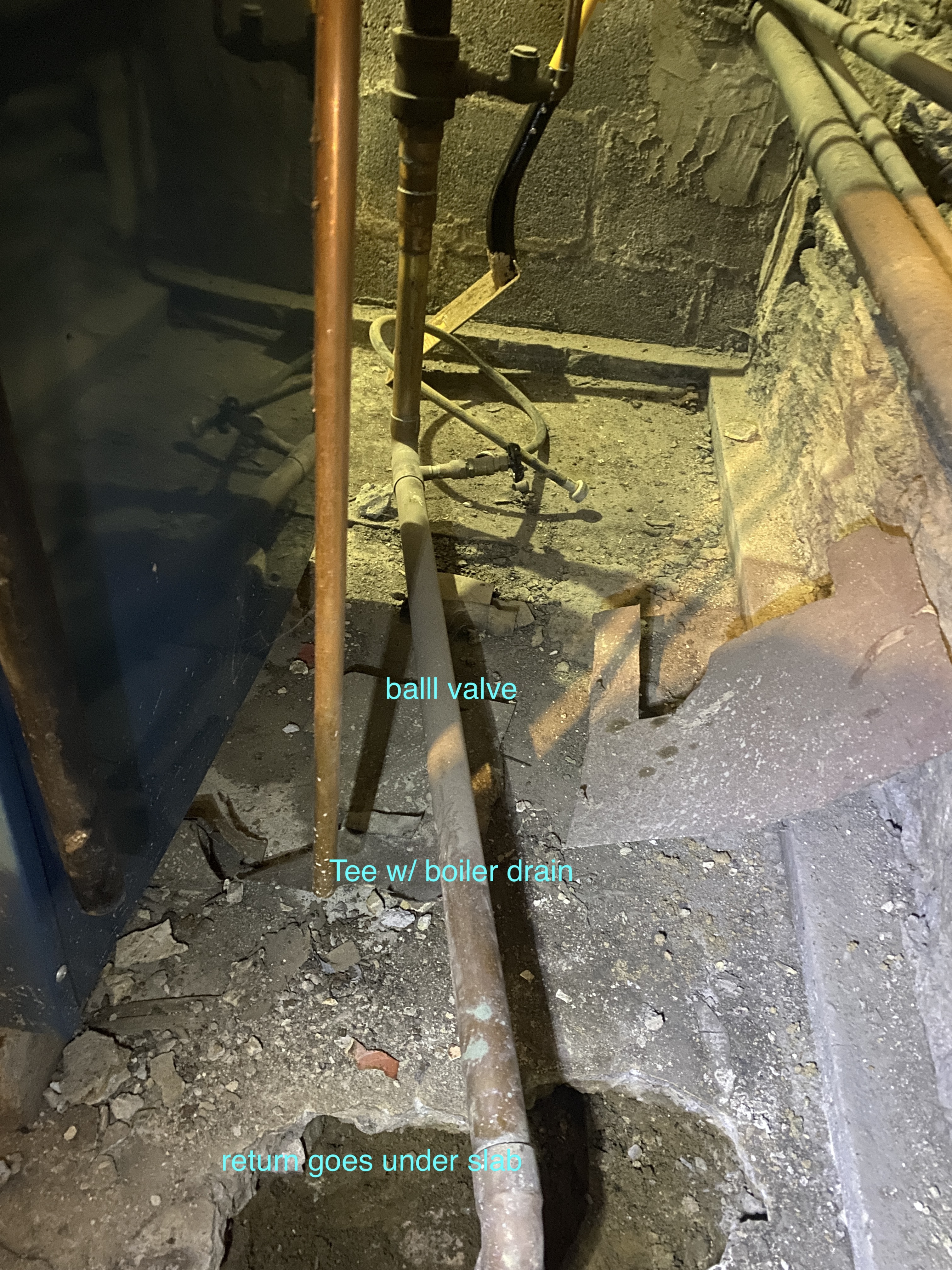
Got most of the wet return done. I have one final question. I'd like to cut in a tee with full port boiler drain followed by a ball valve on the side of the boiler. It's a tight space but certainly manageable. It's right before the wet return goes under the slab for 8 feet. And there's a floor drain within arms length of the picture.
Am I going to regret this location later?
 0
0 -
I don't see why not.
 1
1 -
I've got a small leak on the union nut. Could be 2 issues…
- I noticed the mating surfaces weren't perfect. Small imperfections. Of course I was distracted by something else and I just sent it….
- I didn't have the nut all the way tight when I was assembling the copper run. Maybe a half turn off. Maybe the faces weren't perfectly aligned.
Should I put a little dope on the male threads of the union. I've read I should NOT do that. I've done it before on a radiator and it stopped the leak.
or
I could cut the pipe, put on a copper no stop coupling and call it a day.
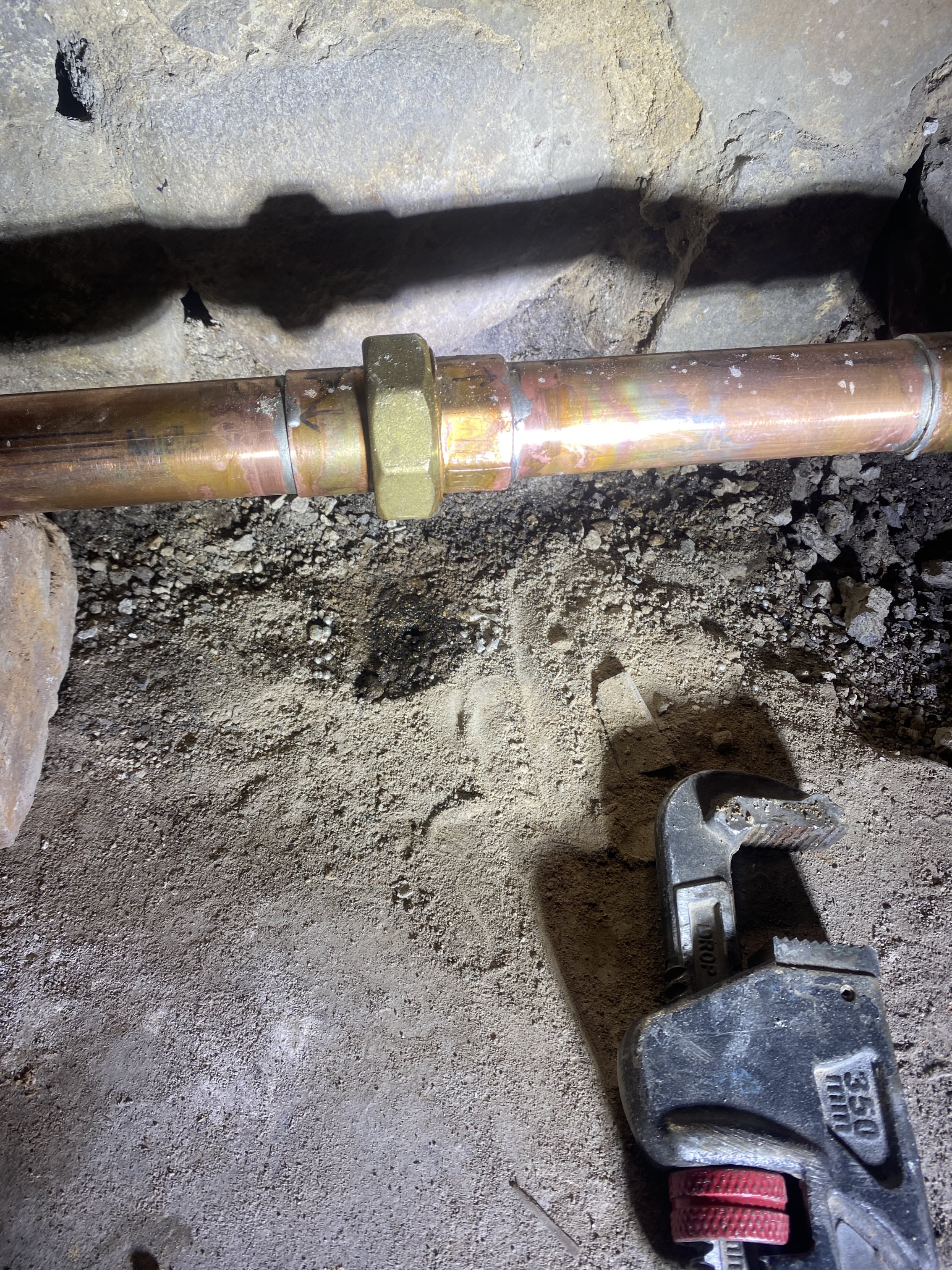 0
0 -
Maybe tighten it a bit more and then clean, flux, and reflow the sweat joints and hopefully it will align properly?
PS: I should have said to loosen it first and put antiseize on the threads.
1 -
The modern copper unions seem to be absolutely terrible. I miss the older ones that were brass.
I'd take it apart, put some grease or pipe dope on the threads, and try to tighten it again. Make sure it's lined up as good as you can possibly get it before tightening the nut. You don't want that nut having to force it straight etc.
Curious, why did you use that union in that location? Worse case, cut it out and use two couplers.
Single pipe 392sqft system with an EG-40 rated for 325sqft and it's silent and balanced at all times.
 3
3 -
I've had probably half the copper unions I've used leak and I don't think they had stress or misalignment. I've sometimes ended up putting teflon tape on the mating faces because they clearly didn't mate right.
1 -
There is play in the sweat joints most likely. I think if you had put antiseize on the threads and tightened the union prior to soldering you would have been fine.
My previous suggestion I realize is problematic because you would have to drain and dry the pipe to reflow the solder properly.
No Hub Sealant may be an option on the mating seal surfaces of the union but again you have to drain. I used it for extra insurance on my 2 in. steam main, and for corrosion resistance since only one face was brass or bronze against an iron opposite face.
The 2 in. malleable iron unions I got were so bad I picked the best 2 out of 4. I picked ones where the angular error was close to the same on each half so that I could index them 180deg opposite to cancel it out, if you know what I mean. That way the nipples are collinear on either side of the union.
1 -
- I'll put some dope on the threads and try again. Can I undo the threads without draining the boiler? Is there going to be an unmanageable amount of water? The basement is being demo'd so a little water is ok.
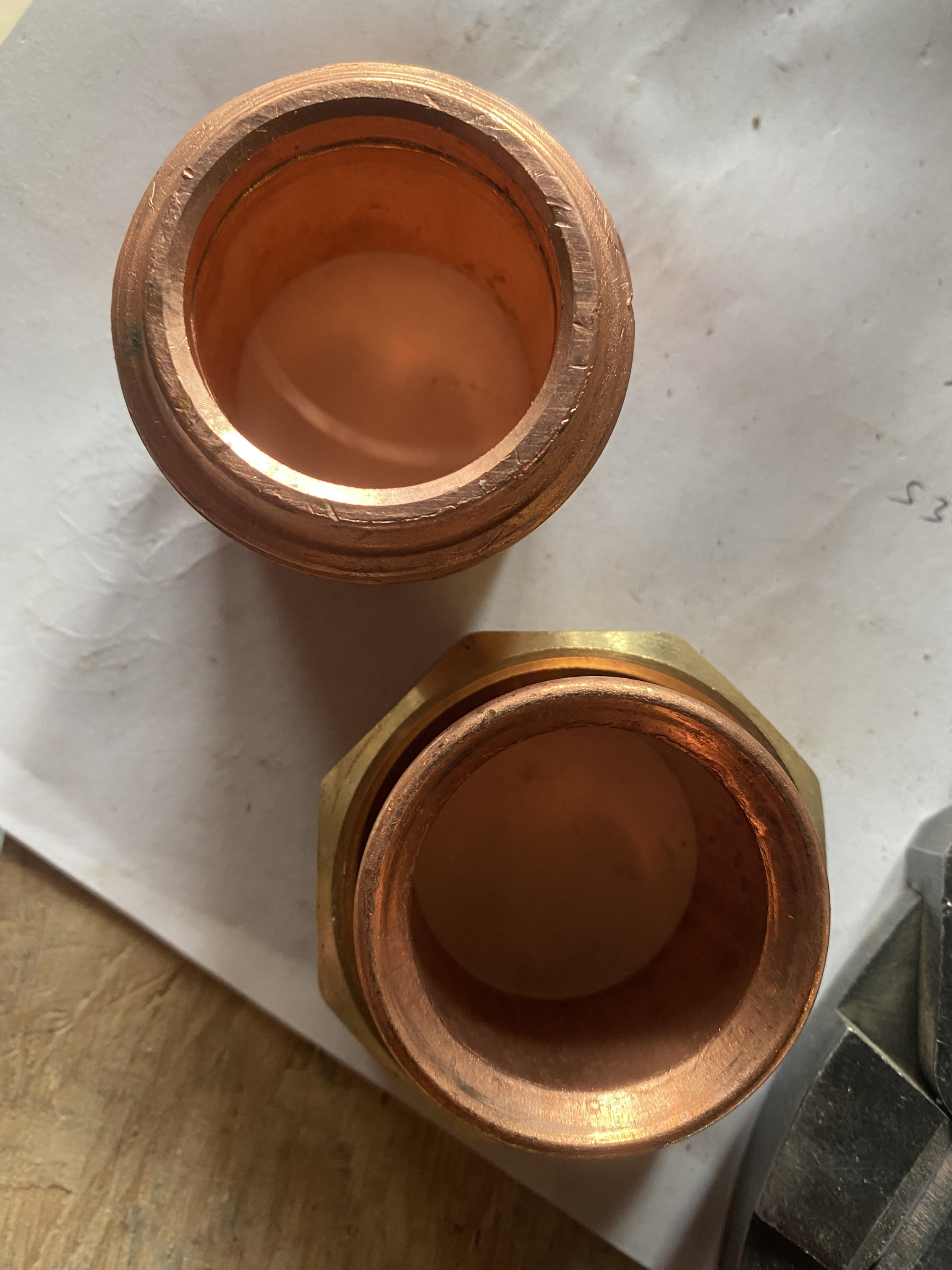
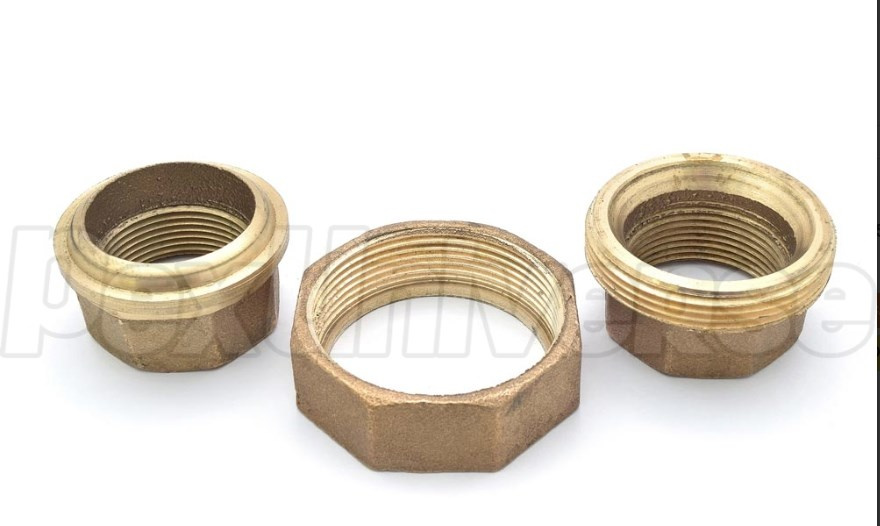
- See the pic of the spare union mating surfaces (from supplyhouse bluefin brand). Looks similar to the one I installed.
- @ChrisJ I put the union on b/c I was overthinking things. I nicked the black tee's threads and my logic was if it's a leaker I could wrench off that section of pipe and cut back some black fittings and replace with copper/brass. In hindsight, it seems like something I will have to babysit. What I haven't mentioned is that union is getting walled over. I know that's not legally allowed. Maybe I'll put an access panel there.
- @Captain Who if worse come to worst, I'll try some type of sealant on the mating surfaces. If that doesn't work, I'm cutting the union out anyway.
How bad for the boiler is it to refill? I've read the new water accelerates rusting.
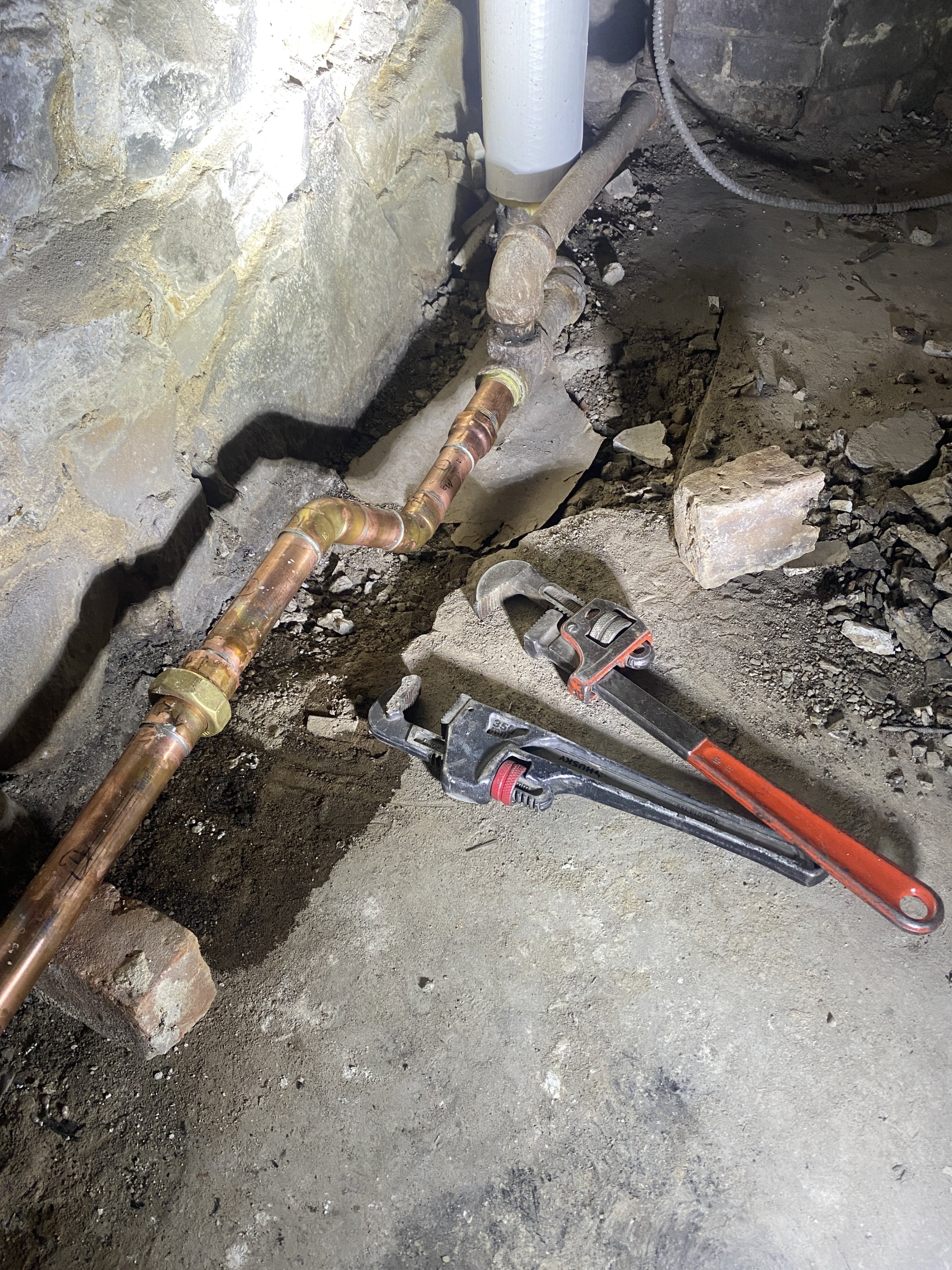 0
0 -
That union seat doesn't look right to me. The one side that is female is a conical seat which is typical but the other side that is male should be radiused or kind of spherical.
 0
0 -
maybe try some lapping compound and rotate them against each other. if the bevel its as roughed up as that margin it is going to have a tough time sealing.
1 -
You are 100% right about the lack of quality of the "all copper" unions they suck. If you install 10 of them your lucky if 2 of them don't leak.
I did a building full of fan coil units and we had to change most of the unions. I ordered replacements with the brass on one end (Nibco still makes them) and when the truck delivered them, they were the 'all copper" unions, and I refused to take them.
Turns out most supply houses don't stock the brass one because the copper one is cheaper. Not when they fail a pressure test and you have to change them.
I would rather solder in a coupling and have to cut it out than use a junk union.
2 -
i was thinking about using brass npt unions and npt adapters although the larger sizes can make $100 disappear pretty quickly.
1 -
Sorry, you need to drain the return. Doping the threads wont do anything because the seal is at the face of the unions. Dope the face with a dope that says "non-hardening thread sealant & gasket material". Let it set up a bit before reassembling. If that doesnt work, clean the whole thing up with a wire wheel, and solder the damn thing together.
0 -
My recommendation for dope, or grease on the threads was to get it tighter and possibly deform / fix the mating faces. If I was going to try anything on the faces at this point it would probably be silicone RTV.
Soldering it together is probably the best solution sadly.
Single pipe 392sqft system with an EG-40 rated for 325sqft and it's silent and balanced at all times.
1 -
Chances are this union has to go. But I am curious - How do you solder a union? With the nut off and go around the rim that joins the faces? Will the nut fit on after that?
0 -
it'd probably take some tricks, but my best guess is flux and tin the faces with solder, then assemble, get it hot enough to melt the solder and tighten the nut while it's still hot / liquid as best you can.= and then try to feed more solder into the joint around the nut.
If it was me, I'd cut it out and use two couplers and a short piece of pipe.
When I said soldering it was the best solution, I meant in regards to trying to use that union. I didn't word that response very good, I'm sorry.
Single pipe 392sqft system with an EG-40 rated for 325sqft and it's silent and balanced at all times.
 1
1 -
just tinning it might smooth it out enough to make it seal.
0 -
maybe you need to take marking fluid and lapping compound to them before installing them.
 1
1 -
probably not the prussian blue type
0 -
i wonder if heating the sealing faces enough to anneal them would help them deform in to each other. they probably get work hardened when they are forged
0 -
maybe i'll pull out a couple unused copper unions and a sharpie and some valve lapping compound and see what happens. i wonder if i have that home depot quality black union still around that wouldn't seal on gas.
0 -
I don't know if you tried this but I'd loosen it until the drip is steady and retighten, really tight. What's really tight? That's the question., But I've found that reseating the faces sometimes works.
Miss Hall's School service mechanic, greenhouse manager, teacher, dog walker and designated driver
0 -
I find with those copper unions you tighten them, and you get a drip so you crank them up hard and the leak gets worse,
1 -
i usually end up wrapping teflon tape in them and thinking of @Jamie Hall
0 -
"I like that stone wall , great place for a bar :)"
I was thinking the same thing 😂
1 -
I put blue block (non-hardening pipe sealant) on the sealing faces and the threads. Not a blob, but carefully with a q-tip. Tightened everything up and let it cure for 3 hours. Refilled water into the wet returns and turned on the system and no drips since Sunday.
Not sure I'm going to leave the union behind the wall - i might play it safe and replace with couplings. Cool experiment though.
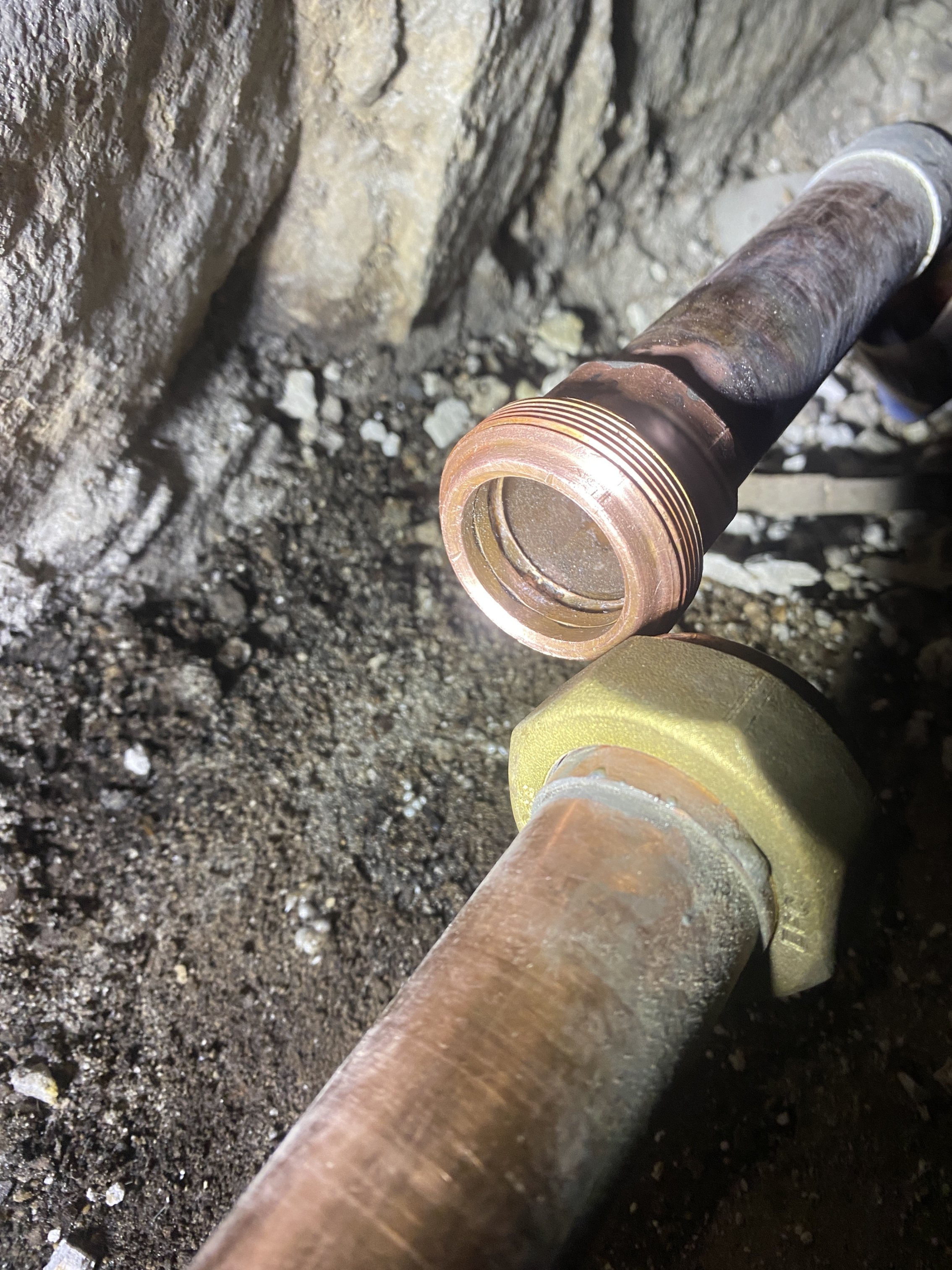
pic of the field union's imperfections…..
 1
1 -
hi meticulousmike here,20 year vet in plumbing,steamfitting,electrical with no formal schooling except in the field training .In my opinion i would use all steel.dissimiliar metals always gunk up where they meet especially with oxygen in the water.typing this comment now coming to mind why not use dielectric unions just like on hot water tanks? this way if you want to run copper you can since the boiler and it's local piping is steel.i always like to keep it all the same piping.could unions handle the heat from the piping and effectively do their job for many years to come?i believe they would.what do you think?
There was an error rendering this rich post.
0




Categories
- All Categories
- 87.6K THE MAIN WALL
- 3.3K A-C, Heat Pumps & Refrigeration
- 59 Biomass
- 429 Carbon Monoxide Awareness
- 124 Chimneys & Flues
- 2.2K Domestic Hot Water
- 5.9K Gas Heating
- 119 Geothermal
- 168 Indoor-Air Quality
- 3.8K Oil Heating
- 78 Pipe Deterioration
- 1K Plumbing
- 6.6K Radiant Heating
- 394 Solar
- 16K Strictly Steam
- 3.5K Thermostats and Controls
- 56 Water Quality
- 51 Industry Classes
- 50 Job Opportunities
- 18 Recall Announcements