Steam pressure and traps

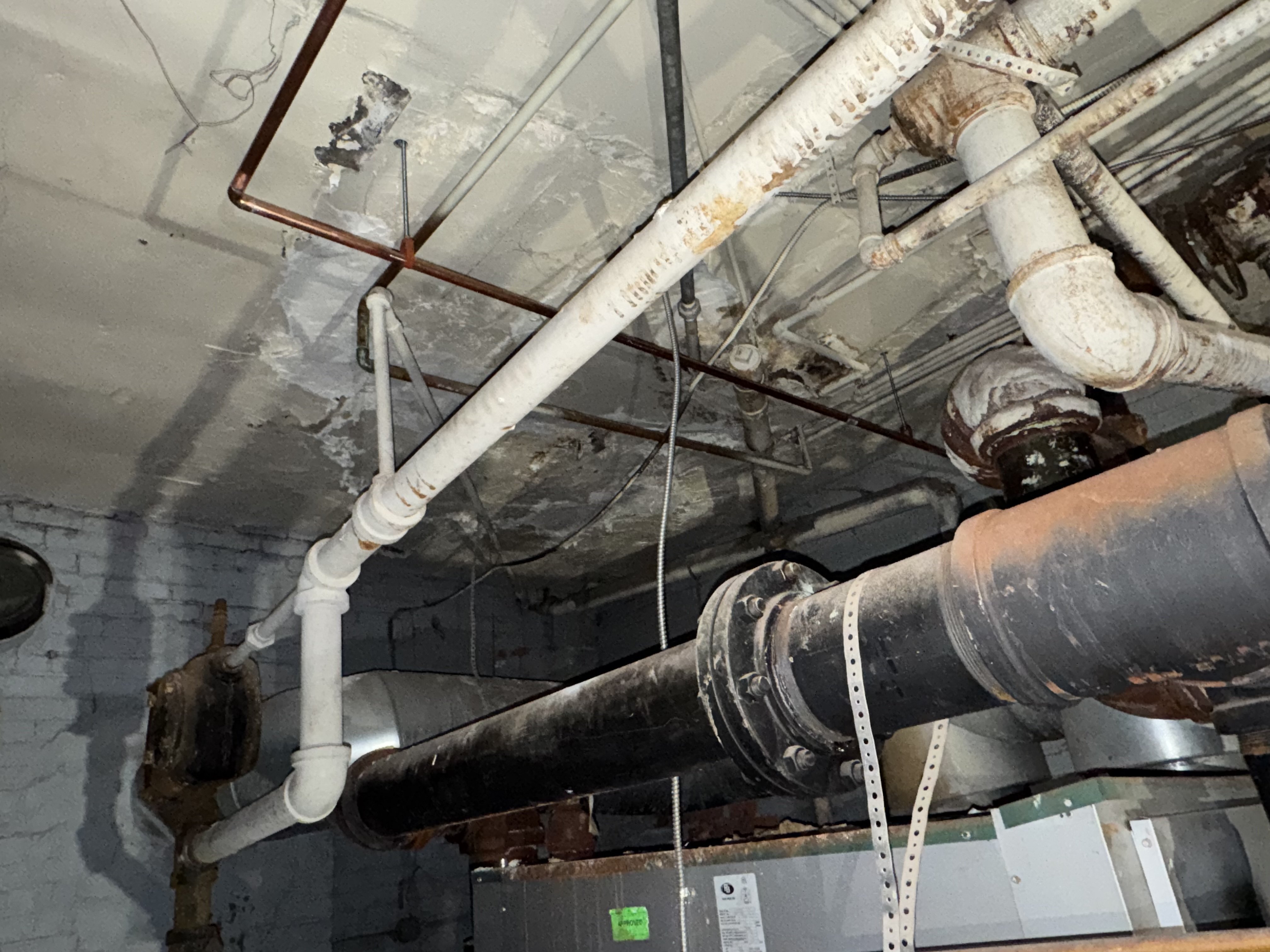
I’m currently working on a 100+ y/o building in midtown sector of Detroit. Building was once fitted w/ coal system and has undergone some changes since its groundbreaking. It’s currently being heated w/ Peerless #211A-09-w/s 1,344,000 BTU/HR steam boiler. Two pipe system. Using a Resideo differential pressuretrol
The issues I'm having:
- system will not make make pressure (set @ 1.5#)
- System runs trying to make pressure but instead eats up all the water in the system and goes out on LWCO
- Steam coming back into my returns
- Approx. x8 Hoffman #75 main vents throughout that are stuck open
- Multiple bad steam traps @ radiators (approx 60-70)
I also believe this may have been a vapor system at one point in time.
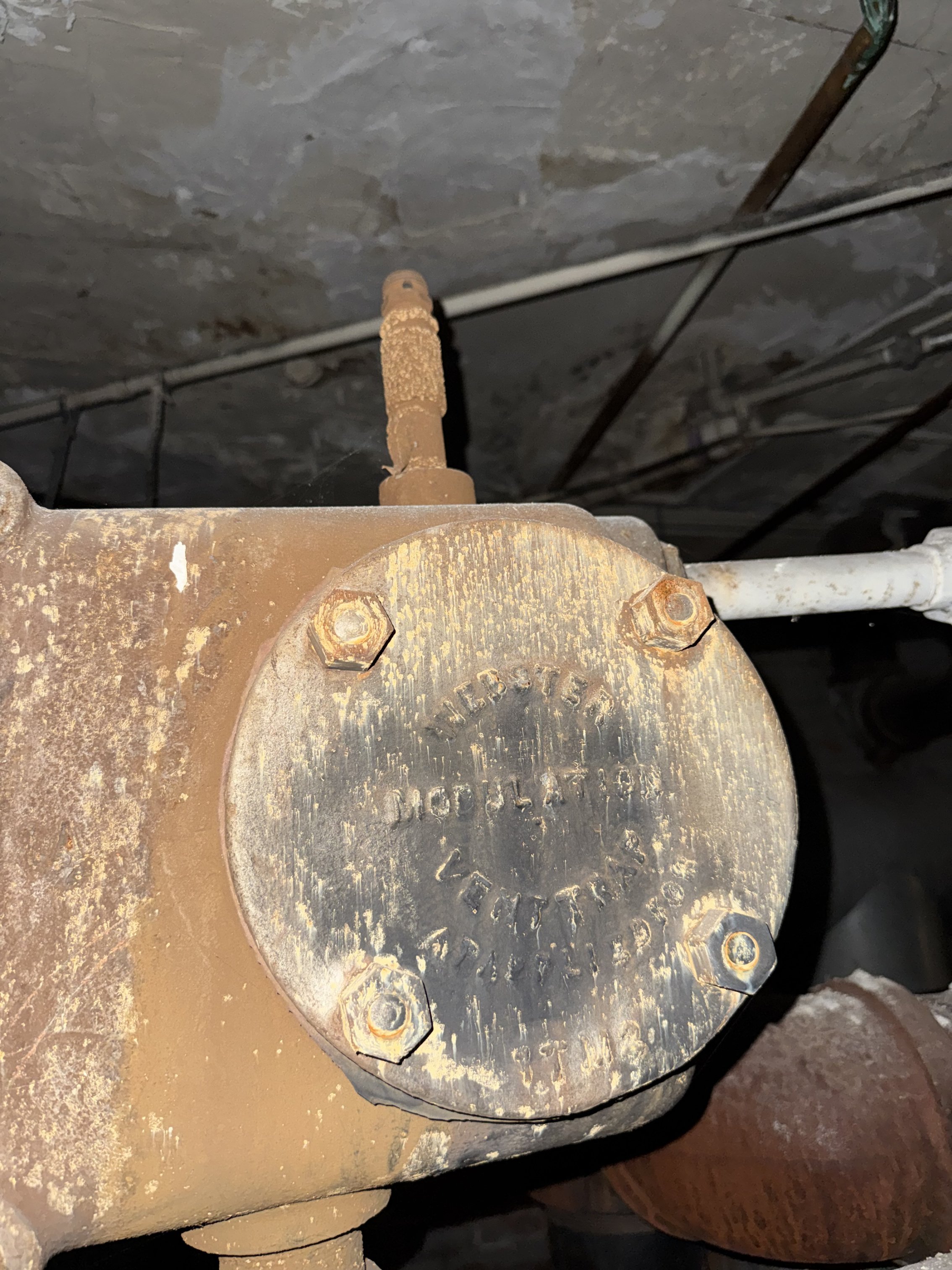
There’s is a “Webster” modulation vent trap at the boiler return #1T M2. Could this be apart of the issue?
Im leaning towards bad steam traps but im also beginning to consider the idea that this system may have never ran correctly and possibly needs a vapor stat and the Webster trap rebuilt and bad steam traps replaced.
Comments
-
It probably was a vapour system, once upon a time. More to the point, it probably ran beautifully.
Sigh.
Step one is going to be to research the Webster system and find out how it was supposed to work.
Step two — or step one in your working hours! — is going to be to find out how steam is getting into your dry returns. It doesn't belong there, and until you get rid of that problem it will never work. I suspect that your bad steam traps are the culprit there — fortunately, although it's a bore, they are usually pretty easy to repair.
Third is going to be to get the pressure under control. In fact, once you get rid of the steam in the returns the excess pressure is going to make the losing water problem worse. It is very likely that the system was intended to operate with a pressure differential between the mains and the dry returns of not more than 0.5 psi, and possibly less. Higher pressure differentials will indeed force water out of the boiler and into the dry returns.
The big Hoffman main vents wandering around the system may have been added in an effort to "fix" some other problem. Most vapour systems had one, and only one, main vent location at or very near the boiler, where the dry returns joined before dropping to the wet return to the Hartford Loop. They won't actually hurt anything —if they are working. They will if they aren't, and may not be needed at all.
Do I see an F&T trap? It is probably not needed — and, again, may have been an effort to "fix" a problem; in this case caused by excess pressure differential.
Br. Jamie, osb
Building superintendent/caretaker, 7200 sq. ft. historic house museum with dependencies in New England1 -
There is 0 F&T traps in the building.
What are some suggestions on balancing the pressure’s between main & return to stop boiler from sucking dry
0 -
@joshua2002 , if you don't have it already, get a copy of @DanHolohan 's book "The Lost Art of Steam Heating", either the original or the Revisited version. The Webster Modulation System is in chapter 15.
This system was designed to work on 8 ounces or less pressure. This barely moves the needle on a standard 0-30# gauge.
That air trap is the only air vent in the system. The vent that's on it looks way too small. You need at least one Gorton #2 vent there. If the air can't get out, the steam can't get in.
You will probably find radiator traps piped between the ends of the steam mains and the dry returns. These are called "crossover traps" and they let the air out of the mains so steam can distribute quickly. I like to upgrade these to Barnes & Jones Big Mouth crossover traps to speed this process up and save fuel.
Do you know how they sized the boiler? The proper procedure is to count up all the radiation and choose a boiler that will handle that amount.
All Steamed Up, Inc.
Towson, MD, USA
Steam, Vapor & Hot-Water Heating Specialists
Oil & Gas Burner Service
Consulting0 -
system will not make make pressure (set @1 .5#)
System runs trying to make pressure but instead eats up all the water in the system
Just for my understanding, but possibly for yours, it seems like you are desiring pressure? And yet the pressure is what is pushing the water out of your boiler (you have used the phrase "eats up all the water" and "sucks out the water" I think).
Are you desiring it to build pressure, or trying to prevent it from building pressure (I would hope the latter)?
NJ Steam Homeowner.
Free NJ and remote steam advice: https://heatinghelp.com/find-a-contractor/detail/new-jersey-steam-help/
See my sight glass boiler videos: https://bit.ly/3sZW1el0 -
If the boiler is bigger, in terms of how many BTUh it can put out, than the radiation can absorb, it will build pressure. Which you don't want. The only solution to that — short of a new properly sized boiler —is to turn off the boiler when the pressure differential between the mains and the retruns exceeds 8 OUNCES. Then turn it back on when the differential drops again.
Pay close attention to @Steamhead 's comments. He really knows these systems.
Br. Jamie, osb
Building superintendent/caretaker, 7200 sq. ft. historic house museum with dependencies in New England1 -
there are no cross over traps anywhere.
No I do not know how they sized this boiler it’s been at the property for a long time.
I actually have that book, I will open that chapter up later this evening.
Are you suggesting that I replace the vent on the Webster and it could potentially ease some problems. Also would it be a good idea to change control to a vaporstat?0 -
By that I mean the boiler runs but never makes 1 1/2# of pressure. As it runs it will suck below water line on occasion and then go off on low water. It sucks so fast the feeder cannot keep up because it happens so rapidly. Then LWCO has to be manually reset each time. The make up water line was just repiped due to existing being compromised galvanized, new line has 40# before backflow & 30# downstream of backflow.
0 -
Does the water eventually come back to the boiler or are you loosing a lot of water and adding a lot of make up?
If you are loosing water you need to find out where it is going, fix the traps and the big vent. Those 3 things are probably most of your issues.
If the water eventually comes back and floods the boiler you could have plugged wet returns (partially)
0 -
On the vapourstat. Yes indeed you are going to need a vapourstat to control that system.
What may be happening on the water loss is that the pressure differential eventually gets high enough to back water out of the boiler (there's nothing there to suck anything) and into the dry returns. You can lose a lot of water that way really fast.
Br. Jamie, osb
Building superintendent/caretaker, 7200 sq. ft. historic house museum with dependencies in New England0




Categories
- All Categories
- 87.5K THE MAIN WALL
- 3.3K A-C, Heat Pumps & Refrigeration
- 61 Biomass
- 430 Carbon Monoxide Awareness
- 122 Chimneys & Flues
- 2.1K Domestic Hot Water
- 5.9K Gas Heating
- 118 Geothermal
- 170 Indoor-Air Quality
- 3.8K Oil Heating
- 78 Pipe Deterioration
- 1K Plumbing
- 6.6K Radiant Heating
- 395 Solar
- 15.9K Strictly Steam
- 3.5K Thermostats and Controls
- 57 Water Quality
- 51 Industry Classes
- 51 Job Opportunities
- 18 Recall Announcements