Substantial Ice Buildup On Chimney: Why?

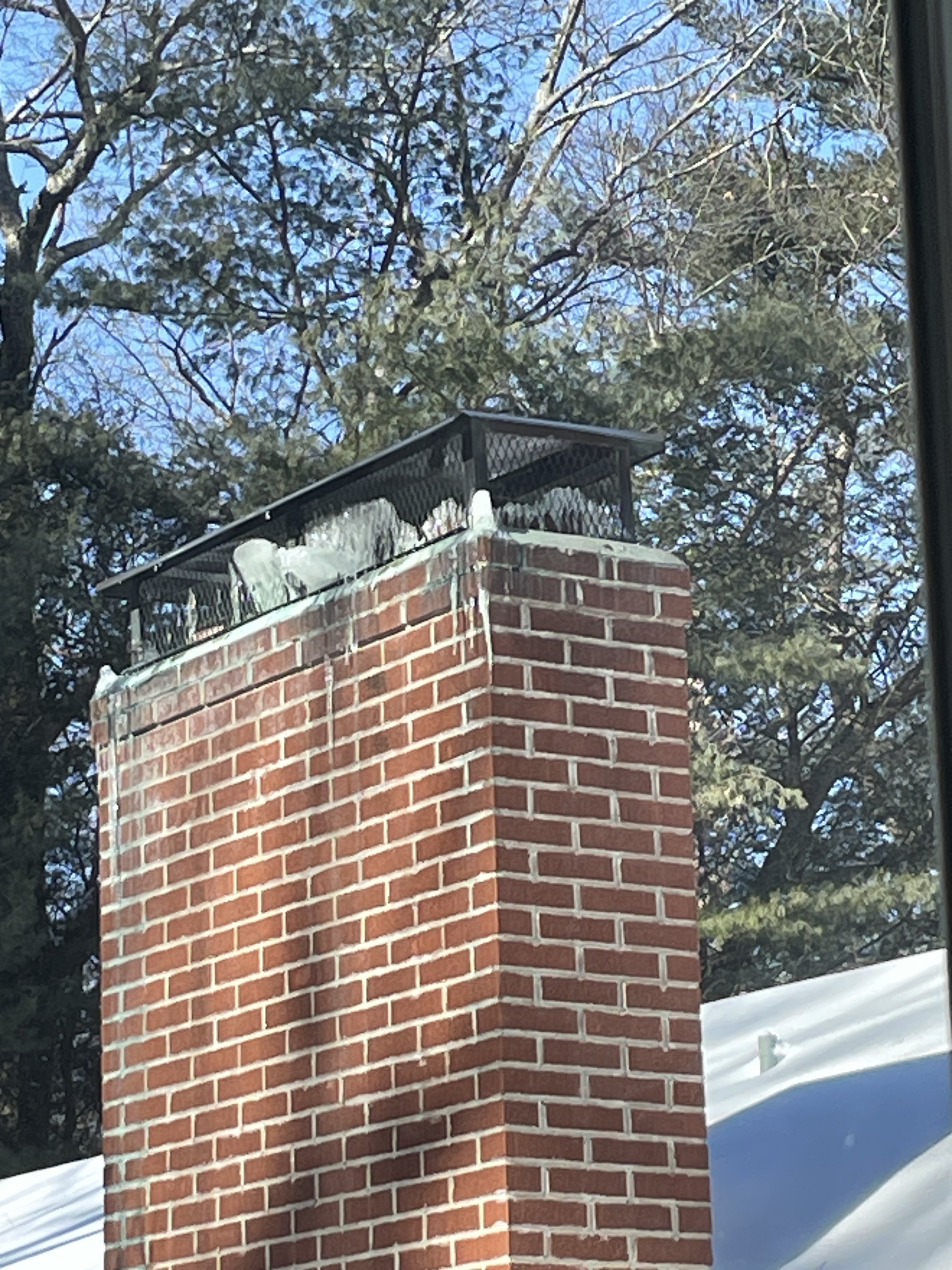
FIrst winter with new boiler (EK) which has outside combustion air intake. I recently noticed a substantial buildup of ice at the top of the chimney. Could this possibly be normal? Is it due to taking in outside air for combustion? I have ice dams forming on the roof adjacent to the chimney at this point. Please explain this to me. Thanks
Comments
-
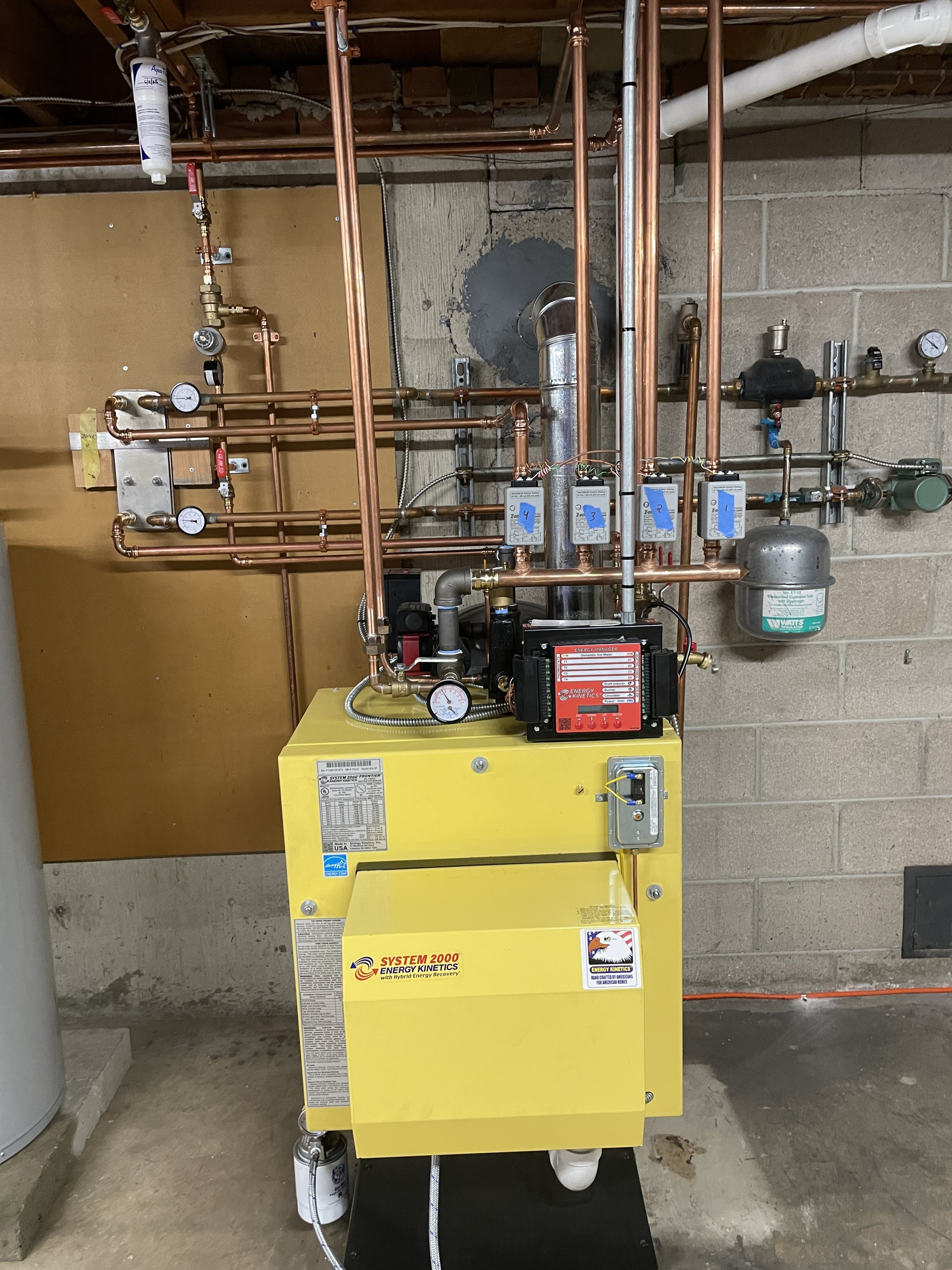
Probably condensation from flue product. Do you have a SS liner? Pictures of boiler please. Mad Dog
0 -
Yes, SS liner. Here is pic of boiler:
 0
0 -
chimney won’t get hot enough and gas is hitting the cap . Could it freeze enough to stop the boiler ? I don’t know but I would be concerned enough figure it out. That chimney cap needs to go , just my opinion. The gas hits chimney cap, cools , and isn’t blowing away in low wind . Gas needs to go up and away, not hit a cap that’s to low .
 1
1 -
Ice damming seems unrelated to the main topic; your house is losing heat
 1
1 -
When was your last tune up/service? What was the stack temp?
Nice system 2000.
0 -
that is like the pillar of ice underneath the direct vent appliance out the side wall. there is plenty of space for the combustion products to mix with the cold, dry air and for evaporation to cool the products further to get it cold enough to freeze to the cap. the cap is a huge heat sink that takes heat away and conducts it in to the air. a small single flue chimney is not likely to do that, but with the 3 flues there is a lot of area compared to the size of the heating flue.
there could have been some snow that has since melted that collected up there that helped it form too.
0 -
ice dams are a combination of not enough attic ventilation for the amount of ventilation in the attic. if the outlet vent is a ridge vent those tend to get covered with snow and stop working in the type of winter with lots of snow we have had in michigan this year.
0 -
OK: starting to make sense.. Contractor indicated reason for the liner was due to flue temps with new system being way lower than with the old 1960's boiler. The flue gases are hitting the screen on the cap and condensing, leading to ice formation (is was minus 1 degree here this AM). I am thinking eliminating the screen part of the cap might solve issue. We put the cap on a number of years ago to protect crown from rain water: never had a problem with birds or squirrels so I think we can live without the screen. Sounds like it goes on the project list for the spring. Thanks all!
 1
1 -
is it preventing the unit from operating?
We don’t get weather like this often.
0 -
Boiler is still operating: hope it continues until the temps warm up: it would be no fun up on that roof with the snow at this point.
0 -
don’t just remove the screen , the cap is way to low , it should go in my opinion. You need the chimney gas to go up and not hit a piece of metal 6” higher . What worked before won’t work now . Talk to boiler manufacturer they deal with this every day .
 1
1 -
I’m making the assumption the previous boiler also utilized combustion air. This boiler uses air that causes ice damming? It’s a colder winter, there’s actually snow this year
0 -
the oild boiler was probably constantly drafting house air up the vent and keeping it warmer. with the new boiler sealed there is no house air to warm it during the off cycle.
0 -
Baby it's cold outsde, and the moisture in the boier exhast is freezing on the first cold thing it hits. If you need to keep critters out of the chimney — which is a good idea — a flat screen across the top will d (I'd suggest half inch mesh, wire of course).
Will it freeze shut? I veery much doubt it — even in this weather.
Br. Jamie, osb
Building superintendent/caretaker, 7200 sq. ft. historic house museum with dependencies in New England0 -
not sure how that relates to ice damming on the roof
0 -
the ice damming is a separate issue with attic ventilation and insulation.
0 -
ah I misunderstood. I thought somebody was mentioning the ice damming was because of the new boiler.
1 -
Thank you for everyone's posts. @CTYankee , I agree with the solution of removing the screen and cap - cold surfaces are condensing the flue gas and causing icing. Prolonged icing can cause damage, so hopefully a break in the weather will allow your chimney cap screen to thaw soon and you will not experience damage by waiting until a reasonable time for roof work.
For reference, from our cold weather testing in Fairbanks, AK (temps down to -60°F) we have seen that the vent temperature is not substantially different when comparing outside combustion air vs room supplied air, so there is no need to consider removing outside air as a possible chimney cap icing solution.
Best,
Roger
President
Energy Kinetics, Inc.0 -
The outdoor air doesn't significantly change the stack temp when the appliance is burning but with the old appliance it was pulling room air up the vent when the appliance wasn't running so that air was keeping the cap warmer.
1 -
Thanks all for sharing your wisdom and experience. I am thinking a nice sunny day in May will be a good time to go up on the roof and deal with the chimney cap..
0 -
As I said there still a lot of opening to vent. It will begin to recede.
0 -
You need a taller cap. That one is too low.
1 -
how often do we get condition's like this?
0 -
in michigan i'd say about every 10-15 years
0




Categories
- All Categories
- 87.5K THE MAIN WALL
- 3.3K A-C, Heat Pumps & Refrigeration
- 61 Biomass
- 430 Carbon Monoxide Awareness
- 122 Chimneys & Flues
- 2.1K Domestic Hot Water
- 5.9K Gas Heating
- 118 Geothermal
- 170 Indoor-Air Quality
- 3.8K Oil Heating
- 78 Pipe Deterioration
- 1K Plumbing
- 6.6K Radiant Heating
- 395 Solar
- 15.9K Strictly Steam
- 3.5K Thermostats and Controls
- 57 Water Quality
- 51 Industry Classes
- 51 Job Opportunities
- 18 Recall Announcements