water level after heating cycle

Hello,
The boiler heated start permissible water level. Does the water level will go high than
permissible water level after steam as water return to from pipes?
Thank you.
Comments
-
Shouldn't. The usual observation is that during steaming the water level will be lower than it was — perhaps a fair amount lower — but then recover more or less rapidly afterward. If there are long or partly clogged wet returns, it can take a surprisingly long time.
Now. If the water level comes back eventually to higher than it started… if there is an automatic feeder, it may have gotten triggered.
Br. Jamie, osb
Building superintendent/caretaker, 7200 sq. ft. historic house museum with dependencies in New England0 -
I just worried my pipes are leaking underground, because after heating up, the water level is lower than
permissible water level, I feel my heat boiler refills water more often than normal.
0 -
Not exactly sure what you are asking but I will give this a go.
cold boiler, radiators fill with air, water is at the proper water line. Am I right so far?
burner turns on and makes the water turn into steam. the water that turns into steam leaves the boiler and goes to the radiators. The radiators get hot and the steam gets cooler and turns back into water (called condensate). The water line in the boiler drops a few inches as a result of the leaving steam.
The condensate in the radiators makes it way back to the boiler and the water line goes back up some.
The burner stops and all the condensate returns to the boiler and the water line gets back to the original level. no higher and no lower.
That is the perfect way to run the boiler. SO… The water line does NOT go higher
What if?
cold boiler, radiators fill with air, water is at the proper water line.
Burner turns on and makes the water turn into steam. The water that turns into steam leaves the boiler and goes to the radiators. The radiators get hot and the steam gets cooler and turns back into water (called condensate). The water line in the boiler drops a few inches as a result of the leaving steam.
The condensate in the radiators takes too long to make its way back to the boiler and the water line goes down more and the water feed valve adds water. the burner continues to make steam.
The burner stops and the all condensate returns to the boiler and the water line gets back to boiler with all the extra water added during the heating cycle from the auto water feed
Now the boiler is cold and the water line is a few inches higher as a result of the added water.
Does this sound like your problem?
Edward Young Retired
After you make that expensive repair and you still have the same problem, What will you check next?
0 -
That's the problem, after the burner stops, the water level is the same or low, and
all condensate feels never returns to the boiler, that reason make me maybe pipes leaking?
it will that happens??
The condensate in the radiators takes too long to make it way back to the boiler and the water line goes down and the water feed valve adds water. the burner continues to make steam.
The burner stops and the all condensate returns to the boiler and the water line gets back to boiler with all the extra water added during the heating cycle from the auto water feed
0 -
I would suspect the return line could be partially plugged. Do you have any 'wet Returns"? That would be return lines below the boiler water line or perhaps under the basement floor?
0 -
No, I didn't see any wet on the floor or under the boiler.
0 -
If the water line is rising, you may not have a leak. You likely have a clogged wet return. A lot of gunk and mud can build up in under-floor wet return piping.
If you have someone clean those pipes so the condensate can return to the boiler more quickly, you may then discover a leak. The debris that was removed may have been plugging holes in the under-floor return pipe.
Get the pipes cleared out, but be prepared to pay for new wet return piping. Copper pipe can be used for wet returns as long as all of it is below the boiler’s water line.
Edward Young Retired
After you make that expensive repair and you still have the same problem, What will you check next?
0 -
Thank you Edward .
Does boiler water go down by itself?
first photo i took 8:25pm the water above permissible water level.
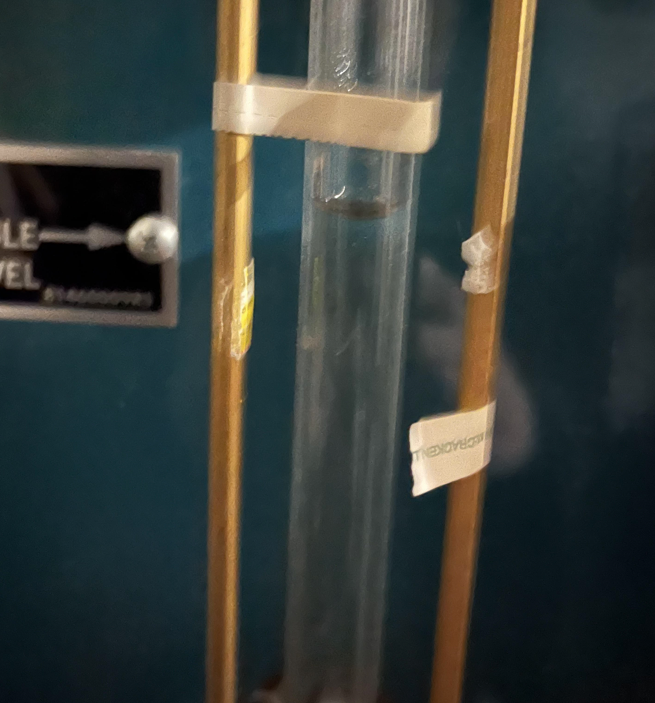
And take a photo again at 9:47pm just the boiler turns on.. water down are they normal?
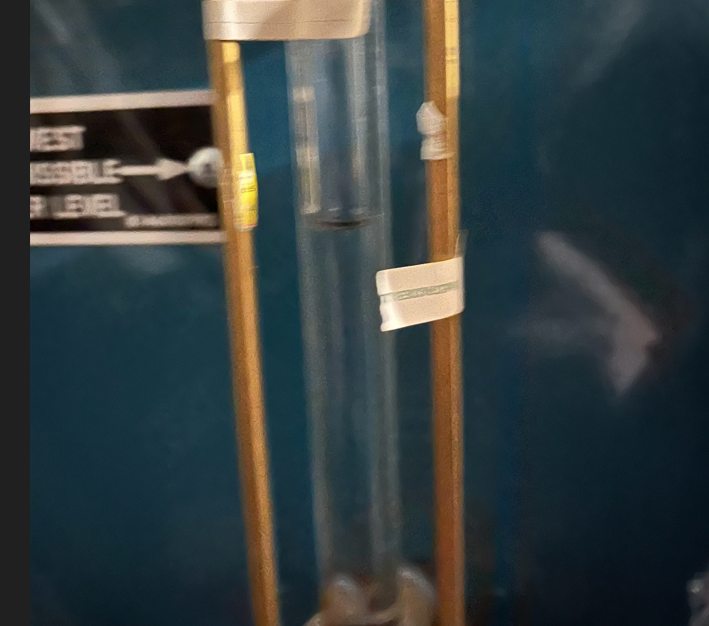
thank you
0 -
That small drop is normal. That is because the water is changing into steam and going the the radiators.
If the burner stops because the water level drops, then the water level goes back up because automatic feed valve adds water, then you will get higher water level after everything cools down.
Does the water level stay at the higher level for a long time if the burner is off?
Does the water level go down when the burner is off for a long time?
These answers will determine if you have a leak under the floor.
Edward Young Retired
After you make that expensive repair and you still have the same problem, What will you check next?
0 -
That small drop is normal. That is because the water is changing into steam and going the the radiators.
Thank you make me feels more safety not problem with boiler i just bought two years aga.
Does the water level stay at the higher level for a long time if the burner is off?
No.
Does the water level go down when the burner is off for a long time? Yes.
A lot of times the burner is off the water at the red line
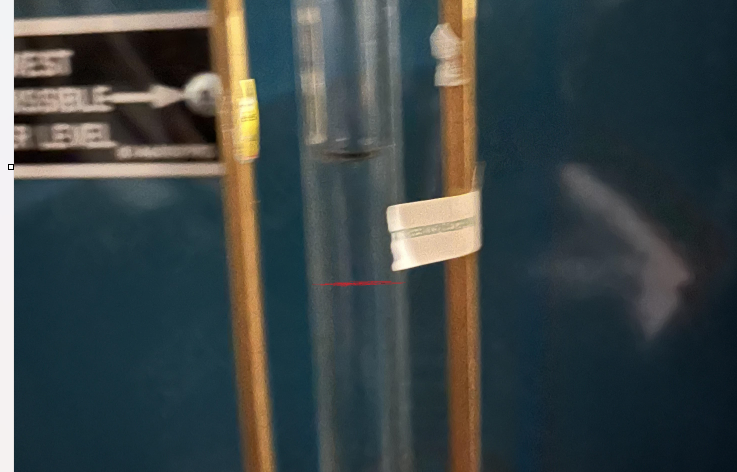
The boiler should not refill water any time in the week.
Thank you.
0 -
I'm still confused, @ups3341 , but what I think I'm reading is that the water level does drop when the burner is off for a long time.
The only way that can happen is that you are losing water somewhere. Now it may not be a big leak — a surprising amount of water can escape from valve stem packings and even vents when the boiler is running. But.. there may be a real leak somewhere, too. If you or your water feeder needs to add mor than a gallon of water per week, then it's time to start looking.
Br. Jamie, osb
Building superintendent/caretaker, 7200 sq. ft. historic house museum with dependencies in New England0 -
Oh and one other thing. Don't chase the water level up and down. Try to observe it just when the boiler is about to start, or within a minute of its firing (you have enough time to hustle down stairs when you hear it start) but before it is really steaming.
Br. Jamie, osb
Building superintendent/caretaker, 7200 sq. ft. historic house museum with dependencies in New England 1
1 -
So with these answers I am getting a better picture (idea in my mind's eye) of what might be happening.
To be clear:
- Boiler runs and heats building properly
- Boiler stops and cools down after building heat is satisfied.
- Wait some time and water lever is higher (because the condensation from radiators takes some time to return to boiler)
- Water in boiler is higher after short wait time
- Water level drops after long wait time .
This is what I understand from your answers so far. Please make corrections if I am wrong
Does the water level stay at the higher level for a long time if the burner is off?
No.
Does the water level go down when the burner is off for a long time? Yes.
A lot of times the burner is off the water at the red line
You indicate this :
The boiler should not refill water any time in the week.
Is this a question? The answer depends on your boiler system. If there is an automatic water feed valve, it can have water added anytime that water feeder gets a signal that the water is too low.
Edward Young Retired
After you make that expensive repair and you still have the same problem, What will you check next?
0 -
This diagram may help
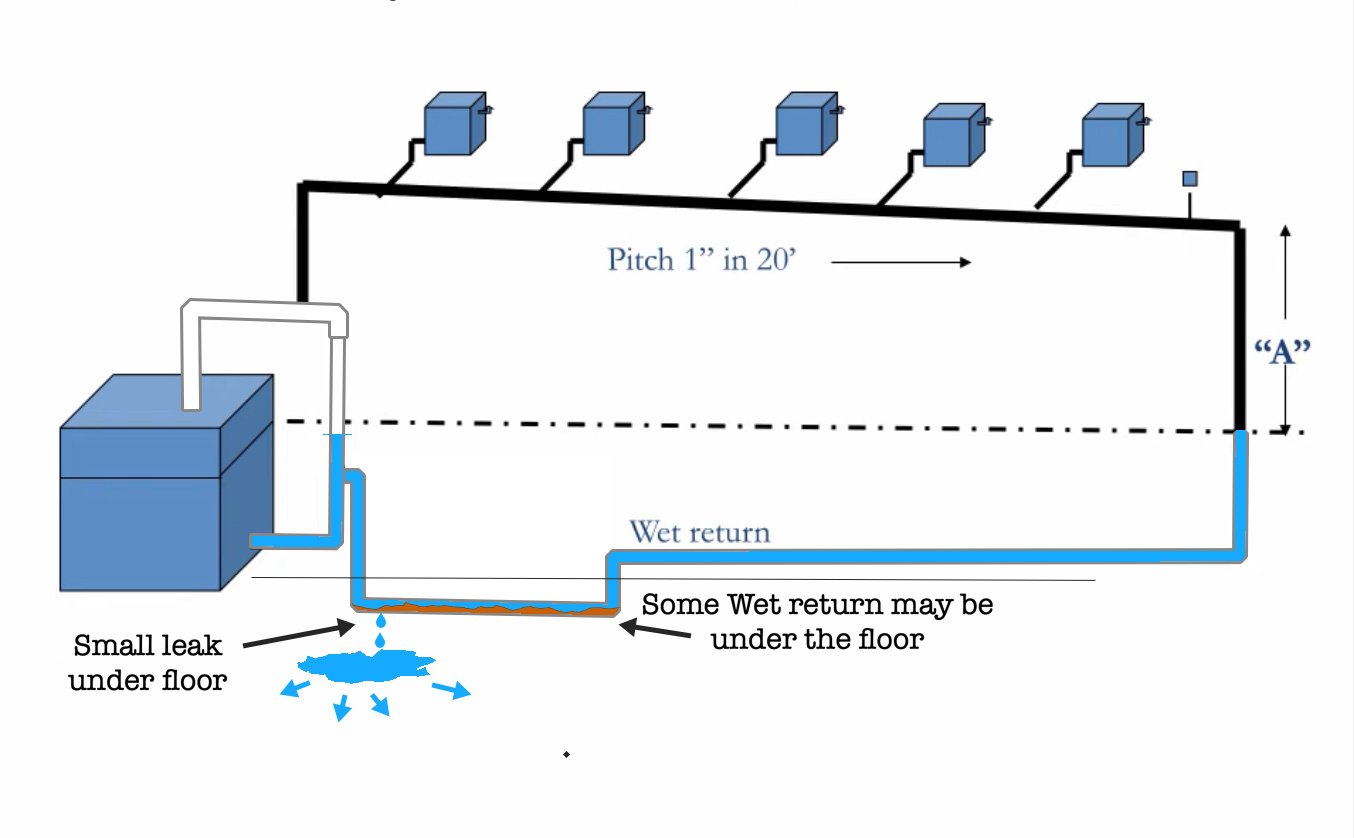
- The wet return under the floor may have mud and rust in the pipe that makes the returning condensate water come back slow
- Slow return water makes automatic water feed add water
- Water level goes up because the water feed add water and the condensate water also return to boiler.
- There is a small leak in the pipe under the floor. You can not see the leak.
- When the burner is off for a long time the boiler water will leak under the floor
- The water level goes to red line
- The water feed will add water when the water goes to the red line
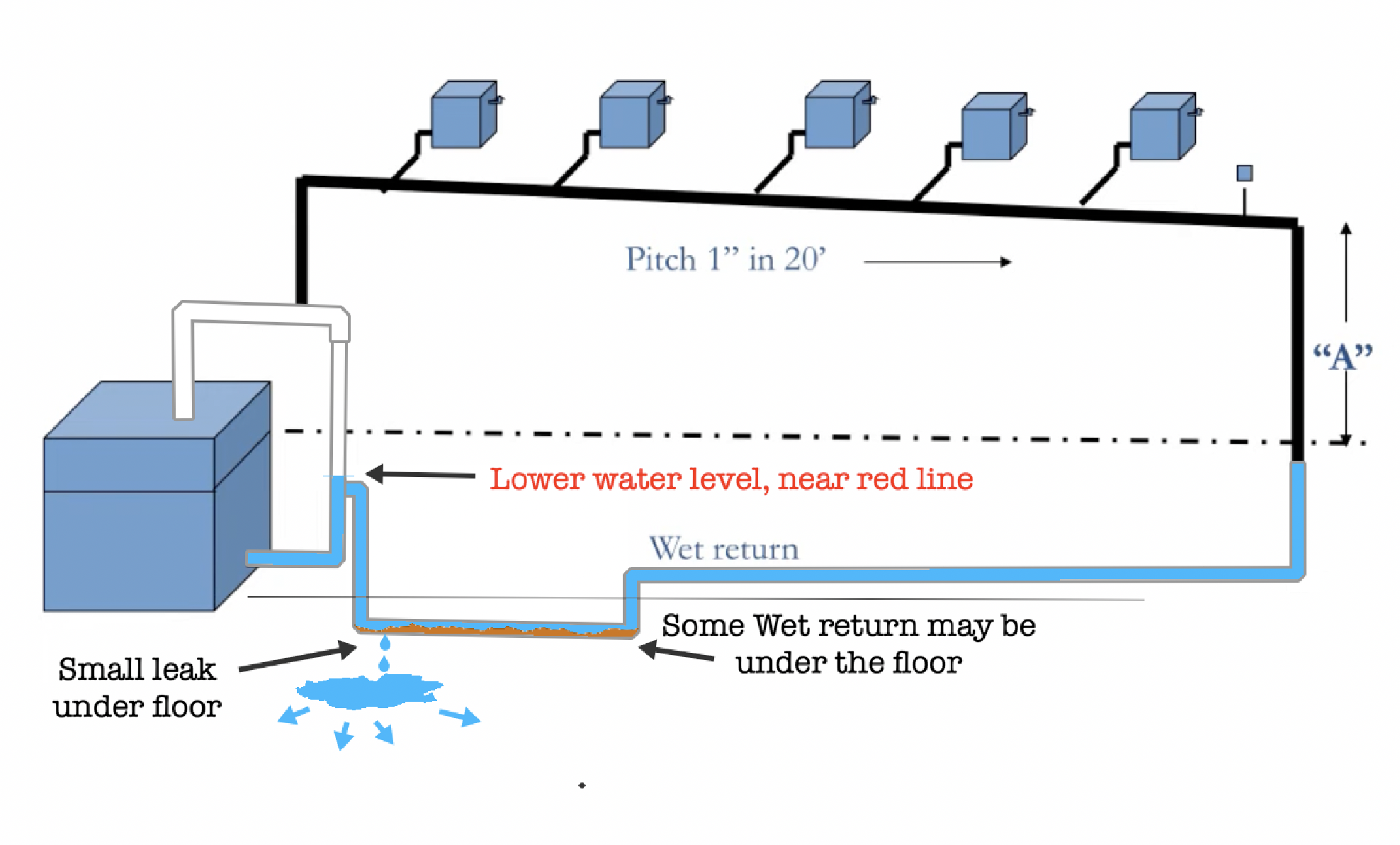
This is only one possibility. You need to have the wet return pipe cleaned and checked for a leak. That would be my first step.
Edward Young Retired
After you make that expensive repair and you still have the same problem, What will you check next?
0 -
And to help with possible language issues, the "Wet Return" is all the return pipe that is below the water line, as in the diagram above. The name of that pipe is the "Wet Return". It's called "wet" because it's always got water in it.
NJ Steam Homeowner.
Free NJ and remote steam advice: https://heatinghelp.com/find-a-contractor/detail/new-jersey-steam-help/
See my sight glass boiler videos: https://bit.ly/3sZW1el 1
1 -
-
no, there’s no problem with Ed’s post but the original poster earlier seemed to confuse Wet Return with a return that is wet
NJ Steam Homeowner.
Free NJ and remote steam advice: https://heatinghelp.com/find-a-contractor/detail/new-jersey-steam-help/
See my sight glass boiler videos: https://bit.ly/3sZW1el0 -
Ah, just read back and found it.
1 -
Ed is right. But assume all is built correct, or is not compromised in any way, the system has three states of operation. All on, all off and in between. Off and steady on could show a stabilized level but be different. But there is a time lag between startup steady, to shut down cold. In between is always changing. Given all of this the question asks, what is normal for this? Here is where the most important diagnostic tool is needed that is almost never done. A complete operation report recording all those little details. With this, we can compare new installed to what we see currently. But this will never be done except maybe by Government and a lab. We'd be lucky to even get a combustion test. But its not just design, there are changes in combustion rate and design that can affect steam dynamics. Is it a rolling boil, or a simmer? Does it cool fast or slow? Just changing any component like a boiler, burner or even a few radiators can make a change. Some tweaking is always needed in a new install. So who will set the settings, size the devices, this all will matter. It is why diagnosticians will always be in demand. If we really want to know and spend the coin to find out. But my experience is hearing, "Its working don't touch it!" And then the boiler room door closes and everything changes again.
1 -
I think that was humor Paul…. At least I got a good laugh!!!
Edward Young Retired
After you make that expensive repair and you still have the same problem, What will you check next?
1 -
It was Ed, and thanks for noticing.
0 -
Thank you EdTheHeaterMan your helpful information,
I know what happened; one of the steam heater air vents is spreading out some water.
0


Categories
- All Categories
- 87.6K THE MAIN WALL
- 3.3K A-C, Heat Pumps & Refrigeration
- 59 Biomass
- 429 Carbon Monoxide Awareness
- 124 Chimneys & Flues
- 2.2K Domestic Hot Water
- 5.9K Gas Heating
- 119 Geothermal
- 168 Indoor-Air Quality
- 3.8K Oil Heating
- 78 Pipe Deterioration
- 1K Plumbing
- 6.6K Radiant Heating
- 394 Solar
- 16K Strictly Steam
- 3.5K Thermostats and Controls
- 56 Water Quality
- 51 Industry Classes
- 50 Job Opportunities
- 18 Recall Announcements