I found the limit for undersizing steam supply piping on my boiler
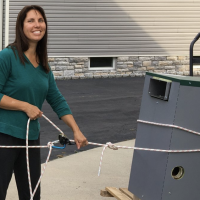
If you didn't see my previous discussion or videos, let me summarize here real quick:
- I used a 1-1/4" supply pipe on my Peerless 63-03L boiler instead of the manufacturer-suggested 2" pipe. It worked fine, no problems at all.
- Then I switched that out for a single 1" supply pipe. This is 1/4 of the cross-sectional area compared to the 2" suggested by the manufacturer. This worked fine also, no problems whatsoever.
In this video, I went with an even smaller pipe to see how it would go, and it went a different way!
So as a result of these, I know I won't be telling people to worry when their near boiler piping is a little undersized. Please put the pitchforks away—they should always be installed according to manufacturer's specification. But it is clear from these videos, to me at least, that there is no way that repiping an existing boiler can solve problems or be worth the expense, short of laughably ridiculous undersizing like you see in the above video.
And piping anything with larger pipes or more pipes than the manufacturer's specification is a complete waste of time, money, and effort, providing no benefit whatsoever.
NJ Steam Homeowner.
Free NJ and remote steam advice:
https://heatinghelp.com/find-a-contractor/detail/new-jersey-steam-help/
See my sight glass boiler videos:
https://bit.ly/3sZW1el


Comments
-
Great demonstration, thanks !!!
Think how bad that would be with an incorrect steam supply piping with a boiler larger than yours.
That water expanded into steam wants to get out of the boiler and takes water with it and all way under 1 PSIG.
National - U.S. Gas Boiler 45+ Years Old
Steam 300 SQ. FT. - EDR 347
One Pipe System 3
3 -
Thanks!
Think how bad that would be with an incorrect steam supply piping with a boiler larger than yours.
Well I don't quite see it that way. With 25% of the specified cross-sectional area, it was working fine. So for example, if the manufacturer calls for a 2-1/2 supply and there's a 2" on there, I wouldn't be that concerned. (3.35 sq in for 2" compared to 4.9 sq in for 2.5") — 68% of specified
Or even if two 2" supplies were called out and there was a single one on there, I wouldn't be surprised if it worked (and we have seen this how many times? many!) — 50% of specified
That water expanded into steam wants to get out of the boiler and take water with it and all way under 1 PSIG.
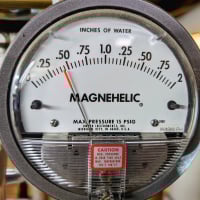
It was about at 1 PSI (~27 inches of water column) when it pushed the water up to my header where we saw it getting shoved up toward the main by the steam, yes.
IIRC when I had the 1" supply pipe the pressure went up to 5-10 inches of WC which didn't cause any trouble.
NJ Steam Homeowner.
Free NJ and remote steam advice: https://heatinghelp.com/find-a-contractor/detail/new-jersey-steam-help/
See my sight glass boiler videos: https://bit.ly/3sZW1el1 -
When you heated your house for one month with the 1-1/4" restricted supply what happened to your gas usage per degree day compared to the normal overbuilt double 2" Drop Header? And then what happened to the gas bill when you added rust particulates to the water at over 50ppm?
Just joshin. I know you didn't do those experiments. 😀 Keep on having fun.
0 -
Nothing would have happened to the gas usage because all the steam I was producing was making it out to the radiators.
I'm not sure what rust has to do with anything, I don't have very much.
NJ Steam Homeowner.
Free NJ and remote steam advice: https://heatinghelp.com/find-a-contractor/detail/new-jersey-steam-help/
See my sight glass boiler videos: https://bit.ly/3sZW1el 1
1 -
OK then take the challenge 😃 If the steam is just as dry you shouldn't see any loss of efficiency. It is possible that a drop header might even make up for it.
0 -
@ethicalpaul , now try that with a Utica, Dunkirk or other side-outlet boiler. I bet the smaller pipes won't work as well there.
All Steamed Up, Inc.
Towson, MD, USA
Steam, Vapor & Hot-Water Heating Specialists
Oil & Gas Burner Service
Consulting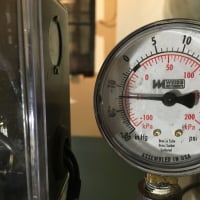
 2
2 -
Knowing him if someone donated one he'd hook it up.
Single pipe 392sqft system with an EG-40 rated for 325sqft and it's silent and balanced at all times.
 2
2 -
not that long ago I would have agreed with you. But remember I did used to have a ridiculously poorly piped Utica with a single supply pipe and when I got the water decent, it didn't carry over anymore.
The small supply pipe slows down the steam exiting the steam chest so there's not really any "sucking" behavior that happens.
Did you see how high I had the water line on my Peerless in these videos? It was to the very top of the gauge glass which is just a couple inches below the top of the section where the supply tappings are.
After what I just put this boiler through I honestly don't think there is a carryover situation that isn't the fault of the water.
NJ Steam Homeowner.
Free NJ and remote steam advice: https://heatinghelp.com/find-a-contractor/detail/new-jersey-steam-help/
See my sight glass boiler videos: https://bit.ly/3sZW1el1 -
"But remember I did used to have a ridiculously poorly piped Utica with a single supply pipe and when I got the water decent, it didn't carry over anymore."
Yeah. My situation exactly. For some reason I don't understand, you deny what I am seeing in my own system the past 20 years or so, that I need to drain and flush (you told me I don't have to do this) and treat to prevent wet steam progressing to severe carry over. Not trying to divert the thread, just have to say this.
"The small supply pipe slows down the steam exiting the steam chest so there's not really any "sucking" behavior that happens."
The velocity actually increases, so it doesn't slow it down at all. The restriction, ie. increased friction to flow, caused the path of least resistance to become the equalizer though, due to the increased boiler pressure. I know you said that in the video but I just wanted to clarify.
"Did you see how high I had the water line on my Peerless in these videos? It was to the very top of the gauge glass which is just a couple inches below the top of the section where the supply tappings are."
Yeah and try raising your Hartford Loop up to where it is installed 3 in. too high and then tip your boiler forward towards the supply tappings so that the waterline is 1/2 in. higher than at the sight glass. Then you have a situation like mine. I have to keep my waterline at rest almost that high in the sight glass so that when a normal amount of water occupies the system as steam, the waterline in the boiler doesn't expose the Close Nipple of the Hartford causing boiler pressure to interfere with condensate return, making any carry over situation escalate.
"After what I just put this boiler through I honestly don't think there is a carryover situation that isn't the fault of the water"
Try removing the drop style header and the second takeoff and put in an undersized header pitched the wrong way away from the equalizer like I have in my mickey mouse install. The water quality only makes things that much worse.
Your experiments are cool but they are a sample size of 1, with your specific install, and you aren't doing anything quantitatively scientific to see how much more wet the steam may be when it reaches your radiators. If you prefer, swap out "more wet steam" with decreased dryness fraction.
You aren't doing it with a poor header install and high TSS of 50 ppm or greater.
0 -
Yeah. My situation exactly. For some reason I don't understand, you deny what I am seeing in my own system the past 20 years or so, that I need to drain and flush (you told me I don't have to do this) and treat to prevent wet steam progressing to severe carry over. Not trying to divert the thread, just have to say this.
Either you are misunderstanding what I've said, or I said it with not enough clarity.
If you have water that is surging/carrying over, then you definitely have to drain it and/or skim it. What I probably said was there's no reason to periodically drain every x months like you are doing. You can get your water in good condition and keep it that way with water treatment such as 8-way.
If I recall correctly, you just recently did some pipe replacement, which would typically introduce oil into your system. That's the kind of thing where you do have to skim and/or drain (just like I had to recently do where I fouled up my own boiler water).
Also let me clarify that I am not claiming you need to treat water to prevent carryover. In fact, I've never seen a product that can actually stop carryover (with the possible exception of Squick). 8-Way definitely makes surging worse under some conditions (I didn't always believe this), so I now advise get the water clean and behaving correctly first, then treat.
The velocity actually increases, so it doesn't slow it down at all. The restriction, ie. increased friction to flow, caused the path of least resistance to become the equalizer though, due to the increased boiler pressure. I know you said that in the video but I just wanted to clarify.
It increases in the constricted pipe, yes. But below that port, in the steam chest area of the sections, the rate of steam flow is indeed slowed as the pressure increases (then it stays steady at whatever the steam generation rate of the boiler is). So in the steam chamber, the steam has no visibility into the constricted pipe. It doesn't "know" there's bad piping up there. So there's no "sucking" that can happen.
In my video I had the water level nearly up to the top of the sections and yet there was only a very occasional splash of water seen, with no ill effect. So that is why I am saying that bad boiler piping shouldn't be seen as the primary cause of carryover.
Yeah and try raising your Hartford Loop up to where it is installed 3 in. too high and then tip your boiler forward towards the supply tappings so that the waterline is 1/2 in. higher than at the sight glass. Then you have a situation like mine.
This is called a "Gifford Loop", and while I can't rule it out as a problem in your system, I can't picture what problem it would cause.
tip your boiler forward towards the supply tappings so that the waterline is 1/2 in. higher than at the sight glass. Then you have a situation like mine.
I would rather level my boiler, but again, I don't know why that would increase carryover. I filled my boiler up to the top, I can't duplicate everyone's exact situation, but that was enough to prove my point to myself at least.
Try removing the drop style header and the second takeoff and put in an undersized header pitched the wrong way away from the equalizer like I have in my mickey mouse install. The water quality only makes things that much worse.
You are kind of hitting me with a lot of stuff in this reply, let's take a breath after this.
My drop header does help when I have carryover…it makes carryover have to be way worse before it gets up to my main, but in these videos (except the 1/2" one), the water never even got up to the supplies, so the drop header was doing nothing.
Headers pitched the wrong way are not a huge deal, because unless the water quality is trash, there's no water getting thrown up to the header anyway, and condensate drains back down to the boiler, or it re-evaporates to steam (as I have seen and shown many times).
I don't think it's the water quality that makes things that much worse, it's the water quality that causes the carryover.
NJ Steam Homeowner.
Free NJ and remote steam advice: https://heatinghelp.com/find-a-contractor/detail/new-jersey-steam-help/
See my sight glass boiler videos: https://bit.ly/3sZW1el0 -
Yeah man take a breath. Sometimes it's better to think a while before answering everything.
This kind of reminded me of Adam Savage on Mythbusters when he jokingly stated "I reject your reality and substitute my own" 🤣 I kind of miss that show.
PS - Your recall needs a little tuning up. When you said that I had probably introduced oil into my system from the steam main replacement I corrected you by saying that since I did the work myself I was able to clean all the pipes and fittings thoroughly before installation and I didn't have any problems whatsoever that I was aware of anyway, until about a month and a half into the heating season, at which point I started to get a lot of noise and when I went into the basement saw the sight glass plunging and immediately knew I had waited too long to drain and flush. There was no oil in the water from that job trust me. Everything was cleaned with isopropyl alcohol.
 0
0 -
Yeah I apologize that I can't remember perfectly every detail about everybody's system. I think it's better if we don't interact on each other's threads.
NJ Steam Homeowner.
Free NJ and remote steam advice: https://heatinghelp.com/find-a-contractor/detail/new-jersey-steam-help/
See my sight glass boiler videos: https://bit.ly/3sZW1el3 -
@ethicalpaul you don’t have to create the exact conditions of my system for me to appreciate and learn from your experiments. Love your perspective and creativity, don’t stop!
 5
5 -
@Captain Who Why would you tolerate all that dysfunction for 20 years ? And personally I think you have way too much 8-Way in your boiler. Look at @ethicalpaul's sight glass in his video(s), the water is clear.
National - U.S. Gas Boiler 45+ Years Old
Steam 300 SQ. FT. - EDR 347
One Pipe System0 -
Why would I tolerate it? UHHH. Well it took me several years of patching holes in my 16 ft. section of main. Without giving you my balance sheet, I didn't want to spend the money to have someone do it (possibly a lousy job) and I prefer to do things myself. So I thought about that for several years before coming up with the plan, with the help of Gordon at Silent Steam Team giving me the reassurance my plan was sound.
Repiping a boiler is expensive. I'm sure you know this. Now that I have the management scheme firmly established I plan to wait until the boiler fails, maybe in 5 to 10 years if I'm lucky. Then of course I will do it correctly. Are you telling me that draining and flushing a steam boiler once a year is that out of the ordinary? If that is all I have to do I'm ok with it. You are missing the point that whether it is finances, laziness, fear of attempting, not knowing someone in the trade that is good and I can trust, whatever….I have learned how to manage a poor installation over my 21 years of experience, and I have done lots of fixes you don't know about, but I don't appreciate being told that what I have learned I need to do is unnecessary. Very aggravating. But regardless, I can pass on what I have learned, not to people with a perfect install, but to people who are in a similar situation.
I am probably at the point where I have screwed up my courage to attempt the re-do on the Hartford Loop this next off season and will probably add a full port ball valve for doing a no-return flush. Sweat soldering pipes of that size is not easy I'm sure.
pH is 9.6 I told you. I don't know why I needed more to get that pH. The pH drops dramatially when it has been in the system and steaming for a few days. Maybe that is due to carbonic acid but I don't know. I have also said that my digital meter is out of action until batteries arrive. Maybe the pH hydrion paper is giving me a false reading. What would be the big deal in taking some out and just putting in water in its place? I don't see a problem. Maybe you could explain what the problem is when the system is running so silently and surge free where surging in the sight glass is nill.
0 -
Why are you stalking @ethicalpaul and arguing with everyone? If you can't agree with him just avoid his threads?
This really isn't what I'm used to seeing on HH.
Single pipe 392sqft system with an EG-40 rated for 325sqft and it's silent and balanced at all times.
2 -
Why are things not up for discussion? Stalking? That's wacko 🤣 You seem to think that disagreement constitutes disrespect. It does not. I have complimented him on his videos and his efforts many times. It is the conclusions that I do not agree with. Don't project on me please.
Why do you not see that him gaslighting me that my annual draining and flushing is not necessary when clearly it is, is something that could be interpreted as a form of disrespect. But that is OK. I will push back politely with or without your approval.
And you are telling a story now, that I am "arguing with everyone" 🤣
0 -
Is the header being flooded by high water outside the boiler? Or is steam actually coming up the equalizer?
1 -
What I think happened in that last video was that due to the increased pressure in the boiler (from the constricted 1/2" supply pipe), water was pushed out the back of the boiler, raising the water level in the rest of the system, including the equalizer. The water eventually got up to the header where it collided with the steam and appeared in my sight glass just below my main (the highest sight glass where you could see the water churning).
NJ Steam Homeowner.
Free NJ and remote steam advice: https://heatinghelp.com/find-a-contractor/detail/new-jersey-steam-help/
See my sight glass boiler videos: https://bit.ly/3sZW1el
 2
2 -
@Captain Who You were being disrespectful to @ethicalpaul. You can disagree with someone without insinuating someone is stupid, forgetful, and accusing them of gaslighting you. Moving forward, follow site rules and be respectful and stop the sarcasm. -Andrew
Forum Moderator
0 -
What about that whole Dimension A thing that the equalizer does not need to be there for you found out in one of your previous videos is now understandable today.
@ethicalpaul… Try This:
Start the boiler with the equalizer valve closed and that way you won't get the boiler water to back up in the equalizer as it does. Then you will see that the dimension A may have had a purpose back in the day when the steam fitters were experimenting with different pipe sizes and higher pressure boilers. I bet that water will back up a lot higher in the dry return …kind of cancelling your no need for the equalizer argument along with the no need for a dimension A argument.
The boiler manufacturers have given us overkill designs to make sure that there is no need for the Dimension A in your home. The piping design is way overkill for no need for the equalizer idea also. The old coal fired boilers that did not have an equalizer and did not have a large enough dimension A as a result of the boiler pressure, could have had the boiler water get pushed out of the boiler up in the return and end up dry firing if there was no Hartford loop.
I’m so glad you actually saw that happen in your own home. WOW!
Edward Young Retired
After you make that expensive repair and you still have the same problem, What will you check next?
 2
2 -
I don't feel that re-piping a boiler (the near boiler piping, header etc.) is expensive if you do it yourself. If you have a threader and know how to do it. If you plan it out even if it larger than 2" you can have a supply house thread the larger sizes.
I used to pipe boilers threaded that needed a 3" or 4" header by measuring it after the boiler was set in place. It take some time to measure carefully but when you are talking larger sizes who wants to lug the threader and 2 or 3 times the fitting you need
I haven't done any estimating in quite a while, but I know the material has gone up a lot. In fact I just looked on Supply House and 2" header and 2 2" riser with 2 2" mains and the HL would be less than $1000
Sadley I can remember 1/2" BM 90s were $.39 and 2" BM 90s were $2.15
 5
5 -
@EBEBRATT-Ed. You are showing your age!
How did all the people our age get to be so old?
Edward Young Retired
After you make that expensive repair and you still have the same problem, What will you check next?
3 -
You send bad messages out there. You use one boiler and treat it has all installations are the same. I have solved so many bad piping installs just by correcting the near boiler piping. I think you do a great disservice to the industry because you do experiments with one boiler and want to act like its the same as every other system out there. Didn't you learn in school that you can only change one variable with experimentation. i'm sure steam engineers would find your experiments amusing.
2 -
Well I like @ethicalpaul 's experiments. When you troubleshoot a piping problem don't you wish you could see what is happening inside the pipe? This is something @DanHolohan has always mentioned and I think of it often.
With Paul's experiments you get to see inside the pipe. You get to open and close valve to see velocity increases etc. You get to see water back up in the return.
You don't have to like it and you don't have to watch it but it is something different. Does his boiler replicate some of the crap in the field that has been neglected, piped wrong or seldom serviced. No.
It still has a lot of value IMHO.


 9
9 -
I like and appreciate that @ethicalpaul is doing it since no one else is (that I know of).
National - U.S. Gas Boiler 45+ Years Old
Steam 300 SQ. FT. - EDR 347
One Pipe System6 -
Thank you for your comment. I think about your concerns a lot, and I try never to claim universal truth from my one boiler, I think if you listen to my words in the video you will find this is true.
But I do think that some things I find during these experiments inform my thinking about when different things can happen to residential boilers.
So many times a homeowner or professional comes here with some photos and some descriptions and we give them some possible things to focus on without any way to know which thing it might be. I do think this series of tests helps to narrow down the possibilities of causes of problems even though as you say it's just one boiler. Thanks again.
NJ Steam Homeowner.
Free NJ and remote steam advice: https://heatinghelp.com/find-a-contractor/detail/new-jersey-steam-help/
See my sight glass boiler videos: https://bit.ly/3sZW1el2 -
Yeah I don't pretend to know what went into their thinking back then. I can guess that there were different piping configurations where the A dimension might have mattered (as I think you are saying) and then the industry changed their standard piping and it no longer did, but that knowledge was lost and they all just remembered the A dimension numbers from before. I definitely don't know.
NJ Steam Homeowner.
Free NJ and remote steam advice: https://heatinghelp.com/find-a-contractor/detail/new-jersey-steam-help/
See my sight glass boiler videos: https://bit.ly/3sZW1el1 -
I loved it when you saw all the pressure (less than 1PSI) push that water out of the boiler in your own home. You hinted in your latest video that you could close the equalizer valve you used in a previous video that indicated there was no need for an equalizer or it was named wrong. I can't remember which. But you actually saw the water get pushed out the wrong way in your own boiler. That is picture proof that there may have been a reason for those old timers that are all dead to write this stuff down in books so we don't need to have a boiler explosion every day and a half to remind us that there is a reason for these things. Although that reason is mitigated with all the other changes that the old timers made.
You're an old timer and you fix one problem, and then you find another, then another, then another. After fixing all the problems you never tested if the first problem's fix is even necessary anymore. you just write it down as the thing to do. Then everyone (in the Know) just follows the leader and keeps doing it that way.
Your boiler obviously does not need a two riser drop header, but I think you are happy with the results. Would you only use one riser if you piped it in today with what you have learned from your experiments and tests?
By the way… Keep up the good work!
Mr. Ed
Edward Young Retired
After you make that expensive repair and you still have the same problem, What will you check next?
1 -
I'll consider what you have said and you are the moderator and try to do what is best. But I will say that telling someone that something they have found to be true about their particular steam system after 21 years of experience is not necessary is pretty much the definition of gaslighting, a form of disrespect, and hopefully that was not the intention. Even without knowing the intention I hope you will agree that it is aggravating. Teachers and would be teachers should realize that not everyone's situation is the same as theirs and that their situation should not be generalized farther than that as if it would be the same with everyone. And I never insinuated stupidity. I was pushing back on imagining the science that has already been well developed, namely 2 phase fluid dynamics and thermodynamics and their effects upon the spectrum of dryness fraction of steam and that effect upon that all important cost of heating, without measuring that crucial thing. This stuff can all be looked up for those who didn't study in college or need a refresher course, especially with AI nowadays. The experiments are great though. I've never been a sycophant kind of person and I feel that is more disrespectful of someone because it is like saying, hey, I know your ego is too big to be able to handle the truth so I will just agree with you on everything or look the other way and remain silent. I feel that people in the trade who have learned so much from so many different situations would do him and us all a service to chime in a little more, like pedmec and clammy and also instructors like ARobertson13 did recently (👍) . I don't have that experience but I am a Mechanical Engineer so things I was reading bothered me, and I have tried to correct them as best I could because misinformation is not good no matter what the intention.
0 -
I'm not saying your experiments are junk. I rather like the experiments. I like the fact we are seeing inside the boiler piping. I don't know how you find the time but I do commend you for at least looking at what's going on. The only other place you can see what's going on is the weil McLain boiler trailer. It's fascinating to see inside the piping.
But I don't think you can argue with the physics of a steam system. And I also don't think you can throw away 100 plus years of engineering based on a simple residential experiment. Things are never that simple. I have had a couple of boilers piped with no equalizer, no header, and no Hartford loop. (1) six foot supply riser to a bull head tee. Basically violated every steam piping principal we were ever taught. And it ran whisper quiet. But I have also never piped in a proper "near boiler piping" boiler and have that piping been the problem. I can always rule out that for creating the issue if there is a problem after installing a new boiler.
i think if you tried to violate these piping principals in a commercial boiler install you would pay dearly for your mistakes. I have a system that has two boilers piped in parallel but is in violation of " near boiler piping piping" principals and bangs like crazy. it's has so much carry over i'm surprised it hasn't blown a fitting apart. Under your theory I shouldn't have the near boiler piping corrected because a simple residential experiment shows something different. I think that's outrageous and doesn't help people who come here for help. It only creates confusion.
My first rule of steam service is to correct the near boiler piping if it is not done to the specifications provided by the manufacturer and the "near boiler piping" principals taught by the engineers and reprinted by Dan.
i'm not trying to be combative here so don't take these as trying to be combative. I'm just defending my position on what I believe to be true and after so many years in the field.
2 -
@Captain Who The main rule here is to be respectful and your tone in this thread is condescending. You can make your points without tearing other people down. -Andrew
Forum Moderator
1 -
Like many here, I love the work that Paul is doing. Can probably write an entire essay, praising his experiments, questioning status que..... Paul's conclusions, about the importance of proper water quality, are monumental and eye-opening. Full disclaimer, I have not watched much of the videos or done a deep dive into every point he has made. So I may be working off of some degree of misinformation. Experiments that he has done with reduced piping sizes..... have been done with his boiler and it's pristine water. Realistically speaking, it's nearly impossible for most residential steam boilers, to achieve that level of water quality. The overwhelming majority of homeowners, don't have the interest or ability, to do what it takes to achieve that level of water quality. Most homeowners cannot be bothered do anything at all with their boilers. Which is fine. Only way to achieve that water quality, would require multiple visits from a professional. Any water treatments, could potentially loosen sludge that already exists in the boiler or in the returns. Could possibly require multiple visits by a professional. At significant cost. There is no way that's most homeowners would agree to these costs. Most systems involve make up water. Which certainly could mess up water quality. No one is boiling their water, and no one is hiring a professional to check pH levels and total dissolved solids, every time make up water is added to the boiler. So realistically speaking, most boilers will have less than ideal water quality. Which means that proper piping is critical to compensate.
2 -
I think tone on a forum is in the eye of the beholder and is difficult to convey. Any time there is a disagreement I have fully explained my position and why I believe it to be true. Sorry you find that disrespectful. I will admit that one or two times I could've sugar coated it a bit better but I was trying to get him to look up the science instead of imagining the science. The "challenge" was my way of making that point for maybe the 3rd or 4th time and was not disrespectful but what I felt was a reasonable one for him to take it to the step where his conclusions could be tested. In science and engineering one makes a hypothesis and then does another experiment to actually try to disprove that hypothesis or other people's hypothesis.
This is a public forum and if you put your ideas out there you should not be offended when there is disagreement, when the person doesn't use name calling and explains why they are saying what they are saying. One should also not be hasty, without research, for fear of misinforming the public.
Now I am arguing I guess, in some people's eyes, but in mine I am explaining further.
0 -
Right. And he did it with a brand spanking new over the top overbuilt installation, maintained to perfection from the git go, short experiments aside. Maybe the rest of his piping in his house and radiators are very well done as well.
0 -
Argument is fine, but I felt more than argument behind your words, so that's why I suggested (without agreement apparently) that we not interact on each other's threads.
Anyway, I don't think I'm very far away from any of you. Let me quote myself:
So as a result of these, I know I won't be telling people to worry when their near boiler piping is a little undersized. Please put the pitchforks away—they should always be installed according to manufacturer's specification.
I'll reply to a few of the interesting comments I saw above, thanks for those:
And I also don't think you can throw away 100 plus years of engineering based on a simple residential experiment.
Did I suggest that? 😅 Please let me know where so I can correct myself!
I have had a couple of boilers piped with no equalizer, no header, and no Hartford loop. (1) six foot supply riser to a bull head tee. Basically violated every steam piping principal we were ever taught. And it ran whisper quiet.
It sounds like we are in 100% agreement that bad boiler piping often doesn't cause problems and we should focus more on water quality for surging and carryover problems.
But I have also never piped in a proper "near boiler piping" boiler and have that piping been the problem.
Again, we are in complete agreement, that the manufacturer suggested piping works and should always be used. That's how I piped my boiler after all!
I have a system that has two boilers piped in parallel but is in violation of " near boiler piping piping" principals and bangs like crazy. it's has so much carry over i'm surprised it hasn't blown a fitting apart.
First, I am working with and only talking about residential systems (although it's true that many of the ideas are global across all low pressure boilers). In the case of two boilers connected to the same system, there will always be a concern of higher pressure in one boiler causing the water to be pushed out of the other boiler, etc. But anyway, please don't suggest that I am making any statements about such systems. All I'm saying is that maybe we shouldn't focus so hard on residential piping errors because I have been unable to show that many of those errors matter very much.
Full disclaimer, I have not watched much of the videos or done a deep dive into every point he has made. So I may be working off of some degree of misinformation.
Well that hardly seems fair 😅 Just at least watch this one:
Experiments that he has done with reduced piping sizes..... have been done with his boiler and it's pristine water.
That's true, but I also did an experiment where I put a little cutting oil into my boiler, and here's how they compared:
- Undersized supply, down to 1" with water level all the way to the top of the gauge glass. Result: No problem
- Normal sized supplies, with a little cutting oil in the water. Result: a lot of carryover
So that's why my current thinking is that water quality is the first thing people should focus on when they have surging/carryover. It's a lot cheaper, easier, and faster, and seems more likely to actually improve things than getting out the wrenches.
NJ Steam Homeowner.
Free NJ and remote steam advice: https://heatinghelp.com/find-a-contractor/detail/new-jersey-steam-help/
See my sight glass boiler videos: https://bit.ly/3sZW1el0 -
1000% agree. Homeowners and contractors, should pay attention to water quality. But we know that they don't. It's a struggle to get homeowners to do any maintenance. Or more precisely, it's a struggle to get homeowners to hire someone to do any maintenance. No way under the sun, any homeowner is hiring contractors, to come back for multiple visits... Therefore, the working assumption is that most residential boilers, will have water that is some degree of bad. Or some degree of less than ideal. Which means that proper piping, or even over piping, is beneficial.
1 -
"So that's why my current thinking is that water quality is the first thing people should focus on when they have surging/carryover. It's a lot cheaper, easier, and faster, and seems more likely to actually improve things than getting out the wrenches."
With all due respect. I am not arguing. I love your experiments. Please don't be offended.
That is not quite the way I remember it, because you were saying that you pretty much ruled out the existence of wet steam issues in any residential boiler due to bad near boiler piping/mechanical issues.
And yet you did tell me that the solution I have found to my problems with my system, which is to pay utmost attention to my water quality by draining and flushing once a year was not necessary.
With all due respect. I am not arguing. I love your experiments. Please don't be offended.
0 -
Just for example. Should I leave 8 way in a customers boiler? Will obviously provide all of its benefits. But what happens when a slug of sludge gets dislodged from the wet return. Now things in the boiler are worse then when we started. Customer certainly not going to be happy paying for that. And contractor certainly won't be happy to come back and do another visit for free. And there's no reason that he should. So sometimes we need to balance the ideal world versus The realistic world.
1 -
And just to reiterate. Paul's insights are invaluable. And I 1,000% respect everything he's doing. And please don't stop now! Keep going!! Paul is a tremendous asset to the steam heating industry. Myself included.
3


Categories
- All Categories
- 87.5K THE MAIN WALL
- 3.3K A-C, Heat Pumps & Refrigeration
- 59 Biomass
- 429 Carbon Monoxide Awareness
- 124 Chimneys & Flues
- 2.2K Domestic Hot Water
- 5.9K Gas Heating
- 119 Geothermal
- 168 Indoor-Air Quality
- 3.8K Oil Heating
- 78 Pipe Deterioration
- 1K Plumbing
- 6.6K Radiant Heating
- 394 Solar
- 15.9K Strictly Steam
- 3.5K Thermostats and Controls
- 56 Water Quality
- 50 Industry Classes
- 50 Job Opportunities
- 18 Recall Announcements