Loud hissing from nearly all radiators during this cold spell
Comments
-
I do that. My contact info is below
Not sure if these issues are related.
Yes, they are related
NJ Steam Homeowner.
Free NJ and remote steam advice: https://heatinghelp.com/find-a-contractor/detail/new-jersey-steam-help/
See my sight glass boiler videos: https://bit.ly/3sZW1el0 -
I put my phone in front of the vents this morning, and it did fog up.
So what is the solution? It's odd because this has been happening since we got the new boiler three years ago (but only when it's very cold).
 1
1 -
Hi Paul, I'll give you a call today!
 1
1 -
And, not to mention, the system just might be working properly at its maximum design requirements as the weather/low temperatures dictate.
1 -
from here, I would first verify the pressure regulation was working
Then if vents are leaking under normal conditions, they have to be replaced
NJ Steam Homeowner.
Free NJ and remote steam advice: https://heatinghelp.com/find-a-contractor/detail/new-jersey-steam-help/
See my sight glass boiler videos: https://bit.ly/3sZW1el0 -
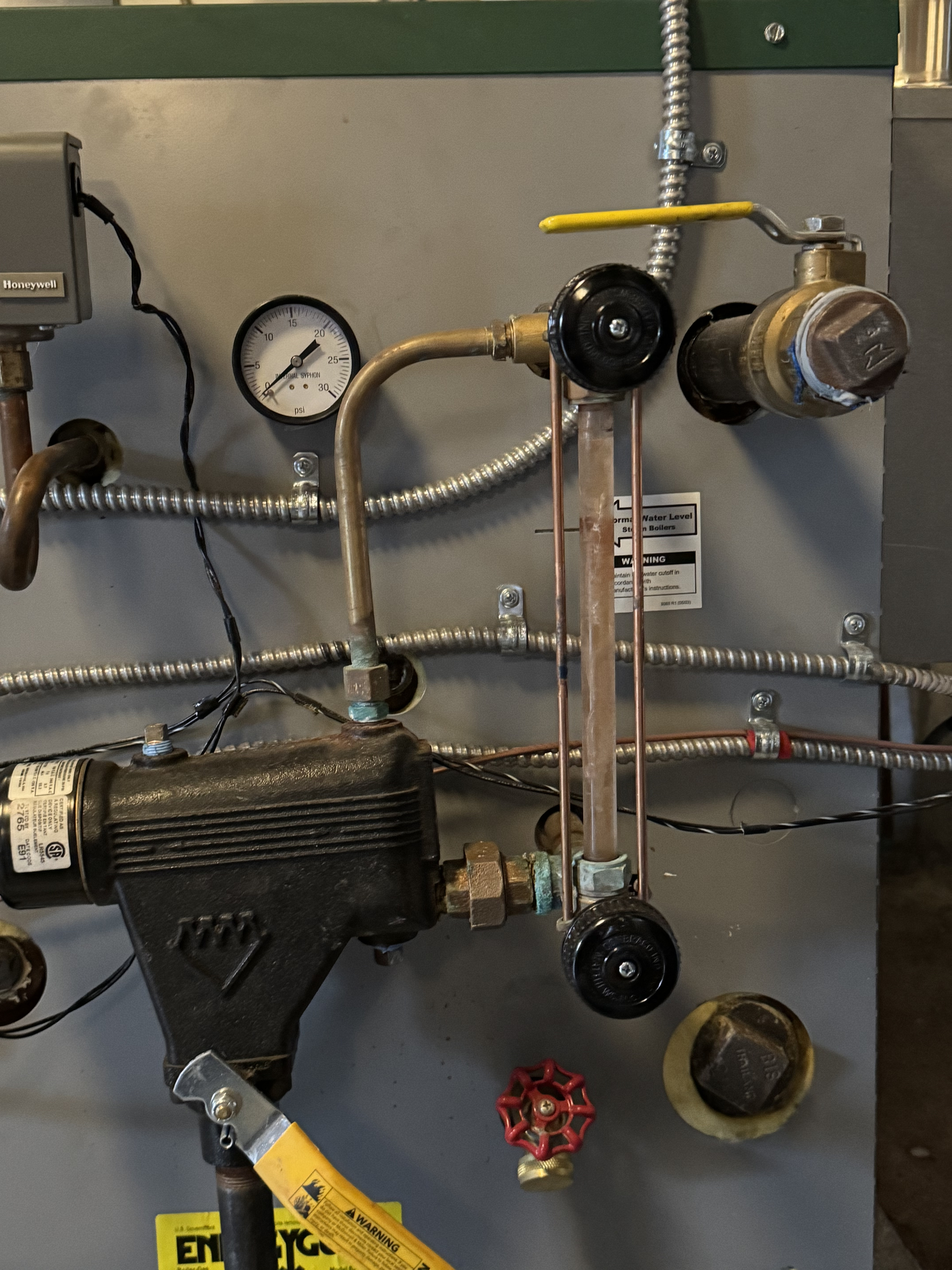
All the manufacturers supply a 0-30psi gauge because it is code that the gauge must be rated to twice the maximum operating pressure of the boiler (I have been told). The pressure relief valve on a residential steam boiler is at 15 psi so that's why the gauges are always 30psi.
If you doubt the pressuretrol, then it would be good to purchase a low pressure gauge to put in that spot (temporarily) or in another spot (could be permanent) to see what the actual operating pressure is when you are hearing the hissing.
Then you'll know if you the vents are bad, or if the pressure is just too high.
I will add that your boiler water is extremely dirty and although I am not a fan of unnecessary draining and refilling, in your case I would consider it necessary.
NJ Steam Homeowner.
Free NJ and remote steam advice: https://heatinghelp.com/find-a-contractor/detail/new-jersey-steam-help/
See my sight glass boiler videos: https://bit.ly/3sZW1el 1
1 -
I don't know why the link is no good. Trying again:
https://www.youtube.com/@gordonschweizer5154 /search?query=pressuretrol
Go to youtube. search on Silent Steam Team. Go to "videos". Search on "pressuretrol". That should get you to the ones for your pressuretrol.
We need more pictures. Front, and other side of the boiler, showing all the piping going out of and into the boiler.
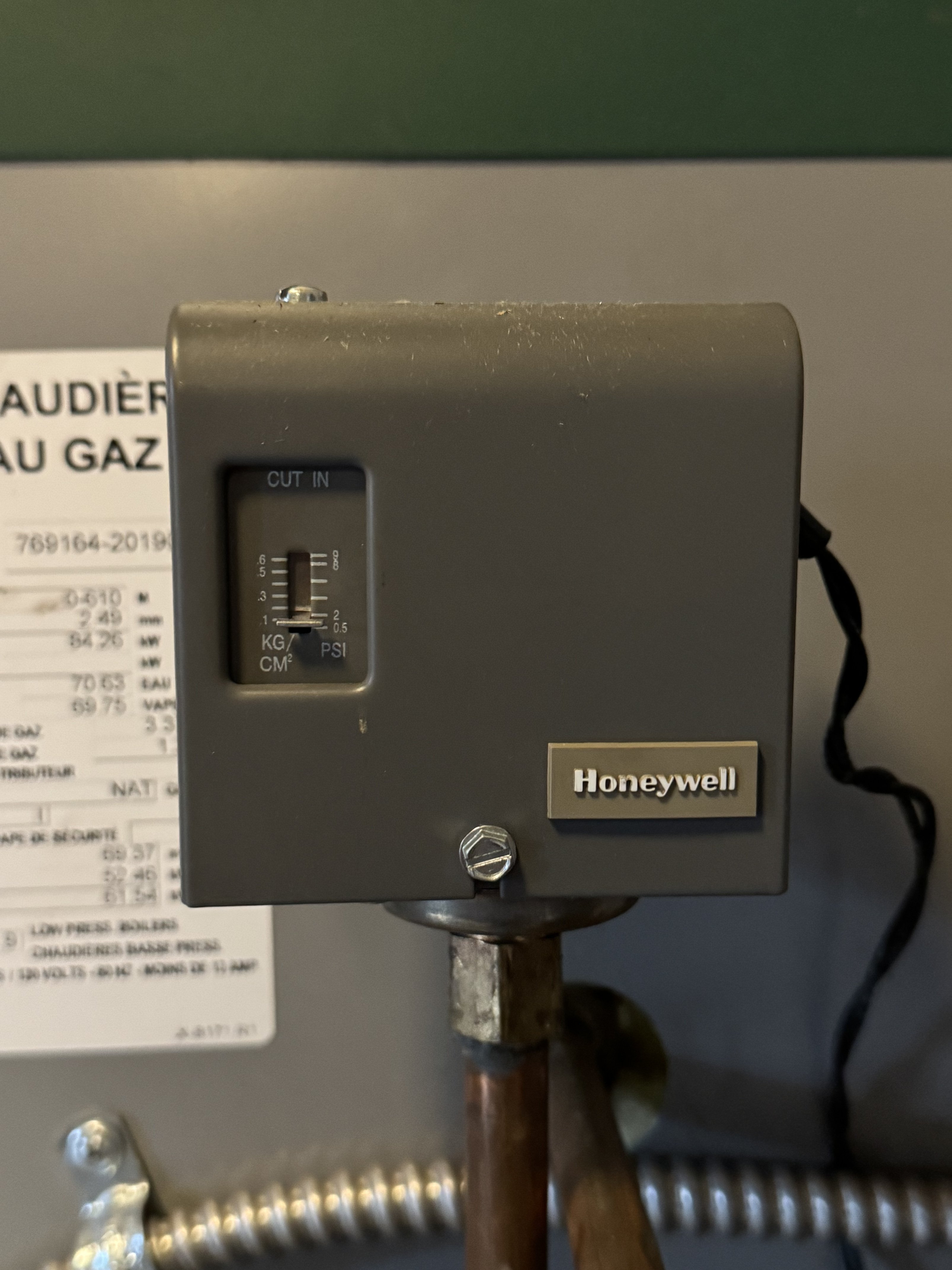
Better picture of the pressuretrol, closer up and in focus, with and without the cover (only one screw to remove cover)
1 -
For convenience, you might consider a back-mount one like the one you currently have. I couldn't find a reasonably priced back mount gauge on supplyhouse, but this one on amazon should be fine:
https://www.amazon.com/BOGERDACK-Diaphragm-Capsule-Pressure-Adjustable/dp/B0F7WZ2DZZ/
Oh I didn't recall your earlier post about the water. I probably already advised don't flush more often than you really need to. edit: ahh I see it was in that last paragraph just above, sorry about missing that
NJ Steam Homeowner.
Free NJ and remote steam advice: https://heatinghelp.com/find-a-contractor/detail/new-jersey-steam-help/
See my sight glass boiler videos: https://bit.ly/3sZW1el1 -
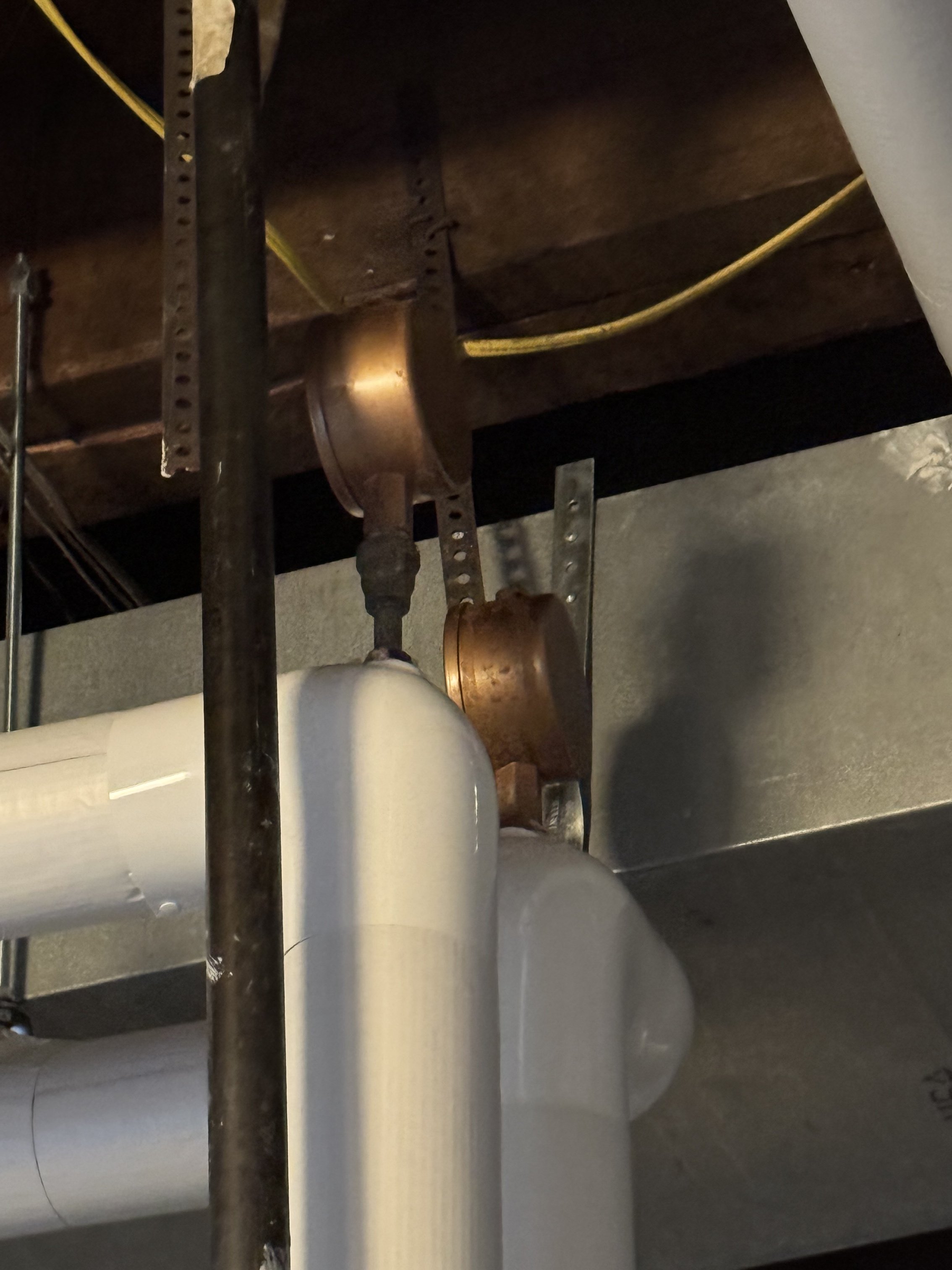
Here are some pics of the system when running
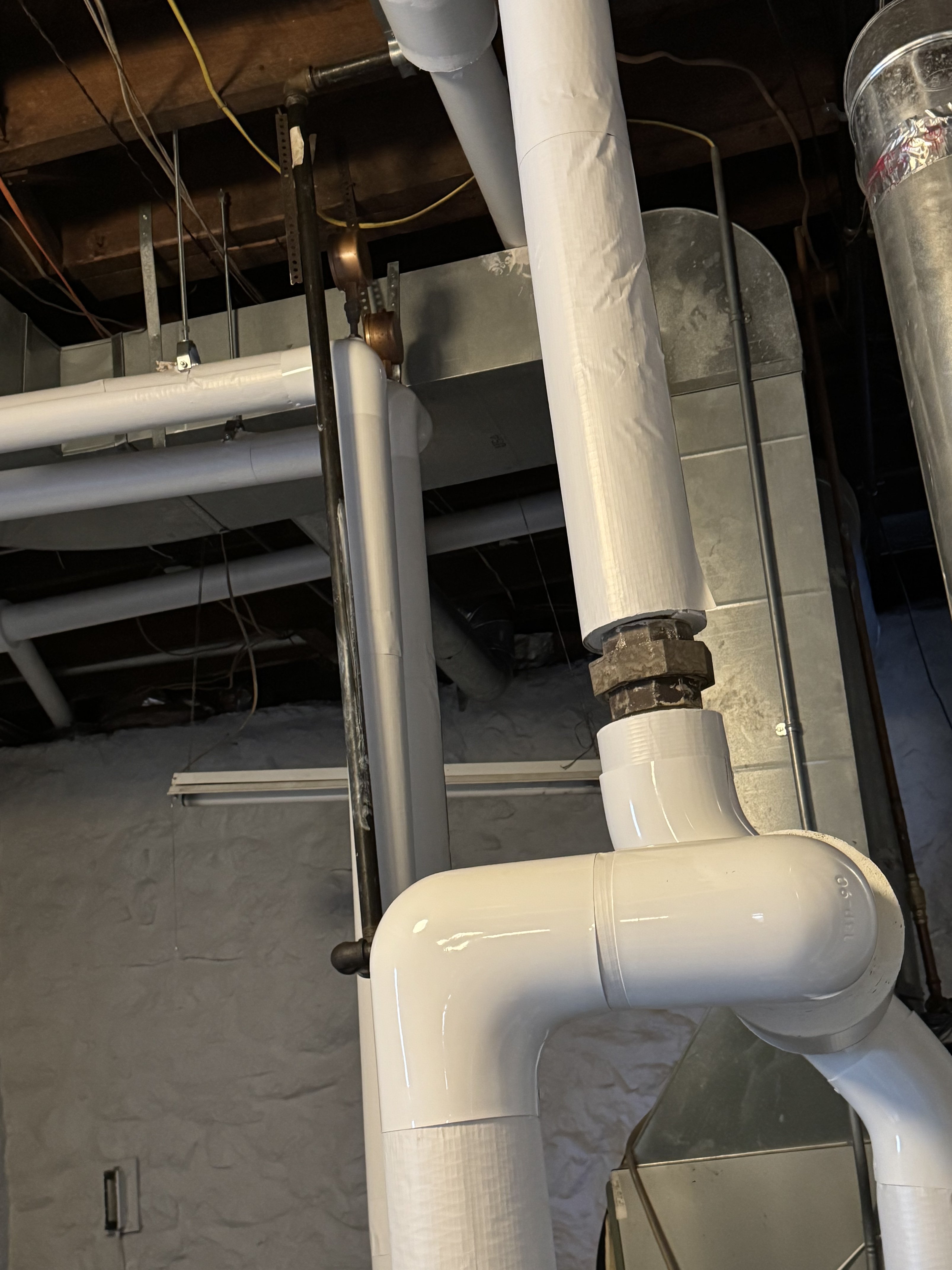
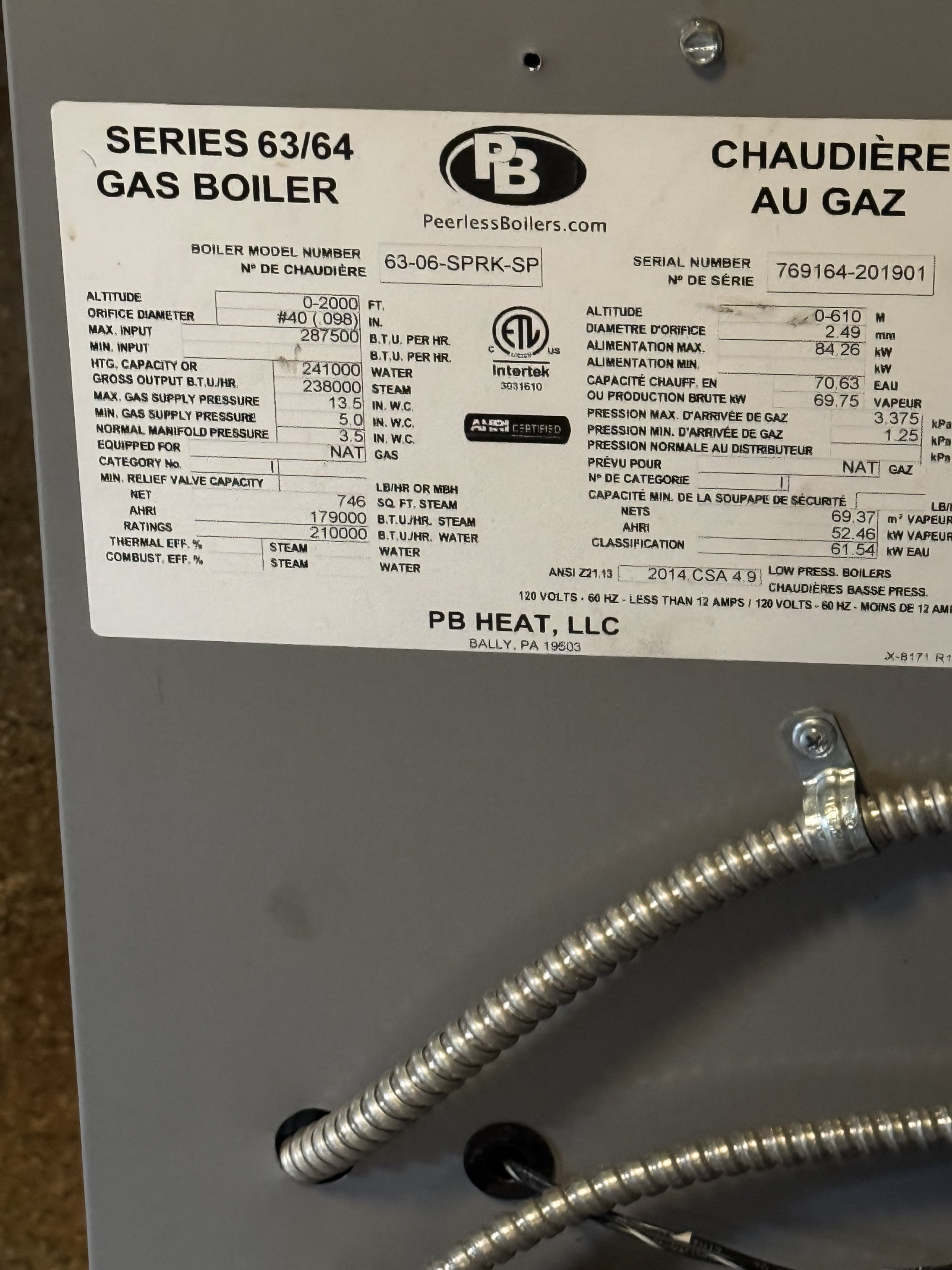 0
0 -
one radiator in our bedroom has been “hissing” all night, but it’s coming from the intake valve
0 -
Can't tell what I'm looking at with your boiler piping photos. Need pictures a bit further away and from multiple angles. But, it looks like your header goes into a bullhead tee with one side going up to the main and the other becoming the equalizer. That would be super wrong.
We need photos of the other side of the boiler showing the Hartford Loop. Measure with a liquid level (clear tube with water in it and a helper) or something, from the top of the Hartford Loop close nipple or elbow to the normal water line of the boiler (should be marked by manufacturer)
We still need that crucial photo of your pressuretrol with the cover off (remove one screw at the front bottom), showing the internal dial setting. It looks like your cut-in may not be as low as it could go.
0 -
You should repack that valve, with teflon packing cord. There is a Silent Steam Team short video on that recently came out. That guy is terrific (Gordon).
Re-packing An Old Single Pipe Steam Radiator Valve With Teflon (PTFE)
https://www.youtube.com/watch?v=-kJyQuvTtOY

 2
2 -
Just walked into another room this morning, and the valve (TRV) leaked a ton of water overnight, soaking the rug underneath — despite this particular radiator being entirely off! I turned it off several weeks ago, because this is the one that rusted through the bottom and was leaking out. How can water still be getting to it if it is completely off??
0 -
If the valve isn't shutting off completely, steam will still get into that radiator, albeit slowly. But then when that steam condenses it can fill the radiator with water up to the vent. If it isn't a type of vent that can shut off in the presence of liquid water (My Heat Timer Varivalves do not), the water will escape the vent. I feel your pain.
0 -
That radiator valve is not working in the off position probably just old.
bob
Smith G8-3 with EZ Gas @ 90,000 BTU, Single pipe steam
Vaporstat with a 12oz cut-out and 4oz cut-in
3PSI gauge1 -
Would someone I hire be able to do that repacking? I'm not really equipped for it.
0 -
Did you watch the video? If money is not an object sure but plumbers are crazy expensive. It is a pretty easy repair. It is really a handyman friendly job so you wouldn't have to hire a plumber and pay the trip charge and all that.
0 -
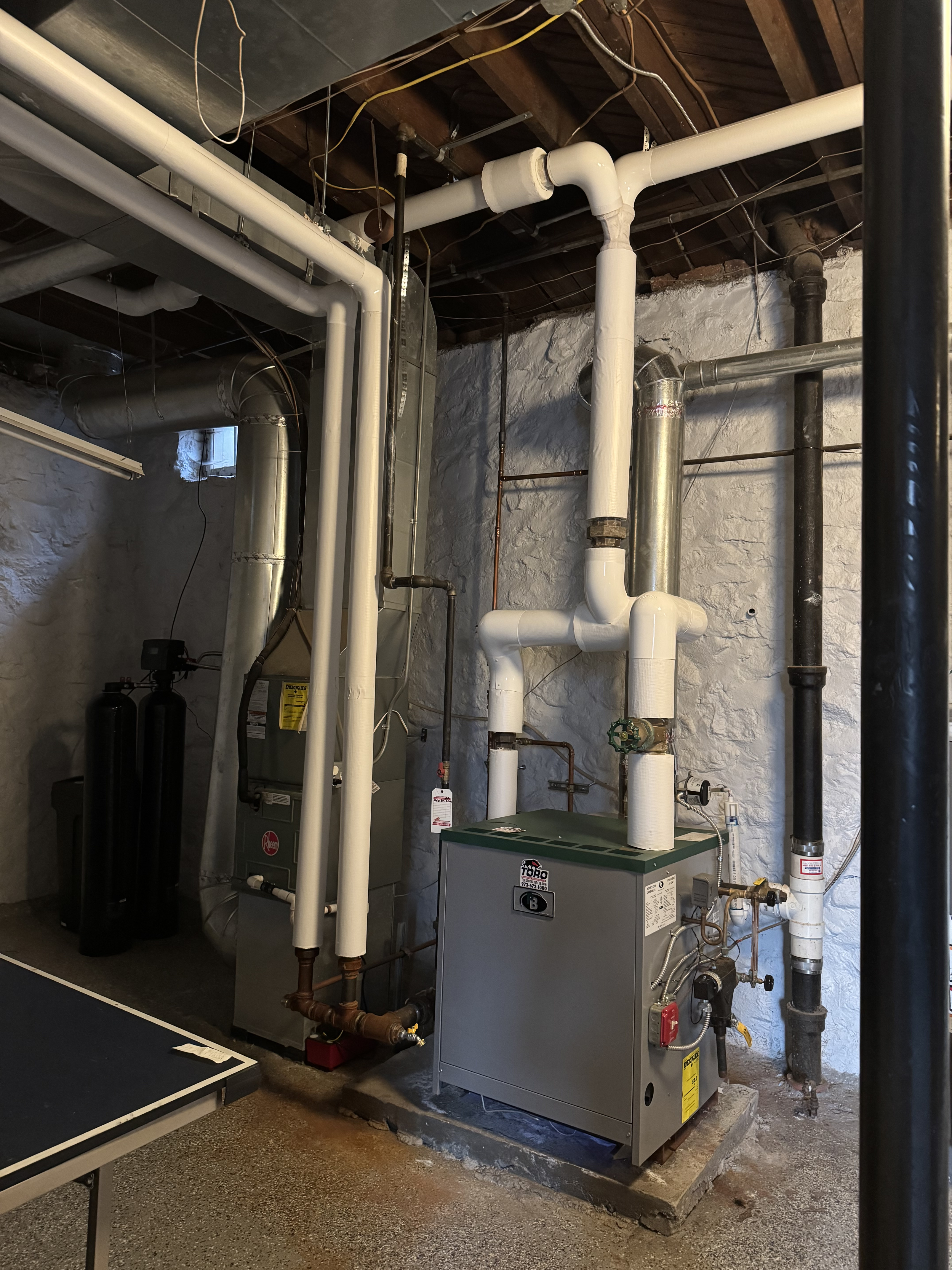
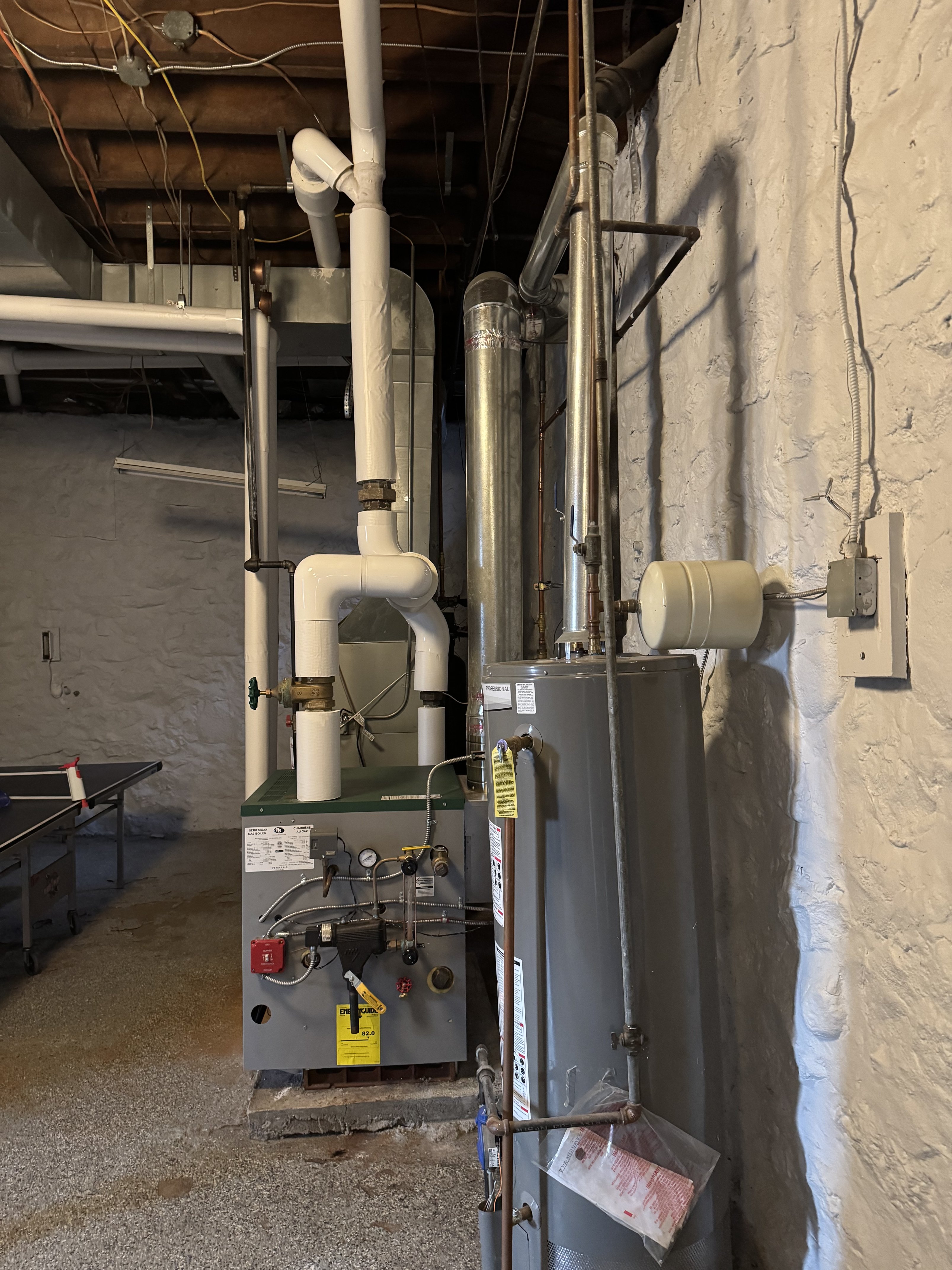 0
0 -
it seems like a larger issue though. Like how is the radiator that is completely off getting steam and leaking tons of water ?
I now how towels down by the intake valves of about 4 of our radiators
0 -
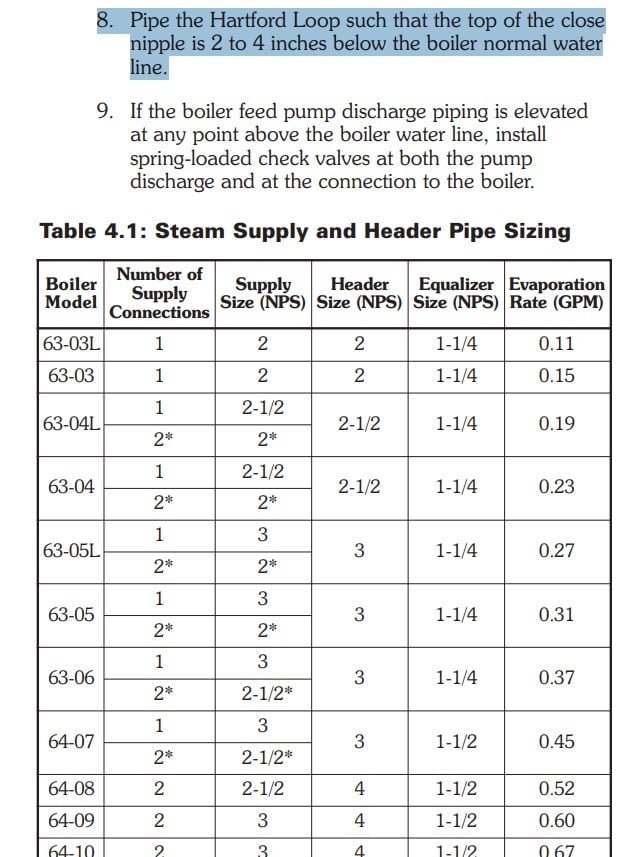
Now we're getting somewhere with those pictures. Supposed to have a 3 in. riser and header on your boiler, for only using one riser. See if you can find out what you have. My 63-04L is supposed to have 2-1/2 in. but only has 2 in.
That different angle shows what I suspected is not the case, with a bullhead tee.
We still need the pictures of the critical Hartford Loop side and the inside of the Pressuretrol showing the dial. I feel your pain with dirty water on carpets.
 0
0 -
So do I need to get someone to replace the intake valve? That would fix the issue for that one?
0 -
What can I do? Water is basically pouring out of the thing. It's soaked through multiple towells already this morning.
0 -
Probably better off opening it back up because it may be acting as a one way valve, letting steam in but not letting condensate back out, except for the vent. On second thought, if you want to keep it turned off for now though, I'd remove that vent and put a plug (pretty sure it is 1/8 in. NPT) in it's place and keep the valve closed until you can replace that valve.
0 -
OK, I did that.
 1
1 -
Yes any supply valves that are hissing or leaking are bad and need to be repacked or replaced. Any vents that continually hiss after steam has already reached them are also bad and need to be replaced. If steam has not reached the radiator vent yet and it hisses it is just releasing air from the radiator as steam advances and the hissing in this case would be normal if the pressure is much more than a couple tenths of a psi.
I don't know what your overall connected sqft of radiation is relative to your 746sqft of boiler rated steam capacity but if your boiler is at all oversized you have to make adjustments for extreme cold weather. I have a 35% oversized boiler yet most of the winter am able to do 5 or 6 degree setbacks and recoveries without issue because I manage those recoveries broken up into controlled on off cycles that limit continuous firing time of the boiler thus avoiding pressure rise. Pressure only rises in the system as radiators one by one start to completely fill up since then there is less place for the steam to go and the boiler doing what boilers do continues to make the same amount of steam until either the thermostat, the pressuretrol or the low water cutoff tells it to stop. So, to avoid all this in extreme cold weather think about what you can do to avoid all or most of your radiators completely filling and thus building pressure. Answer:
- Minimize the required heat - Lower or eliminate your setback if weather is going to be extremely cold. Only you can define what extreme cold is for your system based upon your experience. I am one of the few proponents of setback on this forum but where they do save me money on normal winter days, once night time temperatures get below 15 degrees or so they don't do anything for me but make morning recoveries noisy. If your system only needs to raise the home temperature a degree it is going to take less cycle time than 2, 3 or 4 degrees. I normally go from 59f to 66f but last night and the night before here in Michigan I just set the temp on hold a 65f and went to bed… (-14F this morning)
- Run more shorter cycles - Setting your pressuretrol or vaporstat lower will do this to some extent but they are both still reacting to some level of pressure rise which indicates you are already running a longer cycle than optimal. One simple thing most people can do depending upon your thermostat is to adjust your thermostat control to help minimize cycle time. If a cycle per hour type setting then set it for the cold snap on 2 instead of 1. If a swing temperature range type control set it on +/- 0.5 degrees instead of +/- 1 degree. You can always switch it back if you care to after the polar vortex has passed.
When it comes to the main venting it looks like you have a Gorton #2 on each main which may be sufficient. Have to know your total steam main lengths and pipe sizes to know for sure. Where more main venting makes the most difference on a system is during extreme cold snaps because most of the heating cycles start off with very warm steam main piping and thus the rate of steam advance is less hindered by condensation in the mains themselves from heating up the mains. This isn't going to change your late cycle hissing though, only any hissing that may occur early in the cycle after the boiler starts creating steam and before the main vents closed.
0 -
If you don't have a low pressure gage there is no way you know your pressure trol is not working. Vents will start hissing at more like 0.5psi. It doesn't take 1.5psi to make them hiss particularly if your boiler is oversized or it is after a few radiator vents have closed.
1 -
Yeh, my 0-30 gage doesn't move even when when my true pressure reaches 1.5psi. I verified this when I was tweaking the settings of my pressuretrol.
1 -
We didn't set back at all last night, kept it at 67 and haven't turned it up this morning.
0 -
That single Gorton #1 is way undersized for all that piping that it has to vent (mains plus dry return). You could do a tree and add a second one or you could just put a Gorton #2 in, which is about equal to 3 #1 and only slightly more expensive. Also, I'd insulate the long nipple you have going up to that vent.
I don't like that type of main where it tees off in two directions but that would be super expensive to change so you are probably stuck with it. So hard to balance, especially with only one shared vent location after the dry returns tee back together. Would be much better to have separate main vents at the ends of each subsection after the tee in the main.
What is the height of the top of the close nipple in your Hartford Loop relative to the normal water line in the boiler. That one photo showing the level in your sight glass looks like it could be below the Hartford Loop. That will cause water hammer and prevent proper return of condensate to the boiler. My opinion is too many clown installers are putting the Hartford Loop way too high.
1 -
My bad missing that other main vent. I'd prefer to see another vent at the end of the blue line but I see your runners are exceedingly long. And then you could do away with the one at the end of the shared dry return. Kind of a tough call.
You need to get a section of clear vinyl tubing and make a water level. Have a 2nd person help you. It will wrap around the boiler and you will be able to find out where that Hartford Loop is installed relative to the NWL. Look at your boiler manual for further guidance as to where they want it to be. My Peerless manual says top of close nipple 2 to 4 in. below the NWL. Dan Halohan video had a different take and was even lower than that. You won't necessarily get audible water hammer. You could still have serious problems from this without hearing that. Condensate has to be able to return freely to the boiler.
I don't know if you have mentioned whether or not you have checked all the pitches of all the pipes. 1" per 20 ft. downward pitch for mains and returns and 1" per 10 ft. for runners.
1 -
My pressuretrol originally with the same settings you are at (0.5 main, 1 diff) let my pressure rise to just over 3psi. I was able to tweak it to shutoff at 1.5psi but you would need the new gage to attempt this adjustment. Some pressuetrols simply may not adjust down far enough before not letting the the boiler cut back in.
1 -
@Day_Tripper You and I could be in the same boat as far as maybe having Hartford Loop problems where it is too high. See Hartford Loop thread for my mickey mouse setup. I would prioritize checking and fixing that. I am relatively OK keeping my water level about 1 in. higher than NWL but only when water is pristine clean and relatively low in TSS particulates. Your setup with the shared main and returns with Tees I'm sure makes your system more unpredictable as far as balancing steam and return of condensate. When you have a threaded Tee I don't know how it will be possible to have downward pitch leaving both legs unless you have pipes that were purposely (or happy accident) threaded crooked and you index them properly for pitch. Your Blue line may be substantially counter-flow as a result.
1 -
What can I do about this radiator that is leaking water from the bottom (rusted through) since keeping the intake closed is just allowing it to fill with water that doesn't then run back out? It's leaking quite a bit. I know it needs to be replaced, but that will probalby take a while to get done.
0 -
When I advised you to remove vent and plug it I didn't realize that this radiator had a hole in the bottom. You mentioned that the water was coming out of the vent so I focused on that.
Fixing it would be as much work as replacing the supply shutoff valve because you would have to remove the radiator and the valve and cap the pipe. You will need a new radiator and a new valve. Can you put a large tray underneath the entire radiator? You'd have to disconnect the radiator, put the tray underneath and reconnect it. Also a PIA. I don't know if it is feasible to repair a radiator with high heat JB Weld epoxy putty or Xpando or the like, or if you did, how long it might last.
1 -
It's leaking out of the bottom, not just at the intake and outtake valves. Hard to get a picture though.
If we just replace the intake valve so we can close it off for now, will we have to do so again when we get a new radiator?
0 -
When you get a new radiator, assuming it has the same thread size, or that you have the right reducer bushing too if needed, you will be able to just loosen the nut, remove leaking one, and replace with new one. Or you could just remove both radiator and valve and cap the pipe temporarily and be certain of no leaks, even if the new valve doesn't close off 100%.
0 -
I've never used this stuff but I bookmarked it a while ago:
Iron Paste
withstands temperatures up to 400° F and also withstands pressure up to 60 lbs. on water, oil, steam or gas lines.
https://www.blackswanmfg.com/Category-04/Iron-Paste.HTML
0 -
Yes, I had a new guy come over (recommended here and on town FB group from someone who has single-pipe steam). He seems to know what he is doing, has all of the old manuals from the 1930s and everything, spent a lot of time talking through things. Immediate concern is getting the leaks stopped, so he recommended replacing the intakes on the four radiators that are leaking there (he tried tightening with a pipe wrench, but they did not budge). He did calculations for the BTU requirements for the room with the busted radiator, and he says it's fine to just remove it since the room only needs one radiator. So we're going to do that and just cap it. Reasonable fee to do that work, using castrad intakes.
For the loud hissing (video here for you enjoyment!) he says he needs to do a complete system check to make sure the boiler is sized right, measuring all radiators, etc. My only hesitancy there is that I want to know what possible options will come out of it. We can't replace the boiler, so I'm not sure the full system check will help. It seems to me like focus should be on the pigtail and making sure there is adequate venting on the returns in the basement.
I should note that the leaking is pretty bad at one of the intakes. Like it's soaking through a towell a day, so I want to get it replaced ASAP.
Also should note that this morning, when the below video was taken, the pressure gauge read 2.5 PSI, which I know is high.
What do you all think?
Bonus video of hissing — EDIT, nevermind, I can't post videos here apparently. The boiler guy said "yeah, that's really loud" when I shared it with him.
1 -
I just had the same issue. Turns out my pigtail was clogged. I took it off and cleaned it and my system immediately went to near silence. Try removing and cleaning out the pigtail. It took me about 30 minutes to do.
2 -
Thank you, I will try that!
For whatever reason, the system has been quiter the last few days. All I did was empty out some water, not a lot. Still some hissing, but nothing like the craziness from before. Intake valves are still leaking though, so the guy is coming to replace them this week.
0


Categories
- All Categories
- 87.5K THE MAIN WALL
- 3.3K A-C, Heat Pumps & Refrigeration
- 59 Biomass
- 429 Carbon Monoxide Awareness
- 124 Chimneys & Flues
- 2.2K Domestic Hot Water
- 5.9K Gas Heating
- 119 Geothermal
- 168 Indoor-Air Quality
- 3.8K Oil Heating
- 78 Pipe Deterioration
- 1K Plumbing
- 6.6K Radiant Heating
- 394 Solar
- 15.9K Strictly Steam
- 3.5K Thermostats and Controls
- 56 Water Quality
- 50 Industry Classes
- 50 Job Opportunities
- 18 Recall Announcements