zone pumps to zone valve conversion.

Generally the decision to zone with pumps or valves comes down to personal preference, and maybe past experiences.
When you see an installation with a wall of zone pumps, maybe 4 or more, that system is probably over-pumped. 6 zone pumps on an 80K boiler would be an example. All pumps running way to the bottom of their curve with wire to water efficiency below 20% on a common PSC type circulator.
With the acceptance and wide availability of ECM delta P type circulators, the potential to drop considerable power consumption and have better flow control over the zones could be an option.
A backup pump piped in or on the shelf could ease the worry of a single pump causing the entire system to be down.
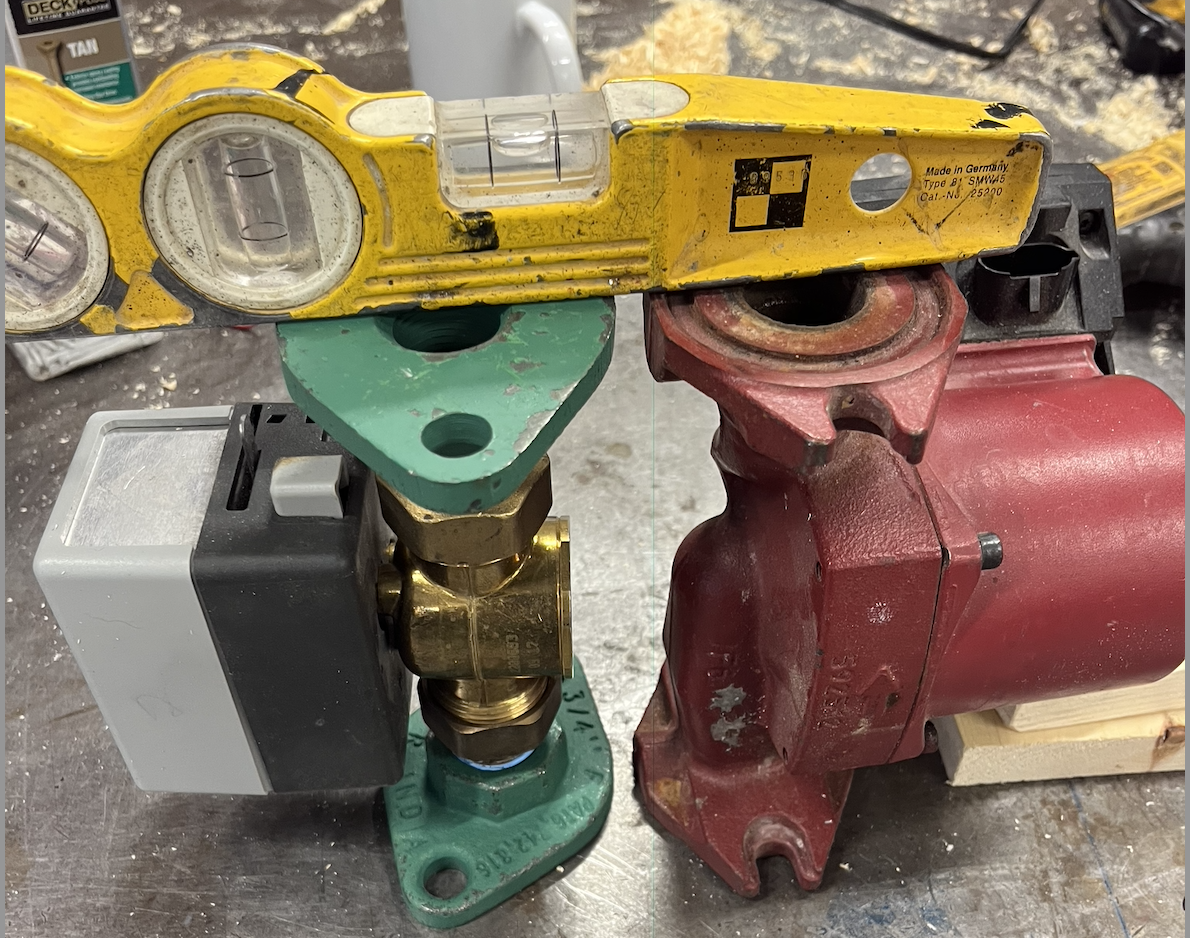
Siggy had this thought so I built up a prototype.
Thoughts or suggestions?
trainer for Caleffi NA
Living the hydronic dream


Comments
-
Was it very tricky to get the same port to port length as the pump or did you get it first try?
0 -
Pretty cool idea. I did something similar for flushing older systems. I made up a straight pipe with two flanges (connected to iso flanges) to flush the system, initial purge it, then swap out the blanks for circulators. To me I think it's a way to keep junk getting lodged into impellers.
0 -
pump spacers, handy for piping systems for the correct spacing
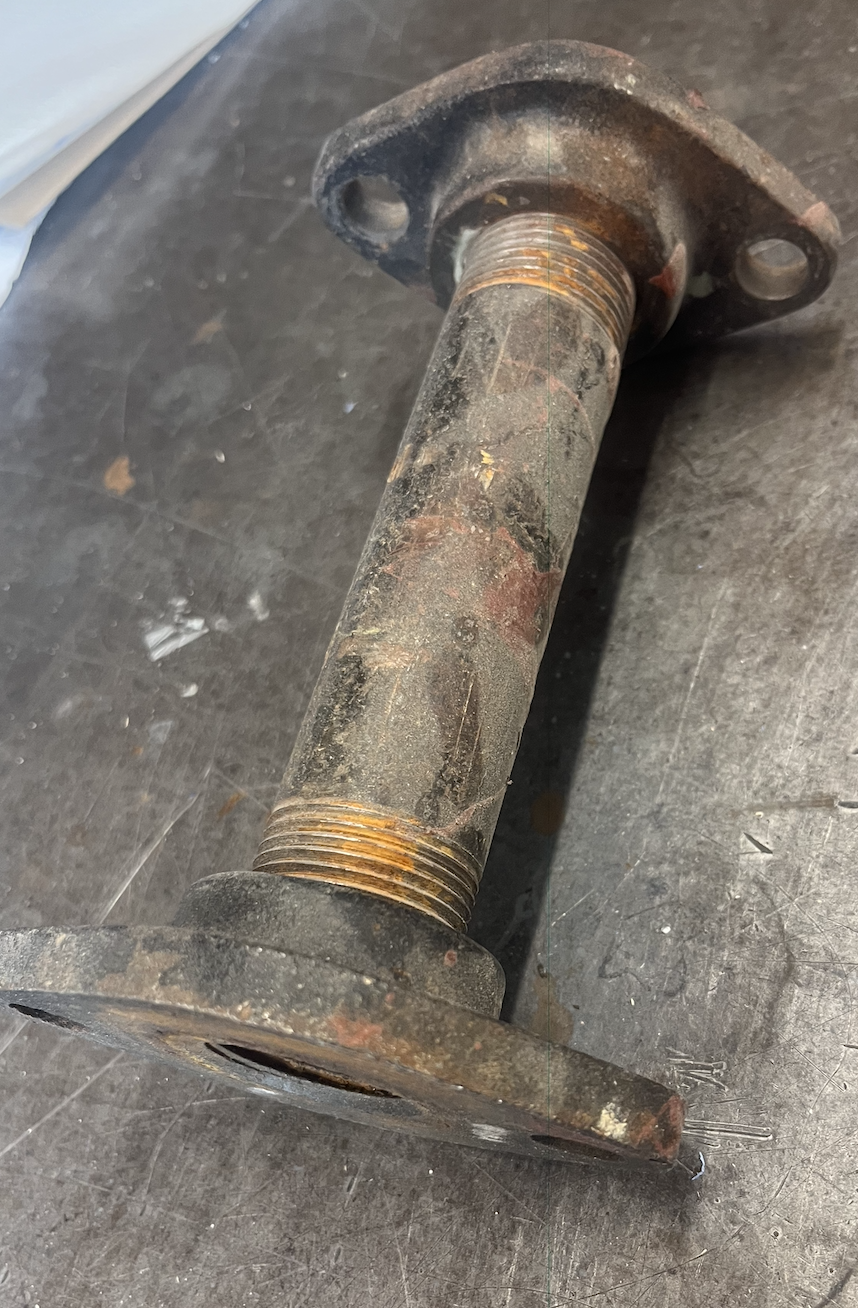
, too
Bob "hot rod" Rohr
trainer for Caleffi NA
Living the hydronic dream0 -
Yeah, it took a few flange brand tries:) This is where BSP threaded pipe shines, Loctite or hemp the threads and stop wherever you want.
A copper sweat version is pretty easy to get "exact", but the sweat flanges are more$$
Bob "hot rod" Rohr
trainer for Caleffi NA
Living the hydronic dream0 -
Where do i put in an order for these?
0 -
Neat idea and all, but don't we need to repipe anyway to add a system circ?
0 -
I prefer pumps to valves, especially when pump has integral check valve. Can be difficult to find circulators small enough. Used to be positive displacement pumps sold for this purpose.
0 -
If you are using typical PSC wet rotor circs, even at the very best OP their efficiency is around 22%.
If you are running"off curve" at one or the other end of the curve, you may be dropping down to 12% efficiency. My guess is most residential zone pumped systems are running at the low end of the pump curve. The same zone pump used regardless if the system needs 1 gpm or 10 gpm.
Here is a typical 78W circ under 3 different flow conditions. The best condition #2 green curve hits the mid point of the curve, running 22% wire to water.
#1 pumping 2.5 gpm is around 12%
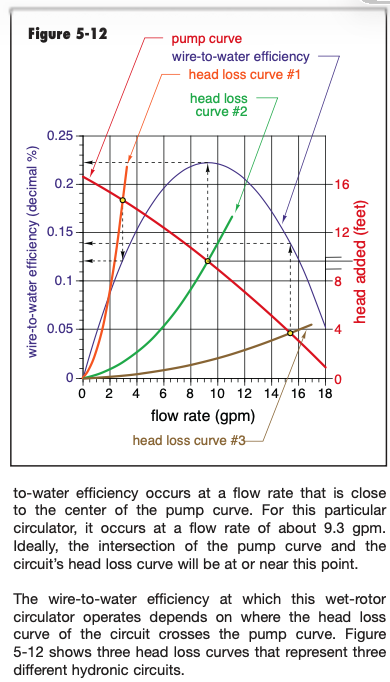
If you swapped the PSC pump to ECM zone pump maybe go from 78 w down to 42W
Assume 2200 hour of operation for 4 zone pumps =316 Kwh saving X (your cost per Kwh)
Now with one ECM circ averaging 30W over the season and 4 - 40W ZV zone valves you are almost double the Kwh savings 586 Kwh
As far as I know
Efficiency Maine still has a $75 per ECM
Mass Save $100
Vermont, based on Wattage
Minnesota Burlington Electric $100
CT still has something.
Bob "hot rod" Rohr
trainer for Caleffi NA
Living the hydronic dream0 -
Thank you hot rod for ever you comment on here. Piping the zone valves that way is a nice idea to simplify a conversion.
To groundup’s question…yes, and maybe a number of other controls might be added.
We’ve been working with and improving a 24 zone system for 17 years. The installation we inherited was installed after a gut rehab in the late 80’s. Most the zone valves and piping are 30’ above the boilers. The piping between those floors is 2”. Originally there was no boiler or circulator control and the pump was a Taco 120. The “control” was hallway baseboard that was always on. (You can imagine the temperature of those interior halls).
As soon as we started to control the zones we learned that the 120 pump was no good because it wouldn’t start (when a zone called for heat) after the pump became hot. This was an expensive and frustrating lesson. We solved this problem by installing two Taco 0010 pumps in parallel. This has the advantage of being able to use one pump when it’s mild outside. We also learned to add a separate 120v relay to turn the pumps on. The 120 pump would quickly burn out the single zone relay used to control the boiler and circulators (controlled by the zone valve end switches).
We also piped in a B&G 100 circulator as an emergency backup. I try to exercise it once a year but don’t ever expect to need it. I only did it for the love of the work and it was a circulator I would have scrapped anyway:) I installed a 3/4” Taco differential bypass at the circulators. Last year I replaced that with a Callefi 1-1/4” differential bypass valve. I think that change is doing a much better job of smoothing things out.
But the best improvement was relocating the zone valves down into hallway closets and installing Taco Zone Control switching relays.-wow they’re e nice! We experimented by adding 9 Taco Sentry zone valves in one cabinet. They seem to work okay so as we run out of parts to service the old 570 series heat motor zone valves we will replace them with Sentry valves.
This system is all pretty’s low tech which I’m fine with. It requires hands on building management during the heating season which is something that I like to do.0 -
How many people do you know that actually calculate the head loss on a system?
Getting the GPM # is pretty easy. As long a people follow the "longest run and add 50% for fittings" it's just not accurate enough IMHO but the old bigger is better always holds so a lot of systems are over pumped, and I am sure many are under pumped and no one notices as the system balances at a higher delta.
Every job I ever calculated worked fine and you can do it if you can see and measure the piping. Then comes the fact that fitting resistance (for the fittings) vary widely depending on who you believe.
You can look at all kind of fitting charts and get different answers.
0 -
Theoretically one can measure system curve with variable speed pump. Then one replaces that pump with one chosen for efficiency. There still remains decision about variable control versus on•off for zones or coils. If on•off then there's the choice between valves or pumps. If valves still further choice between solenoid or motorized. You'll hear complaints about any of these combinations.
0


Categories
- All Categories
- 87.6K THE MAIN WALL
- 3.3K A-C, Heat Pumps & Refrigeration
- 59 Biomass
- 429 Carbon Monoxide Awareness
- 124 Chimneys & Flues
- 2.2K Domestic Hot Water
- 5.9K Gas Heating
- 119 Geothermal
- 168 Indoor-Air Quality
- 3.8K Oil Heating
- 78 Pipe Deterioration
- 1K Plumbing
- 6.6K Radiant Heating
- 394 Solar
- 16K Strictly Steam
- 3.5K Thermostats and Controls
- 56 Water Quality
- 50 Industry Classes
- 50 Job Opportunities
- 18 Recall Announcements