Spud Replacement/Thread Damage

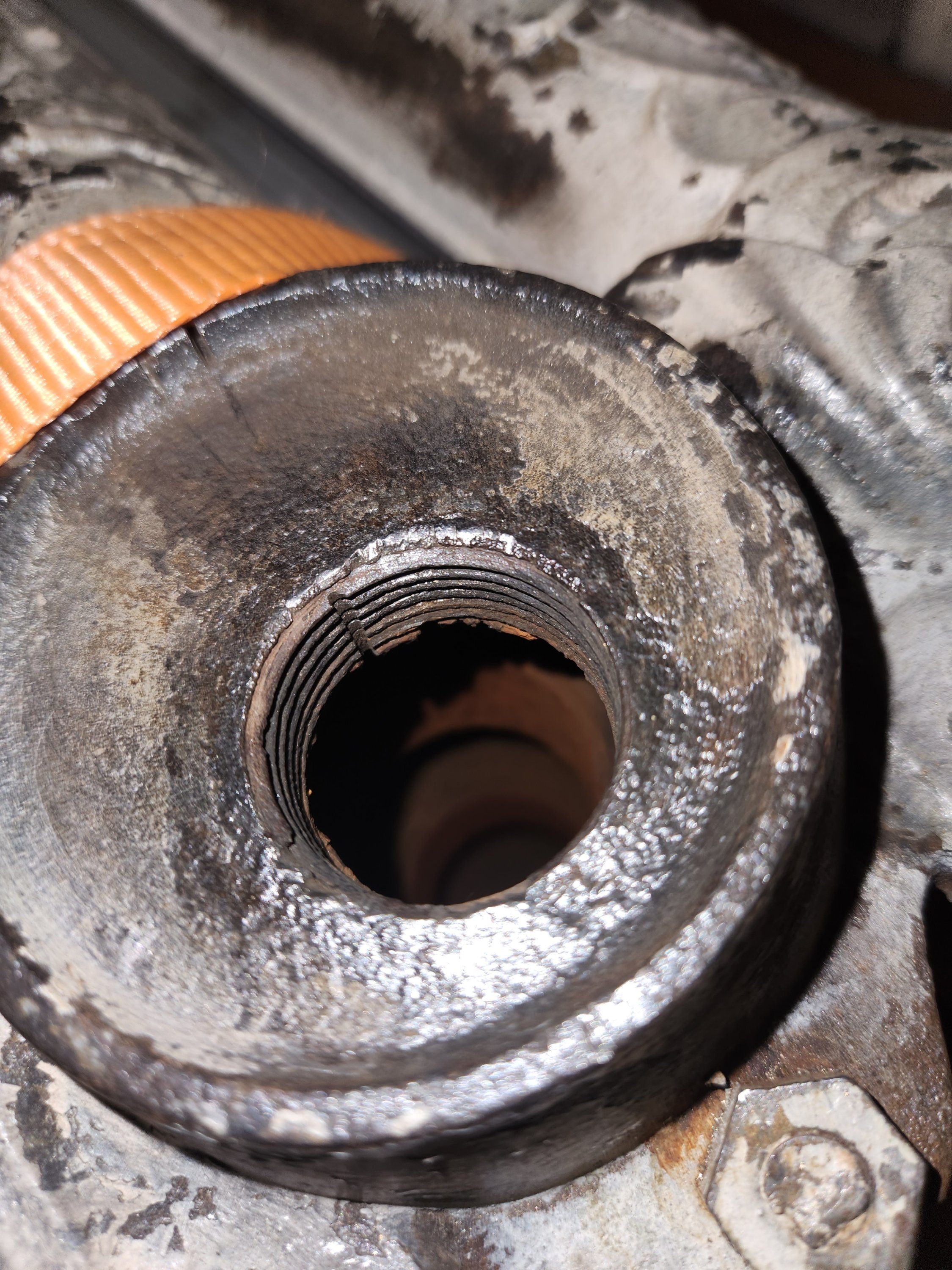
I am redoing my bathroom and repainting the radiator/replacing the valve. I had to cut out the old spud and used a hand saw to cut the piece out. Unfortunatly I went a bit deeper than i thought and cut the threads of the radiator slightly. Is this still usable with heavy dope and even tape to seal things up? Is there something I should do differently to allow me to reinstall this radiator?
Comments
-
It happens.. Run a tap through to clean the threads ,then use good tape and pipe dope….
There was an error rendering this rich post.


 4
4 -
We have all done that at some point in time. It will probably survive. Put a little dope on the inside threads when you put the new spud in.
Not much pressure there anyhow.
0 -
If regular pipe dope doesn't hold, you might have to try an anaerobic sealant.
8.33 lbs./gal. x 60 min./hr. x 20°ΔT = 10,000 BTU's/hour
Two btu per sq ft for degree difference for a slab
 2
2 -
is that part of the radiator itself or is that a bushing?
1 -
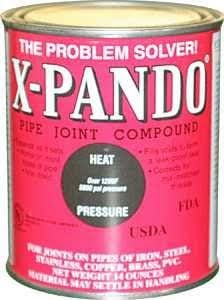
When a cut thread situation like this occurs, this is an excellent product to use.
It does what its name says and is made to seal cut threads. Give it a try. It should work for you.
 1
1 -
If that expando does not fix the problem remove the spud and try using RTV silicone. Just make sure in either case that you allow adequate time for the product to dry and set.
 2
2 -
Hmm. I have used it many times. Can't say that I agree with you.
0 -
Expando is fine but for a HO to buy a whole can for one joint?
Plumber buddy of mine always swears by string wicking.

 3
3 -
Try and clean the threads up with a tap. If you don't have a tap try using a nipple to test the threads out. Remove the nipple and use good tape. I like using 3/4" megatape. Just wrap is fairly good and use a good quality dope. Here in the Detroit area the supply houses carry a local company "Give me the Green Stuff" by Jomar. It works on pretty much everything. If that doesn't work Pando works or go old school and string wick. We have all had some oops on threads at some point, i've seen far worse.
Owner of Grunaire Climate Solutions. Check us out under the locate a contractor section. Located in Detroit area.
1 -
If the radiator threads are visibly cut, heavy dope and tape may not reliably seal it, so you should clean/chase the threads properly or replace the damaged section to avoid leaks rather than trying to force it back together.
0 -
Can't replace the radiator. Tapping or chasing the threads will not get rid of the cut section
 2
2 -
yeah…didn't think of that. The smallest you can get is maybe a 16oz. can for under twenty bucks.
You mention wicking. I like that idea. Haven't used wicking much since teflon tape showed up. My thought if not the Expando would be to wick the threads then teflon tape (maybe six wraps) then pipe dope on the teflon.
1 -
At least it is on the top side so at worst it will only leak steam instead of water!
One last ditch effort if you have trouble sealing it. Clean the threads using a tap then put some JB-Weld or similar over the cut threads then install a nipple and take it back out. Should leave the cut part of the threads in better shape maybe?
Let it harden and then go nuts again with pipe dope and teflon tape.
I'm not a fan of JB-Weld but if it fills in the gap in the threads it might help seal it.
 1
1 -
i'd use permatex before i'd use jb weld. rtv wouldn't' fuse it together permanently.
you can get some cotton string and peel it apart to a single strand to use as ball wicking without having to search out single strand ball wicking.
0 -
No need for overkill. Blue monster tape, any basic pipe dope, and that puppy won't leak or bark. Done this a million and one times.
 2
2 -
chase it with a tap
Teflon and neverseize
0 -
The one trick I learned in addition to the "tape and dope" is to put a small amount of dope on the inside threads if you have a troublesome joint.
Screwing the fitting in tends to push the dope outside. We have all seen this you remove a fitting and the end of the nipple is bare.
We assembled a CI boiler we installed in a post office which at that time had their own boiler inspectors. 30psi boiler had to hod a 45 psi water test. The Smith 28 boilers had a 6" tapping in the front that we put a 6" plug into it and it leaked.
We took it out and put it back and it still leaked. Then I remembered the inside thread trick. Took it out and doped the inside. No more leak.
Everyone has their own choice of dope and methods. Its all good. You find out what works for you and stick with it……………………unless it goes bad LOL
1 -
wicking and pipe dope all day. as mentioned chase the threads first to clean it and then wicking and dope the male threads.
0 -
I use Leak Loc for all my joints anyway, and I’ve never had a problem when I’ve nicked threads on boilers and or steam mains, so you should be good. (I have indeed had some as bad as pictured, but 1/2-1-1/2psi is fine.)
0 -
I worked on old antiquated hot water and steam systems like this. All the suggestions are good. Chasing the threads would be most important. Hard to tell from picture if this an insert, but that's not a problem, if the other fixes don't work, removing and replacing may be necessary. Any dope or sealer should be completely cured before pressurizing. Trust your skills.
0 -
I've used wicking/dope for decades with excellent results. If there is a leak (small), the wicking will hold some of the water which will generate corrosion at that point. Over a week or so the ongoing corrosion will seal the leak. I've taken joints out that were repaired like this that are OLD and could see the corrosion and the wicking sealing the notch in the threads. The joints held for many years. Inexpensive and it works. Teflon will not expand with water leaking by. Expando works, but hope you never have to remove the spud again!
0 -
I've put some 5 minute plumbers epoxy into the saw cut. After it sets up, I run a pipe tap into the joint to clean up the threads. Then assemble as normal.
I expect the OP won't have the tap. In that case, coat the pipe's threads with Pam or similar release agent, thread in the pipe until the epoxy sets up. Then remove the pipe, clean off the oil, anoint with dope and teflon tape as normal and instal the pipe.
Dennis Pataki. Former Service Manager and Heating Pump Product Manager for Nash Engineering Company. Phone: 1-888 853 9963
Website: www.nashjenningspumps.com
The first step in solving any problem is TO IDENTIFY THE PROBLEM.2 -
Iv'e used expando for around 50 years and it has always worked- as long as you mix it and let it set up properly. I always use it when reducing gravity piping to new smaller piping because you can't turn the new nipple/fitting past the old rusty threads. It takes up the gap from lack of taper.
1 -
Teflon tape and Leak Lock has worked for me. Also RED hi-temp silicone; not as much for temp resistance but its iron oxide filler makes it the toughest and most durable of the silicones. Use Permatex; no off-brands. CRUCIAL is that you use a tap that reams it shiny clean. A last resort for a rare and valuable radiator is to bore it out {if there's enough space} and tap it to the next size up, then use a bushing.
0 -
What ever choice you make clean the threads really well. Use a Dremel tool with a round wire brush or tap it, then wire brush. An expanding product for steam makes sense.
0











Categories
- All Categories
- 87.6K THE MAIN WALL
- 3.3K A-C, Heat Pumps & Refrigeration
- 59 Biomass
- 429 Carbon Monoxide Awareness
- 124 Chimneys & Flues
- 2.2K Domestic Hot Water
- 5.9K Gas Heating
- 119 Geothermal
- 168 Indoor-Air Quality
- 3.8K Oil Heating
- 78 Pipe Deterioration
- 1K Plumbing
- 6.6K Radiant Heating
- 394 Solar
- 16K Strictly Steam
- 3.5K Thermostats and Controls
- 56 Water Quality
- 51 Industry Classes
- 50 Job Opportunities
- 18 Recall Announcements