Strange one-pipe plumbing, potentially dangerous?

I moved into a new apartment this Fall, partially because it had old-fashioned steam heat. Which if you've never lived with a well-functioning system, it really is amazing.
Then the heating season came, and my radiators started blasting out a terrible mix of mostly air, with maybe a little bit of steam. Dropping the humidity in my unit into the mid 20s and making my place a living hell most of the time.
I'm a guy that tries to find the reason something isn't working. Which led me down into the basement. Where I realized that two of my radiators are attached to counter-flow branch, with very little pitch. And as far as I can tell, is basically run as a "total loss" system.
I've attached some photos.
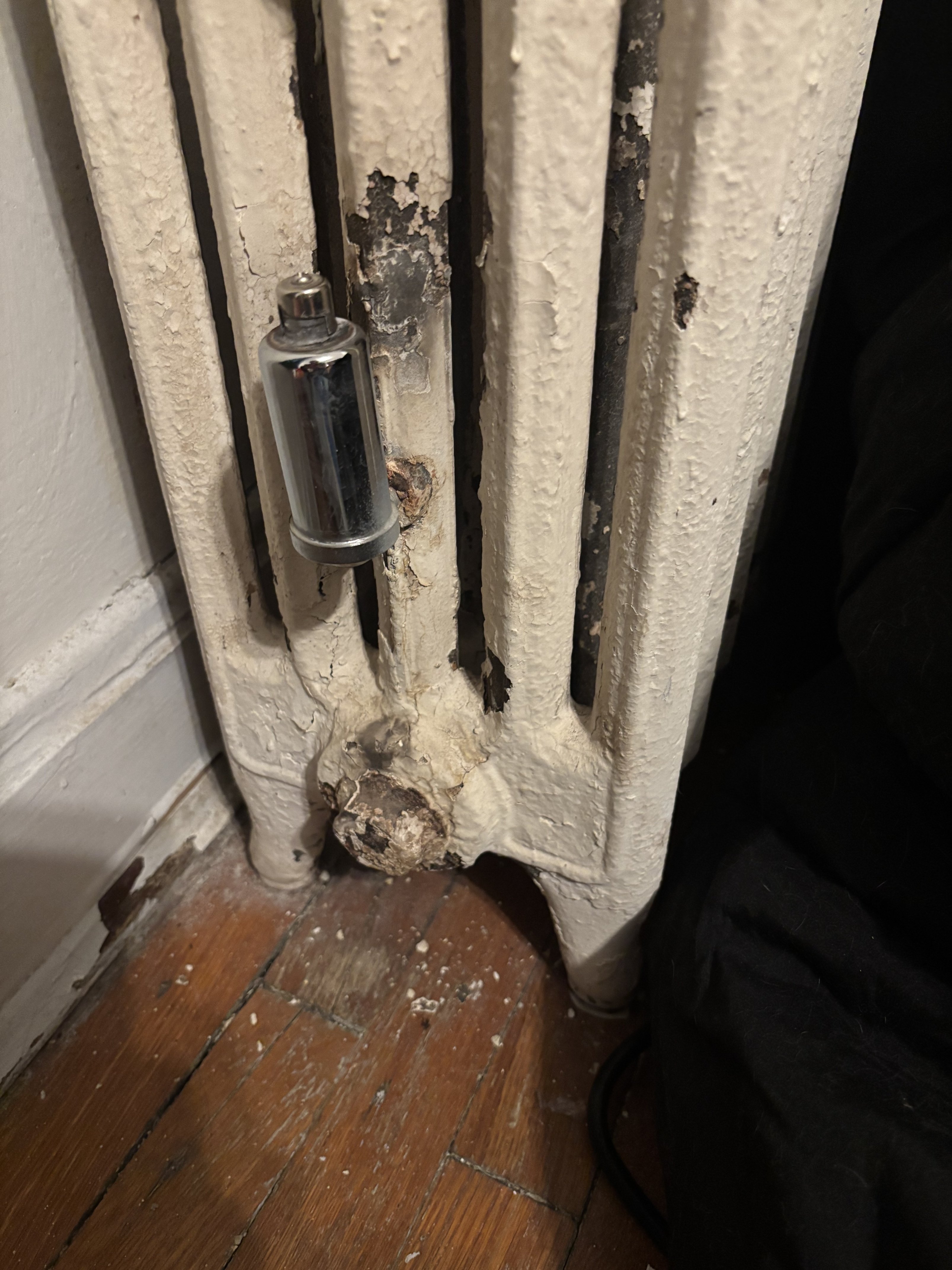
First, a demonstration of the kinds of pressure that must be going on in the system. Enough to strip everything off this radiator down to the metal.
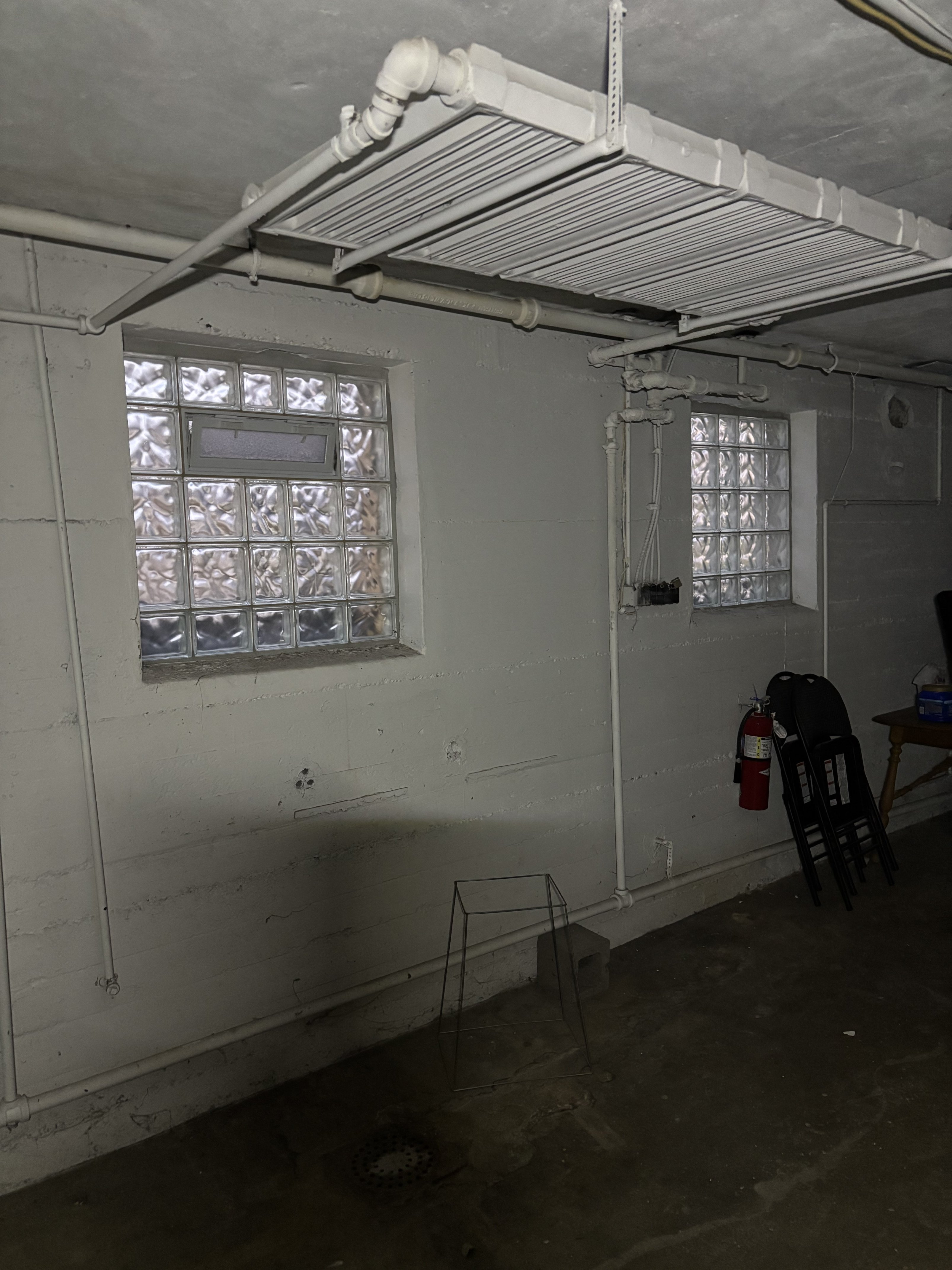
Second a 2-pipe (??) radiator in the basement attached to the same steam main.
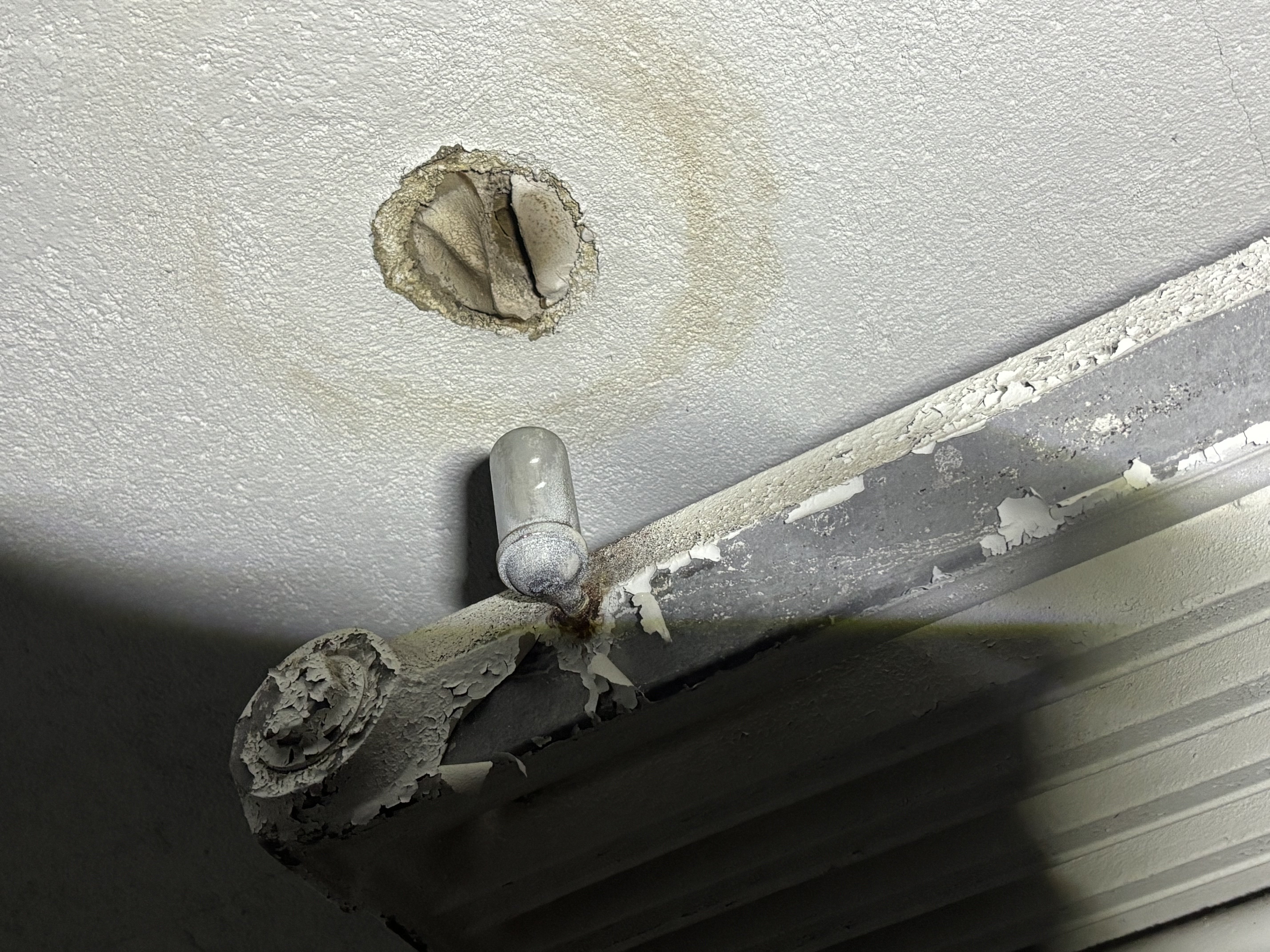
And third, an air vent (I think) that's attached to another horizontal radiator (also 2 pipe) much closer to the boiler than my radiators.
Comments
-
Send pictures of the boiler itself from a distance at a few different angles. Also show a picture of the pressuretrol since we would like to see what it is set at.
 1
1 -
I'll try and snap one the next time the maintenance guys leave the utility room unlocked. The times I've had water hammer while opening the inlet valve it was violent enough to shake the walls.
0 -
So you have one or more radiators where you are often opening and closing the inlet valve? One, closing the inlet valves can reduce the amount of connected load to the boiler which could make it effectively more oversized. Also, it could be a clue to the origin of the hammer. Follow the inlet piping to that radiator back to the main and determine if proper pipe pitch to allow condensate to flow back to the boiler is not maintained. OF course some of that piping may not be visible in any way in which case you may need to trial and error a bit with raising the radiator under the assumption that a "horizontal" run to the radiator is not pitched back enough and is collecting water.
1 -
https://seafile.nxbeatlab.net/f/3c4f1afdf4704953a5fb/
I do have a video of the water hammer the other day though.
0 -
I try to avoid closing/opening the inlet valve, but I'm pretty sure the system is at far too high a pressure for the vents to have any control. And sometimes it's just plain too hot to live in here, even with all windows open, or the AC units blasting.
Almost no pitch along the whole length of the pipe. Also a 2-pipe radiator attached to the same pipe.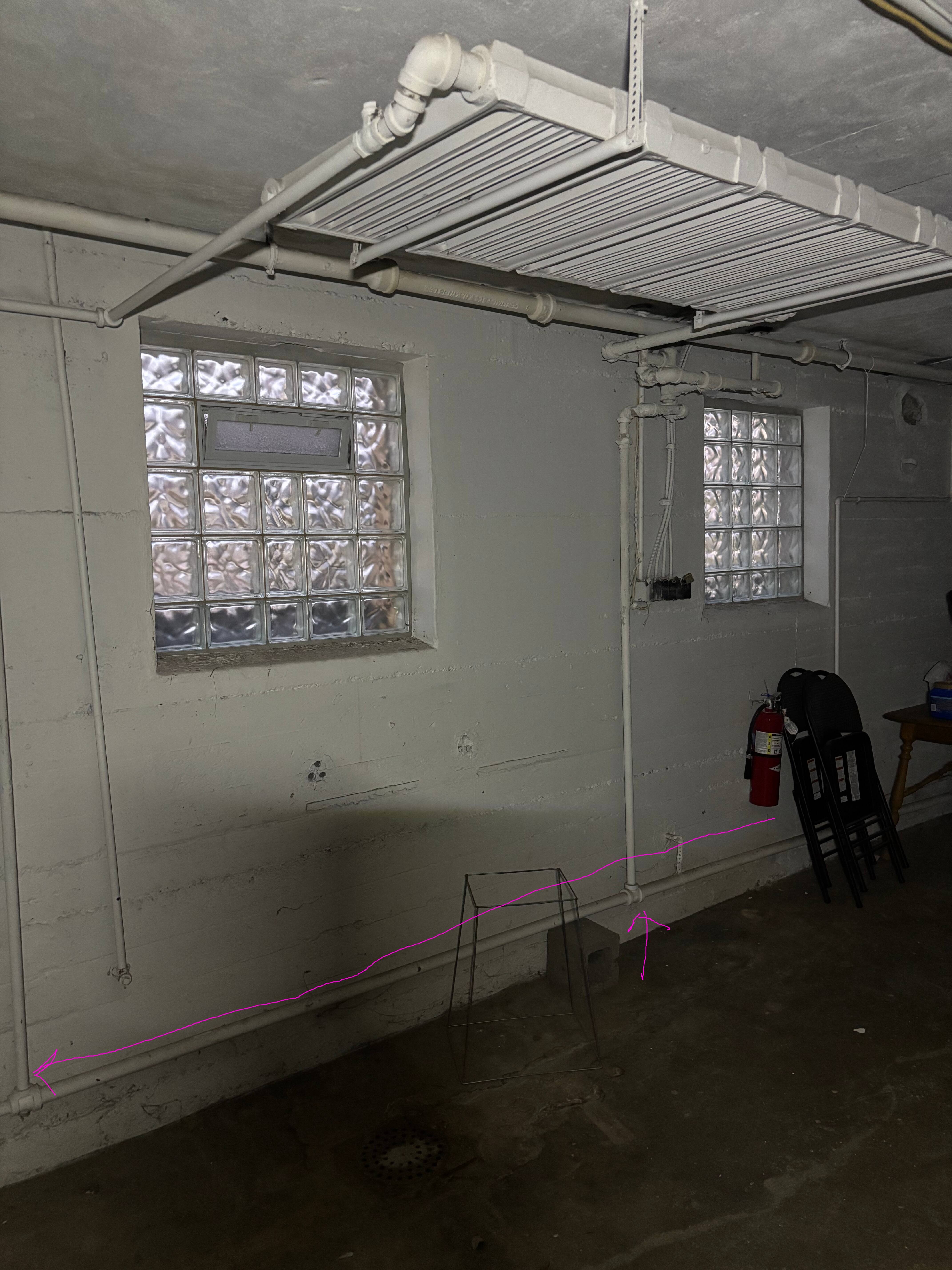 0
0 -
wet returns don't need pitch.
the basement radiator is set up 2 pipe because it is below the main, the condensate can't flow up hill to the main so it needs a drip to let the condensate in to a wet return.
the flaking paint and plaster is from the moisture from bad vents that aren't closing. the pressure may be too high for then to close properly but the reason the paint is flaking is because steam is leaking out the vents.
 1
1 -
The pressure may be too high but that is not what is making it too hot. What do you have for a thermostat and where is it located. If it is in a cold or drafty location then it will not be satisfied while the rest of the apartment is too hot. Is the entire apartment too hot or just one or two rooms?
All we know from your posts is that the system has seen high pressure and water may be being carried from the boiler into the mains. You have to provide pictures of your setup and more detailed information such as boiler size, number of radiators, pressuretrol setting, whether you are seeing surging in the site glass, whether your pigtail is clean, whether you have main venting and how much…to get better help.
 2
2 -
Well if it helps the vent in the radiator in the stairwell right outside of my unit is banging, and clanking around while water shoots out the steam vent.
1 -
Definitely not impressed with the knowledge around here. That radiator isn't even warm. Cause it's literally 2-piped to the same counter-flowing pipe. With both sides at the same pressure.

 1
1 -
the air vent is what lets the air out so the steam from the main can get to the radiator. you probably have water stuck somewhere or being thrown out of the boiler or possibly bad main vents. the theory of the piping seems ok though it could have lost the correct pitch at some point. there may be a lot of bad vents on mains and radiators and someone cranked up the pressure to compress the air to get a little heat instead of fixing the vents.
0 -
If you are talking about the ceiling radiator, one end is piped into a wet return, the other end appears to go through the ceiling, but the picture does not show that too clearly. If the ceiling connection is the feed, the other end goes into a wet return, they are indeed separated by the water that sits in that pipe at all times.
Water is commonly used in a steam system to create a separation so the pressure differential can allow for steam movement. In this case the steam feed, to the vent, the outlet goes to wet return so it doesn't see the steam, so you get steam flow based on the installed venting on the mains and the radiator.
Not getting steam where it is desired in a 1 pipe steam system comes down to venting. The mains need adequate venting to get steam available to all radiators at about the same time. Then the radiator vents handle venting of the individual emitters as required. Sometimes so slow that they barely heat at all. I have that in my own home with some large radiators vented slow enough they heat a maximum of half way and only on the very coldest of days.
As far as pitch, I wouldn't get too wrapped up in that. Only steam carrying pipes need pitch in a wet return water seeks it's own level and flows based on that. If a return is above the water line, then yes pitch is appropriate. For the counterflow main you discuss (I didn't see a picture) the pitch needs to be 1" in 10' based on being counterflow. Parallel flow needs 1" in 20'. So if you are talking about the pipe near the floor, that does not need pitch.
To be crystal clear, I do not see a steam main in any of the pictures you posted.
0 -
tough to troubleshoot over a computer!
 2
2 -
I hope he means in his geographic location and not here on this forum
NJ Steam Homeowner.
Free NJ and remote steam advice: https://heatinghelp.com/find-a-contractor/detail/new-jersey-steam-help/
See my sight glass boiler videos: https://bit.ly/3sZW1el0 -
That banging sound is basically a collision between steam and water. It’s violent because the steam is collapsing instantly when it hits the trapped water.
Since you mentioned the radiator is fed from both sides (2-pipe) but connected to the same main, you likely have steam fighting itself. If steam enters the return side before the supply side fills, it traps air and condensate in the middle. That creates the noise and stops the heat.
In apartment buildings, this often happens when main line air vents fail or are removed. If the main can't breathe, the system builds pressure (as you suspected) and pushes steam erratically into the returns. No amount of fiddling with your in-unit valves will fix a building-wide venting issue.🙂
0 -
give your building manager a “counter clockwise flathead screwdriver”
And ask if the system can be set to 2pounds. It’ll cut out at 2 and cut in at 0.5
But boiler size/BTUs/model would help. Only way to know.
0


Categories
- All Categories
- 87.5K THE MAIN WALL
- 3.3K A-C, Heat Pumps & Refrigeration
- 59 Biomass
- 429 Carbon Monoxide Awareness
- 124 Chimneys & Flues
- 2.2K Domestic Hot Water
- 5.9K Gas Heating
- 118 Geothermal
- 168 Indoor-Air Quality
- 3.8K Oil Heating
- 78 Pipe Deterioration
- 1K Plumbing
- 6.6K Radiant Heating
- 394 Solar
- 15.9K Strictly Steam
- 3.5K Thermostats and Controls
- 56 Water Quality
- 50 Industry Classes
- 50 Job Opportunities
- 18 Recall Announcements