steam radiators

Hi everyone, I’m looking for some help troubleshooting a steam heating issue.
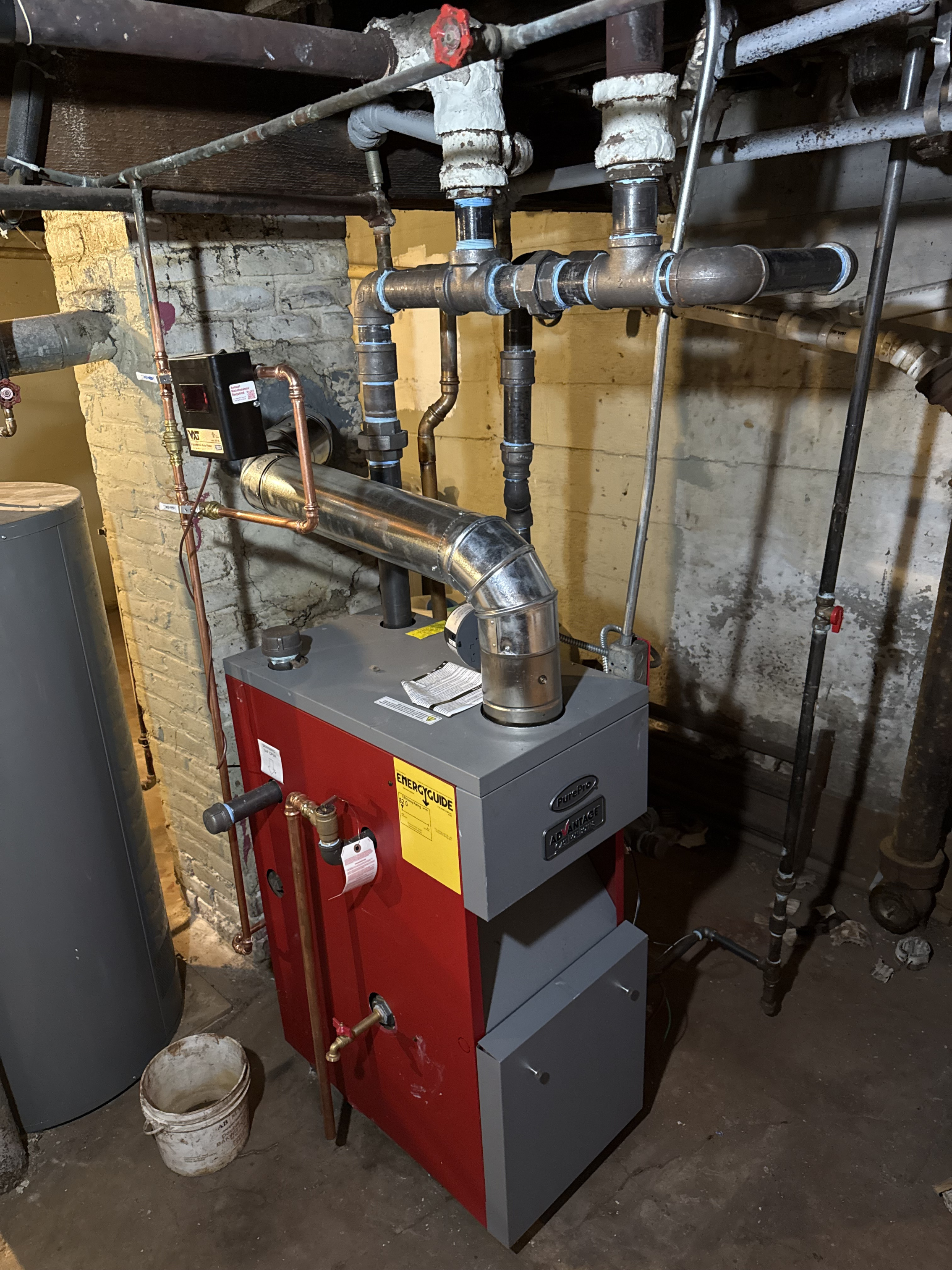
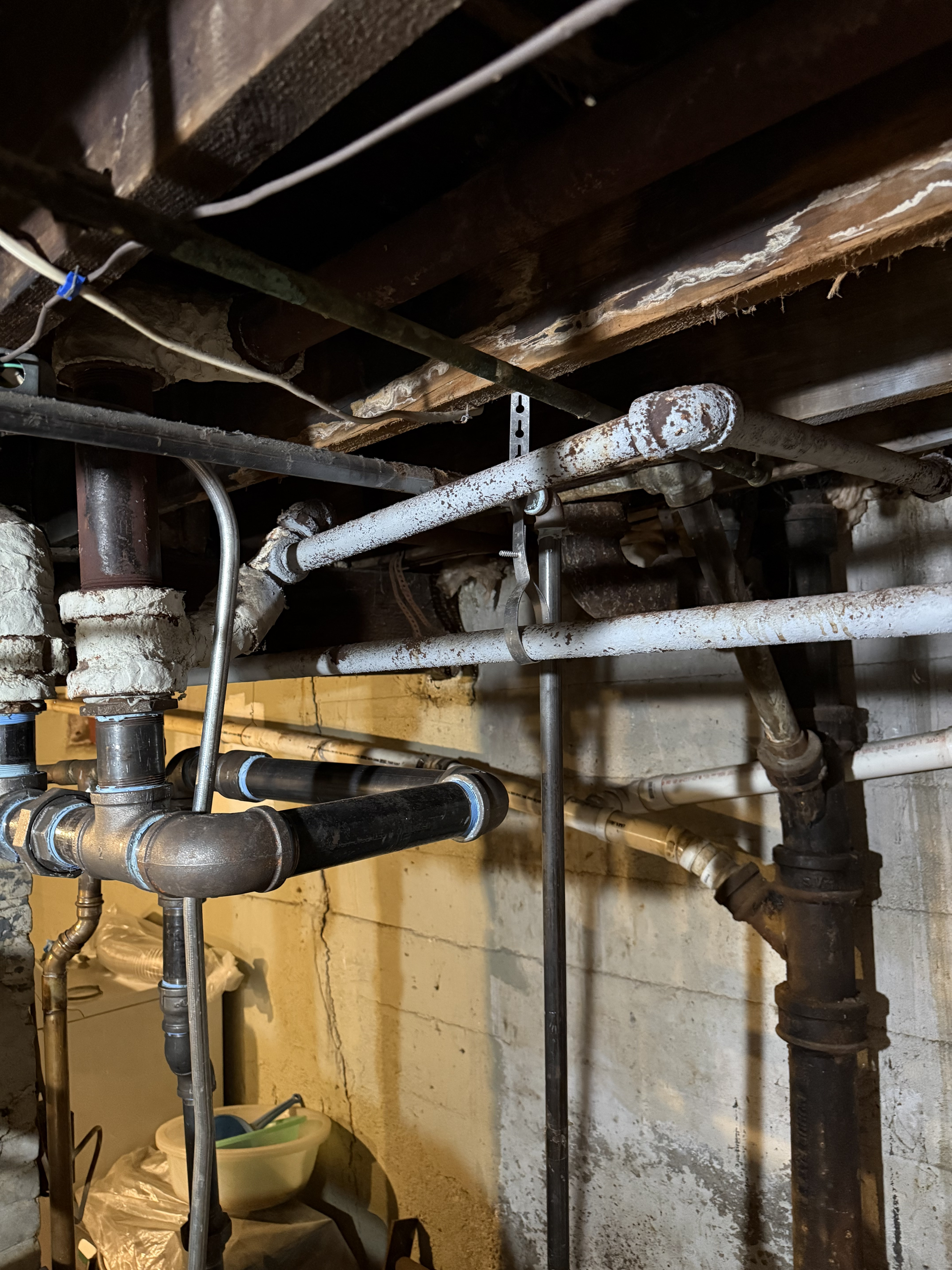
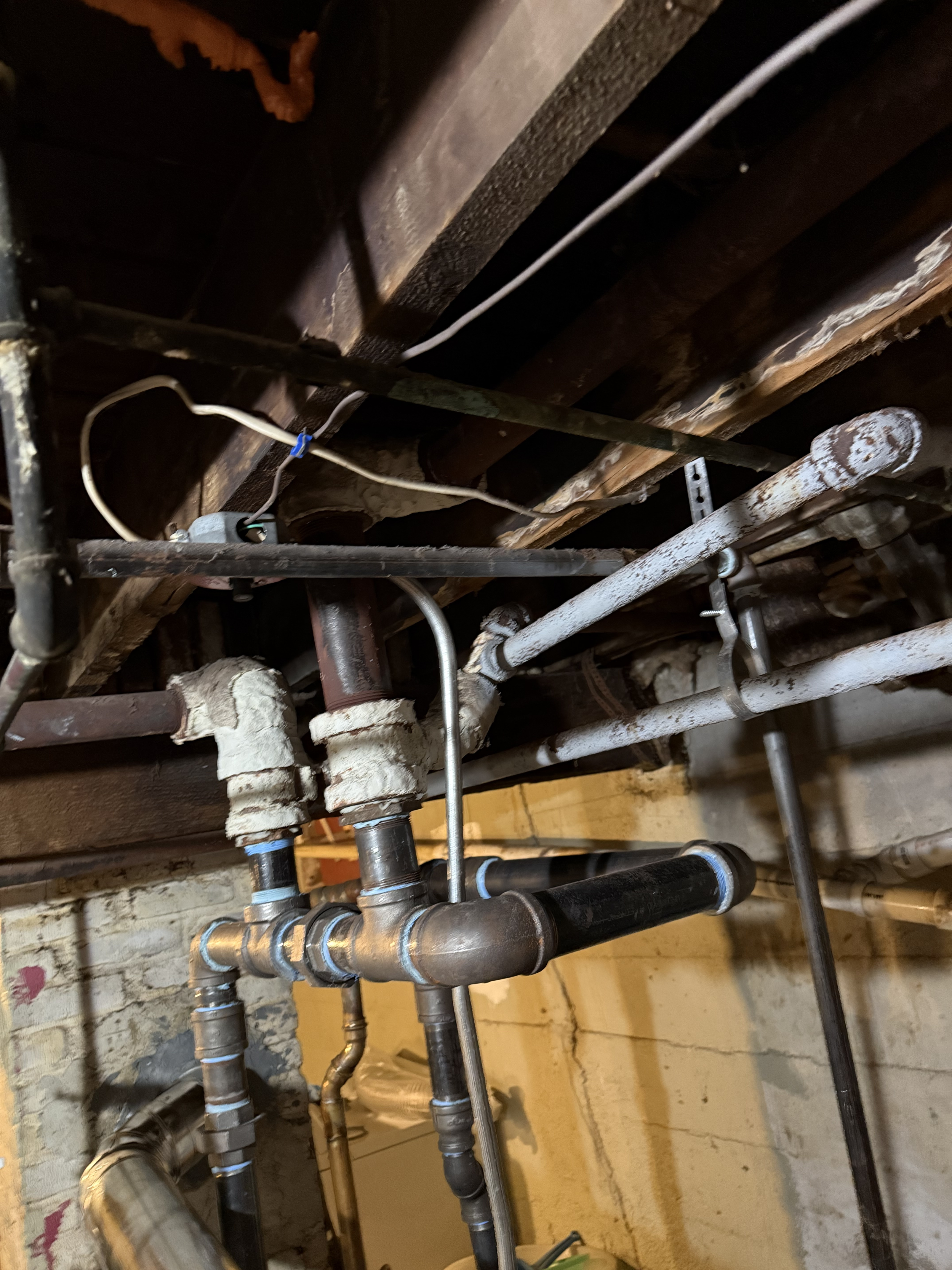
I have a property with two steam radiators that stopped working after the boiler was replaced. The lines are not clogged, but the way these radiators are piped is something I’ve never seen before.
Both radiators are tapped directly off the risers from the main steam line, instead of the more typical takeoffs. According to the homeowner, they worked fine before the boiler replacement, but ever since the new boiler was installed, these two radiators no longer heat up.
I’m trying to figure out what could be causing the issue and what the best approach is to correct the piping or restore proper operation. Any insight or suggestions would be greatly appreciated.
Thanks in advance.
Comments
-
There isn't much that can go wrong with a steam radiator…
Are these one pipe or two pipe? Makes a difference.
In any case, steam has to be able to reach the radiator. All valves open? All pipes pitched so that condensate can't block them? How far up the pipe to the radiator does the steam get?
Air has to be able to leave the radiator? Where does it go? One pipe vent? Is the vent open? Two pipe. Where does the return go? If there is a trap, is it working? Is air able to travel out of the return to a vent somewhere?
And condensate has to be able to leave.
Br. Jamie, osb
Building superintendent/caretaker, 7200 sq. ft. historic house museum with dependencies in New England1 -
As Jamie has said the condensate has to leave/drain back to the boiler.
The new piping/reducers may have upset the mix and the two offending radiators are no longer sloped towards the riser to drain.
I would check them for level and if they are not tipped toward the mains to drain they need to be lifted on the vent side to create the drain back angle.
1 -
How does the sight glass look when the boiler is steaming? If the water level is bouncing a lot the boiler may need to be skimmed and cleaned.
How much pressure is it running at?
Either way did you call the installer back?

 3
3 -
Thanks for the help, guys. These radiators are one-pipe with vents. The steam travels up the riser but stops about 2 feet before reaching the radiators and doesn’t go any further.
I’m not sure if the installer ever skimmed the boiler, so I’ll take care of that, because the water in the sight glass is bouncing a lot—sometimes the glass even goes completely empty.
The reducers were already there; they look as old as the rest of the piping. I’m also going to check the pitch on the radiators.
I have a lot of experience with hydronic systems, but I’m just getting my feet wet with steam, so I want to learn as much as possible.
0 -
What happens if you cautiously remove the vents on the misbehaving radiators? With someone to turn off the boiler if steam starts coming out?
If there is no change, and steam still stops before it gets to the radiators, check the radiator inlet valves… they may look open, but may not be.
Br. Jamie, osb
Building superintendent/caretaker, 7200 sq. ft. historic house museum with dependencies in New England 1
1 -
jamie I though about that I end it up removing the radiator the valve was full open nothing comes up
0 -
oh well. But the steam isn't coming up, there's a stoppage somewhere else…a pipe with the wrong pitch?
Br. Jamie, osb
Building superintendent/caretaker, 7200 sq. ft. historic house museum with dependencies in New England0 -
if it is surging like you say it is probably throwing water in to that tee off the riser and keeping those um… rather uniquely plumbed radiators from heating. Does the return get hot before the main? With the pipe being that small it will have more or less 0 tolerance for carryover water getting in to those runouts. If the were off a horizontal main, the water would tend to stay in the bottom of the main and a little bit wouldn't kill the steam that much. I think you or the original installer will need to skim it several times until the water level is stable. You will have to skim it several tomes over several days to weeks. You will get rid of the oil in the boiler but as it runs it will bring water back to the boiler from the piping. It will take a few cycles of that to get all of the oil back to the boiler and out the skim port, especially if it was surging and throwing that oily water up in to the piping. Is there a layer of oil visible in the sight glass?
0


Categories
- All Categories
- 87.6K THE MAIN WALL
- 3.3K A-C, Heat Pumps & Refrigeration
- 59 Biomass
- 429 Carbon Monoxide Awareness
- 124 Chimneys & Flues
- 2.2K Domestic Hot Water
- 5.9K Gas Heating
- 119 Geothermal
- 168 Indoor-Air Quality
- 3.8K Oil Heating
- 78 Pipe Deterioration
- 1K Plumbing
- 6.6K Radiant Heating
- 394 Solar
- 16K Strictly Steam
- 3.5K Thermostats and Controls
- 56 Water Quality
- 51 Industry Classes
- 50 Job Opportunities
- 18 Recall Announcements