Radiant Floor with Kitec

Also sounds like the pipe failures are at or near the fittings.
I'm trying to determine the risk to buying a house with Kitec radiant floor heating. Folks have talked about the temperature as a factor also but wasn't sure what the actual operating temperature for a radiant floor system was. Any input would be helpful, thanks in advance.
Comments
-
It is always preferred to not have any fittings or splices in a slab. The tube manufacturers have specific requirements if a splice absolutely must be made in a slab, typically when a pour is underway

It been anything from electrical tape, to heat shrink, or a larger sleeve over the repair. Some pex A brands specific thee type of wrap tape. It would be nearly impossible to determine if a slab has a splice, after the fact.
Most of the Kitec failures were on the domestic water piping, but I have seen radiant tube fail. Usually it was a blister between the various walls of the tube, I have seen some that collapsed or blistered inward on radiant tube.
I would be leery of buying a home with ANY tube that has been removed from the market or gone through a class action suit. Entran and Kitec are two types of radiant tube that comes to mind.
Really no way to predict if or when a tube or fitting could fail on those systems. If it has been trouble free for 20 years or more... i would certainly have a plan B in mind should the system fail, it can be an expensive redo to fix an entire radiant slab, floor coverings, etc.
Correct in that the lower the operating temperature the better the chance of the tube lasting, and lower temperatures reduce O2 ingress, which was the big issue with some early rubber tubes. Not only tube failures but corrosion of all ferrous components in the system. Outdoor reset control is a good stratergy.Bob "hot rod" Rohr
trainer for Caleffi NA
Living the hydronic dream 2
2 -
Here's an older thread about it.
https://forum.heatinghelp.com/discussion/168710/is-kitech-safe-when-used-in-concrete-slab-for-in-floor-radiant-heat.
There was an error rendering this rich post.
0 -
Replacing the radiant floor system sounds bad to impossible, any experience with replacing? Or is abandon and find alternative heating the real solution.0
-
There are some over the top products, however they would need 1/2" or more, plus floor coverings. So doors, dishwashers, and stair elevations, if any get a little tweaked.dlrising said:Replacing the radiant floor system sounds bad to impossible, any experience with replacing? Or is abandon and find alternative heating the real solution.
Ceiling radiant, panel rads, a few different options depending on the homes layout and getting tubing from A to B.
At this point I would run with it, add a means to determine if leaks develop, maybe a fill tank instead of fill valve.
It is possible to get many more years out of it, unless the seller, homeowner, or home warranty company wants to qualify that, I would use it as a bargaining chip.
Bob "hot rod" Rohr
trainer for Caleffi NA
Living the hydronic dream1 -
Well, I've have Kitec in my house for 16 years and not one problem - knock on wood. I have a 1906 old craftsman which I remodeled to keep for generations. I hired a CIPE who had 25+ years experience in plumbing and heating, including doing large buildings in NYC. He custom-designed and built (in his own shop) a radiant floor heating system for me. It uses Kitec tubing. He is out of the trade now, but never told me about the lawsuit, so it is too late for that now. Every floor, including the slab, has it. Only one of the pumps has gone out over 16 years. My house is 3250 sq ft, 3 levels, and my heating bill has never reached 300 and is around 200 even in the dark dreary period from Nov-Feb. Is it possible that I don't have the kind that has had the failures? If the pipes were going to fail, wouldn't they have failed by now? At this point is there anything that myself or a future buyer should be concerned about? I mean the system has been virtually maintenance-free.


0 -
I would not be concerned about Kitec failure. I would be very concerned about a future buyer's perception.
Your installation would look cleaner if there was less tubing exposed and the drywall was continuous. You might consider replacing the "snakes" of tubing with copper and "protecting" the remaining tubing from damage by concealing it behind the drywall."If you can't explain it simply, you don't understand it well enough"
Albert Einstein0 -
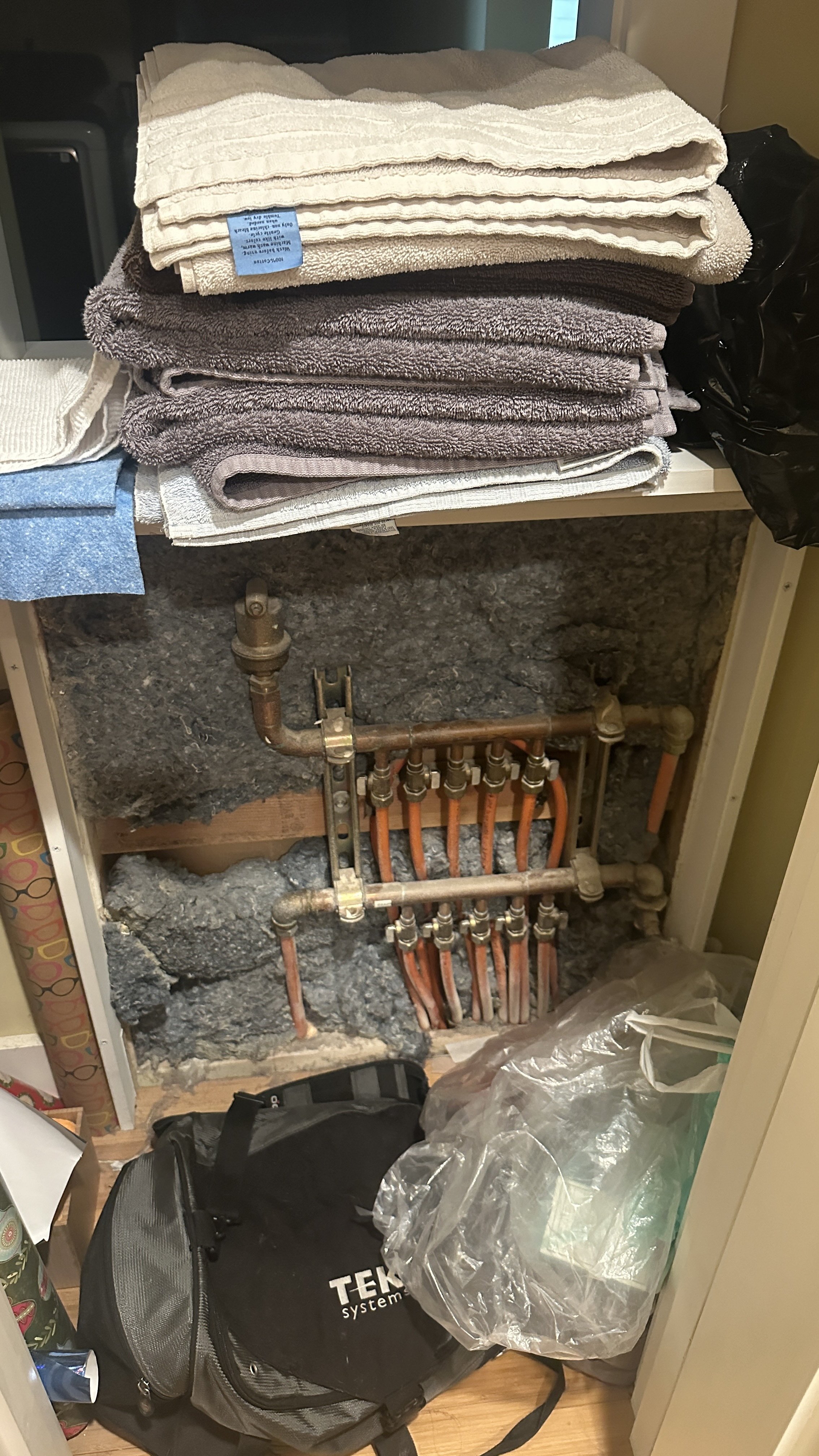

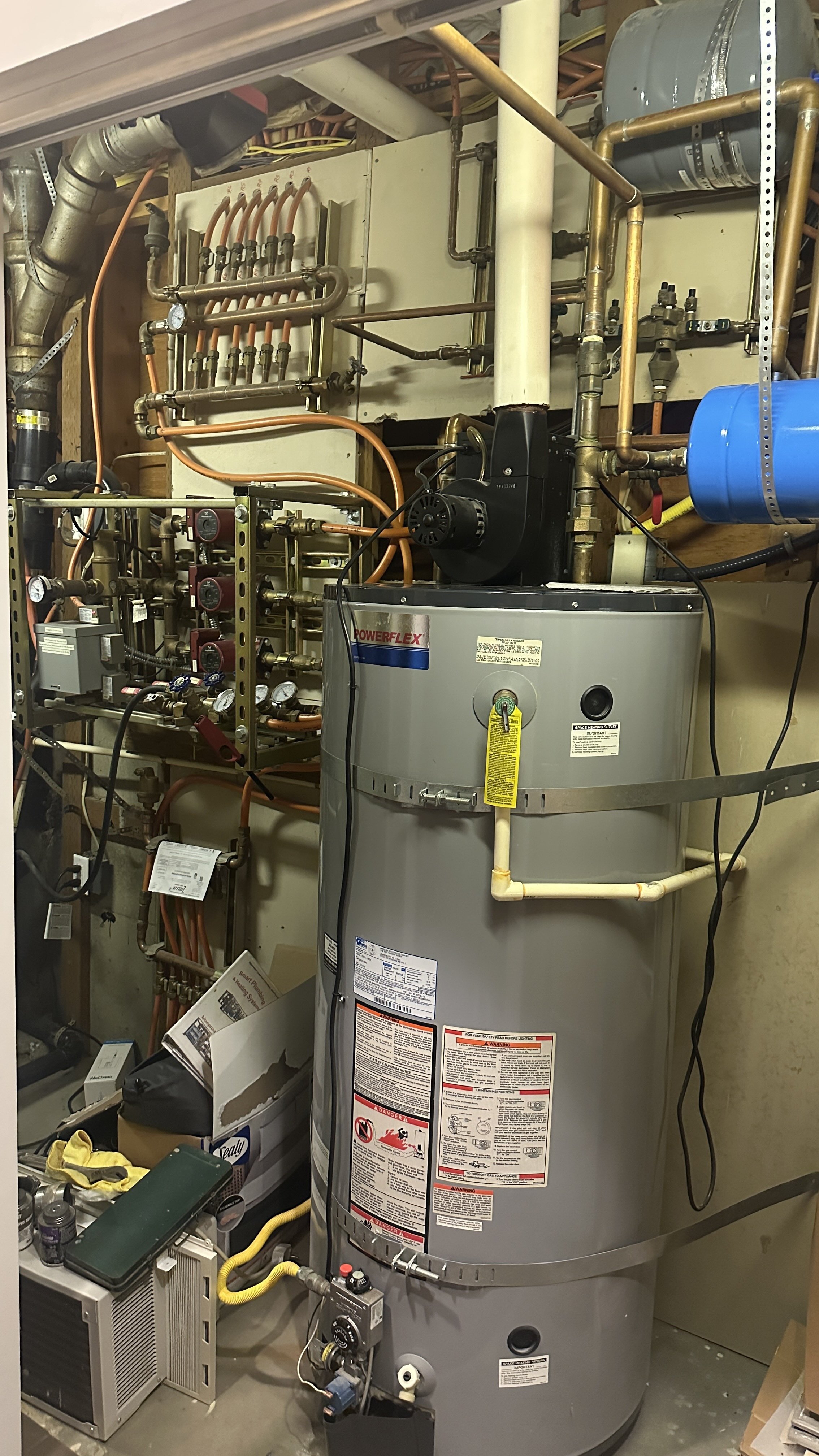
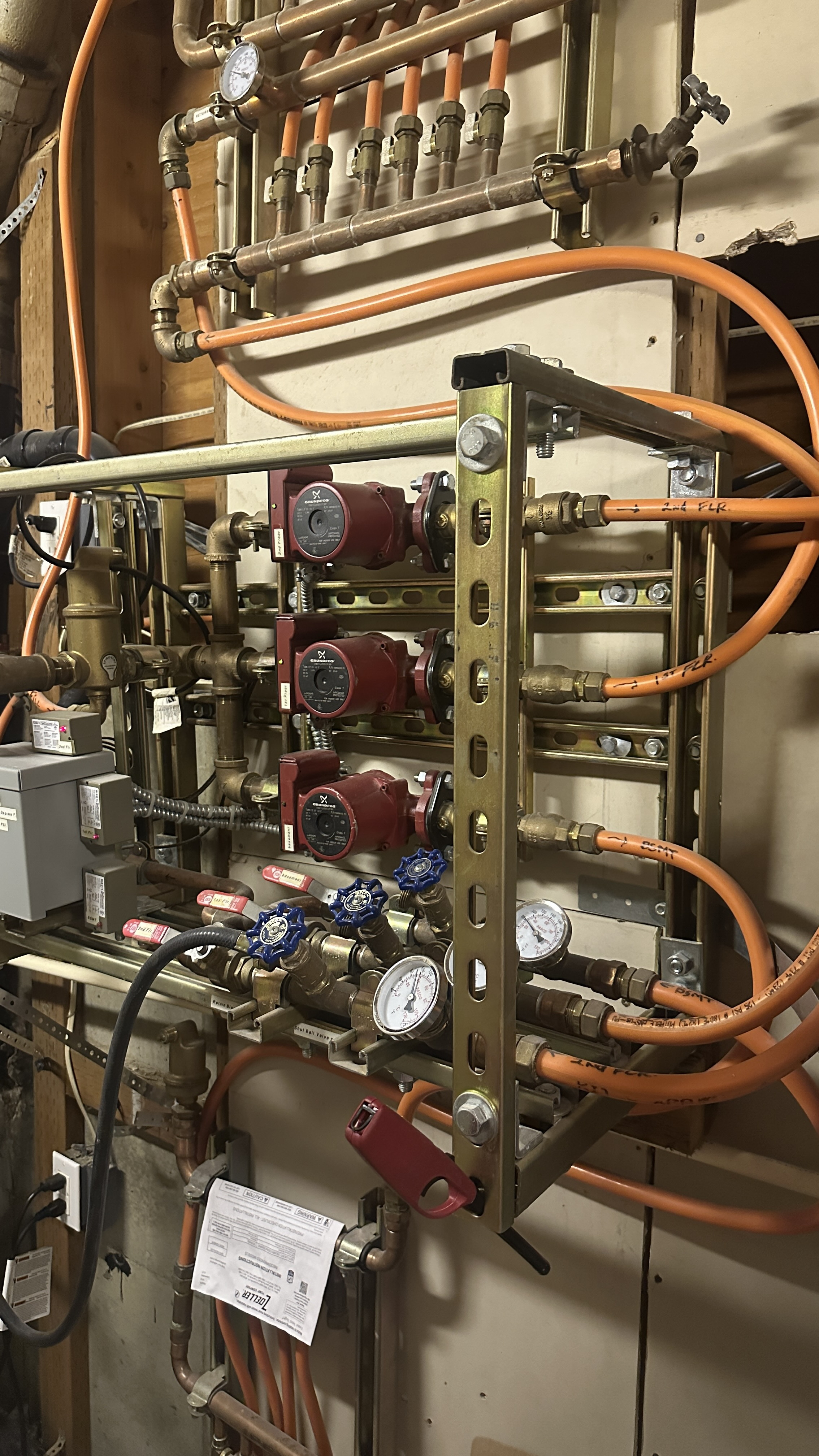
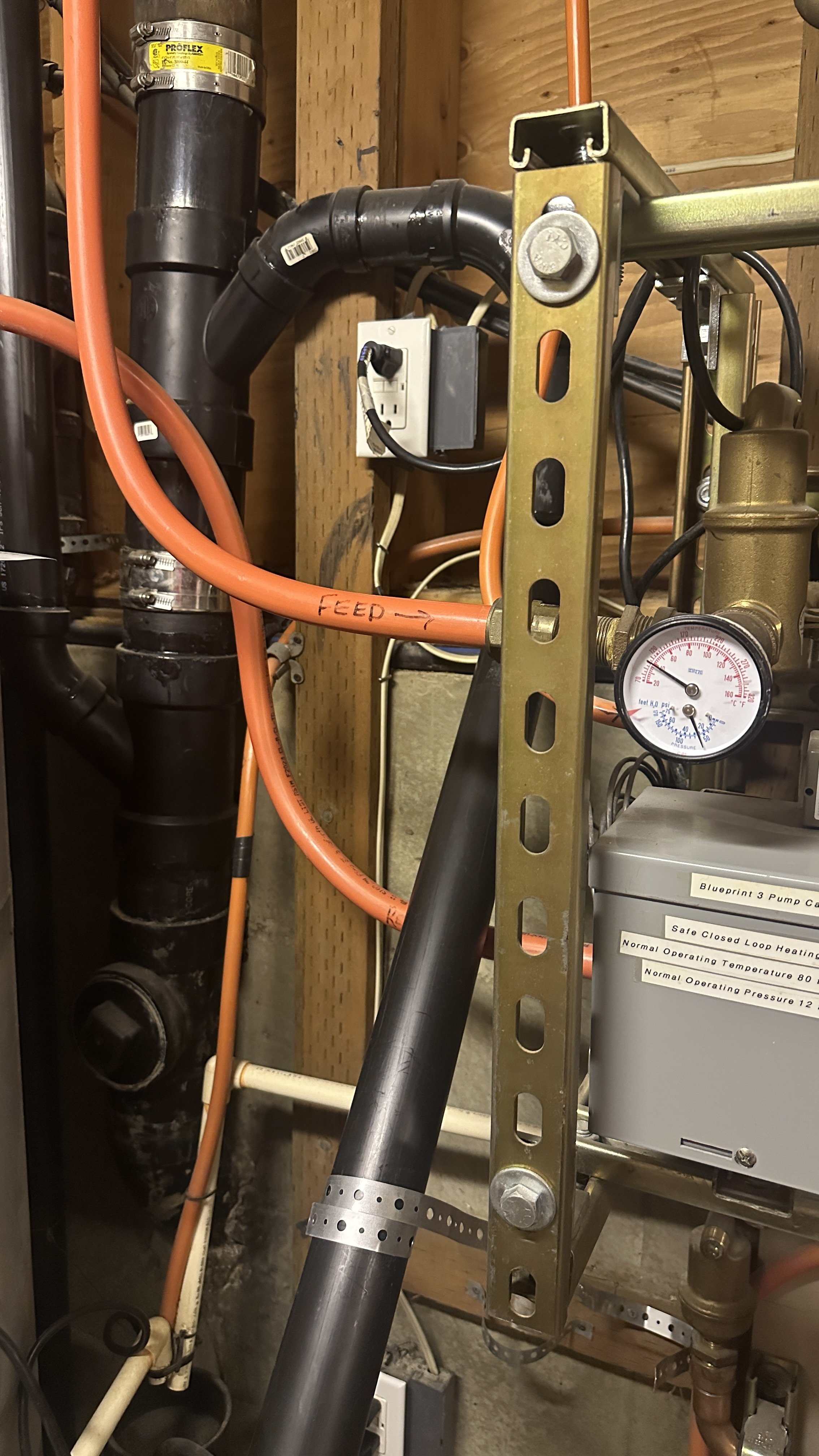
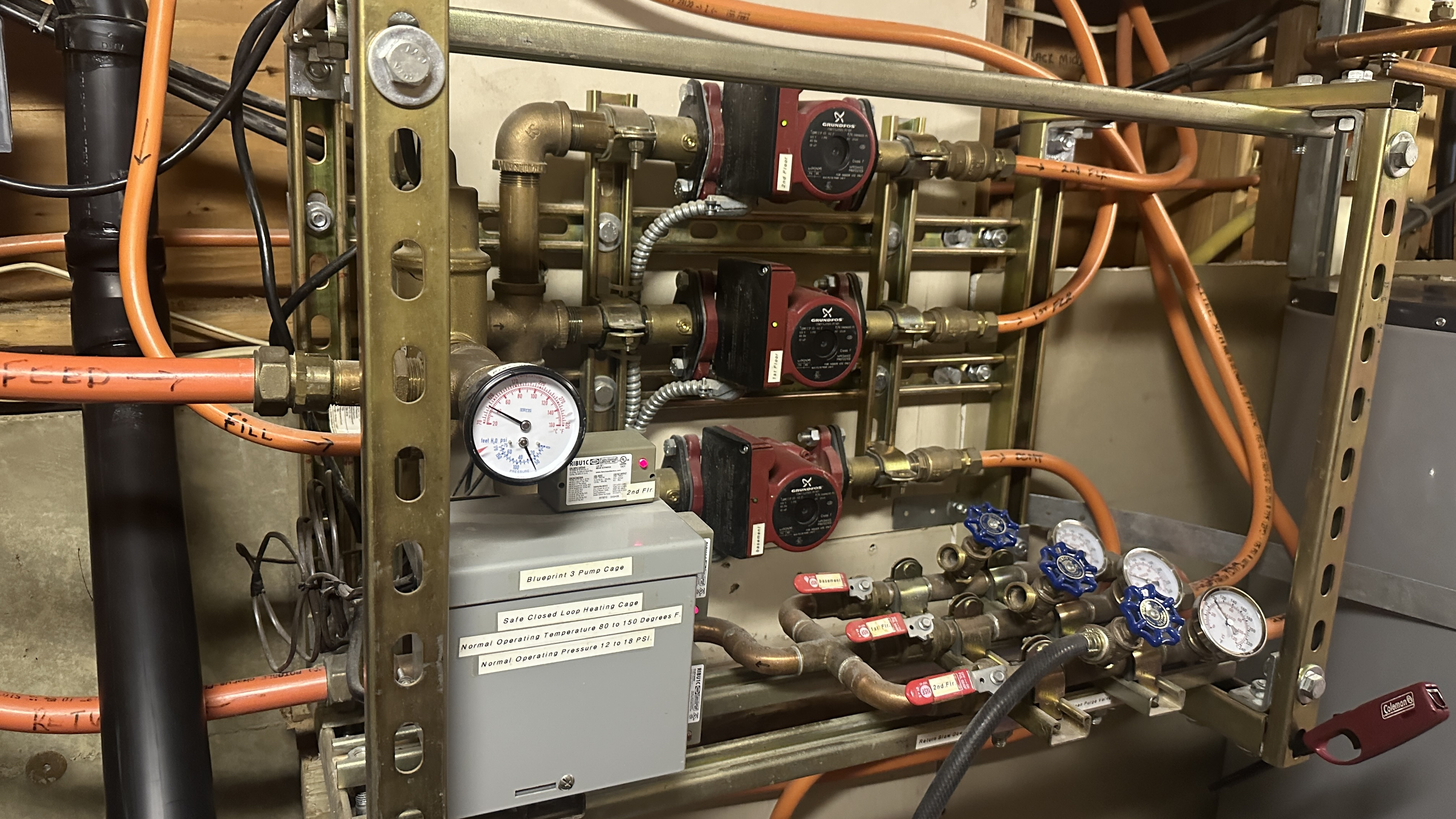
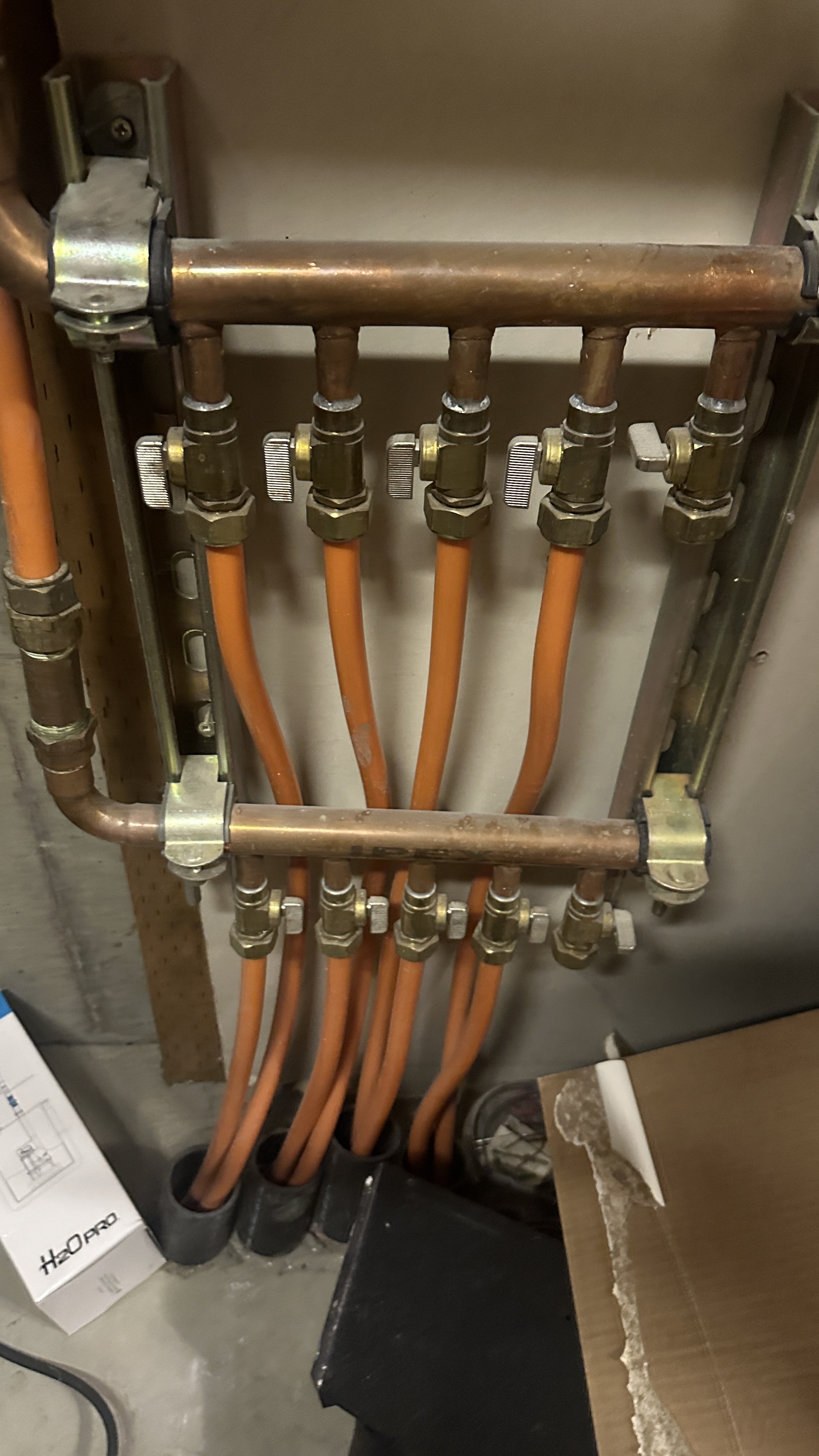
Kitec Kitec Kitec. Sheesh. Folks, it's been about 5 years now. My wife and I decided to stay in our house here in Seattle. My fittings (knock on wood) look pristine. Not one failure. Even with the now 21 year old 75 gal Powerflex water heater, I still get great heat. Now, we are serious about selling.
What can I do besides tearing out a perfectly good system? Should I abandon it when the water heater dies? What are my viable options? How much would it cost?
I thought maybe mini-splits? How does/would it work?
Keep in mind, I am just a former accountant who is interested in building. So, I may not understand all the lingo/how stuff works. That's ok. You guys have been a great source of info.
0 -
After all these years I wouldn't worry about it. Your system seems to be tried and true over all this time so you might be one of the lucky ones that hasn't had any problems with this tubing.
If you do not see or have had any corrosion issues and or [ zinc ] problems you should be fine.
The concern is how to convey that with your realtor. Consult with a good realtor that is experienced with this, they might be able to offer some advice other than repiping or abandoning it.
0 -
Thank you…I have found a single realtor that knows how to convey this. Inspectors see it, and call it out. It ends up on form 17 disclosure. Ridiculous. The system works better than all the plastic pipe they've been running since the lawsuit. People are just plain dumb and do not understand chemistry. The water isn't nearly hot enough and what are essentially di-electric unions are used. Thus, my crude knowledge tells me it's contradictory to allow them for copper, but not pex-al-pex. I believed the heating guy used the Watts fittings that are SPECIFICALLY designed for this. Thus, it confounds me that this is called out. Please help me understand. I am just an accountant who thinks he can build🤣
0




Categories
- All Categories
- 87.6K THE MAIN WALL
- 3.3K A-C, Heat Pumps & Refrigeration
- 59 Biomass
- 429 Carbon Monoxide Awareness
- 124 Chimneys & Flues
- 2.2K Domestic Hot Water
- 5.9K Gas Heating
- 119 Geothermal
- 168 Indoor-Air Quality
- 3.8K Oil Heating
- 78 Pipe Deterioration
- 1K Plumbing
- 6.6K Radiant Heating
- 394 Solar
- 16K Strictly Steam
- 3.5K Thermostats and Controls
- 56 Water Quality
- 51 Industry Classes
- 50 Job Opportunities
- 18 Recall Announcements