Welcome! Here are the website rules, as well as some tips for using this forum.
Click here to Find a Contractor in your area.
If our community has helped you, please consider making a contribution to support this website. Thanks!
130F vs 140F Return H2O Water Temp in Conventional Boiler

I have a question about 130F vs 140F return water temp.
A Weil-McLain WG0-4 was recently installed at my house.
It’s:
- conventional “non-condensing”
- oil filed
- converted legacy gravity
- hot water cast iron rad heat system
- with the original large gravity pipes in place.
The new system raises return water temp no higher than 120F.
The cycle operates for close to 2 hours and the 120F occurs near the end of the cycle.
So, it never gets hot enough to protect the system from condensation.
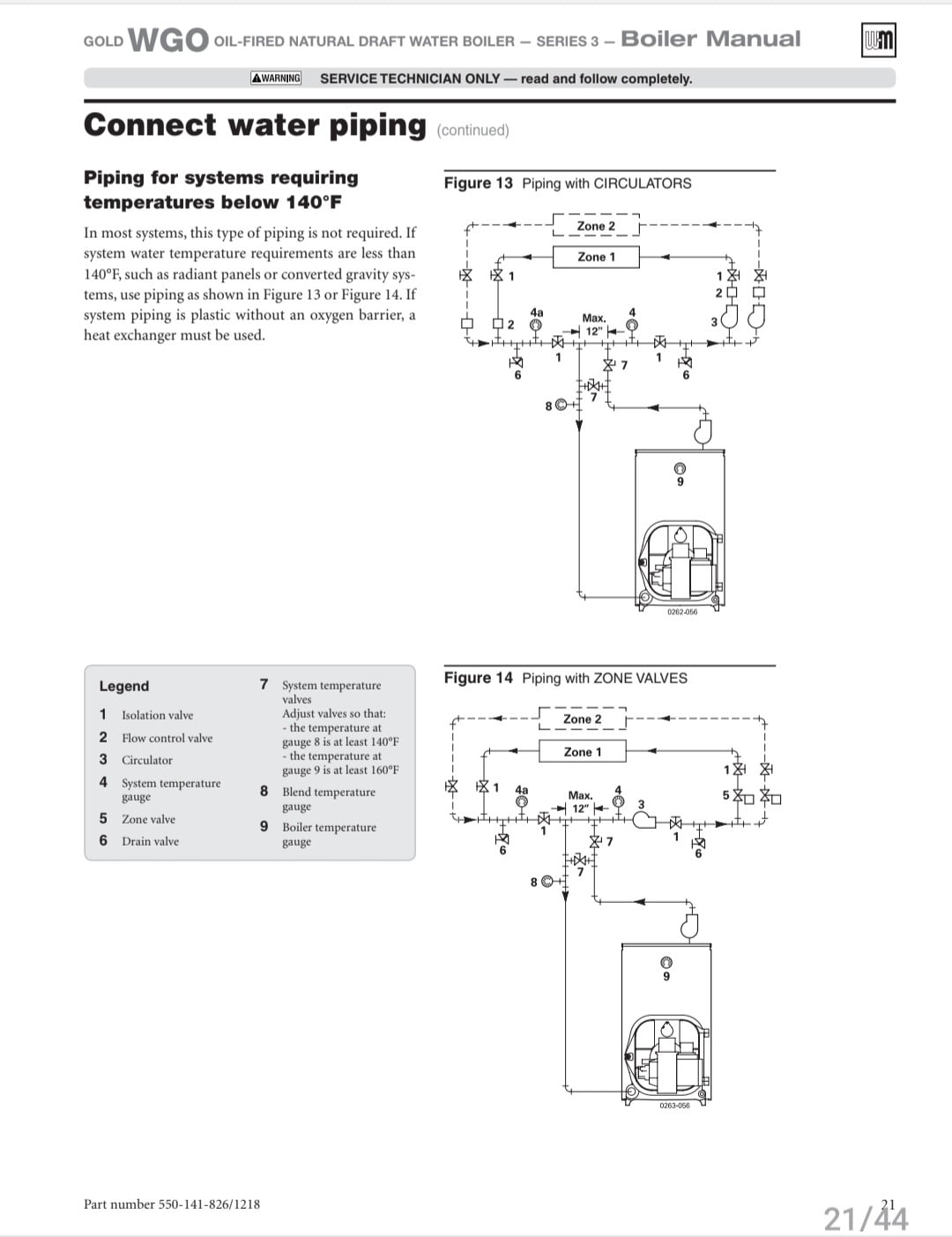
My HVAC installer is working with me to fix the issue. They are proposing to install a manual ball-valve. The thought is this will raise the return water to 130F, not the 140F Weil-McLain specifies in the install instructions.
I’m wondering if 130F should be the goal - if it’s good enough.
Q1: For systems like mine, is a manual “dumb valve” vs a “smart valve” (such as Caleffi Thermo-Protec 280) a good enough retro-fix?
-or-
Q2: Is getting return water to 140F much better at protecting the system from sustained condensation?
Thoughts floating around in my head:
1--“Don’t let the perfect be the enemy of the pretty good.”
2--130F is a suggested target temp for return water but…
…I’ve heard that many manufacturers instead specify 140F and the manufacturer of my boiler, W-M is one of them. W-M recommends 140F.
W-M also permits the use of manual "dumb" valves. The use of manual valves complies with WM install instructions.
I’m also hearing that “smart valves” such as the Caleffi valve produce a better result overall than manual valves.
I assume then, that the manual ball-valve is the minimal requirement, not necessarily the best.
It’d be good to know:
Is the 140F return water temp spec mandated by many boiler manufacturers the result of:
- many boiler manufacturers permitting the minimal ball-valve, and
- the manufacturers taking into consideration research studies that have concluded that 140F produces much better results than 130F when dumb-valves are permitted
- therefore, 140F is really the low temp limit deemed good enough for return water - when a manual valve valve is being installed.
HomeOwner 7
If anyone's interested in diving deeper into the rabbit hole-more about the system installed at my house is here:
Comments
-
Has nothing to do with whether it is a manual or dumb valve. It has everything to do with getting the boiler hot enough to prevent condensation or at least dry it out every cycle. Thus preventing the boiler from dying an early and messy death.
And 140 F is the minimum temperature for a gas fired boiler to do that (I'd want 150 for oil).
Too low a return temperature indicates either not enough flow through the system — or a need for a bypass. In both cases assuming that the output temperature of the boiler is high enough and the boiler has enough power.
Probably the best arrangement is an automatic thermal bypass, arranged to keep the return water temperature above 140 F. A manual valve will work — but can be fussy to get set right and won't be able to compensate for load changes or slow heating of the system.
Br. Jamie, osb
Building superintendent/caretaker, 7200 sq. ft. historic house museum with dependencies in New England1 -
Yes you need a temperature operated valve not a "dumb ball valve" I would set the return temp to 130. You will know at the next boiler cleaning if the temperature needs to be raised. I doubt it.
0 -
I suppose it depends on how often and how long it runs at condensing temperatures. With oversized boilers on small zoned systems it could be in that mode daily.
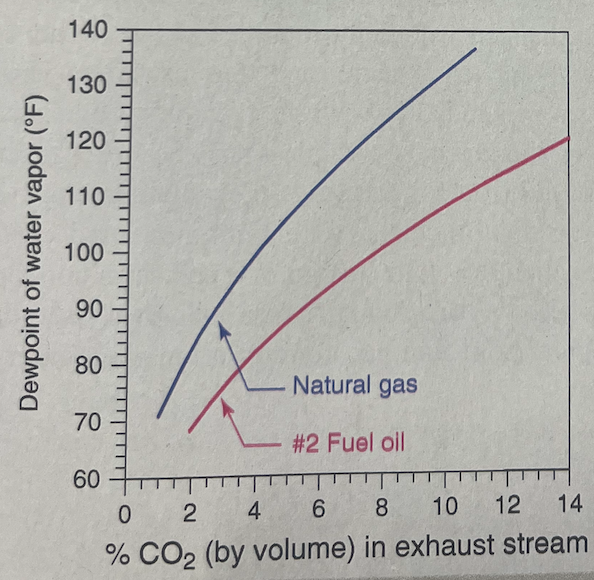
The temperature depends on type of fuel how the burner is running, Co2 number.. Commonly we hear 130 for NG, 140 for oil
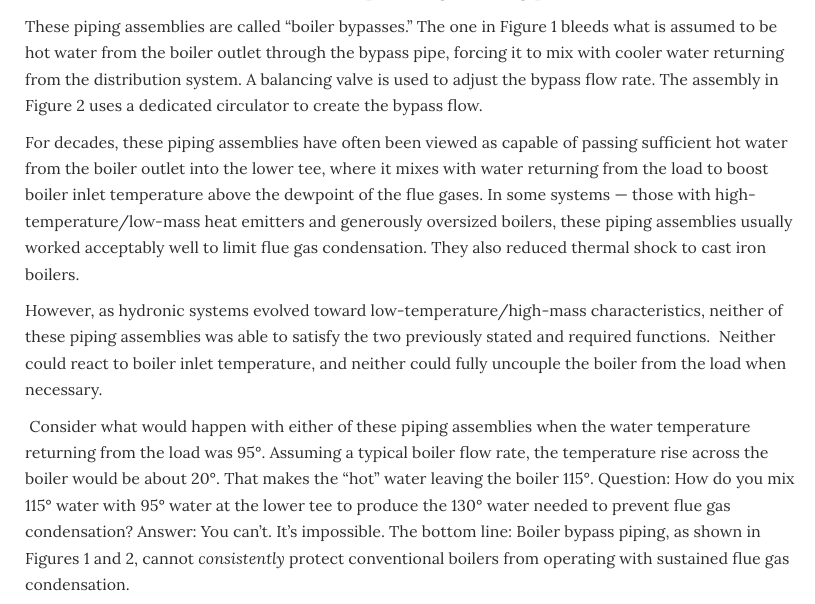
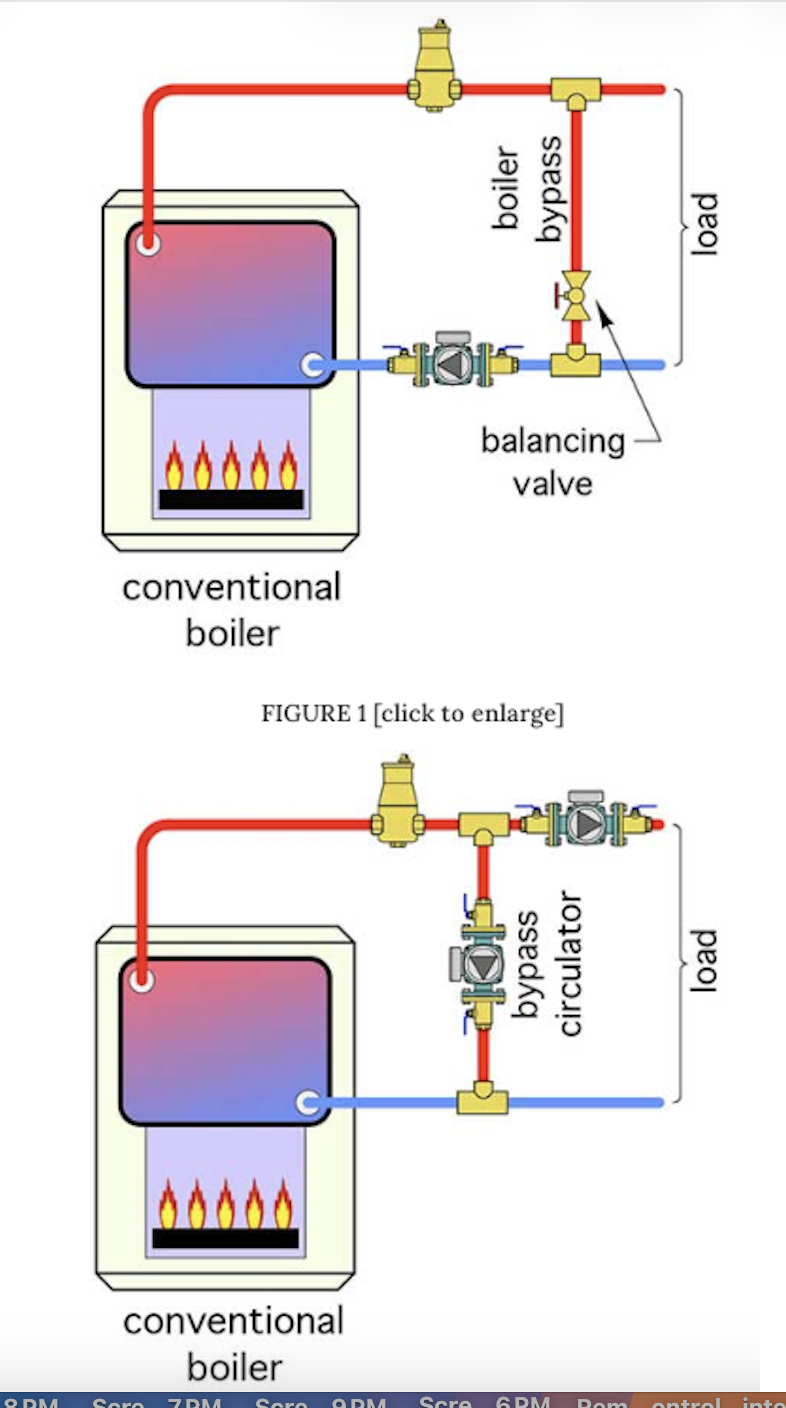
A post from Burnham once upon a time claimed their sections have a blending provision to help boost return.
So there is no one size fits all.
What is known a thermostatic "thermal clutch" is absolute protection. Some of the boiler installation manuals are starting to mention that.
 Bob "hot rod" Rohr
trainer for Caleffi NA
Living the hydronic dream0 -
Personally I would not cut into a cast iron system with 120 or less max return water to add a simple on-off ball valve that I planned to use as a control valve to increase return water to the boiler. Feels like a guess! and not really what that valve is meant for. There are tried and true piping strategies to solve this problem, and purpose built devices to accomplish this task (caleffi for example) if the valve were already installed I would try it sure, but like @Jamie Hall said that manual valve isn't going to compensate for your changing load, which is a moving target through the heating season.
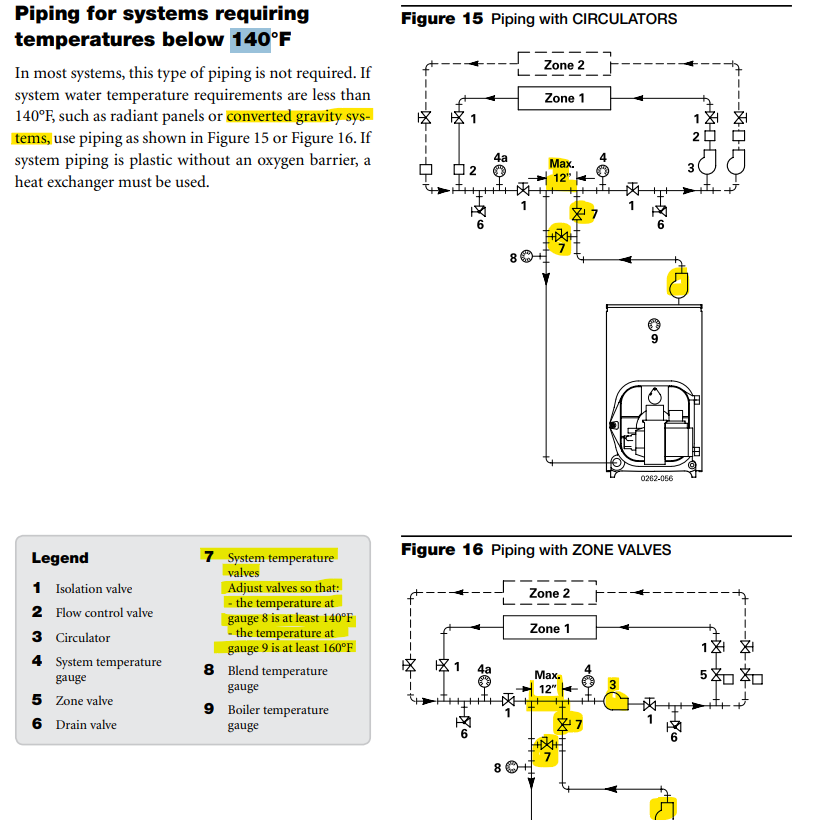
Just to point out in the WM book where they show "system temperature valves" I am not convinced those are standard ball valves, and they are also utilizing primary secondary piping.
 0
-
simple enough, call Weil Mclain for a part number of the “system temperature” valve😏
The only way to blend with a valve is 3 ports
Bob "hot rod" Rohr
trainer for Caleffi NA
Living the hydronic dream 1
-
Didn't we do this already?
Or was that that someone else?
0



Categories
- All Categories
- 87.9K THE MAIN WALL
- 3.3K A-C, Heat Pumps & Refrigeration
- 60 Biomass
- 430 Carbon Monoxide Awareness
- 133 Chimneys & Flues
- 2.2K Domestic Hot Water
- 6K Gas Heating
- 124 Geothermal
- 170 Indoor-Air Quality
- 3.9K Oil Heating
- 80 Pipe Deterioration
- 1.1K Plumbing
- 6.7K Radiant Heating
- 397 Solar
- 16.1K Strictly Steam
- 3.5K Thermostats and Controls
- 56 Water Quality
- 51 Industry Classes
- 51 Job Opportunities
- 18 Recall Announcements