Welcome! Here are the website rules, as well as some tips for using this forum.
Click here to Find a Contractor in your area.
If our community has helped you, please consider making a contribution to support this website. Thanks!
Gravity Return vs Pump return

Background:
- I've been talking with many contractors to try to get my steam boiler replaced for my giant 7000 sq.ft. house with 30 rads, and hopefully made it more efficient and less likely to fail in only 20 years.
- My 1998 condensate pump has had an issue of running continuously, thereby flooding the boiler to the top, thereby accelerating rusting and cracking. We opened up the wiring boxes to find that the condensate pump is NOT connected to the boiler's sensors in any way, despite clear correlation with blowing down the boiler on the one sensor's side (first image) remedying the condensate pump.(And according to several contractors so far, the main pipe size is too big compared to the return pipe size to consider hydronic without a massive overhaul.)
Question:
A few contractors I'm talking to are recommending omitting the condensate pump and just using gravity to return the condensate to the boiler. Others suspect that would not be a good idea, thinking the pressure would not be enough or there would be too much condensate buildup in the wet returns that might make them burst or leak perhaps.
What do you all think?
(Any other advice for this project would be massively helpful. I am very new to this, but learning fast. I got some of the holy books, have not read them yet.)
Equipment:
- Weil-McLain LGB 5 Low-pressure Steam Boiler: installed 2001
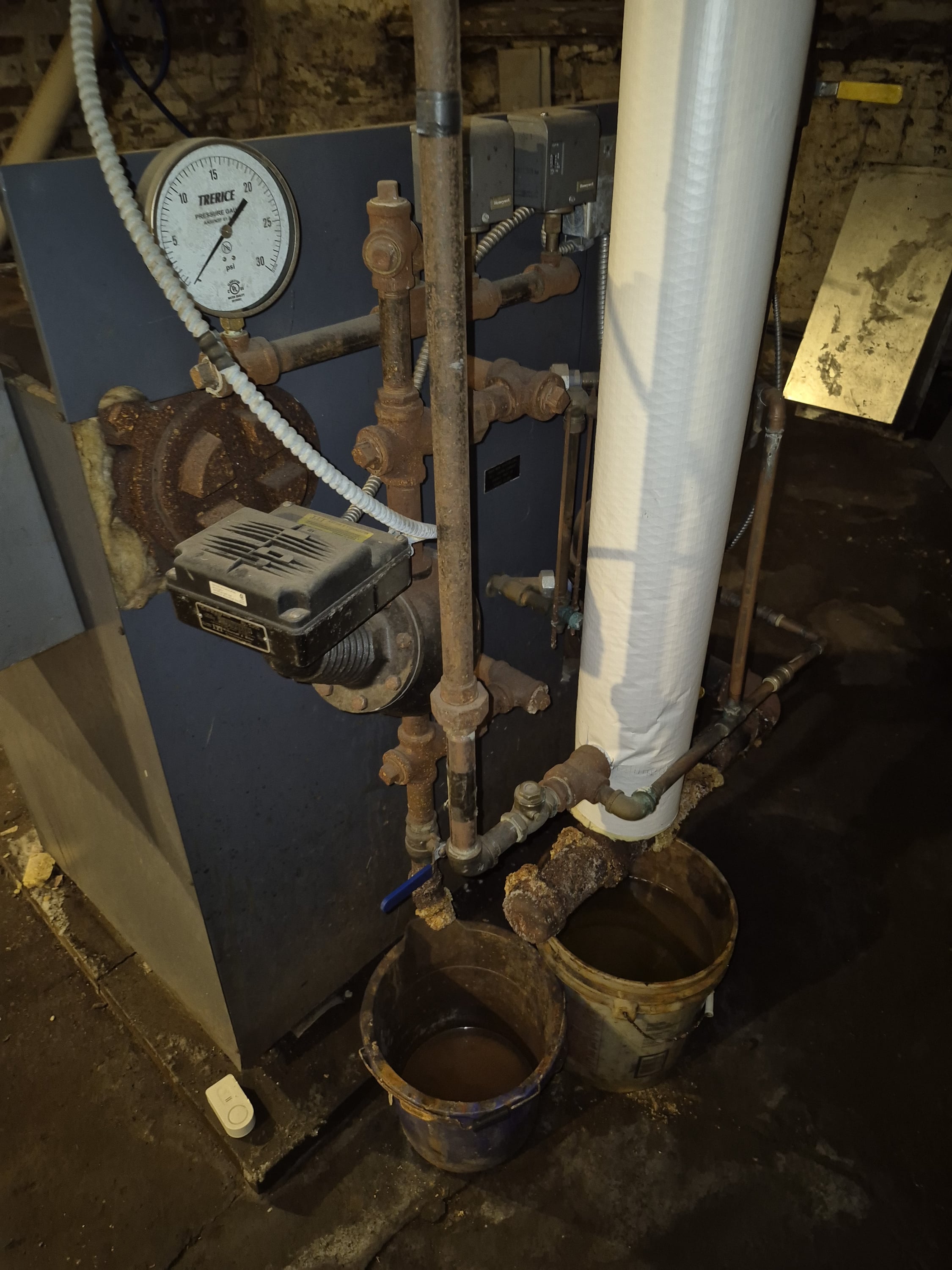
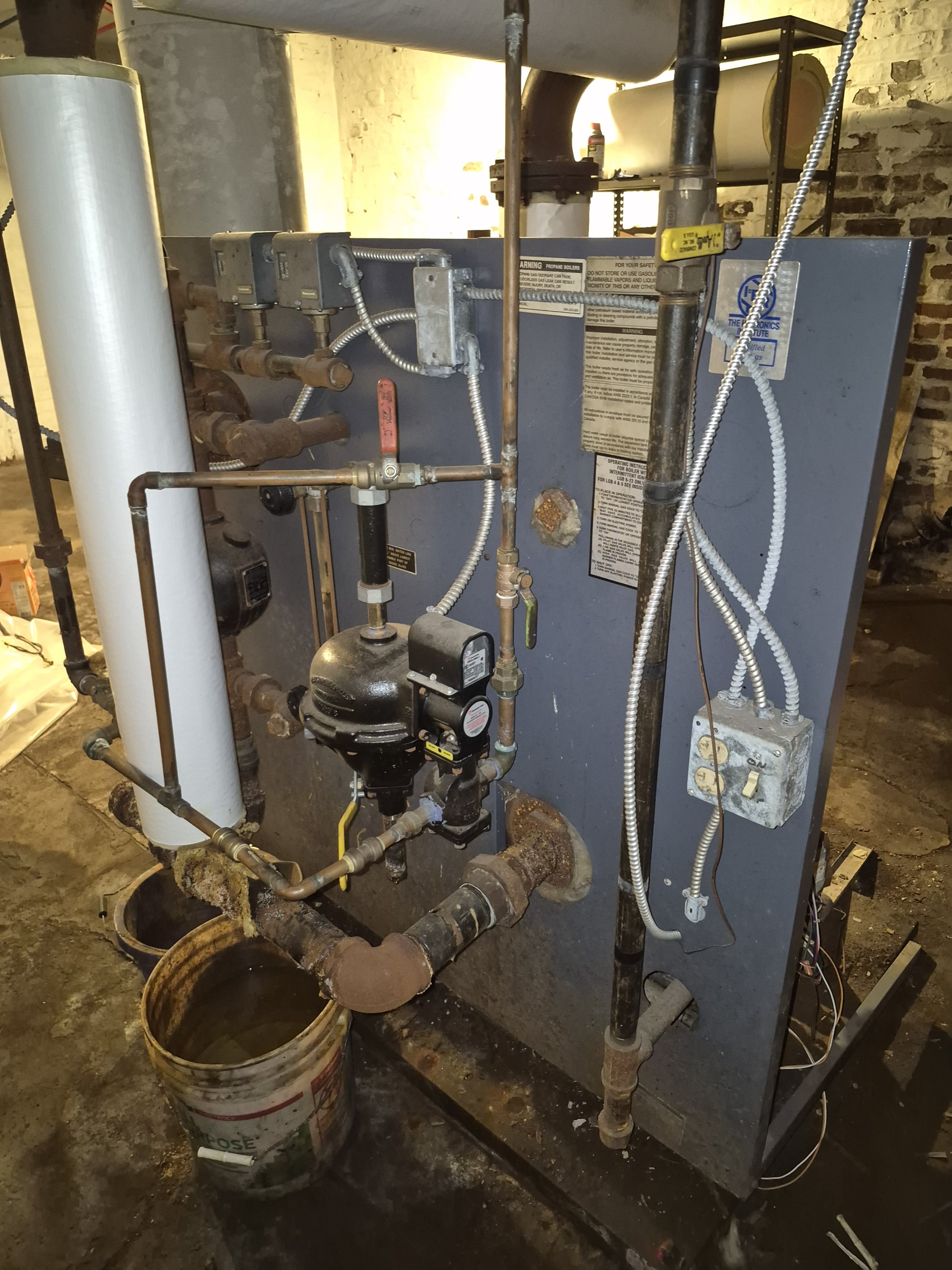
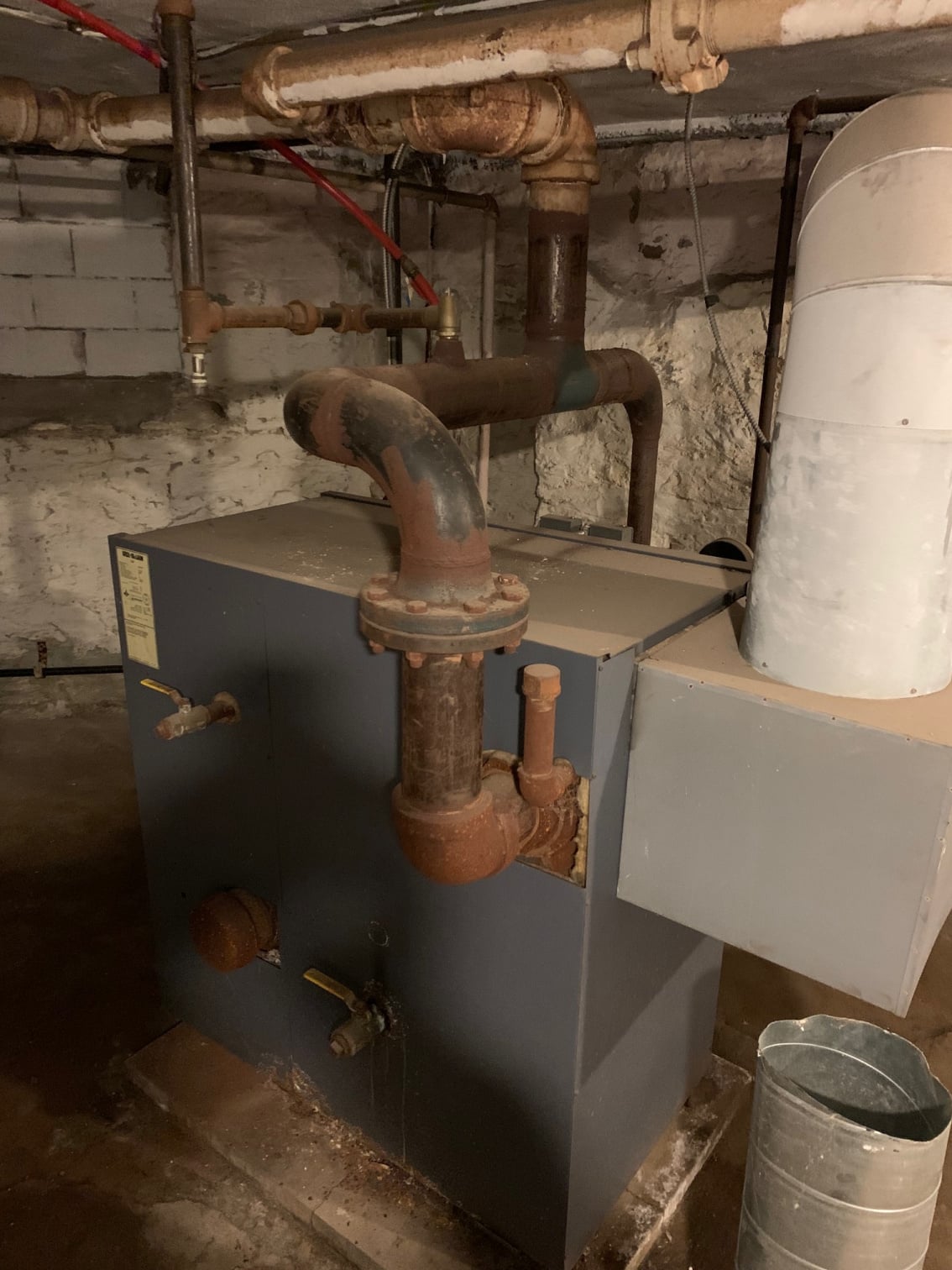
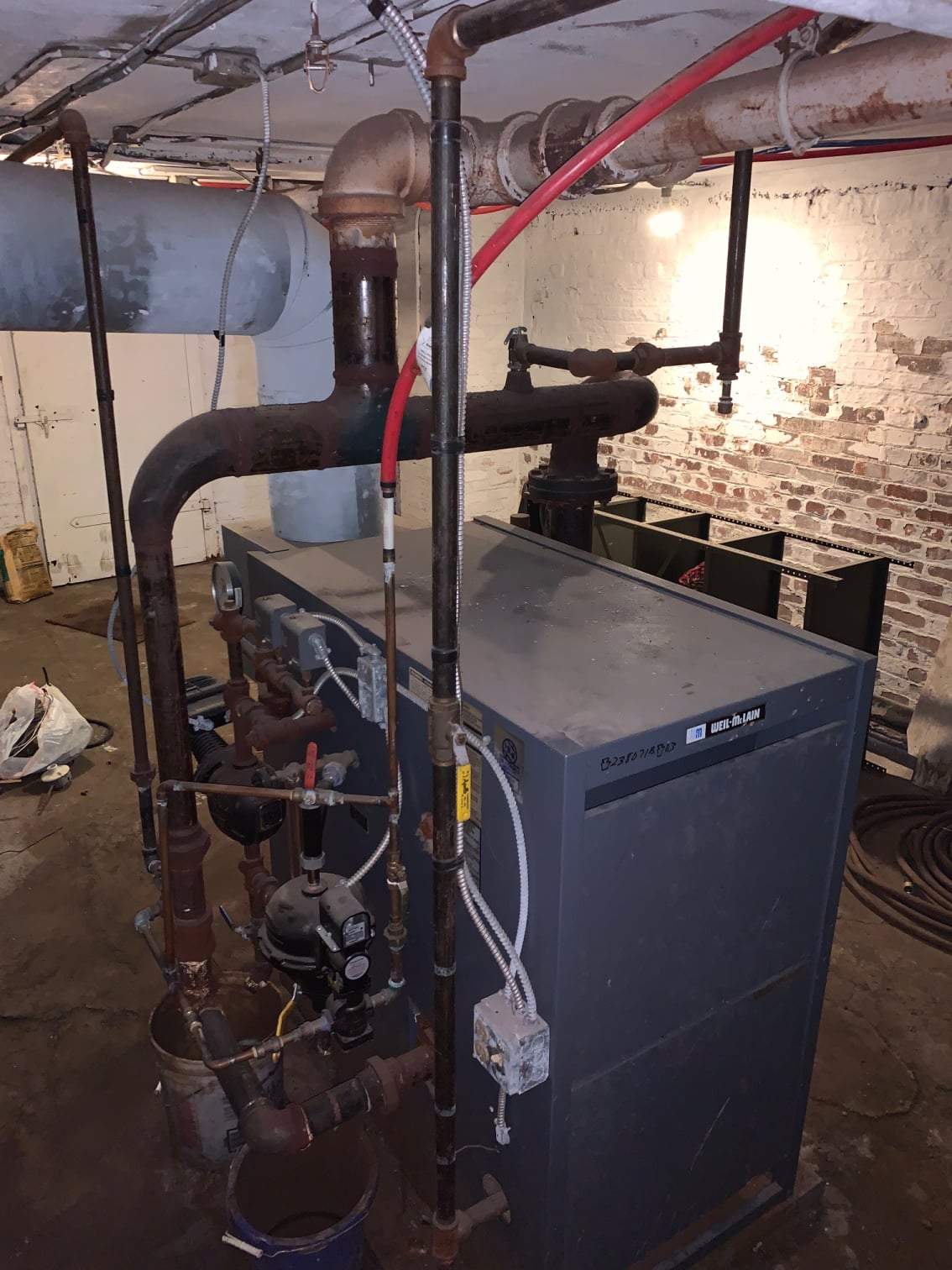
- [DISCONNECTED ] Sterlco - Sterling inc - 1/3 HP Pump??: Installed 2001, same day as boiler. Looks completely defunct and gutless
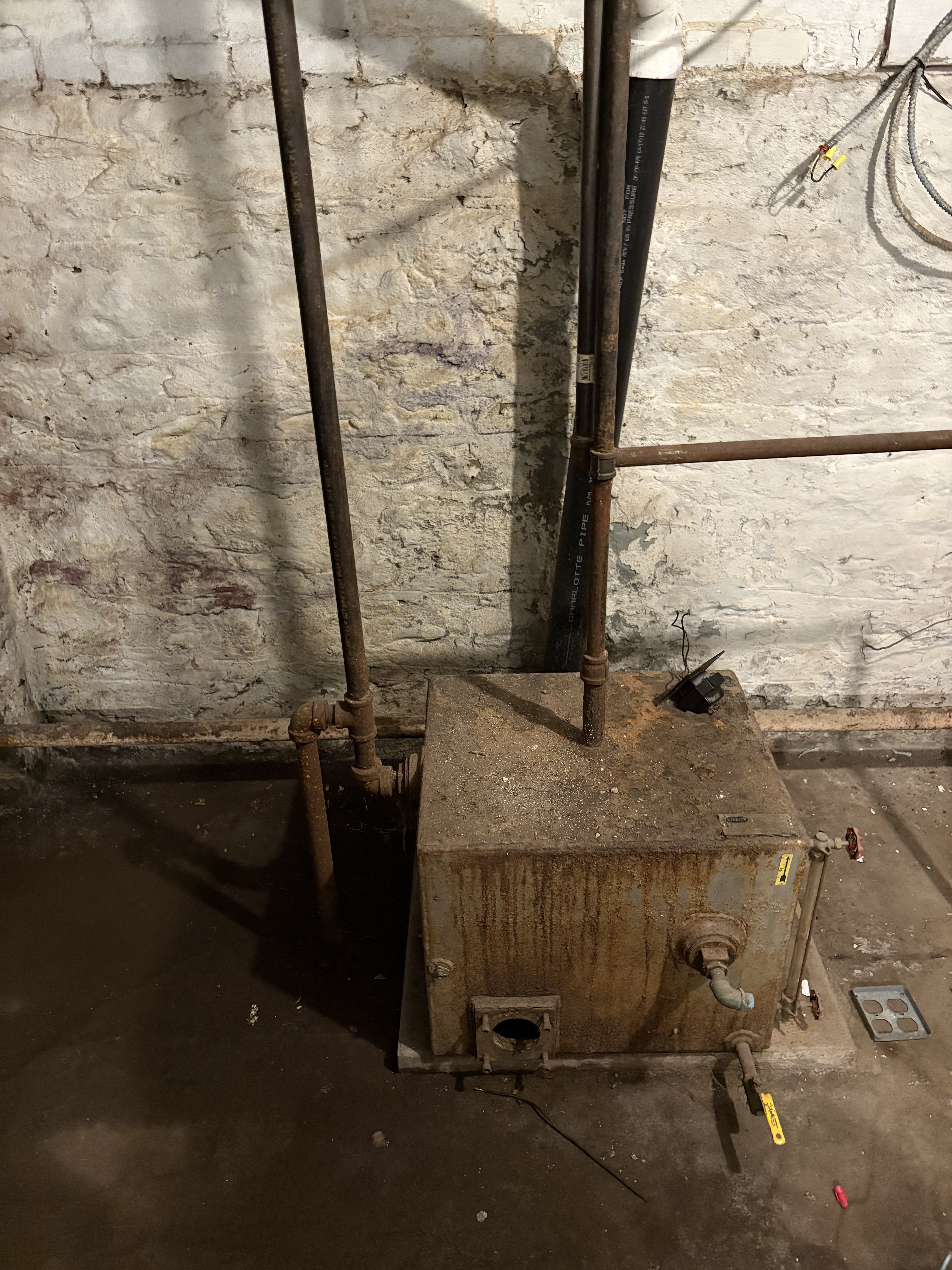
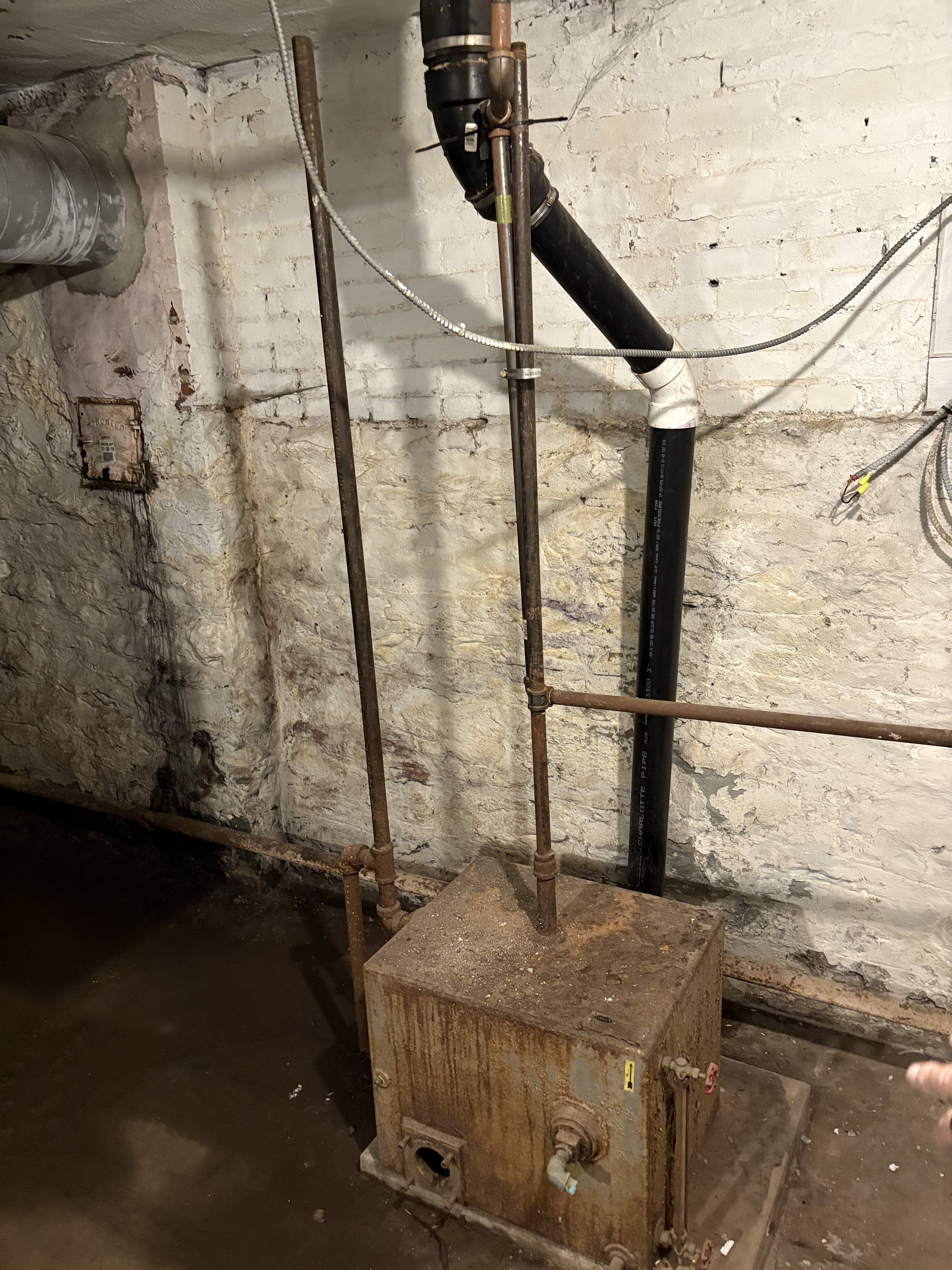
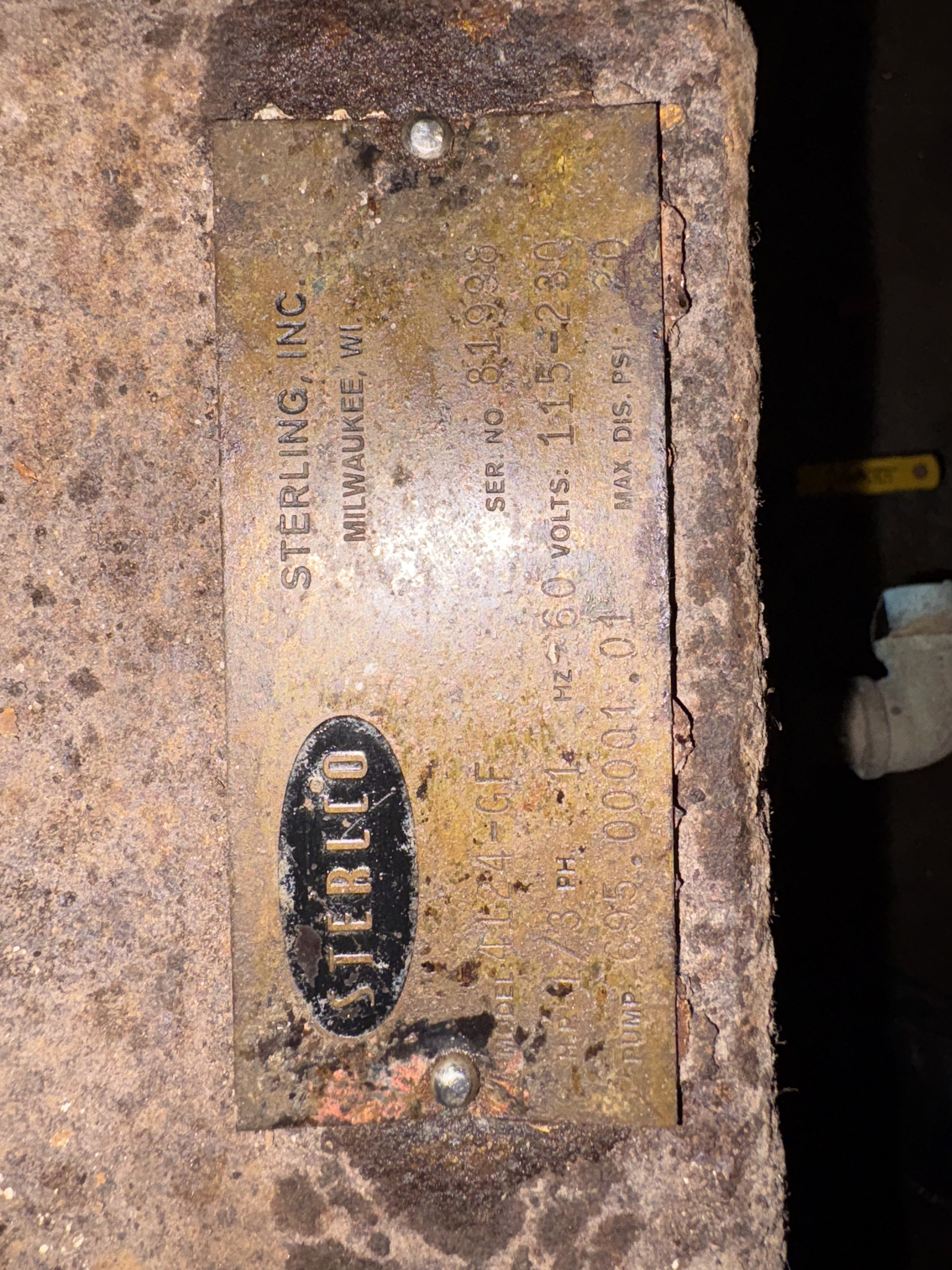
- Smaller condensate pump: installed 1998 - but still connected (didn't get the make/model)
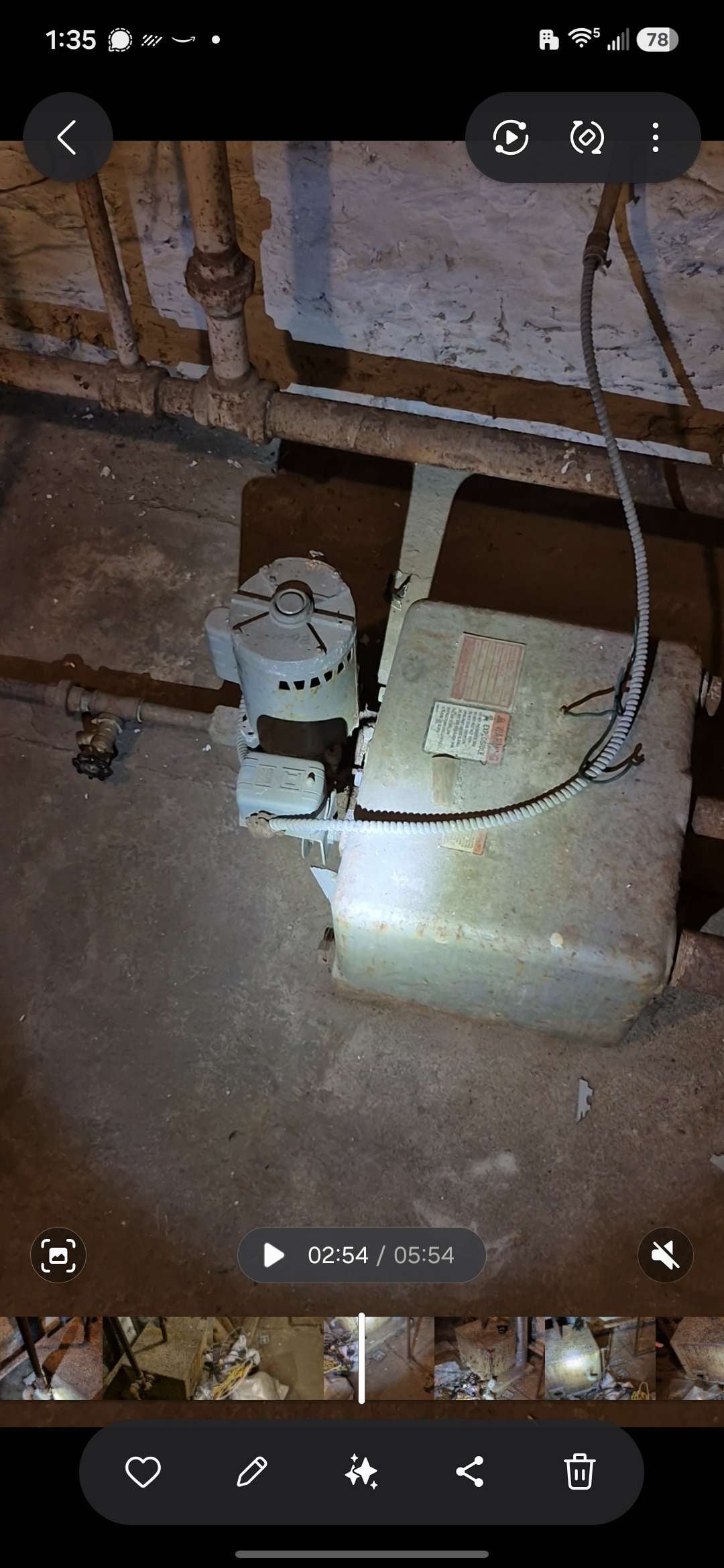
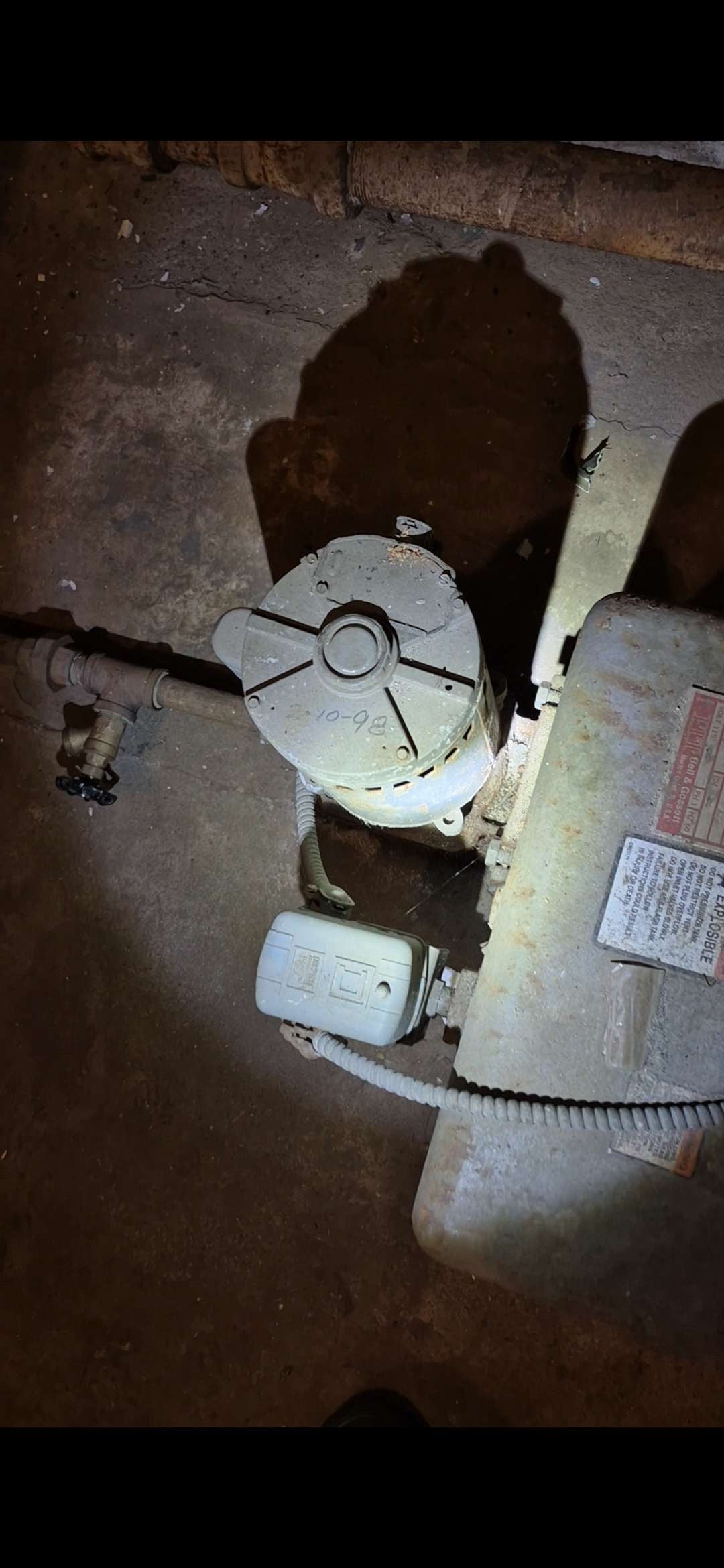
- Wet return, running below the boiler, feeding into the boiler, running through about half of the basement
- Dry returns running parallel to the main pipe throughout the whole basement, feeding into the wet return
Comments
-
the pumped vs gravity return has to do with the water content of the boiler. If the system has too much of the water from the boiler in the system in the form of steam while the system is running, the water level in the boiler may fall too much. bigger boilers have more water content but modern boilers have less water content than older boilers did. if the boiler doesn't have enough water content, more volume can be added with pieces or large pipe or a passive tank that is set up as a reservoir. Usually there are better options than a pumped return.
the other reason to have a pumped return is if you have emitters below the boiler so that the condensate can't return by gravity.
Where are you located, there may be some pros here that are nearby.
0 -
Lose the condensate return pump and rely on good old gravity. The only reason why you might not be able to do that is if the piping is such that somewhere a wet return is above the water level in the boiler or if there is a radiator which is below the water level in the boiler.
There is a possible pressure concern as well. If this is a true two pipe system, any dry returns must be high enough above the boiler water level so that they don't flood. I can't tell from the photos whether or not this is the case. This is not usually a problem, but easily checked.
Br. Jamie, osb
Building superintendent/caretaker, 7200 sq. ft. historic house museum with dependencies in New England 1
1 -
Post your location.
You need someone that knows steam well and there are not many that do. You don't want this to turn into a horror show.
 2
2


Categories
- All Categories
- 87.8K THE MAIN WALL
- 3.3K A-C, Heat Pumps & Refrigeration
- 60 Biomass
- 430 Carbon Monoxide Awareness
- 133 Chimneys & Flues
- 2.2K Domestic Hot Water
- 6K Gas Heating
- 124 Geothermal
- 170 Indoor-Air Quality
- 3.9K Oil Heating
- 79 Pipe Deterioration
- 1.1K Plumbing
- 6.7K Radiant Heating
- 396 Solar
- 16.1K Strictly Steam
- 3.5K Thermostats and Controls
- 56 Water Quality
- 51 Industry Classes
- 51 Job Opportunities
- 18 Recall Announcements