Welcome! Here are the website rules, as well as some tips for using this forum.
Click here to Find a Contractor in your area.
If our community has helped you, please consider making a contribution to support this website. Thanks!
Professionally spacing heavy manifold on Unistrut 2-1/4" off the wall?

Building a heavy hydronic manifold using two 6-foot vertical Unistrut rails and six 40-inch staggered rungs (3 zones).I need to raise the entire Unistrut assembly 2-1/4 inches off the back panel to create a riser chase underneath for the pipe runs.Because of the heavy weight, I am worried about torque and shear force at the spacers.How do professionals achieve this 2-1/4" standoff safely? Any specific bracket part numbers or tricks?Thanks!
Comments
-
Can you make a simple sketch? What kind of weight are we talking? We do this all the time. Mad Dog
1 -
That’s exactly what I call them: Standoffs.
 8.33 lbs./gal. x 60 min./hr. x 20°ΔT = 10,000 BTU's/hour
Two btu per sq ft for degree difference for a slab0 -
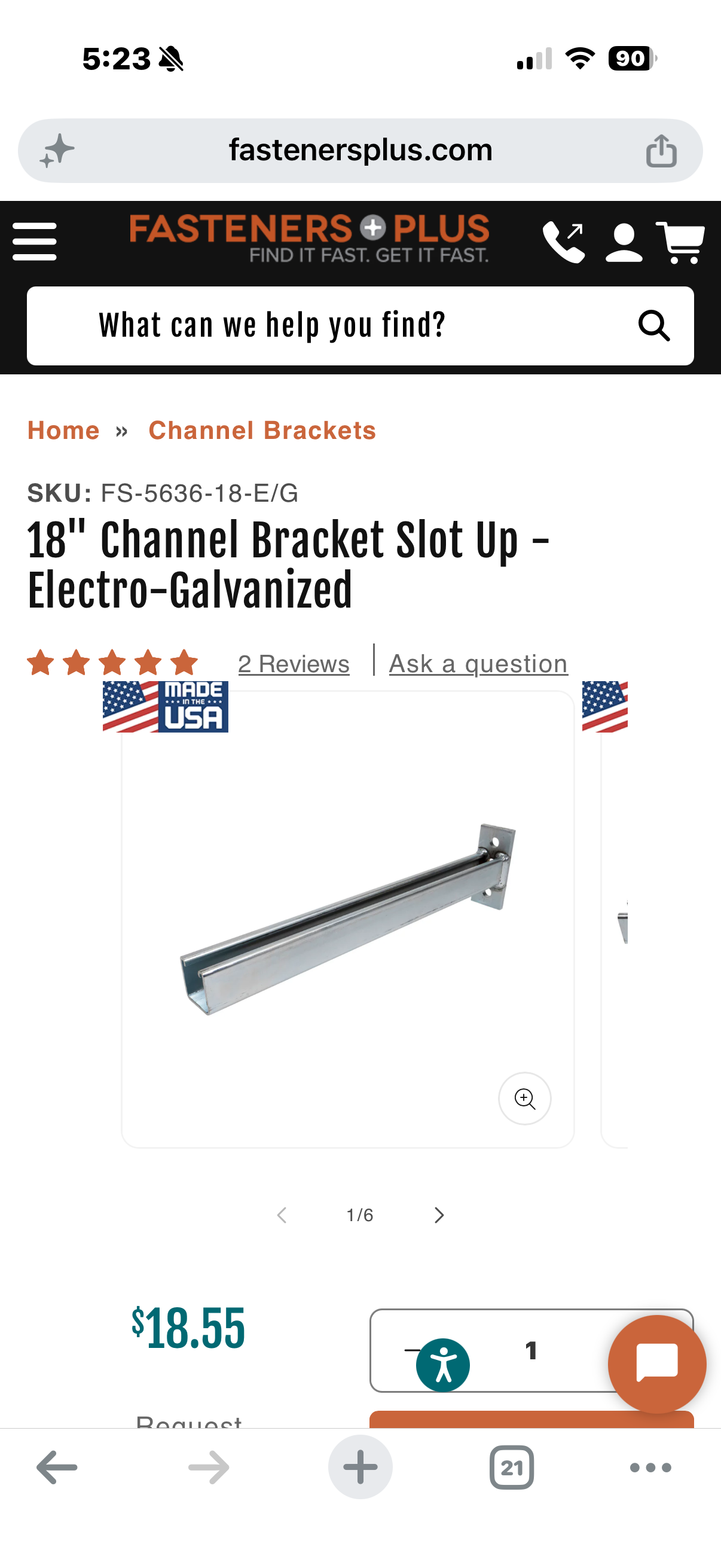
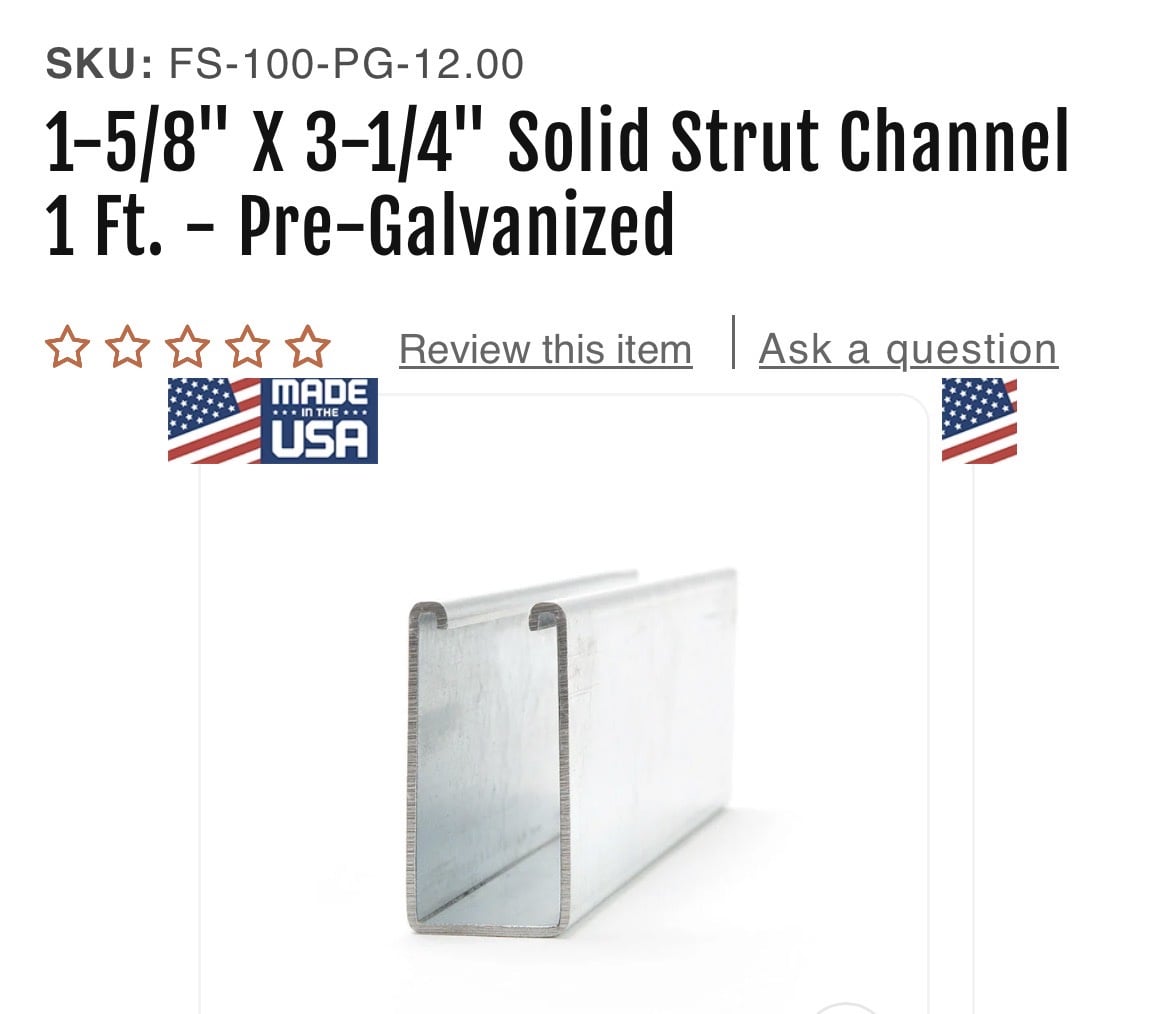
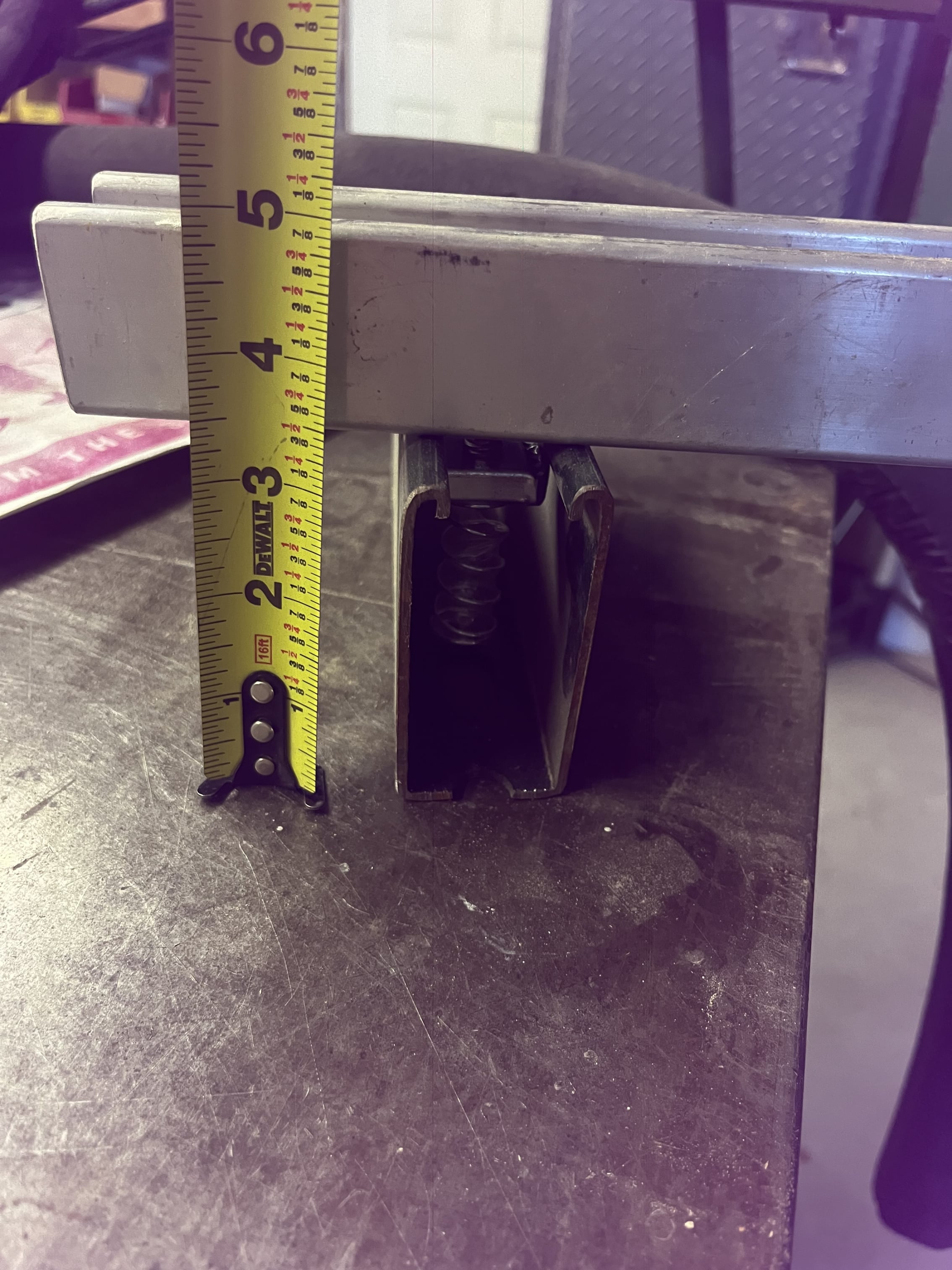
use deep strut for the verticals and standard or shallow depth for the rungs
 Bob "hot rod" Rohr
trainer for Caleffi NA
Living the hydronic dream0 -
how heavy is heavy? usually you use unistrut in a grid to do something like this. if it has an upper and lower support point the rotational forces on the fasteners don't become significant until you have very heavy loads.
0 -
Strut can take a lot of weight.
as mentioned above you can buy strut in various depths,
3/4" (7/8") some mfg
1 1/2" (1 5/8")
You can get (2) 1 1/2" struts sold back to back (riveted) or you can bolt (2) 1 1/2" together
2 1/2 & 3" deep is also old.
You can look on line for strut catalogs and engineering data.
The # of attachments and brackets available is endless
 1
1 -
How much weight? Evenly distributed? A shear strength or pull off the wall load?
You could add some threaded rod and loop hangers from above if it is a front heavy load trying to pull off the wall.
Bob "hot rod" Rohr
trainer for Caleffi NA
Living the hydronic dream0 -
Based on this description I was able to come up with this diagram of the support system.
Building a heavy hydronic manifold using two 6-foot vertical Unistrut rails and six 40-inch staggered rungs (3 zones).I need to raise the entire Unistrut assembly
2-1/4 inches off the back panelto create a riser chase underneath for the pipe runs.Because of the heavy weight, I am worried about torque and shear force at the spacers.How do professionals achieve this 2-1/4" standoff safely? Any specific bracket part numbers or tricks?Thanks!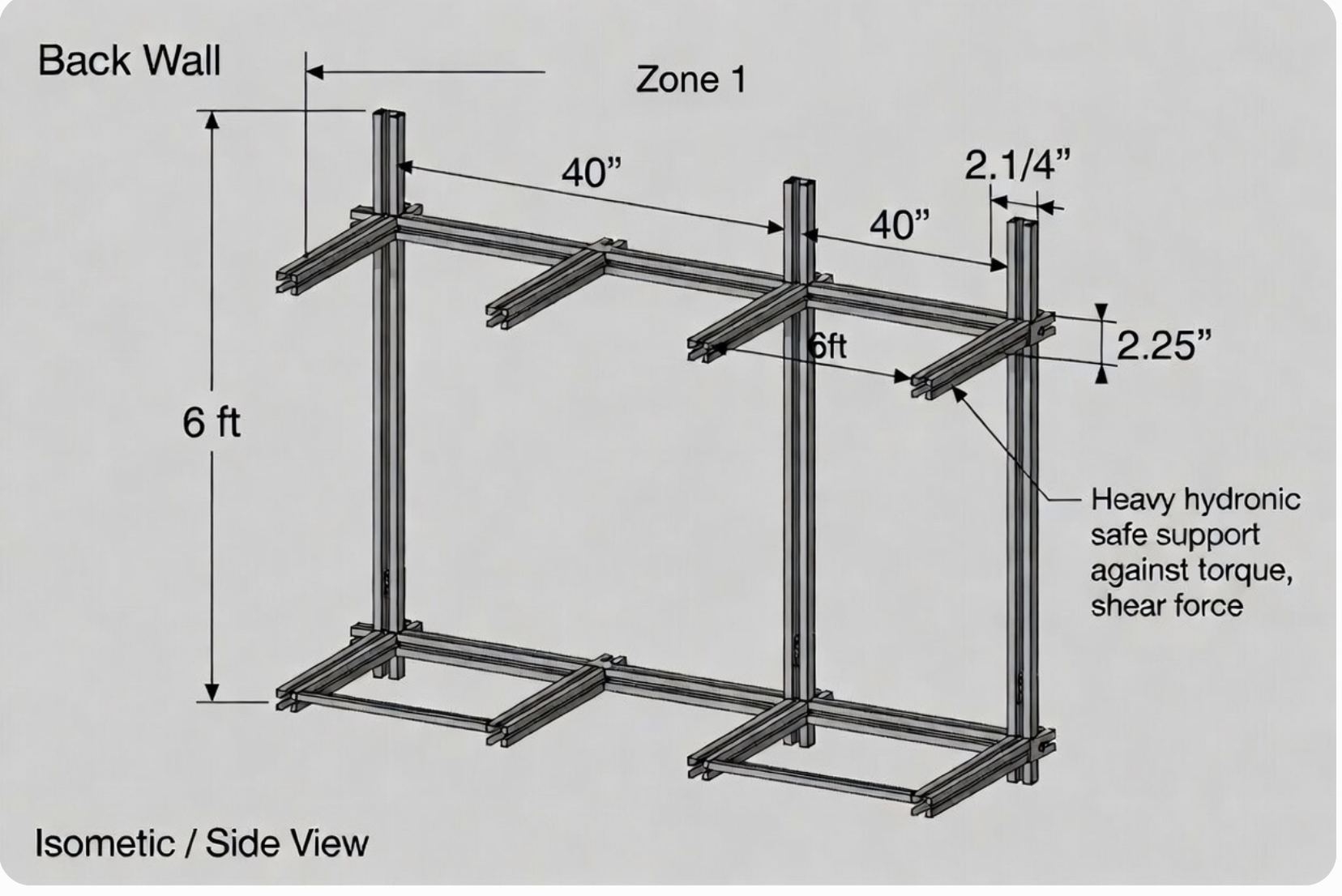
Then I asked the program to place the heavy manifold piping in that support system.
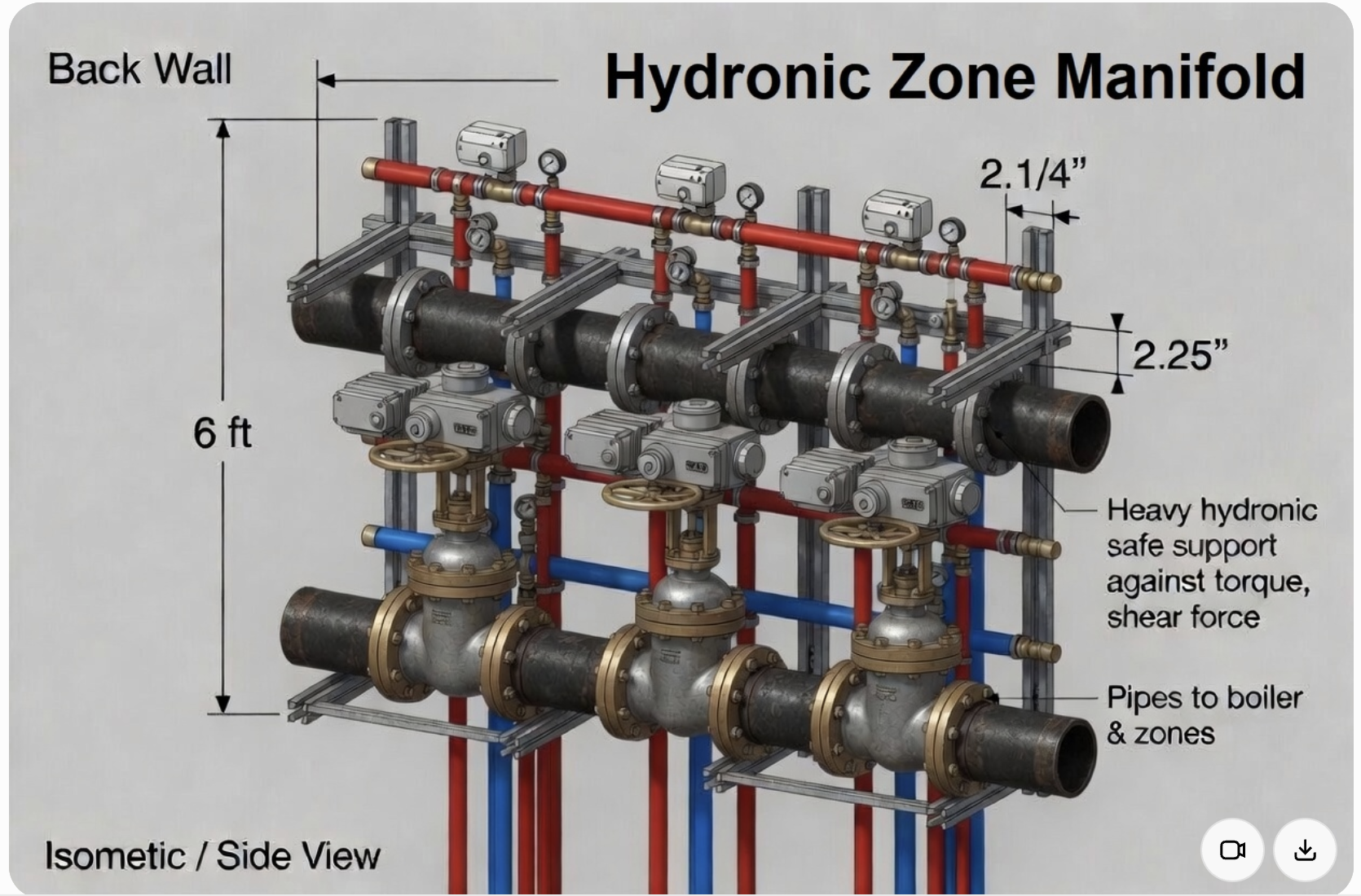
Does this help?
It's amazing what "AI" can do for you.
But I have a feeling that your project looks nothing like this
Edward Young Retired
After you make that expensive repair and you still have the same problem, What will you check next?

 3
3 -
i mean if you want to weld stuff like that it is easy.
0 -
This will tell you what the strut is rated for.
Personally, I'd cradle the valves. How much weight are we talking?
0 -
⅜" all-thread with wall plates and strut warshers (the big thick square ones) will let you space a piece of strut as far as you want. Split rings give it that finished look.
There are literally thousands of strut brackets. Whatever shape you want to make, there's a custom fitting for it—but not all are stocked. I ended up ordering on the internetz for some oddball brackets I needed for the last job, much cheaper and faster than getting my local guy to bring them in for me.
1 -
@pecmsg asked: "Personally, I'd cradle the valves. How much weight are we talking?"
I think the original post is very specific:
It's not VERY HEAVY
It's not overly heavy.
It's just heavy.
And that is more that moderately heavy. But less that really heavy.
Edward Young Retired
After you make that expensive repair and you still have the same problem, What will you check next?
2 -
If it is really heavy hanging at least the heavy stuff from overhead will probably be less work
 2
2 -
WOW, I greatly appreciate all the comments! This site is a godsend.
After I posted this I (temporarily?) went back to my earlier plan of supporting the manifold on studs and doing away with the back board. I modified it to create a wider wall (from 4' to 6') so zone rungs don't need to be staggered. Now the rails are half as heavy and I don't need to cap every other one. As I might have compelling reasons to go back to using a back board, I'll show both designs.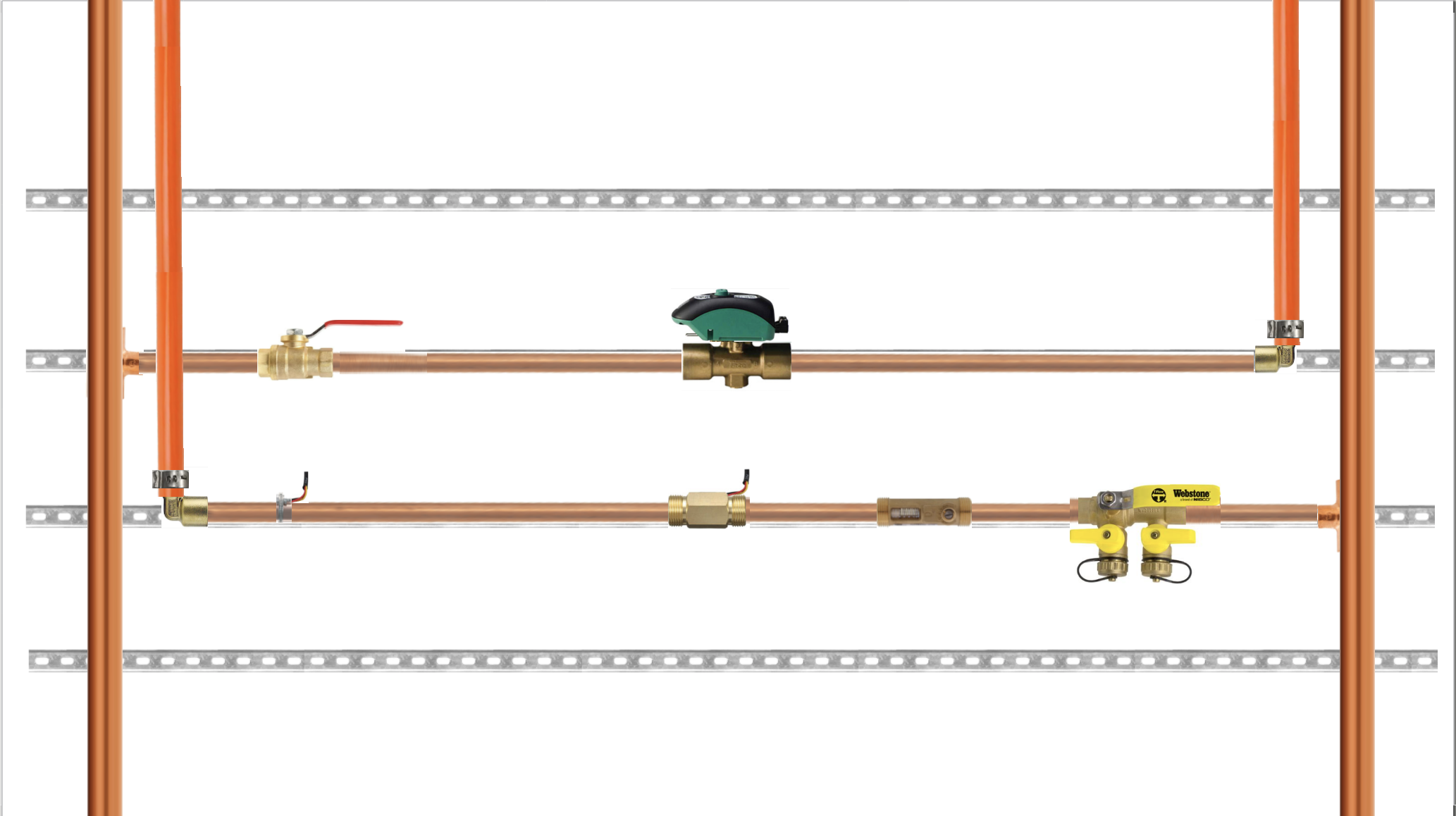
The above design shows the problem I posted about. Note that I'd like to have Unistrut on the backboard, but then I'd want the PEX risers to route under them. That's the rub (no pun intended). Some comments recommend a deeper Unistrut channel, but I know they exist. They don't however allow me to route PEX underneath.
Forgive my unprofessional use of the word "heavy". It's obviously not that heavy, Just heavy enough to need to learn what the proper fittings are. Otherwise I won't like the amount of torque on the fasteners if I have to mount a distance away from the back board.
So here is an image of a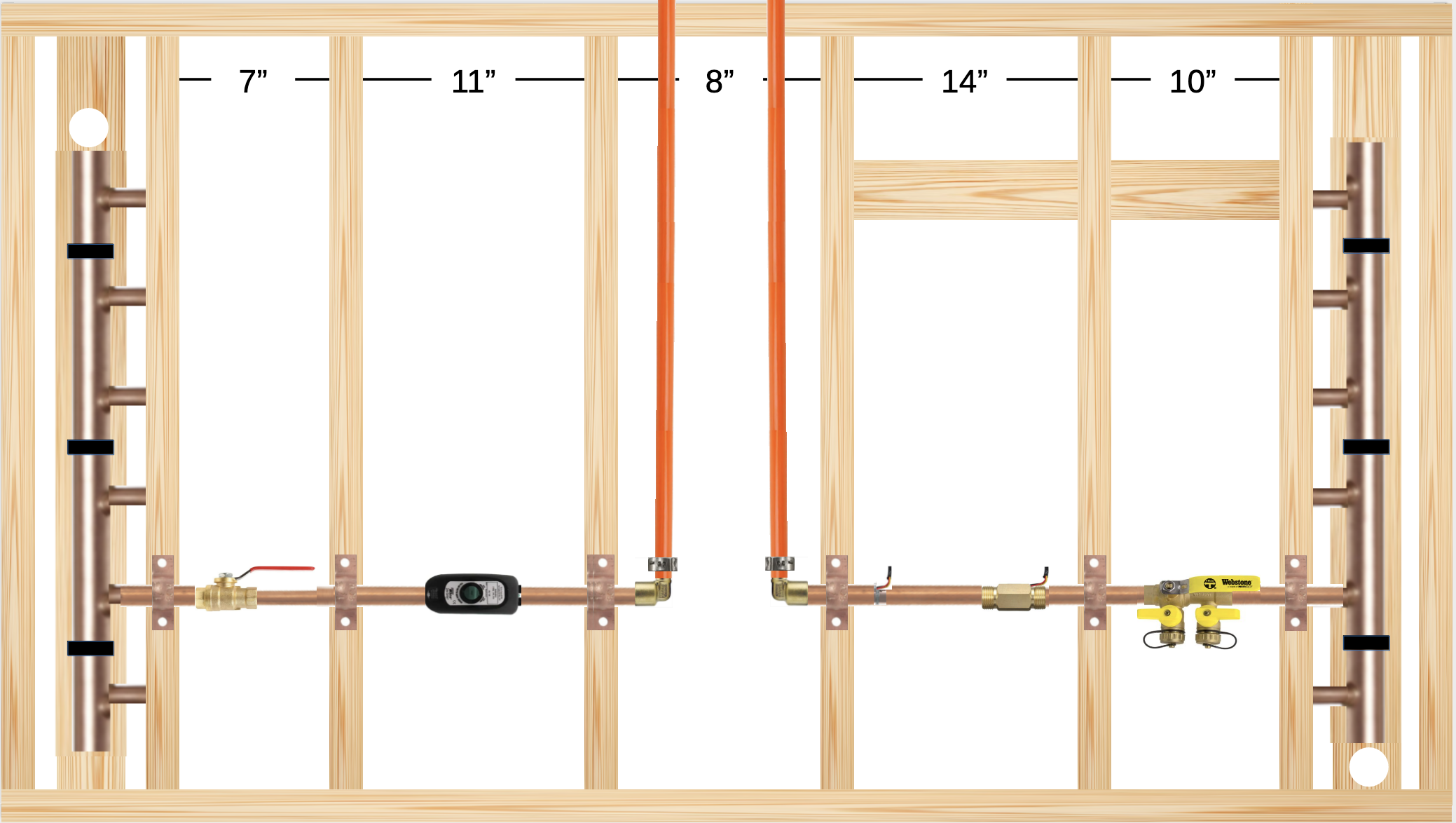
detailed plan to mount directly onto bare studs, showing the entire frame 6' wide and 4' in height. You can see both rails and the zone rung of one of the six zones. This provides an elegant chase for the PEX pipes. Perhaps mounting on studs is now considered "old-fashioned", but I like this design. It's still not resolved what I should use for straps. I would like 2-hole copper straps for robustness, even though they're not as good for serviceability.
I still don't know what is the best way to mount the rails. My latest idea is a flat stud mounted behind each rail so I can attach clamps, but am not familiar enough with these kinds of clamps. I know of course I need to keep one tight on each rail and the two others should be loose enough to allow pipe expansion and contraction.0 -
@DrHerrera I hope you got a chuckle from my posts. But to be serious about your project, that is standard zine valve and piping arrangement. To make a professional looking job you might consider using a split ring hanger that can attach to the stud or uni-strut by way of 3/8" threaded rod cut to length, those lengths can be increased or decreased as needed to allow for PEX to run behind the hard copper manifold piping. I sometimes use copper 45° elbows to get the proper offset.
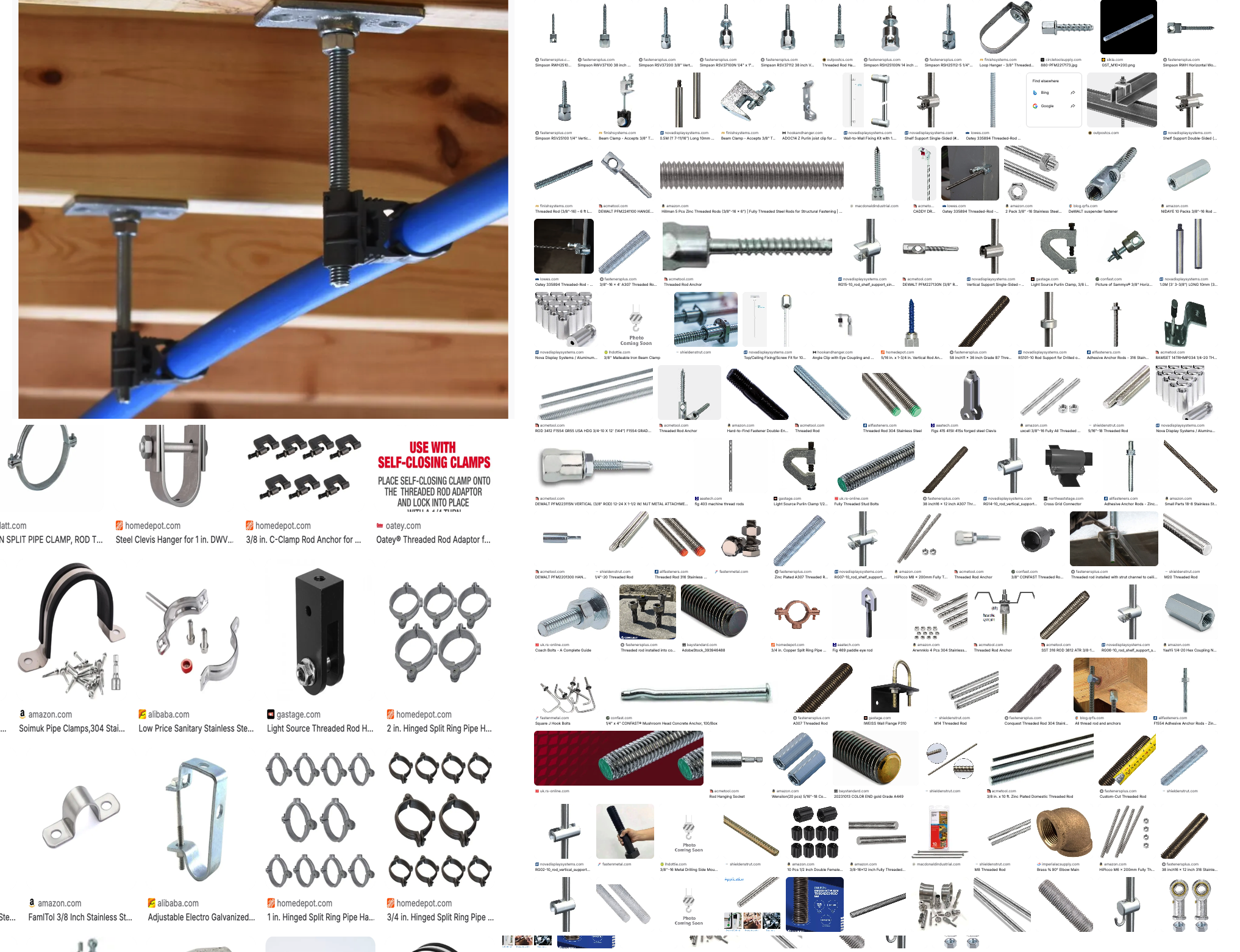
There are too many ways to hang that zone valve and piping. And to be more technical those about the weight, that 3/4" copper stuff is pretty light compared to 12" valves and fittings. You can use just about anything
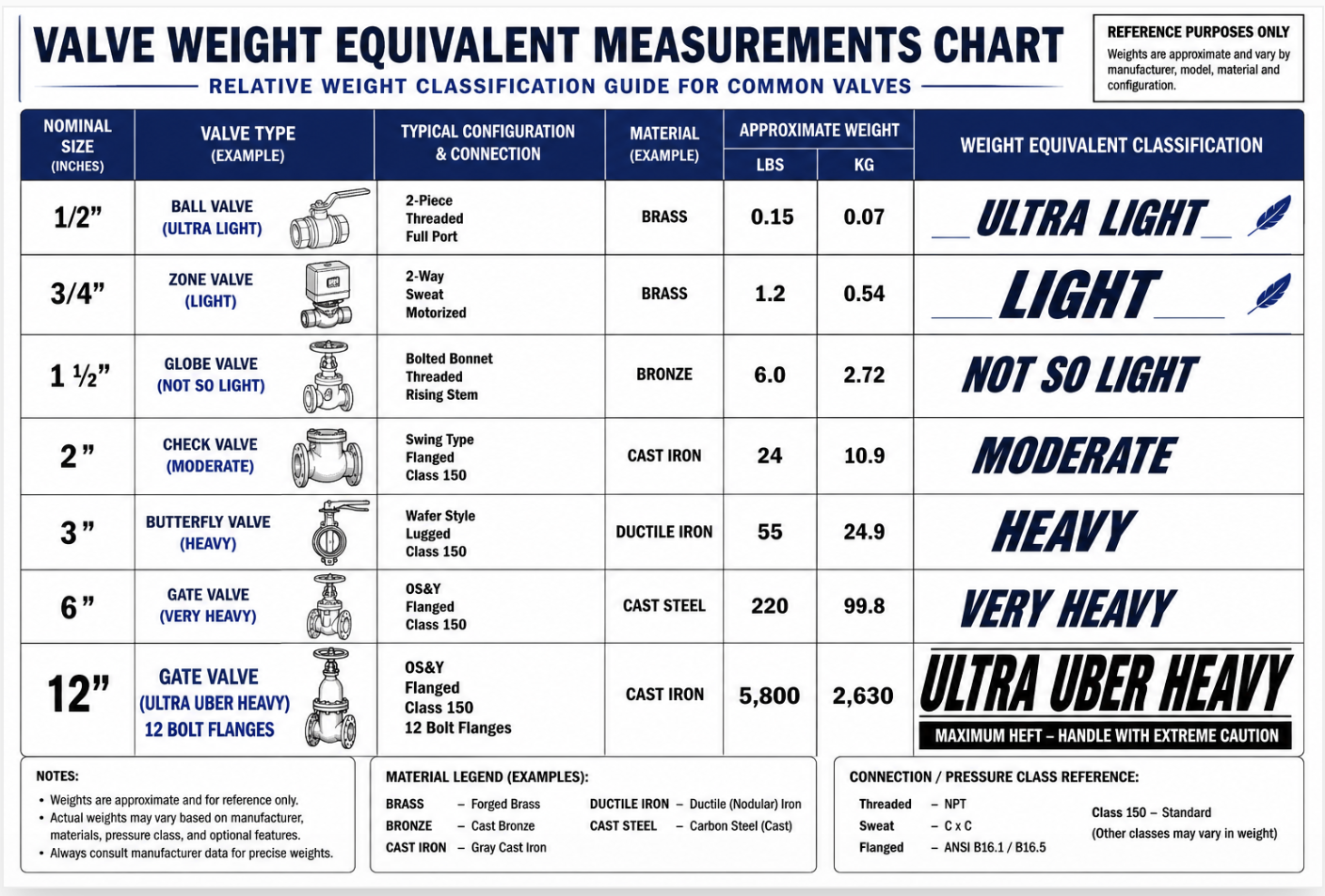
To make this easier in the future I have included this professional chart for reference when describing weight to us professionals on heatinghelp.com
Edward Young Retired
After you make that expensive repair and you still have the same problem, What will you check next?
 2
2 -
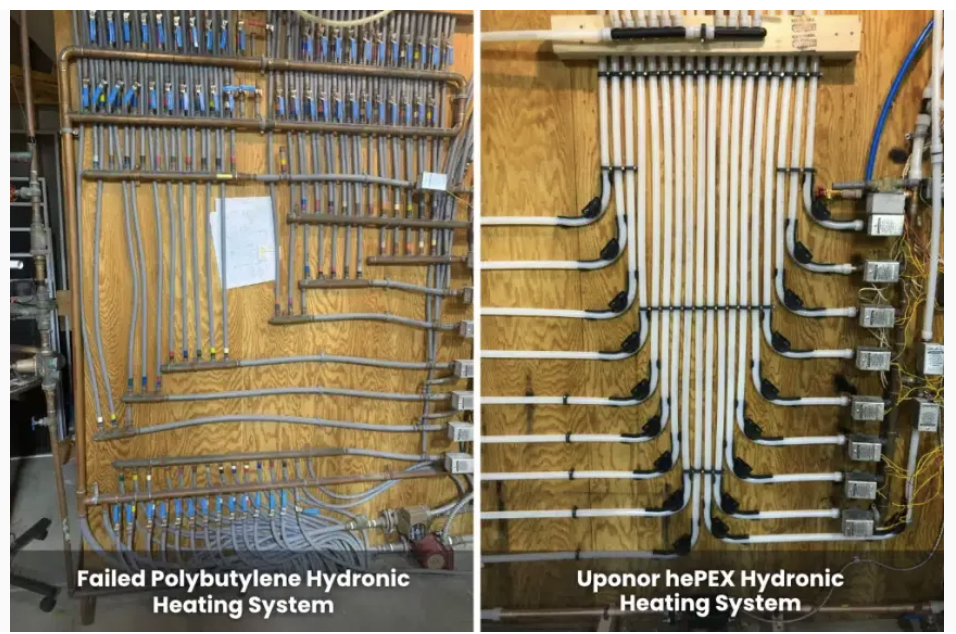
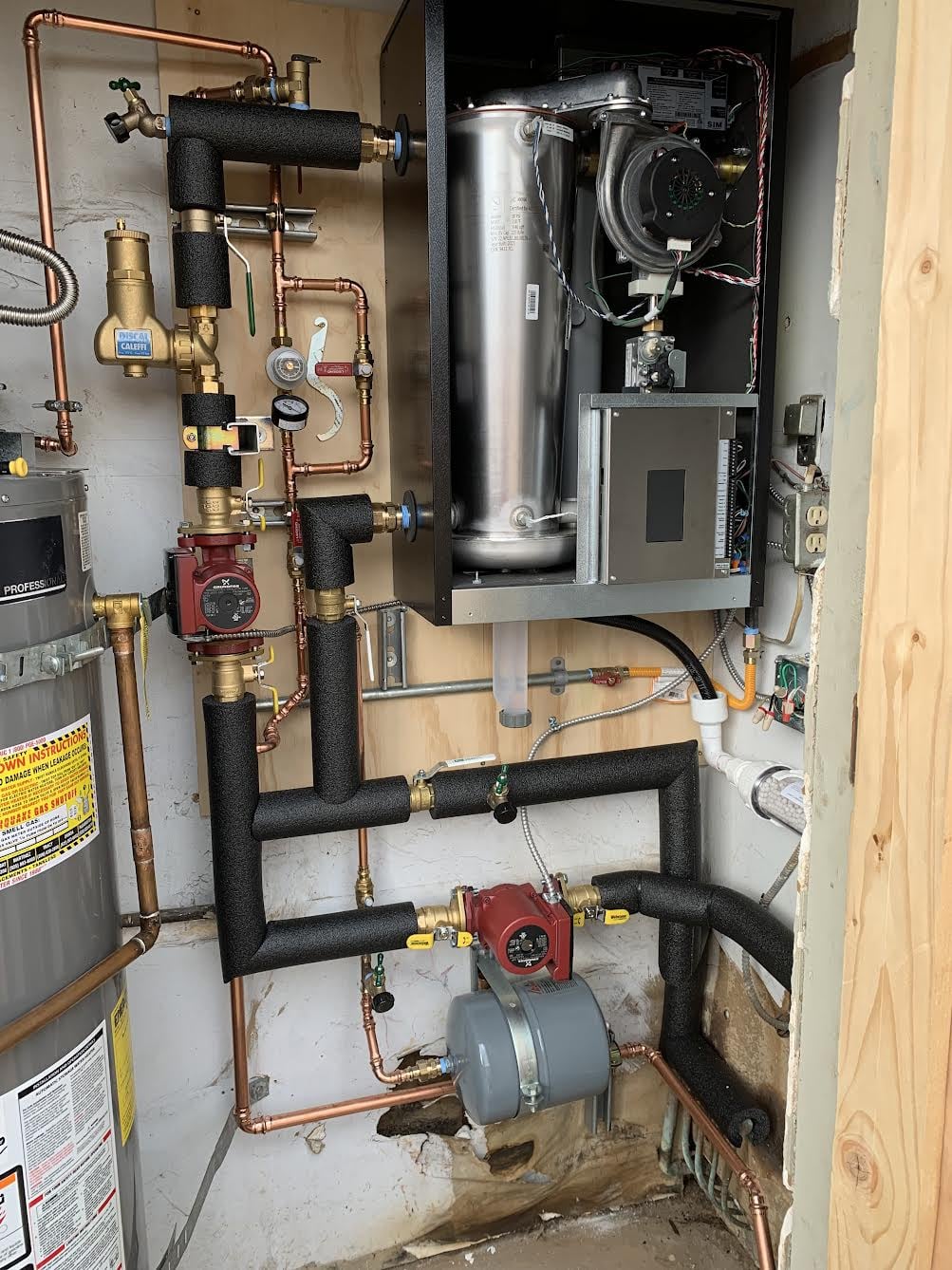
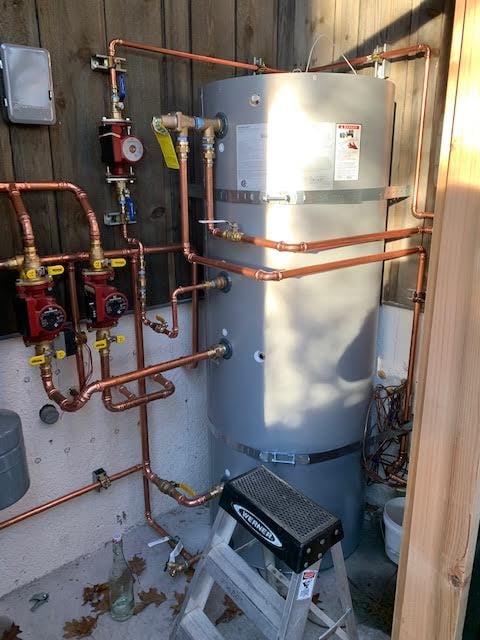
Here are 2 classic photos of a lot more zones to maybe help with what you are trying to do with 3 zones
This one is a failed system next to a better system design.
This next one attached the All thread hangers directly to the wall panel that was decorated with faux diamond plate tiles to make the boiler room have a slick look.
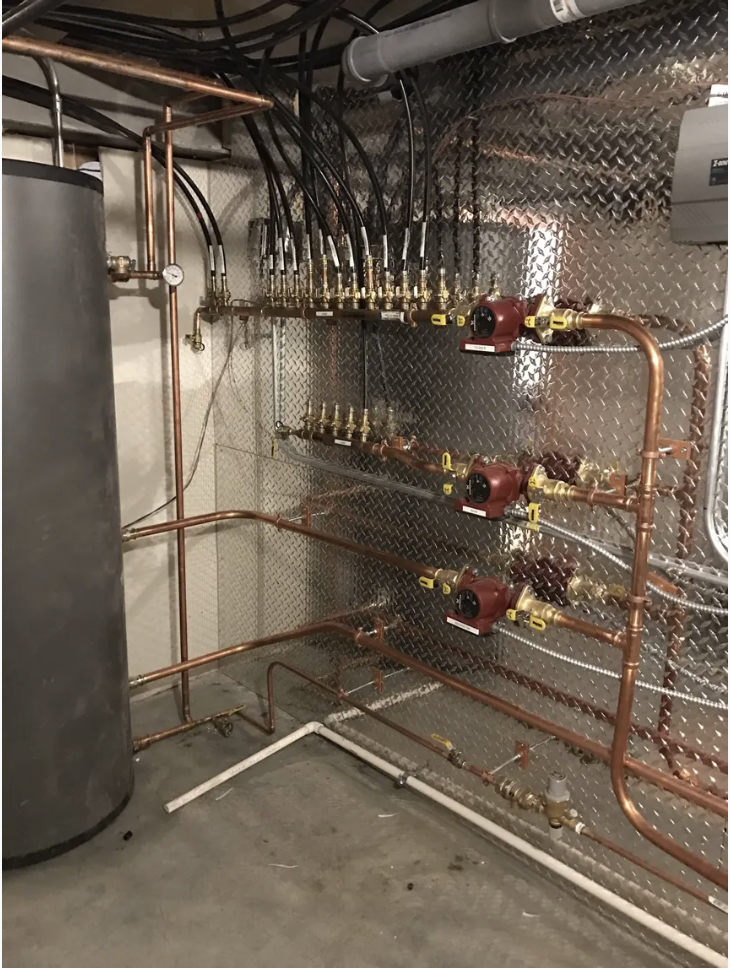
These threaded rods are cut to different length to get the piping far enough from the wall to allow for the circulator pumps and wiring can slip behind the piping.
Edward Young Retired
After you make that expensive repair and you still have the same problem, What will you check next?
0 -
@EdTheHeaterMan
Thanks! That clamp in the photo looks ideal for mounting the rails regardless of my plan (sheathed frame or bare studs). And maybe that's the way to go for the rungs as well. Knew there had to be something standard like this. What's the exact name for it? Never seen one just like this. (This is the first heating system I've ever worked on.) I much prefer this than to the typical split-ring clamp and for my rails they're right next to a stud. What specific amounts of offsets are available perpendicular to the extender? There must be something that is adjustable.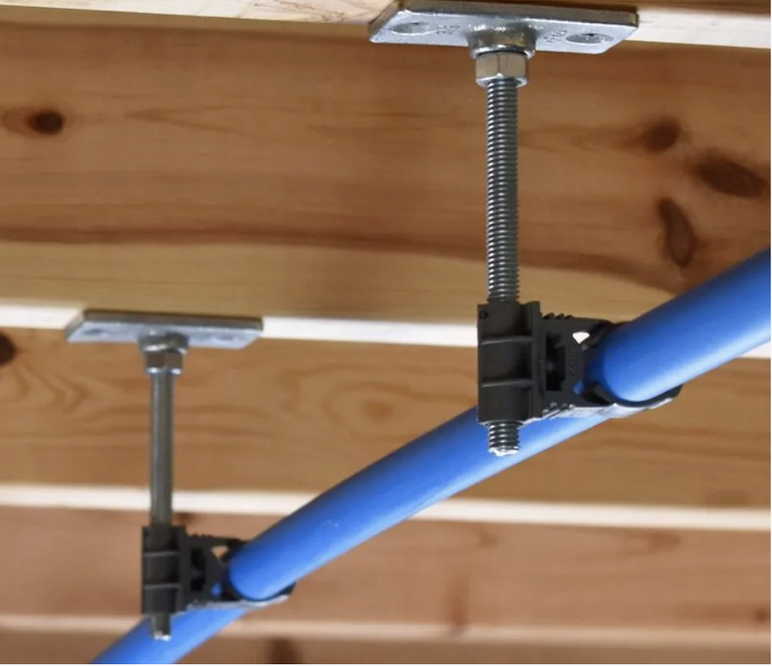
.
0 -
Any good site/white paper/catalog/manual/book that really explains all the clamps that are available for mounting pipes? Chatbots hallucinate immediately, telling me not only that they don't know about it, but that this information is very hard to get online.
0 -
Looks like I'll stick with my "bare studs" plan. I wouldn't be providing thereby a "torsion box" for the boiler and boiler-side mounting on the reverse side, but I still prefer it this way for many reasons.
At this point I'm still thinking of 2-hole copper straps for the rungs, but clamps like EdTheHeaterMan described above for the rails.
Are 2-hole copper straps still used a lot on studs? Is it common to mount a zone manifold on bare studs?
And what type of clamp can define a fixed position for my rails at that clamp, letting the pipe slide on the other two clamps holding it?0 -
@EdTheHeaterMan
Oh, don't miss the message to you above. The link to you isn't active.
However, note that the clamp in your photo won't likely be able to anchor it. I'm sure I'd need to anchor at one point, I'm guessing at the middle. I've seen clamps with a metal ring around compressible rubber.0 -
Hi, Have a look here: Oatey looks to be the one pictured above.
Yours, Larry
0 -
@EdTheHeaterMan Thanks for the photos and that certainly is a "slick" mechanical wall. I've seen enough examples of layouts to know how split-ring clamps are used (but I greatly appreciate collecting many more). It's that I'm quite a dummy in terms of all the specific clamps available on the market and even about how I can get information about them.
0 -
@Larry Weingarten Very helpful, thanks, and I've already heard I should look into Oatey clamps. Now I need to learn more about the clamps that this adapter fits into.
0 -
Maybe an Oatey 3/4-in Plastic Self Closing Pipe Clamp would work for each rung. I've got to learn about how to snap pipes onto multiple clamps though. Or maybe Larry's suggestion is better.
I'd definitely like to not need to raise the rungs. But then the rails can't be mounted this way because their diameter is greater (1-1/4" vs 3/4"). Got to mount them another way from below that level, such as from the flat studs I propose below them. But it would be more convenient to mount from one of the adjacent studs. Something to position the rail 1/4" inches into the frame.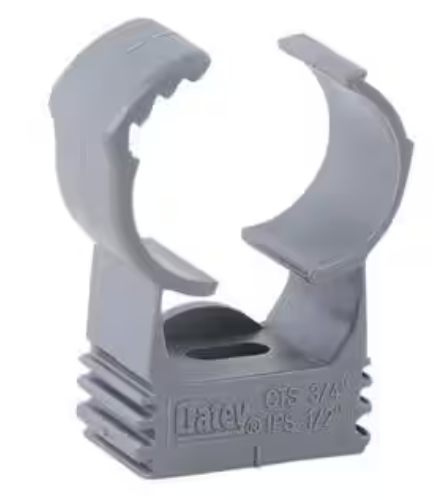 0
0 -
Maybe I don't need those studs that are between the rails and the ball valves.
0 -
My bad!
I don't need the rails to be mounted 1/4" into the frame if I don't use 2-hole clamps, just a self-closing clamp that raises the rails 1/4" less than those clamps that raise slightly the rungs.0 -
For hydronics you want clamps that allow expansion movement, plastic, rubber inserts.
2 hole copper straps can cause noise issues and they transfer pump noise throughout the rack and framing
Ive been using fiberglass or composite strut for my projects, no rusting on the cut ends
Aluminum strut is another option
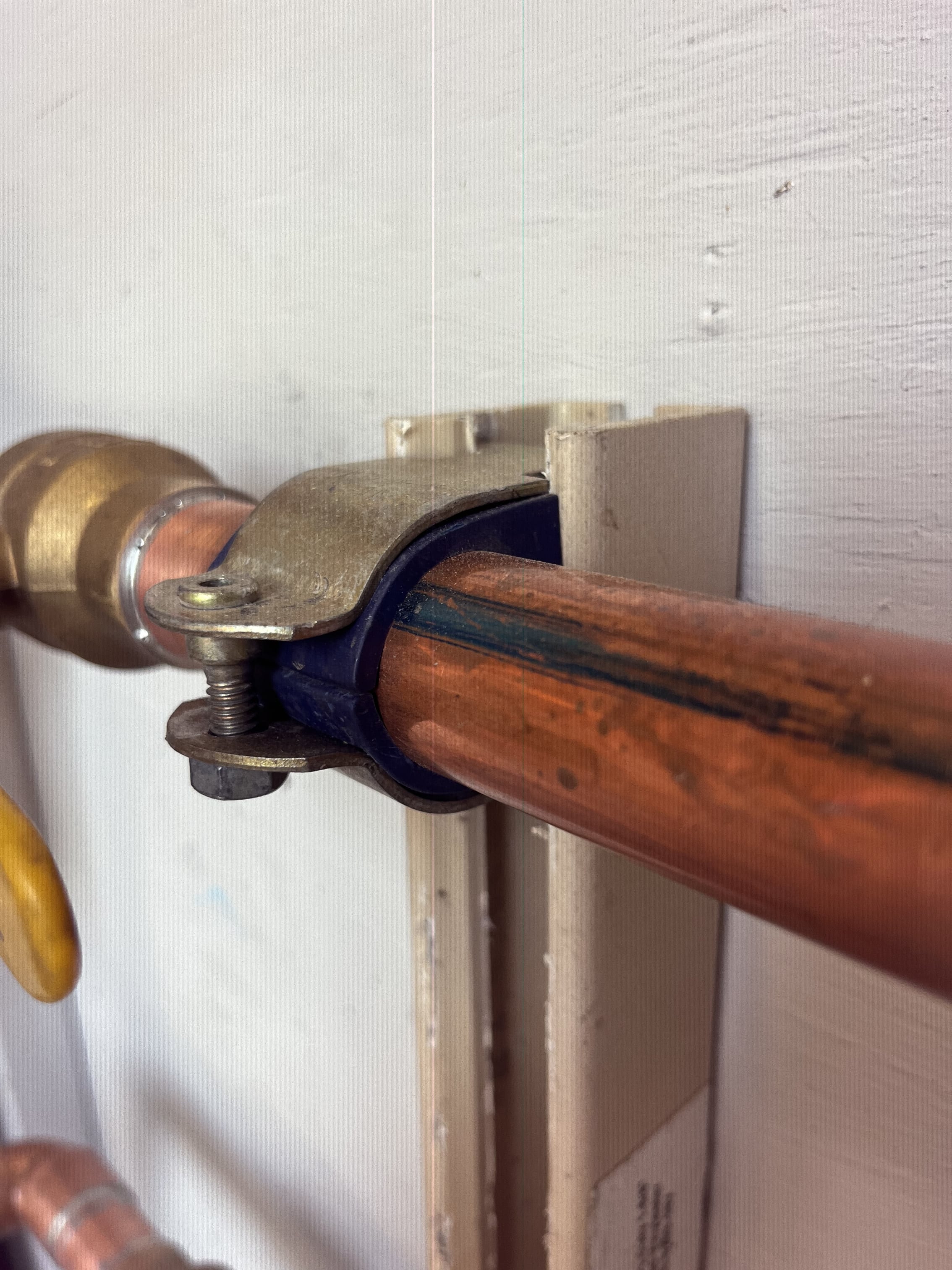
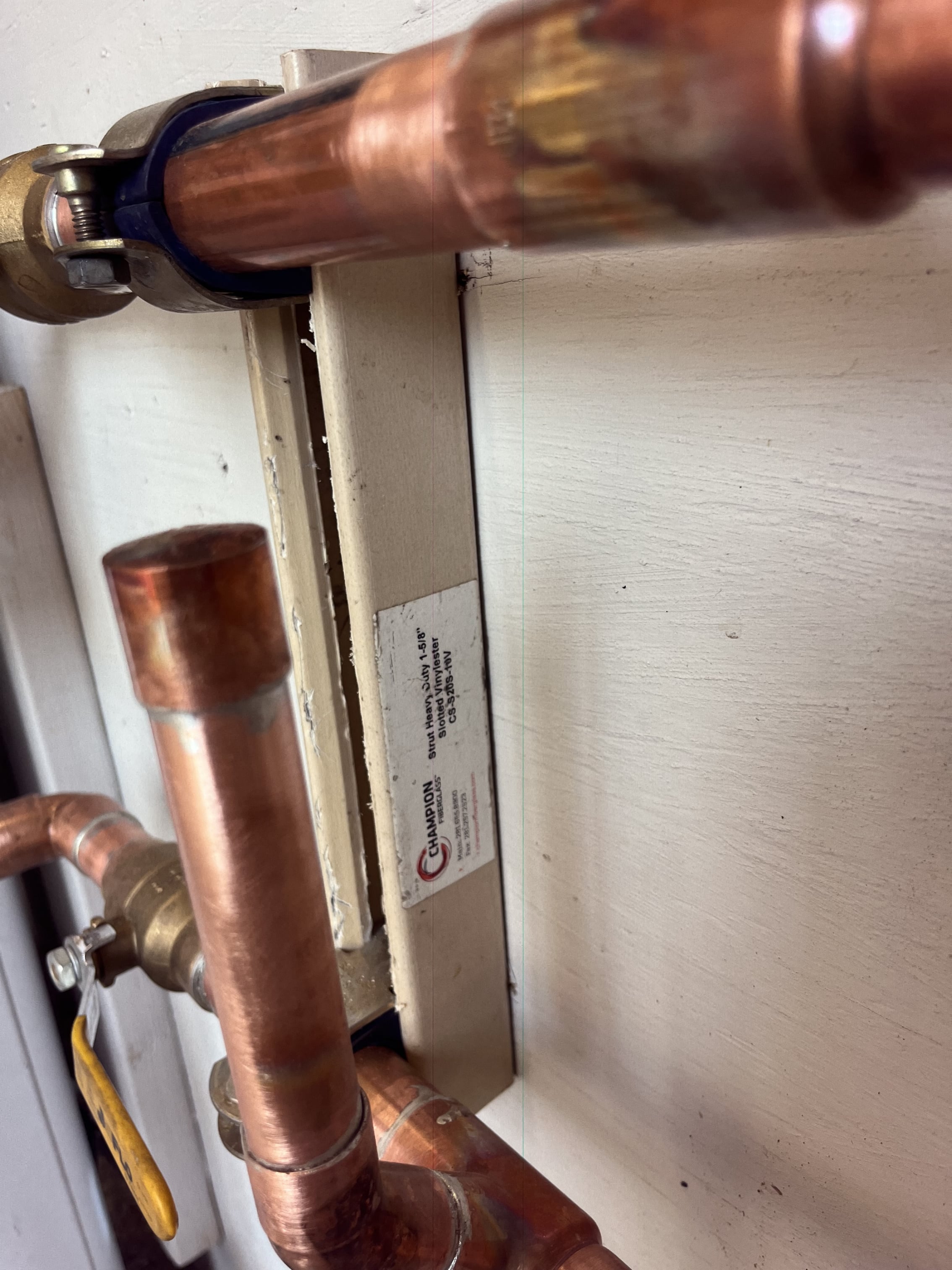 Bob "hot rod" Rohr
trainer for Caleffi NA
Living the hydronic dream0 -
@ratio
"⅜" all-thread with wall plates and strut warshers (the big thick
square ones) will let you space a piece of strut as far as you want.
Split rings give it that finished look.There are literally
thousands of strut brackets. Whatever shape you want to make, there's a
custom fitting for it—but not all are stocked. I ended up ordering on
the internetz for some oddball brackets I needed for the last job, much
cheaper and faster than getting my local guy to bring them in for me."
AH! As easy as that. So these washers are strong enough I'll only need to support the Unistrut that way through each stud? I'd prefer to screw in only through studs, even if I do have a back board.0 -
Can I use the same kind of clamp on the rails, but have only the center one anchor the clamp to account for thermal expansion? How do I know how to have the clamps tight enough to hold the rail but loose enough to account for thermal expansion/contraction? And how do I know the anchor clamp is tight enough to anchor it?
0 -
I believe that W W Grainger has a substantial offering of UniStrut, and pipe mounting hardware. This is the link to the UniStrut section https://www.grainger.com/search?searchQuery=unistrut&searchBar=true
Here is a link to the pipe hanging accessories. https://www.grainger.com/search?searchQuery=pipe+support&searchBar=true&suggestConfigId=6
And you can look search for threaded rod connectors and hangers and couplings and spacers and see all types of ways to use this stuff.
Edward Young Retired
After you make that expensive repair and you still have the same problem, What will you check next?
0 -
Don't forget to leave room for insulation when your pipes cross. And if you've done enough service work, you get used to installing unions on relief valves, equipment connections, expansion tanks…….It makes life and work a lot easier for the next guy.
 8.33 lbs./gal. x 60 min./hr. x 20°ΔT = 10,000 BTU's/hour
Two btu per sq ft for degree difference for a slab0 -
unistrut has all types of fastening methods and the material needed.
Like everything else theses a learning curve. Draw a diagram with exact measurements they can help.https://assets.usesi.com/product-media/catalogs/USESI_320118_catalog.pdf
 1
1 -
The strut warshers are ≈¼" thick, square, with various hole sizes, of a size to sit on top of the channel, not slip inside. TBH, mounting to a wall I'd use a regular fender warsher and a longish screw into the stud, adding more until I felt comfortable with it. If I didn't end up on a stud, I'd do similar but with "Wall Dog" anchors, and a few more than with the screws into the stud. If it was going to bear significant stress, I'd use "Toggler" anchors and ¼-20 bolts.
If you're in shear and not pull-out, drywall is actually pretty stout. I'd climb a wall with handholds mounte attached with two wall dogs each.
0



Categories
- All Categories
- 87.8K THE MAIN WALL
- 3.3K A-C, Heat Pumps & Refrigeration
- 60 Biomass
- 430 Carbon Monoxide Awareness
- 133 Chimneys & Flues
- 2.2K Domestic Hot Water
- 6K Gas Heating
- 124 Geothermal
- 170 Indoor-Air Quality
- 3.9K Oil Heating
- 79 Pipe Deterioration
- 1.1K Plumbing
- 6.7K Radiant Heating
- 397 Solar
- 16.1K Strictly Steam
- 3.5K Thermostats and Controls
- 56 Water Quality
- 51 Industry Classes
- 51 Job Opportunities
- 18 Recall Announcements