Piping /Venting

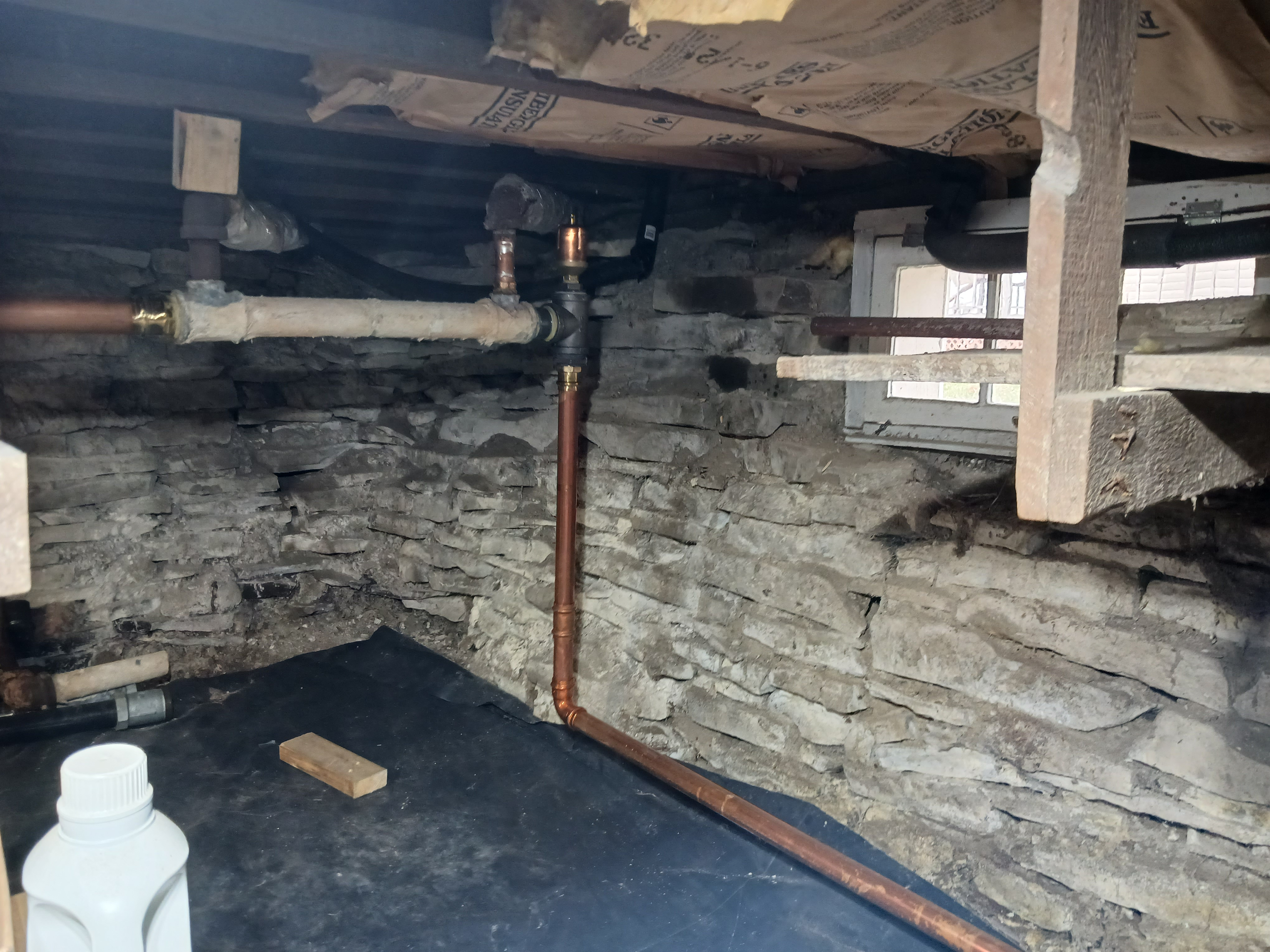
A year ago I hired a local heating contractor in Upstate NY to replace some steam piping that was leaking in the main line. There are not very many knowledgeable steam heating contractors in my area. The contractor replaced around 25 feet of the 2" main line with 2" copper, along with another 20 plus feet of 1 1,/2" wet return line back to the boiler. I know this is not the preferred method but it works. The boiler and piping is in a crawl space with only around 50" of head clearance to the floor joist. This is a single pipe system feeding six radiators.
When we fired up the system this year there is alot of clanging, gurgling and hissing from the radiator vents. This lead me to believe we have venting and balancing problem. So checked the radiator vents and pitch. Found only one radiator with no pitch back to the valve. So I raised it up 1/4" inch. One of the sources I checked, (Chatgpt) suggested the Hoffman 75H on the main line is too small. and should add a second vent. So I added the second vent. A Groton #2 vent, and I also raised both up arouund 8" by building an antler line. This didn’t help much if at all. Now these vents are at the end of the main line and about the same height of the last riser, and only six inches down stream in the top of the tee that drops into the wet returm.
The next thing I looked into was the boiler WL compared to the end of the main. The boiler WL is 24" above the floor and the end of the main is around 42". Which is way too low. So I removed the vents at the tee on the end of the main and Installed a 12" x 3/4" nipple capped off. Now I have a false WL of 28" above the boiler. This has helped out a little.
I am now thinking I have a piping and a venting problem. Given the proximity of the last riser to wet return and the false WL. I really don't have a dry return line. So maybe what needs to be done now is; extend the main a couple of feet of pipe away from the last riser, add a tee. The bottom of the tee drops into the wet return and top is extened up and capped. Using the same 1 1/2 "pipe in order to keep the false WL 28" above the boiler WL. Plus reinstall the Groton 2 vent in the short main extension
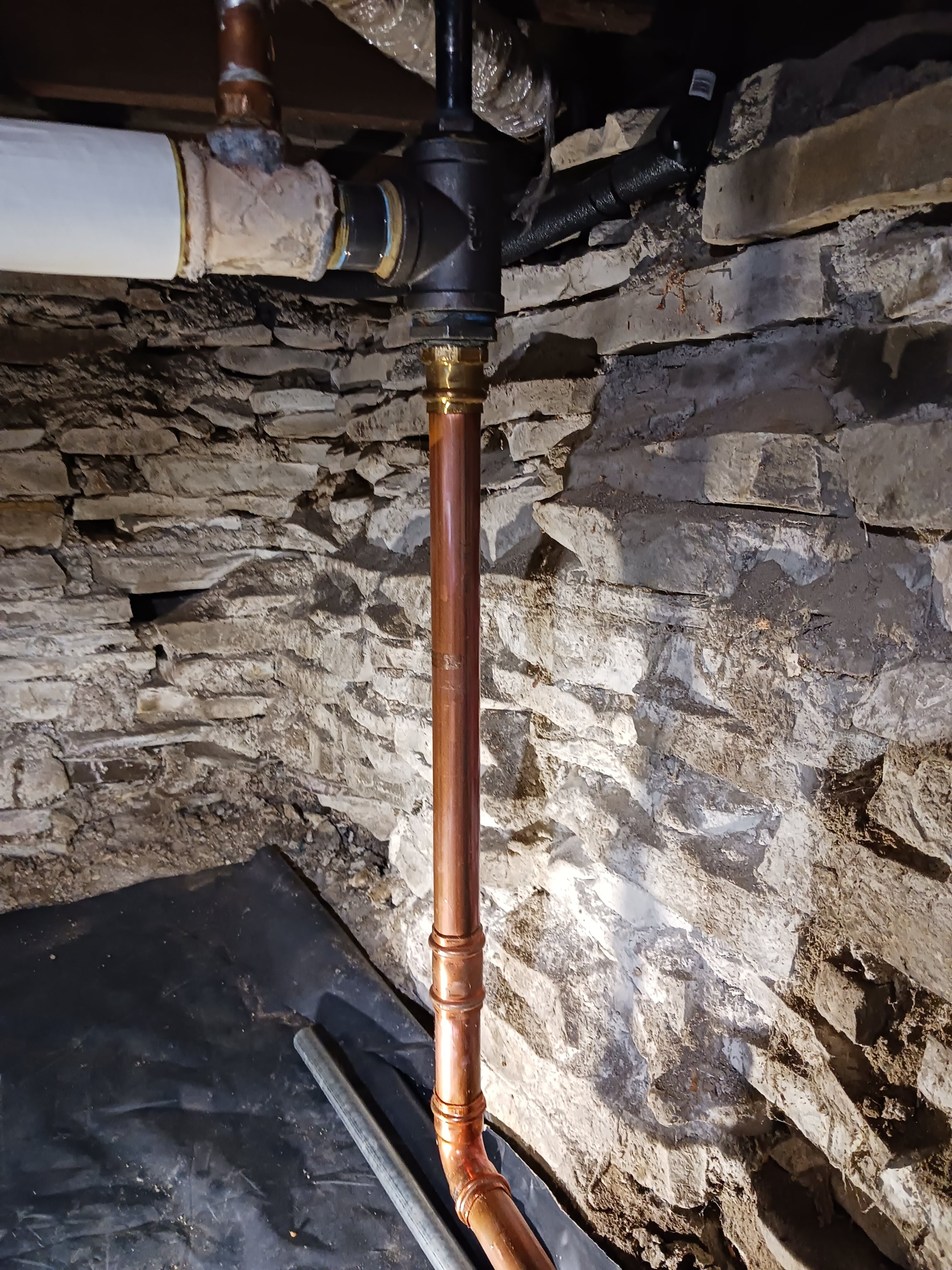
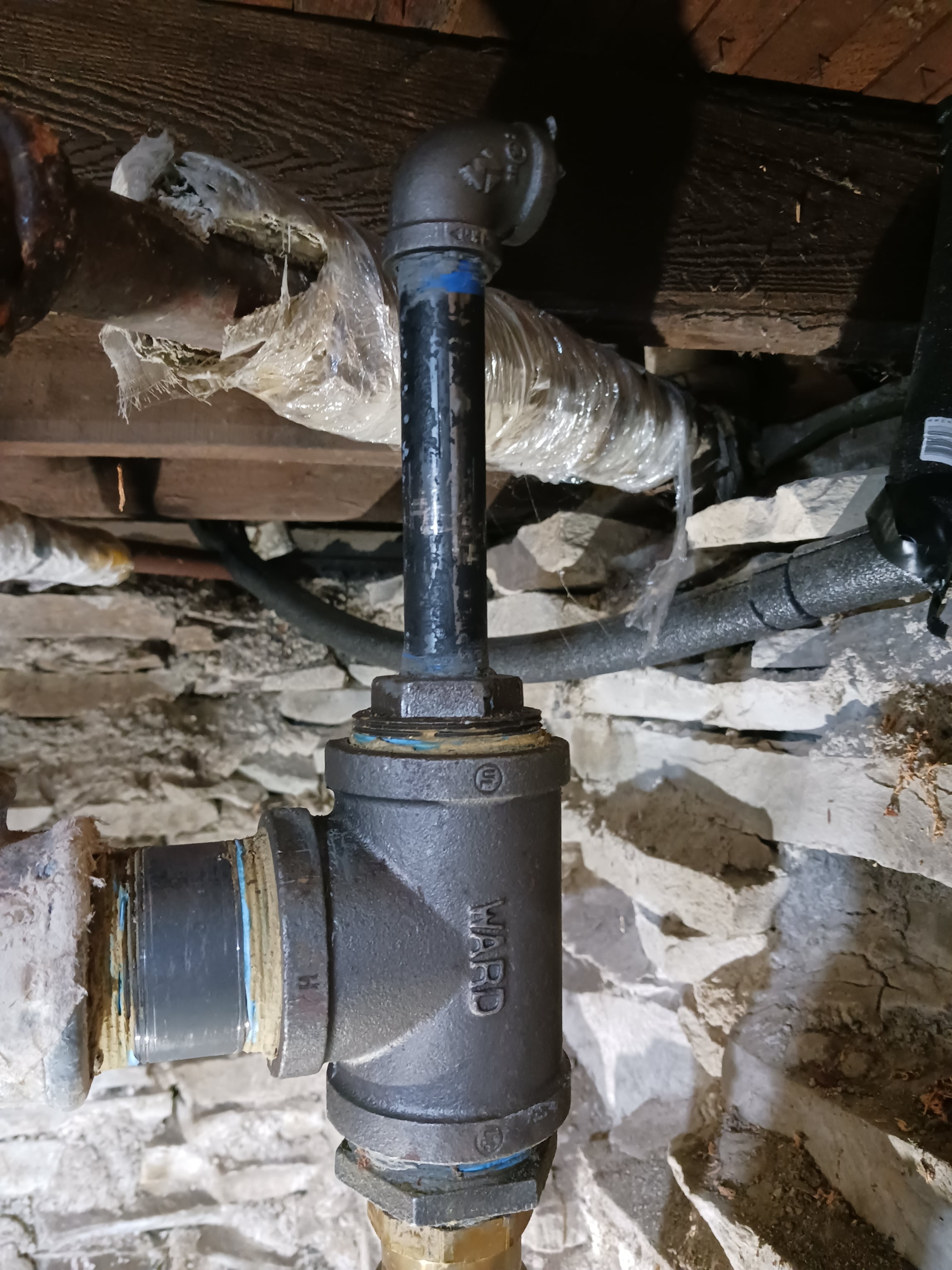
. Looking for some and comments.
BTW the way the boiler is in a crawl space head clearance to floor joist is around 50" So my false WL is between floor joist.
Comments
-
Hard to find anyone that know steam up there.
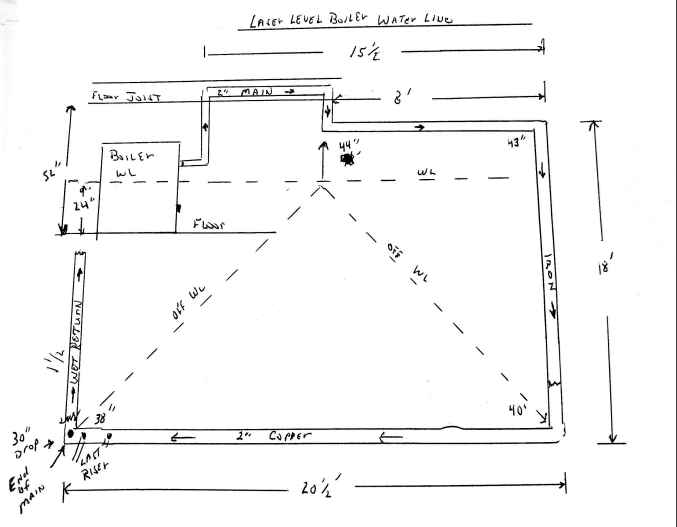
I would suggest making a sketch of the piping showing the different elevations. Hard to figure it out just by reading.
Sounds like your going to have to keep your pressure very low to make this work
0 -
I am not getting the false waterline notion (you eliminated your main vents?) but you have an A dimension of 18 in., which, if you keep the pressure low and you don't have a large boiler could be enough. It will be important to keep the steam dry and the water quality good.
0 -
What is the elevation of that return pipe in relation to the water line in the boiler? And how does it connect with the boiler? As @EBEBRATT-Ed said, a diagram with elevations (relative to the boiler water line) would be very helpful here.
Br. Jamie, osb
Building superintendent/caretaker, 7200 sq. ft. historic house museum with dependencies in New England0 -
Was there no such gurgling, clanging and banging before the section of main was replaced? If not, assuming your water quality is good and no bouncing seen in the sight glass (may be OK since no new oily steel pipe was added to the system) I would take a close look at the added section of pipe and how it is joined with the steel. Any potential for water entrapment?
0 -
Be certain that all pipes are pitched back toward the boiler. No sags in the pipe and none that are level. And as mentioned above little pressure. Your gauge should read zero.
0 -
do you have low pressure gauge installed on your boiler (0-3 or 0-5psi)? if not you must have one to know your ACTUAL pressure. what is your ptroll set to?
»»» See my steam heat YouTube videos:
https://www.youtube.com/@HeatingBlog0 -
what makes you think you need a dry return? it looks like a parallel flow system.
0 -
Thanks for the fed back. Yes the system did some clanging and banging before the new piping, but there was a dip in the main line where the section was replaced. The copper was joined to the steel with brass fitting.
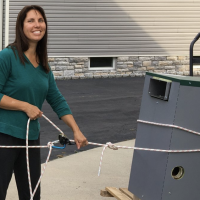
As for slope the near header piping is 52" from the floor and it continues to slope down to 32" at the end of the main shown in the picture. Where I added the 12" capped nipple and the water drops straight down into the wet return.
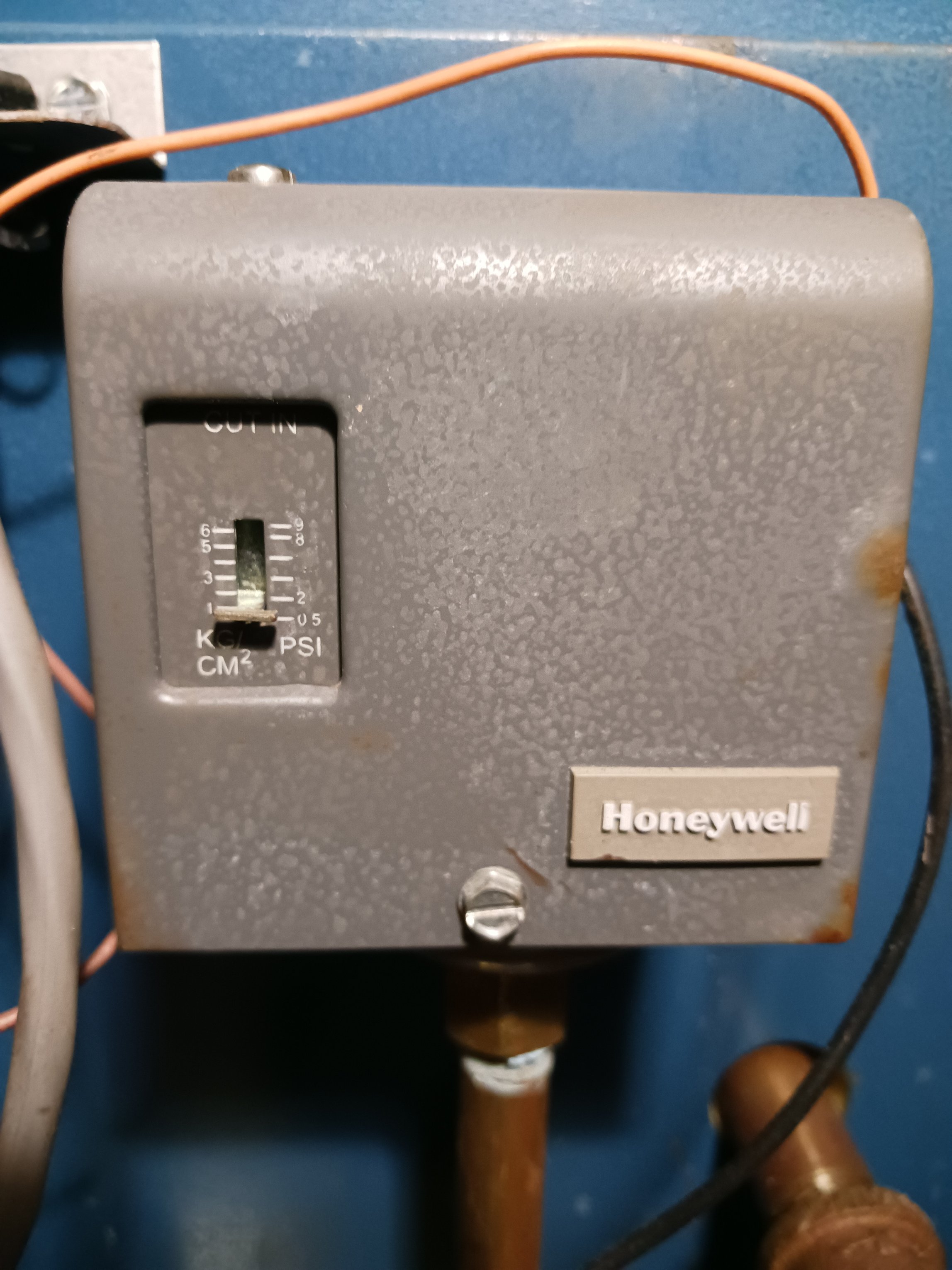
No outside gauge and the Honeywell pressure switch is set to .5 pressure. The pig tail was removed and cleaned last year after the replacement piping. I also added a container of SQUICK cleaner fired it up then drained it out of times. No skimmer tap. No real bouncing in the sight glass.
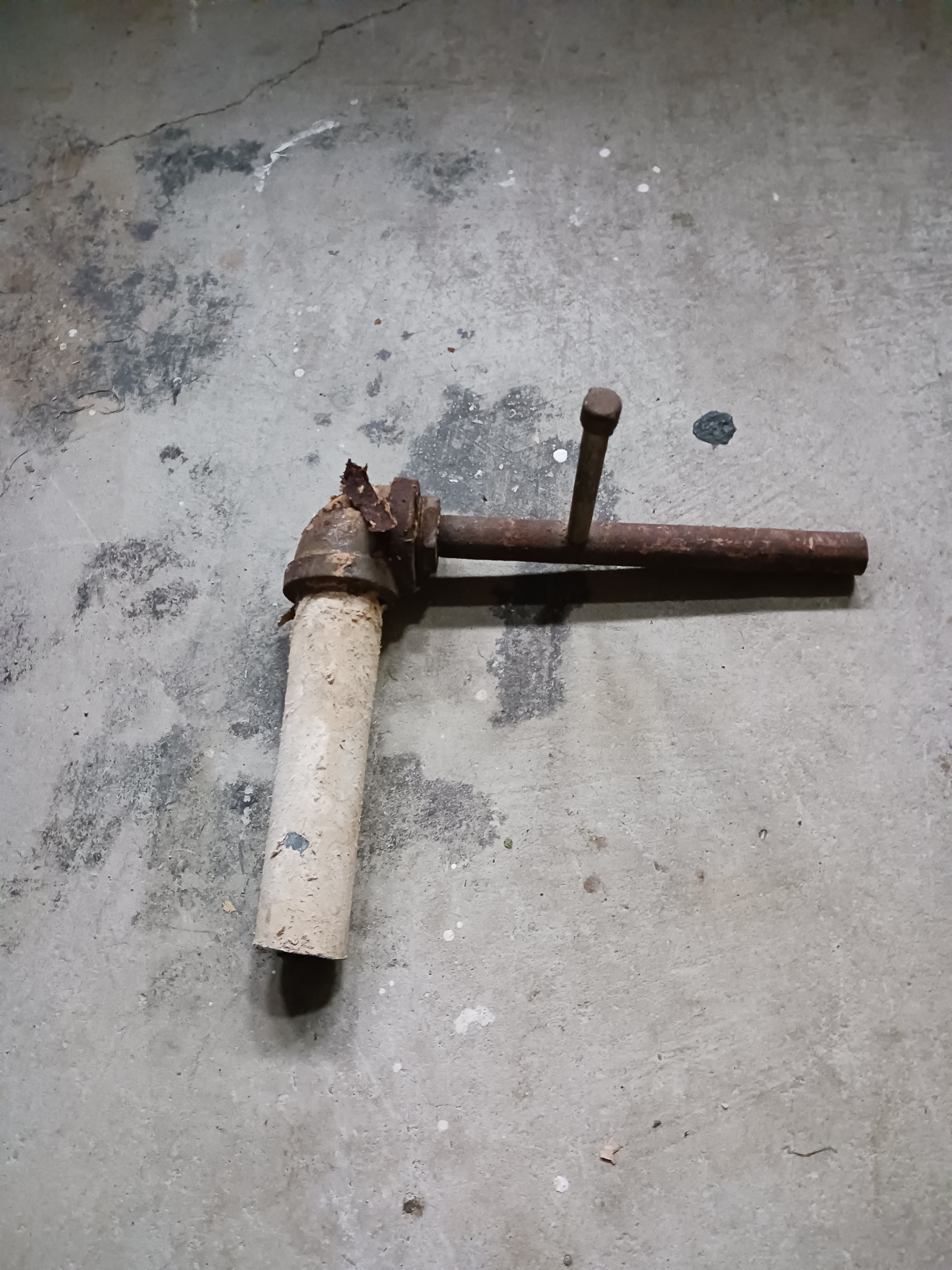
One other interesting no the old piping didn't have a vent and it did have a false water extender in the wet return. See picture below
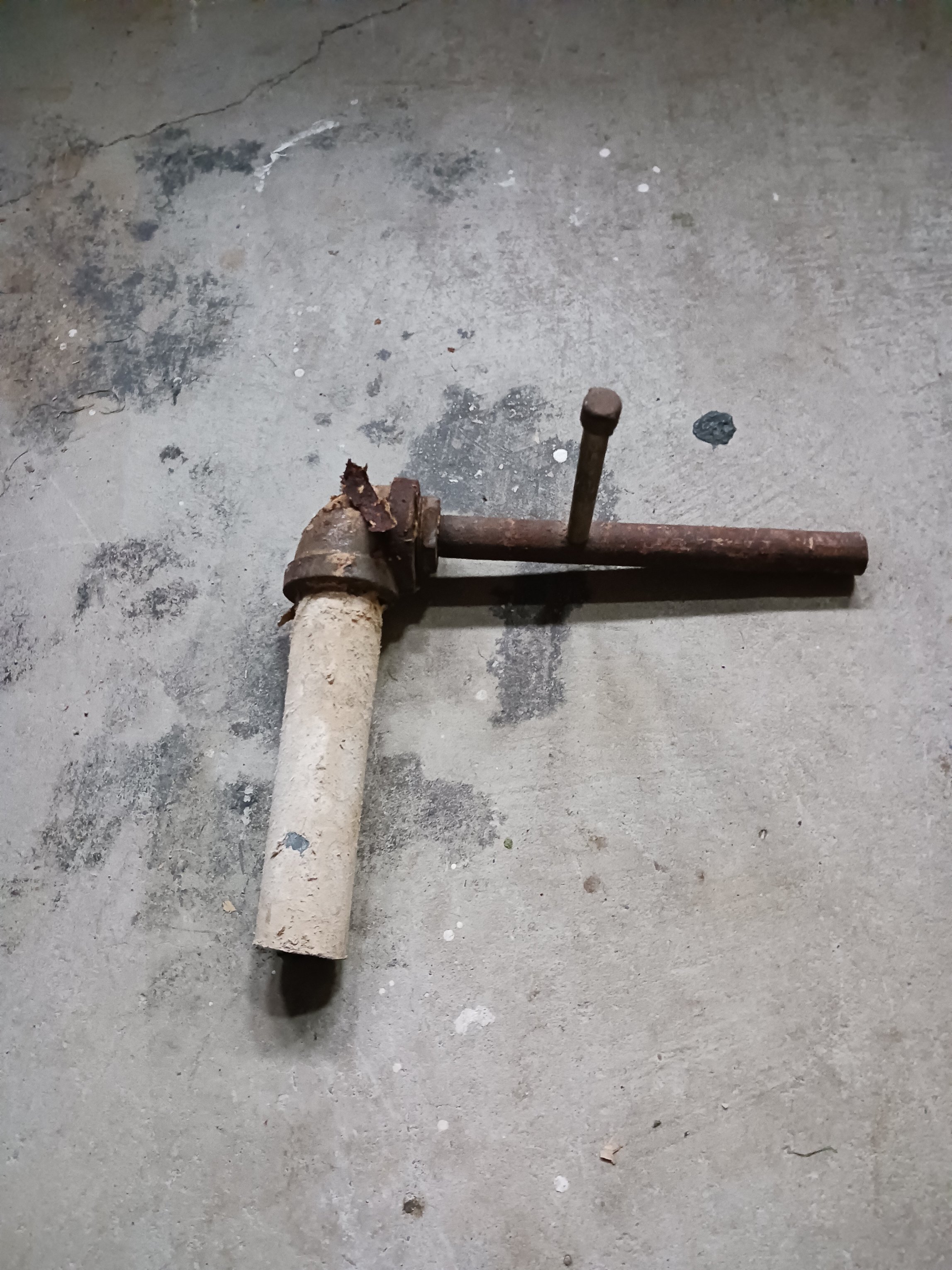
 0
0 -
So before you said the main dropped to 42in. It is actually 32 in.? What is the distance from the boiler WL to the bottom of the header? The main is how long and starts at what height?
0 -
-
So that wet return — the last bit of piping — is 8 inches above the water line? How does it connect to the boiler?
The slopes of the various main sections — end to end — are fine, but do double check that there are no sags!
Br. Jamie, osb
Building superintendent/caretaker, 7200 sq. ft. historic house museum with dependencies in New England0 -
The way you drew it the boiler doesn't have a header or an equalizer? That can't be right?
So that "wet return" is sometimes a dry return and sometimes a wet return? Could be a recipe for disaster. Any way you can drop it down below the boiler WL?
Wait, that 38 in. at the end of the main isn't really "off WL" it is from the floor, so 14 in. off WL? So then the wet return is 16 in. below the WL?
0 -
Yes the wet return is roughly 16 inches above the water line. There is only that short nipple separating the end of the main and the last riser. I had a Hoffman 75H on the top of it. I was lead to believe it was too small. So I raised it up around 8" and added Groton #2. It didnt help much if at all. Now I am wondering if I can place it up stream around 15" before the last two risers.
0 -
Yes the wet return is roughly 16 inches above the water line.
then it’s not wet!
NJ Steam Homeowner.
See my sight glass boiler videos: https://bit.ly/3sZW1el 2
2 -
It's a steam main extension, then. Even more important to know how it is connected to the boiler.
Br. Jamie, osb
Building superintendent/caretaker, 7200 sq. ft. historic house museum with dependencies in New England0 -
-
Hold on here. End of main is 38 in. above the floor? Then there is a 30 in. drop down to the wet return? So that puts the wet return at 8 in. above the floor correct? If the NWL of the boiler is 24 in. above the floor that would mean that the wet return is 16 in. below the NWL of the boiler, right?
0 -
I guess I'm a little confused. This picture is at the end of the main roughly 16" above the waterline with the original Hoffman 75H vent. The piping below the tee drops roughly 30" down an runs back to the boiler. (Hoffman loop) No dry return. I raised the vent up and added a Groton #2 but this didn't help much. Took the vents up added 3/4 x 12" capped nipple. Thinking this would memic the old section pic 2. The old return did not drop down as much and it was not vented. Is the wet return full of water? If it, then it is too low according Dan Holohan venting vedio it needs to be at least 28" above boiler WL, and I'm only around 16" above it. The fix may be to establish a new false WL near the Hartford Loop.
 0
0 -
There is some confusion here. A "wet return" is, by definition, a return that is always 100% full of water due to being below the waterline of the boiler. For the pedants out there, I'm purposely excluding those times where the return has developed a sudden massive hole and let all its water out on the floor.
If the part of your horizontal return piping that you are referring to is above the water line of the boiler, it's not a "wet return". So you might have a misunderstanding of terms, and it might be resulting in us being confused.
NJ Steam Homeowner.
See my sight glass boiler videos: https://bit.ly/3sZW1el0 -
So to rewind a bit, your problem that you are dealing with is "clanging, gurgling, and hissing from the radiator vents". You are "assuming" that is caused by a venting problem. The problem only occurred after someone replaced your main with copper and replaced your long wet return with copper. Have you checked the pitch of the copper main between those points on your diagram to see if there are any puddles? What is happening at your sight glass? Any surging or severe drop of the water level while steaming?
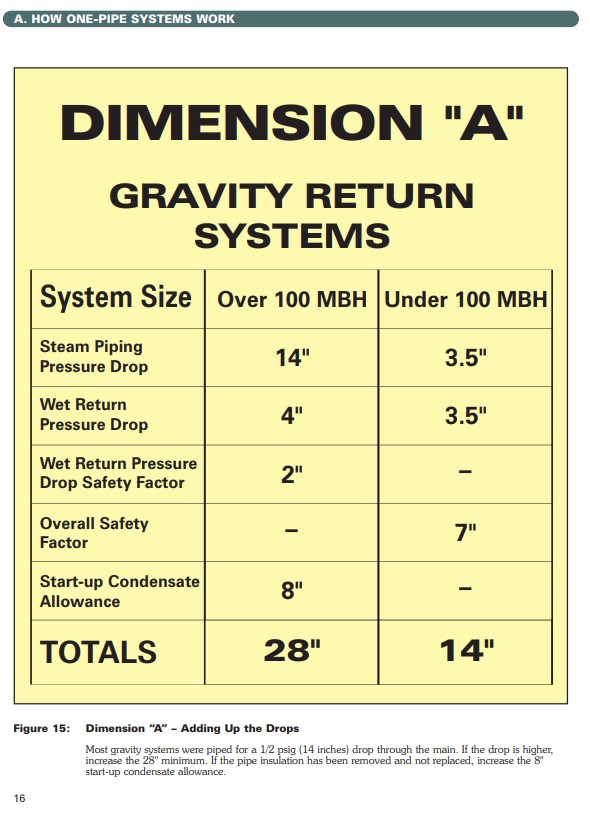
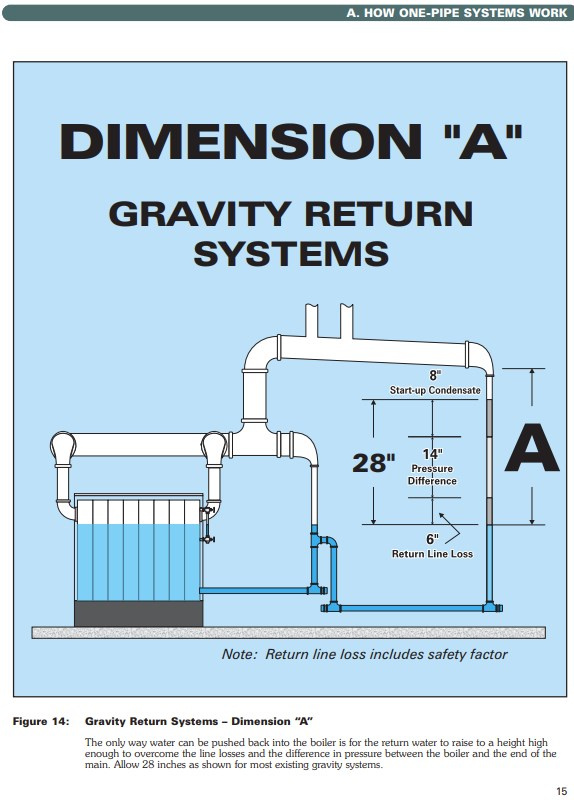
Whether your A Dimension is 14 in. (from your diagram) or 16 in. as you now are saying, that most likely is not a problem unless there is something causing super wet steam or carryover and/or a problem with the return restricting the flow of condensate back to your boiler, especially since it sounds like you must have a small boiler, ie. smaller than 100MBH Steam?
You haven't shown any pictures of your boiler (what make, model, size?) or the near boiler piping but I understand that the person didn't change any of that?
PS: I think you are inadvertently confusing people with:
"Yes the wet return is roughly 16 inches above the water line."
According to your diagram it is 16 in. below the water line.
"This picture is at the end of the main roughly 16" above the waterline"
It was clear to me that you are not referring to the wet return but to the actual height of the end of the main, which would be describing what is known as the A Dimension and in your case it is 16 in. 14 in. is advised for boilers less than 100MBH and has about 7 in. factor of safety built into that so you are good at 2 in. more than that.
0 -
I don't know if I missed it or not but, your drawing shows a boiler with a side tapping on it, rather than on top.
Was this boiler piped correctly because we see an awful lot of boilers with the supplies on the sides piped completely wrong having all kinds of problems.Can you share some pictures of the boiler and it's piping?
Single pipe 392sqft system with an EG-40 rated for 325sqft and it's silent and balanced at all times.
0 -
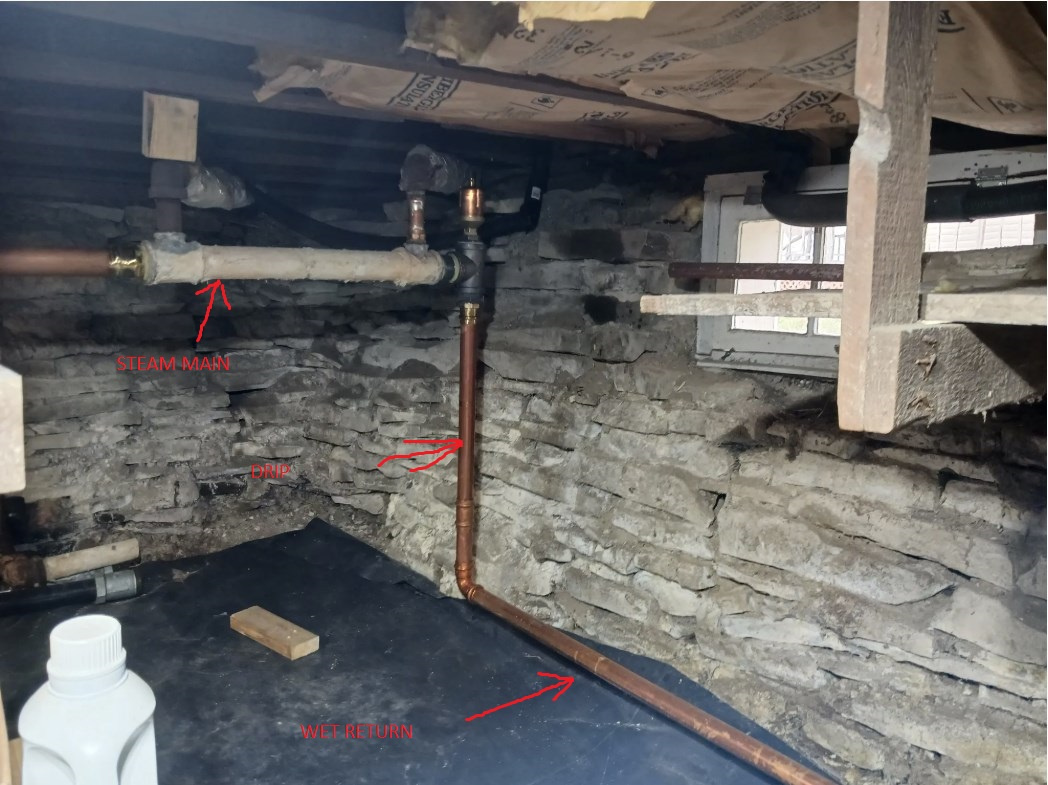
@gfreynolds Just to make sure we are on the same page going forward with the terminology:
 0
0 -
Yes I guess what you are saying is the wet return is below the boiler water line. The Hoffman vent is is in a bad location. The wet return also has a check valve near the Hoffman Loop where connects just before the Hartford loop.
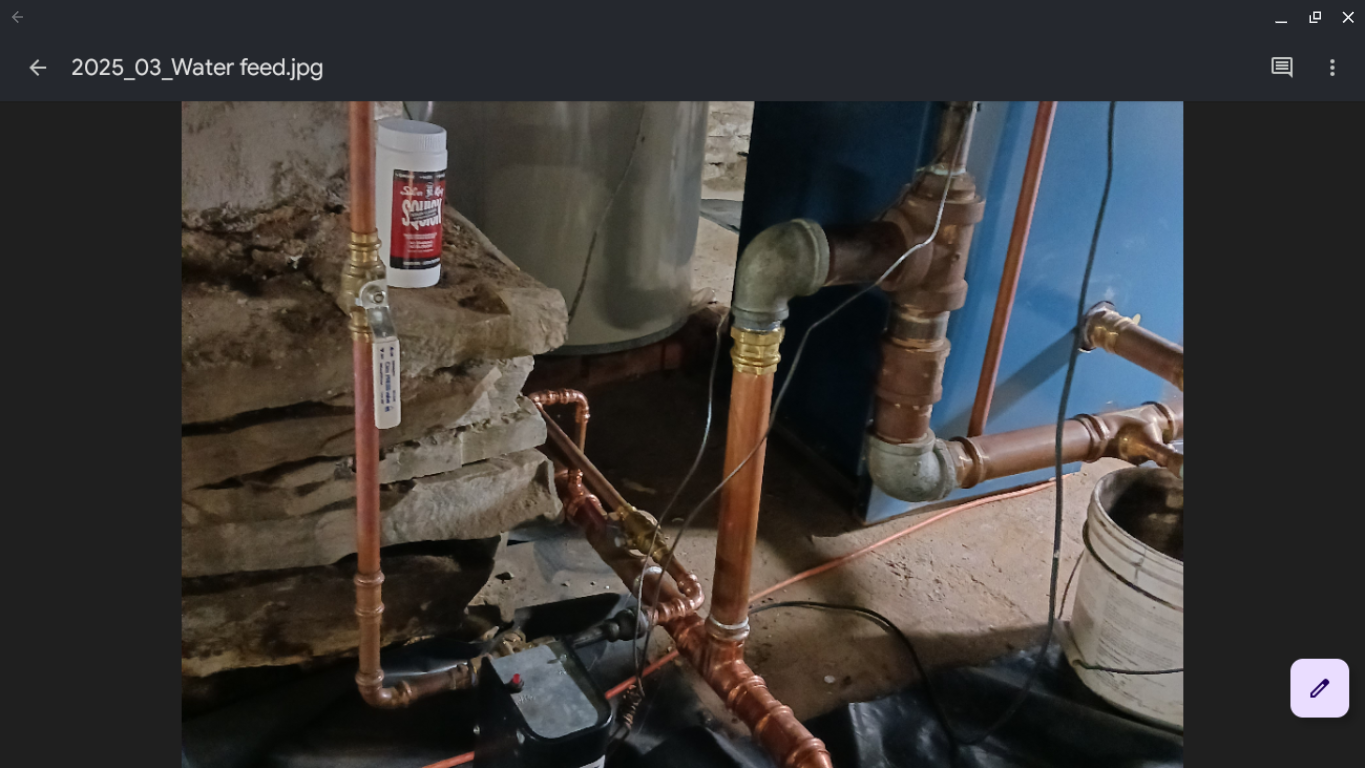
My new plan is extend the 2" drop down from the tee at the end and extend the main around fifteen inches. install the vent and extend and drop 2" pipe below the boiler water line.
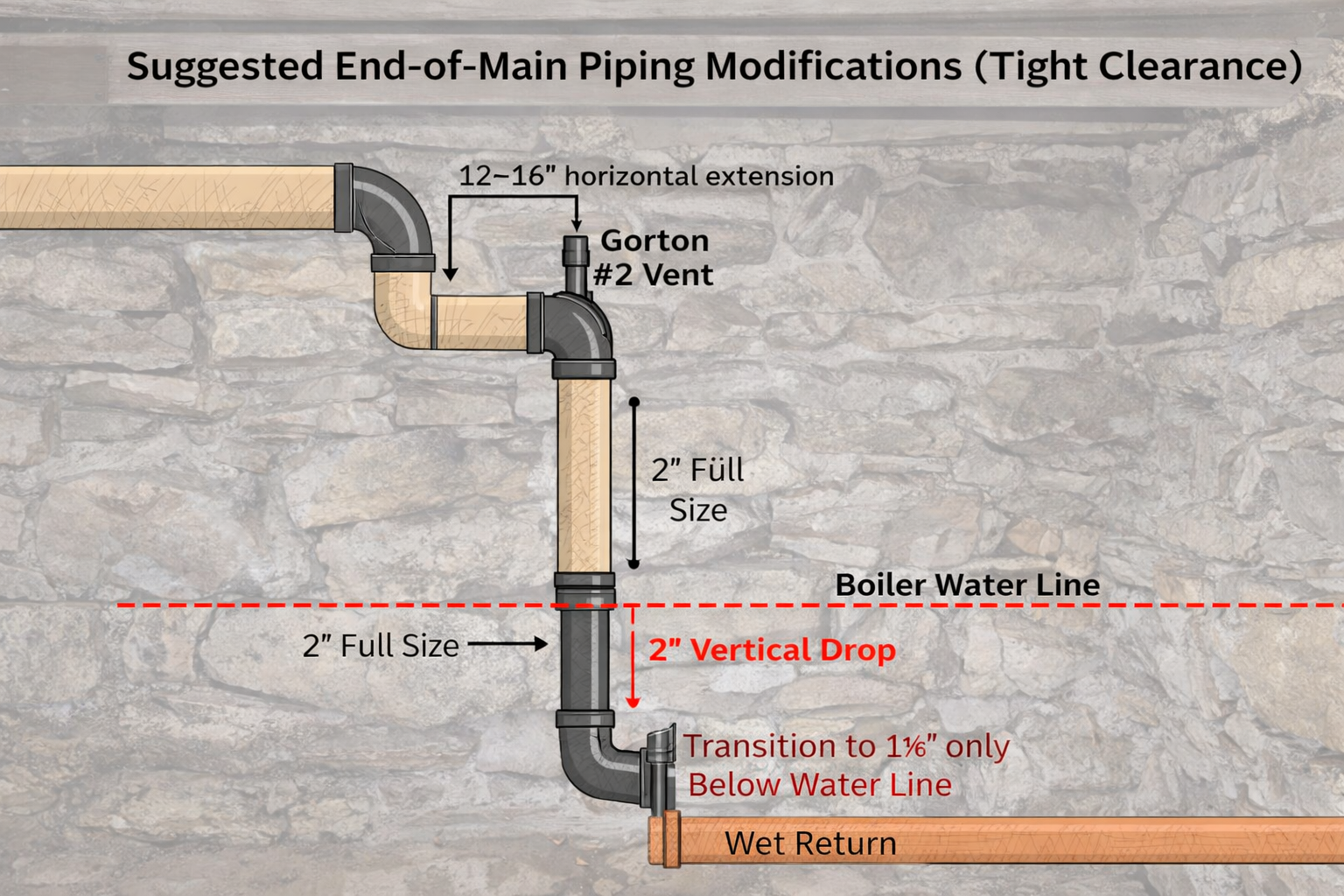 0
0 -
I don't know what you are trying to do. Are you hearing water hammer at the location of the end of main vent? What you have been referring to as "false water line" isn't that. It seems more like a snubber to absorb the shock of water hammer. I guess you are aware that the recommendation for a main vent is that it be a ways back from the elbow down into the drip and also that it be on a bit of an extension above the main. This is to absorb the shock of water hammer to prevent damage to the vent. I guess you are aware of this and trying to fix that?
A bunch of us have asked for near boiler piping. Can you show us the steam side of the near boiler piping, ie. header, equalizer, supply to main?
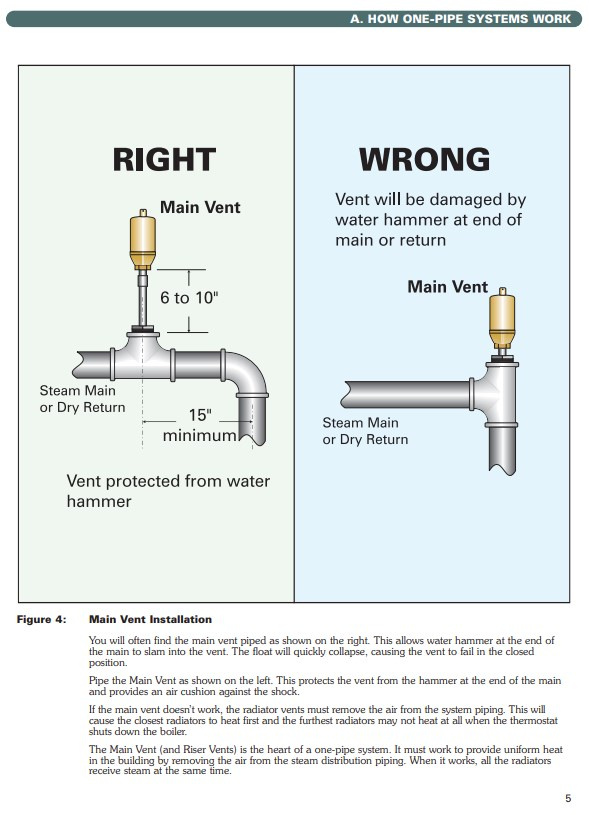
As far as Dimension A goes, I think you are fine there. That 28" recommendation is a generalized super conservative recommendation. If your boiler is small which it should be with 7 radiators? you should be fine with what you have whether it is 14 in. or 16 in. (not sure what you have);
 0
0 -
I guess I am not seeing the positioning of your main vent being that terrible particularly if you, as you say, "changed it to a Gorton#2 and raised it up 8". So, I'm not sure what your proposal will really fix. I'm also not understanding why the check valve on the wet return if you have a Hartford Loop and your A dimension is OK? Hopefully it is not gummed up and restricting water flow back to the boiler?
Also, if you have 25ft of bare copper main uninsulated you will want to insulate that. It will create a lot of condensate, certainly more than the insulated steel pipe it replaced.
Note, I am a homeowner so will let the professionals give you true direction on this.
 1
1 -
Ditto on the check valve. I'd nix that for sure. Unless you are looking at the supply to the water feeder which probably has a backflow preventer on it which is probably required by code?
I would also definitely not proceed with your plan to put a downward pointing nipple with a 2 in. lower down extension of your main, especially if you are concerned with your Dimension A because you are taking away from that. Can't you remove the elbow tee and put a regular tee facing upwards for the vent and then another nipple extension to a downward elbow into the drip? If there is a rafter/floor joist in the way you can do an angular nipple to get the main vent up higher in between joists.
0 -
Not more than radiators……
The boiler produces X amount of steam, the system from the time the pipes start heating until the radiators are all almost full is going to produce the full amount of condensate from the boiler. Only once the radiators are practically maxed out and pressure starts building would this realistically drop and even then, it shouldn't be a whole lot unless the boiler is really oversized.
Single pipe 392sqft system with an EG-40 rated for 325sqft and it's silent and balanced at all times.
 1
1





Categories
- All Categories
- 87.8K THE MAIN WALL
- 3.3K A-C, Heat Pumps & Refrigeration
- 59 Biomass
- 430 Carbon Monoxide Awareness
- 132 Chimneys & Flues
- 2.2K Domestic Hot Water
- 6K Gas Heating
- 124 Geothermal
- 170 Indoor-Air Quality
- 3.8K Oil Heating
- 79 Pipe Deterioration
- 1.1K Plumbing
- 6.7K Radiant Heating
- 396 Solar
- 16.1K Strictly Steam
- 3.5K Thermostats and Controls
- 56 Water Quality
- 51 Industry Classes
- 51 Job Opportunities
- 18 Recall Announcements