Welcome! Here are the website rules, as well as some tips for using this forum.
Click here to Find a Contractor in your area.
If our community has helped you, please consider making a contribution to support this website. Thanks!
Water tight hatch on bathroom floor

The bathroom floor has ceramic tiles. If I remove one tile, make an opening through a wood substrate, do some plumbing work. After that, instead of mortar a new tile in, I want to make it a port for future repairs. Possible to install a water tight port cover on top of the opening?
Comments
-
water on top of the floor is not coming from beneath the floor. if the plumbing under the floor were leaking you would see it in the ceiling below. your leak is either the toilet or in the wall above the floor.
usually the easier way to access plumbing below a bathroom is through the ceiling below because plaster or drywall is much easier to repair than a floor.
0 -
The seeping was seen in the basement toilet, so the floor has to open..
Here this post is about working on washer drain that is on the 2nd floor, so it's possible to work from the ceiling on the 1st floor, and there are two existing access points that were cut earlier.
However, after removing the two sheetrock plates, I saw some complex structures that look like the original plaster ceiling. I need to cut away some of those lath and plaster to figure out where the PVC pipe is. Need to first decide if they are safe to cut
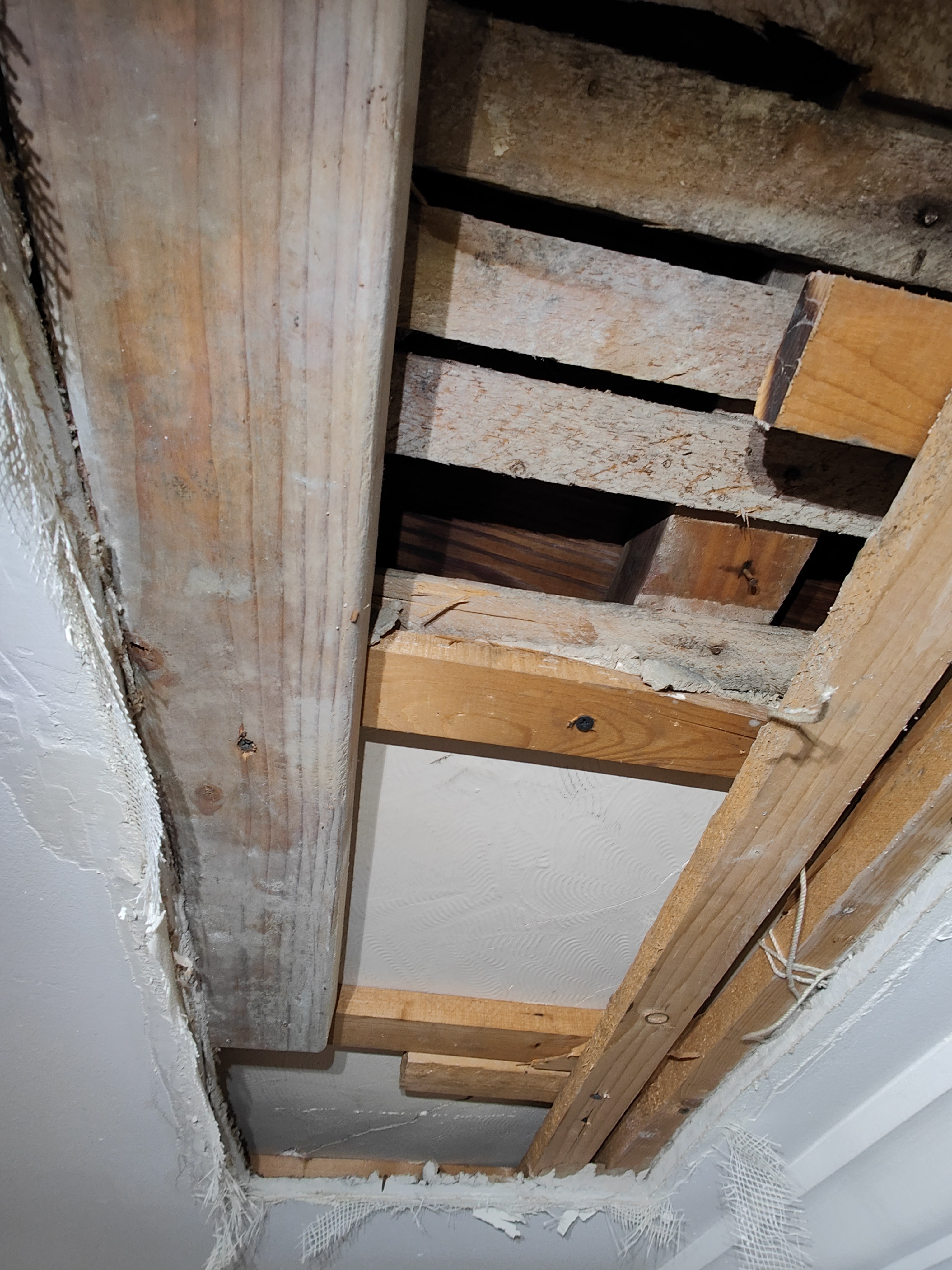
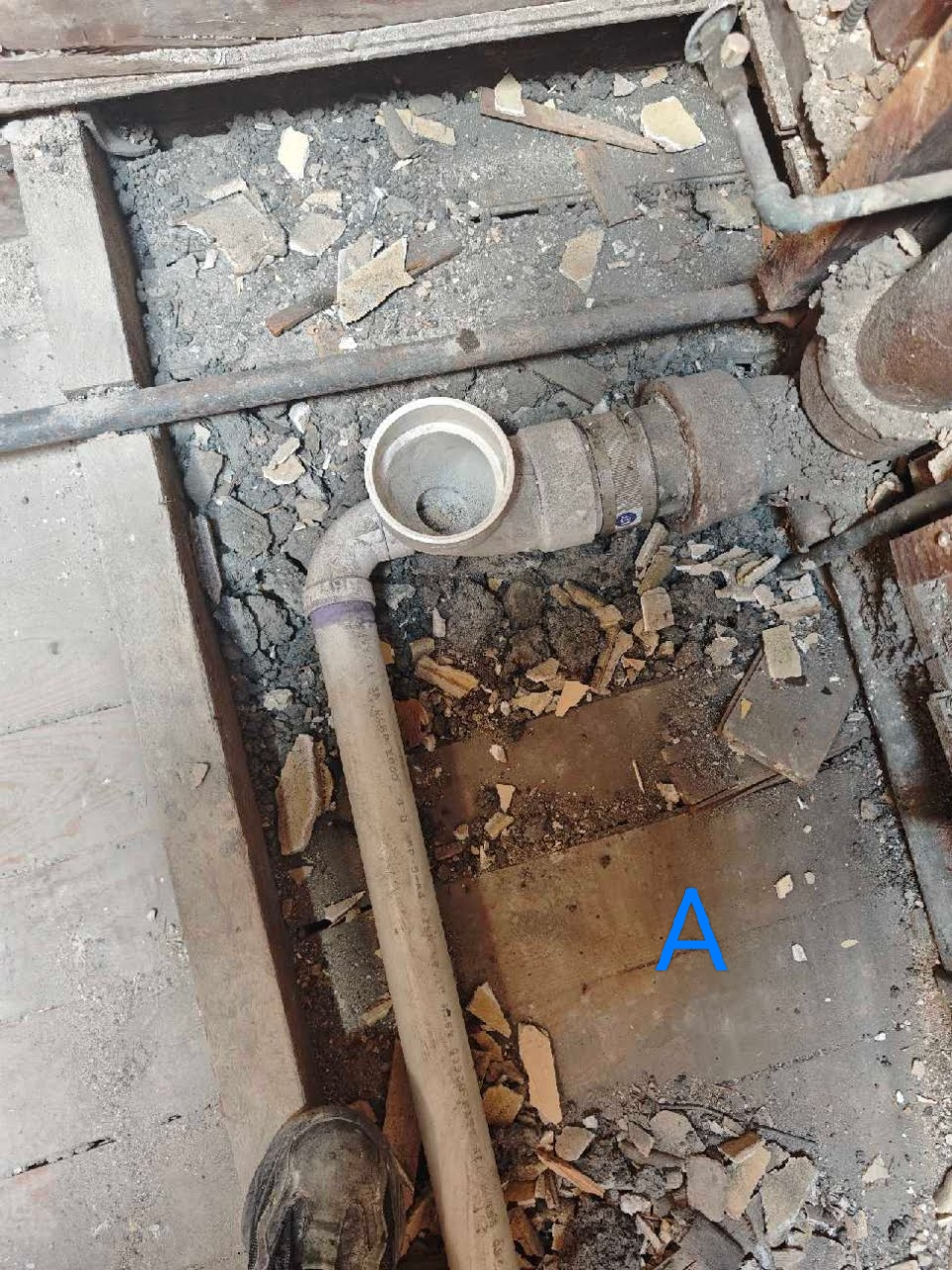 0
0 -
The lathe is safe to cut. It held up the original plaster; the drywall should be screwed into the joists, not into the lathe. If they did it right…
But. Was the water visible on the floor? Or was it noted staining the ceiling below? If it was visible on the floor, it did NOT come from plumbing below the floor.
Br. Jamie, osb
Building superintendent/caretaker, 7200 sq. ft. historic house museum with dependencies in New England 1
1 -
that new ceiling looks like blueboard (drywall with a special coating that lets a thin coat of plaster to be troweled over it)
0 -
It's not for repair a leak, but for some other plumbing work.
But the joists .. the real joists are above the old plaster, the real joists are not visible when they framed the new joists that serve as the mounting base for the new sheetrock.
From top to down:
Old joists - wood lath -plaster - new joists - sheetrock
The new joists could as well be fastened to the wood lath through the plaster, correct?
That's why I have pushed back cutting away the lath and plaster. Want to understand the structure fully before doing.
0 -
It's joint compound that sticks to any drywall.
What make it look like plaster?
0 -

@azward Try this company or any similar company closer to your area. Water-tight access way, or man-way is a good idea for future work. You can find them in different colors, or you can tile over them depending on what you want to do.
0 -
Good grief. I wish renovators wouldn't do that sort of thing. Without carefully examining the entire structure, you honestly have no idea what the new joists are held up by. They could well have been just screwed into the old lathe — which would hold things up, after a fashion for a while… but won't take any additional load. Or there is a chance that the new overhead assmbly was properly designed an build as, basically, a whole new ceiling not really connected to the old one at all. You have more investigation to do…
If it were mine I might well take the entire new ceiling down and repair the old plaster as needed… but that's me.
Br. Jamie, osb
Building superintendent/caretaker, 7200 sq. ft. historic house museum with dependencies in New England0 -
Do you mean removing the old plaster by "repair the old plaster"?
Old plaster refers to the old ceiling as indicated below. Between the old wood lath and the new framework of 1x and 2x that the new ceiling are screwed to.
The old plaster should have been removed if they didn't save the garbage removal cost, right?
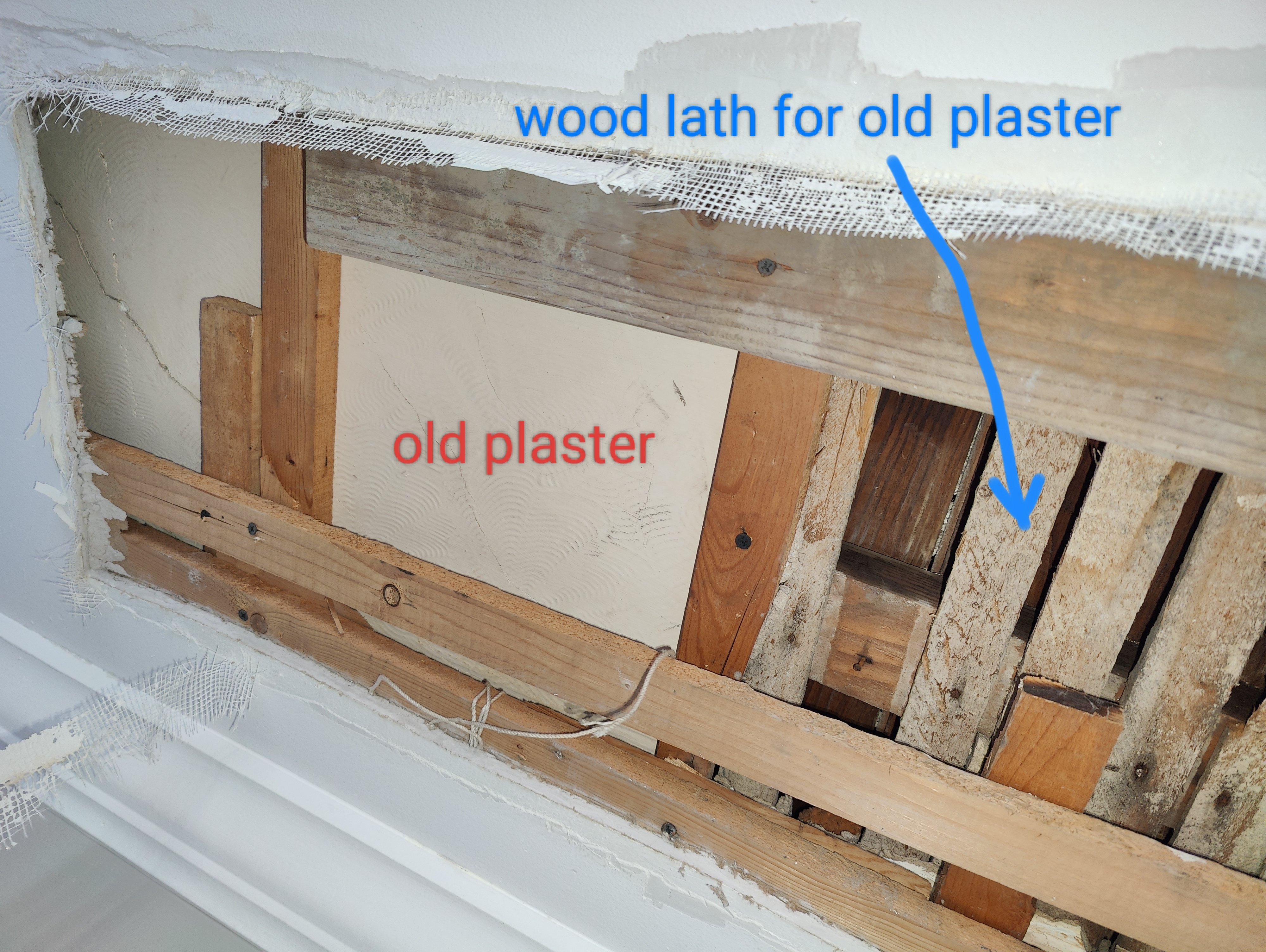 0
0 -
If I don't see any water on the bathroom floor and I want to repair something else below the floor (electrical, plumbing, cable, structural support) so I cut out a tile I might ask the question:
"The bathroom floor has ceramic tiles. If I remove one tile, make an opening through a wood substrate, do some plumbing work or other stuff. After that, instead of mortar a new tile in, I want to make it a port for future repairs. Possible to install a water tight port cover on top of the opening?"
So I believe that a bathroom floor may have the ability to get wet in the normal course of bathroom use like stepping out of the shower to grab a towel or maybe the sink might have a little over splash and wouldn't want to have that water drip into the space below, so I might ask
The bathroom floor has ceramic tiles. If I remove one tile, make an opening through a wood substrate, do some plumbing work. After that, instead of mortar a new tile in, I want to make it a port for future repairs. Possible to install a water tight port cover on top of the opening?
I wonder it that will put this comment in a better context
But that is just me thinking out loud Mat.
My answer to that is that any temporary cover or permanent removable cover would need a gasket to accomplish that. Is it really worth the effort? How often will you need access?
Edward Young Retired
After you make that expensive repair and you still have the same problem, What will you check next?
0 -
I think someone may have added stringers to mount the new sheet rock over the plaster ceiling…
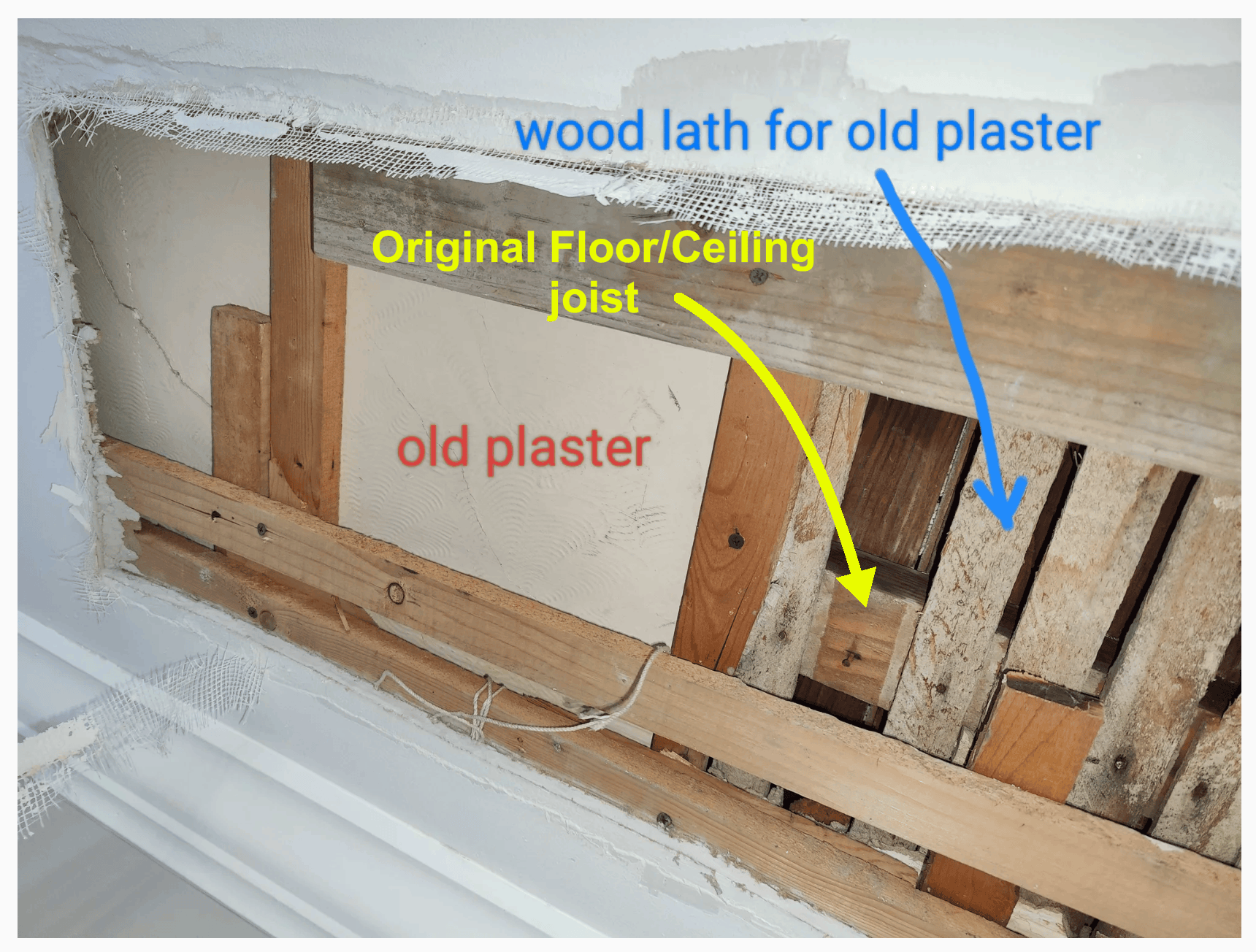
…and at least one of the support screws missed the joist @Jamie Hall.
Edward Young Retired
After you make that expensive repair and you still have the same problem, What will you check next?
0 -
It's so easy to repair old plaster… sigh.
Br. Jamie, osb
Building superintendent/caretaker, 7200 sq. ft. historic house museum with dependencies in New England0 -
Removing a tile for future access is doable, but better to fit a waterproof inspection access panel or sealed service hatch rather than a loose cover, so the substrate stays protected and leaks are avoided long-term. Bella Bathrooms offers bathroom tiles, fittings and practical shower solutions that help plan installs in a clean, serviceable way.
0 -
I look at a home and see an access door in the bathroom floor I'm going to think W T F is that for!
0 -
I keep going back and forth on whether or not I want to do a drop ceiling in my downstairs bathroom to allow access to all of the plumbing I put in the ceiling (the floor of the 2nd floor bathroom).
The thought of sheetrocking over it just seems wrong. I mean, what if I need to get to the tub drain, or, anything.
So far, I'm the only one that thinks the drop ceiling is acceptable and everyone else says sheetrock.
Point being, I totally understand the reason for wanting access to such things. Doubt I'd put one in my tile floor though, and no idea how I'd make it even remotely water tight.
Single pipe 392sqft system with an EG-40 rated for 325sqft and it's silent and balanced at all times.
0 -
I’ve learned from experience that once you crack up the ceiling, there’s no reason to make a small opening. It’s the same amount of work whether you’re repairing a 4 x 8 area or a 12” x 40” hole.
Open it up to get the access you need fix it and things will go much faster.
PS: You’ll feel much better about your work (once the drywall is done🤣) 1
1 -
floor tile and the grout joints are not really water tight. That is why a shower pan is placed under tile in showers
You can get color matched latex Dap to grout around tiles you may want to remove
Plumbing done correctly should not need to have access. Plenty of homes built on slabs with infloor plumbing
Bob "hot rod" Rohr
trainer for Caleffi NA
Living the hydronic dream0 -
I was under the impression that grout is fairly water tight after sealer is applied to it?
Single pipe 392sqft system with an EG-40 rated for 325sqft and it's silent and balanced at all times.
0 -
I suppose it depends on what is assumed to be water tight?
Certainly a wet mop wouldn’t be a problem. Water laying on the floor for a period of time will seep through. Bath mats are good in front of showers and tubs if you expect puddling.
If you ever demo a tiled shower, you will see the need for a watertight pan below.
I don’t see many issues with bathroom tiled floors, especially if the grout was sealed and gets resealed occasionally as grout can shrink after time and open small water ways.
Bob "hot rod" Rohr
trainer for Caleffi NA
Living the hydronic dream 1
1 -
grout and tile are considered finish layer and require additional water proofing layer for wet areas.
Bathroom floor outside shower curb are not typically considered wet areas so usually just have a decoupling layer ( Ditra, 1/4” cmu, etc) 1
1





Categories
- All Categories
- 87.8K THE MAIN WALL
- 3.3K A-C, Heat Pumps & Refrigeration
- 60 Biomass
- 430 Carbon Monoxide Awareness
- 133 Chimneys & Flues
- 2.2K Domestic Hot Water
- 6K Gas Heating
- 124 Geothermal
- 170 Indoor-Air Quality
- 3.9K Oil Heating
- 79 Pipe Deterioration
- 1.1K Plumbing
- 6.7K Radiant Heating
- 397 Solar
- 16.1K Strictly Steam
- 3.5K Thermostats and Controls
- 56 Water Quality
- 51 Industry Classes
- 51 Job Opportunities
- 18 Recall Announcements